Hear from Our Customers
When your basement takes on water, the instinct is to mop it up and hope it doesn’t happen again. But in Villanova, where the average home sits north of $1.3 million, that approach is a gamble you probably don’t want to take. Water intrusion is rarely a one-time event — it is a pattern driven by the clay-heavy soils throughout the Radnor Township and Lower Merion Township corridor, soils that hold moisture long after the rain stops and push it steadily against your foundation walls.
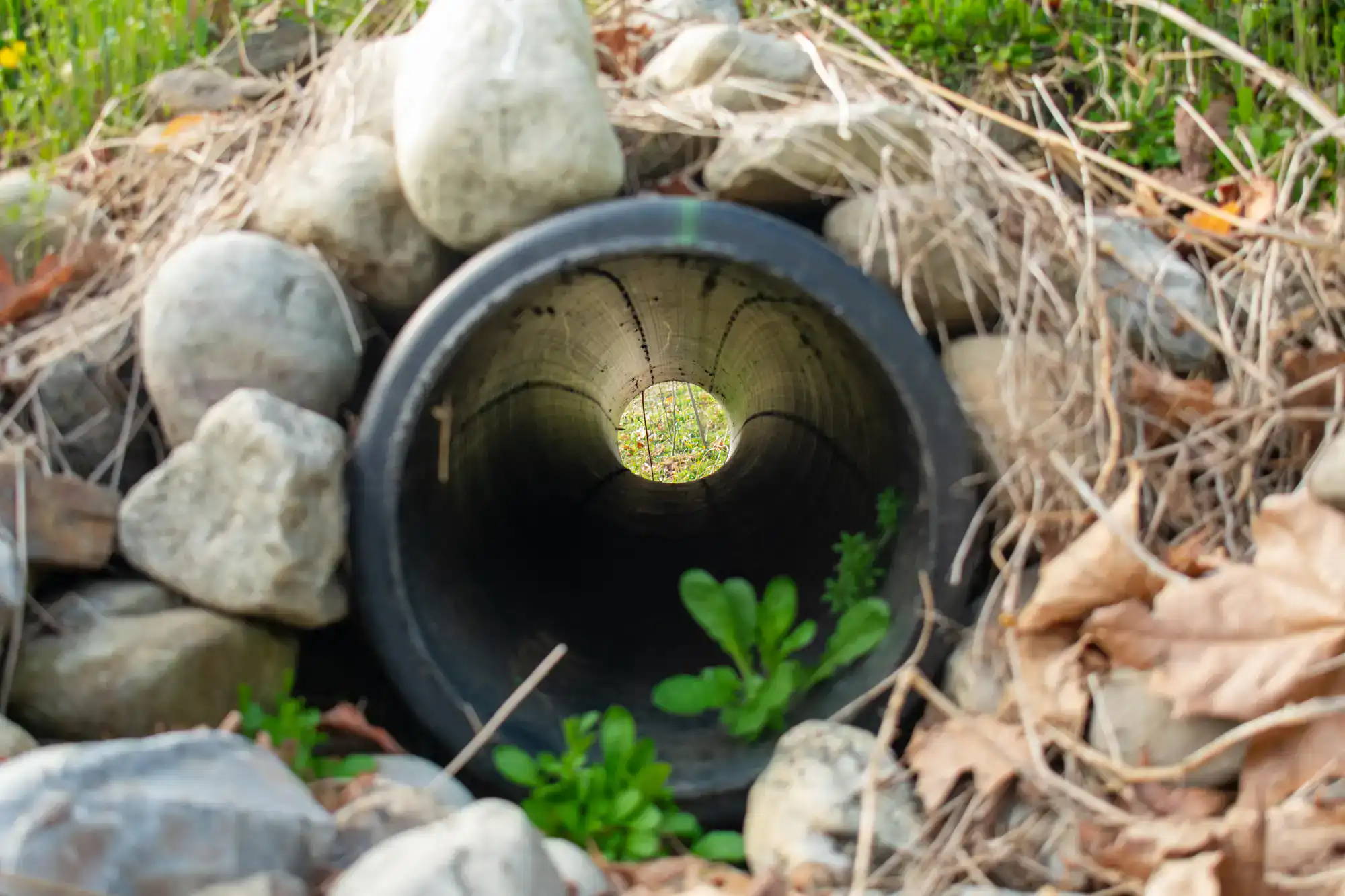
The rolling terrain along Spring Mill Road and the neighborhoods surrounding Lancaster Avenue creates natural grade conditions that funnel subsurface water directly toward foundations. A properly installed French drain intercepts that water before it ever reaches your walls — redirecting it away from the structure and giving it somewhere to go that isn’t your basement floor.
Beyond the immediate fix, there is a longer-term reality: mold begins growing within 24 to 48 hours of water intrusion, and one inch of standing water in a finished basement can cause up to $25,000 in damage according to FEMA. A French drain system installed correctly lasts 30 to 40 years. On a property worth what yours is worth, that math is not complicated.
We have been working in Delaware County and Montgomery County for two decades — which means we have been on the ground in Radnor Township and Lower Merion Township long enough to know exactly what conditions look like under the foundations of Villanova’s historic estate homes. We understand the specific challenges that come with pre-1978 construction, clay-heavy soils, and the mature landscaping that defines these properties.
What sets us apart from every other drainage contractor showing up in local search results is simple: we are a Certified Lead Inspector and Risk Assessor operating under EPA and HUD compliance standards. The majority of Villanova’s residential housing stock was built before 1978 — the federal threshold year for lead-based paint risk. Before we touch the soil around your foundation, we test it. That is not standard practice in this industry. It should be, but it is not.
We are fully licensed, bonded, and insured at the level required for environmental work — not just the general liability minimum that most drainage contractors carry. We offer free estimates, 24/7 phone availability, and emergency response service when you need it most.
It starts with a free on-site assessment. We walk the property, identify where water is entering or pooling, evaluate the grade and soil conditions, and determine whether an exterior French drain at footing depth, an interior perimeter system, or a combination of both is the right solution for your specific situation. In Villanova, where large estate lots often include extensive hardscape and mature landscaping, this assessment also accounts for how the installation will affect the existing property.
Before any excavation begins, we conduct environmental testing. This is not optional and it is not an upsell — it is a requirement when working around pre-1978 foundations where lead paint and asbestos-containing materials may be present in the soil or on foundation walls. If hazardous materials are identified, we handle remediation as part of the same engagement, using HEPA filtration systems throughout. No secondary contractor, no hand-off, no gap in accountability.
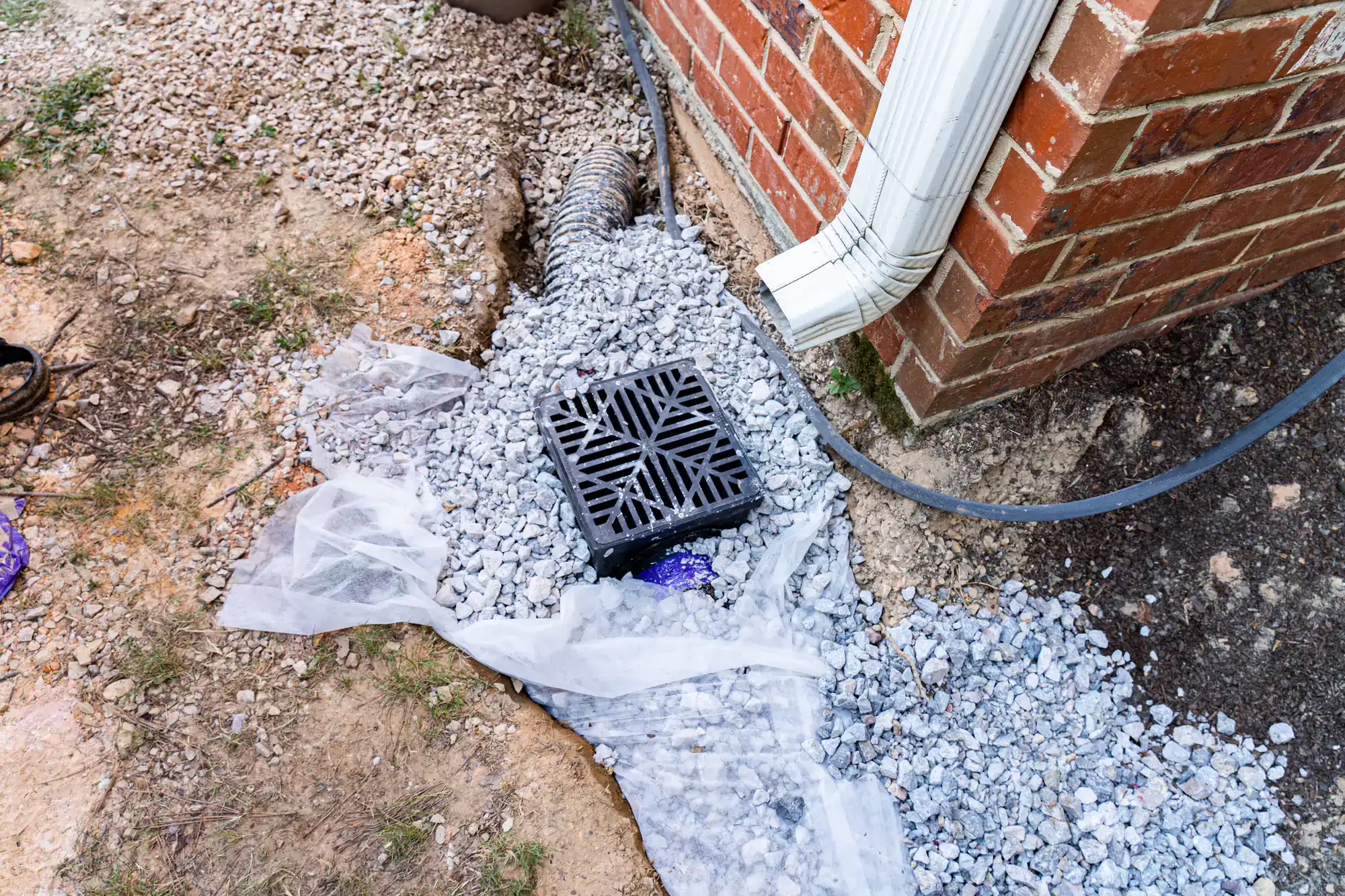
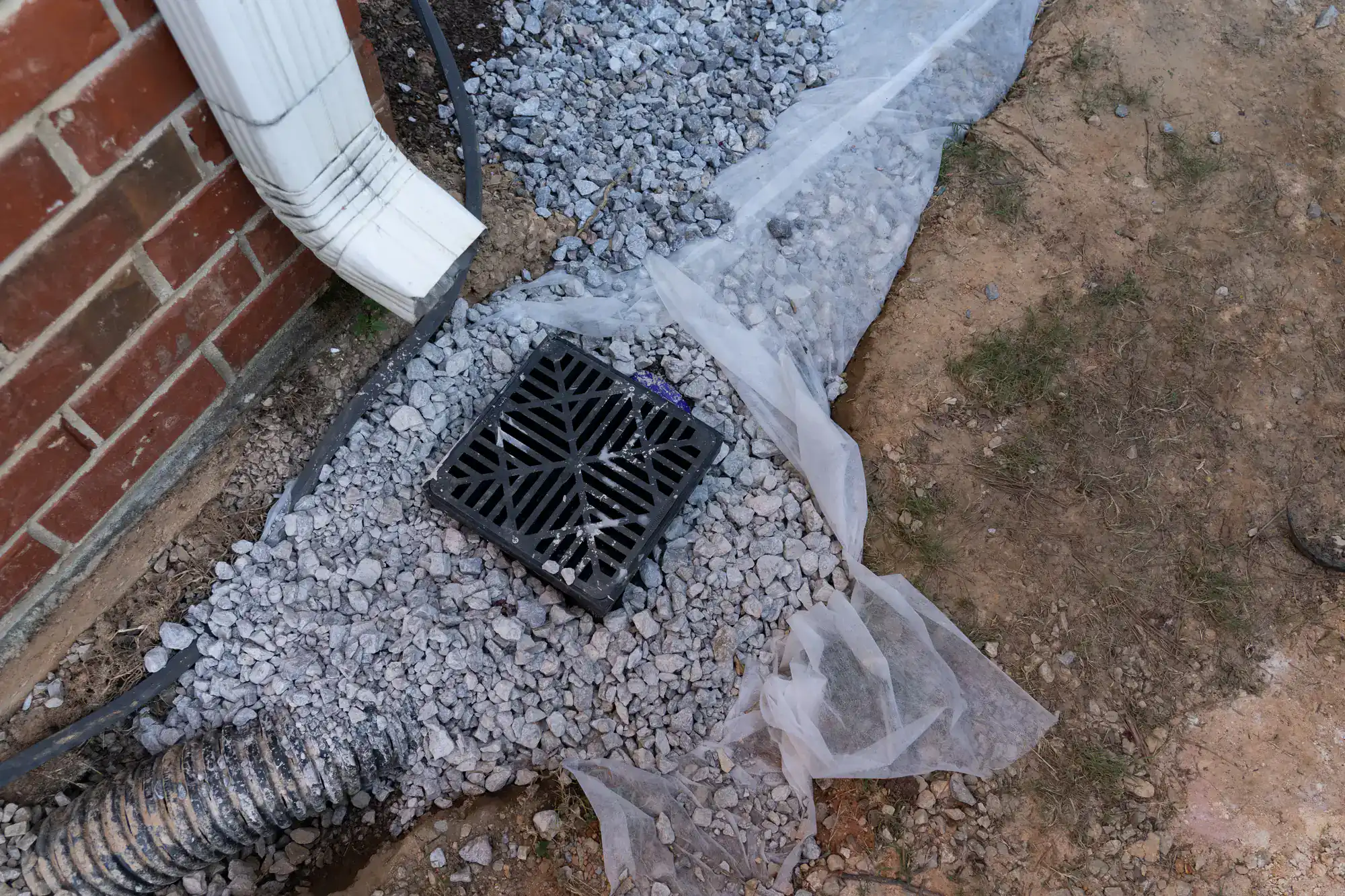
Once the site is cleared and safe, the drainage system is installed using rigid perforated PVC pipe — not the cheap corrugated flex pipe that collapses over time — surrounded by clean crushed stone and wrapped in geotextile filter fabric to prevent soil infiltration. For work in the Radnor Township portion of Villanova, we manage the grading permit process in compliance with Stormwater Management Ordinance No. 2022-15. When the job is done, you get documentation of everything — the testing, the remediation if applicable, and the installation — so your records are clean for any future property transaction.
Ready to get started?
Most drainage contractors do one thing: they dig, they lay pipe, and they leave. If they find mold behind a finished basement wall, they refer you out. If the soil tests positive for lead contamination — which is a real possibility in a community where the housing stock is as old as Villanova’s — they are not equipped to handle it. You are left coordinating multiple contractors for problems that were always connected.
We operate differently. Our service model covers environmental testing, hazardous material abatement, drainage installation, waterproofing, demolition, and cleanup under one roof. If your Lancaster Avenue-area estate has a 1940s foundation with decades of lead paint weathering into the surrounding soil, we identify it, document it, remediate it, and install your French drain system — all in a single engagement. That is not a convenience feature. In a home worth $1 million or more, it is the only approach that makes sense.
French drain installation cost in the Villanova area typically ranges from $5,000 to $12,000 depending on system length, depth, and whether interior or exterior work is involved. We offer free estimates so you know exactly what you are looking at before any commitment is made, and cash discounts are available. Every project is backed by full licensing, bonding, and insurance coverage at the environmental services level.

Yes, and the requirements are specific. Radnor Township adopted Stormwater Management Ordinance No. 2022-15 in October 2022, which governs drainage work throughout the Delaware County portion of Villanova. If your project involves excavation near the foundation or affects stormwater runoff patterns on your property, a grading permit is required. The fee is $1,500, which includes a $50 application fee and a $1,450 Professional Services Agreement — submitted as two separate checks.
If your property sits in the Lower Merion Township portion of Villanova, which falls under Montgomery County, separate permit requirements apply. We have been working in both jurisdictions for two decades and manage the permit process as part of the project. You should not have to figure out which township governs your parcel and what forms to file — that is part of what you are hiring a contractor with real regional experience to handle.
The typical range for French drain installation in the Villanova area runs from $5,000 to $12,000. Where your project lands in that range depends on a few things: whether the system is exterior (installed at footing depth around the foundation perimeter), interior (a perimeter drain beneath the basement slab), or a combination of both. System length, soil conditions, and the depth required to reach proper drainage grade all factor in.
In Villanova specifically, older estate homes with deep foundations and extensive hardscape can add complexity to the installation. If environmental testing identifies lead-contaminated soil or hazardous materials near the foundation — which is a real possibility in pre-1978 homes — remediation is handled as part of the same project, and that work is priced transparently in your free estimate. There are no surprises after the contract is signed.
This is exactly the right question to ask, and the honest answer is: it depends on what is there. Homes built before 1978 — which covers the vast majority of Villanova’s residential housing stock — may have lead-based paint on foundation walls, lead-contaminated soil from decades of exterior paint weathering, or asbestos insulation on basement pipes and mechanical systems. Standard drainage contractors are not equipped to identify or handle any of these materials.
We are a Certified Lead Inspector and Risk Assessor operating under EPA and HUD compliance standards. Before any excavation begins on a pre-1978 property, we conduct environmental testing to determine what is present. If hazardous materials are found, we remediate them safely using HEPA filtration systems before drainage work proceeds. This is not a standard practice in the waterproofing industry — it is a requirement that we build into every project on older homes. For a Villanova homeowner with a property worth $1 million or more, this process is not optional. It is the baseline.
An exterior French drain is installed outside the foundation, typically at footing depth, to intercept groundwater before it ever reaches your basement walls. It requires excavation around the perimeter of the home and is generally the more comprehensive long-term solution. An interior French drain — sometimes called a perimeter drain system — is installed beneath the basement slab and collects water that has already entered through the foundation, directing it to a sump pump for removal.
In Villanova, where the clay-heavy soils throughout the Radnor Township and Lower Merion Township corridor hold moisture and create significant hydrostatic pressure against foundation walls, exterior systems are often the right first line of defense. However, for finished basements in older estate homes where exterior excavation would disturb mature landscaping or formal hardscape, an interior system can be the more practical solution. The right answer depends on your specific property, your water intrusion pattern, and the grade conditions around your foundation — which is exactly what the free assessment is designed to determine.
A properly installed French drain system — rigid perforated PVC pipe, clean crushed stone, and quality geotextile filter fabric — should last 30 to 40 years under normal conditions. The most common reason systems fail earlier than that is poor installation: corrugated flex pipe that collapses over time, insufficient slope, or filter fabric that was skipped entirely to cut costs. In the clay-heavy soils common throughout the Main Line corridor, a system installed without proper fabric will eventually clog with fine particles and lose its effectiveness.
Signs that your French drain needs cleaning or repair include water returning to areas that were previously dry, slow drainage in yard low spots after rain, or a sump pump that runs constantly during wet weather. French drain cleaning typically involves hydro-jetting the pipe to clear accumulated sediment and debris. We provide this service as well, so if you have an existing system that is underperforming — whether we installed it or not — we can assess it and tell you honestly whether cleaning will restore it or whether replacement makes more sense.
No catch. Credit card processing fees run 2.5 to 3.5 percent on every transaction, and on a project in the $5,000 to $12,000 range, that is real money. When a customer pays in cash, we are not absorbing that processing cost — and we pass the savings directly back to the customer rather than quietly building it into the estimate. It is a straightforward financial decision, not a gimmick.
For Villanova homeowners managing a project that may include environmental testing, remediation, and drainage installation in the same engagement, the total investment can be meaningful. The cash discount is one way we keep the overall cost as reasonable as possible without cutting corners on the work itself. Combined with the free estimate and transparent pricing, it reflects how we operate in general: no hidden fees, no inflated numbers, and no pressure to sign before you are ready.
Other Services we provide in Villanova