Hear from Our Customers
Most Villanova homeowners don’t call about asbestos until something forces the issue — a contractor opens a wall, a pre-sale inspection comes back flagged, or an old boiler room gets looked at for the first time in thirty years. At that point, the question isn’t whether to deal with it. It’s who you trust to handle it correctly inside a home that may be worth well over a million dollars.
When asbestos abatement is done right, your renovation moves forward on schedule. Your real estate transaction closes without a last-minute scramble. You get documentation — lab results, clearance air testing, PA DEP notification confirmation — that holds up legally and protects you in any future sale. That paperwork matters enormously in a market where buyers routinely commission full environmental inspections before closing on a Villanova estate.
Villanova’s housing stock tells the story clearly. With a median construction year of 1963 and a significant share of homes built before 1940, the majority of properties here were built during the decades when asbestos was standard in pipe insulation, floor tiles, plaster, joint compound, and furnace wrap. Opening up original walls in a 1930s fieldstone Colonial along County Line Road is a fundamentally different project than renovating a postwar split-level — and it deserves a contractor who understands that difference.
We’ve been doing licensed asbestos abatement work across Delaware County and Montgomery County for twenty years. Villanova sits in both — the Radnor Township side and the Lower Merion Township side — and we know the permitting requirements, the regulatory landscape, and the housing stock on both sides of that county line.
This isn’t a company that occasionally ventures into the Main Line. We maintain an established service history in Delaware County and have worked with homeowners, general contractors, and real estate professionals throughout Villanova and the surrounding area — including the kind of large-scale estate renovations that properties here regularly require. We’re fully licensed under Pennsylvania’s Department of Labor and Industry, EPA and HUD compliant, fully bonded, and fully insured.
When you’re managing a renovation on a historic property near Ithan Village or along the County Line Road corridor, you need one company that can handle what’s actually inside those walls — asbestos, lead, mold — without you having to coordinate three separate contractors while your GC waits.
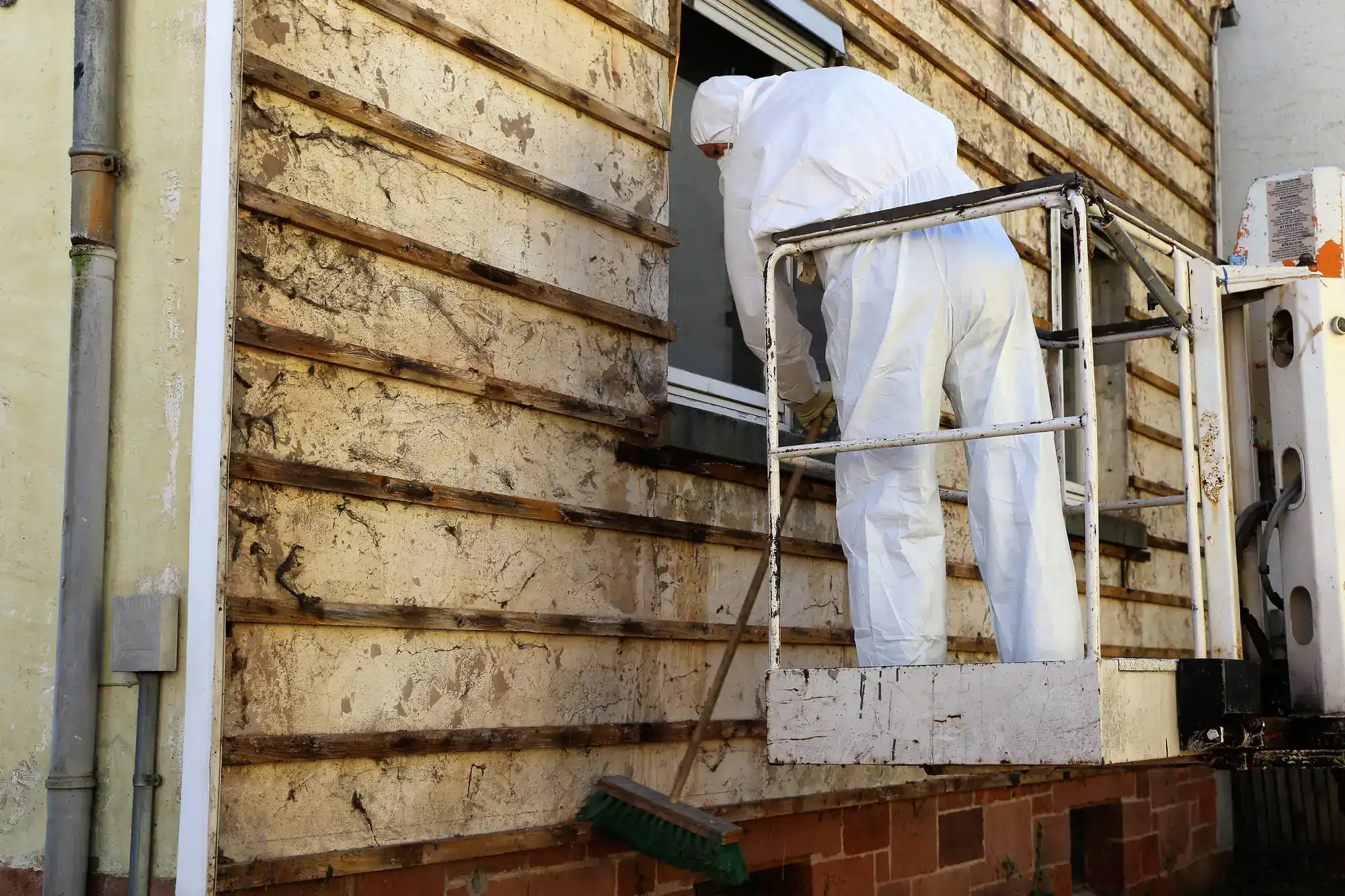
It starts with an inspection and testing. Before anything gets removed, we identify what materials are present, where they are, and what condition they’re in. Samples go to a certified lab. You get real results, not assumptions. For older Villanova estates with original plaster walls, pipe insulation, and legacy mechanical systems, this step often turns up more than one material — which is exactly why you want a contractor who handles the full scope rather than one who only does floor tiles and refers everything else out.
Once testing confirms what you’re dealing with, we file the required PA DEP advance notification — Pennsylvania law mandates a minimum five-day notice before friable asbestos removal begins — and build a project-specific abatement plan around your renovation timeline. In Radnor Township, sub-contractor permits must be submitted alongside the main building permit, so we coordinate directly with that process to keep your project on track rather than creating a bottleneck.
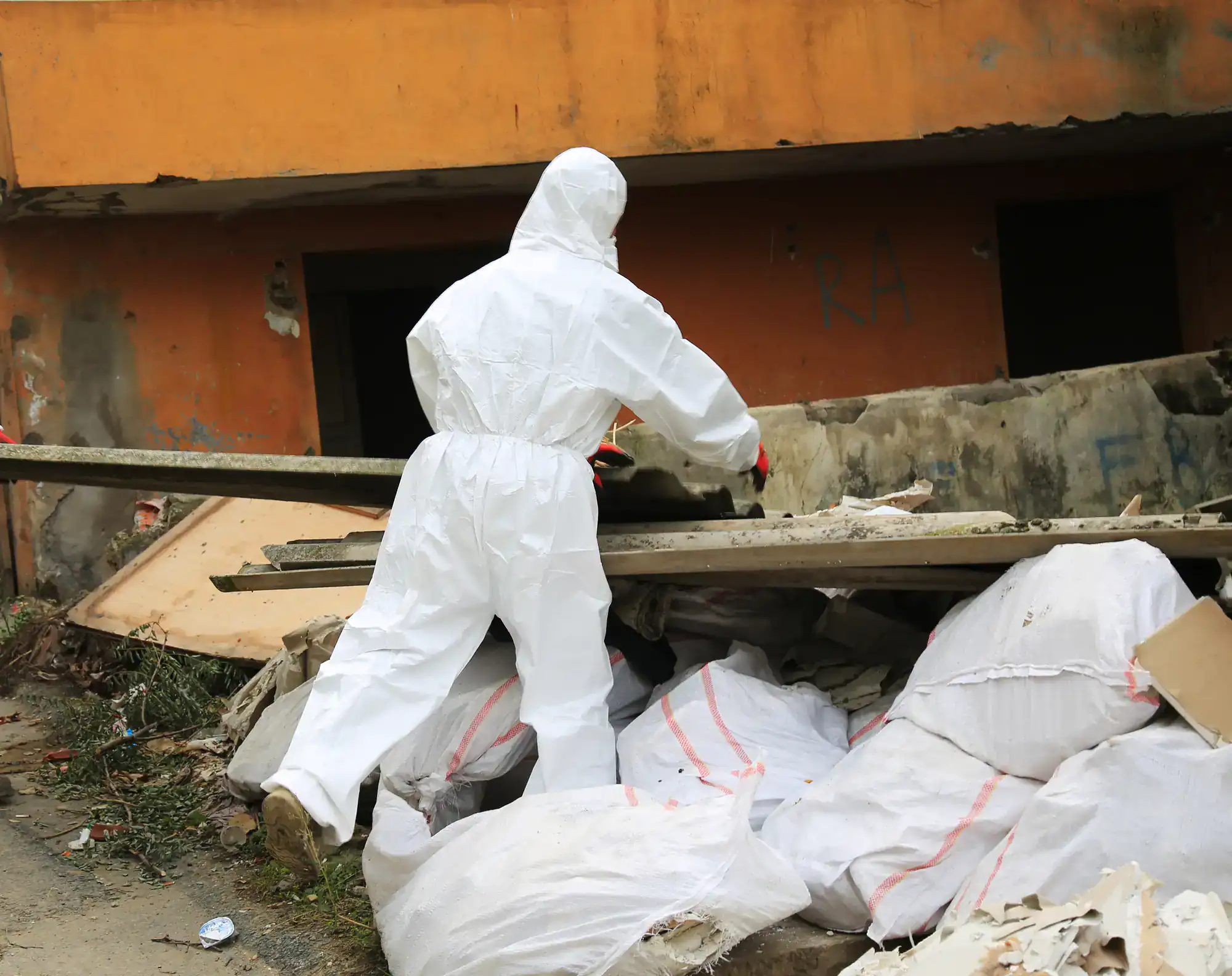
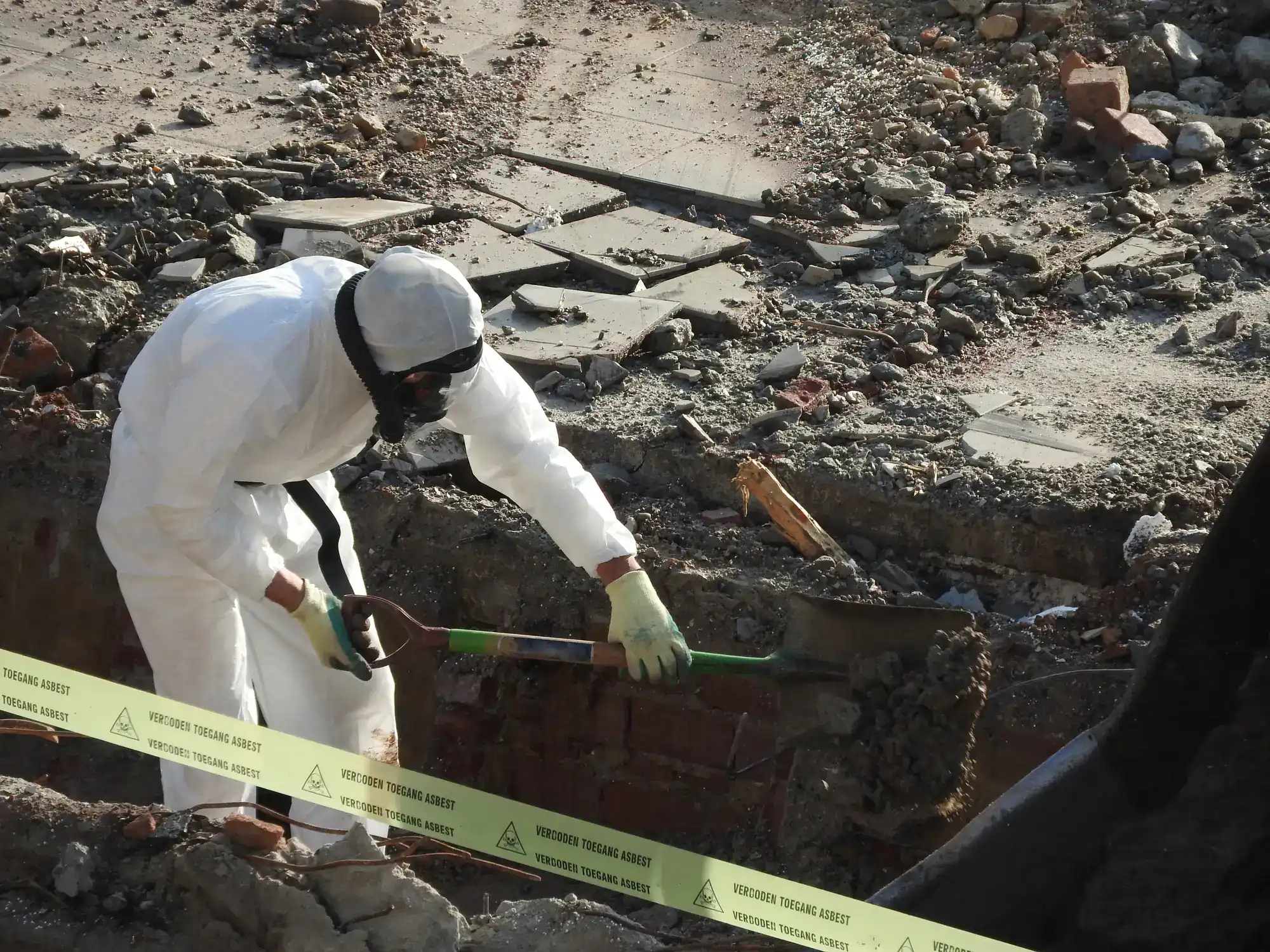
The abatement itself uses HEPA filtration and negative air pressure containment throughout. That’s not optional — it’s how you prevent fiber migration into the rest of the home while work is underway. When the removal is complete, post-abatement clearance air testing confirms the space meets regulatory standards before anyone re-enters. You get the full documentation package, and the project moves forward.
Ready to get started?
Asbestos rarely shows up alone in a home of this age. A full gut-renovation on a 1930s Villanova estate might surface asbestos in the pipe wrap and boiler insulation, lead in the original window glazing and painted trim, and mold behind a fieldstone foundation wall that’s been holding moisture for decades. We handle all of it — asbestos inspection, testing, and abatement; lead assessment and remediation; mold remediation; demolition and gutting; waterproofing; and full environmental clean-outs. One call, one licensed contractor, one coordinated schedule.
For homeowners on the Radnor Township side of Villanova, we’re familiar with the township’s contractor licensing requirements and can provide all documentation needed for your building permit application. For properties on the Lower Merion Township side, the same applies. Whether your home sits north or south of Route 30, you’re not dealing with a contractor who has to figure out local requirements on your dime.
We also offer free estimates on every job — from a single room of floor tile removal to a whole-home abatement on a large estate — along with cash discounts and 24/7 availability for emergency situations. If a contractor discovers something mid-project and you need an immediate answer, we pick up the phone. The work gets scoped, the plan gets made, and your renovation doesn’t sit idle while you wait for a callback.
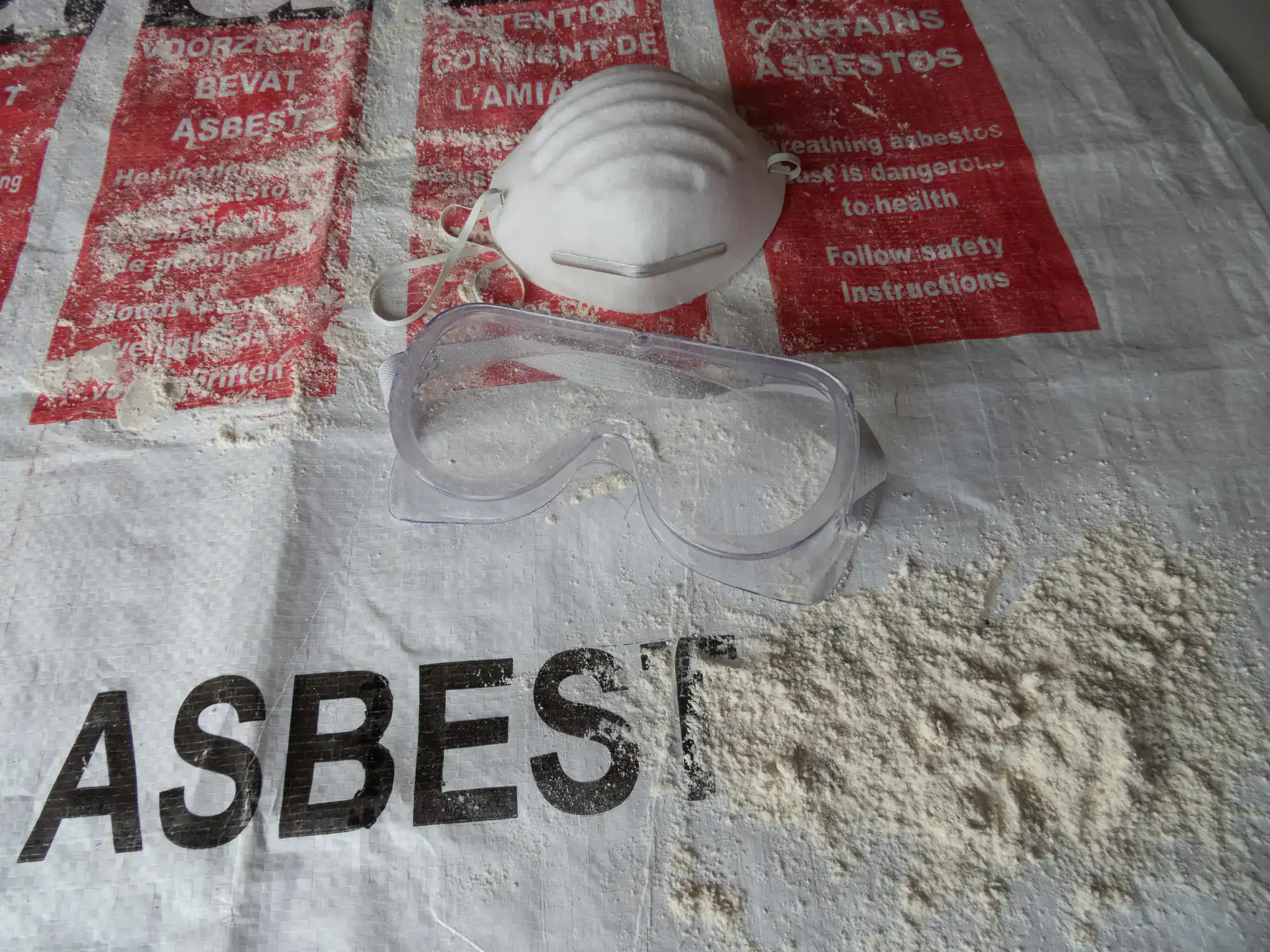

If your home was built before 1980, testing before renovation isn’t just a good idea — in many cases it’s legally required. Pennsylvania’s asbestos regulations and federal NESHAP rules both apply to renovation and demolition work that disturbs materials above certain thresholds, and Radnor Township’s permitting process requires that sub-contractor work, including abatement, be identified at the time the building permit is filed. Starting demolition without testing first can create serious legal and health exposure.
For Villanova properties specifically, this matters more than most people expect. Homes built between the 1920s and 1970s — which describes a large share of Villanova’s housing stock — commonly contain asbestos in pipe insulation, floor tiles, ceiling tiles, joint compound, plaster, and furnace or boiler wrap. Opening up any of those materials without knowing what’s there puts your crew, your family, and your renovation timeline at risk. Testing first is the step that keeps everything else on track.
Cost depends heavily on how much material is present, where it’s located, and what condition it’s in. For a standard residential job — say, floor tile removal in a single room or pipe insulation in a utility area — you’re generally looking at a range of $1,500 to $4,000. For the kind of large-scale, whole-home abatement that’s common in Villanova’s estate market, where original insulation, plaster, and tile may be present throughout a 4,000 to 6,000 square foot property, costs can run from $15,000 to $30,000 or more depending on scope.
The most important thing to understand is that the cost of doing it wrong is always higher than the cost of doing it right. Improper removal can contaminate the entire structure, create legal liability in a future sale, and result in regulatory fines. We offer free estimates so you know the actual number before committing to anything, and cash discounts are available — which, for a large estate project, is a meaningful line item.
Timeline depends on the scope of the job, but here’s the general framework. Testing and lab results typically take two to five business days. Once results are confirmed and an abatement plan is in place, Pennsylvania law requires a minimum five-day advance notification to the PA DEP before friable asbestos removal begins on qualifying projects. For larger commercial or institutional projects — which can apply to some of the larger estate properties or institutional buildings near Villanova University — federal NESHAP regulations require a minimum ten working days.
The actual removal work on a standard residential job usually takes one to three days. Larger whole-home projects on historic estates can take a week or more depending on how many materials are involved and how they’re distributed throughout the structure. Post-abatement clearance air testing adds another day. We build the abatement schedule around your renovation timeline wherever possible, so the work fits into your project rather than stalling it.
For the areas being treated, yes — occupants need to stay out of the containment zone during active removal. Whether you need to vacate the entire home depends on the scope of the work and where the affected materials are located. For a contained job in a basement utility room or a single bathroom, the rest of the home can often remain occupied. For larger whole-home abatement projects, it’s generally safer and more practical to be out of the house entirely while work is underway.
We use negative air pressure containment and HEPA filtration throughout every job, which is specifically designed to prevent fiber migration from the work area into the rest of the structure. That containment is what makes it possible to work in one part of a home without contaminating the other parts. Post-abatement clearance air testing confirms the space is safe before re-entry. We’ll walk you through exactly what to expect for your specific property during the free estimate — there’s no reason to guess.
The most common materials in Villanova’s pre-1980 housing stock are pipe and boiler insulation, floor tiles and the adhesive beneath them, ceiling tiles, joint compound used on drywall seams, plaster in original walls and ceilings, roofing materials including some slate underlayment products, and insulation around HVAC ductwork. In the older fieldstone estates that define much of Villanova’s north side, original furnace rooms are particularly likely to contain asbestos-wrapped pipe systems that have never been touched.
One thing that surprises a lot of homeowners: the material doesn’t have to be visibly deteriorating to be a concern. Asbestos-containing materials in good condition and left undisturbed generally don’t pose an immediate risk. The risk comes when they’re disturbed — during renovation, demolition, or even aggressive cleaning. That’s why the trigger is almost always renovation work, and why testing before you start is the step that keeps a project from becoming a much larger problem.
In Villanova’s real estate market, where buyers routinely commission full environmental inspections before closing on a home, asbestos is one of the more common issues that surfaces — particularly in the pre-1980 estates that make up a significant portion of the inventory. When it comes up, the transaction doesn’t have to fall apart. What matters is how it’s handled and whether the documentation is complete.
Properly completed abatement, with lab results, a filed PA DEP notification, and post-abatement clearance air testing on record, gives a real estate attorney exactly what they need to confirm the issue has been resolved. We’ve worked with Delaware County and Montgomery County insurance companies on abatement claims and understand the documentation requirements that protect both buyers and sellers. For sellers preparing a Villanova estate for listing, addressing known asbestos issues before the property goes to market — rather than scrambling after a buyer’s inspection — puts you in a significantly stronger negotiating position and removes a variable that can delay or kill a closing.
Other Services we provide in Villanova