Hear from Our Customers
Lower Merion’s own planning records document what a lot of homeowners here figure out the hard way: the soil has moderately slow permeability, the water table is very high, and bedrock sits just four to eight feet down. That combination means water doesn’t drain naturally — it builds up against your foundation and eventually finds a way in. A properly installed French drain system intercepts that water before it becomes your problem.
Once that drainage is in place, you stop managing a recurring issue and start ignoring it entirely. No more wet corners after a hard rain. No more musty smell in a basement you’ve been avoiding. No more putting off the renovation because you’re not sure the space is actually dry. For homeowners in Ardmore, Bala Cynwyd, and Gladwyne — where a lot of these homes date back to the early 1900s and were never built with today’s hydrostatic pressure in mind — that outcome is significant.
What makes this more than a standard drainage job is the environmental piece. When you’re excavating around a foundation that’s 80 or 100 years old, there’s a real possibility of disturbing lead paint, lead-contaminated soil, or asbestos pipe insulation. We’re a certified lead inspector and risk assessor. That means the hazard assessment happens before the first shovel goes in — not after something turns up.
We’ve been working in Montgomery County for over 20 years. That’s not a tagline — it’s the reason we understand what Lower Merion homes actually do during a hard rain, what the soil profile looks like in Belmont Hills versus Gladwyne, and why the neighborhoods along the Schuylkill River corridor tend to see water intrusion that other parts of the township don’t.
What separates us from every other drainage contractor serving the Main Line is the environmental credential stack. EPA certified lead inspector. Risk assessor. State DEP accredited. HUD compliant. Fully licensed, bonded, and insured. That combination matters here because the homes you’re protecting aren’t generic — they’re older, they’re valuable, and they carry real environmental risk when you start digging around their foundations.
You get one company that handles testing, remediation, and installation. No handoffs, no gaps, no second vendor trying to figure out what the first one left behind.
It starts with a free estimate. Someone from our team comes out, walks the property, looks at where water is entering or pooling, and gives you a straight read on what’s needed and why. No pressure, no upsell theater — just an honest assessment of what’s going on with your drainage.
Before any excavation begins, we conduct an environmental assessment. For homes built before 1978 — which covers the majority of the housing stock in Ardmore, Merion Station, and Bryn Mawr — this step isn’t optional, it’s essential. Lead paint and asbestos don’t announce themselves. Testing first means you know exactly what you’re working with before anyone breaks ground. If something is found, it gets handled under EPA and HUD compliance protocols, contained with HEPA filtration, and remediated properly before the drainage work proceeds.
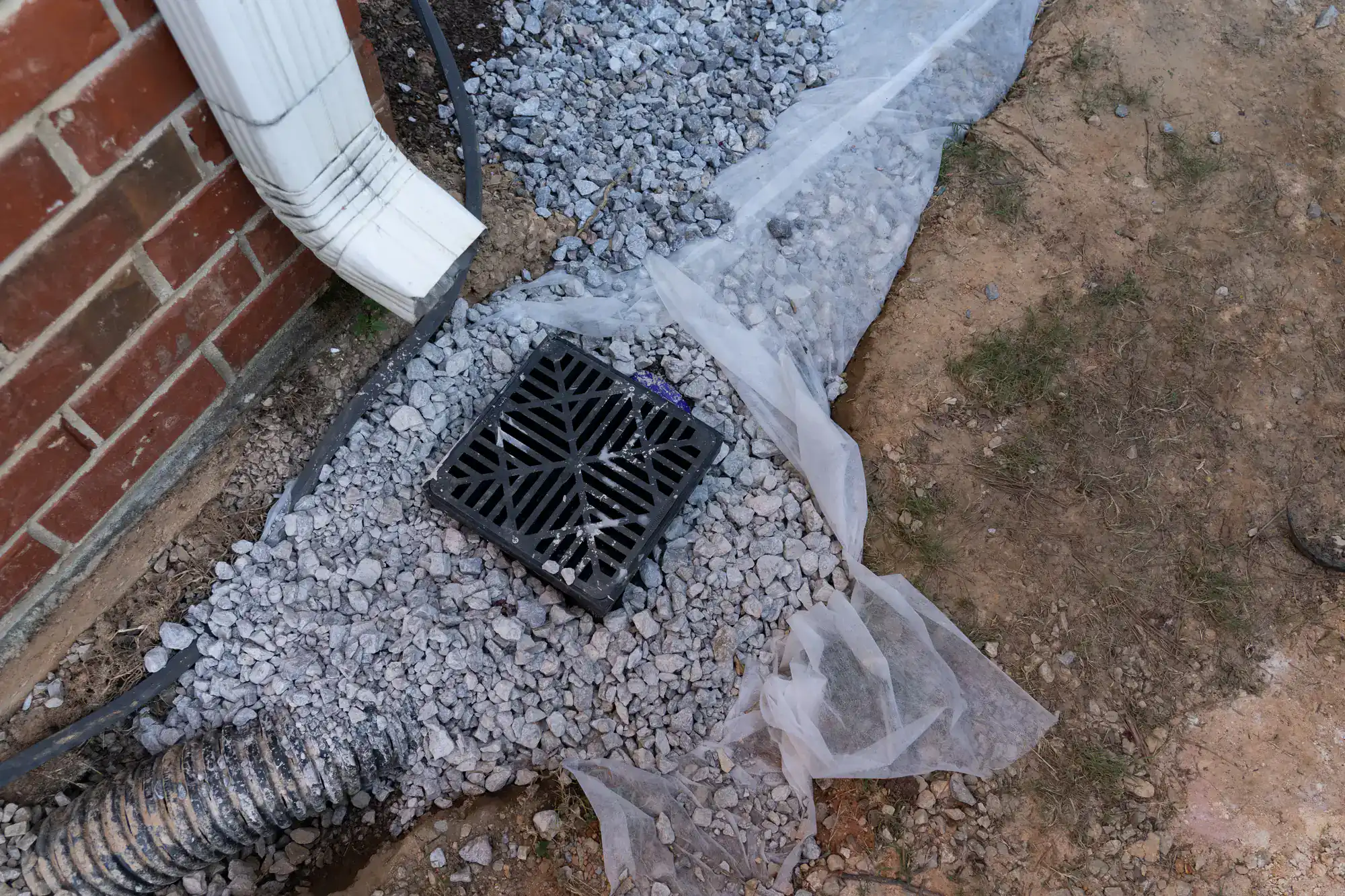
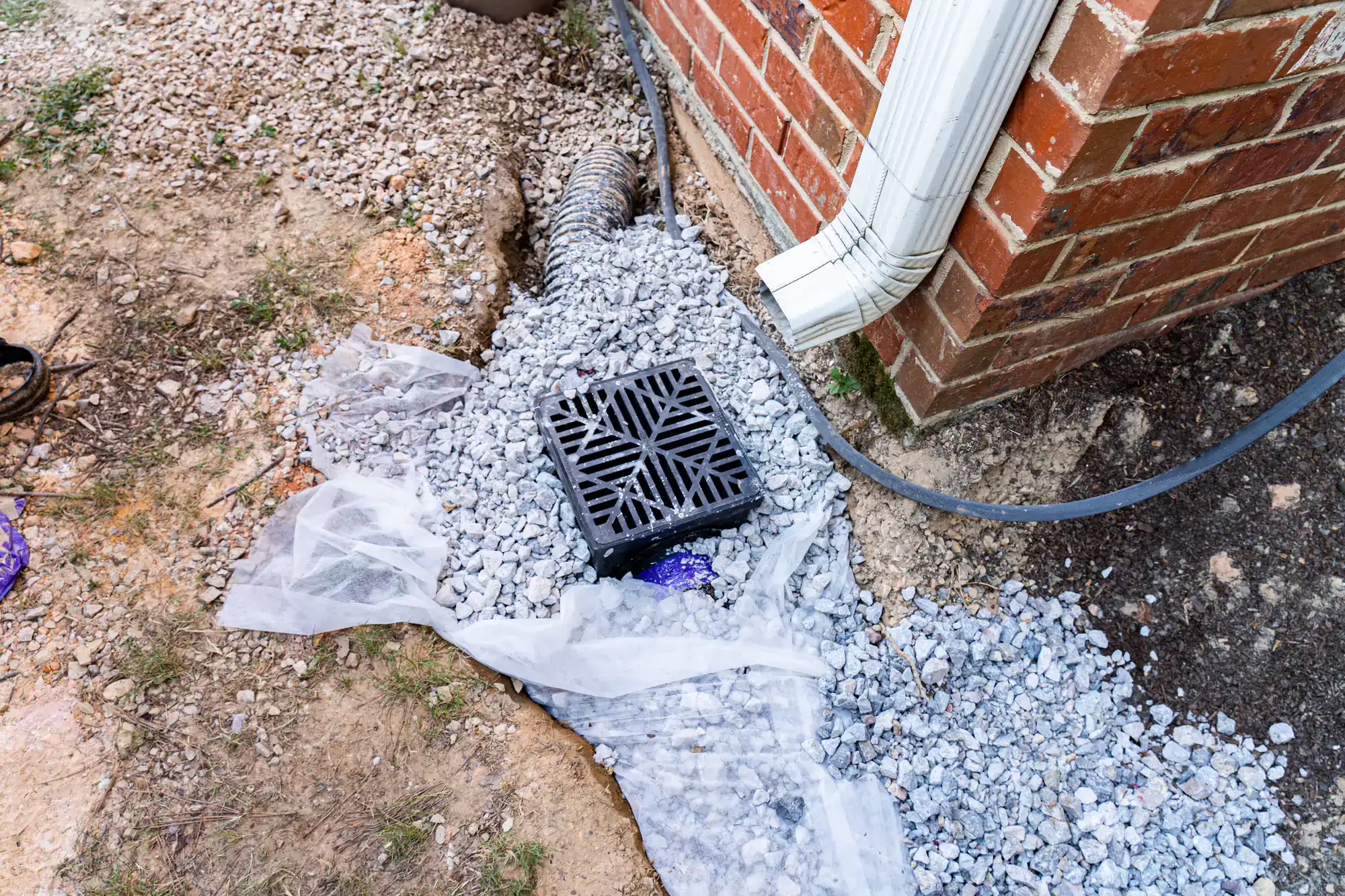
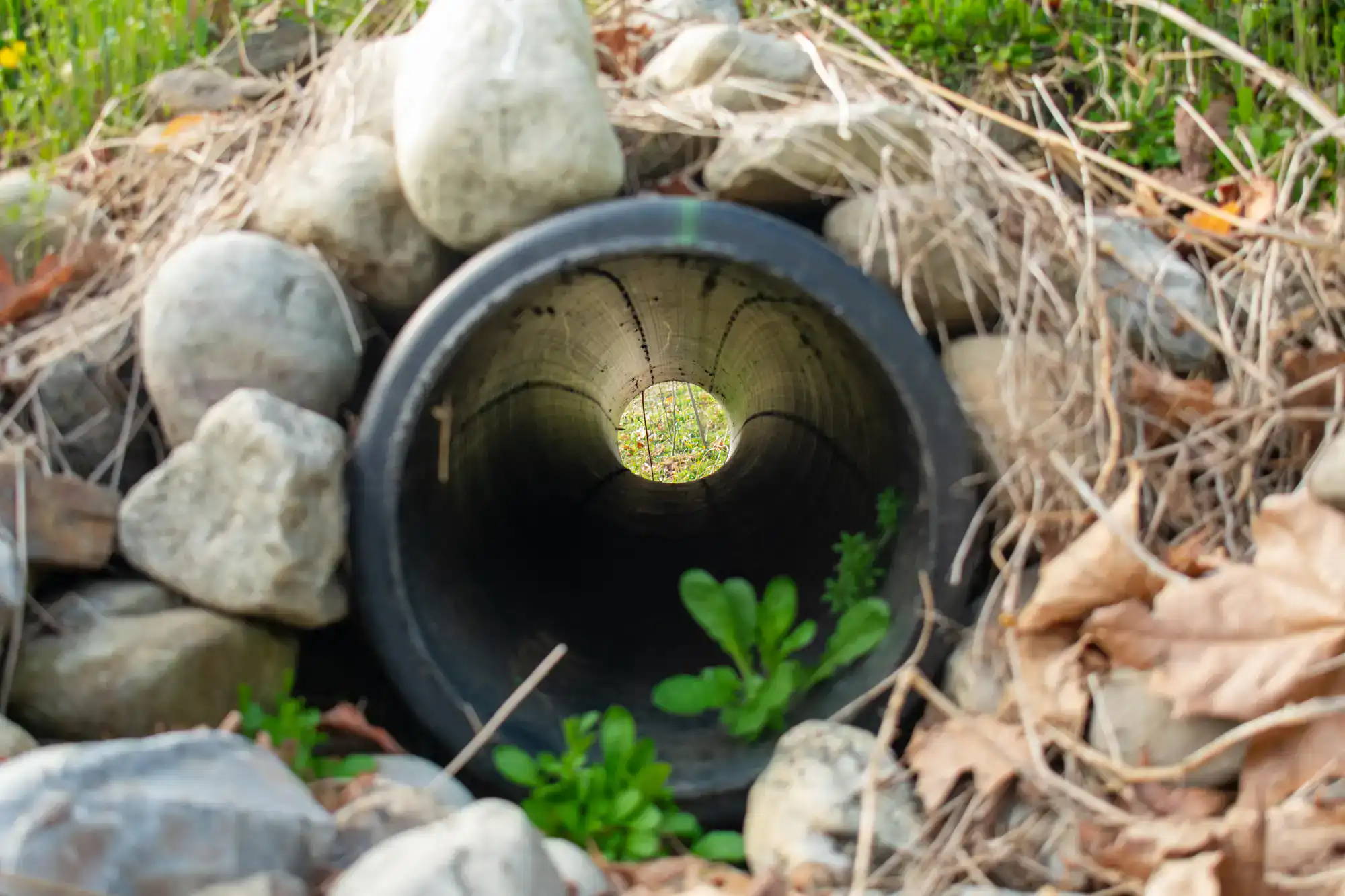
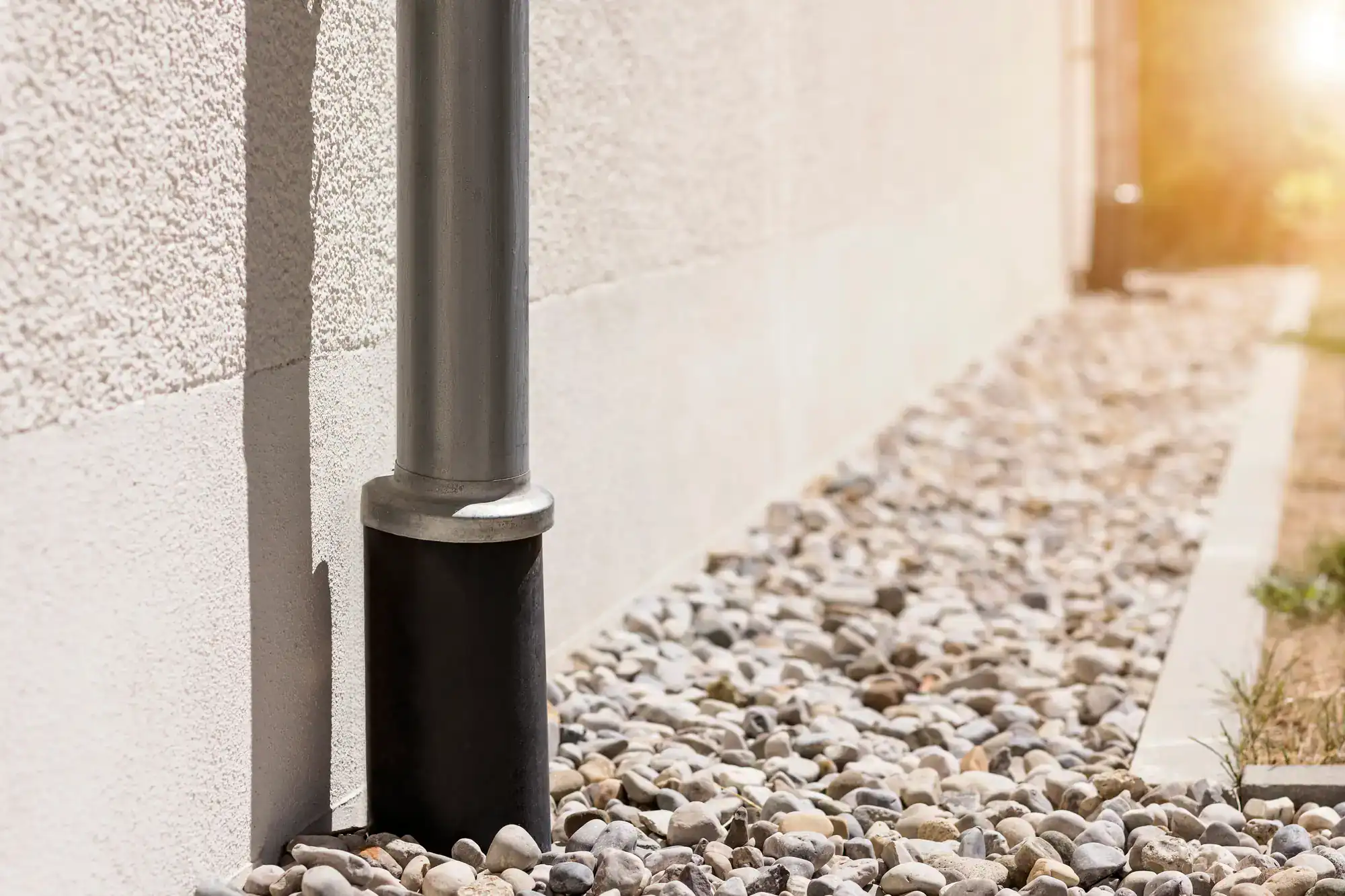
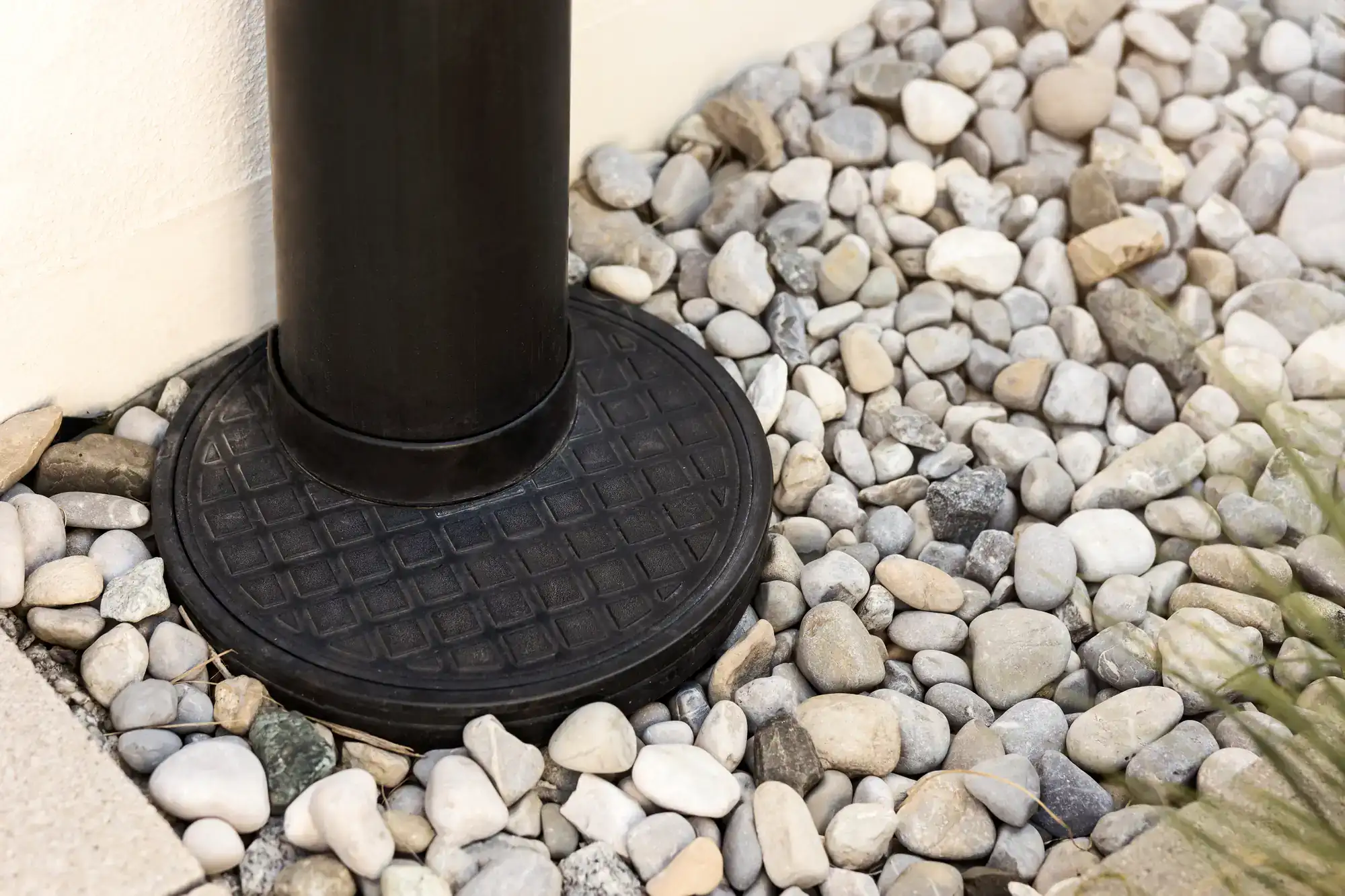
The installation itself uses rigid perforated PVC pipe — not the cheap corrugated flex pipe that collapses and clogs within a few years — surrounded by clean crushed stone and wrapped in geotextile filter fabric to keep soil out of the system long-term. The trench is sloped to meet the minimum grade needed for water to actually move, and the outlet is positioned to discharge away from the foundation. Lower Merion Township has specific stormwater management requirements under the Act 167 drainage plan, and we’re familiar with what does and doesn’t require a permit for residential drainage work here. When the job is done, the system is built to last 30 to 40 years — not 3 to 5.
Ready to get started?
French drain installation in Lower Merion isn’t a one-size-fits-all job. The service is shaped by what’s actually happening on your property — whether that’s a basement taking on water during spring snowmelt, a yard that stays saturated for days after rain because the soil can’t absorb it fast enough, or a foundation wall showing the early signs of hydrostatic pressure. We handle all three scenarios, and the approach changes based on what your specific property needs.
Interior French drains are installed along the perimeter of the basement floor, channeling water that enters through the foundation into a sump pump system before it can spread. Exterior French drains intercept groundwater before it reaches the wall entirely — more invasive to install, but often the right call for properties with significant grade or soil issues. Yard drainage systems address surface water that’s pooling in low spots, saturating lawns, or running toward the house during heavy storms. For homeowners in neighborhoods like Penn Valley or Wynnewood where lots tend to have more grade variation, the exterior and yard drainage options are often what actually solves the problem.
Because we’re also a certified environmental hazard abatement firm, every job that involves excavation near an older foundation includes a pre-work hazard assessment at no additional charge. That’s not standard practice in this industry — it’s something we built into the process because the homes in Lower Merion require it.

It depends on where the water is coming from. If your basement gets wet because of a crack in the wall or a failed window well seal, those are targeted repairs — not necessarily a full drainage system. But if water is seeping in along the floor-wall joint, if your yard stays saturated for days after rain, or if you’re dealing with recurring moisture that no single repair has fixed, that’s usually a drainage problem. The source is groundwater or surface runoff that has nowhere else to go.
In Lower Merion specifically, the soil profile makes this more common than in other parts of Montgomery County. The moderately slow permeability means water doesn’t move through the ground quickly, and the high water table means it’s already close to the surface before the rain even starts. That combination creates hydrostatic pressure against foundations that doesn’t go away on its own. A French drain doesn’t patch the symptom — it removes the pressure source. The free estimate is the right starting point because you’ll get a clear answer on what’s actually driving the problem before committing to anything.
Residential French drain installation in the Lower Merion area typically runs between $3,000 and $8,000 for most jobs, though larger exterior systems or projects that involve environmental remediation can run higher. The range is wide because the scope varies significantly — an interior perimeter drain in a 1,200-square-foot basement is a different job than an exterior French drain running 80 feet along a foundation with lead-contaminated soil that needs to be handled before excavation begins.
The factors that move the number are trench length, depth, outlet complexity, whether you need an interior or exterior system, and whether any environmental hazard work is required before installation. For older homes in Ardmore, Bala Cynwyd, or Merion Station, the pre-work hazard assessment is built into our process at no additional charge — but if remediation is needed, that affects the overall project cost. The free estimate gives you a real number based on your specific property, not a ballpark that changes once work starts. Cash discounts are available, which can bring the final number down meaningfully on larger jobs.
For most standard residential French drain installations — interior perimeter drains, basic exterior systems, or yard drainage on existing lots — a permit is typically not required in Lower Merion Township. However, the township operates under the Act 167 Lower Merion Drainage Area stormwater management plan, which does have specific requirements for projects that add significant impervious surface or disturb larger areas of ground. If your project involves adding more than 1,500 square feet of impervious surface, a Runoff and Erosion Control Permit is required.
For properties in or near floodplain overlay districts — which applies to some areas along the Schuylkill River corridor and near Mill Creek in Gladwyne — there are additional requirements that affect what can be done and how. We’ve been working in Montgomery County for over 20 years and are familiar with where these thresholds apply. If your project touches any of those triggers, you’ll know upfront — not after the fact. The permit question is part of the estimate conversation, not an afterthought.
An interior French drain is installed inside the basement, typically along the perimeter of the floor at the base of the foundation wall. It captures water that has already entered through the wall or the floor-wall joint and channels it to a sump pump for removal. It doesn’t stop water from reaching the wall — it manages it after it arrives. This is often the more practical option for finished or semi-finished basements, or for properties where exterior excavation is difficult due to landscaping, hardscaping, or tight lot lines.
An exterior French drain is installed outside the foundation, intercepting groundwater before it ever reaches the wall. It requires digging down alongside the foundation — sometimes several feet — and is more disruptive to install, but it addresses the problem at the source rather than managing the outcome. For homes in Penn Valley or Wynnewood where the lot grade pushes water toward the foundation, or for properties with significant hydrostatic pressure issues, the exterior system often produces better long-term results. We’ll tell you which approach actually fits your property’s situation — not which one is easier to sell.
A properly installed French drain system — rigid perforated PVC pipe, clean crushed stone, quality geotextile filter fabric — should last 30 to 40 years under normal conditions. The systems that fail in three to five years are usually built with corrugated flex pipe that collapses over time, or without filter fabric that keeps soil from migrating into the gravel and eventually clogging the pipe. The installation quality is what determines the lifespan, not the concept.
Maintenance is minimal but not zero. Over time, sediment can accumulate in the pipe, especially in areas with fine or clay-heavy soil — which describes much of Lower Merion’s documented soil profile. French drain cleaning every few years, particularly after major storm seasons, keeps the system flowing properly. If you notice standing water returning to areas that were previously draining well, or if the sump pump is running less frequently than it used to, those are signs the drain may need to be flushed. We can inspect and clean existing systems, not just install new ones — which matters if you’ve moved into an older Main Line home and aren’t sure what’s already under the floor.
Because in Lower Merion, the odds are real. Most of the township’s residential housing stock was built between 1900 and 1940 — well before the EPA’s 1978 lead paint threshold and decades before asbestos was phased out of building materials. When you excavate around a foundation that old, you can disturb lead paint on exterior surfaces, lead-contaminated soil that accumulated over decades of paint weathering, or asbestos insulation on pipes running through the foundation area. Standard waterproofing contractors aren’t equipped to identify or handle any of that.
We’re a certified lead inspector and risk assessor operating under EPA and HUD compliance standards. That means before any trench gets dug, the area is assessed for what’s actually present. If hazardous materials are found, they’re contained and remediated using HEPA filtration systems and proper protocols — not ignored or disturbed carelessly. For homeowners in Ardmore, Bala Cynwyd, Bryn Mawr, or Merion Station with children or elderly family members in the home, this isn’t a bonus service. It’s the reason we’re the right contractor for homes like yours. No other drainage company serving the Main Line holds these credentials.
Other Services we provide in Lower Merion