Hear from Our Customers
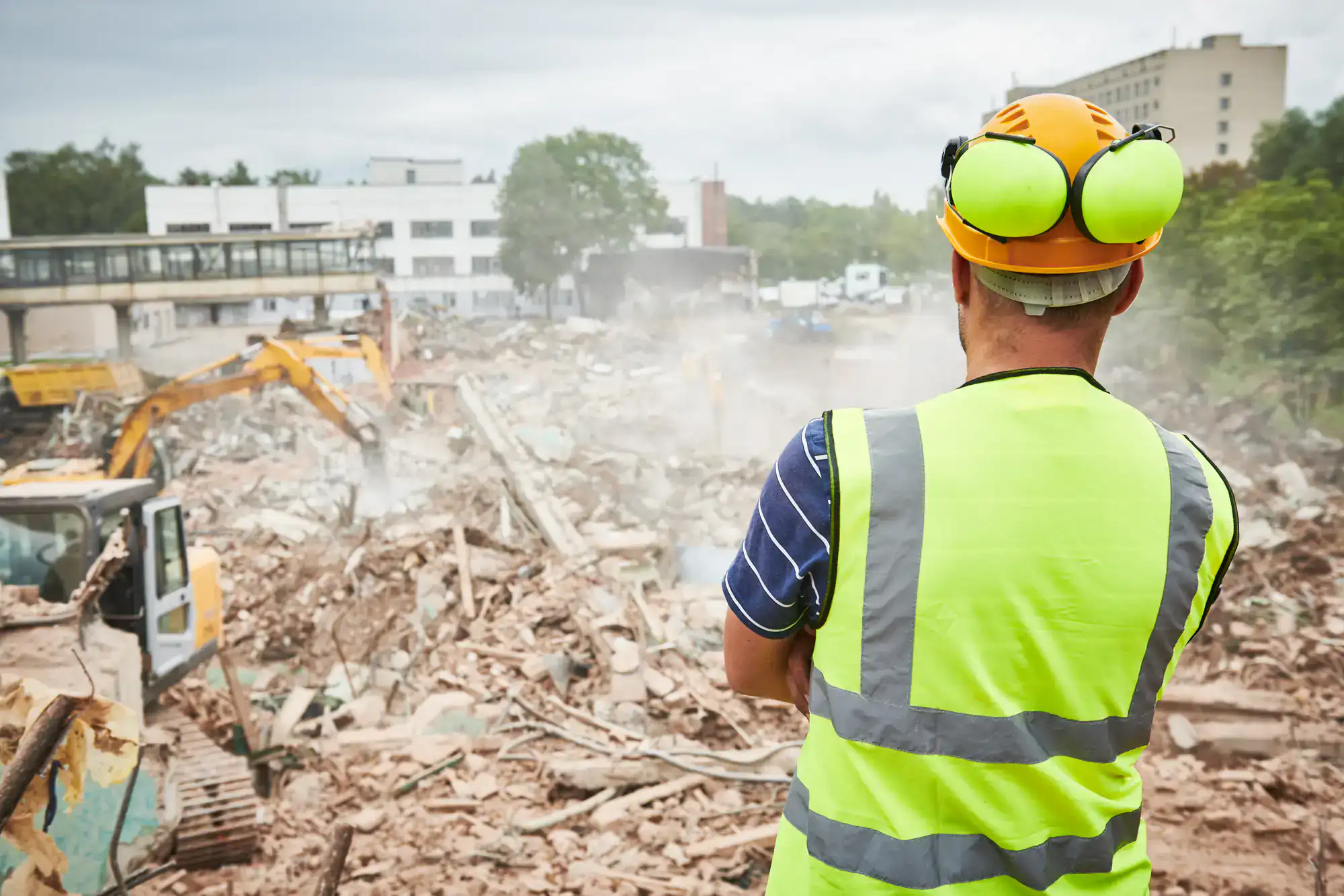
Most homes throughout Lower Merion were built long before 1978. That’s not a minor detail — it’s the reason every renovation, gutting, or teardown in this township carries a real chance of encountering asbestos-containing materials or lead-based paint. When you hire a contractor who doesn’t test before they demo, you’re not just taking a quality risk. You’re taking a health risk, a legal risk, and a financial one — on a property that’s likely your most valuable asset.
When we handle your project, the testing, abatement, gutting, and cleanup all happen under one roof. You don’t coordinate three separate vendors. You don’t wait for one crew to finish before another can start. The job moves forward as a single, managed process — and when it’s done, you know it was done right.
That matters especially in Lower Merion, where the housing stock ranges from Victorian-era stone estates in Gladwyne to early-20th-century colonials along Lancaster Avenue. These aren’t standard suburban builds. They’re older, more complex, and more likely to contain hazardous materials than nearly anything built in the last 40 years. Working with a contractor who understands that — and is certified to handle it — is the difference between a smooth project and a very expensive problem.
We’re based in Glenside, PA — about 10 miles from Lower Merion’s northern border — and have been working on homes and commercial properties throughout Lower Merion and Montgomery County for over two decades. That’s not a number we throw around lightly. In a business this regulated, this credential-dependent, and this unforgiving of shortcuts, longevity means something.
We’re EPA Certified as a Lead Inspector and Risk Assessor — a federal credential that qualifies us not just to remove lead, but to inspect, test, and certify lead conditions on a property. That’s a meaningful distinction in Lower Merion, where the Historic Resource Inventory includes buildings that predate 1913 and where the average home sits well above $800,000. We’re also EPA/HUD compliant, fully licensed, bonded, and insured — including the specific blasting and demolition insurance that Lower Merion Township’s own contractor licensing ordinance (Chapter 69) requires.
From Ardmore to Bryn Mawr to Wynnewood, we’ve worked on the kind of homes that define this area. We know what to expect inside a pre-war Main Line home, and we know how to handle it.
It starts with a free estimate. You describe the scope — a basement gut, an interior demolition, a full teardown, water damage cleanup — and we come out to assess what you’re working with. In Lower Merion, that assessment almost always includes evaluating the age of the structure and the likelihood of hazardous materials. If the home predates 1978, asbestos and lead testing happen before anything else. That’s not optional — it’s the law, and it protects you.
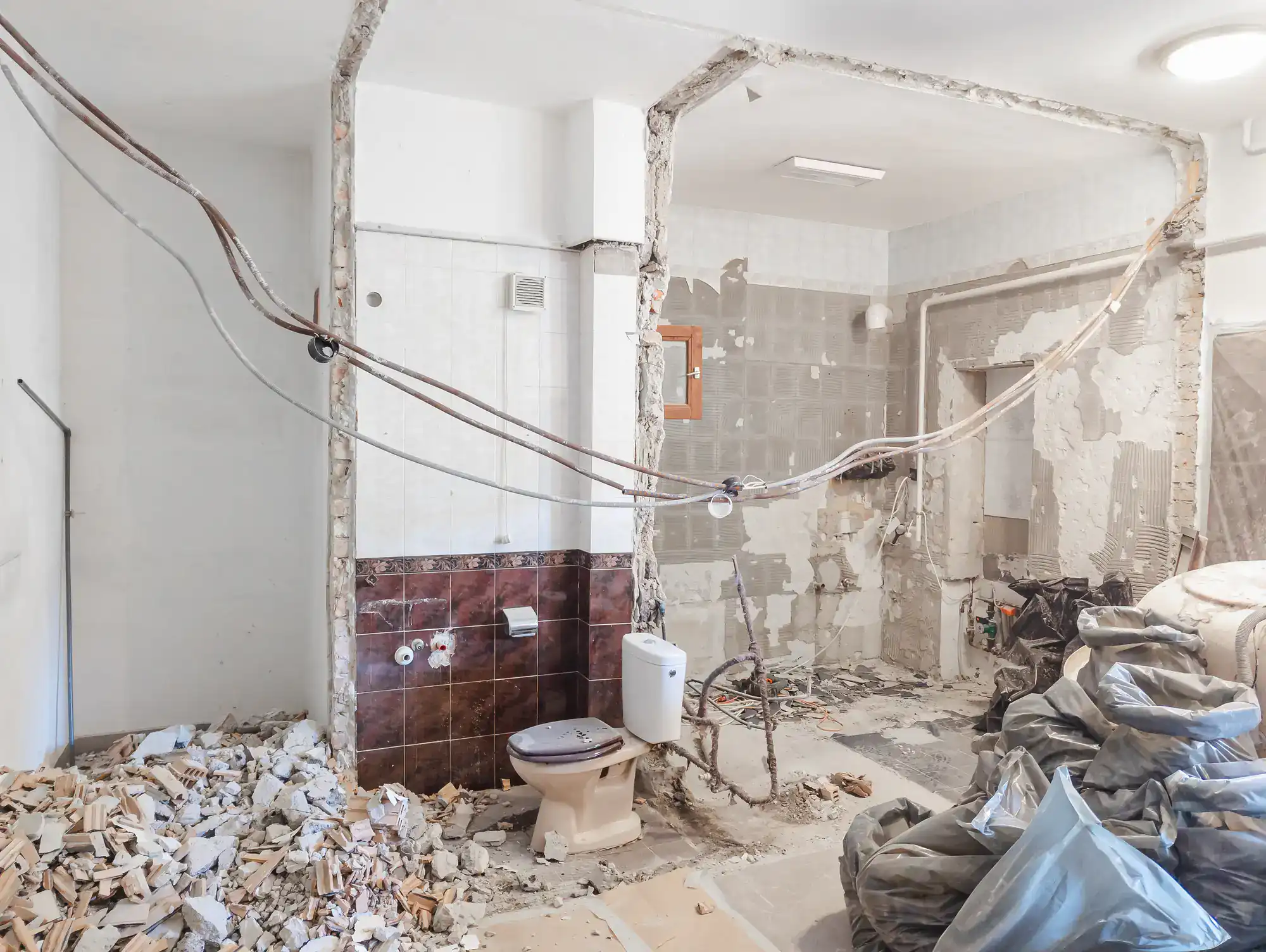
If testing confirms the presence of asbestos, lead paint, or mold, abatement comes next. We handle that in-house, with HEPA filtration and proper containment so the rest of your home stays clean during the process. Once abatement is cleared, the demolition or gutting work begins. Lower Merion Township requires a building permit before demolition starts — and if your property is on the Historic Resource Inventory or within a local historic district, a review through the township’s Historical Architectural Review Board may also be required. We’re familiar with this process and can help you understand what applies to your specific property.
After the structural work is done, debris removal and cleanup are handled as part of the same engagement. If waterproofing is needed — common in Lower Merion’s older stone and brick homes after a water damage event — that gets addressed before the project closes out. You end up with a clean, cleared space and a clear record of what was done and how.
Ready to get started?
We handle the complete range of services that come up on a demolition or renovation project in this area. That includes asbestos inspection, testing, and abatement; lead inspection, testing, and removal; mold sampling and remediation; interior demolition and gutting; water damage restoration and waterproofing; construction debris removal; above-ground oil tank removal; appliance and furnace disposal; and HEPA filtration throughout every abatement job. If your Lower Merion home was heated by fuel oil at some point — which is common in homes built before the 1970s across Penn Valley, Haverford, and Merion Station — oil tank removal is often a necessary first step before any renovation can proceed.
The reason the one-stop model matters here isn’t just convenience. In a township with Lower Merion’s regulatory environment, having a single licensed contractor manage the entire scope — from the initial hazmat assessment through final debris removal — reduces the risk of gaps between vendors, missed permit requirements, and scheduling delays that push a project weeks off course. Every phase of the work is coordinated internally, which means nothing falls through the cracks.
We’re available around the clock for emergency response. When a pipe bursts in a Gladwyne stone home in January or a basement floods during a spring storm on the Schuylkill corridor, the clock starts immediately. Mold can take hold within 48 hours, and in a pre-1978 home, water-damaged materials can’t be removed without testing first. We answer at any hour and can mobilize quickly — because waiting until Monday is not always an option.

Yes — Lower Merion Township requires a building permit before any demolition work begins, whether you’re taking down an interior wall or gutting an entire floor. Starting work without the necessary permit can result in fines, stop-work orders, and additional fees on top of your original permit cost. The township’s Building and Planning Department handles permit applications, and their online system now accepts residential demolition permit submissions.
If your property is listed on the Lower Merion Historic Resource Inventory or sits within a local historic district, there’s an additional layer. The Historical Architectural Review Board (HARB) reviews demolition applications for properties in historic districts, and the Historical Commission handles properties on the inventory that fall outside those districts. This isn’t a rubber-stamp process — it involves a citizen board review that takes time and requires documentation. A contractor who’s worked in Lower Merion before will know how to help you navigate this, rather than discovering it mid-project.
Yes, and this is especially true in Lower Merion. The township’s housing stock is among the oldest in the Philadelphia suburbs — many homes in Ardmore, Wynnewood, Merion Station, and Bryn Mawr were built in the early 1900s, and some predate 1913 entirely. Asbestos was used extensively in building materials throughout that era: pipe insulation, floor tiles, ceiling tiles, plaster compounds, roofing materials, and more. It’s not a question of whether your home might have it — it’s a question of where.
Pennsylvania state law and EPA regulations require that asbestos-containing materials be identified and properly abated before they’re disturbed. That means testing before demolition, not after. If asbestos is found and disturbed without proper abatement, you’re looking at potential fines, mandatory remediation costs, and health exposure for anyone in the home. The testing process itself is straightforward and doesn’t take long — it’s the step that protects everything that comes after it.
A standard demolition contractor is licensed to take things apart and haul them away. An EPA-certified contractor — specifically one holding EPA Lead Inspector and Risk Assessor credentials like we do — is legally qualified to inspect, test, and certify the hazardous material conditions on a property before any structural work begins. That’s a federally-issued credential, not a state registration or a basic renovation certification.
In practical terms, it means you don’t need to hire a separate environmental testing firm before our demo crew can start. The same company that tests for lead and asbestos is the same company doing the abatement and the demolition. That matters in Lower Merion, where pre-war homes are the norm and virtually every gutting or teardown project will encounter some level of hazardous material. Hiring a contractor without these credentials means either skipping the testing — which is illegal and dangerous — or coordinating two separate companies with two separate schedules, two separate mobilization fees, and twice the opportunity for something to fall through the cracks.
Lower Merion Township has its own contractor licensing ordinance — Chapter 69 — that requires any contractor performing demolition work within the township to be licensed with the township directly, not just at the state level. Licenses expire every December 31st and must be renewed annually. For demolition specifically, the ordinance also requires contractors to carry blasting and demolition insurance, with coverage limits set by the Township’s Director of Building and Planning based on the nature of the work. This is a separate, additional insurance requirement beyond standard general liability.
What this means for you: a contractor who is properly licensed in Pennsylvania but hasn’t obtained a Lower Merion Township contractor license is operating illegally within the township’s borders. If something goes wrong on a job performed by an unlicensed contractor — a structural issue, an injury, a hazmat exposure — you may have limited recourse, and your homeowner’s insurance may not cover it. Verifying a contractor’s township license status is something you can do directly by contacting Lower Merion’s Building and Planning Department at 610-645-6200.
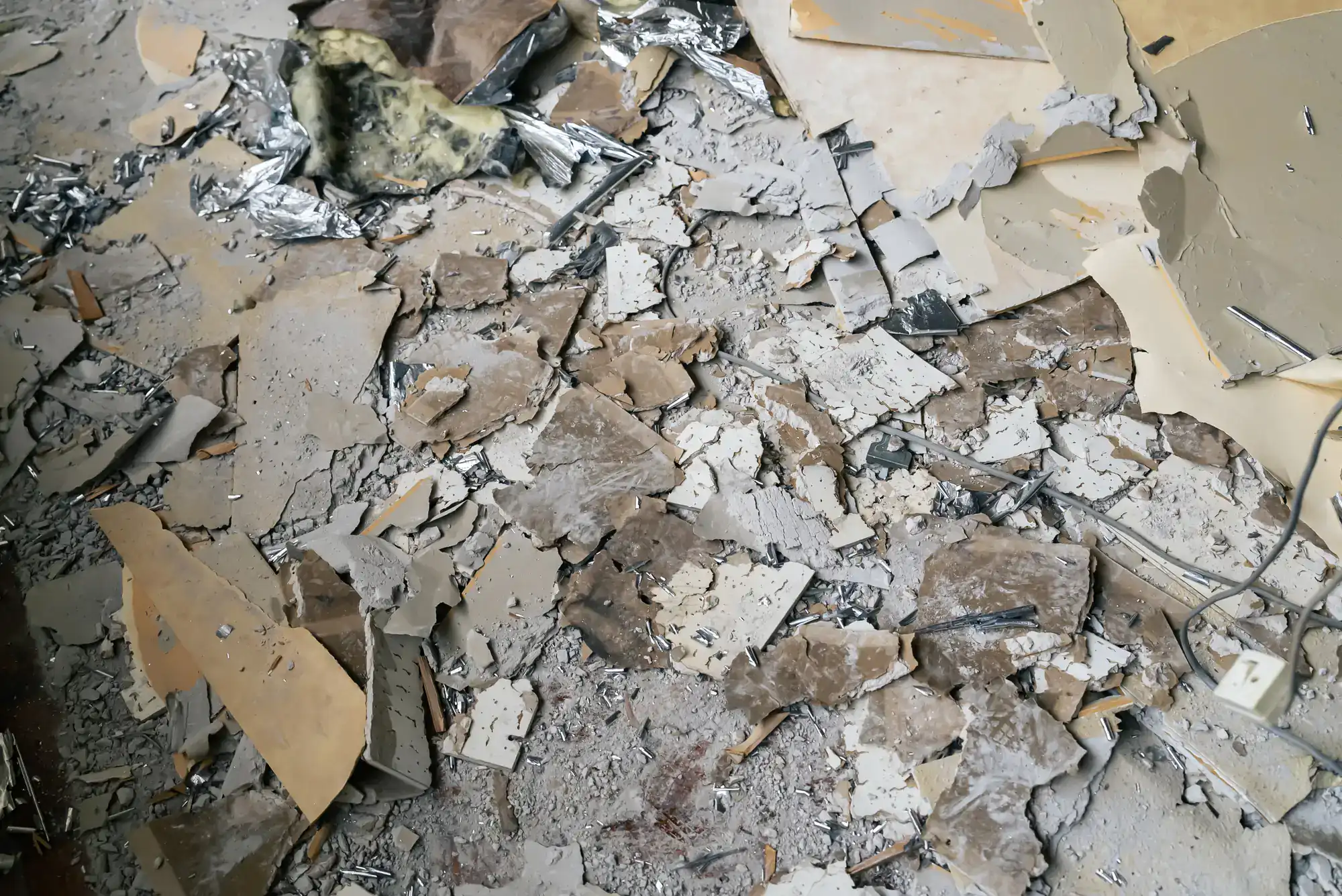
Water damage cleanup in an older Lower Merion home isn’t just about drying things out. In a pre-1978 home — which describes the vast majority of residential properties in Lower Merion — the materials that got wet almost certainly need to be tested for asbestos and lead before they can be removed. Drywall, insulation, floor tiles, plaster, and pipe insulation all have the potential to contain hazardous materials, and disturbing them without testing first is both a health risk and a regulatory violation.
The sequence matters: testing comes first, then abatement if needed, then gutting, then waterproofing. If a contractor shows up and starts ripping out wet drywall without asking about the age of your home or conducting a hazmat assessment, that’s a problem. We handle the entire sequence — emergency response, testing, abatement, gutting, and waterproofing — as a single coordinated project. Lower Merion’s winters bring real freeze-thaw stress to older plumbing systems, and spring flooding along the Schuylkill corridor is not uncommon. When that call comes at 10 PM on a Tuesday, we’re available.
We offer cash discounts on qualifying projects, and free estimates on all work. The cash discount is straightforward — when payment processing fees aren’t part of the transaction, the savings get passed to you rather than absorbed into overhead. For a project that already involves permitting costs, abatement fees, and debris disposal, that’s a real number worth asking about when you call.
The free estimate is worth taking seriously too, especially in Lower Merion where project scopes can be more complex than they first appear. A pre-war home in Haverford or Penn Valley might look like a simple interior gut on the surface, but once you factor in the age of the structure, the likely presence of asbestos or lead, and any historic review requirements, the scope changes. Getting a proper assessment upfront — at no cost — means you’re not surprised three weeks into a project. It also gives you a clear, itemized picture of what you’re paying for before a single wall comes down.
Other Services we provide in Lower Merion