Hear from Our Customers
You can move forward. That’s the simplest way to say it. Whether you’re mid-renovation on a 1920s Merion Station colonial, heading toward a closing on a Wynnewood property, or just got a call from your contractor saying “we found something” — asbestos abatement done right means the project moves, the deal closes, and the health risk gets handled by someone who actually knows what they’re doing.
Lower Merion’s housing stock is genuinely old. The neighborhoods along the Main Line — Bala Cynwyd, Bryn Mawr, Ardmore, Merion Station — are filled with homes built during the peak asbestos-use era, from the 1930s through the late 1970s. Steam heat systems with pipe wrap insulation, 9″x9″ vinyl floor tiles, plaster walls, and older roofing materials are all standard features in these homes. Knowing what’s there, and having it removed correctly, is what lets you renovate, sell, or simply live without that question hanging over the project.
The other thing that changes is documentation. A licensed abatement with proper clearance air testing gives you a paper trail — something your real estate attorney, your lender, or your general contractor can actually use. In a market where Lower Merion home values regularly exceed $1 million, that paperwork is worth having.
We’ve been handling asbestos abatement, lead removal, mold remediation, and environmental hazard work across southeastern Pennsylvania for two decades. Lower Merion Township and the surrounding Main Line communities are squarely in the middle of the area we’ve served throughout that time. We’re fully licensed by the Pennsylvania Department of Labor and Industry under the Asbestos Accreditation and Certification Act. We’re EPA and HUD compliant. We carry a Certified Lead Inspector and Risk Assessor on staff, which matters in a township where asbestos and lead paint frequently show up in the same home. And we’re available around the clock — because renovation discoveries and emergency situations don’t wait for Monday morning.
Lower Merion homeowners tend to ask good questions and expect straight answers. That’s exactly how we work. You’ll know what we found, what it means, what we’re going to do about it, and what it’s going to cost — before we start.
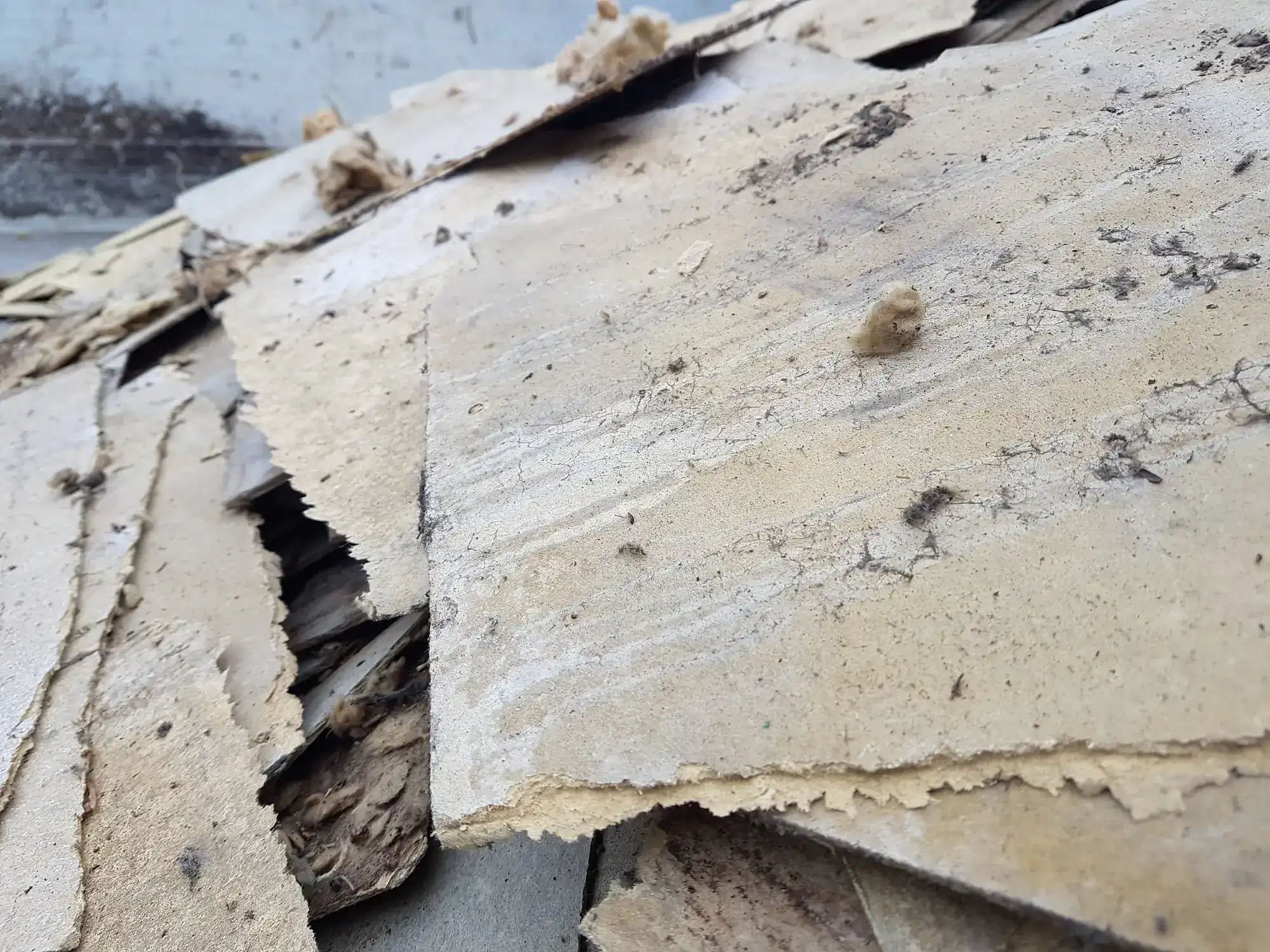
It starts with an inspection. Before anything gets removed, we assess the property and identify where asbestos-containing materials are present. In Lower Merion’s older homes — especially the stone colonials and Tudors that define neighborhoods like Gladwyne, Bryn Mawr, and Bala Cynwyd — that often means checking pipe and boiler insulation, floor tiles, plaster, ceiling materials, and roofing. Samples go to a certified lab. You get real results, not guesses.
Once we know what we’re dealing with, we build a plan specific to your property and your scope of work. Pennsylvania law requires that any renovation or demolition work on pre-1980 buildings that may disturb asbestos-containing materials be performed by a licensed contractor — not a general contractor, not a handyman. We handle the required notifications to Pennsylvania DEP when applicable, and we coordinate with your renovation timeline so the project doesn’t stall any longer than it has to. If your property falls under Lower Merion Township’s Historic Resource Preservation Ordinance, we’re familiar with how abatement work intersects with those requirements.
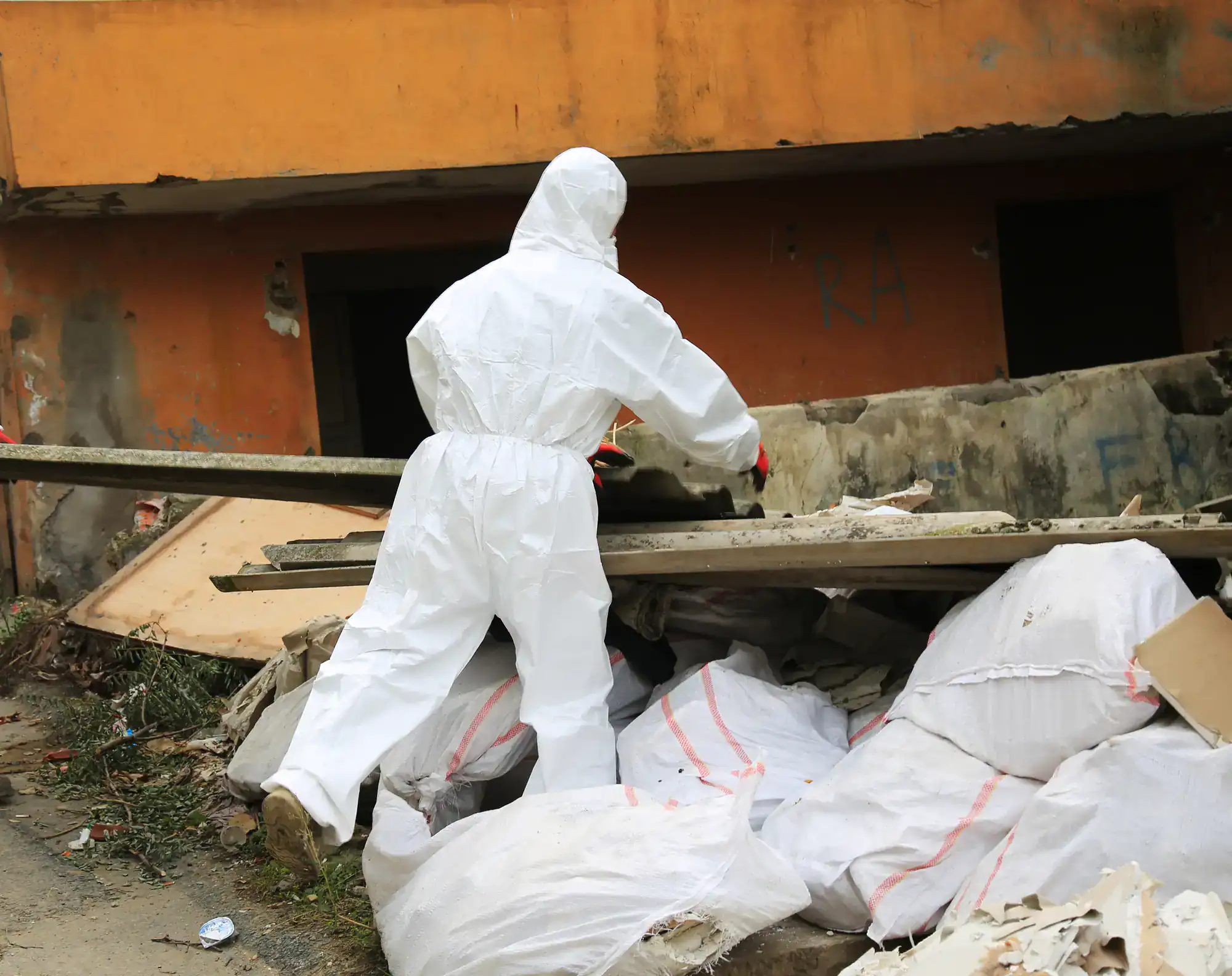
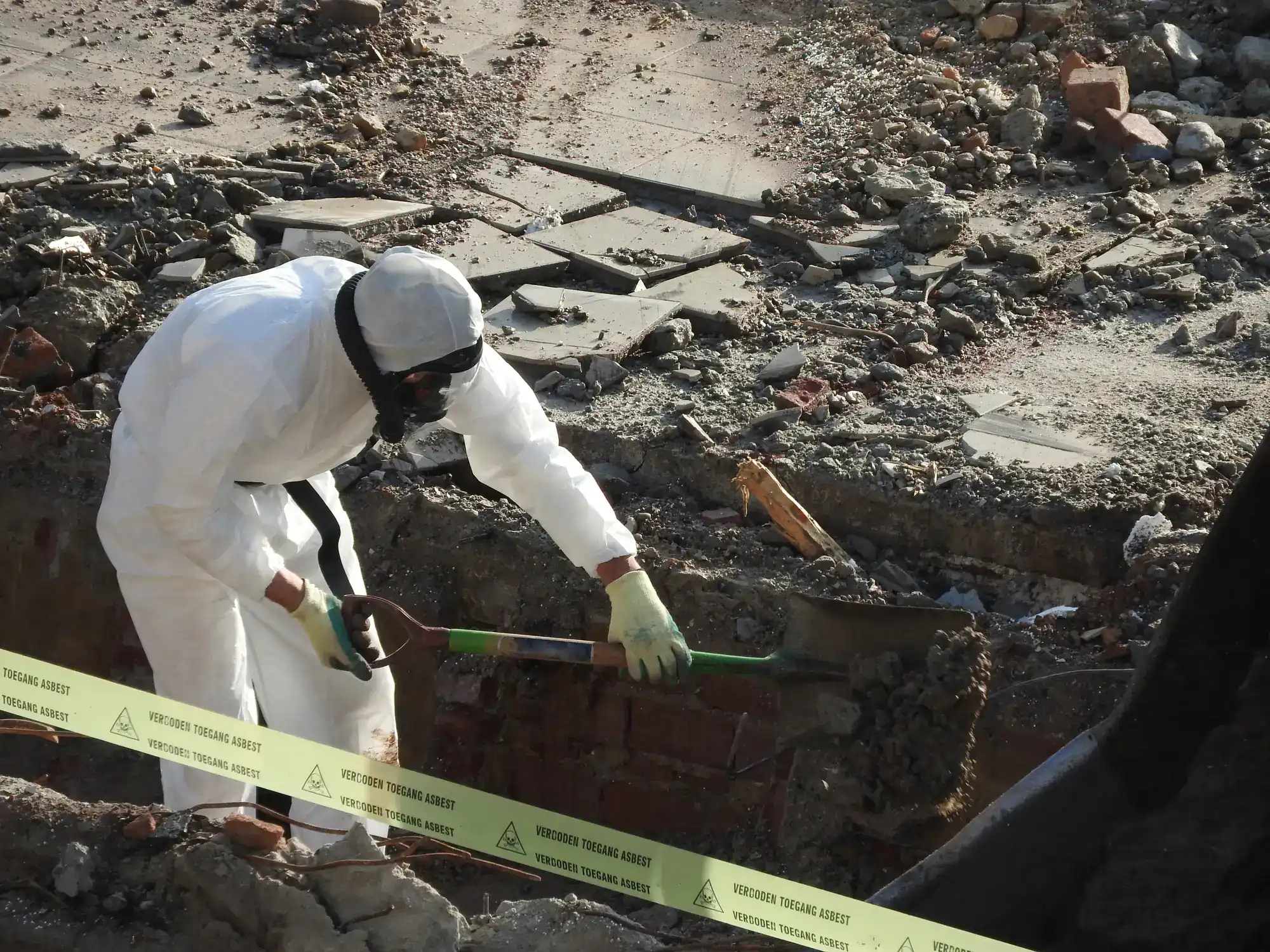
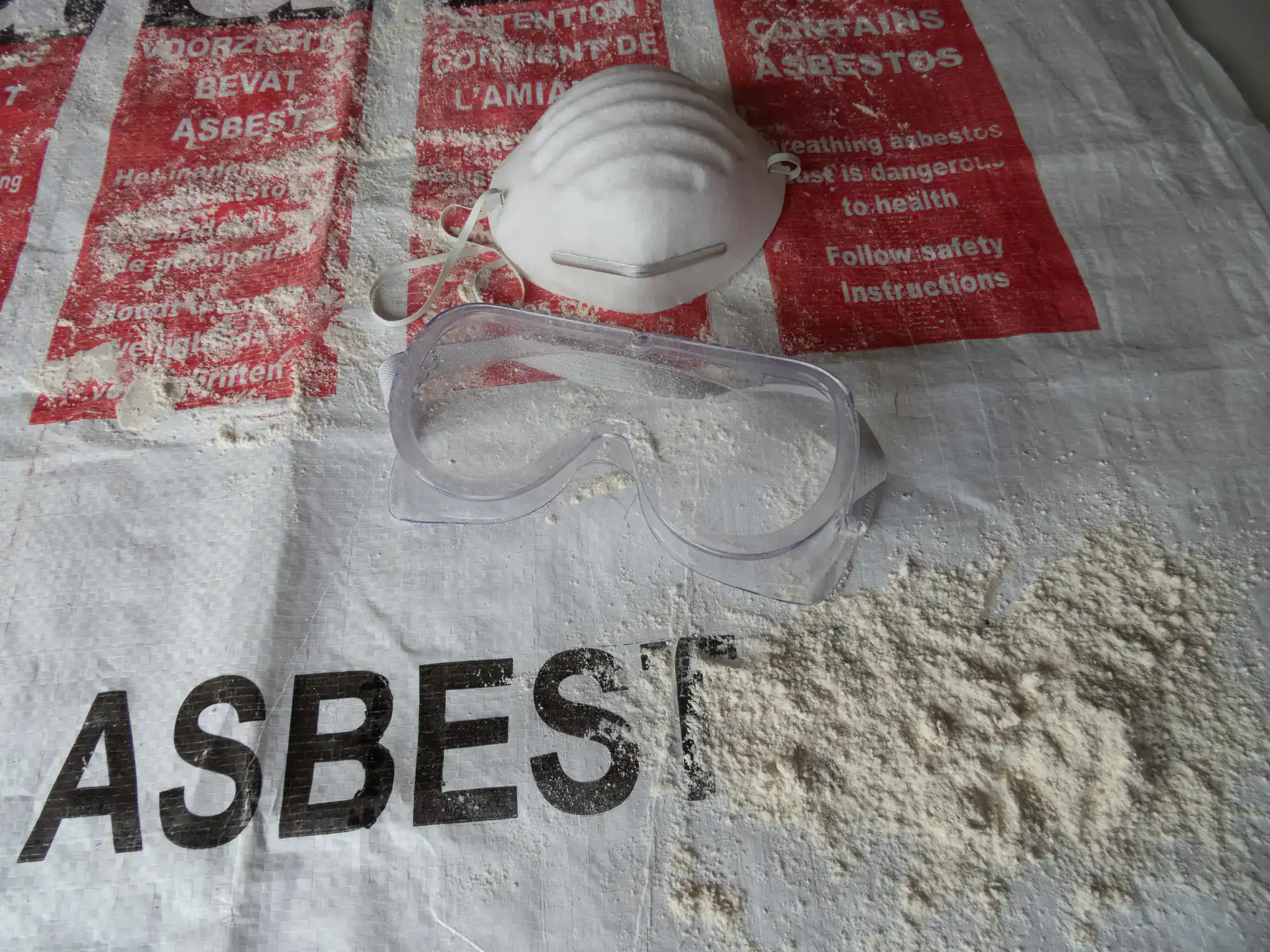
The removal itself is done under full containment — plastic sheeting, negative air pressure, and HEPA filtration on every job. When the work is complete, we conduct post-abatement clearance air testing and provide you with the documentation your contractor, lender, or real estate attorney needs to move forward.
Ready to get started?
We’re a full-service asbestos abatement company, which means you’re not coordinating three different contractors to get one problem resolved. We handle inspection, lab-confirmed testing, licensed abatement, and post-removal clearance — all under one roof. For Lower Merion homeowners dealing with the layered complexity that older Main Line properties often bring, that single-vendor model is genuinely useful.
Asbestos rarely shows up alone in these homes. Pre-1978 construction frequently involves lead paint as well, and older basements and crawl spaces in the Schuylkill River corridor neighborhoods — Belmont Hills, Cynwyd, Bala Cynwyd — can develop mold problems, especially after the periodic flooding that affects lower-lying areas near the river. Our team is equipped to assess and address all of it: asbestos abatement, lead encapsulation and removal, mold remediation, demolition cleanup, waterproofing, duct cleaning, oil tank removal, and radon testing. Montgomery County does not accept asbestos materials at household hazardous waste events, and state law requires licensed disposal — we handle that end of it too.
Free estimates are standard. Cash discounts are available. And if something comes up outside of business hours — a contractor discovery, a boiler replacement gone sideways, storm damage in a utility room — we’re reachable at any hour.
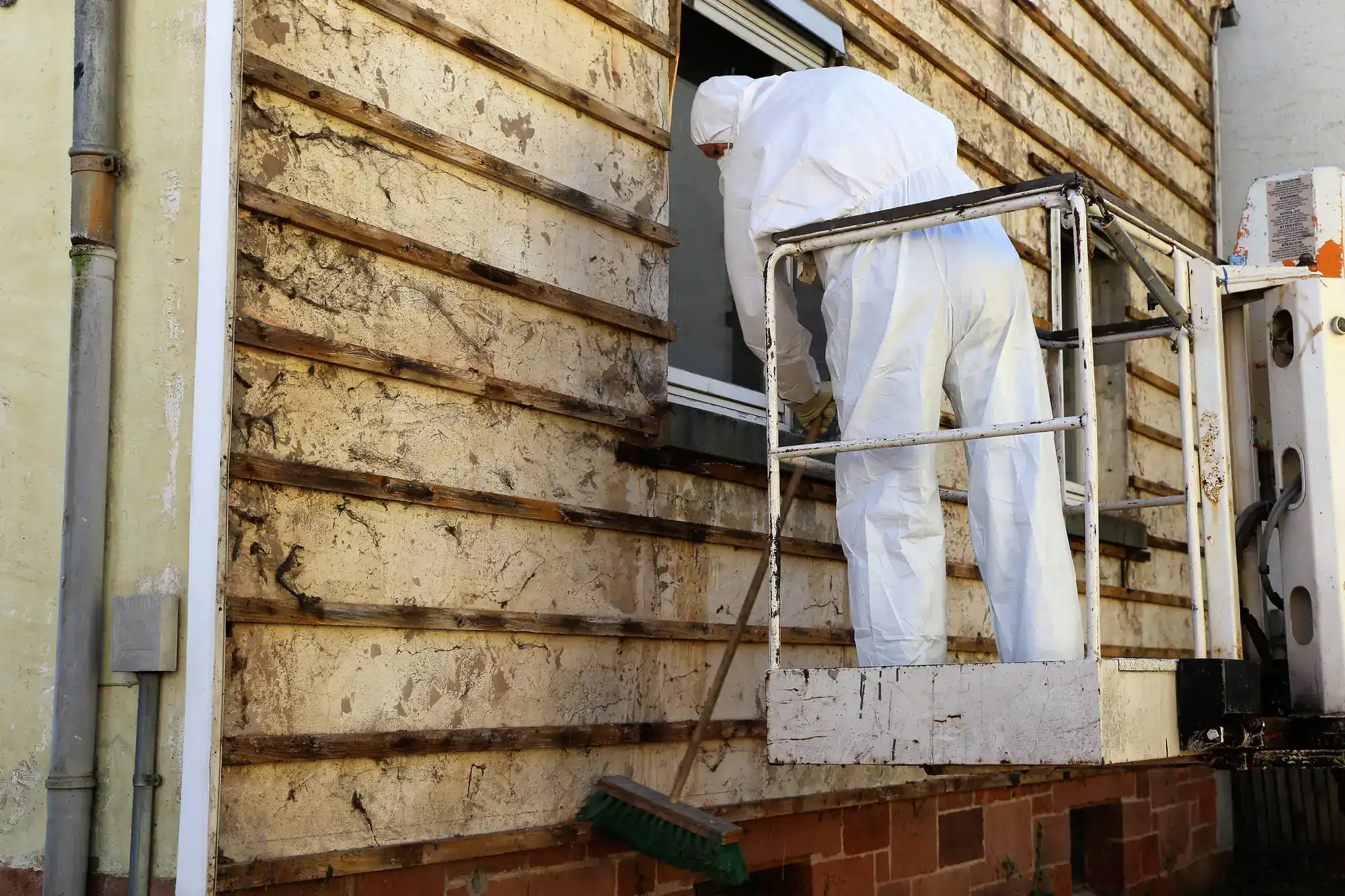

Yes — and more often than most homeowners expect. Lower Merion’s residential character is defined by pre-war stone colonials, Tudors, and early 20th-century estates, particularly in neighborhoods like Merion Station, Bala Cynwyd, Bryn Mawr, and Ardmore. These homes were built during the era when asbestos was a standard building material, and it shows up in predictable places once you know what to look for.
The most common locations in these homes are pipe and boiler insulation (steam heat systems were standard in pre-1960 construction), 9″x9″ vinyl floor tiles from mid-century renovations, plaster and joint compound, attic insulation, and older roofing materials. It’s also not unusual to find asbestos in multiple systems simultaneously in a single home. The older the property, the more likely it is that more than one material will test positive. If your home was built before 1980 and you’re planning any renovation work, testing before you start is the right call — not optional.
Pennsylvania requires that any renovation or demolition work on a pre-1980 building that may disturb asbestos-containing materials be performed by a contractor licensed under the Pennsylvania Asbestos Accreditation and Certification Act, administered by the PA Department of Labor and Industry. That means your general contractor cannot legally do this work — regardless of how experienced they are with everything else.
For larger projects, Pennsylvania DEP requires advance notification before the removal of friable asbestos material exceeding certain thresholds. Federal NESHAP regulations also require a minimum 10-working-day advance notification for commercial or institutional projects above regulatory limits. For residential work in Lower Merion, the practical takeaway is straightforward: if your home was built before 1980, get it tested before your contractor starts demo. If asbestos is present, a licensed abatement contractor handles removal and disposal before any other work proceeds. Montgomery County’s own guidance explicitly directs residents to licensed contractors for all asbestos removal — it’s not a gray area.
It depends on the scope of the work and where in the home it’s being performed. For localized abatement — a section of pipe insulation in a utility room, floor tiles in a single space, or ceiling material in one room — it’s often possible for residents to remain in unaffected areas of the home while work is contained to the abatement zone. For larger or whole-house projects, temporary relocation is typically recommended.
The containment protocol matters here. Proper abatement involves sealing off the work area with plastic sheeting, maintaining negative air pressure to prevent fiber migration, and running HEPA filtration continuously throughout the job. When those steps are done correctly, the risk of cross-contamination to other areas of the home is minimized significantly. We’ll give you a straightforward answer about what’s appropriate for your specific project — the scope of work, the location of the materials, and the layout of your home all factor into that recommendation. We don’t give one-size-fits-all answers on something this important.
Nationally, residential asbestos abatement runs roughly $1,200 to $3,200 for a typical job — a single material type in a defined area. Whole-house projects, or homes where asbestos is present in multiple systems simultaneously, can reach $15,000 to $30,000 or more depending on scope. In Lower Merion, where the housing stock skews older and larger than average, it’s not uncommon for an initial inspection to reveal ACMs in more than one location.
The honest answer is that cost depends entirely on what’s there and how much of it needs to come out. That’s exactly why we offer free estimates — so you get a real number before you commit to anything. What we can tell you is that the cost of professional, licensed abatement is substantially less than the cost of dealing with a contamination problem caused by improper removal, or losing a real estate deal because an asbestos disclosure wasn’t resolved before closing. In a market where Lower Merion home values regularly exceed $1 million, the math on doing this right is not complicated.
Work stops. That’s the correct response, and any licensed contractor should know it. Once a material is suspected to contain asbestos, disturbing it further before testing and abatement is both a legal and a health risk. The renovation timeline pauses, the area gets isolated, and a licensed asbestos contractor comes in to assess, test, and remove the material before demo resumes.
This scenario is genuinely common in Lower Merion renovation projects. When a contractor pulls up mid-century floor tiles in an Ardmore kitchen, opens a wall in a Wynnewood colonial, or starts demo on a Bryn Mawr basement, finding asbestos-containing materials is a real possibility. The key is having a contractor you can actually reach when it happens. We offer 24/7 phone availability and emergency response service for exactly this reason. A discovery at 7 PM on a Thursday shouldn’t mean your project sits idle for a week waiting for someone to return a call.
It’s a straightforward business decision that we pass directly to the customer. Credit card processing fees and administrative overhead on invoicing add real costs to every job — costs that ultimately get built into pricing. When a customer pays in cash, those costs don’t exist, and we reduce the price accordingly. It’s that simple.
For Lower Merion homeowners managing a renovation budget — especially on older Main Line properties where unexpected environmental findings have a way of adding up — a cash discount on an already-necessary expense is a meaningful number, not a token gesture. It’s one of the ways we keep pricing honest and transparent without padding estimates to cover every possible overhead scenario. If you’re getting multiple estimates for an abatement project, ask each contractor directly how they handle payment and whether their estimate reflects any flexibility. Ours does.
Other Services we provide in Lower Merion