Hear from Our Customers
Bridgeport is a borough that was built to work. Paper mills, woolen mills, steel works, brickyards — for over a century, this town ran on industrial production, and asbestos was woven into nearly every structure that supported it. That history doesn’t disappear when a building changes hands or gets a new coat of paint. It stays in the pipe wrap, the floor adhesive, the ceiling tile, and the attic insulation — waiting for the moment someone starts a renovation.
When asbestos abatement is done right, what changes is simple: you can finish the project. The contractor can come back. The inspector signs off. The deal closes. You stop second-guessing the air in your own home. For a lot of Bridgeport homeowners — especially those gutting older row homes near DeKalb Street or along the Fourth Street corridor — that’s not a small thing. That’s the difference between a renovation that moves forward and one that stalls indefinitely.
Bridgeport’s housing stock is dense and old, concentrated into less than a square mile. The row homes and twins that define the borough were largely built between the early 1900s and the 1960s, squarely within the window when asbestos was standard in residential construction. Add Bridgeport’s humid summers — which accelerate the degradation of older building materials — and you have conditions where previously stable asbestos-containing materials can become friable over time without anyone touching them. Getting ahead of it isn’t paranoia. It’s just smart.
We’ve been doing this work for two decades — in Montgomery County, in the kinds of buildings Bridgeport is full of, and in the regulatory environment that governs every job performed in Pennsylvania. We hold a valid asbestos contractor license issued by the Pennsylvania Department of Labor and Industry, carry full bonding and insurance, and have a Certified Lead Inspector and Risk Assessor on staff. That last credential matters in Bridgeport, where virtually every home in the original housing stock predates 1978 and almost certainly contains lead paint alongside anything else that turns up.
This isn’t a company that drives in from three counties away and figures it out on arrival. Bridgeport is home territory. We know the permit process at Bridgeport Borough Hall, understand the PA DEP notification requirements that apply locally, and have worked in the same tight, older housing stock — the same row homes, twins, and converted commercial buildings — that makes up the fabric of this borough. When something unexpected turns up mid-job, we’ve already seen it before.
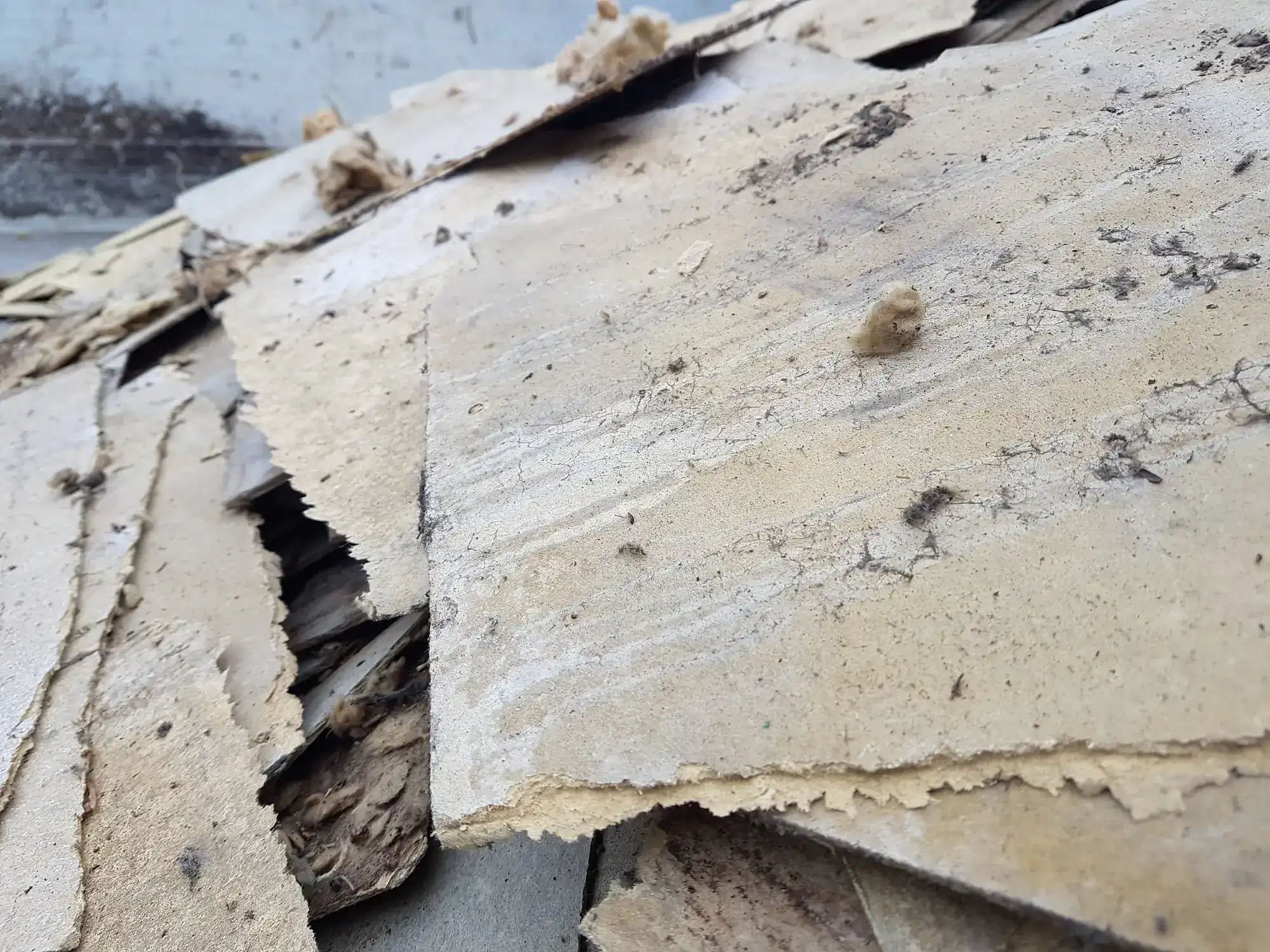
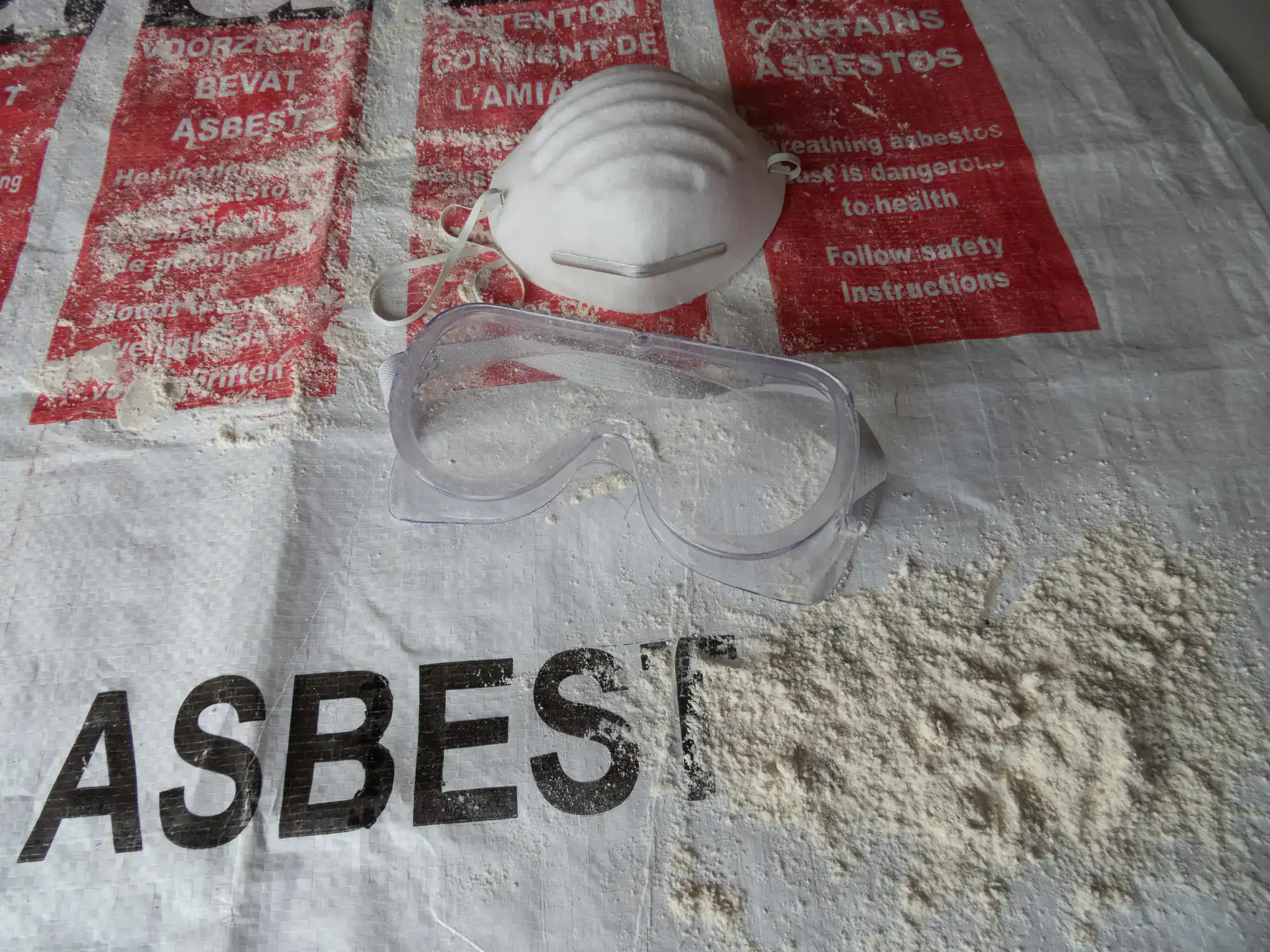
It starts with an inspection and sampling. A licensed inspector walks the property, identifies materials that may contain asbestos, and collects samples for lab analysis. In Bridgeport’s older housing stock, that typically means checking floor tiles, pipe insulation, ceiling materials, attic insulation, joint compound, and sometimes exterior siding or roofing. You get a clear picture of what’s there before any decisions are made.
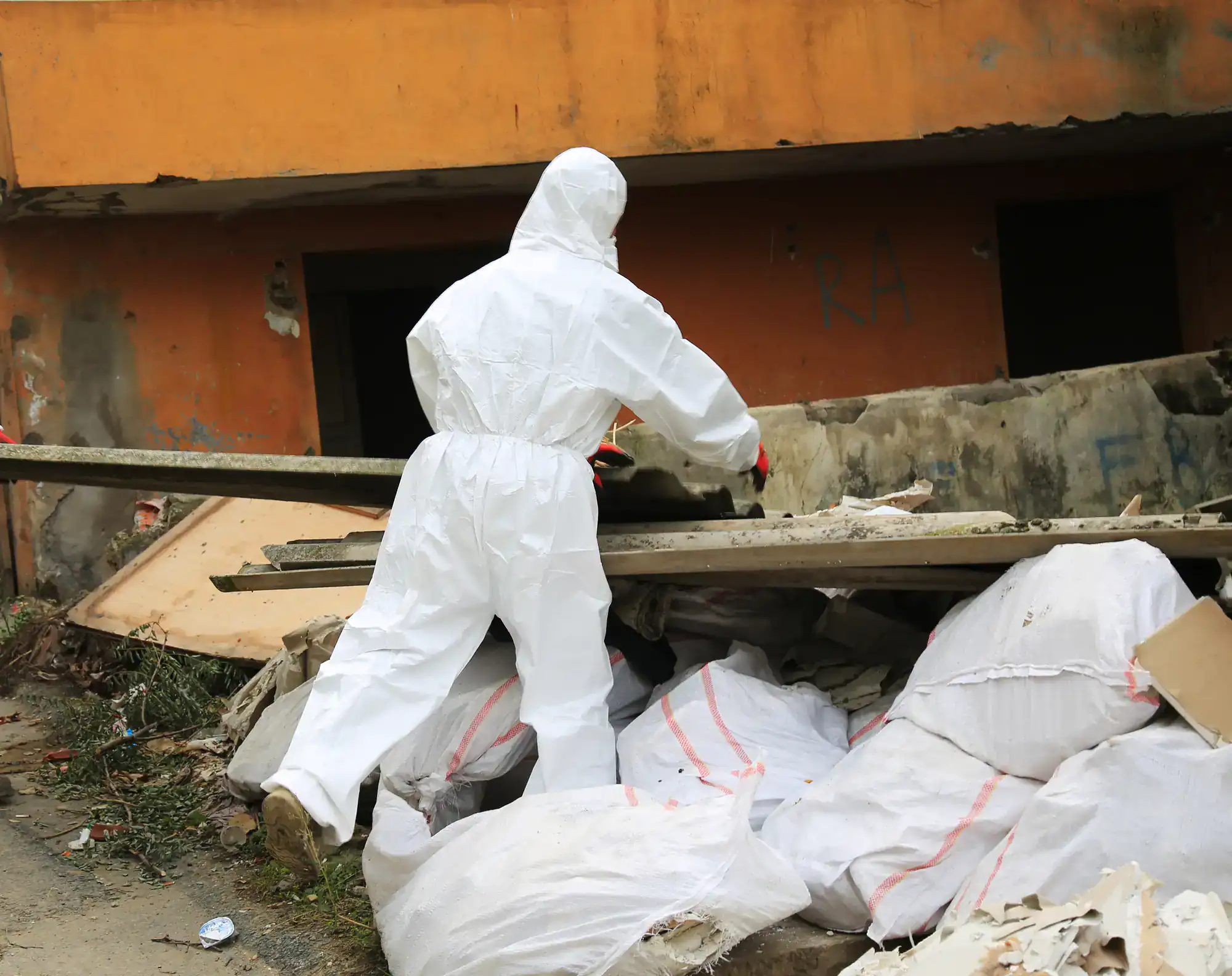
If the lab confirms asbestos-containing materials, the abatement phase begins. The work area is sealed off with negative air pressure containment and HEPA filtration — not as optional equipment, but as standard practice on every job. In a borough as densely settled as Bridgeport, where homes share walls and sit close together, containment isn’t a formality. It’s what keeps the problem from becoming your neighbor’s problem too. Depending on the scope, Pennsylvania DEP may require advance notification before removal begins — we handle that paperwork as part of the job.
After removal, all materials are disposed of at a certified facility. Then comes clearance air testing — the step that officially confirms the space is safe. You get documentation you can hand to an inspector, a lender, or a real estate attorney. If the job also turns up mold or lead paint, which is common in Bridgeport properties that have seen decades of humidity and deferred maintenance, we address those in the same engagement. One team, one process, one sign-off.
Ready to get started?
Asbestos shows up differently depending on the building, the era, and what’s been done to it over the years. In Bridgeport, that means we regularly encounter pipe wrap in older basement mechanical systems, floor tile adhesive beneath layers of later flooring, deteriorating ceiling materials in homes that haven’t been opened up in decades, and insulation around boilers and HVAC systems that date back to the mid-twentieth century. The assessment we deliver is specific to your property — not a one-size checklist applied to every job in the county.
The full scope of what we handle includes initial inspection and bulk sampling, lab confirmation, full containment setup with HEPA air filtration, licensed removal and certified disposal, post-abatement clearance air testing, and complete documentation. If your renovation or real estate transaction also requires lead assessment — and in Bridgeport’s pre-1978 housing stock, it almost always should — our Certified Lead Inspector and Risk Assessor handles that in the same visit. Free estimates are available on every job, and cash discounts apply to qualifying work. For Bridgeport homeowners managing renovation budgets in an affordable market, that’s a real number, not a footnote.
We also offer emergency response for situations that can’t wait — storm damage disturbing old insulation, a contractor who cracked open the wrong wall, a closing deadline that just got moved up. The 24/7 phone line at (484) 378-2453 connects you to a real person, not a callback queue.
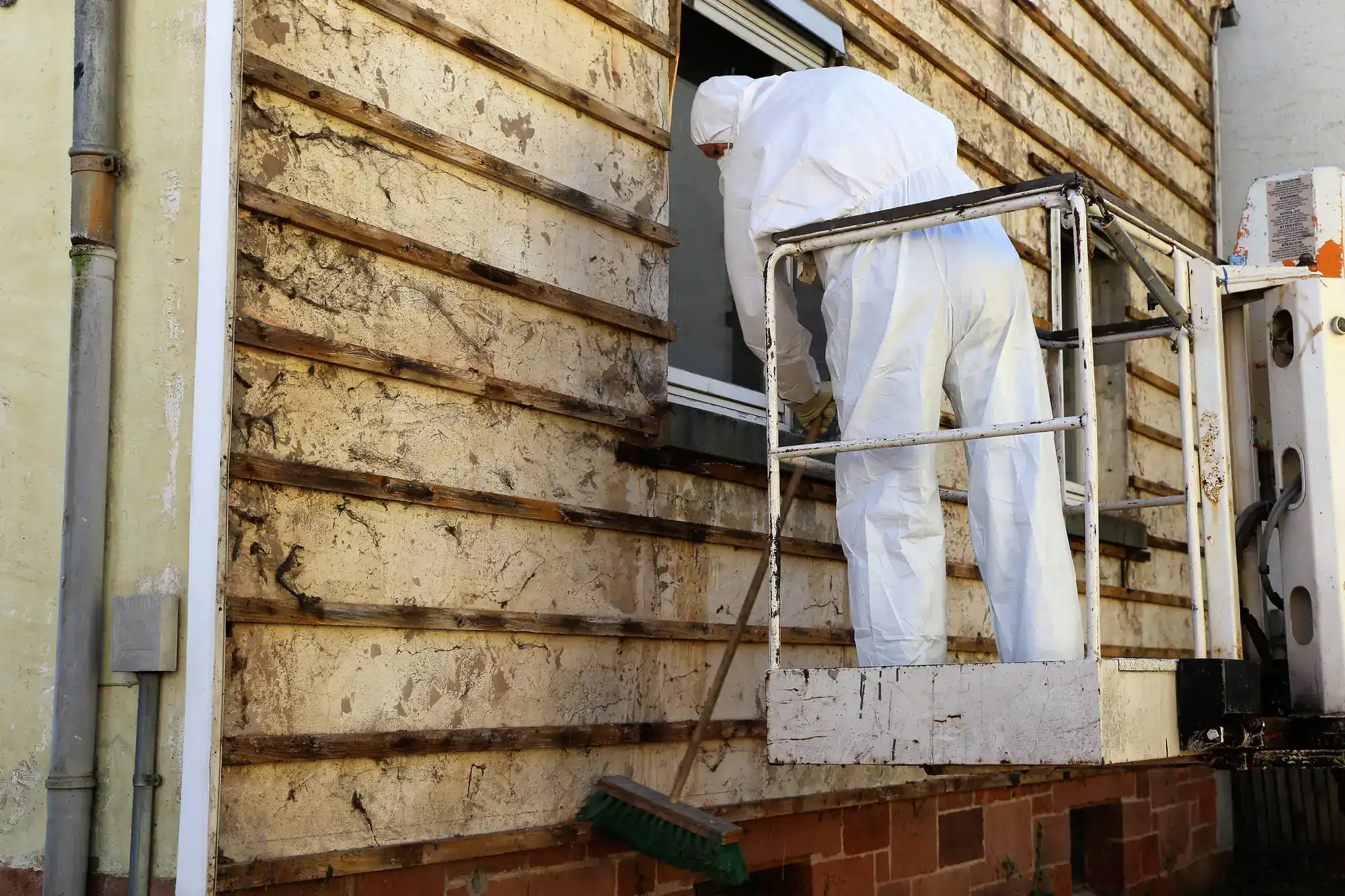

Yes — and not just occasionally. Bridgeport’s residential housing stock was built almost entirely during the period when asbestos was a standard construction material, roughly the 1900s through the mid-1970s. Floor tiles, pipe insulation, ceiling materials, attic insulation, joint compound, exterior siding, and roofing shingles all commonly contained asbestos during that era. In a borough where the vast majority of homes predate 1980 and were built to house workers in the surrounding industrial economy, the presence of asbestos-containing materials is the norm, not the exception.
The good news is that asbestos in good condition and left undisturbed generally doesn’t pose an immediate health risk. The risk comes when materials are disturbed — during renovation, demolition, or when older materials begin to degrade on their own. Bridgeport’s humid summers accelerate that degradation process in ways that drier climates don’t. If your home was built before 1980 and you’re planning any renovation work, testing before you start is the right move.
For most residential work in Pennsylvania, state law does not require a licensed contractor when the property is a single-family home — but that doesn’t mean it’s a good idea to skip it. Improper asbestos removal can turn a localized problem into a whole-property contamination event, and the cost of remediation after a botched DIY or unlicensed removal is significantly higher than the cost of doing it right the first time. For any commercial property, multi-unit building, or job involving more than three square or linear feet of friable material, Pennsylvania DEP licensing requirements apply without exception.
Beyond the legal question, there’s a practical one: documentation. If you’re selling a property, refinancing, or working with a lender, you’ll need clearance air testing results and chain-of-custody documentation from a licensed contractor. Verbal assurances from an unlicensed operator don’t satisfy a lender, a title company, or a real estate attorney. We hold a valid PA DL&I asbestos contractor license and provide full documentation on every job — which is what actually moves a transaction forward.
Residential asbestos removal in the Bridgeport area generally runs between $1,500 and $3,500 for a typical single-room or localized job. The actual cost depends on the type of material, how much of it there is, where it’s located, and whether it needs to be fully removed or can be encapsulated. A basement pipe wrap job in a Bridgeport row home is a different scope than a full floor tile removal across multiple rooms in a larger property.
The most important first step is a free estimate, which we provide on every job. That gives you a real number based on your actual property — not a range pulled from a website. For qualifying jobs, cash discounts are available, which matters in a market like Bridgeport where renovation budgets are real and finite. Getting the estimate costs you nothing and gives you the information you need to make a decision without any pressure attached.
Stop the work in that area. Don’t disturb the material further, and don’t let anyone without proper protective equipment back into the space until it’s been assessed. This is the most common scenario we get called for in Bridgeport — a contractor pulls up old floor tiles or opens a wall and finds something that doesn’t look right. The instinct to push through and finish the job is understandable, but disturbing asbestos-containing material without containment spreads fibers through the structure, into the HVAC system, and potentially into adjacent spaces.
Call us at (484) 378-2453 — that line is available 24/7, including nights and weekends, because these discoveries don’t happen on a schedule. An inspector can assess the material quickly, confirm whether it contains asbestos, and get a containment and removal plan in place so the renovation can resume. In Bridgeport’s tight row home and twin construction, where a single HVAC system often serves the entire structure, fast containment isn’t just about your space — it’s about keeping the problem from spreading.
It depends on the scope and location of the work. For small, localized jobs — a single room, a section of basement pipe wrap, a contained ceiling area — it’s often possible to remain in the home while work is underway in a properly sealed and contained area. For larger jobs involving multiple rooms, whole-floor removal, or work near central HVAC systems, temporary relocation during the active abatement phase is usually the safer and more practical choice.
We’ll give you a straight answer on this during the estimate — not a blanket policy that applies to every job regardless of the specifics. In Bridgeport’s older row home and twin construction, where living spaces are compact and often share walls or mechanical systems with the work area, the containment setup is especially important. HEPA filtration and negative air pressure are standard on every job we perform, which is what makes staying in the home feasible when the scope allows it. You’ll know exactly what to expect before the work begins.
Bridgeport is an affordable community, and the people renovating its older homes are generally working with real budgets — not unlimited ones. Asbestos abatement is a required cost, not an optional upgrade, and we understand that the difference between a few hundred dollars one way or the other can matter when you’re also managing a renovation, a mortgage, and everything else that comes with owning an older property in this borough.
The cash discount is straightforward: for qualifying jobs where payment is made in cash, we pass a portion of the savings from reduced transaction processing back to the customer. It’s not a promotional gimmick — it’s a practical option that works for both sides. If you’re a Bridgeport homeowner managing a gut renovation on a row home near DeKalb Street or a landlord turning over a rental unit, that discount is worth asking about when you call for your free estimate. Just mention it upfront and we’ll let you know if your job qualifies.
Other Services we provide in Bridgeport