Hear from Our Customers
You stop managing three different contractors and start getting answers from one. That matters more than it sounds when you’re dealing with a water-damaged basement in a 1920s Wayne colonial or gutting a century-old Ithan estate before a full renovation. The older the home, the more moving parts — and the more ways a poorly coordinated project can go sideways.
Radnor’s housing stock is genuinely old. Founded in 1682, this township has homes that predate modern building codes, modern materials, and modern anything. That means asbestos in the insulation, lead paint behind the drywall, and foundations that have been holding up stone walls longer than most states have existed. A demolition contractor who doesn’t know how to test for and handle those materials isn’t just cutting corners — they’re creating a federal compliance problem for you as the homeowner.
When we come in, you get a contractor who’s EPA-certified to inspect and certify lead conditions, HUD-compliant, and equipped to handle the full scope — testing, abatement, demolition, and cleanup — without handing you off to someone else mid-project. By the time we’re done, you know exactly what was in your walls, it’s been handled correctly, and you have the documentation to prove it.
We’re based out of Glenside, and we’ve been working in Delaware County — including Radnor Township and the surrounding Main Line communities — for over two decades. We’re not a national franchise dispatching a crew from three counties away. We know Radnor, we know the housing stock here, and we’ve worked on homes in Wayne, Rosemont, and Villanova that have more history in their walls than most contractors have years in business.
We’re fully licensed — including with Radnor Township’s own contractor registration requirement — bonded, insured, and EPA/HUD certified. That last part isn’t a bonus credential. In a township where a significant portion of homes predate 1978, it’s the difference between doing the job legally and not doing it at all.
You get free estimates, 24/7 availability, and a team that treats a $900,000 stone colonial the same way it treats any other job — carefully, completely, and with zero shortcuts.
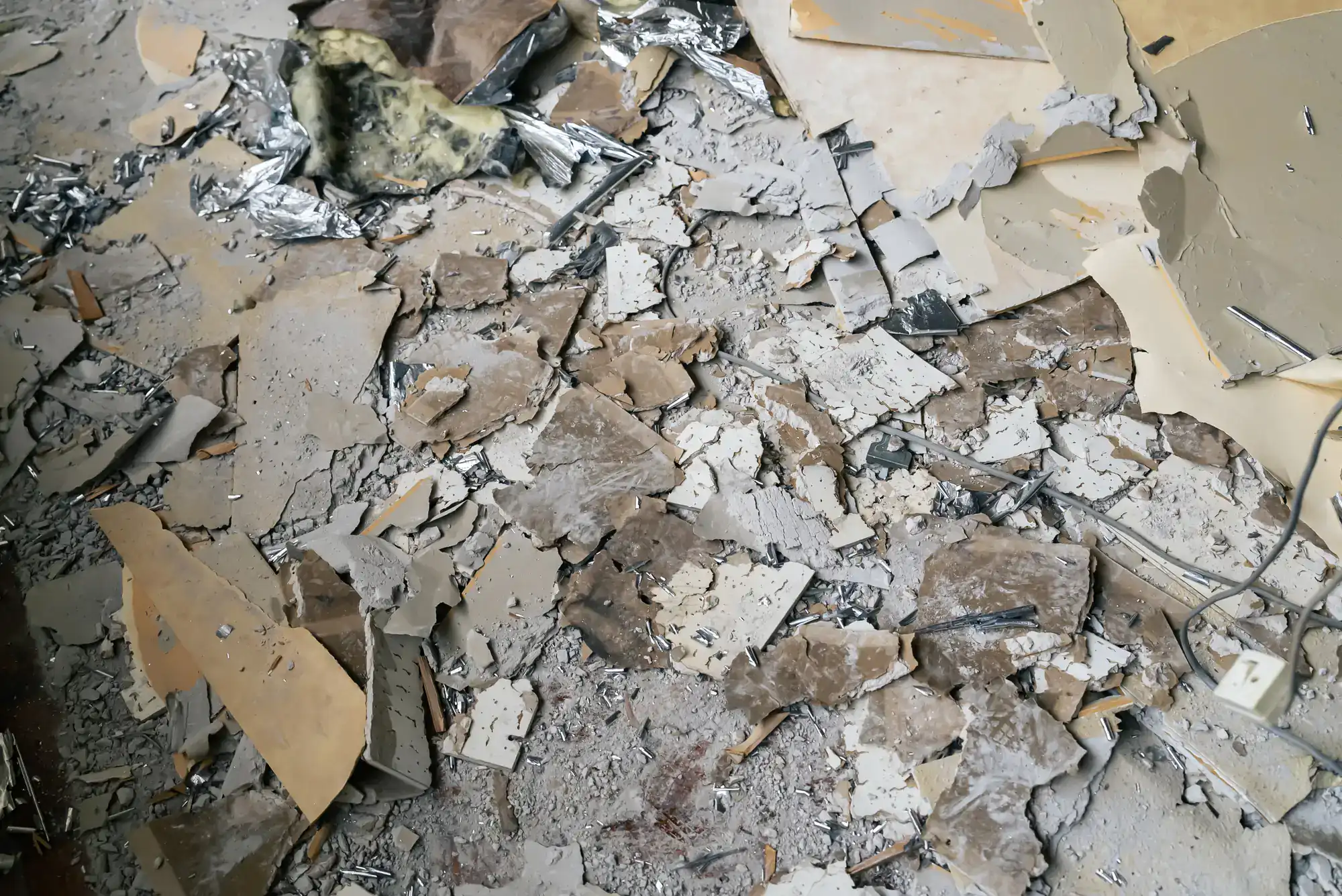
It starts with a free estimate and an honest conversation about what you’re dealing with. If there’s any indication the structure involves pre-1978 materials — and in Radnor, there usually is — we test before anything gets touched. That means proper sampling, lab confirmation, and a clear picture of what’s actually in the home before a single wall comes down.
Once we know what we’re working with, we handle the abatement first. Asbestos, lead paint, mold — whatever the testing turns up gets removed safely, with HEPA filtration systems running throughout the process to keep contaminated particles contained. This isn’t an optional step. Radnor Township’s building code and Pennsylvania DEP both require proper hazmat handling before demolition proceeds on structures containing these materials, and we make sure every box is checked.
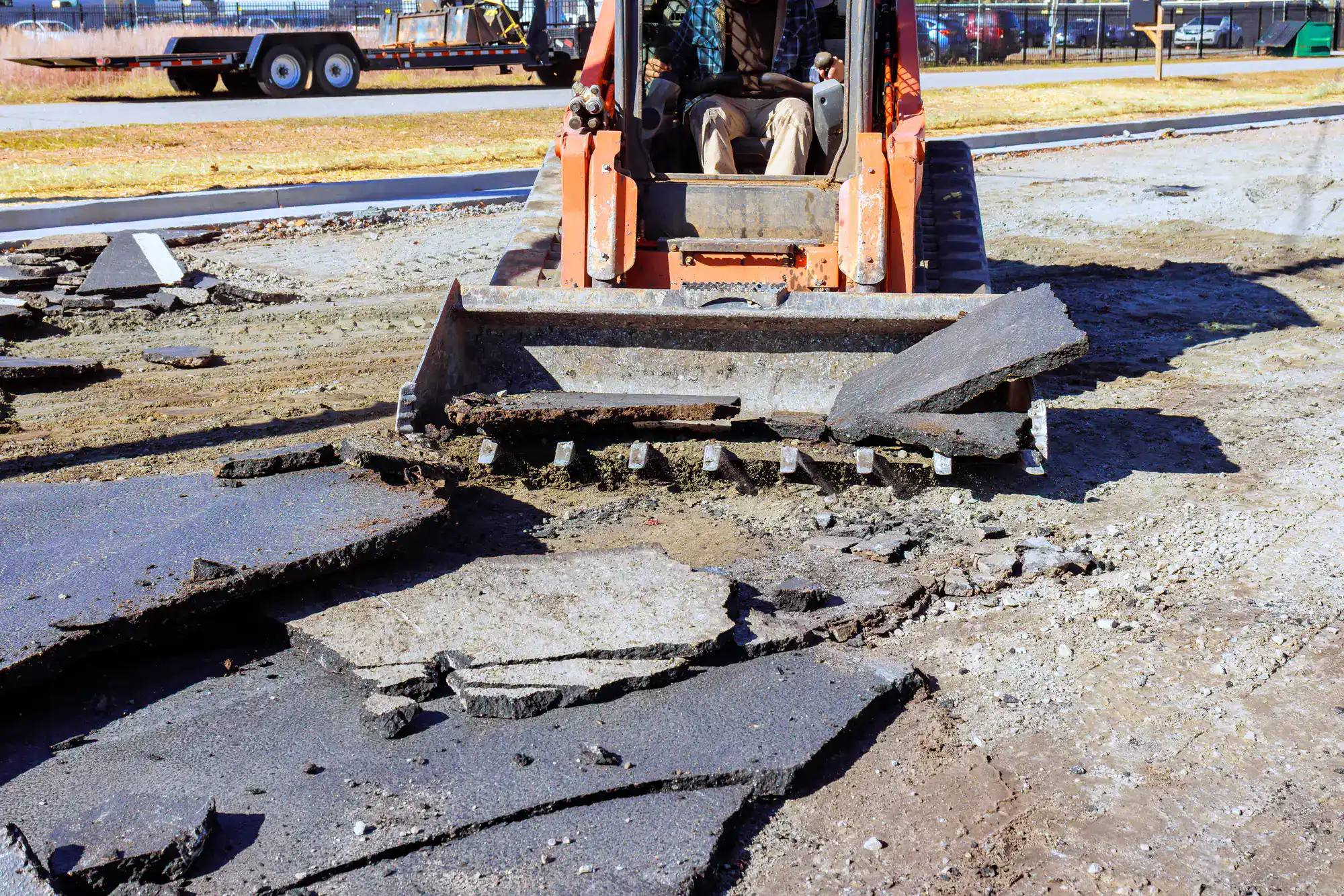
From there, we move into the demolition or gutting work itself — selective interior demo, full structural teardown, or anything in between. We also pull the permits. Radnor has specific requirements worth knowing about: all contractors must be registered with the township, and demolition permits require a certificate of extermination for wood-destroying pests before they’re issued. We know the process, we handle the paperwork, and we keep your project on schedule.
Ready to get started?
We cover the full range of what Radnor homeowners and property owners actually need — not just the demolition itself, but everything that has to happen before and after it. That includes asbestos testing and removal, lead paint inspection and abatement, mold remediation, interior gutting, selective structural demolition, basement waterproofing, and construction debris removal. If your project touches any of those categories, you don’t need a separate contractor for each one.
For Radnor’s older homes specifically — the stone colonials near Ithan Creek, the Victorian estates in North Wayne, the pre-war properties throughout Rosemont — the combination of age and high property value makes proper process non-negotiable. A home worth $800,000 or more deserves a contractor who knows that cutting a corner on hazmat handling today can mean a legal and financial problem for the homeowner tomorrow.
We also handle emergency response. Radnor’s climate — cold winters, wet springs, aging infrastructure — means frozen pipe failures and basement flooding are real, recurring events. When water damage hits fast and you need gutting and remediation started immediately, we’re available around the clock. Cash discounts are available, estimates are always free, and the same team that tests your home is the same team that finishes the job.

Yes — and this is one of the most commonly overlooked requirements in Radnor. Radnor Township’s Department of Community Development explicitly requires all contractors to be licensed with the township, separate from any state-level licensing. That means a contractor who’s fully licensed in Pennsylvania but hasn’t registered with Radnor Township is not in compliance with local requirements.
This matters because permit applications can be rejected, work can be stopped, and homeowners can be held responsible for violations even when they hired a contractor in good faith. Before you sign anything, ask your contractor directly whether they’re registered with Radnor Township — not just whether they’re state-licensed. We’re registered and compliant at both levels, so there’s no gap between what’s required and what we bring to the job.
Radnor Township requires a construction permit for most types of demolition and renovation work, and the process has a few specific requirements that catch people off guard. First, all permit submittals require two sets of plans and two sets of applications — a rule that’s been in effect since July 2022. Second, before a demolition permit is issued, you’ll need to provide a certificate of extermination from a recognized pest control company addressing wood-destroying insects, rodents, and other pests. That’s a step a lot of contractors don’t mention upfront.
There’s also a Shade Tree Ordinance compliance requirement under Chapter 263 of the Radnor Township Code. If your demolition project could affect trees on or near the property, you’ll need to demonstrate compliance with that ordinance before the permit is issued. On top of all of that, if the structure contains asbestos, Pennsylvania DEP requires an Asbestos Abatement and Demolition/Renovation Notification Form to be submitted before work begins. We handle all of this as part of the project — permits, notifications, and compliance documentation included.
The honest answer is: you don’t, until you test. And in Radnor, the probability is high enough that you should always test before any renovation or demolition work begins on a home built before 1978. Asbestos was used in insulation, floor tiles, ceiling materials, pipe wrap, roofing compounds, and cement products through the late 1970s. Lead-based paint was standard on virtually all homes built before that cutoff. Given that Radnor Township was founded in 1682 and has homes dating back centuries, a significant portion of its housing stock falls well within that risk window.
Testing involves sampling materials from areas that will be disturbed — walls, ceilings, flooring, insulation — and sending them to a certified lab for analysis. We hold an EPA Certified Lead Inspector and Risk Assessor credential, which means we can legally inspect, test, and certify lead conditions in your home, not just remove materials. That distinction matters. You get a documented assessment, not just a contractor’s verbal opinion, and that documentation protects you if questions come up later.
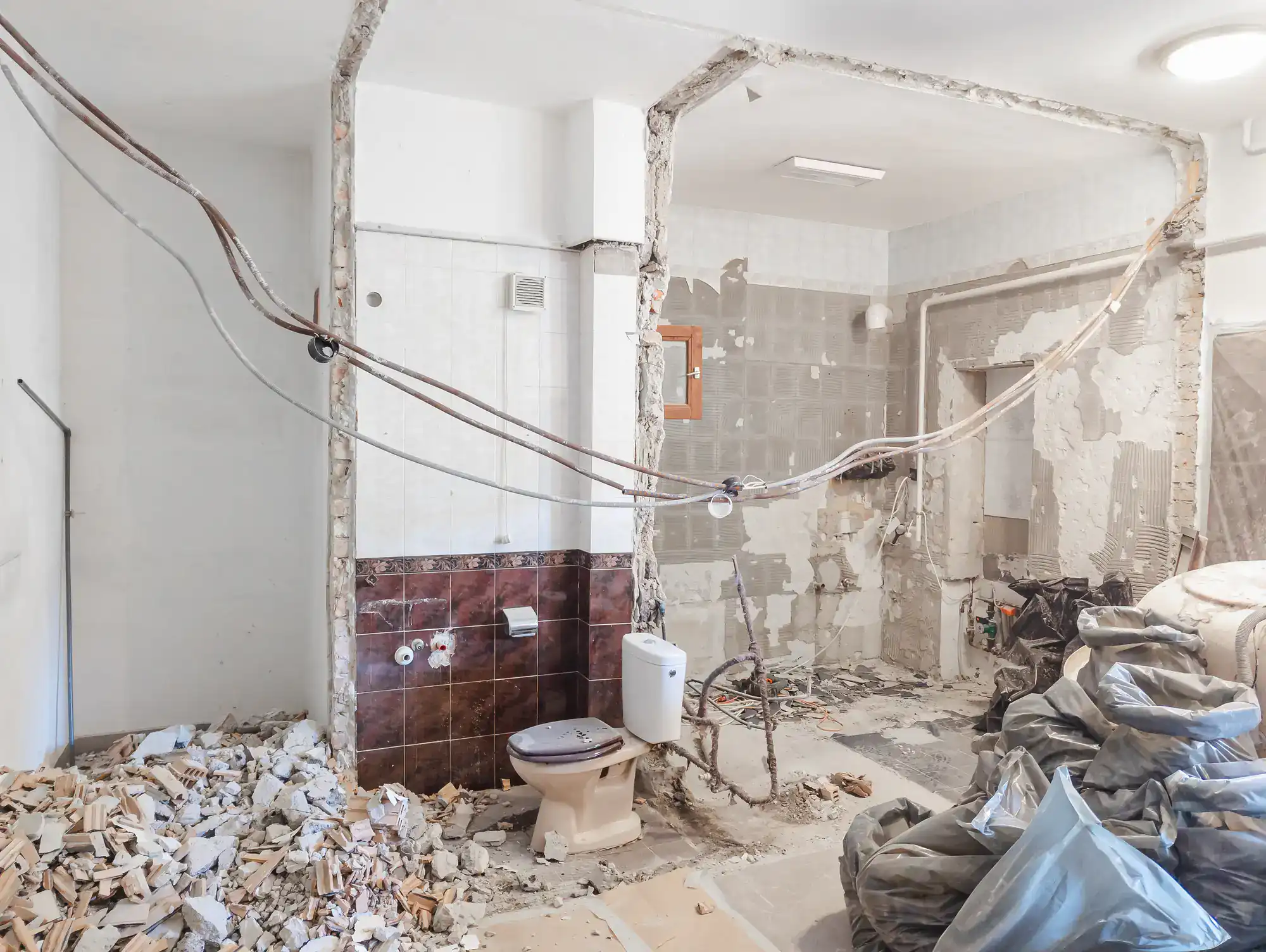
Full demolition means taking down an entire structure — walls, roof, foundation, everything — down to a cleared lot. Interior gutting is more targeted: removing the interior components of a space (drywall, insulation, flooring, fixtures, framing) while leaving the structural shell intact. Most residential projects in Radnor fall into the gutting category, especially when the goal is renovation rather than replacement.
Water damage is one of the most common triggers for interior gutting in this area. When a basement floods in an older Wayne or Rosemont home, or a pipe bursts in a Villanova estate during a cold snap, the damaged materials — drywall, insulation, subfloor — have to come out before mold sets in and before any restoration work can begin. In those situations, speed matters. Mold can start forming within 24 to 48 hours of water exposure, which is part of why we maintain 24/7 availability for emergency response. Whether you need a full teardown or a targeted gut job, the scope gets determined during the free estimate — and you’ll know exactly what’s included before any work starts.
Timeline depends heavily on the scope of work and what the testing turns up. A straightforward interior gut of a single room or basement — no hazardous materials, permits already in hand — can often be completed in a day or two. A larger project involving asbestos abatement, multiple rooms, or full structural demolition will take longer, and the permitting process in Radnor adds time that needs to be factored in from the start.
The permit process itself — including the certificate of extermination requirement and any Shade Tree Ordinance documentation — can add days to a week depending on how quickly the township processes the application. That’s not a reason to skip permits; it’s a reason to start the process early. We initiate permitting as soon as the project scope is confirmed, so there’s no lag between when you’re ready to move and when work can legally begin. If you’re working against a deadline — a real estate closing, a contractor start date, a water damage situation — let us know upfront and we’ll build the timeline around what you actually need.
Yes — cash discounts are available. For homeowners in Radnor managing large renovation projects where costs add up fast across multiple trades, the ability to simplify a transaction and reduce the total without jumping through hoops is genuinely useful. There’s no complicated program to sign up for. If you’re paying cash, ask about it when you call and we’ll factor it into your estimate.
Free estimates are also standard — always. Demolition pricing in the Main Line market can be opaque, and hidden costs like permit fees, hazmat handling, and debris disposal have a way of showing up after contracts are signed with other contractors. We itemize estimates so you know what you’re paying for before anything starts. On a project involving a pre-1978 Radnor home — where testing, abatement, demolition, and cleanup can represent significant combined costs — that transparency isn’t a courtesy, it’s how you avoid a bad surprise halfway through a job.
Other Services we provide in Radnor