Hear from Our Customers
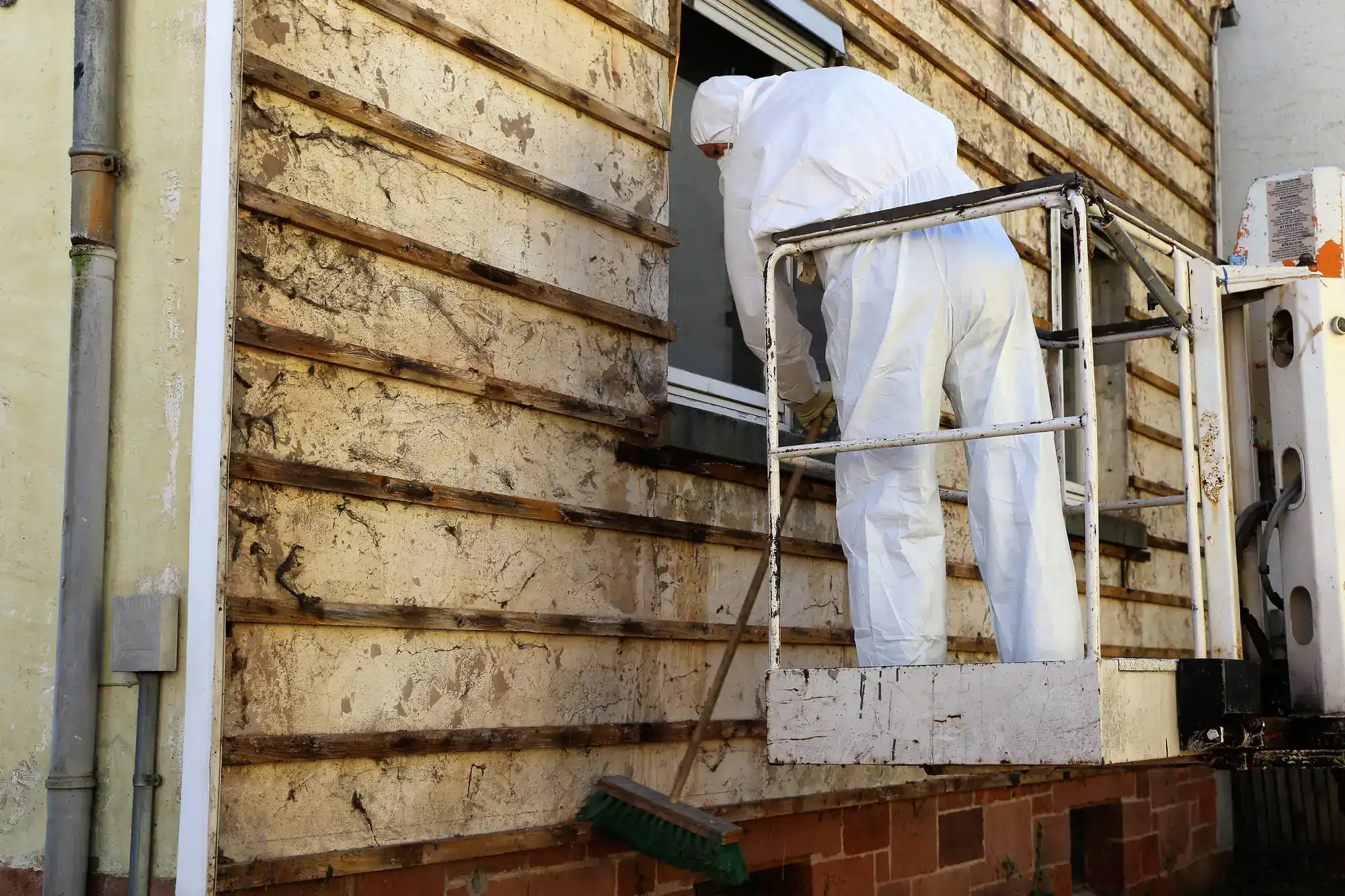
When asbestos abatement is done right, you’re not just removing a hazardous material — you’re clearing the path for everything that comes next. The renovation can continue. The closing can proceed. The contractor you’ve had booked for months doesn’t have to reschedule. That’s what a clean, properly documented abatement actually gives you.
Radnor’s housing stock tells the story. The Delaware County core of this township was built out largely before World War II, and much of what’s standing today — the stone colonials in North Wayne, the older estates near Ithan, the pre-war homes along Lancaster Avenue — was constructed during the decades when asbestos was standard in pipe insulation, floor tile adhesive, boiler wrap, plaster, and ceiling materials. These aren’t abstract risks. They’re sitting inside walls and mechanical rooms that haven’t been touched since the original build.
What changes after a proper abatement is simple: the air in your home is clean, the work area has been cleared by post-abatement testing, and you have the documentation to prove it — to your contractor, your real estate agent, your buyer, or your insurance company. In a market where homes regularly sell above $800,000, that paperwork isn’t a formality. It’s protection for the asset you’ve invested in.
We’ve been handling asbestos abatement, lead removal, mold remediation, and environmental clean-outs across Delaware County for over twenty years. Radnor is home turf for us — we know the difference between a 1930s estate in the heart of the township and a 1970s office building near the Radnor Corporate Center. We operate in Delaware County as a named service area, not as a company building a landing page for your ZIP code.
Every job we complete comes with a licensed, bonded, and fully insured crew, a Certified Lead Inspector and Risk Assessor on staff, and EPA/HUD compliant processes from start to finish. Radnor Township requires all contractors to be licensed at the township level — on top of Pennsylvania’s state licensing requirements — and we meet both without exception.
You also get one point of contact, on-site supervision throughout the job, and a phone that’s answered 24 hours a day. When something comes up mid-renovation — and in these older Radnor homes, it often does — you’re not leaving a voicemail.
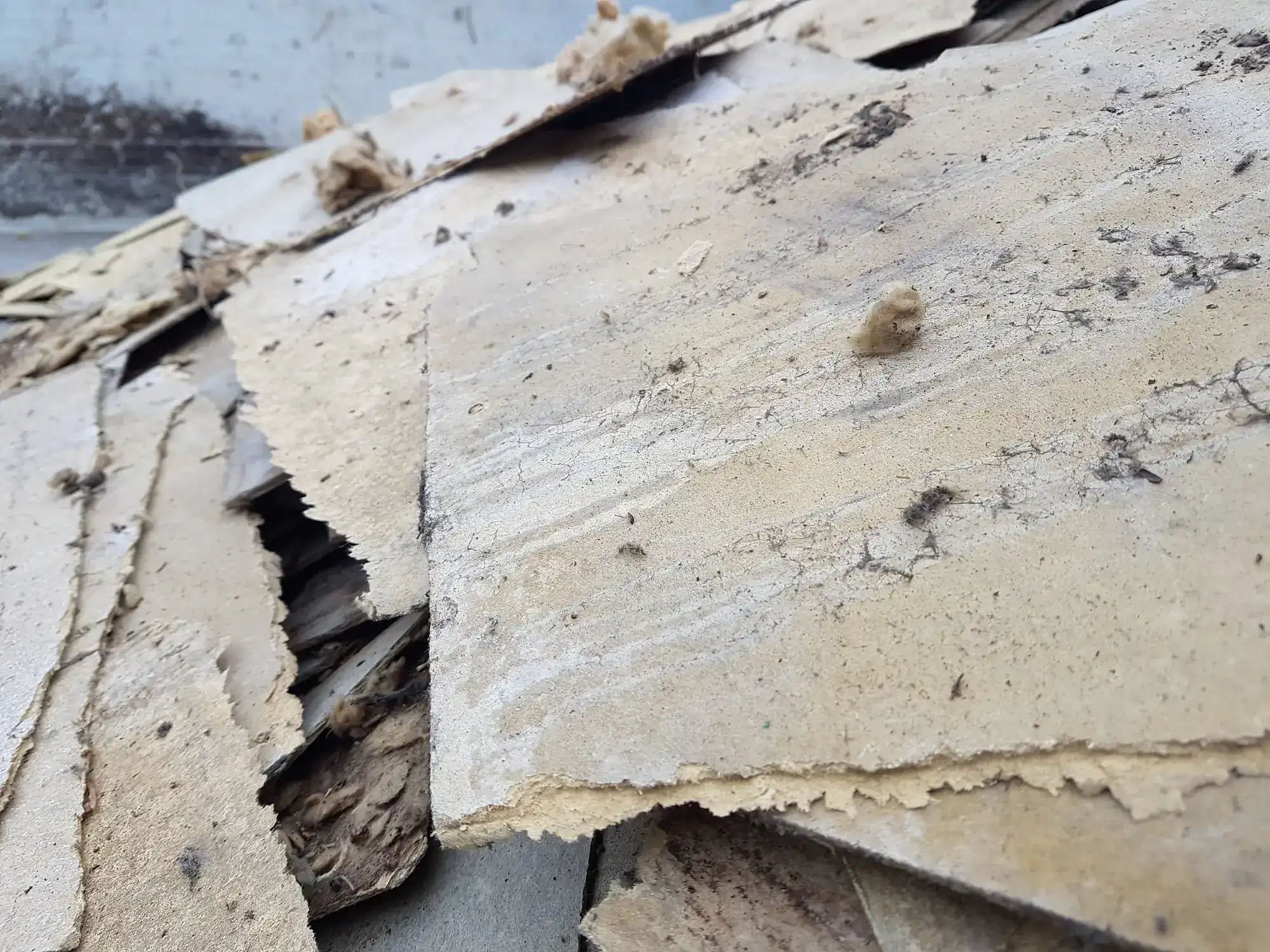
It starts with a call and a free estimate. One of our professionals comes to your property, assesses the materials in question, and gives you a clear picture of what you’re dealing with before any work begins. If testing is needed to confirm the presence of asbestos, that happens first — you don’t move forward blind, and you don’t pay for removal you might not need.
Once the scope is confirmed, we handle the permitting side. In Radnor Township, that means satisfying both township-level contractor licensing requirements and Pennsylvania DEP’s advance notification requirement — a minimum five-day notice before friable asbestos removal exceeding three square or three linear feet. If the job crosses federal NESHAP thresholds, the ten-working-day notification to state environmental agencies is handled as well. You don’t need to track any of that yourself.
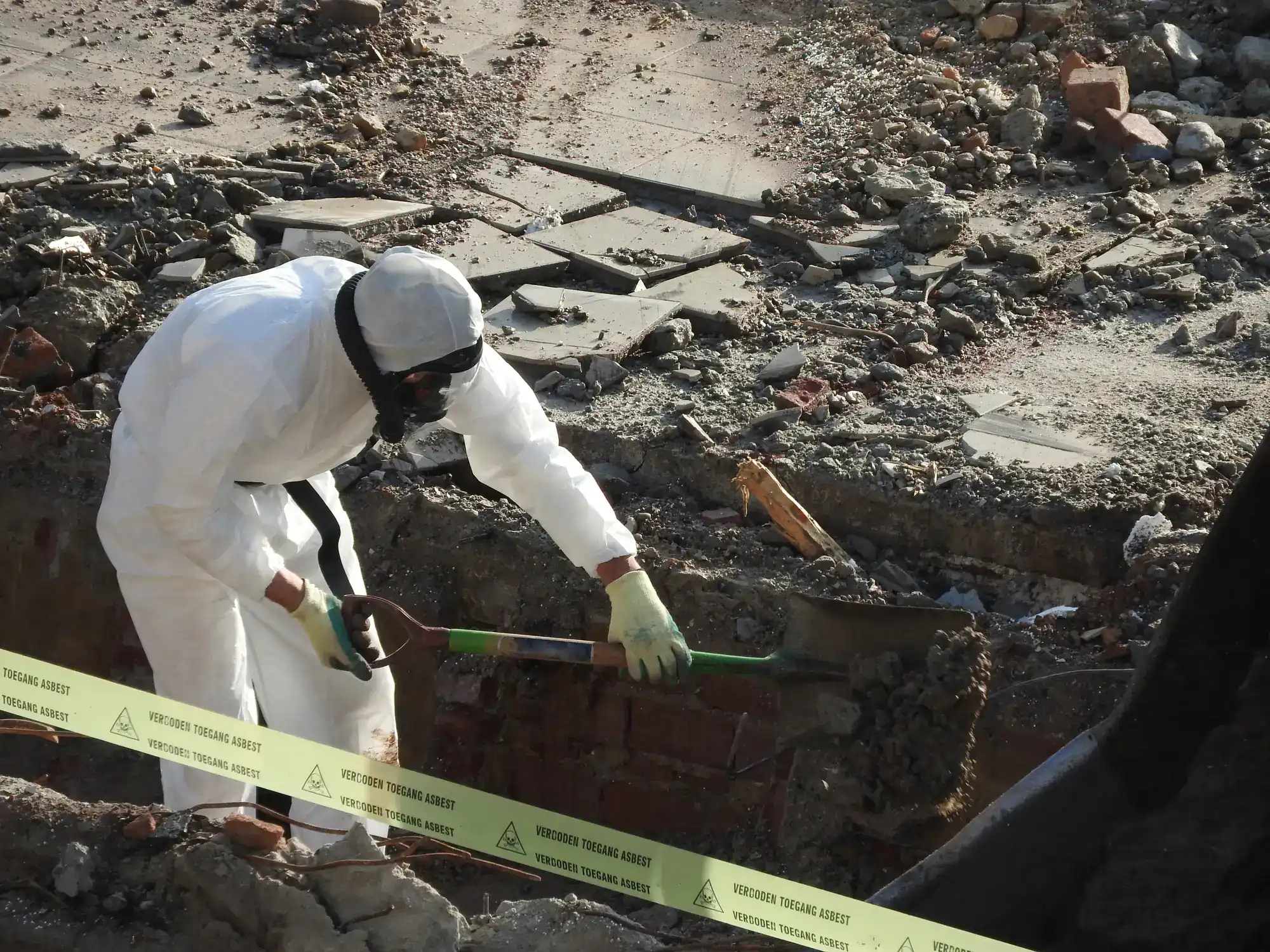
During the abatement, the work area is fully contained under negative air pressure with HEPA filtration running throughout. Once removal is complete, post-abatement clearance testing confirms the space is clean before containment comes down. You get the full documentation package — clearance results, disposal records, and compliance paperwork — so whether you’re handing it to a general contractor, a real estate attorney, or a buyer’s agent, the file is complete.
Ready to get started?
Asbestos rarely shows up alone. In Radnor’s older homes and institutional buildings — think the pre-war residential stock in Wayne and Villanova, or the aging campus structures at Villanova University, Eastern University, and Valley Forge Military Academy — asbestos in the pipe insulation often shares a wall with a mold problem, and the mold problem is sitting behind materials that need to come out anyway. We handle all of it: asbestos inspection, testing, and abatement; mold sampling and remediation; demolition and gutting; waterproofing; lead inspection and removal; environmental clean-outs; and more.
That matters practically. You don’t pause a renovation to find a separate demo crew while your general contractor sits idle. You don’t explain the project from scratch to three different companies. One call to us moves the whole job forward, and every piece of the work is covered under the same license, the same insurance, and the same accountability.
For Radnor homeowners navigating a real estate transaction, the timeline pressure is real. We offer emergency response service and 24/7 phone availability specifically because discoveries don’t wait for business hours. A home inspection finding on a Thursday afternoon in a $1.2 million Wayne colonial isn’t a Monday problem — and with a cash discount available and free estimates on every job, there’s no reason to wait on getting a real number in front of you.

If your home was built before 1980, yes — and in Radnor, that covers a significant portion of the residential housing stock. The Delaware County core of the township was developed largely before World War II, which means pipe insulation, boiler wrap, floor tile adhesive, plaster, joint compound, and ceiling materials in many of these homes were installed during the decades when asbestos was a standard building material.
Pennsylvania doesn’t automatically require a pre-renovation inspection for single-family homes, but any contractor you hire for demolition or gut work is required to stop if they suspect asbestos-containing materials. That mid-project stop — while your general contractor is already on-site and your schedule is already running — is far more disruptive and expensive than an inspection before the first wall comes down. An inspection gives you a clear answer upfront, and if abatement is needed, it can be scheduled on your timeline rather than in reaction to a crisis.
The honest answer is that cost depends heavily on what materials are involved, where they’re located, and how much of it there is. A straightforward pipe wrap removal in a single basement mechanical room is a very different job than full floor tile abatement across multiple rooms of a pre-war Radnor estate. Nationally, residential asbestos abatement typically runs between $1,200 and $3,200 for a contained, single-material job — but whole-house or multi-material projects can run significantly higher.
In Radnor’s market specifically, where homes regularly transact above $800,000 and renovation scopes tend to be substantial, the cost of abatement is rarely the deciding factor. What matters more is getting an accurate number before you commit. We provide free estimates on every job, which means you get a real, property-specific figure — not a national average — before any work begins. Cash discounts are also available.
It’s one of the more stressful moments in a real estate transaction, but it’s also one of the more manageable ones if you move quickly. When asbestos is flagged during a home inspection in Radnor, the typical next step is a formal assessment by a licensed abatement contractor to confirm what’s present, where it is, and what removal will involve. From there, the seller, buyer, and their agents negotiate how the abatement is handled — whether the seller completes it before closing, the price is adjusted to reflect the cost, or some combination of both.
The key variable is time. Radnor’s real estate market moves fast, and closing dates don’t flex easily. We offer emergency response service and can turn around assessments and abatement on timelines that keep transactions on track. Having a licensed, Delaware County-based contractor who knows Radnor Township’s permitting requirements — rather than scrambling for someone available — is the difference between a deal that closes and one that falls apart over a fixable problem.
For most residential abatement jobs, yes — occupants should vacate the work area and typically the home during active removal, and they shouldn’t return until post-abatement clearance testing confirms the air is clean. The exact scope depends on where the asbestos is located and how the containment is set up. A sealed, negatively pressurized work area in a basement mechanical room is a different situation than abatement in a central living space where HVAC circulation is a concern.
We use HEPA filtration and negative air pressure containment on every job, which limits fiber migration outside the work zone. But the clearance test is what actually tells you the space is safe — not just the completion of removal. That documentation matters, particularly in Radnor’s older homes where HVAC systems sometimes run through multiple zones and original ductwork connects areas of the house that haven’t been touched in decades. You’ll receive the full clearance report before anyone re-enters the treated space.
More common than most people expect. Pennsylvania was home to asbestos mines specifically in Delaware and Montgomery counties in the early 1900s — the two counties that define the Main Line corridor where Radnor sits. The state ranks fourth in the US for mesothelioma and asbestos-related deaths, and the highest concentrations are in the metropolitan Philadelphia area. That’s a regional reality tied directly to the building materials used in homes and commercial buildings across this part of Delaware County.
The materials most commonly found in Radnor’s pre-1980 housing stock include pipe and boiler insulation, floor tile and the adhesive beneath it, textured and popcorn ceilings, plaster and joint compound, roofing shingles and felt, and siding on mid-century homes. Institutional buildings — including aging campus structures at Villanova University, Eastern University, and Valley Forge Military Academy — also fall within the construction window where asbestos use was standard. If a building in this area was built or significantly renovated before 1980, it warrants a professional look before any work disturbs the original materials.
It comes down to how the work gets priced. Credit card processing fees, billing overhead, and administrative costs all factor into what a job costs to complete — and when those costs go away, there’s real room to pass the savings directly to you. Cash payment simplifies the transaction on both ends, and we pass that back to you rather than keeping it as margin.
For Radnor homeowners managing renovation budgets that already include contractor fees, permits, materials, and often multiple overlapping scopes of work, a cash discount on the abatement portion is a straightforward way to reduce total project cost without cutting corners on the work itself. The abatement process, the documentation, the clearance testing, and the compliance paperwork are identical regardless of how the job is paid for. The discount is on the transaction, not the standard. Combined with a free estimate upfront, it means you know your full cost before committing — and you have a clear option to reduce it.
Other Services we provide in Radnor