Hear from Our Customers
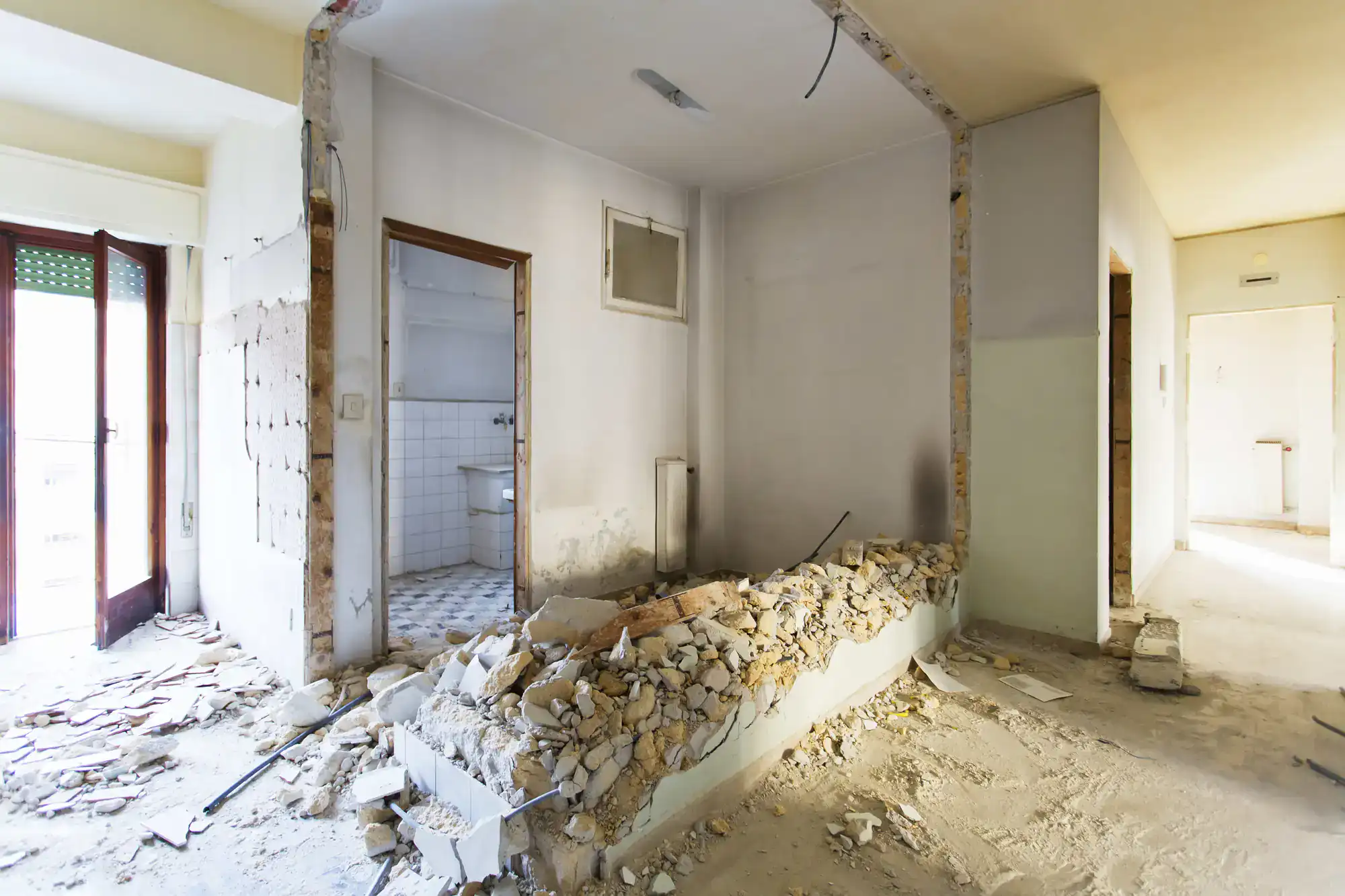
Most demolition jobs in Radnor go sideways the same way — a crew opens a wall, finds something regulated, and the whole project freezes. Now you’re scrambling to find a certified abatement contractor, waiting on their schedule, and watching your renovation timeline collapse.
Radnor’s housing stock is heavily weighted toward pre-WWII and mid-century construction — the exact era when asbestos was used in insulation, floor tiles, ceiling materials, and joint compound, and when lead paint was the standard finish on every interior surface. In Wayne, St. Davids, Rosemont, and Ithan, the odds of encountering regulated materials during a gut renovation aren’t low. They’re the baseline.
We’re licensed for both demolition and hazmat abatement under the same roof. When something turns up inside your walls — and in Radnor, something often does — the job doesn’t stop. The same crew that’s doing your demo is certified to handle what’s behind it. You get a clean, cleared space on schedule, without the coordination nightmare that comes with hiring two separate contractors for the same project.
We’ve been operating as a licensed environmental and demolition contractor for over twenty years, serving Radnor Township, Delaware County, and the surrounding region. We’re not a general contractor who added demo to our service list — this is the specific work we’ve built our entire operation around.
Our credentials are real and verifiable. We hold Pennsylvania state licensure for asbestos and lead removal under Acts 194 and 161 — a state-issued license that requires demonstrated competency and ongoing compliance, and that many contractors claiming to do this work simply don’t hold. We carry a Certified Lead Inspector and Risk Assessor designation, we’re EPA/HUD compliant, and we’re fully licensed, bonded, and insured. All three — not just the ones that are easy to claim.
In a township like Radnor, where homes in the North Wayne and St. Davids historic districts carry layers of original construction and where the Historic and Architectural Review Board has oversight across twelve designated districts, you need a contractor who knows the regulatory landscape before the job starts — not one who discovers it mid-project.
It starts with a free estimate. We come to your Radnor property, walk the space, and give you a real number — not a ballpark that doubles once the job starts. If you’re in one of the township’s HARB-regulated historic districts, we’ll flag that upfront so you’re not blindsided by the approval process after you’ve already committed to a timeline.
Before demolition begins, we conduct testing for asbestos, lead, and other regulated materials. This isn’t a formality — in a township where the bulk of the housing stock predates 1978, it’s the step that determines whether your project stays on schedule or gets derailed. If hazardous materials are present, we handle abatement in-house under state certification. You don’t need to find another contractor. You don’t need to wait for a separate crew’s availability.
Once the space is cleared and abatement is complete, the physical demolition work begins — whether that’s a full gut-out, selective interior demo, or structural work. HEPA filtration systems run throughout to keep the rest of your home clean and the air safe. When we leave, the space is cleared, documented, and ready for whatever comes next. We’re available by phone around the clock, including for emergency response when water damage or unexpected discoveries require immediate action.
Ready to get started?
We handle the full range of demolition work in Radnor Township — interior gut-outs, selective demolition, kitchen and bathroom teardowns, basement demo, wall removal, and full structural demolition for teardown-and-rebuild projects. Given Radnor’s land values, where a half-acre lot in Wayne or St. Davids can command $500,000 or more on its own, full structural demolition ahead of new construction is a regular part of the work here, not an edge case.
Every project in Radnor includes environmental assessment as part of the process, not as an add-on. The township’s twelve HARB-regulated historic districts — including North Wayne, South Wayne, St. Davids, Ithan, and Garrett Hill — mean that a meaningful portion of renovation work here involves additional regulatory steps before a permit is even issued. Radnor Township’s demolition permit requirements include compliance with the Shade Tree Ordinance under Chapter 263 and a certificate of extermination for wood-destroying insects and rodents. We know these requirements and walk clients through them before anything starts.
For commercial and institutional work, we also serve the office and campus corridor along Lancaster Avenue — the Route 30 stretch that runs through the heart of Radnor Township and hosts corporate headquarters, university facilities, and commercial properties that periodically require interior demolition and environmental abatement as part of renovation and fit-out work. Cash discounts are available, and we’ll beat any legitimate estimate.

Yes, and the permit process in Radnor has a few layers that catch people off guard. Under Chapter 125 of the Township Code, you’ll need to demonstrate compliance with the Shade Tree Ordinance before a permit is issued — meaning if the demolition work could affect protected trees on the property, that has to be addressed first. You’ll also need a certificate of extermination from a licensed pest control company documenting the absence of wood-destroying insects, rodents, and other harmful pests before the permit goes through.
If your property falls within one of Radnor’s twelve HARB-regulated historic districts — which includes significant portions of Wayne, St. Davids, and other neighborhoods — you’ll need Historic and Architectural Review Board approval before demolition work can legally begin. That’s a separate process from the standard building permit, and it adds time to the front end of any project. An experienced contractor who knows Radnor will flag all of it before you commit to a start date, not after the inspector shows up.
The first thing to do is stop disturbing the material. Asbestos that’s intact and undisturbed is generally contained — it’s when it gets cut, broken, or pulled apart during demo that fibers become airborne and the health risk becomes real. If we find something suspicious, work stops in that area until a certified inspector can assess it.
In Radnor’s older housing stock — particularly in the pre-WWII homes in the historic districts and the mid-century construction that went up during the township’s post-war expansion — asbestos shows up in insulation around pipes and boilers, in original floor tiles, in ceiling texture, in joint compound, and in roofing materials. Pennsylvania requires a state-issued license under Acts 194 and 161 for any contractor performing asbestos abatement, and that license is specific — it’s not covered by a general contractor’s license. We hold it. When asbestos is found on a job we’re running, we don’t stop the project and send you looking for someone else. We handle it in-house, on the same schedule, with the same crew.
The practical rule is straightforward: if your home was built before 1978, you should test before any demolition or significant renovation work begins. Lead paint was standard in residential construction until the federal ban took effect in 1978, and asbestos was used extensively in building materials through the early 1980s. In Radnor Township, where a large share of the housing stock was built during the post-WWII suburban expansion of the 1940s through 1970s — and where many homes in the historic districts predate World War II entirely — the probability of encountering one or both materials is genuinely high.
Testing isn’t just a precaution — in many cases it’s legally required before certain types of renovation work can proceed under EPA and HUD guidelines. We carry a Certified Lead Inspector and Risk Assessor designation, which means the assessment you get isn’t just a contractor’s opinion. It’s a formal evaluation from someone credentialed to conduct it. We’ll tell you exactly what’s present, where it is, and what needs to happen before demo begins.
Yes — and honestly, this is the most important question to ask before you hire anyone for demo work in an older home. Most demolition contractors are not licensed for asbestos or lead abatement. They can swing a hammer and haul debris, but the moment they hit a regulated material, they’re legally required to stop and bring in someone who is certified. That handoff costs you time, money, and coordination headaches on a project where you’re already managing a lot of moving pieces.
We’re one of the few contractors in the Delaware County and Main Line area that holds Pennsylvania state licensure for both demolition and hazmat abatement under the same operation. We handle testing, abatement, and demolition as a single continuous process. There’s no gap between the abatement crew leaving and the demo crew arriving, no scheduling conflicts between two separate companies, and no finger-pointing if something goes sideways. For Radnor homeowners investing in significant renovations — in a township where the median home value is approaching seven figures — that continuity isn’t a luxury. It’s how you protect your timeline and your investment.
Interior demolition pricing in Radnor depends on the scope of the work, the size of the space, and whether hazardous materials are present. A single-room gut-out — a kitchen or bathroom in a Wayne or St. Davids colonial — will run differently than a full-floor demolition ahead of a major renovation. The presence of asbestos or lead affects the cost because abatement is a separate, regulated process that requires licensed personnel, containment, and proper disposal — and that work has real costs attached to it.
What you should be cautious about is the low-bid contractor who doesn’t account for hazmat at all. In Radnor’s housing stock, where pre-1978 construction is the norm rather than the exception, a bid that doesn’t include environmental assessment is a bid that’s planning to deal with those issues as surprises — and surprises mid-project always cost more than upfront planning. We offer free estimates with no obligation, so you can get a real number for your specific project before committing to anything. We also offer cash discounts and will beat any legitimate estimate.
Yes — Wayne and St. Davids are both within Radnor Township, and we have an established service presence in both communities and across Delaware County. Wayne is the commercial and residential hub of the township, with a mix of historic homes along tree-lined streets and newer construction closer to the Lancaster Avenue corridor. St. Davids carries some of the township’s oldest residential fabric, with homes near St. David’s Episcopal Church — whose buildings date to 1715 and which is listed on the National Register of Historic Places — reflecting the kind of historic construction that requires careful, credentialed demolition work.
Both neighborhoods include properties that fall within HARB-regulated historic districts, which adds a layer of regulatory complexity that not every contractor is prepared to navigate. We’ve been working in this market for two decades and understand what the permit process looks like in Radnor specifically — including the HARB requirements, the Shade Tree Ordinance compliance, and the pre-permit extermination certificate. If your project is in Wayne, St. Davids, Rosemont, Villanova, or anywhere else in the township, we’re a local call, not a distant one.
Other Services we provide in Radnor