Hear from Our Customers
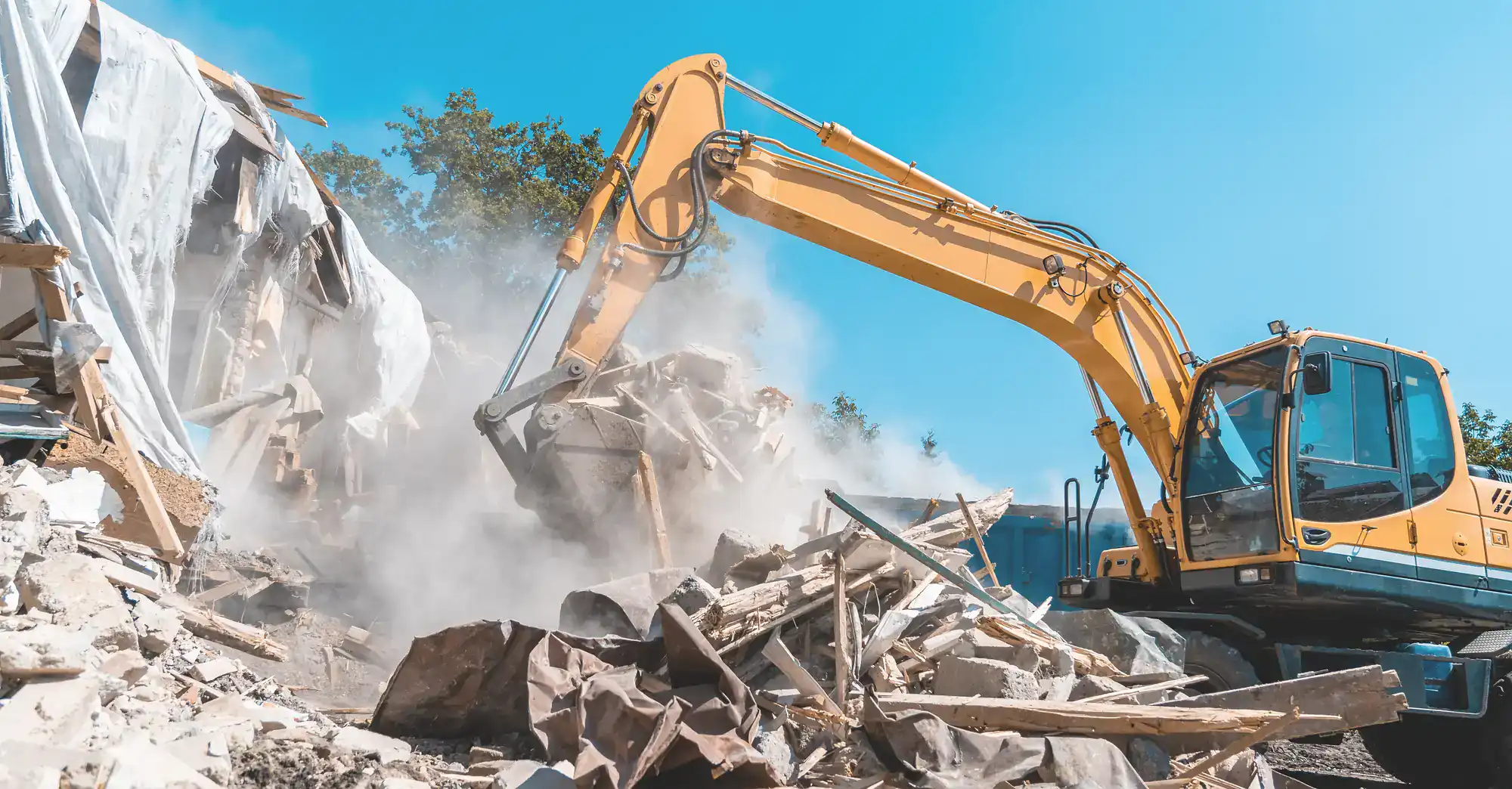
When you’re gutting a kitchen or tearing out a bathroom in a Merion Station home built in the 1930s, the demo phase isn’t just about what comes down — it’s about what you might find along the way. Plaster walls in pre-1940 homes frequently contain asbestos as a binding agent. Lead paint is almost a given in anything built before 1978. In Merion Station, where the average home dates back to around 1935, those aren’t edge cases. They’re the norm.
What makes the difference is hiring a contractor who doesn’t stop when something turns up. We test before the work starts, handle any abatement in-house, and keep the project moving without pulling in a second crew or blowing up your timeline. For the general contractors managing renovations on the Main Line, that’s exactly why they call us first — because a mid-project shutdown on a $700,000 stone colonial is not a small problem.
You also get a cleaner, safer job site from start to finish. HEPA filtration, proper containment, and on-site licensed supervision mean the rooms that aren’t being touched stay protected. Whether you’re renovating one floor or gutting the whole interior, the rest of your home doesn’t become a casualty of the demo phase.
We’ve been working in Montgomery County for twenty years, and we know Merion Station intimately. The pre-WWII stone colonials and Tudor homes that line the streets near Montgomery Avenue and the old Paoli/Thorndale rail corridor aren’t new territory for us — they’re the homes we’ve been working in since day one. We know what plaster walls from 1935 look like when they open up, and we know exactly what to do when they do.
We’re fully licensed, bonded, and insured. We hold Pennsylvania state certification for asbestos work — a license the PA Department of Labor and Industry specifically requires, not just recommends. We’re also a Certified Lead Inspector and Risk Assessor and EPA/HUD compliant. Those aren’t checkboxes. In a community like Merion Station, where homes carry real history and real value, they’re the baseline for doing this work responsibly.
We offer free estimates, cash discounts, and a beat-any-estimate guarantee. And if something comes up after hours, we answer — 24/7, including emergencies.
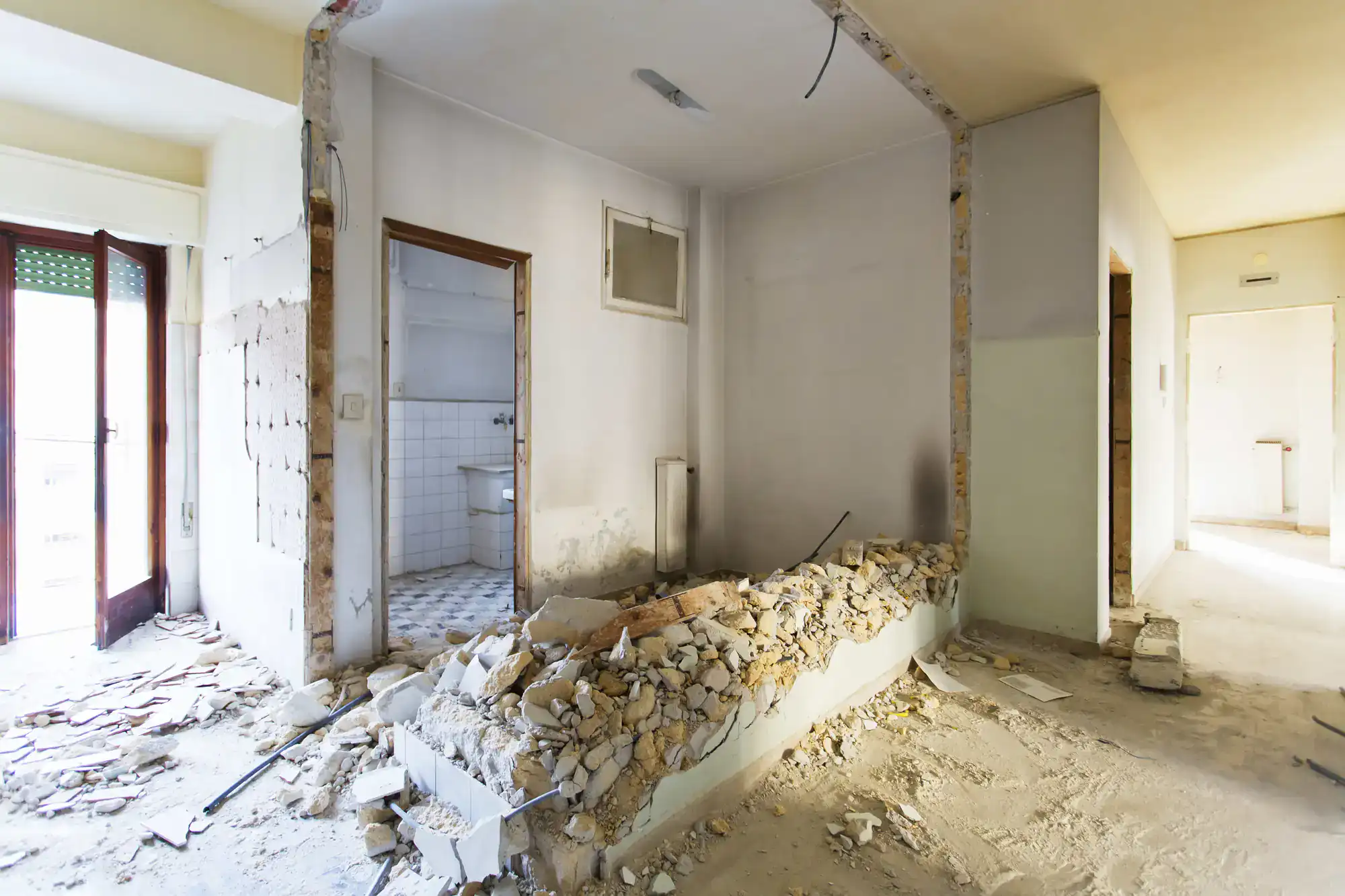
It starts with a free estimate. We come out, walk the space, and give you a straight answer on scope, timeline, and cost — no vague ranges, no surprises later. For homes in Merion Station, that walkthrough includes an honest assessment of what the age and construction of your home might mean for the project. A 1930s stone colonial with original plaster interiors is a different job than a 1990s drywall build, and we approach it accordingly.
Before any demolition begins, we test for asbestos-containing materials and lead paint. Pennsylvania DEP requires a five-day notification for any friable asbestos abatement exceeding three square or linear feet — and that clock doesn’t start until the testing is done and a certified plan is in place. We handle all of that. If hazardous materials are present, we remove them under proper containment before a single wall comes down. Lower Merion Township also requires a demolition permit through their Building and Planning Department, and for properties on the Township’s Historic Resource Inventory, additional documentation may be needed. We know the process and we don’t skip steps.
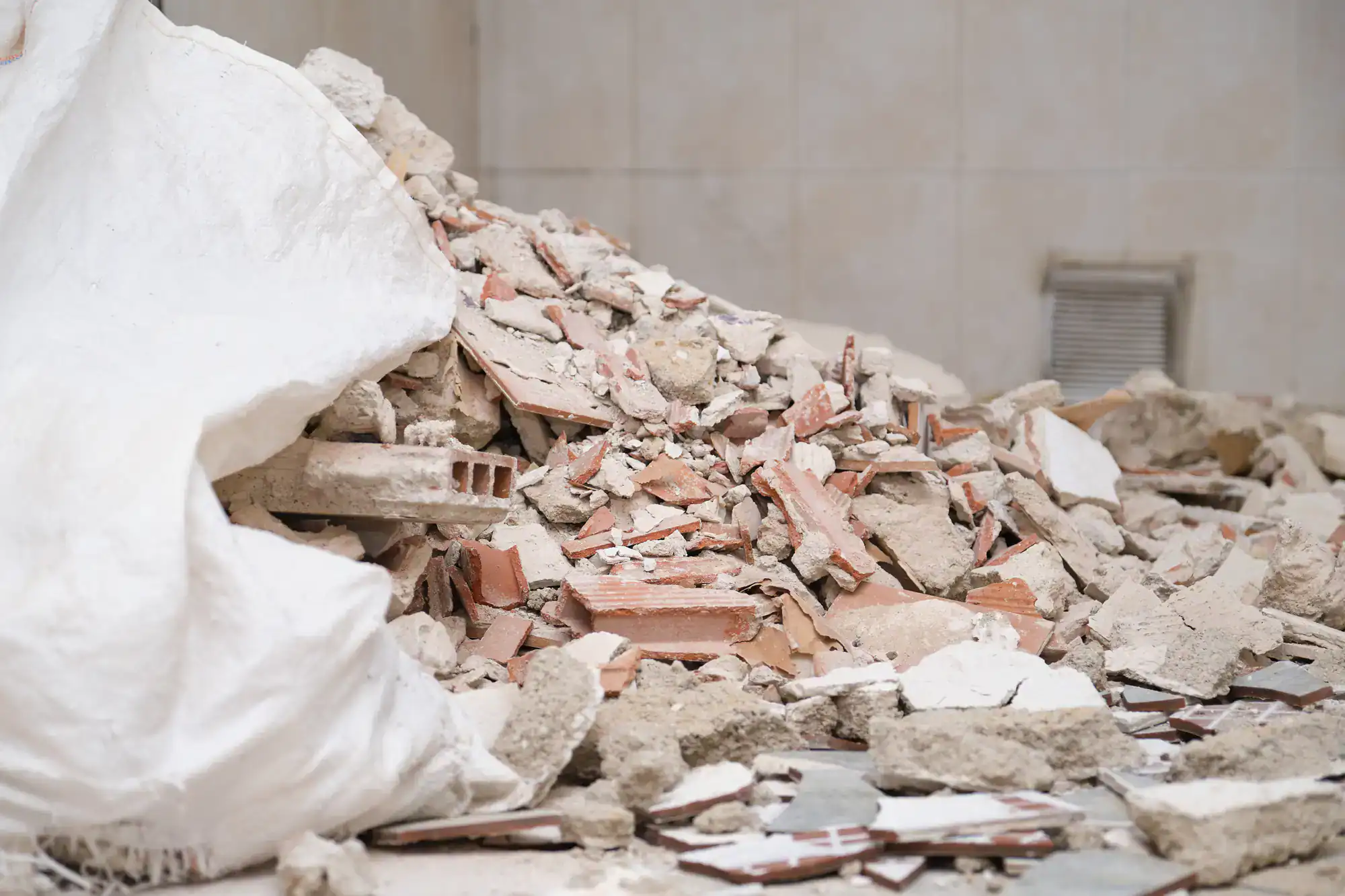
Once the site is clear and permitted, the demolition work begins. We use HEPA filtration throughout, protect the areas that aren’t being touched, and manage debris removal cleanly and efficiently. When we’re done, the space is ready for the next phase — whether that’s your GC, your architect, or your own renovation plan.
Ready to get started?
We handle the complete range of interior and structural demolition — kitchen gut-outs, bathroom demolition, basement clearing, wall removal, and full interior gutting for major renovation projects. We also handle the parts most demo crews won’t touch: asbestos removal, lead encapsulation and removal, mold sampling and remediation, above-ground oil tank removal, furnace and boiler removal, and environmental clean-outs. If it needs to come out before the build-back starts, we handle it.
For Merion Station homeowners, that full-scope capability matters more than it does almost anywhere else in this service area. The Wissahickon schist and brick construction that defines the housing stock here, combined with original plaster interiors and pre-1978 building materials throughout, means the environmental side of a demolition project isn’t a possibility — it’s a near-certainty. Having one contractor who manages both sides of that equation protects your timeline, your budget, and frankly your health.
We also serve the general contractors working throughout Lower Merion Township who need a reliable demolition and abatement subcontractor before renovation work begins. If you’re a GC preparing a job site in Merion Station or the surrounding Main Line communities, we’re the crew that keeps your project on schedule when the walls open up and something unexpected is inside them.
Yes, in most cases you do. Lower Merion Township requires a permit for demolition work through their Building and Planning Department, reachable at 610-645-6200. This applies to both full structural demolition and significant interior gut work. The permit process under the Township’s Uniform Construction Code is fairly straightforward for standard residential projects, but it can get more involved if your property is listed on Lower Merion’s Historic Resource Inventory — which applies to more properties in Merion Station than most homeowners realize, given the community’s depth of pre-WWII architecture and its proximity to National Register landmarks like the General Wayne Inn and the Merion Friends Meeting House.
If your home has any historic designation or is located near a protected resource, additional documentation may be required before work can begin. We’re familiar with the Lower Merion permit process and will make sure everything is in order before the first wall comes down. The last thing you want is a stop-work order on a gut renovation that’s already in progress.
The honest answer is that you don’t — not without testing. And in Merion Station, where the average home was built around 1935, you should assume asbestos is present until a certified inspector tells you otherwise. Asbestos was commonly used in floor tiles, ceiling tiles, pipe insulation, joint compound, roofing materials, and — critically for this area — as a binding agent in plaster walls. The stone colonials and Tudor homes that define the Main Line housing stock here were built heavily with plaster interiors, which means the risk isn’t limited to one or two materials. It can be throughout the entire interior.
Pennsylvania state law and federal NESHAP regulations both require that buildings be thoroughly inspected for asbestos-containing materials before any renovation or demolition work begins. Disturbing regulated asbestos without proper abatement isn’t just inadvisable — it can be a federal violation. We’re a PA-certified asbestos contractor and a Certified Lead Inspector and Risk Assessor. We test first, and if something turns up, we handle the abatement in-house before demolition proceeds. You don’t need a second contractor. You don’t need to stop the project. We keep it moving.
Demolition typically refers to the removal of an entire structure or a major structural component — taking down a building, removing load-bearing walls, or clearing a section of a home down to the framing. Gutting refers to the interior stripping of a space: pulling out cabinets, flooring, plaster or drywall, fixtures, and finishes while leaving the structural shell intact. Most homeowners in Merion Station undertaking a kitchen renovation, bathroom overhaul, or basement conversion need gutting, not full demolition — but the line between the two blurs quickly in older homes.
In a pre-1940 stone colonial, what starts as a bathroom gut can turn into a structural conversation the moment you open a wall and find something unexpected — whether that’s a load-bearing element in an unusual location, asbestos-containing plaster, or moisture damage that goes deeper than it looked. We handle both gutting and demolition, and our team is experienced enough to recognize when one turns into the other. We’ll tell you what you’re actually dealing with during the estimate, not after the walls are already open.
Yes — but only if they hold the right credentials for both. In Pennsylvania, asbestos abatement requires a state-issued certification under the Asbestos Occupations Accreditation and Certification Act (Act 194 and Act 161). This is a hard legal requirement, not a suggestion, and it’s a separate credential from a general contractor’s license or a home improvement contractor registration. Many contractors who advertise demolition services in the Lower Merion area — including some who show up in local search results — do not hold this certification. That means if they encounter asbestos during a gut-out, the project legally has to stop until a certified abatement contractor is brought in.
We hold PA state certification for asbestos work, are a Certified Lead Inspector and Risk Assessor, and are EPA/HUD compliant. We are licensed to handle both sides of the job. When you hire us for demolition in Merion Station, you’re hiring one contractor who can legally and safely take the project from initial testing all the way through final debris removal — without the delays, coordination headaches, or liability gaps that come from splitting the work between two separate companies.
Interior demolition in the Philadelphia suburbs generally runs between $2 and $8 per square foot, with full gut-outs on larger spaces typically landing somewhere between $2,500 and $9,800 depending on scope, materials, and what’s found inside the walls. In Merion Station specifically, the cost calculation has an added layer: the age and construction type of the homes here means hazardous material testing and potential abatement are almost always part of the equation. Asbestos removal and lead paint abatement carry their own costs, and those vary based on what’s present, how much, and where.
The most accurate way to understand what your project will cost is a free on-site estimate — which we provide at no obligation. We’ll walk the space, assess the scope, identify any potential hazmat concerns based on what we see, and give you a real number for your specific home. We also offer cash discounts, and we’ll beat any legitimate quote from a licensed, insured competitor. The goal isn’t to be the cheapest option. It’s to make sure you’re getting the full scope of work done correctly, at a price that’s fair for what’s actually involved.
Yes. We offer 24/7 phone availability and emergency response services, and that’s not a line that exists just to look good on a website. In Merion Station, emergency demolition needs tend to come from specific situations that older homes are genuinely prone to: sudden mold discovery during a renovation, water intrusion damage from the freeze-thaw cycles common in this part of Montgomery County, fire damage requiring immediate structural clearing, or an unexpected hazmat find that stops a project mid-stream and needs to be resolved fast.
When something like that happens, you don’t want to be leaving voicemails and waiting for a callback. We answer around the clock, can assess the situation quickly, and — because we handle both the environmental and demolition sides of the job — we don’t need to coordinate with a second company before work can begin. For homeowners managing complex renovation projects on high-value Main Line properties, and for the general contractors working in Lower Merion Township who need a subcontractor they can actually reach when something goes sideways, that kind of availability is part of what makes us the call worth making first.
Other Services we provide in Merion Station