Hear from Our Customers
Merion Station’s housing stock is among the oldest and largest in the entire Philadelphia region. The stone Colonials and Tudor estates that line Montgomery Avenue and the surrounding streets weren’t built with modern materials — they were built with whatever was available at the time, and for most of the late 19th and early 20th centuries, that included asbestos in the pipe insulation, floor tiles, attic fill, plaster, and HVAC duct wrap. When you renovate without testing first, you’re not just rolling the dice on your health — you’re rolling the dice on a home that may be worth two or three million dollars.
Once abatement is done correctly, the picture changes completely. Your contractor can open walls without triggering a hazmat situation. Your real estate transaction can move forward with proper documentation in hand. Your family isn’t breathing air that hasn’t been cleared by a certified post-abatement test. That’s not a small thing — that’s the difference between a renovation that goes smoothly and one that stops cold when something gets discovered mid-demo.
For homeowners in Merion Station who are managing pre-sale prep, large-scale renovations, or aging HVAC systems in homes with original boiler rooms and pipe chases, the cost of not knowing is almost always higher than the cost of finding out. A proper abatement — done by a licensed contractor, with HEPA containment and a clearance air test at the end — is what gives you the documentation, the confidence, and the clean bill of health to move forward.
We’ve been doing this work across Montgomery County and the Main Line for close to twenty years. That’s not a number we throw around for effect — it means we’ve been inside the boiler rooms, the attic spaces, and the finished basements of pre-war estate homes like the ones that define Merion Station. We know what these properties tend to hold, where materials are typically found, and what a job of this scale actually requires to do right.
We’re fully licensed by the PA Department of Labor and Industry, EPA and HUD compliant, fully bonded and insured, and we have a certified lead inspector and risk assessor on staff — which matters in a community where lead-based paint and asbestos often show up in the same home, sometimes in the same room. Lower Merion Township has its own contractor licensing requirements on top of state licensing, and we meet both.
We also handle mold remediation, demolition, waterproofing, and more. If you’re renovating a large historic property in Merion Station and multiple issues surface — which happens more often than not in homes of this age — you’re not calling three different contractors. You’re calling us.
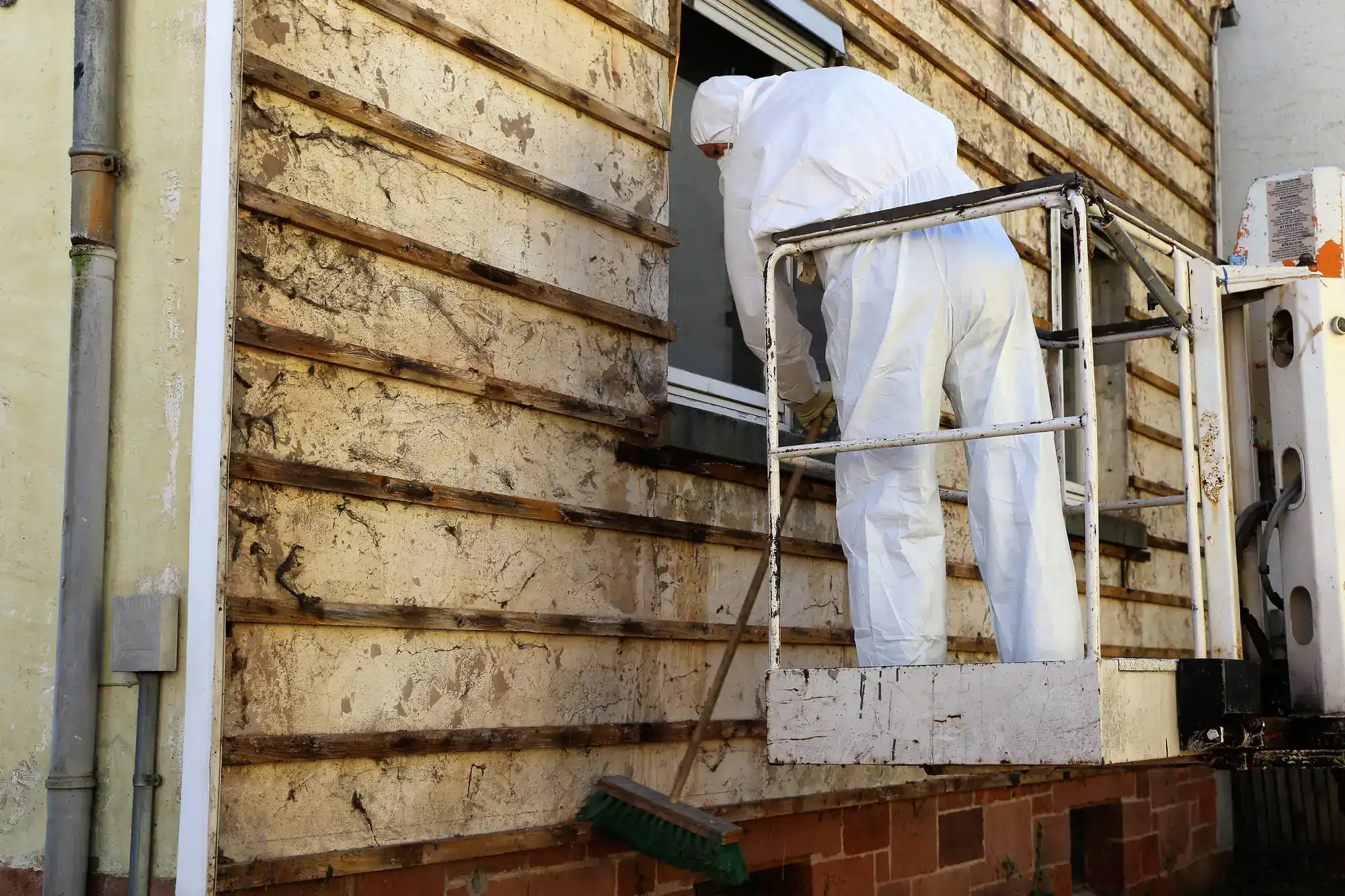
It starts with an inspection. Before anything is touched, we assess the materials in your home and collect samples for lab testing. In a Merion Station property — where asbestos can be present in six or seven different materials across multiple floors — this step isn’t a formality. It’s the foundation of everything that follows. You don’t want to plan a scope of work around incomplete information.
Once the lab results are back and we know what we’re dealing with, we build an abatement plan specific to your home and your situation. For projects that exceed Pennsylvania DEP thresholds — which is common in the large-scale estate homes here — we file the required advance notifications with the state before work begins. That’s a five-day notice for friable material removal under PA DEP rules, and a ten-working-day notice under federal NESHAP regulations for larger jobs. We handle that paperwork. You don’t need to track it.
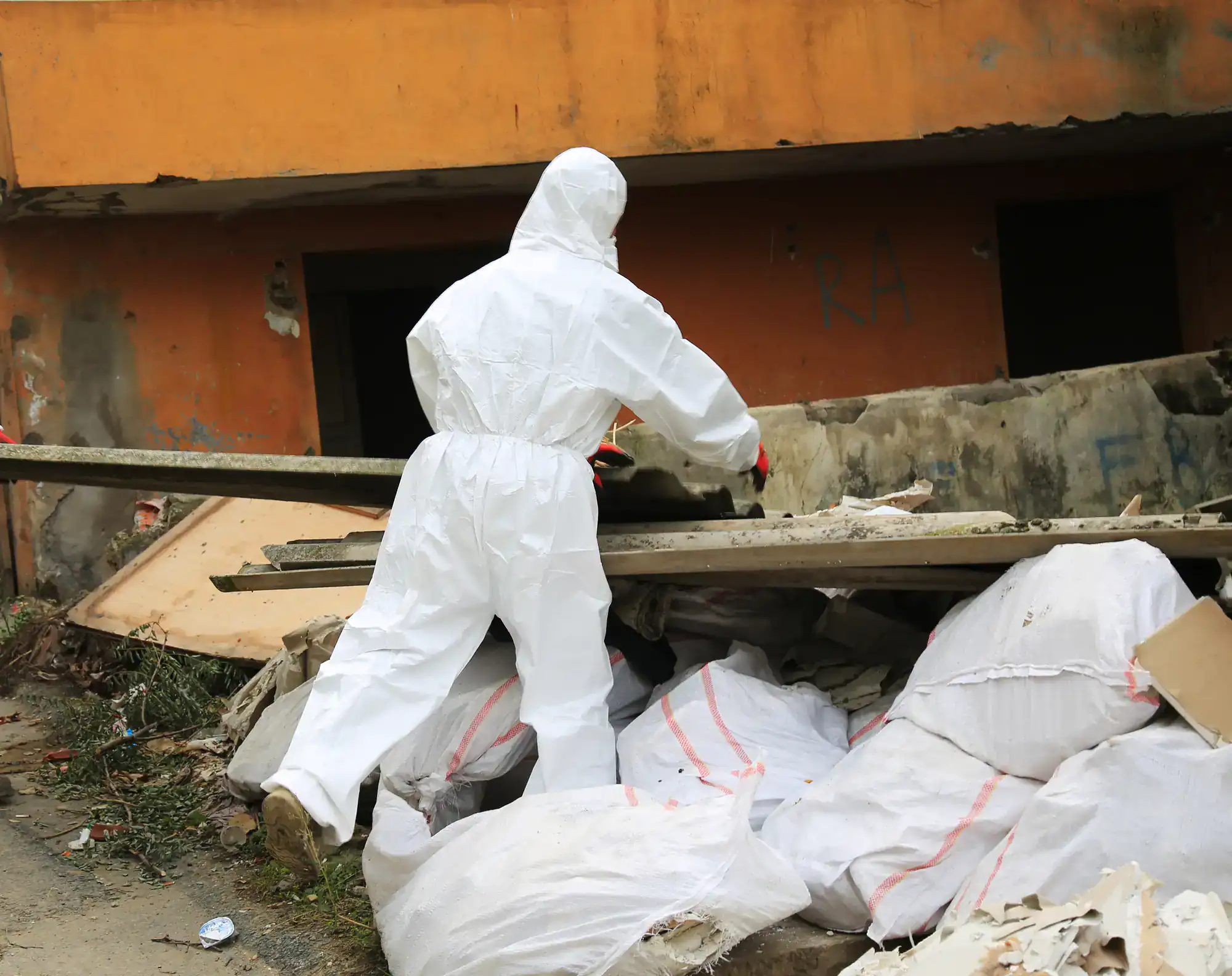
During the actual removal, we set up full containment with HEPA-filtered negative air pressure systems to make sure fibers don’t migrate beyond the work area. When the physical work is done, we conduct post-abatement clearance air testing — the step that produces the documentation you’ll need for your contractor, your buyer, your lender, or your own peace of mind. That final report is what closes the loop.
Ready to get started?
Asbestos abatement in Merion Station isn’t a single-material, single-room job in most cases. The pre-war homes in this community — many of them built before 1930, some significantly older — tend to have asbestos in multiple locations simultaneously. Pipe insulation in the basement mechanical room. Attic insulation between the rafters. Original floor tiles under hardwood that was installed decades later. Plaster walls. Ceiling tiles. HVAC duct wrap. We assess all of it, not just the one spot your contractor flagged.
Every job includes the initial inspection and lab testing, full containment setup with HEPA filtration and negative air pressure, physical removal or encapsulation depending on the material and condition, certified disposal with a documented chain of custody, and post-abatement clearance air testing with a written report. That report matters — especially in Merion Station’s real estate market, where buyers and their attorneys are going to want documentation before any high-value transaction closes.
Because we also handle lead inspection and risk assessment, mold remediation, demolition, and waterproofing under the same roof, homeowners renovating large historic properties don’t have to manage multiple licensed contractors to get through the environmental phase of a project. We offer free estimates, cash discounts, and 24/7 phone availability — including for emergency situations where a renovation crew has uncovered something and work has stopped.
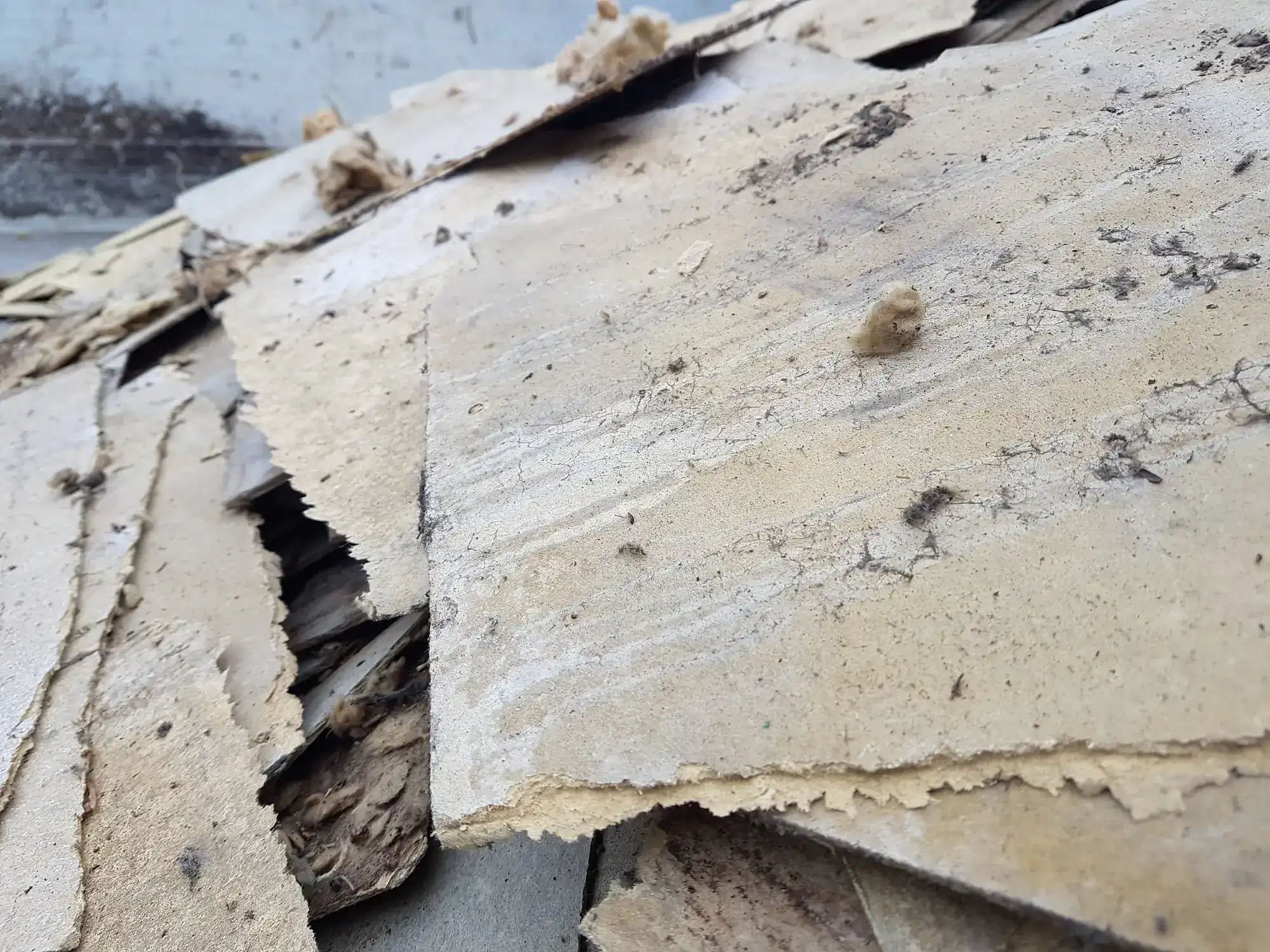

The honest answer is that you don’t know until it’s tested — and in Merion Station, the odds are not in your favor if your home was built before 1980. The overwhelming majority of homes in this community predate World War II, and asbestos was used extensively in residential construction throughout that era. It was in pipe insulation, floor tiles, attic insulation, plaster, joint compound, ceiling tiles, roofing materials, and HVAC components. If your home has any of those original materials still in place, there’s a real possibility asbestos is present.
The only way to confirm it is through professional sampling and lab analysis. Visual identification isn’t reliable — asbestos-containing materials often look identical to non-asbestos materials. A licensed inspector collects samples from suspected areas, sends them to a certified lab, and returns results that tell you exactly what you’re dealing with and where. That’s the starting point for everything else.
It depends on the scope of the work and where in your home it’s being done. For a contained, single-area job — say, pipe insulation in a basement mechanical room that can be fully sealed off from the rest of the house — it’s often possible for occupants to remain in the home during the work. For larger jobs involving multiple rooms, HVAC-connected materials, or areas that can’t be effectively isolated, temporary displacement is the safer call.
This is a question we answer specifically for every job, not with a blanket policy. In a large Merion Station home — where a five or six-bedroom stone Colonial might have asbestos in the basement, the attic, and a main-floor mechanical room simultaneously — the containment plan has to account for the actual layout of your house. Families with children attending Merion Elementary or Cynwyd Elementary often have real scheduling constraints around displacement, and we factor that into the planning conversation. The short version: ask us during the estimate, and we’ll give you a straight answer based on your actual home.
For a typical single-material, single-area residential job — pipe insulation in a basement, for example — costs generally fall in the range of $1,500 to $4,000 depending on the linear footage involved and the accessibility of the space. Larger jobs involving multiple materials or multiple areas of a home can range from $8,000 to $30,000 or more. Whole-house abatement of a large pre-war estate can exceed that range depending on what’s found.
In Merion Station specifically, the size and age of the housing stock means multi-material jobs are common. A home that was built in 1920 and hasn’t had a prior environmental inspection may have asbestos in four or five different locations — and each of those locations adds to the scope. The most accurate way to understand your cost is to get a proper inspection first, so the estimate reflects what’s actually there rather than a guess. We offer free estimates, and we’ll walk you through the scope before you commit to anything.
Pennsylvania doesn’t have a blanket legal requirement that forces every homeowner to test before renovating — but federal NESHAP regulations do require that any building scheduled for demolition or renovation that may disturb asbestos-containing materials be inspected prior to the work. For residential properties, the practical reality is that your general contractor may refuse to proceed without a clearance, your lender may require documentation, or your buyer’s attorney will flag it during due diligence. In Merion Station’s real estate market, where transactions routinely involve high-value properties and detailed environmental scrutiny, the question of asbestos almost always comes up before closing.
Beyond the legal minimums, disturbing asbestos-containing materials without containment — even unintentionally — can create a contamination situation that’s far more expensive to remediate than a planned abatement would have been. Pennsylvania also requires that all asbestos abatement work be performed by a PA DL&I licensed contractor. Hiring an unlicensed operator doesn’t just create a health risk — it creates a liability problem and produces documentation that won’t hold up in a real estate transaction or insurance claim.
For a straightforward single-area job, the physical removal work typically takes one to two days. Add in the lab turnaround time for initial testing samples — usually two to five business days depending on the lab — and the post-abatement clearance air test results, and you’re looking at a total timeline of roughly one to two weeks from first inspection to final documentation in hand.
Larger projects involving multiple materials or multiple areas of a home take longer, both in terms of physical work and regulatory lead time. Pennsylvania DEP requires five days advance notice before friable asbestos removal begins for amounts exceeding regulatory thresholds, and federal NESHAP rules require ten working days for larger projects. For homeowners in Merion Station managing a renovation timeline with contractors waiting, understanding this regulatory lead time upfront is important — it affects your project schedule in a real way, and we factor it into the planning from the start.
The straightforward reason is that processing fees on credit card transactions add real cost to every job, and passing that savings directly to the customer is a more honest way to price the work. In a service category where homeowners are already navigating unexpected costs — especially when asbestos turns up mid-renovation and the project is already in motion — removing unnecessary overhead from the transaction is just the right thing to do.
For Merion Station homeowners managing large renovation budgets across multiple contractors, architects, and project phases, every dollar of unnecessary overhead matters. The cash discount isn’t a gimmick — it’s a straightforward way to keep the pricing honest. We’d rather give you that savings directly than build it into the estimate and pretend it isn’t there. Combined with free estimates and 24/7 availability, it’s part of how we try to make a genuinely stressful process a little more manageable.
Other Services we provide in Merion Station