Hear from Our Customers
When your home in Merion Station is pushing 90 or 100 years old, a renovation isn’t just a construction project — it’s a compliance event. The pre-WWII stone colonials and Tudor homes that line the streets here almost certainly contain asbestos in the pipe wrap, lead paint on the original woodwork, and possibly an old oil tank that hasn’t been touched since the Eisenhower administration. Skipping certified abatement on a home like that isn’t just cutting corners. It’s a federal violation, and the liability stays with you as the homeowner.
When the job is handled correctly, you’re not just getting a cleaner space. You’re getting documentation that protects your property value, clears the way for your renovation, and keeps your family safe during the process. In a ZIP code where homes regularly sell at or above $750,000 and buyers do their homework, that paper trail matters more than most homeowners realize until they’re sitting across from a buyer’s attorney at settlement.
There’s also the emergency side of this. Merion Station’s older homes — original plumbing, stone foundations with limited waterproofing, basements that have been holding back groundwater for decades — are genuinely vulnerable to water damage during the Philadelphia area’s winter freeze-thaw cycles and spring flooding season. When a pipe bursts or a basement floods, mold starts forming within 24 to 48 hours. Getting the right contractor on-site fast, one who can gut, dry, and remediate in a single engagement, is the difference between a manageable repair and a months-long project.
We’re a Glenside-based environmental hazard abatement and demolition company — about 9 miles up the road from Merion Station. We’ve been doing this work for over 20 years, primarily in Montgomery County and the surrounding Philadelphia suburbs, which means we know the Merion Station housing stock. Stone colonials, Tudor revivals, original plaster walls, knob-and-tube wiring, asbestos pipe wrap in the basement — none of that is new to us.
What makes us different from a standard demo crew is the certification depth. Eric, our owner, holds EPA Certified Lead Inspector and Risk Assessor credentials — not just the basic RRP contractor certification that most competitors carry. That means we can inspect, test, and certify lead conditions, not just remove them. We’re also EPA and HUD compliant, fully licensed with the state, bonded, and insured.
We serve Chester, Delaware, Montgomery, New Castle, and Bucks counties. If you’re in Merion Station or anywhere in Lower Merion Township, you’re in our primary service area — and you’ll get the same level of attention whether your job is a single-room gut or a full interior demolition.
It starts with a free estimate. We come out, walk the space, and give you a clear written scope of work — including permit costs, hazmat handling, debris removal, and cleanup. No verbal ballpark. No hidden line items that show up on the final invoice.
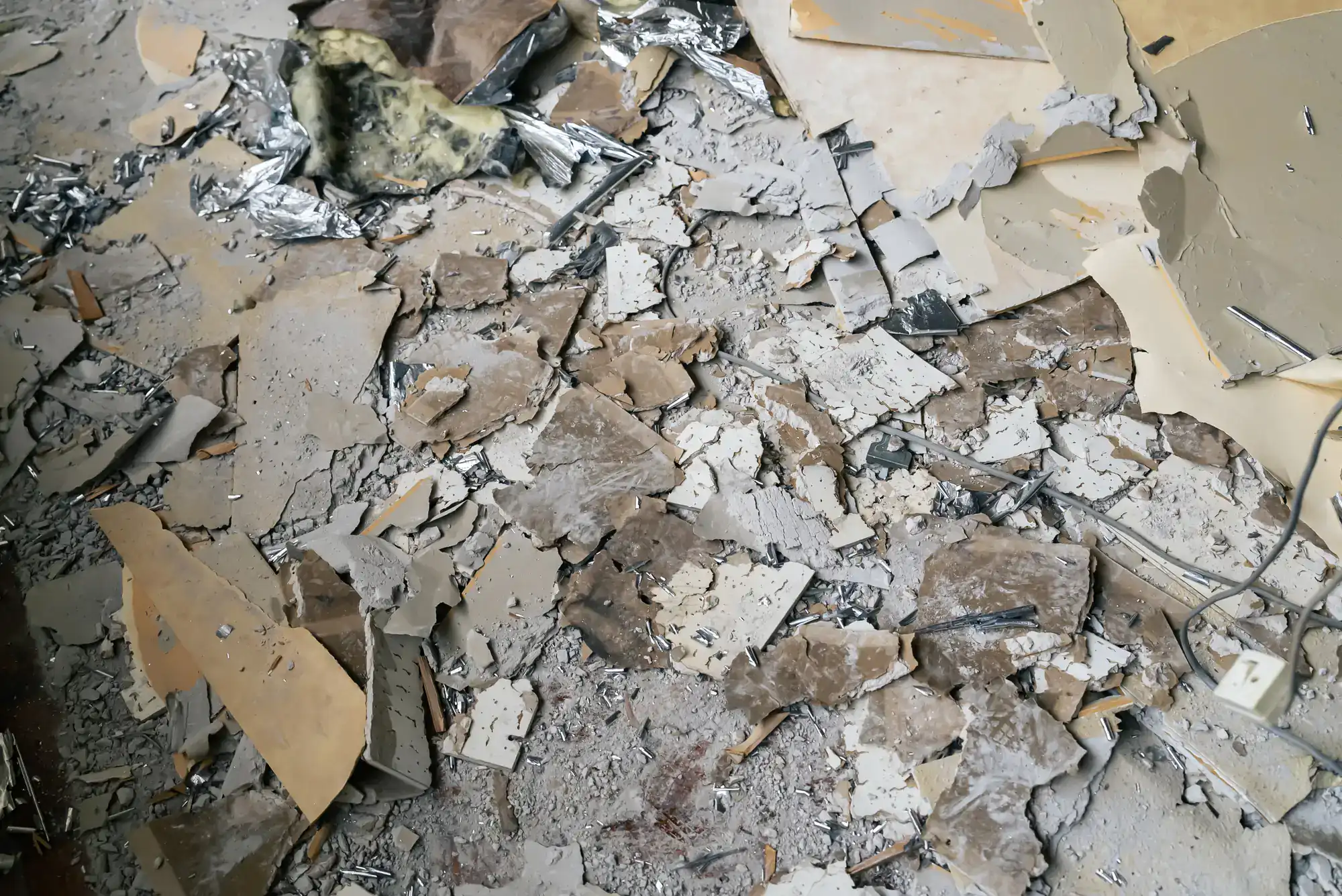
From there, if your Merion Station home was built before 1978 — which covers virtually every home in this neighborhood — we conduct a pre-demolition hazmat assessment. That means testing for asbestos and lead before any demolition work begins. This is a federal requirement under the EPA’s NESHAP rules, not something we add on to pad the bill. If regulated materials are found, we handle certified abatement first, using HEPA filtration systems and proper containment so the rest of your home stays clean during the process.
Once abatement is cleared, demolition proceeds. We pull the required Lower Merion Township building permits on your behalf, coordinate the work, and handle construction debris removal when the job is done. If your property is on or near the Township’s Historic Resource Inventory, we’re familiar with what that means for exterior work and the HARB review process — that’s not something you want to figure out mid-project. When we leave, the space is clean, documented, and ready for the next phase of your renovation.
Ready to get started?
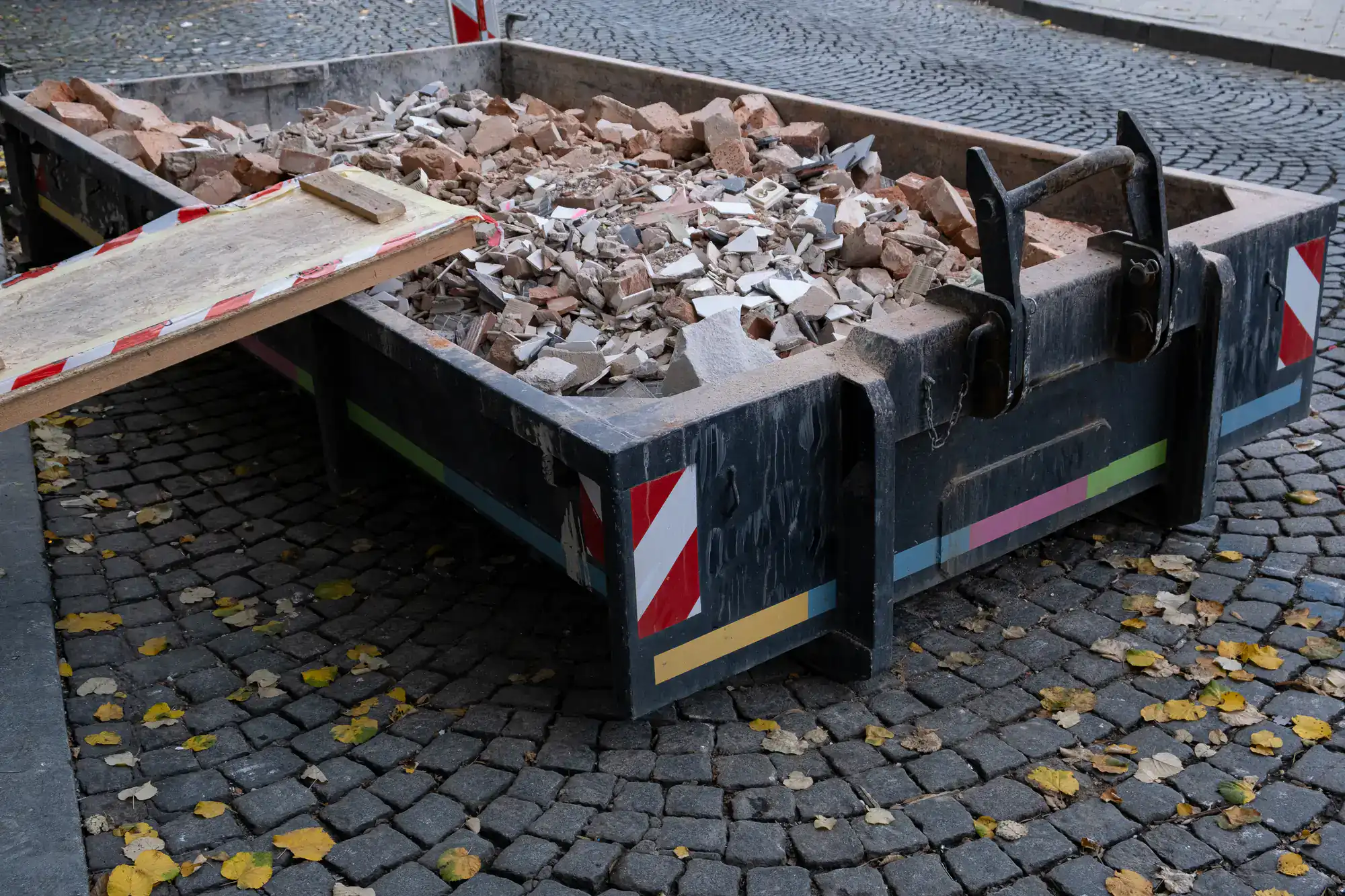
Most homeowners in Merion Station don’t realize how fragmented the demolition and abatement process typically is. You hire an asbestos tester, then an abatement firm, then a demo crew, then a debris hauler — and you’re the project manager coordinating all of them. We eliminate that entirely. We handle asbestos inspection, testing, and removal; lead inspection, testing, encapsulation, and removal; mold sampling, testing, and remediation; water damage restoration and waterproofing; full interior demolition and gutting; construction debris removal; above-ground oil tank removal; and environmental clean-outs. That’s one call, one company, one invoice.
For Merion Station specifically, the oil tank piece is worth calling out. A lot of the older homes in this neighborhood were originally heated with oil, and above-ground tanks from that era are still sitting in basements throughout the 19066 ZIP code. Removal requires proper handling and disposal — it’s not a job for a general contractor who doesn’t specialize in this work.
We also offer 24/7 emergency response, because water damage in a 100-year-old home doesn’t happen on a schedule. Whether it’s a burst pipe on a January night or a flooded basement after a spring storm off the Schuylkill drainage area, we’re reachable around the clock and can respond fast. Cash discounts are available, and every job starts with a free, written estimate.

Yes — and this is one of the details that catches homeowners off guard. Because Merion Station is an unincorporated community within Lower Merion Township, all demolition and renovation permits are issued through the Township’s Building and Planning Department, not a separate Merion Station municipal office. Any gutting, structural alteration, or demolition work requires a Township building permit, and Lower Merion enforces the Uniform Construction Code with fines up to $1,000 per violation.
There’s also a separate layer that most contractors don’t mention: Lower Merion Township requires commercial contractors and residential home builders to hold a Township contractor’s license — distinct from Pennsylvania’s state HIC registration. That means you should verify that any contractor you hire is actually licensed with the Township, not just the state. You can check the Township’s licensed contractor registry at lowermerion.org. We handle permit acquisition on your behalf, so you’re not navigating that process alone while also managing a renovation.
Not definitely, but almost certainly in at least one location — and probably more than one. Homes built in the 1920s and 1930s routinely used asbestos in pipe insulation, boiler and furnace wrap, floor tiles (especially 9″x9″ vinyl tiles), ceiling tiles, joint compound, roof shingles, and exterior siding. The average structure age in Merion Station is approximately 1935, which puts most homes squarely in the era when these materials were standard.
The only way to know for certain is a professional inspection and testing by a certified contractor. Under the EPA’s NESHAP rules, a pre-demolition asbestos survey is legally required before any renovation or demolition that could disturb asbestos-containing materials. We hold the certifications to conduct that inspection, handle the testing, and perform the abatement if regulated materials are found — all in one engagement. You don’t need a separate inspector and a separate abatement firm.
It depends on your property’s status, but it’s worth knowing before you start. Lower Merion Township has an active Historic Resource Preservation Ordinance and a Historical Architectural Review Board (HARB) that reviews exterior alterations and demolition proposals for properties within the Township’s local historic districts and on the Historic Resource Inventory. A Class 1 designation on the inventory gives the Township significant authority over exterior renovation and demolition decisions.
This isn’t a theoretical concern — as recently as early 2025, there was active public debate in Lower Merion Township over the future of a historic Main Line mansion, with the Township’s Historical Commission recommending inventory listing specifically to restrict demolition. If your Merion Station home is on or near the inventory, exterior demolition or alteration work may require HARB review before permits are issued. We’re familiar with this process and can help you understand what it means for your specific project before you’re mid-demo and facing a stop-work order.
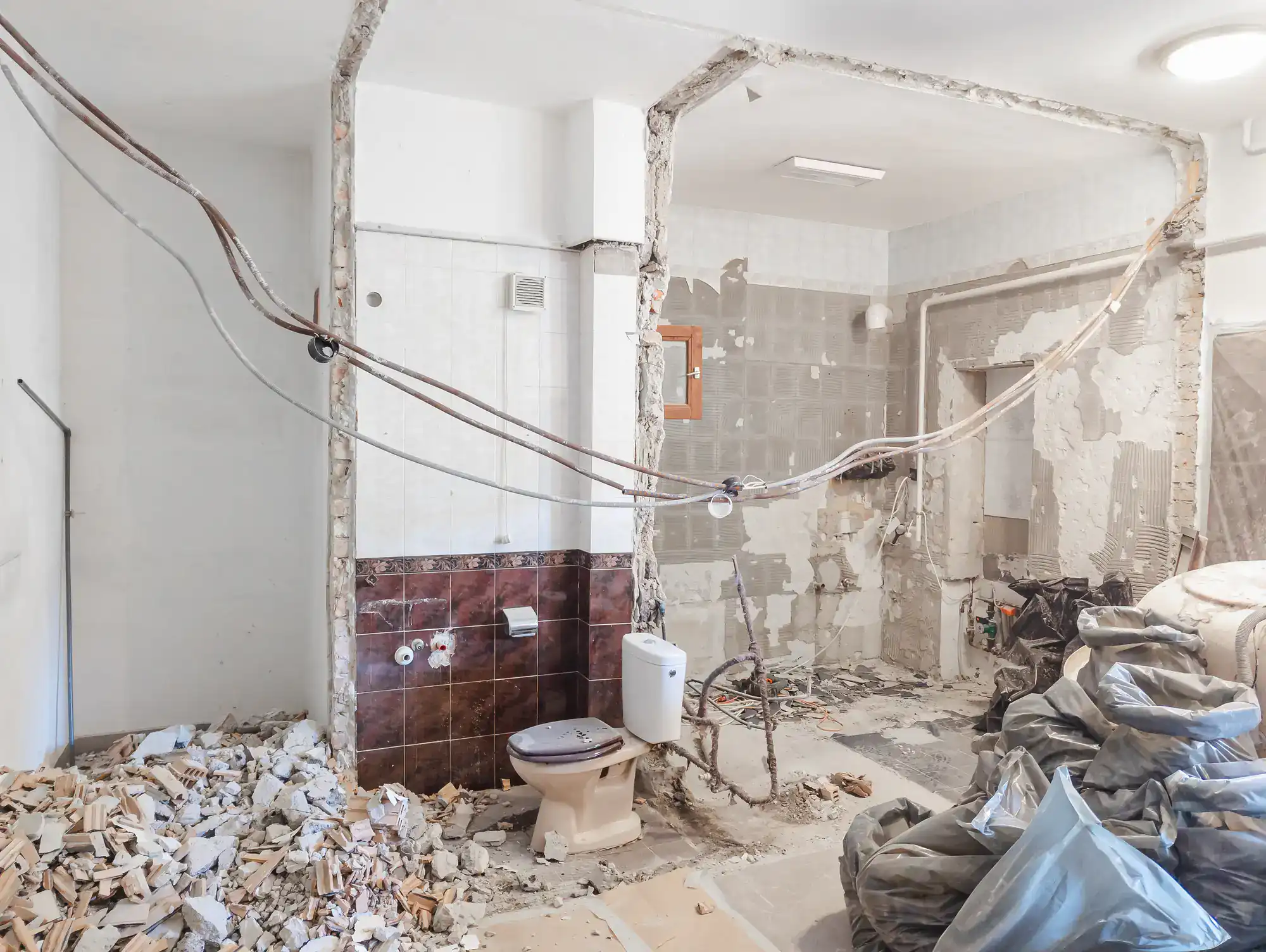
Interior demolition — sometimes called gutting — typically involves removing non-structural walls, ceilings, flooring, fixtures, cabinetry, plaster, and other interior materials down to the framing and subfloor. The scope depends on your renovation goals, but in older Merion Station homes, interior demo almost always involves more than just swinging a hammer. Original plaster walls, original millwork, and older flooring materials frequently contain regulated hazardous materials that require certified abatement before they can be disturbed.
The process starts with a hazmat assessment to identify what’s present, followed by abatement if needed, followed by the actual demolition work. We handle all three phases, which matters because in a pre-WWII stone colonial, you don’t know what’s in the walls until you test. We also handle construction debris removal after the work is complete — so you’re not left coordinating a separate haul-away crew. The space gets handed back to you clean and ready for the next contractor.
We offer 24/7 phone availability and emergency response, which matters because water damage in an older home moves fast. Mold begins forming within 24 to 48 hours of a water event — and in Merion Station’s pre-WWII homes, which often have original plumbing, stone foundations with limited waterproofing, and basements that have been managing groundwater for decades, a burst pipe or a flooded basement is a genuine emergency, not just an inconvenience.
The Philadelphia area’s winter freeze-thaw cycles put real stress on older plumbing systems, and spring groundwater events are common in Lower Merion’s lower-lying areas near the Schuylkill drainage. When you call us after a water event, we can respond quickly, assess the damage, begin water removal and drying, and handle mold remediation and gutting if needed — all without you having to coordinate three separate companies. Getting the right people on-site in the first few hours is the most important decision you’ll make in a water damage situation.
Yes — we offer cash discounts on qualifying jobs. In a service category where pricing is often opaque and final invoices don’t always match initial estimates, offering a straightforward cash discount is a way of keeping the transaction simple and transparent for both sides. It’s particularly relevant for homeowners in Merion Station who are managing renovation budgets on complex, multi-phase projects where costs can add up quickly across testing, abatement, demolition, and debris removal.
Every job also starts with a free written estimate that includes a clear scope of work — permit costs, hazmat handling, debris disposal, and labor — so you know what you’re committing to before any work begins. For a pre-WWII home in a ZIP code where the average sale price is around $750,000, having complete cost transparency upfront isn’t just a nice-to-have. It’s the standard you should expect from any contractor working on a property that significant.
Other Services we provide in Merion Station