Hear from Our Customers
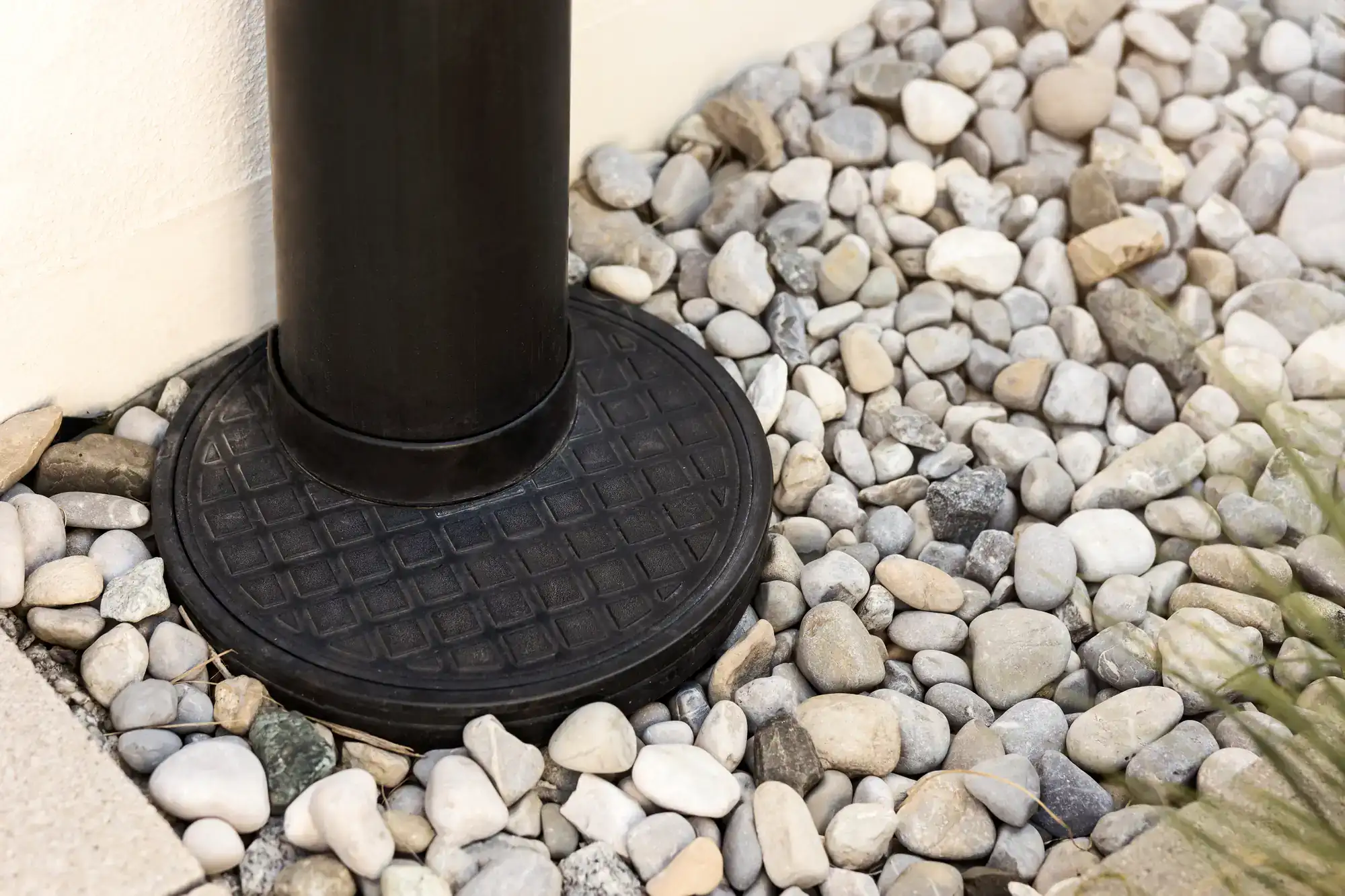
When water finds its way into a Rosemont basement, it’s not just an inconvenience — it’s a threat to a property that’s likely worth close to $800,000 or more. The clay-heavy soils throughout this part of the Main Line don’t drain on their own. They hold water against your foundation, and every freeze-thaw cycle that runs through the Philadelphia corridor each winter makes that pressure worse. A properly installed french drain system intercepts that water before it ever reaches your walls.
What changes after the work is done is straightforward. You stop watching the weather forecast with dread. The musty smell in the basement goes away. If you’ve been thinking about finishing that space — a home office, a gym, a place that actually gets used — now you can do it without gambling on whether the floor stays dry. For a home sitting between Lancaster Avenue and I-476, in a community where the housing stock carries real age and real value, that kind of protection isn’t optional. It’s just smart ownership.
The difference here isn’t just a trench and a pipe. It’s knowing that the system was designed for your specific conditions — the soil, the slope, the drainage patterns of your lot — and installed by someone who understood what was in the ground before they started digging.
We’ve been working on Pennsylvania homes for over 20 years. That includes a lot of Main Line properties — the kind with stone foundations, aging drainage, and a construction history that goes back further than most homeowners realize. When you’re working near a Rosemont foundation, you’re often working near lead paint, lead-contaminated soil, or asbestos pipe insulation. Most drainage contractors aren’t equipped to deal with that. We are.
We hold EPA certification as a Certified Lead Inspector and Risk Assessor. That means before any excavation happens near your foundation, we can test what’s actually in that soil. If something needs to be addressed, we handle it — remediation, abatement, the whole chain — without sending you off to find a second or third contractor. We serve both the Radnor Township and Lower Merion Township sides of Rosemont, which matters more than it sounds given that those are two separate municipalities with two separate sets of permit requirements.
You get one company, one point of contact, and a crew that knows what they’re getting into before we show up.
It starts with a free estimate. Someone comes out, looks at the property, and gives you an honest read on what’s causing the water intrusion and what it will take to fix it. For homes in Rosemont — especially anything built before 1960, which covers the majority of the housing stock here — that assessment includes evaluating the environmental profile of the site. If there’s a meaningful chance of lead paint or contaminated soil near the foundation, we test before a single shovel goes in. That step alone separates this process from what most drainage contractors offer.
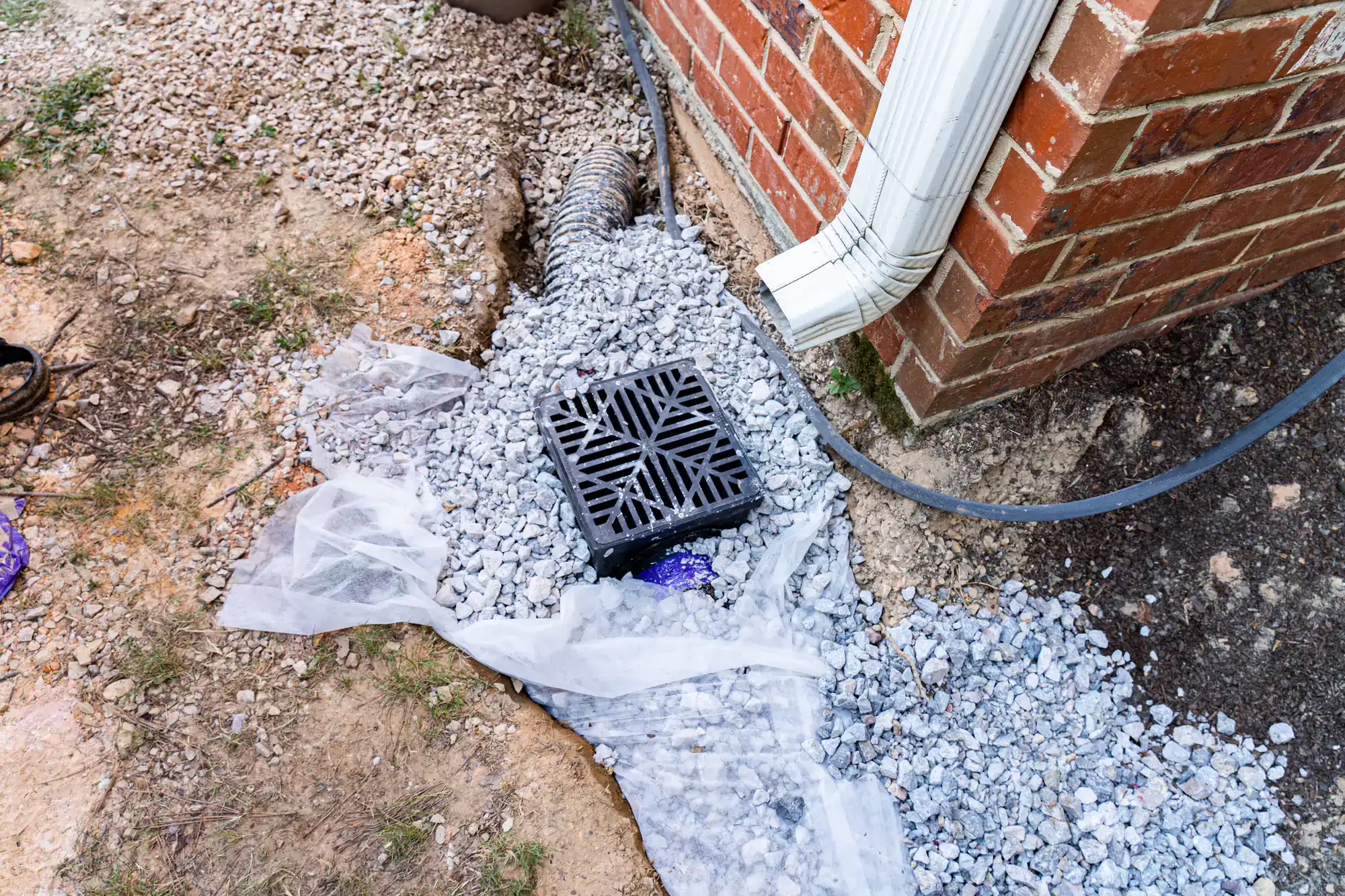
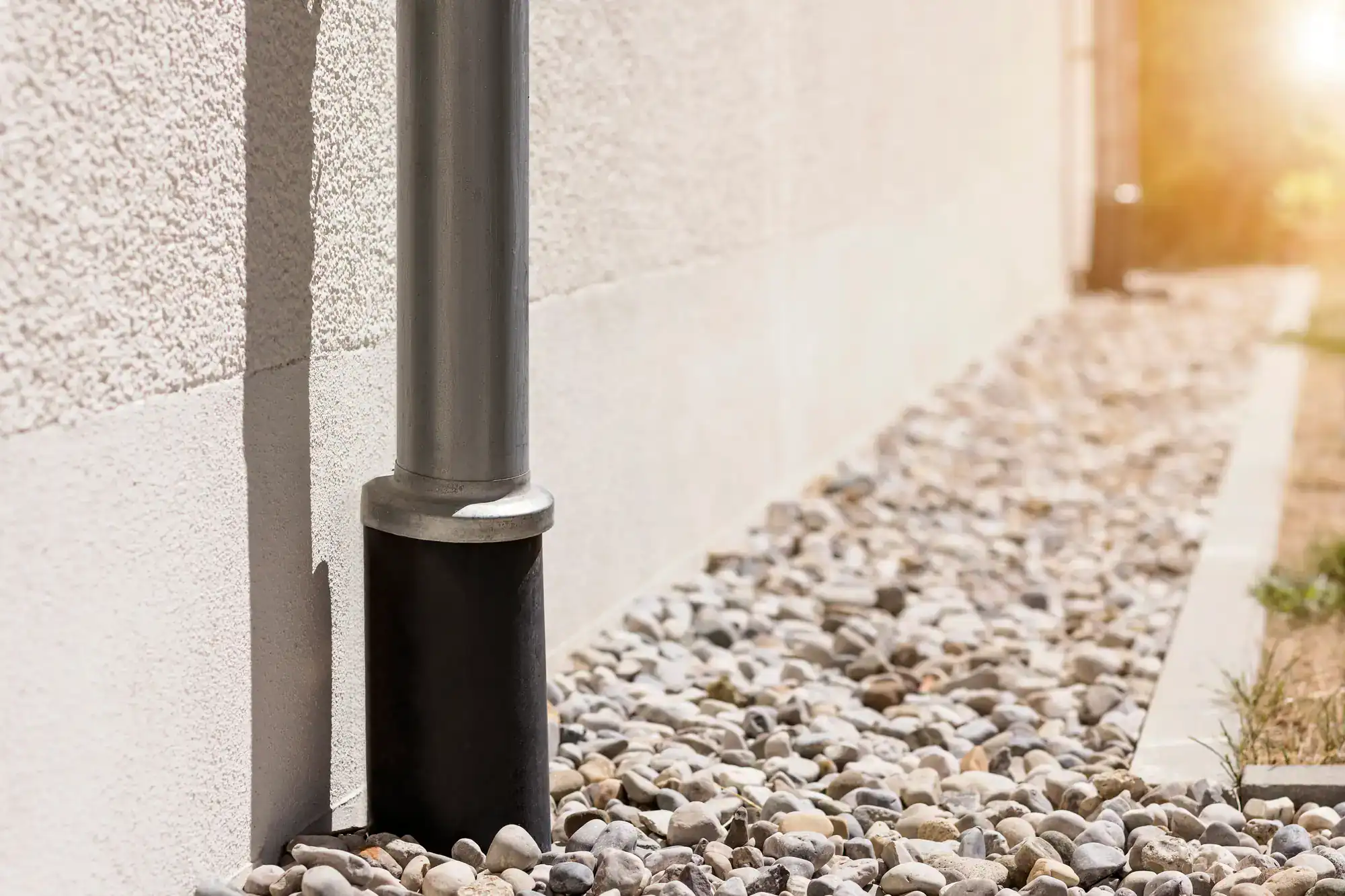
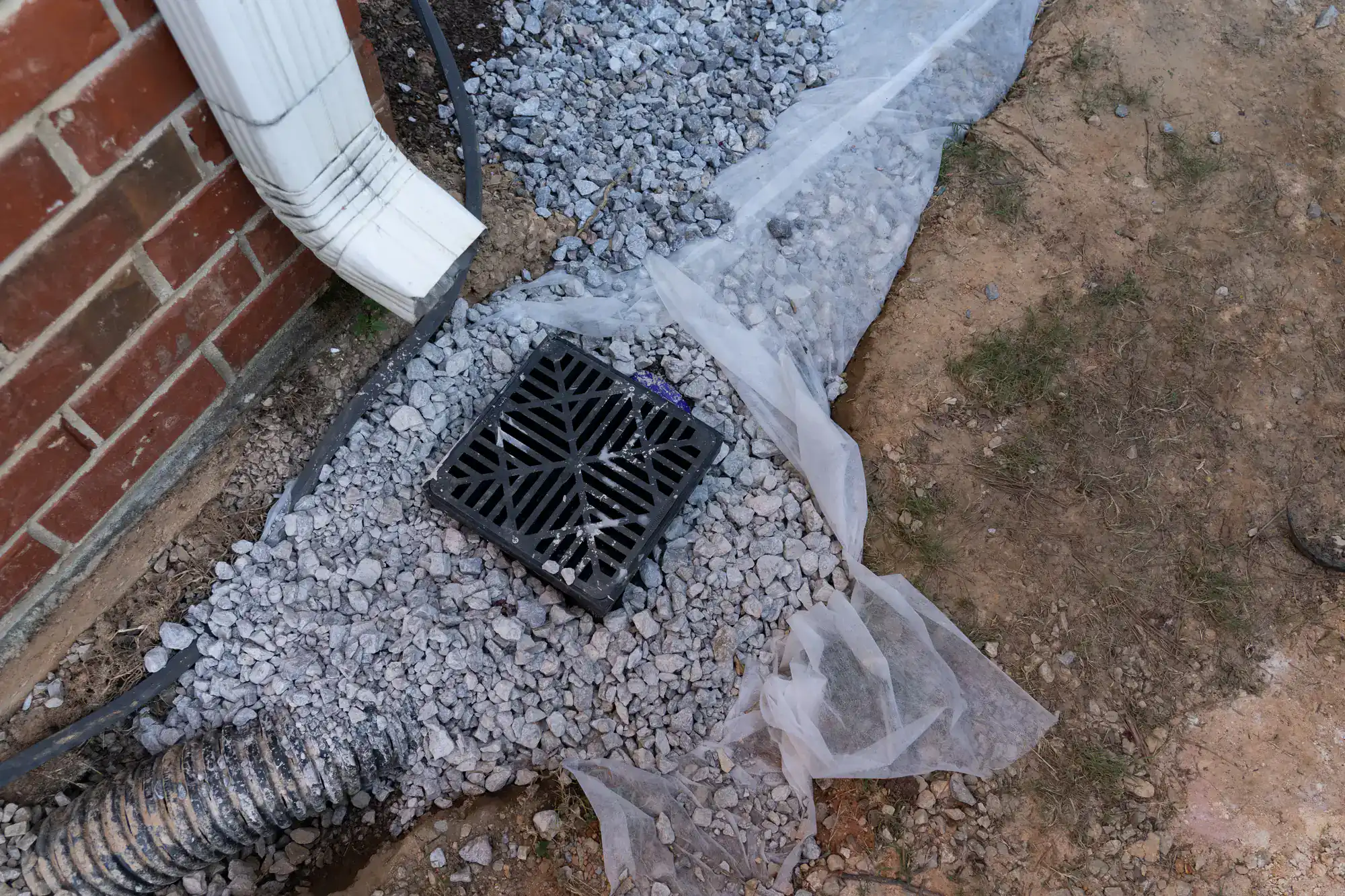
Once the scope is clear and the site is confirmed safe to work, the installation begins. For a french drain system, that means excavating a trench along the appropriate path — exterior, interior, or both depending on where the water is entering — laying rigid perforated PVC pipe surrounded by clean crushed stone, wrapping it in geotextile filter fabric to keep Rosemont’s clay soil out of the pipe, and grading the outlet so water has somewhere to go. The filter fabric piece is especially important here. Clay soil will infiltrate a poorly protected drain and clog it within a few years. Done right, this system lasts 30 to 40 years.
If your property sits in the Radnor Township portion of Rosemont, the 2022 stormwater ordinance update may affect permit requirements for your project. We know the current thresholds and handle that process. You don’t need to figure out which municipality governs your address — we do that for you.
Ready to get started?
Our french drain installation covers the diagnostic work, the environmental assessment where warranted, the physical installation, and the outlet design — all under one roof. For Rosemont properties, that scope often includes more than a standard drainage contractor would even think to look at. Homes near the Beaupre corridor, along Conestoga Road, or in the older residential sections closer to Garrett Hill frequently have foundation conditions that reflect 70, 80, or 100 years of weathering. That history matters when you’re designing a drainage solution that’s supposed to last.
For yard drainage specifically, we assess the topography of your lot and where water is moving across it. Rosemont’s valley position within the Darby Creek watershed means that runoff from uphill lots can add to your drainage load — it’s not always just your own roof and yard you’re managing. The french drain system is sized and positioned to account for that lateral groundwater movement, not just the obvious surface water.
On the basement side, interior french drain systems are an option when exterior excavation isn’t practical — a common situation on densely built lots or properties with mature landscaping that can’t easily be disturbed. We’ll tell you which approach makes more sense for your specific property and why, without steering you toward the more expensive option if the simpler one gets the job done. Free estimates, honest assessments, and a cash discount available if that helps — that’s how we work.

It depends on which side of Rosemont your property sits on, and that’s not a question most contractors can answer confidently. Rosemont straddles two municipalities — Radnor Township in Delaware County and Lower Merion Township in Montgomery County — and each has its own stormwater management rules. Radnor Township updated its ordinance in October 2022, lowering the threshold at which a formal stormwater permit is required. Projects that previously didn’t need a permit may now require one under the new standards.
If your property is in the Lower Merion Township portion of Rosemont, a separate set of regulations applies through Montgomery County. Additionally, any work near a natural drainageway may require a Pennsylvania DEP permit under Title 25, Chapter 105. We handle the permit research as part of the project scoping process, so you’re not left trying to figure out which municipality governs your address or which forms to file. That’s part of what working with an experienced contractor in this specific area actually looks like.
French drain costs vary widely depending on the length of the system, whether it’s interior or exterior, the depth required, and what the site conditions look like. For a straightforward exterior french drain on a residential property, you’re generally looking at somewhere in the range of $1,500 to $6,000. Larger systems, more complex layouts, or properties that require additional environmental assessment before excavation can push that number higher.
In Rosemont specifically, the age of the housing stock means that pre-installation environmental testing is sometimes a necessary part of the budget. If lead-contaminated soil is present around the foundation — which is a real possibility on any pre-1978 property — that needs to be addressed before drainage work begins. Skipping that step to save money upfront is how you end up with a much larger problem later. The free estimate we offer gives you a clear, itemized picture of what your specific property needs before you commit to anything.
An exterior french drain is installed around the perimeter of the foundation on the outside of the house. It intercepts groundwater before it reaches the foundation wall and redirects it away from the structure. This is generally the preferred approach when the water intrusion is coming from hydrostatic pressure in the surrounding soil — which is common in Rosemont given the clay-heavy composition of the soil throughout the Main Line corridor.
An interior french drain is installed inside the basement, typically along the perimeter of the floor where it meets the wall. It doesn’t stop water from entering the foundation, but it collects it and channels it to a sump pump before it can spread across the floor. Interior systems are often the more practical option on properties where exterior excavation would disturb mature landscaping, hardscaping, or structural elements that can’t easily be replaced. On many older Rosemont properties, interior installation is the right call — not a compromise, just the appropriate solution for the conditions.
The honest answer is that you don’t know without testing — and in Rosemont, the probability is significant enough that it’s worth taking seriously. The EPA’s lead paint threshold is 1978. The median construction year for homes in Rosemont is 1960, and more than 29% of the housing stock was built before 1950. That means the majority of properties in this community were built during the era of peak lead paint use, and decades of exterior repainting have deposited lead into the soil around most of those foundations.
We hold EPA certification as a Certified Lead Inspector and Risk Assessor. We can test the soil and surfaces around your foundation before any excavation begins. If lead is present at levels that require remediation, we handle that as part of the same engagement — you don’t need to find a separate environmental contractor and then come back to the drainage work. This matters especially for households with children or elderly residents, where lead exposure risk is highest. It’s not a standard step that other drainage contractors in this area offer, but it should be.
A french drain installed with the right materials — rigid perforated PVC pipe, clean crushed stone, and proper geotextile filter fabric — should last 30 to 40 years under normal conditions. The filter fabric is particularly important in Rosemont and throughout the Main Line area because the clay-dominant soil will infiltrate an unprotected drainage pipe and cause it to clog within a few years. That’s one of the most common reasons french drains fail prematurely, and it’s entirely preventable with the right installation.
In terms of ongoing maintenance, the main thing to watch for is the outlet. The discharge point of the system needs to stay clear so water can exit freely. Roots, debris, and sediment buildup at the outlet are the most common maintenance issues over time. French drain cleaning — running a drain snake or hydro-jetting the pipe — is occasionally necessary, especially on properties with heavy tree coverage, which is common throughout Rosemont’s older residential sections. Catching a partial clog early is much easier and less expensive than dealing with a fully failed system.
The cash discount exists because processing fees on card transactions are a real cost, and passing those savings directly to the customer is a straightforward way to keep pricing honest. It has no bearing on the materials used, the installation process, or the scope of work. The same rigid PVC pipe, the same clean stone, the same filter fabric, the same crew — the discount just reflects a simpler payment transaction.
For Rosemont homeowners who are already investing in a project that may include environmental testing, remediation if needed, and a properly engineered drainage system, every reasonable cost reduction matters. This isn’t a promotional device — it’s just how the pricing works when you pay cash. If you want to know exactly what your project will cost before committing, the free estimate covers that in full, with or without the cash discount factored in. No pressure, no obligation, just a clear number for what your specific property actually needs.
Other Services we provide in Rosemont