Hear from Our Customers
Most Rosemont homeowners don’t realize that gutting a kitchen or tearing out a finished basement in a home built before 1978 isn’t just a demo job — it’s a regulated process. The walls, floors, and ceilings of older Main Line homes routinely contain asbestos-containing materials and lead paint. Disturbing them without certified abatement isn’t just risky — it’s a federal violation. That’s the reality for a large portion of homes in this community, and it’s something most general contractors either don’t know or won’t tell you upfront.
When the work is handled correctly, here’s what actually changes. The project moves forward without stop-work orders, permit issues, or health hazards left behind. You’re not juggling a tester, an abatement firm, a demolition crew, and a cleanup company — because we handle all of it under one roof. One call, one scope of work, one invoice.
Rosemont’s dual-township character adds another layer most contractors miss entirely. Depending on which side of the community your address falls on, your permit goes through either Radnor Township in Delaware County or Lower Merion Township in Montgomery County. Those are two separate permitting authorities with different requirements, different inspection processes, and different contractor licensing rules. We serve both counties and know the difference — which means your project doesn’t stall because someone filed in the wrong place.
We’re based in Glenside, PA — about seven miles from Rosemont along the Main Line corridor. That proximity isn’t just a convenience. It means we’ve worked on the same kind of Victorian-era stone homes, mid-century colonials, and early 20th-century construction that defines Rosemont. We know what’s inside these walls before we open them.
Eric, our owner, holds EPA Certified Lead Inspector and Risk Assessor credentials — not just the basic contractor certification, but the full inspector-level qualification that allows us to legally test, document, and certify hazardous material conditions in your home before any work begins. Add HUD compliance, full licensure, bonding, and insurance across both Delaware and Montgomery Counties, and you have a contractor who can actually do what we say we can.
We’ve been doing this for over two decades. That’s not a marketing line — it’s the reason we understand Radnor Township’s Shade Tree Ordinance compliance requirement before a demolition permit gets issued, or why we know that Delaware County carries one of the highest radon risk ratings in Pennsylvania. We’ve seen it all in homes like yours in Rosemont and throughout the Main Line, and we know how to handle it.
It starts with a free estimate. We come out, walk the property, and give you a clear, written scope of work — what’s included, what permits are needed, and what the timeline looks like. For most Rosemont homes, that first visit also involves an assessment for hazardous materials. Given that a significant portion of homes here were built between 1940 and 1969, asbestos and lead testing isn’t optional — it’s the responsible first step before anything gets touched.
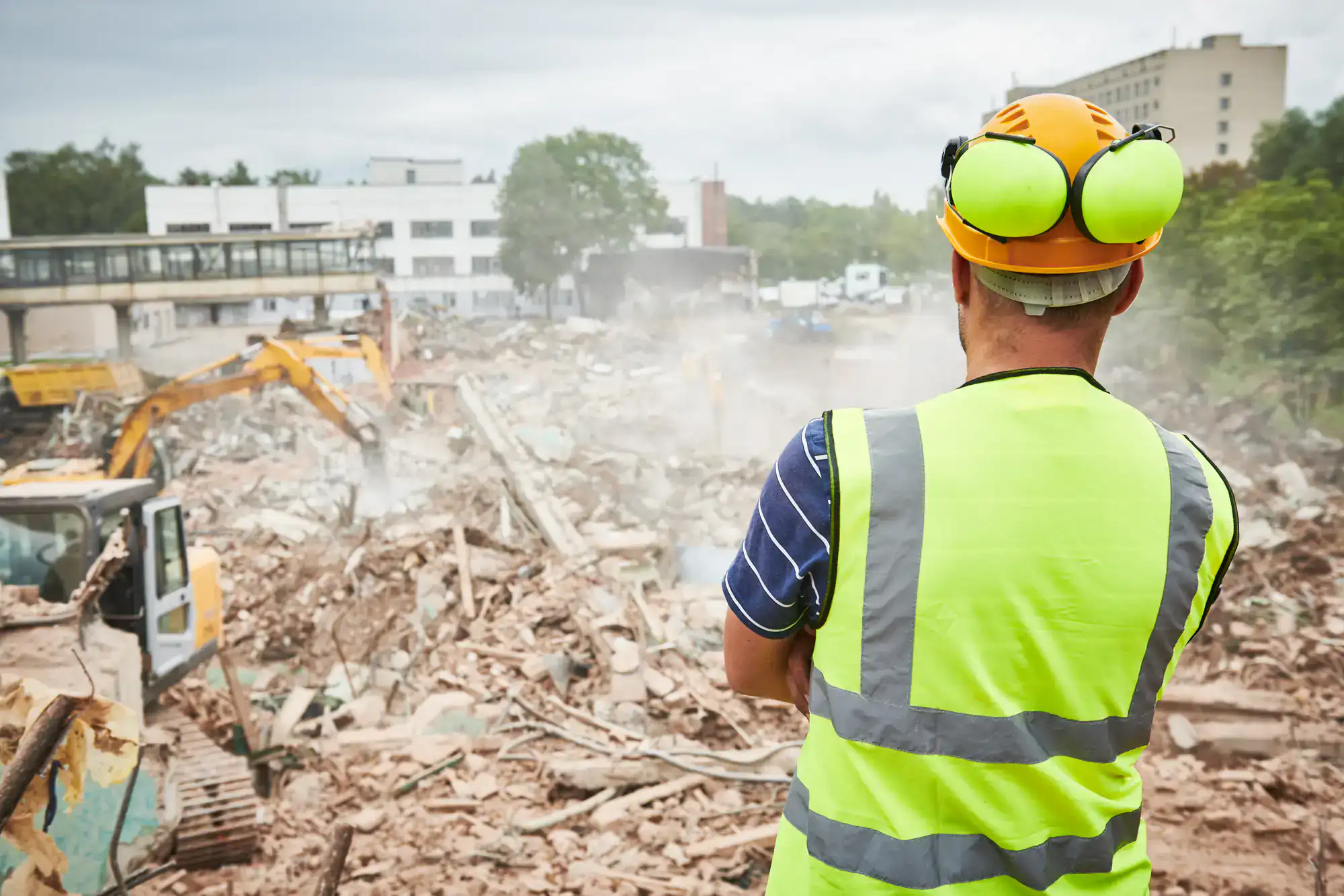
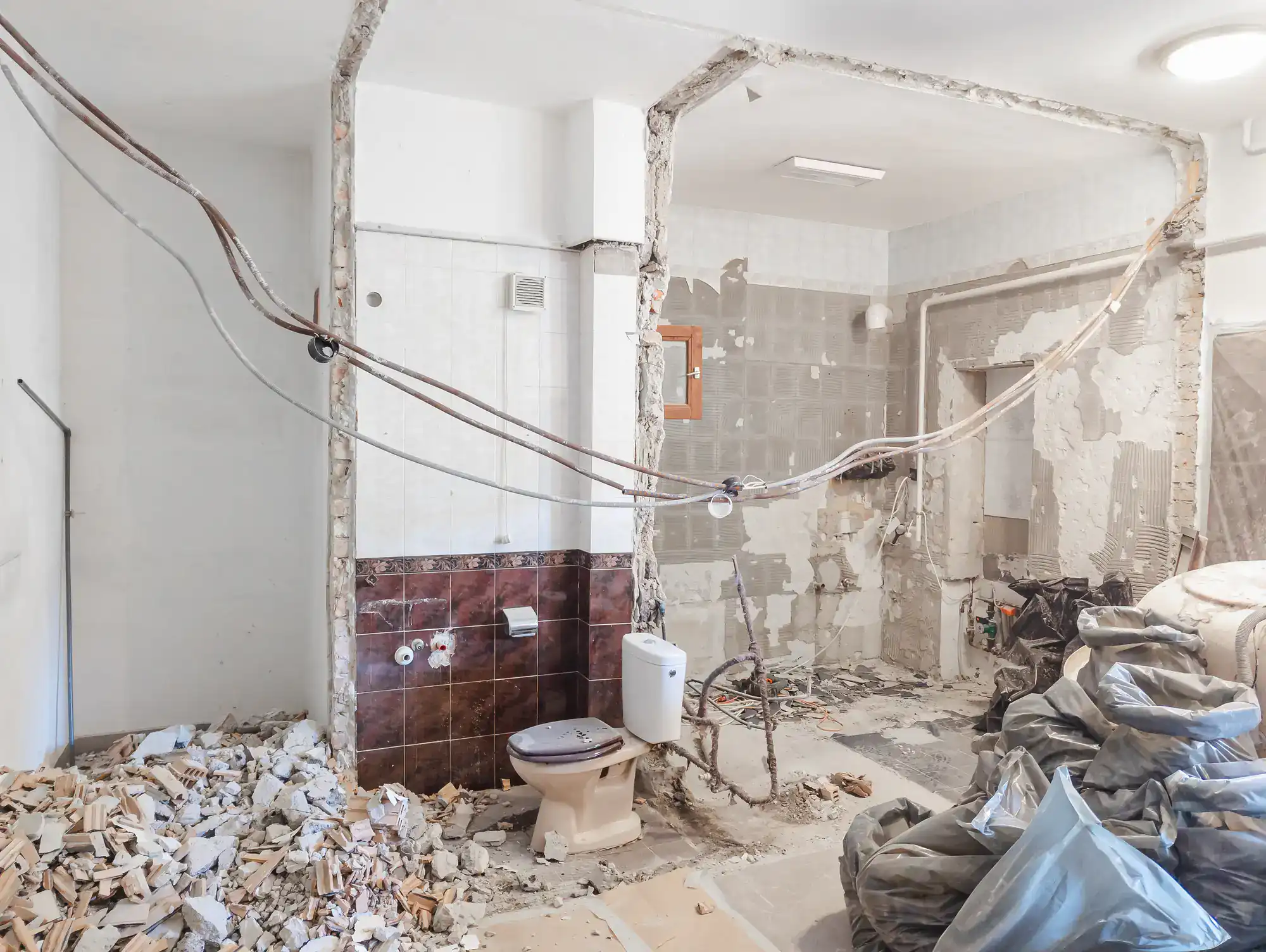
If hazardous materials are present, abatement happens before demolition begins. We use HEPA filtration systems and negative air pressure containment to keep fibers and dust from migrating into the rest of your home. This isn’t an add-on — it’s built into how we work. Once abatement is complete and documented, the demolition or gutting phase begins. Whether that’s a full interior gut, selective structural demo, or a specific room teardown, the work is scoped, permitted, and executed cleanly.
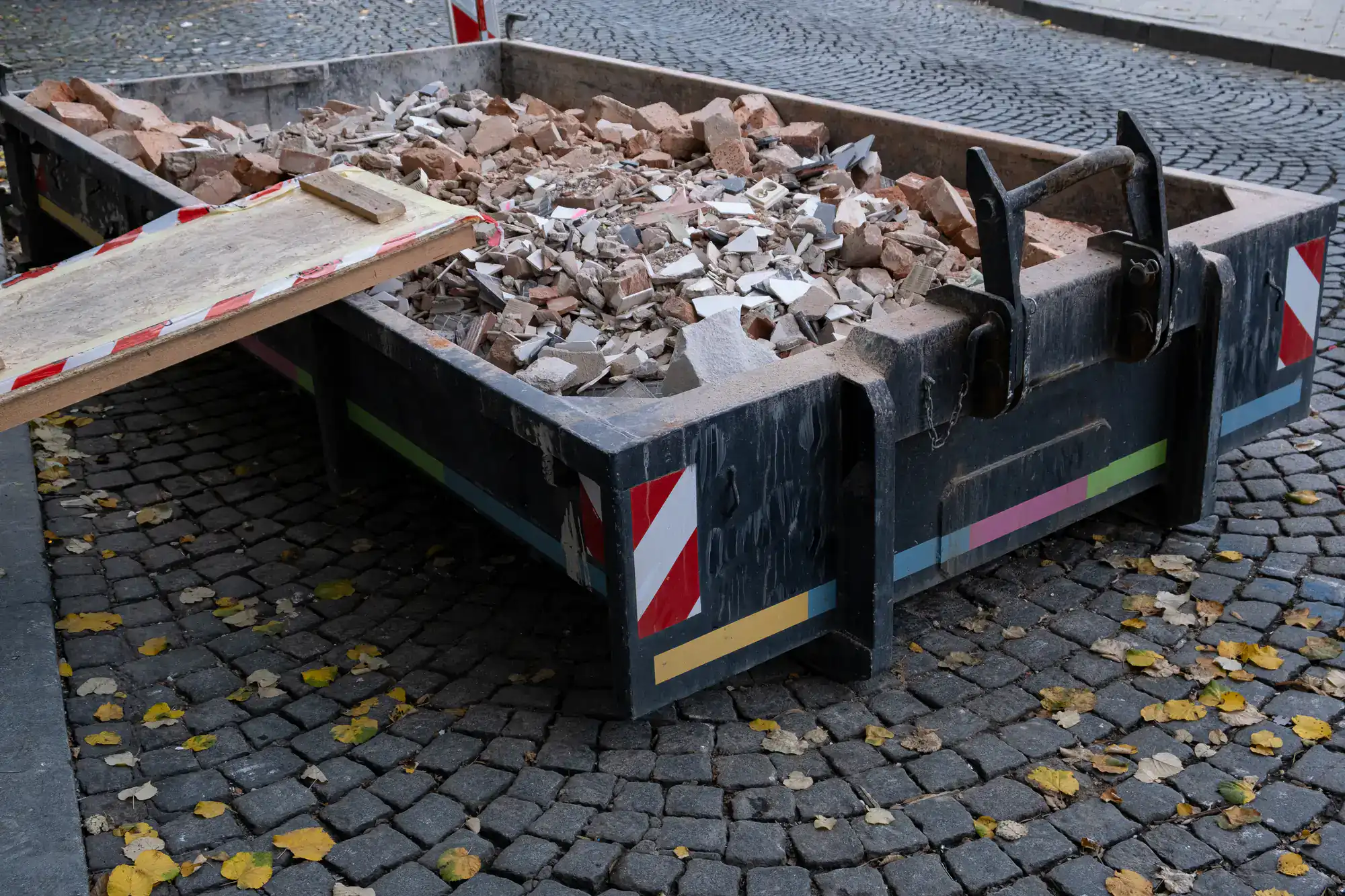
Permit filing is handled based on your specific Rosemont address. Properties in Radnor Township go through Delaware County’s permitting process, which includes Shade Tree Commission compliance and a pest extermination certificate before a demolition permit can be issued. Properties on the Lower Merion side follow Montgomery County’s separate process. We handle both. When the work is done, construction debris removal and site cleanup are part of the job — not a separate charge you find out about later.
Ready to get started?
A lot of contractors in this area will take on a demo job and hand off the hazmat piece to someone else — or skip it entirely. We don’t work that way. Asbestos abatement, lead paint removal, mold remediation, interior demolition, full gut renovations, waterproofing, and construction debris removal are all handled in-house. If your Rosemont home needs it, we do it — start to finish.
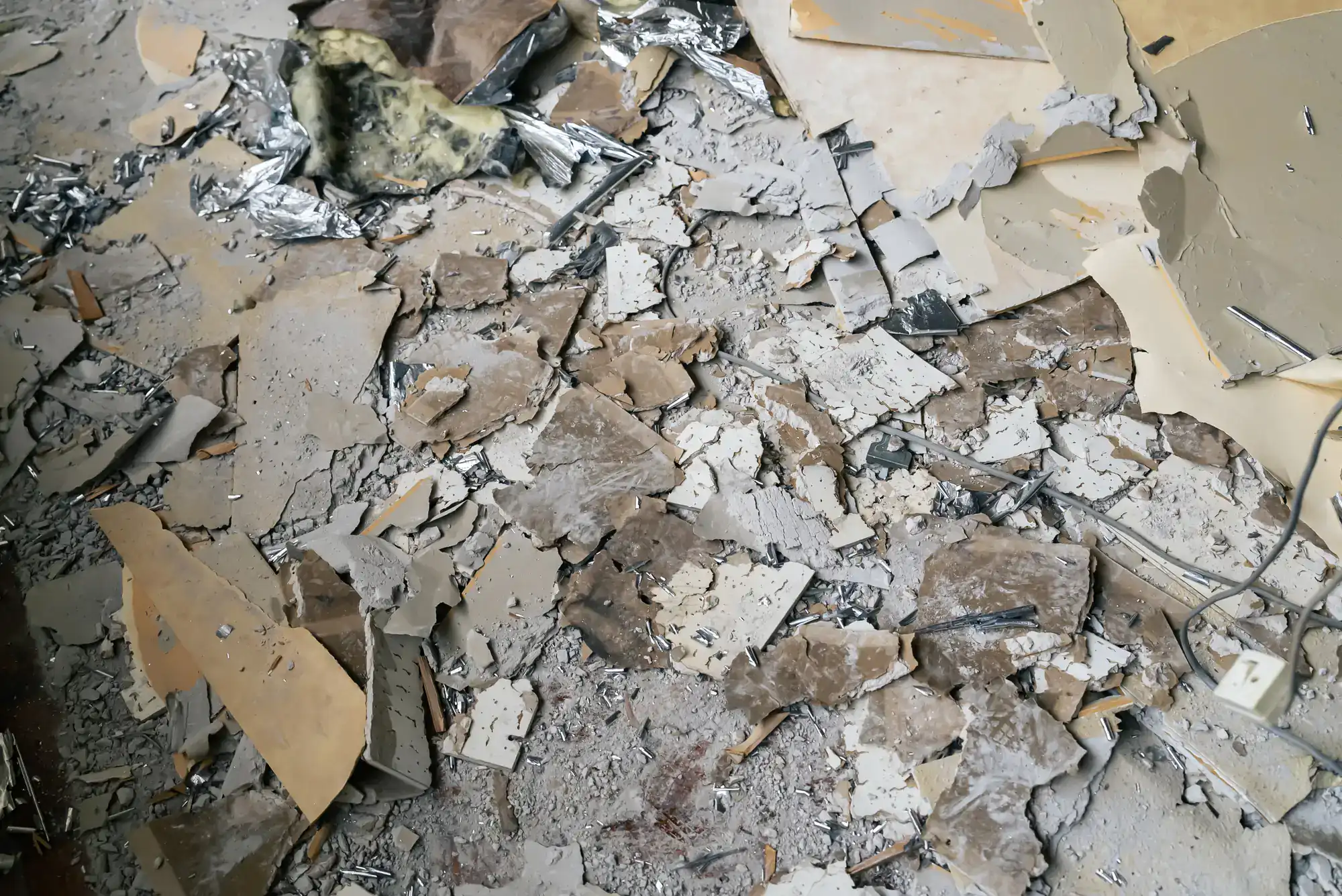
For homeowners near the Rosemont College campus, or anyone dealing with early 20th-century institutional or residential construction, the abatement component is especially important. Buildings from the 1920s through the 1960s were built with asbestos in floor tiles, pipe insulation, ceiling materials, and joint compound. Lead paint is present in virtually every pre-1978 home in Rosemont. Neither of those things go away on their own, and neither can be legally disturbed without certified handling. We carry the EPA and HUD certifications that make us qualified to do that work — not just willing to.
Emergency response is also part of what we offer. If a pipe bursts in your 1940s Rosemont home during a January freeze, or a basement floods after a spring storm, we’re available around the clock. Water damage in older homes moves fast — mold can establish within 24 to 48 hours — and having a contractor who handles emergency gutting, drying, and remediation without requiring you to call three separate companies is a real difference when timing matters. Free estimates, cash discounts, and no hidden fees for permits or debris disposal are standard with every job.

If your home was built before 1978 — which covers the majority of Rosemont’s residential housing stock — then yes, a professional asbestos assessment should happen before any demolition or gutting work begins. Federal EPA regulations require it for any renovation or demolition that disturbs asbestos-containing materials, and the consequences of skipping it go well beyond a fine. Asbestos fibers are invisible and odorless, and once they’re airborne inside your home, they’re a serious health risk to everyone in the building.
In Rosemont specifically, this matters more than people realize. Homes built between the 1940s and late 1960s — a common construction era throughout this community — frequently contain asbestos in floor tiles, pipe insulation, drywall joint compound, ceiling texture, and roofing materials. Some of the older Victorian-era and early 20th-century properties in Rosemont go back even further. An EPA-certified inspector like us can assess the property, test suspect materials, document the findings, and handle abatement before a single wall comes down — so your project stays legal, safe, and on schedule.
This is where Rosemont gets genuinely complicated, and it’s worth understanding before you hire anyone. Rosemont straddles two separate townships — Radnor Township in Delaware County and Lower Merion Township in Montgomery County. Depending on your specific address, your permit application goes to one or the other, and they are entirely separate permitting authorities with different requirements and different inspection processes.
For properties in Radnor Township, demolition contractors must hold a township-issued contractor license. Before a demolition permit is issued, you’ll also need to demonstrate compliance with Radnor’s Shade Tree Ordinance — meaning the impact on trees on or near the property has to be reviewed — and provide a pest extermination certificate confirming the structure is free of wood-destroying insects and rodents. Lower Merion Township has its own separate set of requirements. The practical advice here: before you hire a contractor, confirm which township your Rosemont address falls under, and make sure your contractor has experience filing permits in that specific jurisdiction. We work in both counties and handle the permit process as part of every job.
The straightforward answer is that if your home was built before 1978, you should assume lead paint is present until a certified inspector tells you otherwise. The EPA estimates that the vast majority of pre-1978 homes contain lead-based paint somewhere — and in Rosemont, where the housing stock skews heavily toward mid-century and earlier construction, that’s not a remote possibility. It’s the baseline expectation.
What happens next depends on the scope of your project. If you’re doing minor repairs that don’t disturb painted surfaces, the risk is lower. But if you’re gutting a room, tearing out walls, or doing any structural demolition, lead paint becomes a direct concern. Sanding, cutting, or demolishing lead-painted surfaces creates fine dust that’s hazardous to breathe — especially dangerous for children and pregnant women. We hold EPA Certified Lead Inspector and Risk Assessor credentials, which means we can legally test your home, document the conditions, and perform certified lead abatement before demolition begins. That documentation also matters if you’re selling the home — it protects you during the inspection and disclosure process.
Interior demolition typically refers to removing specific elements inside a structure — taking out walls, ceilings, flooring, or fixtures — while leaving the building’s shell and structural systems intact. A full gut renovation goes further: everything non-structural gets stripped out, down to the studs and subfloor, so the space can be rebuilt from scratch. Both types of work are common in Rosemont, where older homes are frequently renovated rather than torn down, and where the original construction often includes materials and systems that need to be removed and replaced entirely.
The key distinction from a practical standpoint is that both require hazmat assessment first in a community like Rosemont. Whether you’re removing one bathroom’s worth of tile and plaster or gutting an entire floor of a 1950s colonial, the same asbestos and lead considerations apply. The scope of abatement work scales with the scope of demolition. We handle both types of projects and can walk you through exactly what’s involved based on your home’s age, construction type, and the specific work you’re planning — before you commit to anything.
Act quickly, because timing is the single biggest factor in how bad the damage gets. Mold can begin establishing itself within 24 to 48 hours of a water event, and in an older Rosemont home with plaster walls, hardwood floors, and a stone or block foundation, water travels fast through materials that weren’t designed to be waterproof. The longer it sits, the more you’re dealing with — and the more expensive the remediation becomes.
Call us directly. We offer 24/7 emergency response, which means an actual response — not a voicemail and a callback the next morning. When we arrive, the first priority is assessing the extent of the damage and beginning controlled gutting of affected materials to stop the spread. In older homes, that process also has to account for the possibility of disturbing asbestos or lead-containing materials during emergency demo work — something most restoration-only companies aren’t equipped to handle. Because we do abatement and demolition together, we can manage the emergency without creating a secondary hazmat problem in the process. Delaware County, which covers the Radnor Township portion of Rosemont, sees a higher-than-average number of natural disaster events annually — winter storms, flooding, and freeze events are recurring, not rare. Having a contractor already in your phone before something happens is worth it.
The cash discount has nothing to do with cutting corners — it’s a straightforward pricing option for customers who prefer to pay that way, and it reflects the kind of direct, no-overhead relationship that comes with working with an owner-operated company rather than a large contractor with layers of administrative cost built into every invoice. We pass that savings along when the payment method allows for it. The work, the certifications, the permits, and the equipment are identical regardless of how you pay.
In a community like Rosemont, where residents are accustomed to working with professionals who are transparent about what they charge and why, this kind of upfront pricing flexibility tends to be appreciated rather than questioned. You’ll get a written, itemized estimate before any work begins — covering labor, permits, debris removal, and hazmat handling — so there’s no moment at the end of the job where the number looks different than what you expected. The cash discount is simply an option, not a condition. If it works for your situation, it saves you money. If it doesn’t, the pricing is still clear and the work is still the same.
Other Services we provide in Rosemont