Hear from Our Customers
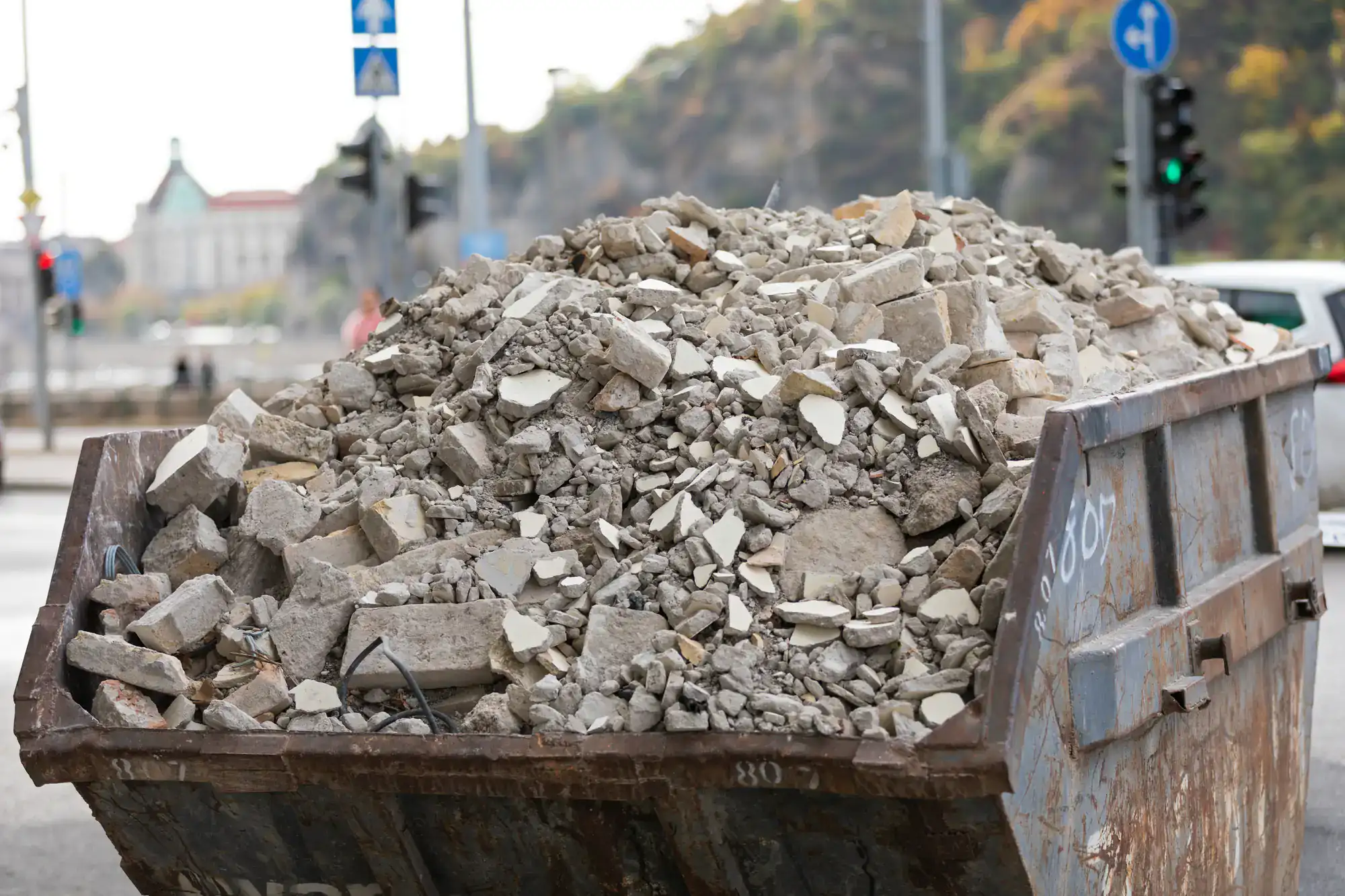
Most demolition jobs in West Rockhill don’t stall because of bad contractors. They stall because the contractor doing the demo isn’t licensed to handle what they find inside the walls. Lead paint, asbestos in the floor tiles, mold behind plaster — these aren’t rare surprises in a township settled in the 1700s. They’re the baseline. When a demo-only company hits one of those materials, they stop. You’re left finding a separate abatement contractor, waiting for availability, and absorbing a timeline that’s now completely out of your hands.
That’s the problem we were built to solve. Testing, remediation, and demolition all happen under one roof — one call, one crew, one schedule. If something turns up during your gut renovation in one of West Rockhill’s older Foursquares or stone farmhouses off Ridge Road, the job doesn’t stop. It just moves to the next step.
The township’s housing stock along the Pennridge corridor runs old. Homes built before 1940 carry an 87% probability of containing lead-based paint, according to the EPA. Asbestos is presumed present in anything built before 1980 until proven otherwise. In a community with four historic villages — Almont, Derstine, Naceville, and Ridge Valley — and a real estate market full of pre-war architecture, the odds aren’t in favor of a clean, straightforward demo. Having a contractor who can handle the full picture isn’t a luxury. It’s how the project actually gets done.
We’ve been doing this work in Bucks County for twenty years, with deep roots in West Rockhill and the surrounding Pennridge area. That’s twenty years of walking into older Pennsylvania homes, knowing what to look for before the first wall comes down, and handling whatever turns up without turning it into a crisis. Our team is PA state-certified for asbestos removal, holds the Certified Lead Inspector and Risk Assessor designation, and operates in full compliance with EPA and HUD regulations — credentials that matter a lot when you’re gutting a kitchen in a home built in 1910.
West Rockhill sits squarely in our service territory. The township is explicitly covered, the permit process at the local building department is familiar ground, and our crew isn’t learning on the job when they pull up to a farmhouse near Lake Lenape or a Victorian on the east side of town. We’re fully licensed, bonded, and insured — which also means we meet West Rockhill Township’s own contractor registration requirements, including the certificate of insurance naming the township. A lot of contractors operating in this area can’t say that.
It starts with a free estimate. Before any work is scoped or scheduled, we come out to assess the project — what’s coming down, what’s staying, and what the structure might be holding that needs to be addressed before demolition begins. For homes in West Rockhill, that assessment almost always includes an environmental review. The township’s housing stock is too old to skip it, and skipping it is how projects blow up mid-job.
If testing reveals asbestos, lead paint, or mold — which it frequently does in pre-1978 homes throughout the Pennridge area — remediation happens first, handled by our same licensed crew under the same project. No second contractor. No scheduling gap. West Rockhill Township requires a building permit for any demolition or structure removal, and contractor registration with a certificate of insurance naming the township is mandatory. We handle all of that as standard practice, not as an add-on.
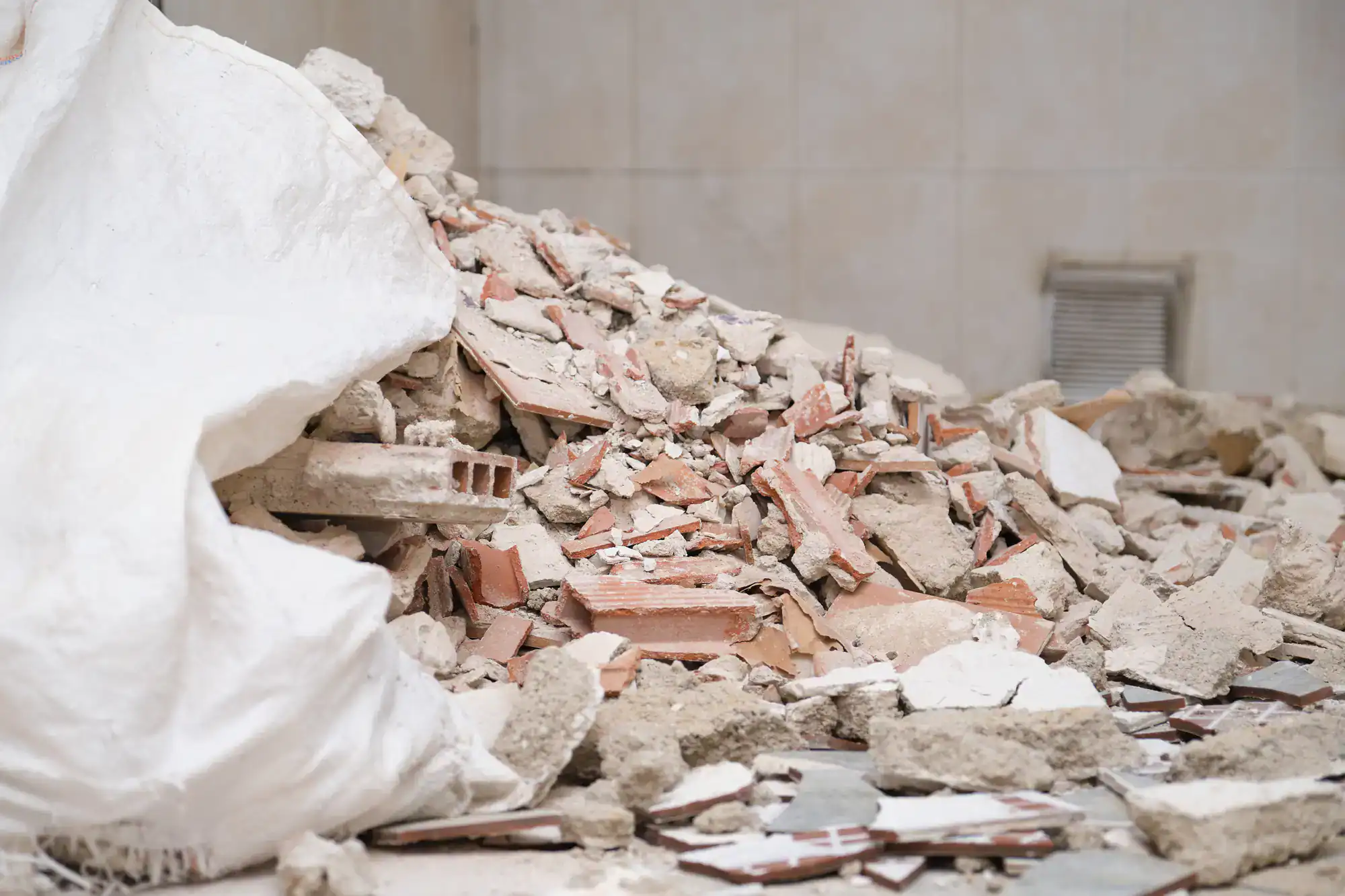
Once the environmental work is clear and permits are in place, demolition moves forward. Whether it’s a full gut-out down to the studs, selective interior demo for a kitchen or bathroom renovation, or a structural removal, the process runs clean — HEPA filtration systems in use throughout, state-of-the-art equipment, and a crew that knows the difference between what needs to go and what’s worth preserving in a historic home. When the job is done, the space is ready for whatever comes next.
Ready to get started?
Demolition in West Rockhill isn’t the same as demo work in a 1990s subdivision. The homes here have history — and history means layers. Multiple coats of old paint over original plaster, asbestos wrapped around pipes in basements near the East Branch Perkiomen Creek, mold growing behind stone foundation walls that have been absorbing moisture for a hundred years. Our service is designed specifically for this kind of work. Environmental testing before demolition begins, licensed hazardous material removal if needed, and full interior or structural demo executed by a crew that’s certified for all of it.
The scope covers everything from a single-room gut to a full house teardown. Kitchen demolition, bathroom demo, basement gut-outs, wall removal for additions, and full structural clearing — all available, all handled by the same team. For general contractors working renovation projects in the Pennridge area, we’re the demolition sub that doesn’t create problems when the unexpected shows up. That’s why contractors refer us. That’s why homeowners call back.
We’re available around the clock — including for emergency response when a pipe bursts in February or a basement floods after the creek runs high. Free estimates, cash discounts, and a beat-any-legitimate-estimate guarantee. Fully licensed, bonded, insured, and PA state-certified for asbestos. If you’re renovating in West Rockhill, this is the call that keeps the project on track.
Yes — West Rockhill Township requires a building permit any time you demolish or remove a structure, which includes interior demolition like wall removal and gut renovations, not just full building teardowns. The township also requires all contractors to complete a Contractor Registration Application and submit a certificate of insurance that names West Rockhill Township as an additional insured before any work begins. Inspections require 24-hour advance notice, and the township building department can be reached at 215-257-9063.
This isn’t just bureaucratic paperwork. It’s a legitimate layer of protection for you as the homeowner. If a contractor tells you permits aren’t necessary for your project, that’s a red flag. We pull the appropriate permits and meet every local registration requirement as standard practice — it’s built into how we operate, not treated as an afterthought.
If you’re working with a demo-only contractor and they find asbestos or lead paint, the job stops. They’re not licensed to remove it, which means you’re now finding a separate certified abatement contractor, waiting for their availability, and managing two completely different schedules. In West Rockhill, where homes routinely predate 1940 and asbestos is presumed present in most pre-1980 construction until tested, this scenario isn’t unlikely — it’s common.
We eliminate that problem entirely. We’re PA state-certified for asbestos removal and hold the Certified Lead Inspector and Risk Assessor designation, which means we can test, remediate, and demolish under one roof. If something turns up mid-project, our same crew handles it. The job doesn’t stop — it moves to the next step. That continuity is what keeps your renovation on schedule instead of dragging out for weeks while you coordinate between contractors who don’t talk to each other.
The short answer: if your home was built before 1980, you should assume it needs testing until proven otherwise. The EPA estimates that approximately 87% of homes built before 1940 contain lead-based paint, and asbestos was used in floor tiles, insulation, joint compound, plaster, and pipe wrap in homes built as recently as the late 1970s. West Rockhill Township has four historic villages and a housing stock that spans centuries — the odds of encountering hazardous materials in a pre-war home here are not a remote possibility.
Beyond the age of the home, the scope of the work matters. Any project that disturbs walls, floors, ceilings, or mechanical systems in an older home has the potential to expose hazardous materials. Pennsylvania’s DEP also requires a minimum 10-working-day notification before any demolition or renovation project that disturbs regulated asbestos-containing materials. Getting testing done before the project starts — not after something is already disturbed — is how you stay on schedule, stay compliant, and avoid a situation that’s far more expensive to clean up after the fact.
Yes — but only if they hold the right credentials for both. In Pennsylvania, asbestos removal contractors must hold a specific state-issued certification under the Pennsylvania Asbestos Accreditation and Certification Act (Act 194 and Act 161), issued by the PA Department of Labor and Industry. This is separate from a general contractor’s license. Many contractors who advertise demolition services in the Bucks County area do not hold this certification — which means they legally cannot remove asbestos even if they find it on your job site.
We hold the PA state asbestos certification, the Certified Lead Inspector and Risk Assessor designation, and operate in compliance with EPA and HUD regulations. That combination is what makes the one-stop model actually work — it’s not a marketing angle, it’s a credentials reality. When you hire us for demolition in West Rockhill, you’re hiring a contractor who is legally authorized to handle every phase of the project, from initial testing through final debris removal.
Costs vary based on the size of the space, the scope of the work, and what the environmental assessment reveals before demo begins. As a general range, interior demolition runs approximately $2 to $8 per square foot for standard gut work. A full gut-out of an entire home down to the studs typically falls between $2,500 and $9,800 depending on square footage and complexity. If hazardous materials are present and require remediation before demo can proceed, that adds to the total — but knowing that upfront, before work starts, is exactly why we conduct environmental testing first.
For West Rockhill homeowners dealing with older properties — Victorian-era homes, stone farmhouses, pre-war colonials — the environmental component is often the variable that determines final cost. We provide free estimates that account for the full scope, including any testing findings, so you’re looking at a real number before anyone touches a wall. Cash discounts are available, and we’ll beat any legitimate competing estimate. No mid-project surprises, no change orders when something turns up unexpectedly.
Yes — we’re available 24 hours a day, 7 days a week, including for emergency response situations. In West Rockhill, that availability matters more than it might in a newer suburb. The township is drained by the East Branch Perkiomen Creek and Unami Creek, and creek-adjacent properties can take on water quickly after significant rain events. Older stone foundations and pre-war construction throughout the township are also more vulnerable to burst pipes, ice dam damage, and moisture infiltration during the freeze-thaw cycles that hit Bucks County every winter.
When a basement floods or a pipe bursts inside an older home, the damage can move fast — and the longer water sits against old plaster, wood framing, and historic materials, the more likely mold becomes. Emergency demolition and remediation in those situations isn’t about being dramatic. It’s about stopping the damage before it compounds. We pick up the phone at 2am, respond to emergency calls, and bring the same licensed, certified crew whether it’s a scheduled gut renovation or an urgent situation that can’t wait until Monday morning.
Other Services we provide in West Rockhill