Hear from Our Customers
When demo work gets done right in a home like yours, the difference is immediate. No lingering dust concerns, no mystery materials left behind the walls, no permit headaches that hold up the next phase of your renovation. You move forward — on schedule, with documentation in hand, and without the anxiety of wondering whether a shortcut was taken somewhere.
That matters more in Narberth than most people realize. The borough’s housing stock is predominantly pre-1978, which means asbestos-containing materials and lead-based paint aren’t a remote possibility on a gut job — they’re close to a certainty. A contractor who isn’t EPA-certified to inspect and abate those materials before touching a wall isn’t just cutting corners. They’re putting you in a legally and medically compromised position inside a home that’s worth close to $800,000.
And because Narberth homes sit close together — this is a half-square-mile borough with nearly 9,000 residents per square mile — the way demo work gets contained matters to your neighbors too. HEPA filtration, proper negative air pressure, and clean debris removal aren’t extras here. They’re the baseline expectation for anyone doing this kind of work responsibly on a dense residential street.
We’re based in Glenside — about six miles up the road from Narberth — and have been working on Montgomery County homes for over two decades. This isn’t a franchise dispatching crews from three counties away. We’re an owner-operated company that knows Narberth, knows the housing stock, and knows what’s typically hiding inside a 1920s Dutch Colonial or a Craftsman bungalow off Montgomery Avenue.
Eric holds EPA Certified Lead Inspector and Risk Assessor credentials — not just the basic RRP contractor certification that most renovation companies carry, but the full inspector-level qualification that allows him to legally test, evaluate, and certify lead conditions before any demo work begins. That distinction matters enormously in Narberth, where virtually every home predates the federal lead paint cutoff.
We’re fully licensed, bonded, and insured. Our team uses HEPA filtration systems on every applicable job, pulls the permits, and handles the full scope — testing, abatement, gutting, waterproofing, debris removal — so you’re not managing a revolving door of subcontractors through your home.
It starts with a free estimate. We walk the property, assess the scope, and give you a written, itemized breakdown of what the work involves — including any hazmat considerations. For a pre-1940s Narberth home, that almost always means a lead and asbestos evaluation before anything gets touched. That’s not a delay. That’s the step that keeps the rest of the project legal, safe, and on track.
Once the scope is confirmed and permits are pulled — we handle Narberth Borough’s non-structural demolition permit process through the borough’s MyGov portal, so you don’t have to figure that out yourself — the abatement phase comes first. Any regulated materials are addressed, documented, and properly disposed of before the demolition crew begins. If your project falls within or near the Narbrook Park Historic District, we know how to navigate that overlay without triggering unnecessary review for interior work that doesn’t require it.
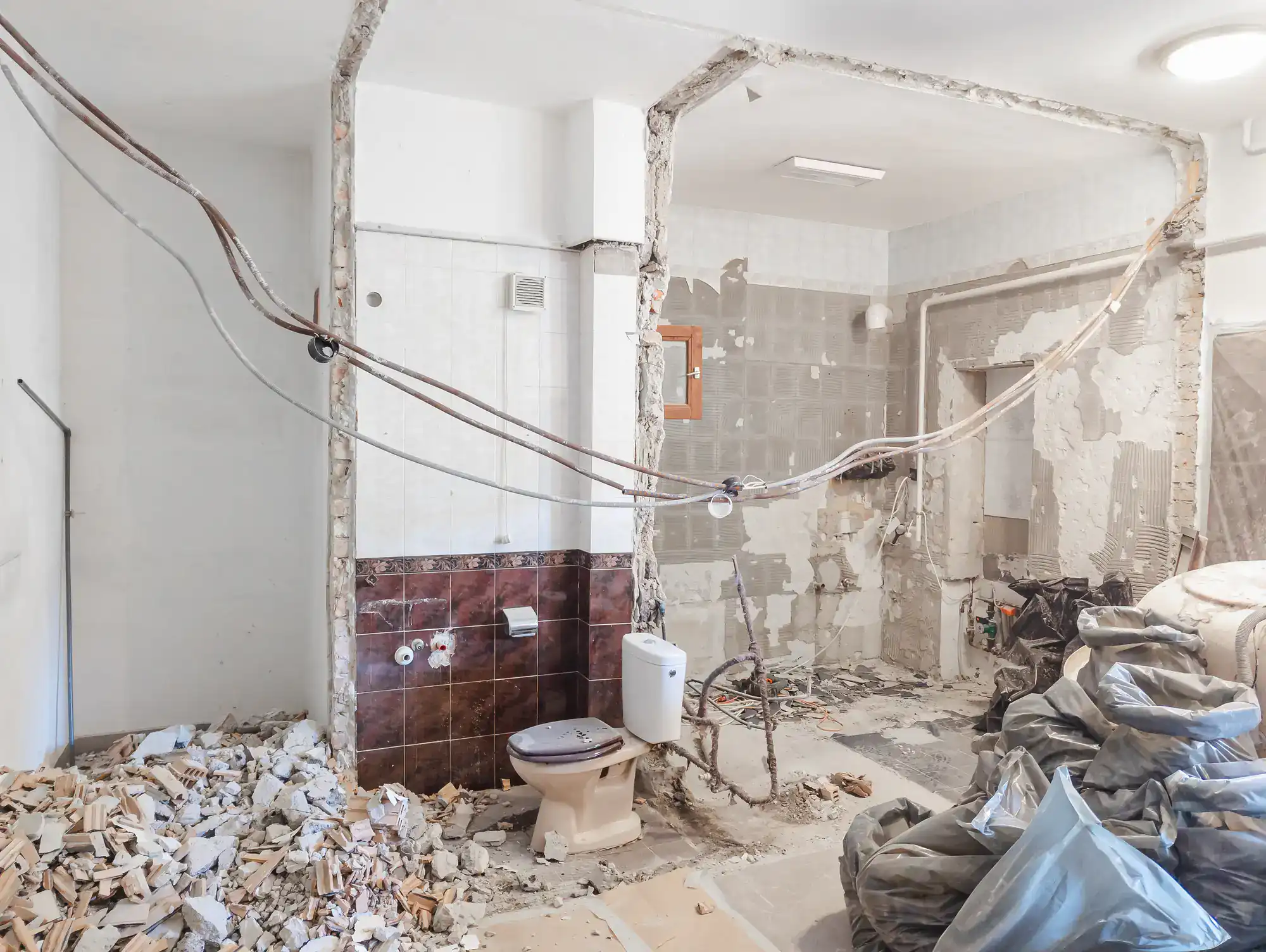
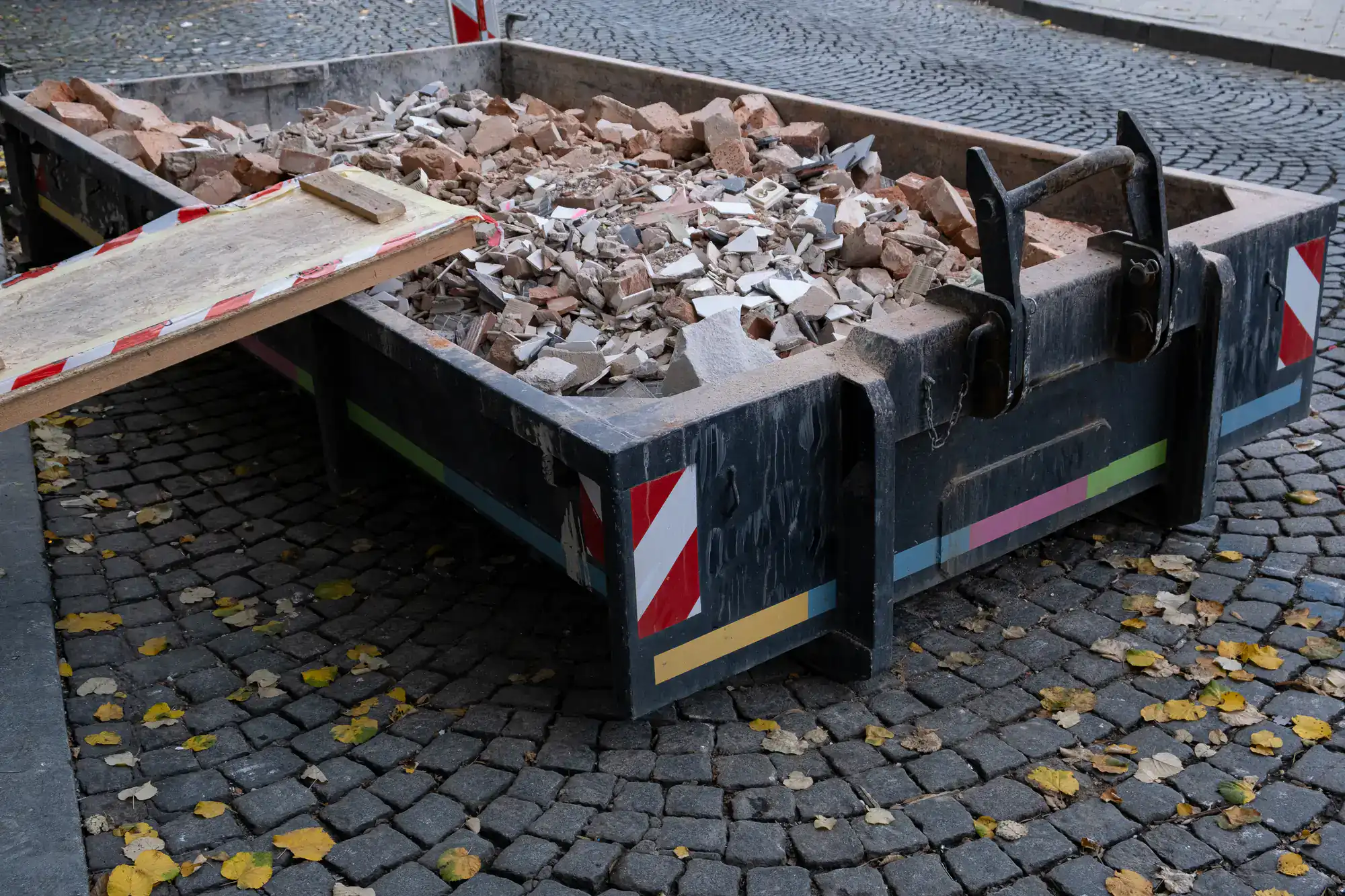
From there, the gutting or selective demo proceeds. Debris is removed and disposed of properly. If waterproofing or restoration work is part of the scope, that happens next — same crew, same company, same point of contact. When we leave, the space is clean, documented, and ready for whatever comes next.
Ready to get started?
The reason most renovation projects in older Narberth homes get complicated isn’t the demo itself — it’s the coordination. You hire a mold tester, they flag asbestos, you call an abatement company, they finish, then the demo crew shows up and finds water damage behind the wall, and suddenly you need a fourth contractor. We eliminate that entirely. Testing, abatement, interior demolition, gutting, waterproofing, and construction debris removal all happen under one contract.
For Narberth specifically, that one-stop model addresses a very real local problem. The homes here — particularly along the older residential streets and within the Narbrook Park Historic District — were built in an era when asbestos was standard in floor tiles, pipe insulation, and joint compound, and lead was in the paint on virtually every surface. Any gut job that doesn’t start with a certified inspection isn’t just incomplete. It’s a liability. Our EPA Certified Lead Inspector credential means the inspection, abatement, and demolition are all handled by the same qualified team, with documentation at every stage.
Water damage restoration is also part of our scope when needed. Older plumbing in pre-war homes fails — especially in hard winters — and when it does, the gutting and restoration have to happen fast. We offer 24/7 emergency availability and can respond to burst pipe situations before mold sets in and compounds the damage.

Yes — Narberth Borough requires permits for demolition work, including non-structural interior demo. The borough has a specific non-structural demolition permit application process managed through its MyGov online portal, and the Building and Zoning Department enforces local codes throughout the project. If your home is within or adjacent to the Narbrook Park Historic District, there may be additional review considerations depending on the scope of work and whether the structure is a contributing resource in the district.
We handle the permit process for you. We’re familiar with Narberth Borough’s requirements, we’ve navigated the MyGov application process before, and we know how to scope interior gutting work in a way that doesn’t trigger unnecessary historic preservation review. You don’t need to figure out which form to file or which department to call — we handle it as part of the project.
Almost certainly, yes — at least one of the two, and very likely both. Homes built before 1978 are presumed to contain lead-based paint under EPA regulations, and the older the home, the higher the concentration tends to be. For a home built in the 1920s, lead paint is essentially a given on original surfaces. Asbestos is similarly prevalent in Narberth homes of that era — it was commonly used in floor tiles, pipe insulation, textured ceilings, roofing materials, and joint compound through the late 1970s.
This doesn’t mean you can’t renovate. It means the renovation has to start with a certified inspection before any demolition work begins. We hold EPA Certified Lead Inspector and Risk Assessor credentials — not just the basic contractor-level RRP certification — which means we can legally inspect, test, and certify lead conditions in your home. We handle the full sequence: inspection, abatement, and then demolition, all under one contract, with proper documentation at each stage.
It’s more common than most people expect, especially in Narberth’s older housing stock. Pre-war plumbing, aging foundations, and construction methods that predate modern vapor barriers mean that water infiltration — slow leaks, old pipe failures, seasonal moisture — often hides behind walls until a gut job exposes it. When that happens mid-project, you need a contractor who can pivot and handle the restoration work without stopping everything to bring in a separate company.
We handle water damage restoration as part of our scope. When gutting exposes moisture damage, mold, or structural deterioration from water, we address it directly — drying, remediation, and restoration — before the rebuild phase begins. That matters a lot in Narberth, where homes sit close together and an unresolved moisture problem doesn’t just affect your property. It can migrate. Having one crew that handles both the demo and the restoration keeps the project moving and keeps the documentation clean.
Narberth is one of the most densely settled boroughs in Montgomery County — nearly 9,000 people per square mile in a half-square-mile footprint. That means the home next to yours might be ten feet away, and the way a contractor manages dust, debris, and containment during a demo or abatement job has direct implications for your neighbors, not just your own household.
We use HEPA filtration systems and negative air pressure containment during all asbestos and mold abatement work. That means contaminated air is filtered and controlled — not recirculating through your home or drifting toward adjacent properties. Debris is managed and removed properly, not left in open containers on a shared driveway. Narberth Borough’s noise ordinance also regulates construction and demolition equipment noise across property lines, and we work within those parameters. In a community this connected, how the work gets done is just as important as whether it gets done.
The honest answer is that it depends heavily on scope — and in a pre-war Narberth home, scope often expands once walls come down. A straightforward interior gut of a single room in a home with no hazmat complications might run a few thousand dollars. A full floor gut that requires asbestos abatement, lead paint remediation, permit fees, and debris removal in a dense borough like Narberth will cost meaningfully more, and any contractor giving you a firm number before a walkthrough is guessing.
What we provide is a free, written, itemized estimate after a proper site assessment — so you know exactly what’s included before anything starts. That means permit fees, hazmat handling, debris removal, and any abatement work are in the estimate, not added as surprises after the contract is signed. We also offer cash discounts, which in a project of this size can represent a real reduction in total cost. Call for a free estimate and get a number that actually reflects the full scope of your project.
In most cases, homeowners in Narberth end up coordinating multiple contractors for a single renovation project — a mold inspector, an abatement company, a demo crew, and a debris hauler — because most contractors in this category only do one piece of the job. That’s expensive, slow, and creates real gaps in accountability when something goes wrong between phases.
We’re structured specifically to handle the full sequence under one contract. Lead and asbestos inspection, abatement, interior demolition, gutting, waterproofing, and construction debris removal are all in-house services, not subcontracted out. That matters practically: one schedule, one point of contact, one invoice, and a crew that knows what the previous phase found because they were there for it. For a Narberth homeowner managing a renovation on a pre-war home while commuting to Philadelphia and running a household, eliminating that coordination burden isn’t a minor convenience — it’s the difference between a project that moves and one that stalls every time a handoff goes sideways.
Other Services we provide in Narberth