Hear from Our Customers
When a contractor pulls up your original floor tiles and stops mid-job, or you find suspicious pipe wrap on the boiler in your basement, the renovation doesn’t just pause — everything pauses. You’re stuck in a holding pattern, unsure what you’re dealing with, unsure who to call, and unsure whether the air in your house is safe right now. That’s the moment most Narberth homeowners find themselves in when they reach out to us.
What happens after proper asbestos abatement is straightforward: the material is gone, documented, and disposed of legally. Your contractor can get back to work. Your family can breathe easier — literally. And if you’re in the middle of a real estate transaction on a home worth close to a million dollars, you have the clearance documentation both sides need to move forward without the deal falling apart.
Narberth’s housing stock makes this more than a hypothetical. Nearly 87% of homes in the borough were built before 1970 — and roughly two-thirds were built before 1939. That means the Victorian on Forrest Avenue, the Craftsman bungalow near Narbrook Park, the twin on Conway Avenue — they were all built during the era when asbestos was standard in floor tile adhesives, pipe insulation, plaster, duct wrap, and roofing materials. If you’re renovating, selling, or buying in Narberth, the odds that asbestos is somewhere in that structure are not small. Getting it properly handled by a licensed asbestos removal contractor is how you protect your investment, your health, and your timeline.
We’ve been doing this work in Montgomery County for twenty years. That’s not a tagline — it’s context. It means we’ve been inside the Victorian homes, the Craftsman bungalows, the pre-war twins, and the older apartment buildings that make up the fabric of Narberth and the surrounding Lower Merion area. We know what original pipe wrap looks like on a 1920s boiler system. We know what floor tile mastic from 1940 smells like when it gets disturbed. We’ve seen it, we’ve handled it, and we’ve done it correctly.
We’re fully licensed under Pennsylvania’s Asbestos Occupations Accreditation and Certification Act, bonded, insured, and EPA/HUD compliant. We also have a Certified Lead Inspector and Risk Assessor on staff — which matters in Narberth because lead paint and asbestos tend to show up together in pre-war homes. One call, one company, both handled. We serve Narberth as part of our core Montgomery County territory, and since we already work throughout the Lower Merion area that surrounds the borough on every side, we’re not learning your neighborhood — we already know it.
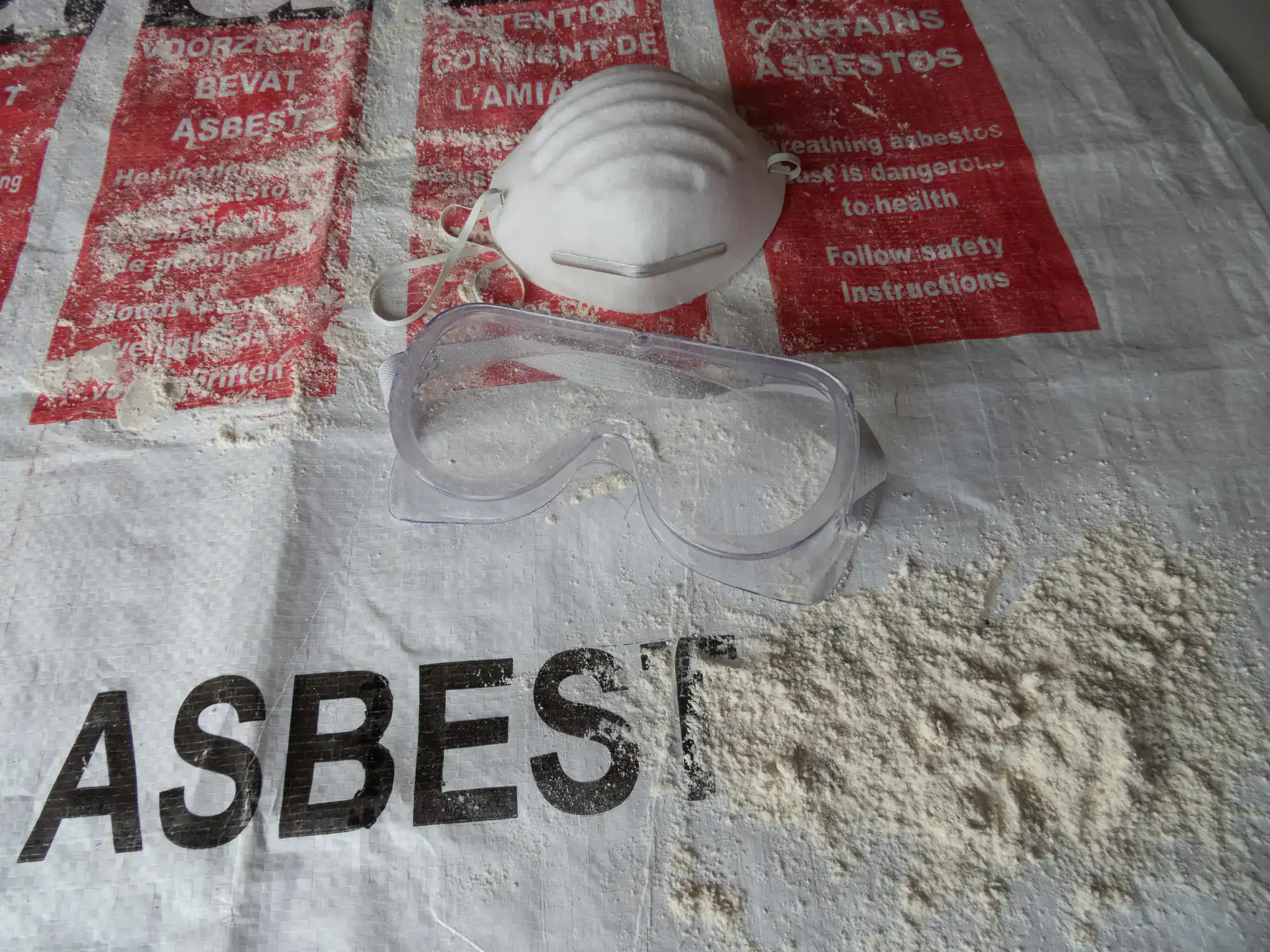
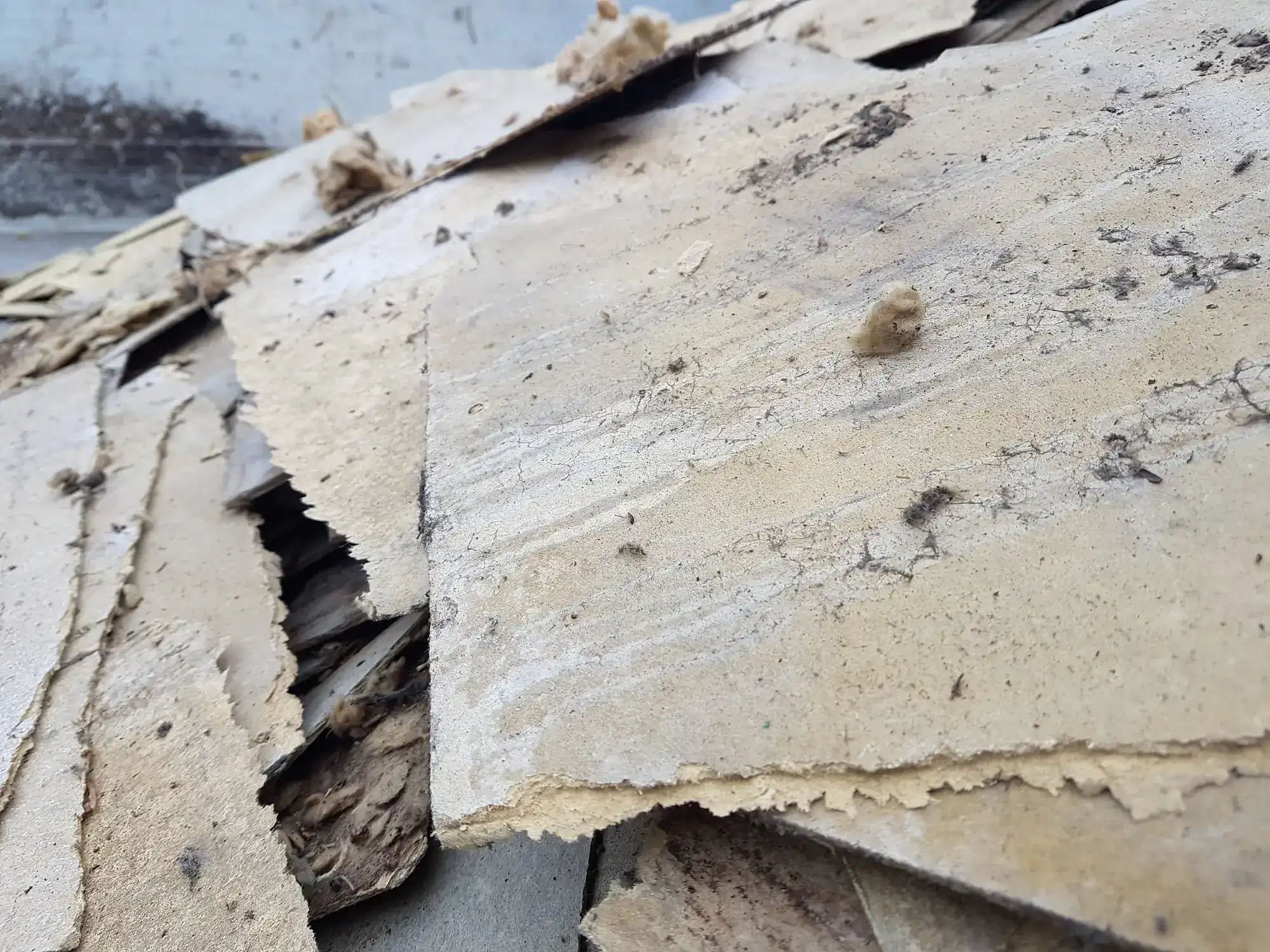
It starts with testing, because you cannot identify asbestos by looking at it. If you’ve found something suspicious — floor tiles, pipe insulation, plaster, duct wrap, ceiling texture — we collect samples and send them to an accredited lab. That result tells us what we’re actually dealing with before anyone touches anything.
If asbestos-containing material is confirmed, we build a removal plan specific to your property. For friable asbestos — material that can be crumbled or disturbed into airborne fibers — Pennsylvania’s Department of Labor and Industry requires at least a five-day advance notification before work begins. For larger commercial properties, like the apartment buildings that make up a significant portion of Narberth’s housing stock, the EPA’s NESHAP regulations require a ten-working-day notification to PA DEP. We handle all of that paperwork. You don’t have to figure out what applies to your property — we do.
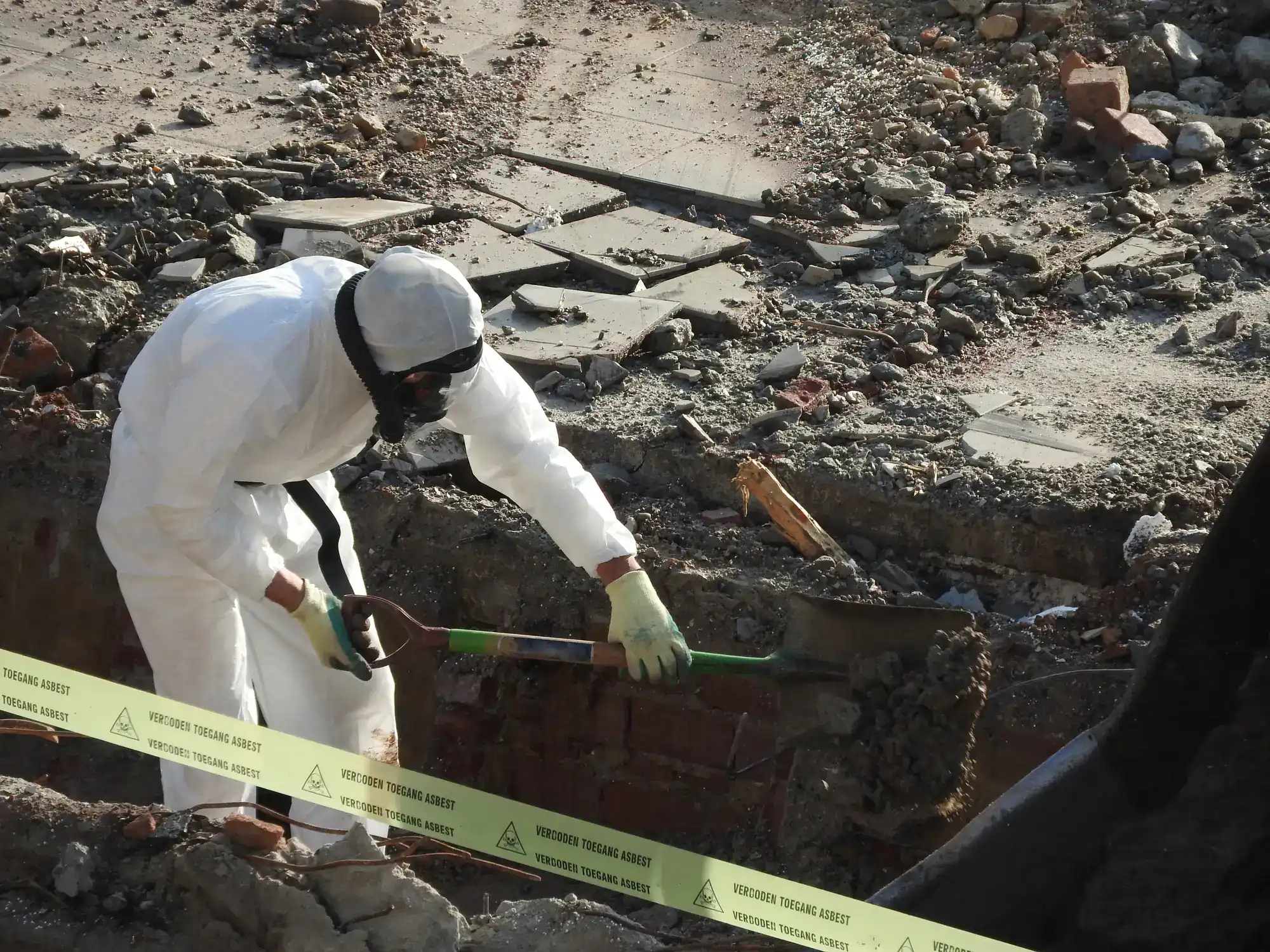
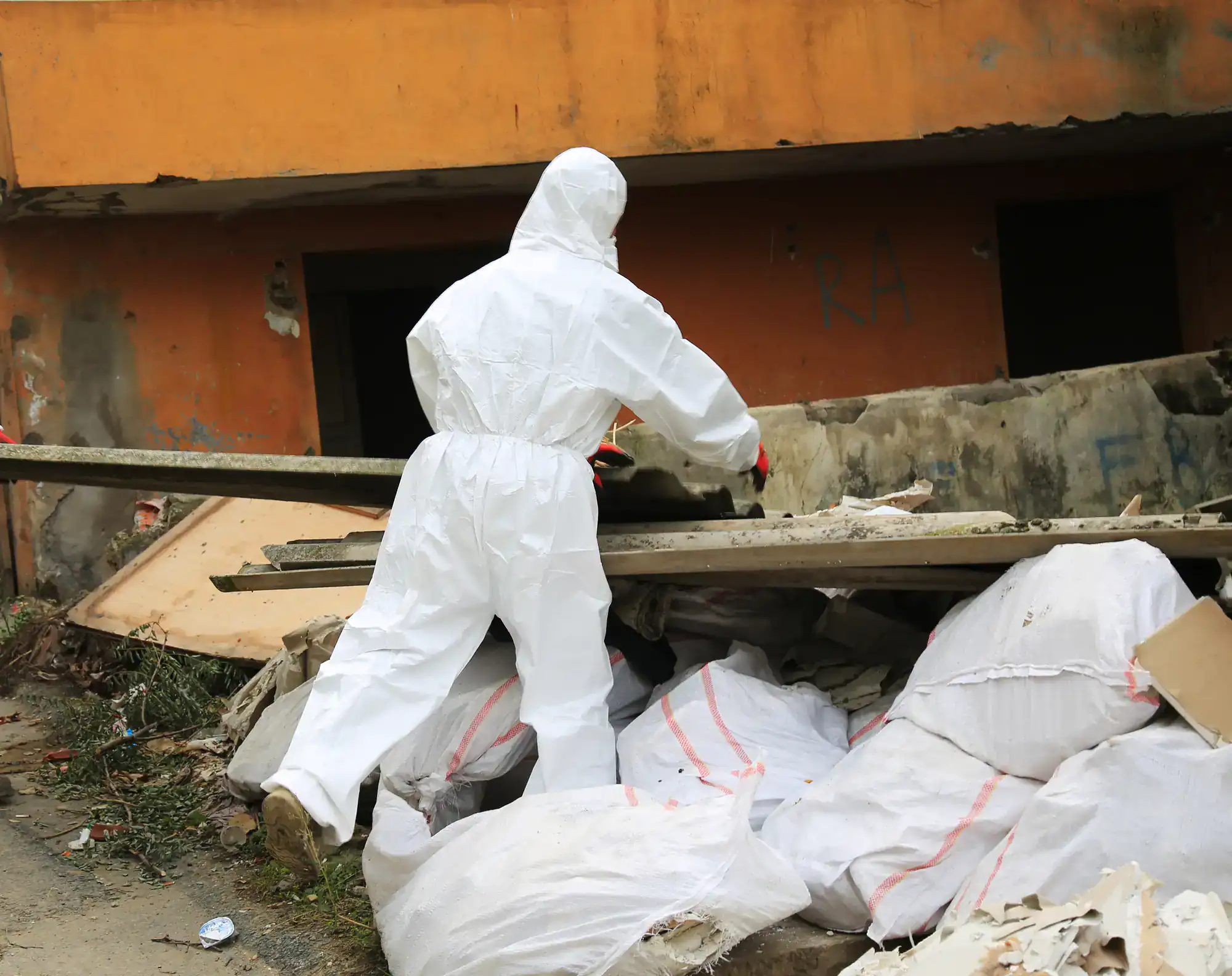
The removal itself is done under negative air pressure containment with HEPA filtration running throughout. That’s not optional equipment we bring on certain jobs — it’s standard on every job we do. In a borough where homes sit close together on smaller lots, proper containment matters beyond your own four walls. Once the material is removed, it’s bagged, labeled, and transported to a licensed disposal facility. Then we conduct post-abatement clearance testing to confirm the space is clean before anyone re-enters. Your renovation contractor gets a documented clearance. Your project moves forward.
Ready to get started?
Asbestos abatement is rarely the only thing going on in a pre-war Narberth home. Open up a wall in a 1928 Dutch Colonial and you might find asbestos pipe wrap, lead paint on the original woodwork, and mold in the wall cavity — all at once. Most contractors handle one of those things. We handle all of them. Testing, asbestos abatement, mold remediation, demolition, and waterproofing are all available under one licensed, insured company. That means one point of contact, one consistent crew, and no conflicting advice from three different vendors trying to hand off liability to each other.
For Narberth homeowners in the Narbrook Park Historic District — where 51 contributing buildings from 1915 to 1938 are listed on the National Register of Historic Places — there’s an added layer of care required. Original Craftsman and Colonial Revival materials deserve a methodical approach, not a tear-it-out mentality. We document everything, work within the scope of what needs to be removed, and leave the rest of your home intact.
We offer free estimates, 24/7 phone availability, emergency response service, and cash discounts. If you’re in the middle of a renovation discovery, a pre-sale inspection, or a buyer-requested environmental assessment on a home in the $800,000-plus range, you don’t have time for a company that calls you back in three days. We pick up the phone, give you a straight answer, and get moving.

If your home was built before 1980, testing before any renovation work is the right call — and in Narberth, where nearly 87% of homes were built before 1970, that applies to almost every property in the borough. Asbestos was used in floor tile and its adhesive mastic, pipe and duct insulation, plaster, joint compound, roofing materials, and ceiling texture. You can’t identify it visually. The only way to know for certain is lab testing.
The reason this matters before renovation specifically is that intact, undisturbed asbestos-containing material is generally not an immediate health risk. The risk comes when it gets cut, sanded, drilled, or torn out — which is exactly what renovation work does. A kitchen remodel in a 1930s Narberth Victorian that disturbs original floor tile without prior testing can turn a manageable situation into an airborne contamination event that affects the entire home. Testing first is not a bureaucratic hurdle — it’s what keeps a straightforward project from becoming a much larger and more expensive problem.
The timeline depends on what’s being removed and how much of it there is. A single-room floor tile removal in a Narberth twin might take one to two days. A larger scope — pipe wrap throughout a basement, multiple rooms of tile, or duct insulation on an older heating system — can run three to five days or more. Before work can begin on friable asbestos, Pennsylvania’s Department of Labor and Industry requires a minimum five-day advance notification, so factor that into your planning.
As for staying in the home: in most cases, we recommend you’re not in the immediate work area during active abatement. Whether you can remain in other parts of the house depends on the scope and location of the work. We set up containment barriers and run HEPA filtration to prevent fiber migration into living spaces, but if the work is in a heavily trafficked area — a main floor, a shared HVAC system — temporary relocation for the duration of the job is the safer choice. We’ll give you a straight answer about your specific situation during the estimate, not a vague “it depends” that leaves you guessing.
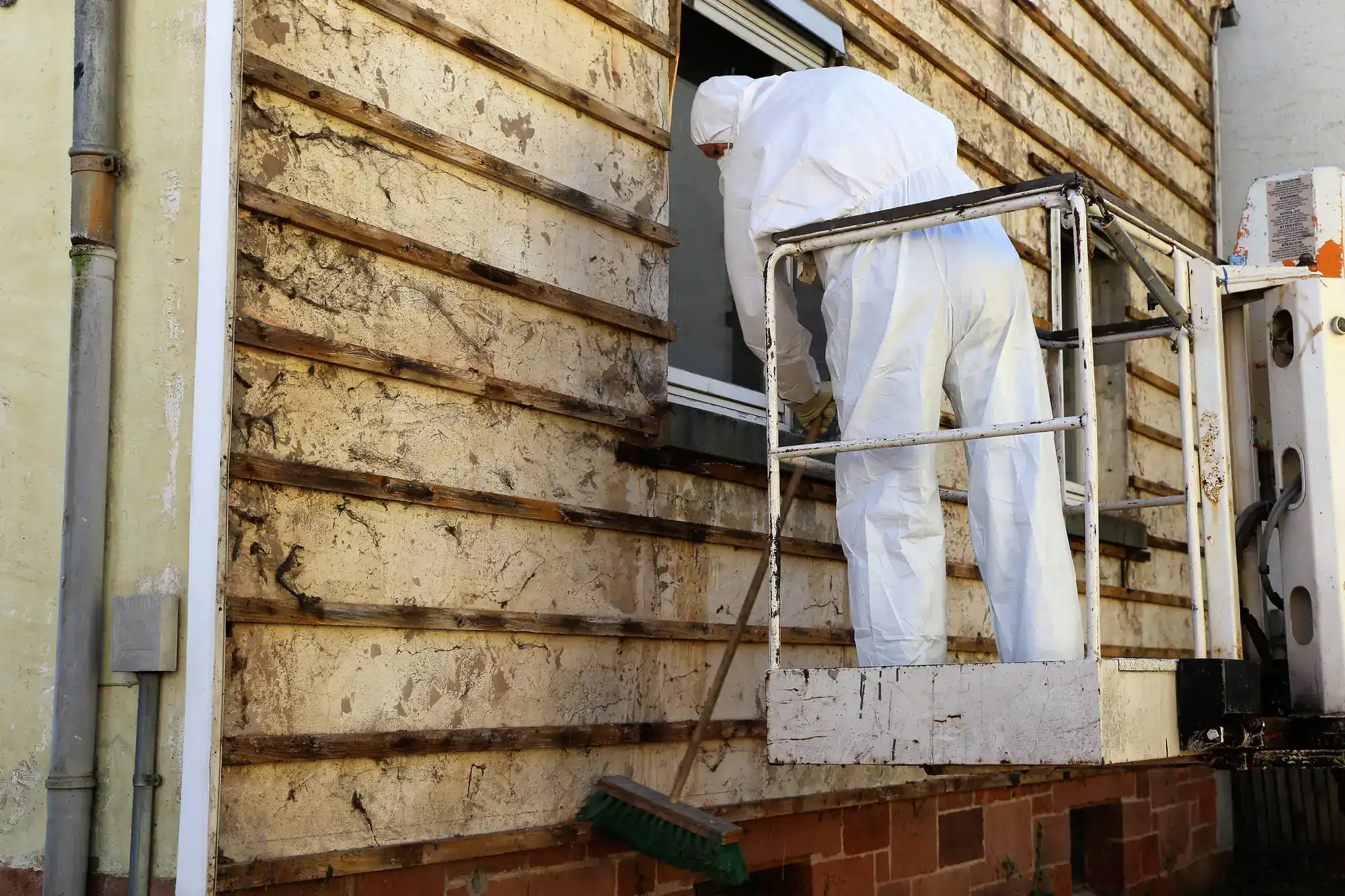
In Narberth’s pre-war housing stock — the Victorians, Dutch Colonials, Craftsman bungalows, and twins built between the 1890s and 1940s — the most common locations are the basement and mechanical systems, the floors, and the walls and ceilings. Pipe wrap insulation on original steam or hot water boiler systems is extremely common in homes from this era, and it’s often the first thing a contractor disturbs when updating an old heating system. Floor tiles from the 1940s through the 1960s, and the black adhesive mastic beneath them, frequently contain asbestos — and they’re often hidden under hardwood floors that were installed over them decades later.
Plaster walls and ceilings in pre-war homes can also contain asbestos as a binding agent, as can the joint compound used during repairs and updates made through the 1970s. Older homes with original attic insulation, particularly vermiculite, carry a specific asbestos risk that’s worth testing before any attic work begins. If your Narberth home has its original roofing — slate or early asphalt shingles — that’s another area worth assessing before a roofing contractor starts tearing things off.
This is one area where Narberth’s status as an independent borough — not part of Lower Merion Township — matters. Narberth has its own Building and Zoning Department at 100 Conway Avenue, and any renovation work that involves disturbing suspected asbestos-containing materials should be coordinated with that office. Permit applications go through the borough’s MyGov portal, and projects requiring stamped plans need hard copies submitted before review begins.
At the state level, Pennsylvania’s Department of Labor and Industry requires at least a five-day advance notification for any project removing friable asbestos above three square or three linear feet. For larger commercial properties — which includes apartment buildings with five or more units, a relevant category given that roughly 25% of Narberth’s housing stock is multi-unit — the EPA’s NESHAP regulations require a ten-working-day notification to PA DEP before work begins. Starting January 2026, the state’s abatement notification fee increases to $400 for Montgomery County projects. We handle all required notifications as part of our process — you don’t need to navigate the regulatory framework yourself.
Cost varies based on the type of material, how much of it there is, where it’s located, and how accessible the work area is. For a single room of floor tile removal in a Narberth home, you’re generally looking at a range of $1,500 to $3,000. More extensive work — full basement pipe wrap removal, multiple rooms, or a combination of materials like tile plus duct insulation — can range from $5,000 to $10,000 or higher depending on scope. Testing and clearance sampling are separate line items and typically run a few hundred dollars each.
In a market where homes are valued at $800,000 and up, the cost of proper abatement is a small fraction of the asset you’re protecting. What’s more relevant is knowing the real number upfront — which is why we offer free estimates. We come out, assess what’s actually there, and give you a clear scope and price before any work begins. We also offer cash discounts, which no local competitor in this market currently matches. The goal is that you walk into this process knowing exactly what it costs, not finding out after the crew has already started.
Pennsylvania law requires that asbestos abatement work be performed by a contractor licensed under the Asbestos Occupations Accreditation and Certification Act. That requirement exists for a specific reason: improper removal — without containment, without HEPA filtration, without wet suppression methods — can spread asbestos fibers from one room throughout an entire home. There are documented cases in Pennsylvania of unlicensed crews performing asbestos removal without respiratory protection or containment, leaving properties with higher airborne fiber concentrations after the work than before it.
In Narberth specifically, the density of the housing stock adds another dimension. Homes in the borough sit on smaller lots and are often in close proximity to neighbors. A containment failure during improper removal isn’t just a problem for your house. Asbestos disposal is also strictly regulated — Montgomery County explicitly states that asbestos materials are not accepted at county Household Hazardous Waste events and must be handled by a licensed contractor. Beyond the legal and safety requirements, a licensed contractor provides the clearance documentation you need for a real estate transaction, a building permit, or simply a record that the work was done correctly. That documentation has real value on a property worth what Narberth homes are worth.
Other Services we provide in Narberth