When water gets into your home, the clock starts immediately. Here's what professional cleanup actually looks like — and why waiting costs more than you think.
Water doesn’t wait for a convenient time to become a problem. It comes in through a burst pipe at 2am, a backed-up drain during a storm, or a sump pump that gave out while you were at work. By the time you find it, the damage is already underway.
The good news is that the first 48 hours matter more than anything that comes after. Act quickly, and a water event stays manageable. Wait it out, and you’re looking at mold, structural damage, and a repair bill that’s grown considerably since you first noticed the problem. Here’s what our professional water damage cleanup actually involves — and what you should know before you make a single phone call.
The first thing our professional water damage team does isn’t grab a mop — it’s assess. Before any equipment gets deployed, we need to understand what type of water you’re dealing with, how far it’s traveled, and what materials it’s affected. Clean water from a burst pipe is handled differently than gray water from a backed-up appliance, and both are handled differently than black water from a sewage event or floodwater.
Once the scope is clear, extraction begins. We deploy industrial pumps and wet-vacuum systems that pull standing water out of the space far more effectively than anything you’d rent from a hardware store. In severe flooding, water needs to be removed gradually — pulling it all at once can create a pressure imbalance that stresses your foundation. That’s not a detail most homeowners know until someone explains it.
Mold begins growing within 24 to 48 hours of a water event. This is the standard established by the IICRC, the governing body for the restoration industry. At the temperatures most homes in Montgomery County maintain year-round, mold has everything it needs: warmth, moisture, and the organic material inside your walls, floors, and ceiling cavities.
What makes this particularly frustrating is that you can’t see it happening. Drywall, wood framing, and insulation absorb moisture and hold it long after the surface feels dry to the touch. By the time visible mold appears, the colony is already established and the remediation cost has climbed significantly. A cleanup job that might run around $4,000 when addressed immediately can escalate to $12,000 or more once mold sets in and structural materials need to be removed.
This is why emergency water damage response isn’t just a convenience — it’s a financial decision. Every hour between the water event and professional extraction is an hour of additional moisture penetration into porous materials. We answer the phone 24 hours a day, seven days a week, specifically because water damage doesn’t schedule itself for business hours. When a storm rolls through Lansdale at midnight or a pipe lets go in your Cheltenham home on a Sunday, we respond now, not when the office opens Monday morning.
There’s also a health dimension that’s easy to underestimate. Families with young children, elderly members, or anyone with respiratory sensitivities are at elevated risk from mold exposure. Getting our professionals in quickly isn’t just about protecting the structure — it’s about protecting the people inside it.
This is the question most homeowners don’t think to ask until they’re already in the middle of a claim — and the answer is more complicated than most people expect.
Standard homeowners insurance policies typically cover water damage that is sudden and accidental from an internal source. A pipe that bursts unexpectedly, a washing machine hose that fails, a water heater that lets go — those events are usually covered. What most standard policies do not cover is flood damage, meaning water that enters your home from outside: groundwater, surface flooding, storm surge, or an overwhelmed drainage system. For that, you’d need a separate flood insurance policy through FEMA’s National Flood Insurance Program or a private insurer.
Sewer backup is another common exclusion. Many homeowners in older Montgomery County communities — Norriton, Abington, and Jenkintown where the infrastructure has some age on it — discover this gap only after a sewage event has already occurred.
This matters for Montgomery County residents specifically because the county has roughly 85,000 people living in flood-prone areas, and rainfall projections for this region are trending upward. Hurricane Ida in September 2021 dropped 8 to 10 inches of rain in as little as six hours across the county, crested the Perkiomen Creek at 26 feet, and destroyed approximately 70 homes in the Perkiomen watershed alone. That kind of event falls squarely into the “not covered by standard homeowners insurance” category for most policyholders.
The practical takeaway: before you assume your policy covers what happened, call your insurance company and ask specifically. Document everything with photos and moisture readings before cleanup begins — that documentation matters whether the claim is approved or denied. We can help walk you through what that documentation process looks like so nothing gets missed.
Want live answers?
Connect with a EJS Environmental expert for fast, friendly support.
Mitigation and restoration are two different things, and the distinction matters. Mitigation is everything that happens to stop the damage from getting worse — extraction, structural drying, containment, mold prevention treatment. Restoration is what comes after: repairing or replacing the materials that couldn’t be saved and returning the property to its pre-loss condition.
Most of the critical decisions in a water damage event happen during mitigation. How thoroughly we extract the water, how aggressively we dry the structure, whether we identify and address hidden moisture pockets — these determine whether the restoration phase is straightforward or complicated. Skipping steps in mitigation to save time almost always creates more work on the back end.
This is one of the most common questions we hear, and the honest answer is: it depends on the materials affected, the extent of the saturation, and how quickly extraction began.
After standing water is removed, we deploy industrial air movers and dehumidifiers throughout the affected space. These aren’t the box fans and consumer dehumidifiers you’d pick up at a hardware store — our industrial equipment moves significantly more air volume and pulls dramatically more moisture out of the environment. The goal isn’t for surfaces to feel dry. The goal is for moisture readings taken with calibrated meters to return to pre-loss levels, which can take anywhere from three to five days for a typical residential water event.
Thermal imaging is an important part of this process. Moisture hides in wall cavities, under flooring, and inside ceiling assemblies in ways that aren’t visible to the naked eye. Without thermal imaging and moisture meters, you’re guessing. Our professional drying process involves daily readings logged at specific points throughout the structure, so there’s a documented record of the drying progress — and a clear endpoint when the structure is actually dry, not just when it looks that way.
For Montgomery County homes with finished basements — a significant investment in this market — this thoroughness is especially important. Saturated subfloor and wall assemblies in a finished basement can harbor moisture for weeks if the drying process isn’t handled correctly, creating the exact conditions mold needs to establish itself quietly behind finished surfaces.
HEPA air scrubbers run throughout the drying process to maintain air quality. This matters for families who need to remain in the home during remediation, and it’s particularly relevant in older homes where disturbed materials may contain dust and particulates that shouldn’t be circulating through the living space.
Here’s something that doesn’t come up enough in conversations about water damage repair: in homes built before 1978, demolition of water-damaged materials isn’t straightforward.
Montgomery County has a substantial stock of older homes — particularly in communities like Lower Merion, Cheltenham, Ardmore, and Jenkintown, where historic housing is part of the character of the neighborhood. These homes are beautiful, and they’re worth protecting. They’re also likely to contain lead-based paint and potentially asbestos-containing materials in walls, ceilings, flooring, and insulation. When water damage requires tearing out drywall, removing flooring, or opening up wall cavities, those materials get disturbed.
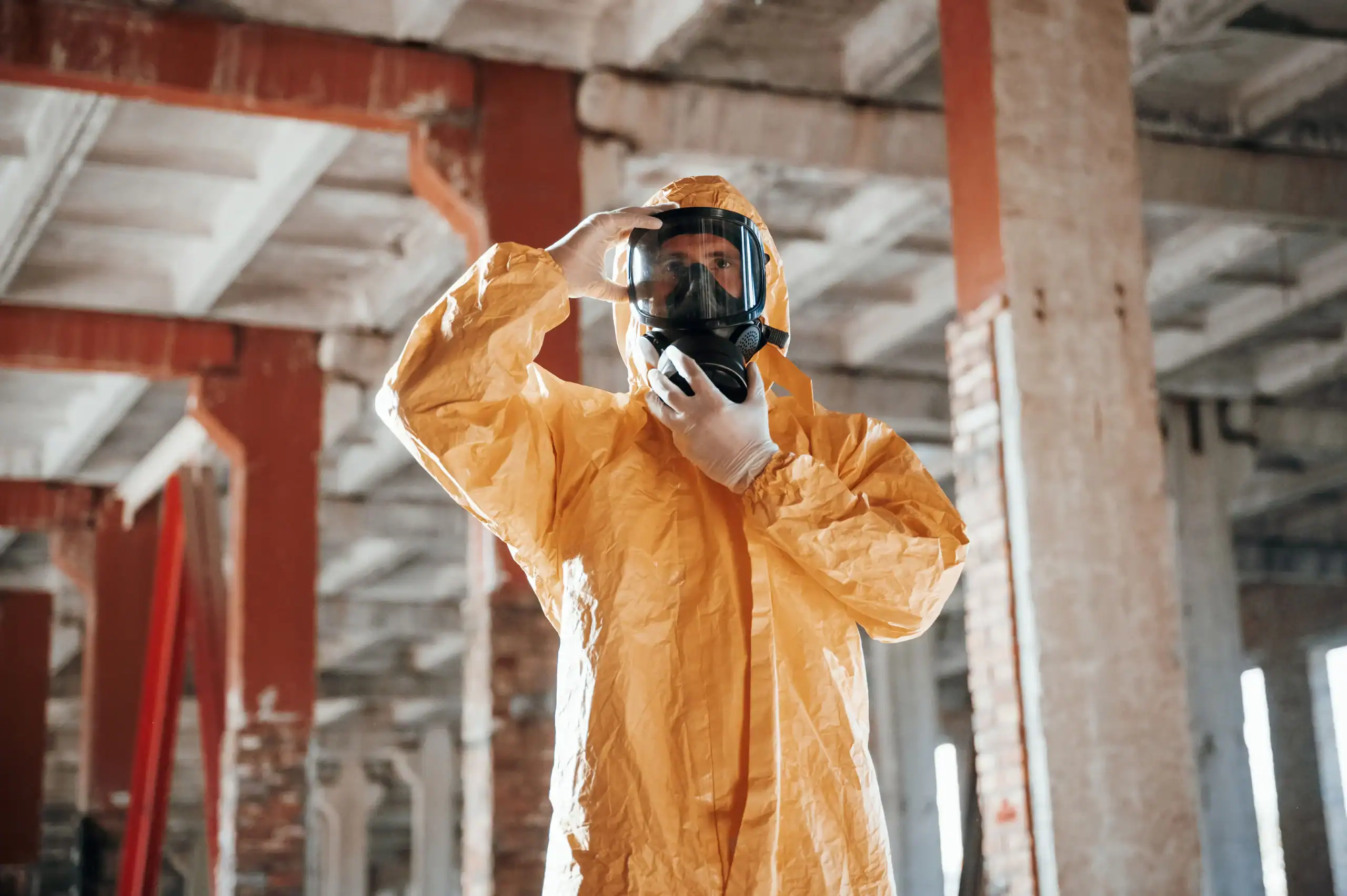
A general contractor or a water damage company without the right certifications isn’t legally or safely equipped to handle that demolition. We are. We hold EPA and HUD certification as a Certified Lead Inspector and Risk Assessor, which means we can assess what’s present before demolition begins and manage it correctly throughout the process. This isn’t a minor detail — it’s a health and liability issue that homeowners in older communities need to understand before they hire anyone to start tearing things out.
This is also where our one-stop model makes a real difference. Most homeowners dealing with water damage end up coordinating between a water extraction company, a drying company, a mold inspector, a demolition contractor, and a rebuilder. Each handoff is a delay, and each contractor has their own schedule and their own interpretation of what the previous one left behind. We handle testing, remediation, demolition, waterproofing, and restoration under a single contract. One call, one point of contact, one company that sees the job through from start to finish. After two decades of doing this work across Chester, Delaware, Montgomery, New Castle, and Bucks counties, we’ve seen what happens when that coordination breaks down — and we’ve built our entire service model around making sure it doesn’t.
The short version: don’t wait. The 48-hour window between a water event and mold growth is real, and every hour you spend hoping it dries out on its own is an hour working against you. Document the damage with photos before anything gets moved or cleaned. Call your insurance company to understand what your policy actually covers — and don’t assume. Then get a professional on-site to assess what you’re actually dealing with.
If you’re in Montgomery County and you’re dealing with water damage right now — whether it’s a finished basement in Collegeville, a burst pipe in King of Prussia, or storm flooding in a home near the Perkiomen watershed — EJS Environmental Services LLC is available around the clock. Free estimates, no pressure, and the experience to handle whatever the job requires.
The sooner you make the call, the more options you have.
Summary:
Article details:
Share: