Asbestos removal looks different depending on whether you're dealing with a family home or a commercial building. Here's what actually changes — and why it matters.
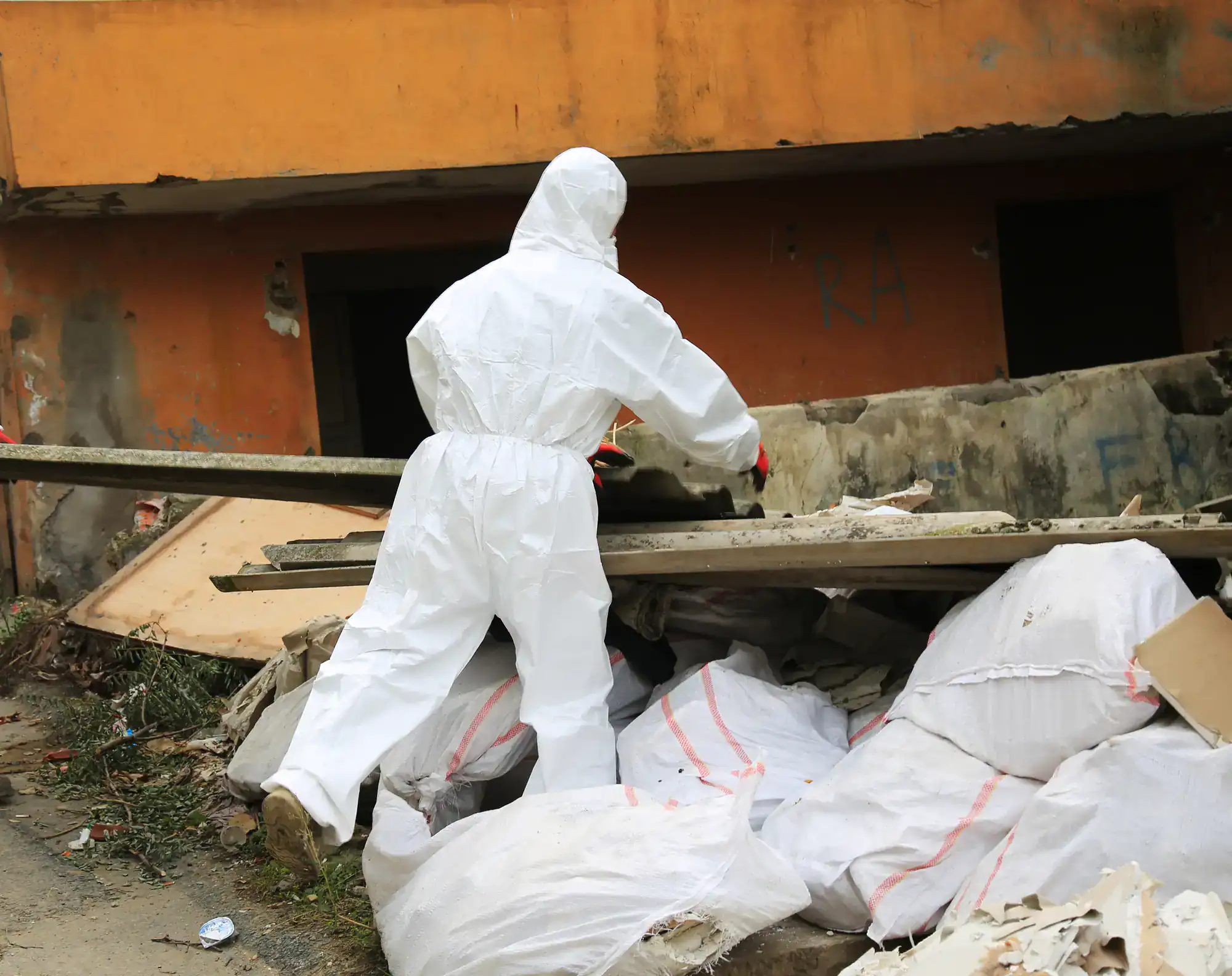
If you’ve discovered what might be asbestos in your home or building, your first instinct is probably to figure out how serious it is and who to call. That’s a reasonable place to start. But here’s something most people don’t know going in: residential asbestos removal and commercial asbestos removal aren’t the same job. The regulations are different, the scale is different, and the process looks different depending on what type of property you’re dealing with. Understanding those differences won’t just help you make a smarter hiring decision — it’ll help you know exactly what to expect from start to finish.
Residential asbestos removal is centered on one thing above everything else: keeping your family safe while disrupting your life as little as possible. When we’re working in someone’s home — whether it’s a 1950s ranch in Lansdale or a century-old Main Line colonial in Bryn Mawr — the priority is precision and care. Families are often still living nearby, personal belongings are present, and the work needs to be contained to a specific area without spreading fibers into the rest of the house.
The regulatory framework for residential projects in Pennsylvania is also distinct. Under the EPA’s NESHAP regulations, residential buildings with four or fewer units are not subject to the same federal notification requirements that apply to commercial and institutional structures. That said, Pennsylvania’s own rules still apply the moment you hire a contractor. Act 194 of 1990 requires any contractor performing asbestos work — regardless of property type — to hold current certification from the PA Department of Labor and Industry. That’s not optional. It’s the law.
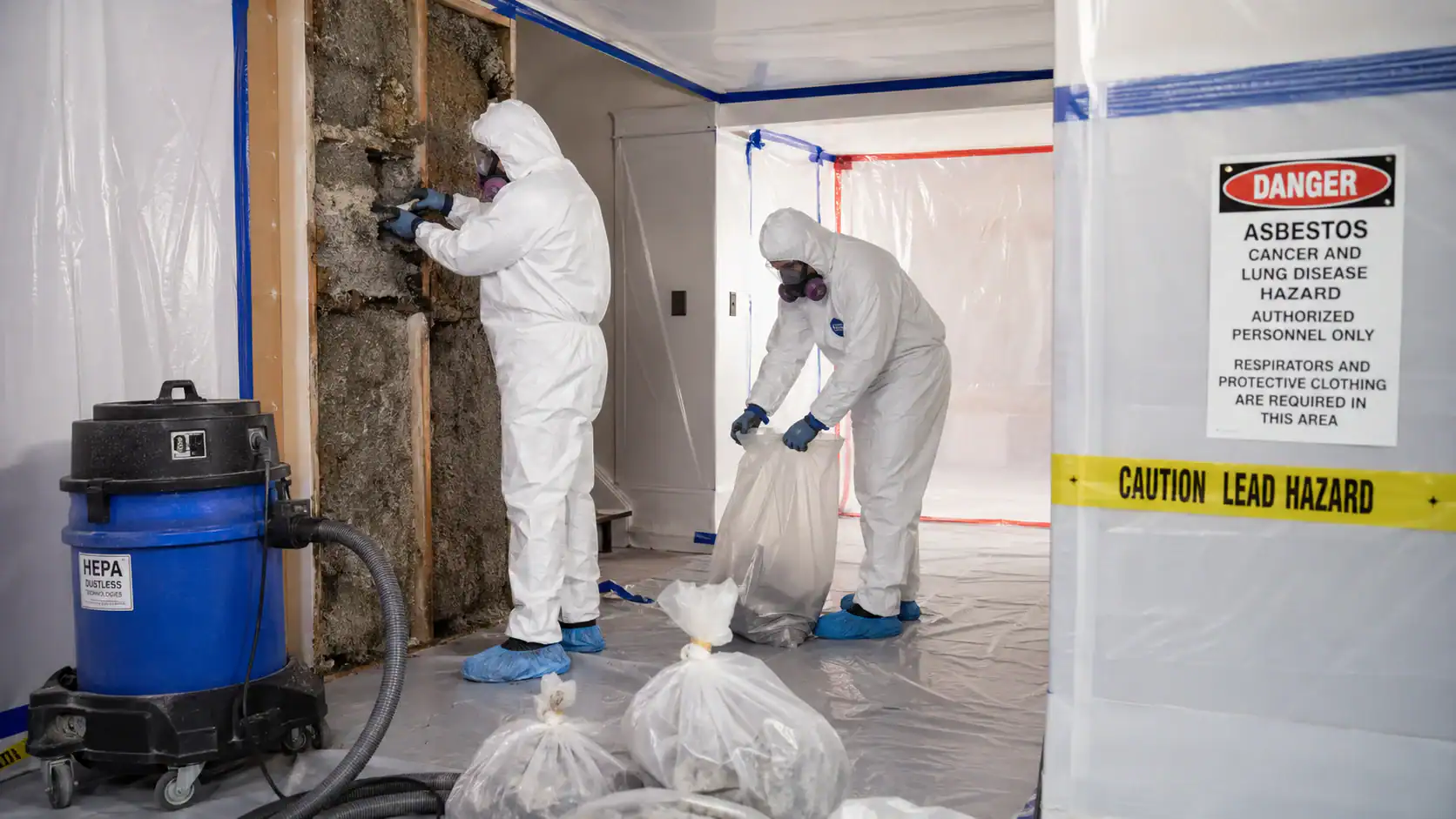
The process starts before anyone touches a wall. We begin with a site inspection and certified lab testing to confirm whether asbestos-containing materials are actually present and where. This matters because asbestos can’t be identified by sight alone — the fibers are invisible, and many materials that look suspicious turn out to be fine, while others that look perfectly normal test positive. Skipping this step isn’t just risky; it’s a gamble with your family’s health.
Once we’ve confirmed what we’re dealing with, we set up containment. That means sealing off the work area with polyethylene sheeting, establishing a decontamination unit for workers entering and exiting, and running HEPA-filtered negative air machines that create negative pressure inside the containment zone. The goal is simple: nothing leaves that space. No fibers migrate to your living room, your HVAC system, your kids’ bedrooms. The negative air pressure setup is the industry gold standard, and it’s how we approach every residential job regardless of size.
During removal, wet methods are used to suppress airborne fibers while materials are carefully bagged, labeled, and removed for disposal at a licensed facility. This isn’t a grab-and-go operation. Every step follows state and federal protocols, and the job isn’t finished until post-abatement air clearance testing confirms that fiber levels are within safe limits. That final clearance test is what separates a properly completed abatement from a contractor who just packed up and left.
For homeowners across Montgomery County — particularly in older communities like Norristown, Lansdale, Pottstown, and along the Main Line — this process is especially relevant. A significant portion of the county’s housing stock was built before 1980, which is the threshold year when asbestos use began to be phased out. If your home falls into that category and you’re planning any renovation, you need to know what’s in those walls before work begins.
One question we hear often from homeowners is whether asbestos always needs to be removed. The honest answer is no — not always. If asbestos-containing material is in good condition and won’t be disturbed, encapsulation is sometimes a viable option. Encapsulation means treating or covering the material so it can’t release fibers, rather than removing it entirely. It’s less invasive and can be appropriate in certain situations.
The catch is that “certain situations” is doing a lot of work in that sentence. The moment you plan to renovate, remodel, or demolish anything that might disturb the material — a kitchen gut, a bathroom update, a basement finishing project — encapsulation is no longer a safe answer. Renovation work disturbs materials. That’s the whole point. And disturbed asbestos-containing material releases fibers that are invisible, odorless, and capable of embedding in lungs for decades before symptoms appear.
In practical terms for a Montgomery County homeowner, this means that if you’re getting ready to pull up old 9×9 vinyl floor tiles, knock out a plaster ceiling, or tear into pipe insulation in the basement, encapsulation isn’t on the table. Removal is. The decision between the two should always be made by a certified inspector who has actually tested the material — not by a contractor who hasn’t looked at it yet, and not by a YouTube video. We always assess the specific situation before recommending a path forward, and we’ll tell you honestly which approach makes sense for your property.
It’s also worth knowing that asbestos fibers don’t stay put once they’re airborne. They can settle into carpet, upholstery, bedding, and HVAC ductwork — which is why improper removal or amateur attempts to handle it yourself can end up contaminating far more of your home than the original problem area. The risk isn’t just in the spot where the asbestos was found.
Want live answers?
Connect with a EJS Environmental expert for fast, friendly support.
Commercial asbestos removal operates in a different regulatory environment altogether. EPA NESHAP regulations apply to all institutional, commercial, public, and industrial buildings — and they require thorough pre-renovation and pre-demolition inspections, formal notification to state agencies before work begins, and specific work practice standards that go well beyond what’s required for a small residential project.
For property owners, building managers, and contractors in Montgomery County dealing with commercial or mixed-use properties, this means more paperwork, more lead time, and more moving parts to coordinate. It also means the stakes for hiring an under-qualified contractor are higher. NESHAP violations carry serious penalties, and the complexity of a commercial abatement job is not something to hand off to whoever gave you the lowest bid.
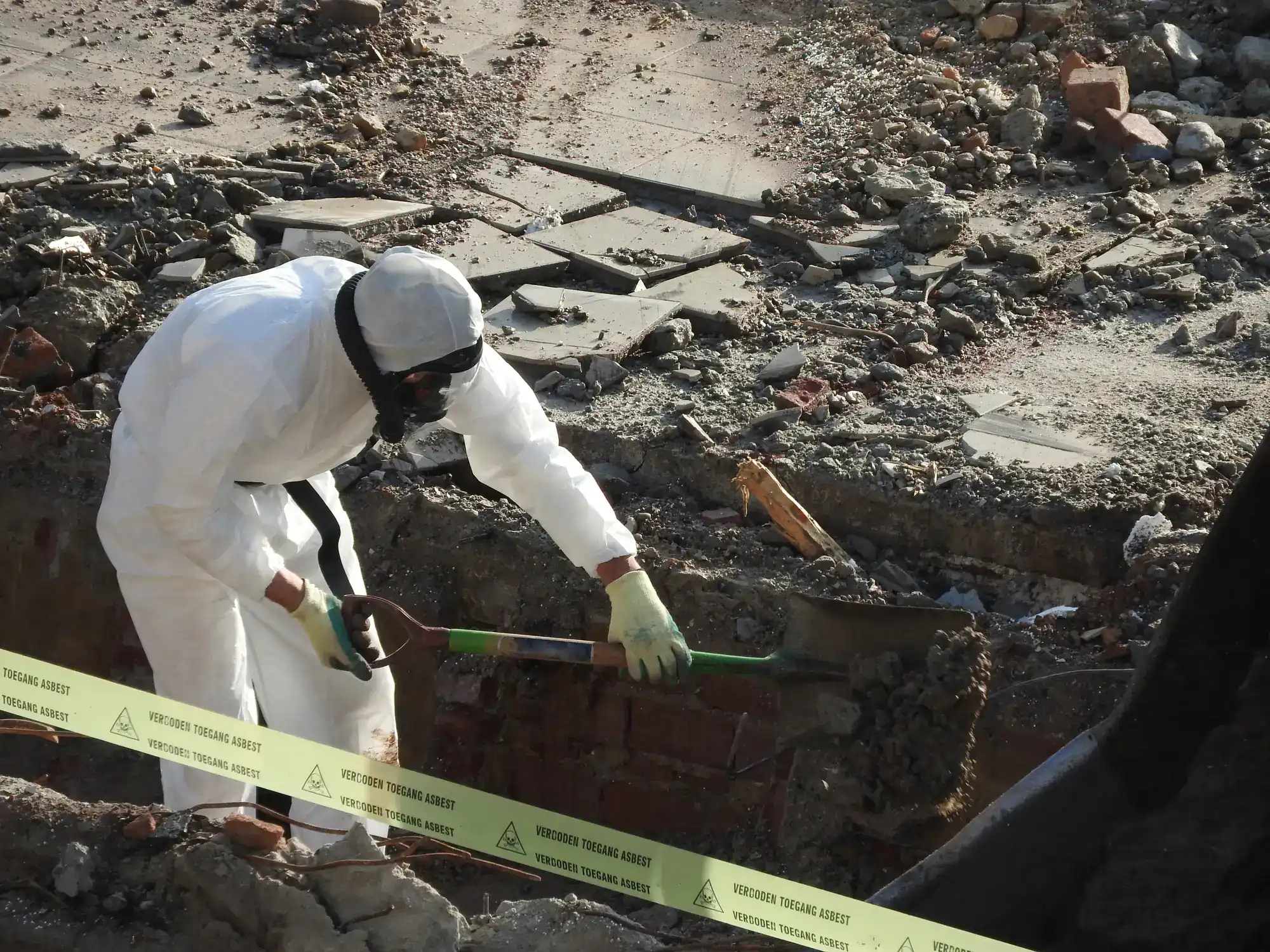
The physical scale of a commercial abatement project is one obvious difference — more square footage, more materials, more workers, more equipment. But the more significant difference is regulatory. Before any demolition or renovation of a commercial structure in Pennsylvania, a thorough asbestos survey must be conducted by a certified inspector. If regulated asbestos-containing materials are found above threshold quantities, a five-day prior notification to the PA Department of Environmental Protection is required before work can begin. That’s not a courtesy — it’s a legal requirement with enforcement behind it.
On top of that, commercial projects often involve tenants, building management teams, OSHA compliance considerations, and coordination with multiple contractors working on the same site. The containment setup for a large commercial abatement is a more elaborate operation than what you’d see in a residential setting — larger negative air systems, more extensive critical barriers, and stricter decontamination protocols to protect workers and building occupants who may be present in adjacent areas.
We’ve worked on both sides of this. The same licensed, certified team that handles a Lansdale homeowner’s pipe insulation removal also handles larger commercial and industrial projects across Montgomery, Chester, Delaware, Bucks, and New Castle counties. The equipment is the same. The certifications are the same. What changes is the scale of the operation and the regulatory framework we’re navigating — and after two decades in this business, we know both well.
For commercial clients, the value of working with a contractor who understands the full regulatory picture — PA DEP notification requirements, NESHAP compliance, DLI certification for every worker on the job — is hard to overstate. A missed notification or an improperly certified crew doesn’t just create a legal problem. It can shut down an entire project.
Pennsylvania’s licensing requirements for asbestos work are more layered than most people realize, and they apply regardless of whether the project is residential or commercial. Under Act 194 of 1990 — the Asbestos Occupations Accreditation and Certification Act — it is illegal for any individual to perform asbestos work in Pennsylvania without holding current certification from the PA Department of Labor and Industry. That applies to workers, supervisors, inspectors, project designers, and management planners. It also applies to the contracting company itself.
This matters because “licensed” is a word that gets thrown around loosely in the contracting world. A general contractor who is licensed to do renovation work is not automatically certified to perform asbestos abatement. Those are different credentials, issued by different agencies, requiring different training. When you’re vetting contractors, the question isn’t just “are you licensed?” — it’s “do you hold DLI asbestos contractor certification, and do your workers hold individual certifications for their specific roles?”
We are federally licensed and fully certified under Pennsylvania’s requirements. Our team holds individual certifications, and we maintain EPA and HUD compliance across all project types. We also hold certification as a Lead Inspector and Risk Assessor — which matters in Montgomery County because many older homes contain both asbestos and lead paint, often in the same spaces. Being able to assess and remediate both hazards under one roof saves homeowners the hassle of coordinating separate vendors and the uncertainty of getting two different sets of advice about the same property.
Certified asbestos removal companies operating at this level also carry full liability insurance and bonding — protection for you if anything goes wrong. Before you sign anything with any contractor, ask to see proof of DLI certification and insurance. A legitimate operation will hand it over without hesitation. If there’s any hesitation, that’s your answer.
Whether you’re a homeowner in Conshohocken getting ready to gut a bathroom or a property manager in Norristown dealing with a pre-demolition inspection, the fundamentals are the same: you need a contractor who is legally certified, properly equipped, and honest about what the job actually involves.
Asbestos removal isn’t a service where the lowest bid is the safest bet. The difference between a properly contained, clearance-tested abatement and a rushed job by an unlicensed crew isn’t just a quality issue — it’s a health and legal liability issue that can follow a property for years.
If you’re in Montgomery County or anywhere in the surrounding area and you’re not sure where to start, a free estimate and an honest conversation about your specific situation is always the right first step. We’ve been doing this work for over two decades, and we’re available around the clock — because asbestos problems don’t always show up during business hours.
Summary:
Article details:
Share: