Not sure whether your basement needs interior or exterior waterproofing? Here's how to tell the difference — and why it matters more than you think.
Water in your basement is one of those problems that’s easy to ignore — until it isn’t. Maybe it shows up after every heavy rain. Maybe it’s just a smell you’ve learned to live with. Either way, once you start looking into fixes, you’ll run into a debate that seems to have no clean answer: interior waterproofing or exterior waterproofing?
Both methods work. Both have real advantages. And the right choice depends almost entirely on your specific home, your foundation type, and where the water is actually getting in. Here’s what we’ve learned from two decades of work across Montgomery County and the surrounding region — without getting talked into something you don’t need.
At the most basic level, interior waterproofing manages water after it enters the foundation zone, while exterior waterproofing tries to stop it from getting there in the first place. Neither description tells the full story, but that distinction is where everything else starts.
Our exterior systems typically involve excavating the soil around your foundation, applying a waterproof membrane to the outside of the wall, and installing drainage at the footing level to redirect groundwater away before it builds up pressure. Interior systems work from inside the basement — we capture water that makes it through the wall and route it to a sump pump before it spreads across your floor.
Both approaches are legitimate. The problem is that some contractors push one regardless of what your home actually needs, which is how homeowners end up spending serious money and still finding water in the spring.
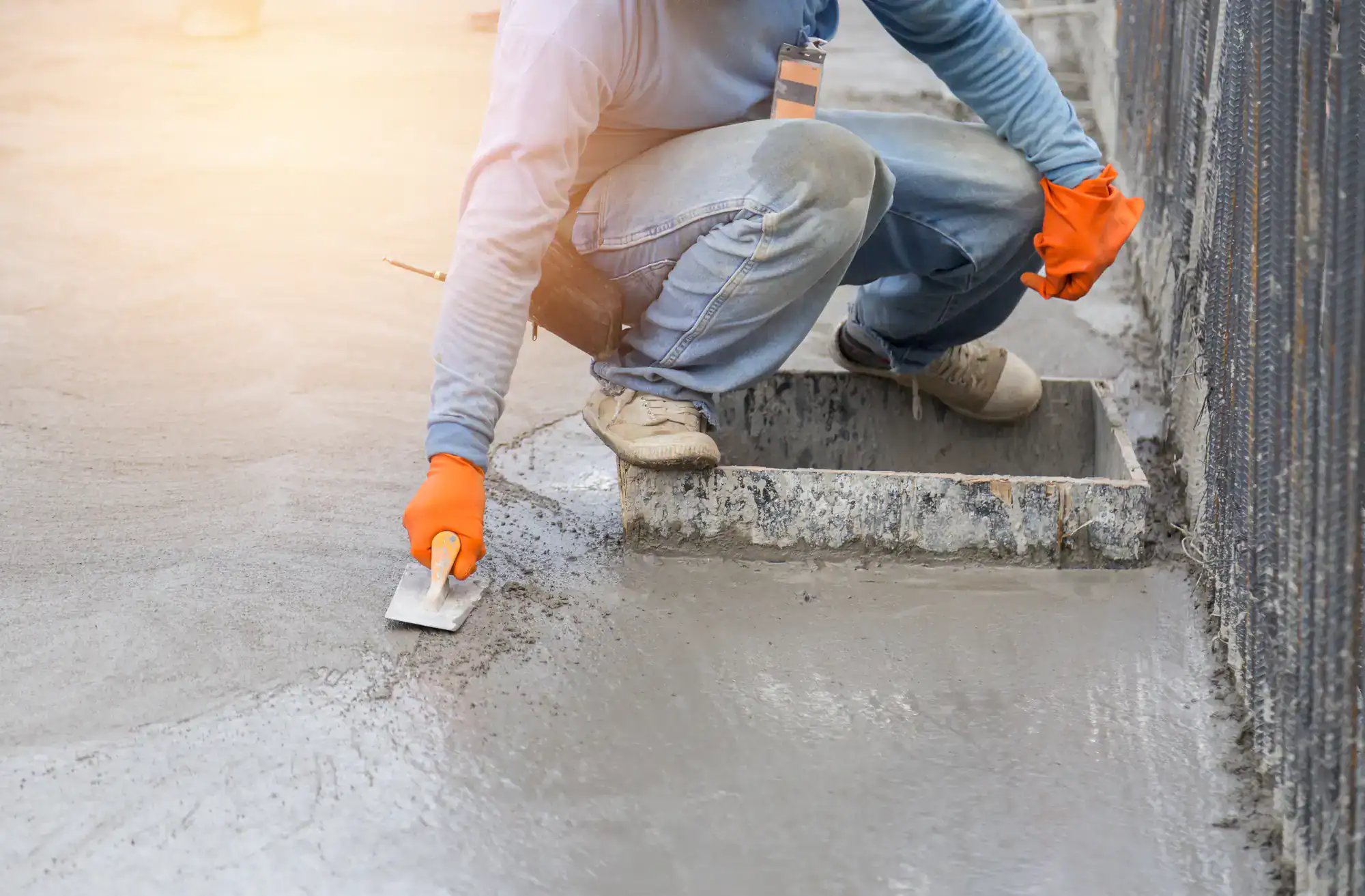
Before you can choose the right waterproofing method, it helps to understand the most common ways water enters a basement in the first place. In Montgomery County homes — especially those built before 1970 — there are a few entry points that come up again and again.
Foundation cracks are the most obvious. Over time, concrete and block foundations shift, settle, and develop cracks that let water through. In Pennsylvania, the freeze-thaw cycle accelerates this process significantly. Water seeps into a hairline crack in November, freezes and expands, widens the crack, and admits more water the following spring. Repeat that cycle over 15 or 20 winters, and what started as a hairline crack becomes a real problem.
The cove joint — the seam where your basement floor meets the wall — is another major entry point that often gets overlooked. When groundwater saturates the soil around your foundation, hydrostatic pressure builds up and pushes water through that joint. It’s not dramatic flooding; it’s a slow seep that can go unnoticed until there’s mold on the lower half of your walls.
Window wells are a third common culprit, particularly in older homes throughout Norristown, Ambler, and Lansdale where basement egress windows were added after original construction. If the well doesn’t drain properly, water pools against the window frame and eventually finds its way inside.
Each of these entry points responds differently to waterproofing approaches. A crack in the upper third of a wall might call for exterior membrane work. Water coming in at the cove joint is almost always better addressed from the inside. That’s why a proper assessment matters — not just a quick glance and a quote.
Walk into any home improvement store and you’ll find shelves of waterproofing paint, hydraulic cement, and crystalline sealants. The packaging is confident. The price is reasonable. And for a very specific, limited set of situations, these products actually do something useful.
Here’s the honest version: surface sealants work for minor moisture vapor transmission — the kind of dampness that makes a basement feel humid without producing standing water. If your walls are slightly damp to the touch but there’s no active water intrusion, a quality crystalline sealant applied to clean masonry can reduce that vapor transfer meaningfully.
What they cannot do is hold back hydrostatic pressure. When saturated soil is pressing against your foundation wall — which is exactly what happens in Montgomery County every spring when snowmelt combines with April rain — that pressure will find a way through. Paint and sealant don’t stand a chance against it. They’ll blister, peel, and fail, usually within a season or two, and you’ll be right back where you started.
This is one of the most common and costly misconceptions in the basement waterproofing space. Homeowners apply a coat of waterproofing paint after a wet winter, feel good about it through a dry summer, and then get hit again the following March. The problem was never the wall surface — it was the water pressure building up outside it.
Sealing basement walls from the inside has a legitimate role in a comprehensive waterproofing plan, but it’s rarely a standalone solution for active leaks. When we assess a basement, we’re looking at what’s driving the water, not just where it’s showing up. Those are two different questions, and they don’t always have the same answer.
Want live answers?
Connect with a EJS Environmental expert for fast, friendly support.
This is the question most homeowners are actually trying to answer when they start researching. And the honest answer is: it depends on your home, your budget, your yard, and the nature of your water problem.
Exterior waterproofing is more comprehensive when it’s feasible. It addresses the root cause — water pressure against the outside of your foundation — and can include drainage board membranes, footing drains, and proper grading to redirect surface water. The tradeoff is cost and disruption. Excavating around a foundation is expensive, weather-dependent, and hard on established landscaping. For a home in Blue Bell with a mature garden and a patio along the foundation, exterior excavation is a significant undertaking.
Interior waterproofing is less invasive and can be installed year-round. A properly designed interior drainage system — typically a perimeter channel connected to a sump pump — captures water before it spreads and removes it efficiently. For many Montgomery County homes, this is the right solution, and it works long-term when it’s designed and installed correctly.
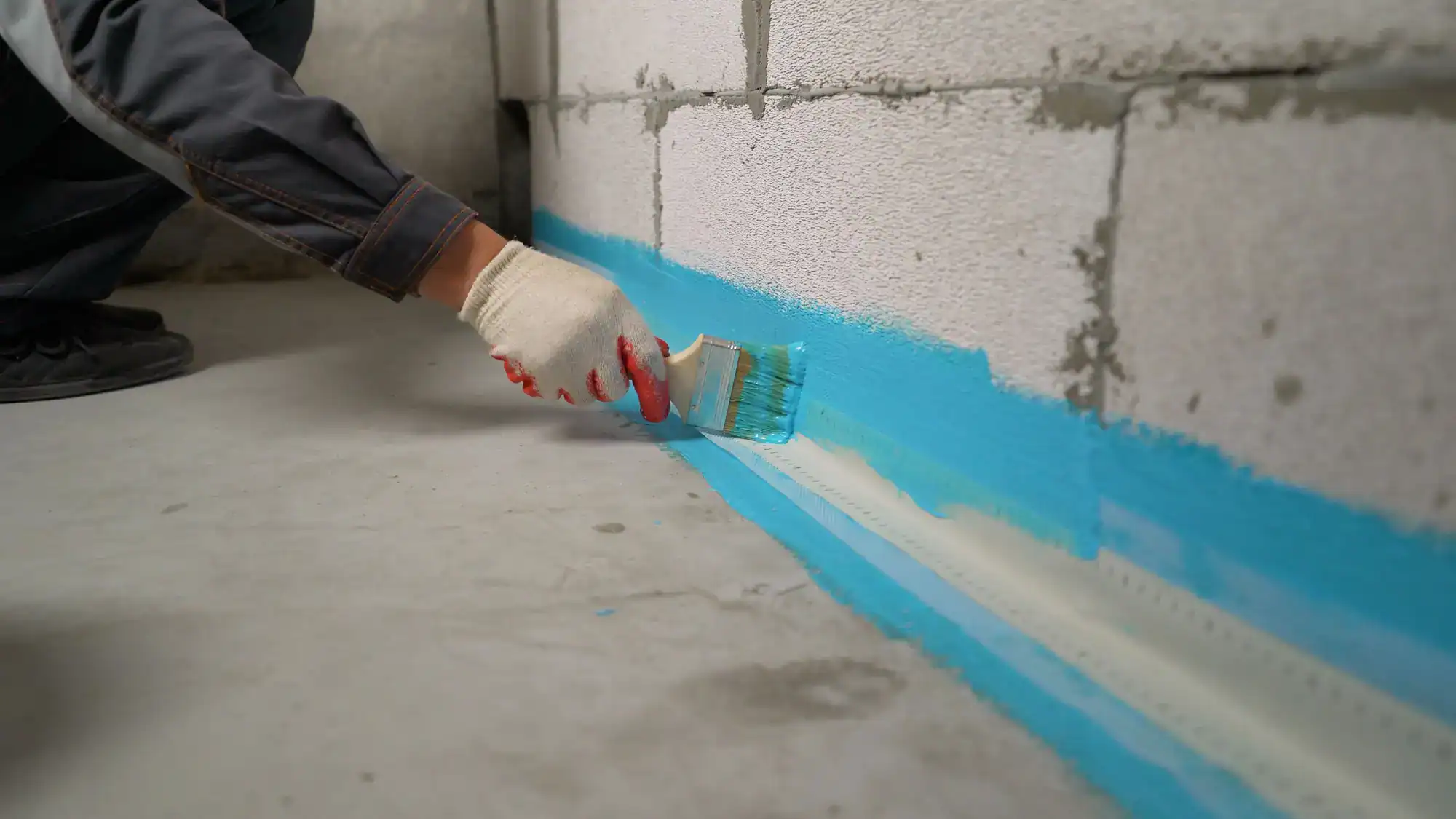
Interior waterproofing gets a bad reputation in some corners of the internet, usually from people arguing that it “doesn’t fix the real problem.” That framing misses the point. Our interior systems aren’t pretending to stop water at the soil line — they’re designed to intercept water that reaches the foundation and remove it before it causes damage. When that system is sized correctly and maintained properly, it does exactly that.
The most common interior approach we use involves cutting a channel along the perimeter of the basement floor, installing a perforated drain pipe at the footing level, and routing that drain to a sump pump. Water that enters through the cove joint or through wall cracks below grade gets captured and pumped out before it reaches the living space. A vapor barrier along the lower portion of the walls keeps moisture from migrating inward. The result is a dry basement — not because the water stopped, but because it has somewhere to go.
For homes in Horsham, Willow Grove, Hatboro, and throughout central Montgomery County, interior systems are often the most practical choice. Properties in these areas typically sit on clay-heavy soil that holds moisture for extended periods after rain, creating sustained hydrostatic pressure rather than a single flood event. An interior drainage system handles that sustained pressure reliably, season after season.
There are situations where interior work alone isn’t enough — active structural cracks that are widening, significant foundation wall deflection, or conditions where the volume of water intrusion is too high for interior drainage to manage efficiently. In those cases, exterior work may be necessary, and we’ll tell you that directly rather than selling you a system that won’t hold up.
Montgomery County has a specific set of conditions that shape what basement waterproofing actually looks like here. The county’s piedmont geology means clay-heavy soil throughout most of the suburban townships — soil that doesn’t drain quickly and expands when wet, pressing hard against foundation walls. Pair that with heavy spring snowmelt and the kind of summer thunderstorms that can drop two inches of rain in an hour, and you have a recipe for persistent basement water problems.
The housing stock adds another layer. More than 22% of homes in Montgomery County were built before 1950, and the median construction year across the county is in the late 1960s. That means stone foundations, original block construction, and drainage systems that were never designed to handle modern stormwater volumes. These homes need a real assessment — not a salesperson with a standard package.
There’s also something most waterproofing contractors won’t bring up: in a home built before 1978, any significant basement work carries the potential to disturb asbestos floor tiles, lead-based paint, or mold that’s been growing behind damp walls for years. We’re a certified lead inspector and risk assessor, EPA/HUD compliant, and licensed for asbestos abatement — which means when we open up a basement in an older Cheltenham or Jenkintown home, we’re looking at the full picture, not just the water. That matters more than most homeowners realize until they’re in the middle of a project and something unexpected turns up.
For anyone in the Main Line communities — Lower Merion, Bryn Mawr, Ardmore, Narberth — the Victorian and Colonial-era homes in those neighborhoods are particularly prone to foundation moisture issues. Beautiful homes, but original stone foundations were never waterproofed to modern standards. The solution in those cases is almost always a combination of interior drainage and targeted exterior work at specific problem areas, rather than a full excavation that would cost a small fortune and tear up a historic property.
The bottom line is that there’s no universal answer to the interior vs. exterior question. Anyone who gives you an answer before they’ve seen your basement is guessing — or selling.
If there’s one thing to take away from all of this, it’s that the method matters less than the diagnosis. Interior and exterior waterproofing are both effective tools — the question is whether the tool matches the problem. A contractor who recommends the same system for every home isn’t assessing your basement; they’re filling a sales quota.
The right approach starts with understanding where your water is coming from, what’s driving it, and what your home’s specific construction and location require. In Montgomery County, that means accounting for clay soil, aging foundations, seasonal flooding patterns, and — in a lot of cases — the hazardous materials that come with older housing stock.
We’ve been doing this work across Montgomery, Chester, Delaware, Bucks, and New Castle counties for over two decades. If your basement has water in it — or you suspect it might — reach out to EJS Environmental Services LLC for a free estimate. We’ll take a real look and give you a straight answer.
Summary:
Article details:
Share: