When mold shows up uninvited, waiting isn't an option. Here's what you need to know — and who to call — before it spreads further.
You didn’t plan for this. Maybe your basement flooded after a bad storm, or you pulled back a piece of drywall during a bathroom renovation and found something dark growing behind it. Maybe your kids have been coughing for weeks and you finally put two and two together. Whatever brought you here, you’re probably looking for a straight answer: how serious is this, and what do I do right now?
This page gives you that. We’ll cover what makes a mold situation an emergency, what the health risks look like, and how professional remediation actually works — so you can make a clear-headed decision when the stakes feel anything but calm.
Not every mold situation is a five-alarm crisis, but some absolutely are. The EPA draws a clear line: if the affected area is larger than 10 square feet — roughly a 3-by-3-foot patch — you’re past the point where a sponge and some bleach will cut it. At that scale, mold has almost certainly penetrated porous materials like drywall, wood framing, or insulation, and disturbing it without proper containment can spread spores to parts of your home that were previously clean.
Beyond size, location matters just as much. Mold discovered near a return air duct or inside an HVAC system is a different category of problem entirely — because every time your system runs, it’s actively pushing spores through every room in the house. That’s when “wait and see” stops being a reasonable option.
There’s also the question of what’s behind the mold. In Montgomery County’s older housing stock — the stone colonials on the Main Line, the cape cods in Abington, the mid-century ranches in Horsham — mold remediation often means opening up walls that were built before 1978. That means a potential lead paint situation on top of a mold situation, which is exactly why the contractor you call needs to be certified for both.
“Black mold” gets a lot of attention, and not without reason — but the color of mold is not a reliable indicator of how dangerous it is. Plenty of mold species that aren’t black can still trigger serious health responses, and plenty of dark-colored mold is relatively benign. What matters more is the duration of exposure, the quantity of spores in the air, and how sensitive the person breathing them in happens to be.
That said, the effects of black mold exposure — specifically from Stachybotrys chartarum, the species most people mean when they say “black mold” — can be significant. Respiratory distress, persistent coughing, and wheezing are common. So are headaches, eye irritation, skin rashes, and a general feeling of fatigue that doesn’t improve with rest. For people with asthma, even a brief exposure can trigger an attack.
One thing the EPA is clear about: allergic reactions to mold can be immediate or delayed. That delayed-onset pattern is part of why mold problems go undiagnosed for so long. A family in Cheltenham or Blue Bell might spend months attributing their symptoms to seasonal allergies or a lingering cold, not realizing their crawl space has been quietly growing a mold colony since last spring’s flooding.
Children, the elderly, and anyone with a compromised immune system face higher risk across the board. If someone in your household fits that description and you’ve found mold — or you’re just smelling something you can’t explain — that’s reason enough to get a professional assessment rather than waiting to see how things develop. The health cost of delay is almost always higher than the cost of the call.
Yes — and the degree depends on factors you can’t always control. Mold reproduces by releasing microscopic spores into the air, and those spores are small enough to travel deep into your respiratory system when inhaled. For a healthy adult with no sensitivities, a brief, low-level exposure might produce nothing more than a stuffy nose. But that’s not the situation most people are calling us about.
When mold has been growing undisturbed for weeks or months — behind a wall, under a subfloor, in a basement that floods every spring — the spore concentration in the surrounding air can reach levels that cause real harm. Chronic exposure to elevated spore counts has been linked to worsening asthma, sinus infections that keep coming back, and in cases involving mycotoxin-producing species, more serious neurological symptoms.
The part that makes this genuinely hard to navigate on your own is that you can’t see spores. You can’t smell the difference between a low-level surface mold situation and a more serious hidden colony. A musty smell is a signal, not a diagnosis. Professional air sampling and surface testing are the only way to know what you’re actually dealing with — and that’s not a sales pitch, it’s just the reality of how mold works. If you’re already noticing symptoms that improve when you leave the house and return when you come back, that pattern is worth taking seriously.
Want live answers?
Connect with a EJS Environmental expert for fast, friendly support.
There’s a lot of loose language in this industry about “emergency mold removal” — companies that answer the phone at any hour but still show up three days later, or that spray a surface treatment and call the job done. What genuine emergency remediation looks like is a specific set of steps done in a specific order, and the sequence matters.
When we respond to an emergency call across Montgomery County, the first priority is assessment — finding out where the mold is, how far it’s spread, and what’s causing the moisture that’s feeding it. Removing visible mold without identifying the moisture source is like mopping around a running faucet. It’ll be back, and usually faster the second time.
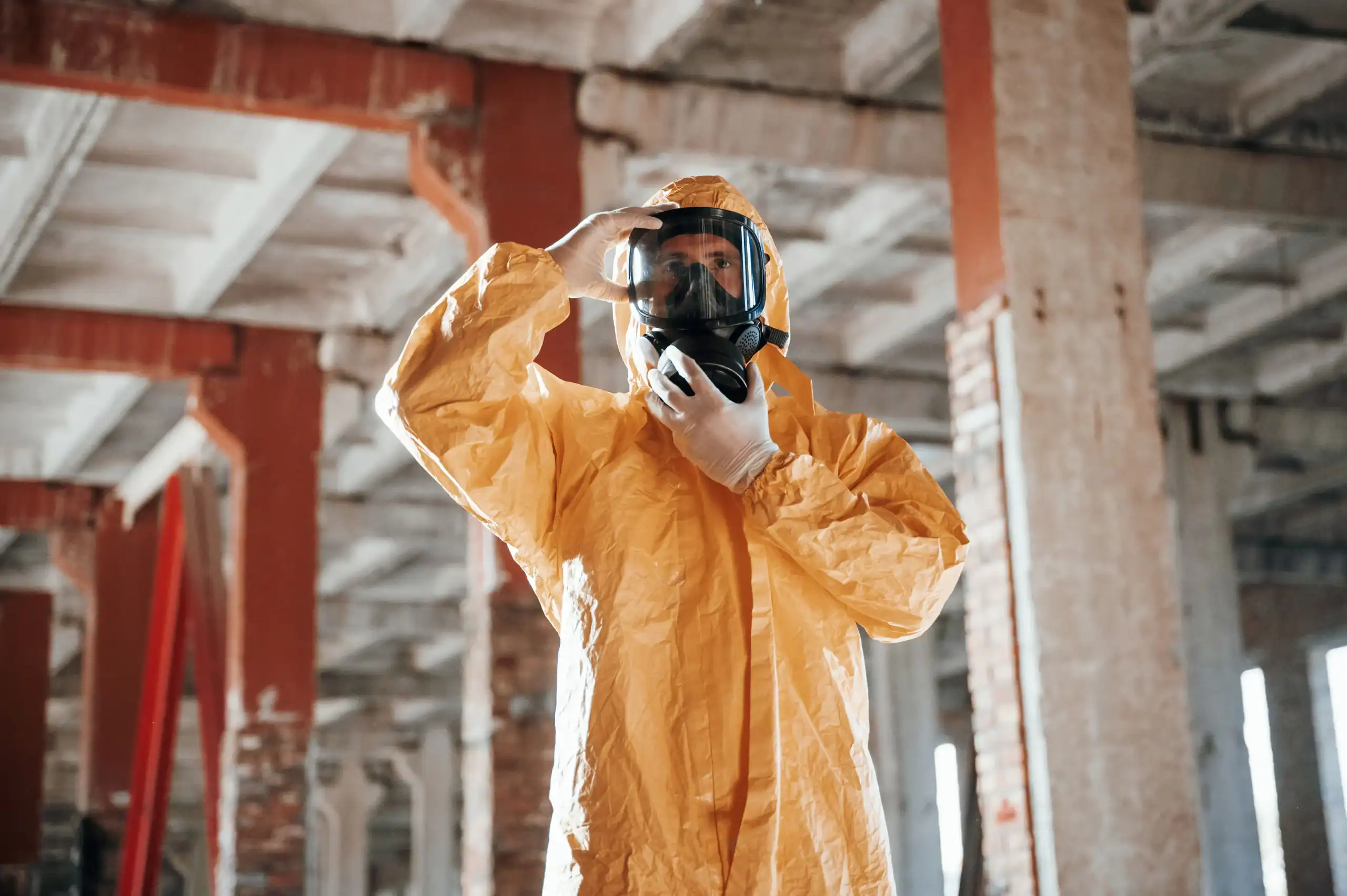
Once the scope is clear, containment goes up before any remediation work begins. That means physical barriers — typically heavy plastic sheeting — that isolate the affected area from the rest of the structure. Alongside that, we run HEPA-filtered negative air machines that create negative pressure inside the containment zone, so air flows in rather than out. Any spores disturbed during the removal process get captured by the filtration system rather than drifting into your living room.
This step is where professional remediation separates itself from DIY attempts. Disturbing mold without proper containment — even with good intentions and a box of disposable gloves — can scatter spores to areas that were previously unaffected. We’ve seen it happen in homes across Norriton, Conshohocken, and Lansdale: a homeowner does their best with what they have, and a problem that was isolated to one corner of a basement ends up in the HVAC return.
After containment, the actual remediation is physical removal — not chemical treatment. The IICRC S520, which is the national standard for professional mold remediation, is explicit about this: the primary method is removing contaminated material, not killing it in place. Affected drywall, insulation, and framing get removed and disposed of properly. HEPA vacuuming follows on all remaining surfaces. Then antimicrobial treatment is applied to the remediated area before reconstruction begins.
Post-remediation testing — ideally by an independent party — confirms the job was done right. That clearance step is what gives you confidence that the mold is actually gone, not just out of sight.
Here’s a situation we hear about more than we’d like: a homeowner in King of Prussia or Upper Dublin discovers mold after a pipe bursts. They call a mold remediation company. That company removes the mold but doesn’t do waterproofing. So the homeowner calls a waterproofer. The waterproofer says they need a demolition contractor to open the wall first. Now there are three companies involved, three schedules to coordinate, and three separate invoices — while the moisture problem that started everything sits unaddressed for another two weeks.
We built our service model specifically to avoid that scenario. From the initial inspection and testing through full remediation, demolition if needed, and waterproofing to address the source, we handle it under one roof. That’s not a convenience feature — in an emergency situation, it’s the difference between resolving a problem in days versus letting it drag out for weeks while the affected area expands.
It’s also worth mentioning that in Montgomery County’s older homes, mold remediation frequently involves opening walls in structures built before 1978. That means there’s a real possibility of encountering lead paint during the process. We’re certified as a lead inspector and Risk Assessor, which means we can handle that safely and legally — without the homeowner needing to stop the job, find a separate contractor, and start over. Most mold-only companies aren’t equipped for that. In a county where a significant portion of the housing stock predates the EPA’s lead paint regulations, that certification isn’t a footnote — it’s a reason to make sure whoever you call is actually qualified to do the full job safely.
If you’ve found mold, the most useful thing you can do in the next hour is stop trying to clean it yourself and get a professional assessment. Mold starts growing within 24 hours of a moisture event, and established colonies don’t resolve on their own — they spread. The longer the gap between discovery and remediation, the larger the affected area tends to be, and the higher the cost to fix it.
We offer free estimates, we’re available around the clock, and we’ve been working in Montgomery County long enough to know exactly what these homes deal with — the spring flooding along the Schuylkill, the basement moisture problems in Norriton and Pottstown, the crawl space issues that come with the older homes in Jenkintown and Ambler. This isn’t unfamiliar territory for us.
If you’re ready to get a straight answer about what you’re dealing with, reach out to us. We’ll tell you what we find, explain what needs to happen, and give you a clear picture of the cost before any work begins.
—
**FAQs**
**Is bathroom mold dangerous?**
It depends on where it is and how long it’s been there. Surface mold on grout or caulk in a well-ventilated bathroom is common and manageable — a thorough cleaning with the right product can handle it. But mold on ceiling drywall, behind tile, or anywhere that keeps coming back after cleaning is a different situation. That pattern usually means there’s a moisture or ventilation problem driving the growth, and surface treatment won’t fix it. In Montgomery County’s older homes — particularly the bathrooms in pre-war houses in Cheltenham or Jenkintown that haven’t had ventilation upgrades — this kind of recurring mold is worth having us assess, not just scrubbing down again. We can identify whether you’re dealing with a simple humidity issue or something that requires structural work.
**Does homeowner’s insurance cover emergency mold removal?**
Sometimes, but the details matter. Most standard policies will cover mold remediation if it resulted directly from a sudden, accidental water event — like a burst pipe or an appliance failure. What they typically won’t cover is mold that developed gradually from a slow leak, chronic humidity, or deferred maintenance. If you’re in the middle of an insurance claim from a water event, document everything before any cleanup begins, and act quickly — most policies require you to take reasonable steps to mitigate damage promptly. Waiting for full claim approval before starting remediation can actually work against you. We can walk you through what we’re seeing and help you understand what to communicate to your insurer.
**How fast can mold spread after a flood or water leak?**
Faster than most people expect. Mold can begin colonizing wet porous materials — drywall, wood, carpet, insulation — within 24 to 48 hours of moisture exposure. After that initial window, the growth rate accelerates. What starts as a small affected area in a basement corner can spread significantly within a week, especially in summer when Montgomery County’s humidity levels are already high. That’s why the framing of “emergency” is accurate — not alarmist. Every day between a water event and professional remediation is a day the problem is getting larger.
Summary:
Article details:
Share: