Black mold isn't just an eyesore — it's a genuine health threat. Here's what you need to know before it gets worse.
You noticed something dark in the corner of your basement. Or maybe it’s been a musty smell you can’t quite place. Either way, you’re here because something feels off — and you want a straight answer about whether it’s actually dangerous.
That instinct is worth listening to. Black mold is one of those things that gets dismissed as overblown in some circles and catastrophized in others. The truth sits somewhere more useful: it’s a real hazard, the health effects are well-documented, and the longer it goes unaddressed, the harder it gets to fix. Here’s what you actually need to know.
Black mold — the species most people are referring to when they use that term — is Stachybotrys chartarum. It ranks among the world’s ten most dangerous fungi, and it earns that distinction because of what it produces: mycotoxins. Specifically, a class called macrocyclic trichothecenes, which are highly toxic compounds capable of disrupting normal cell function throughout the body.
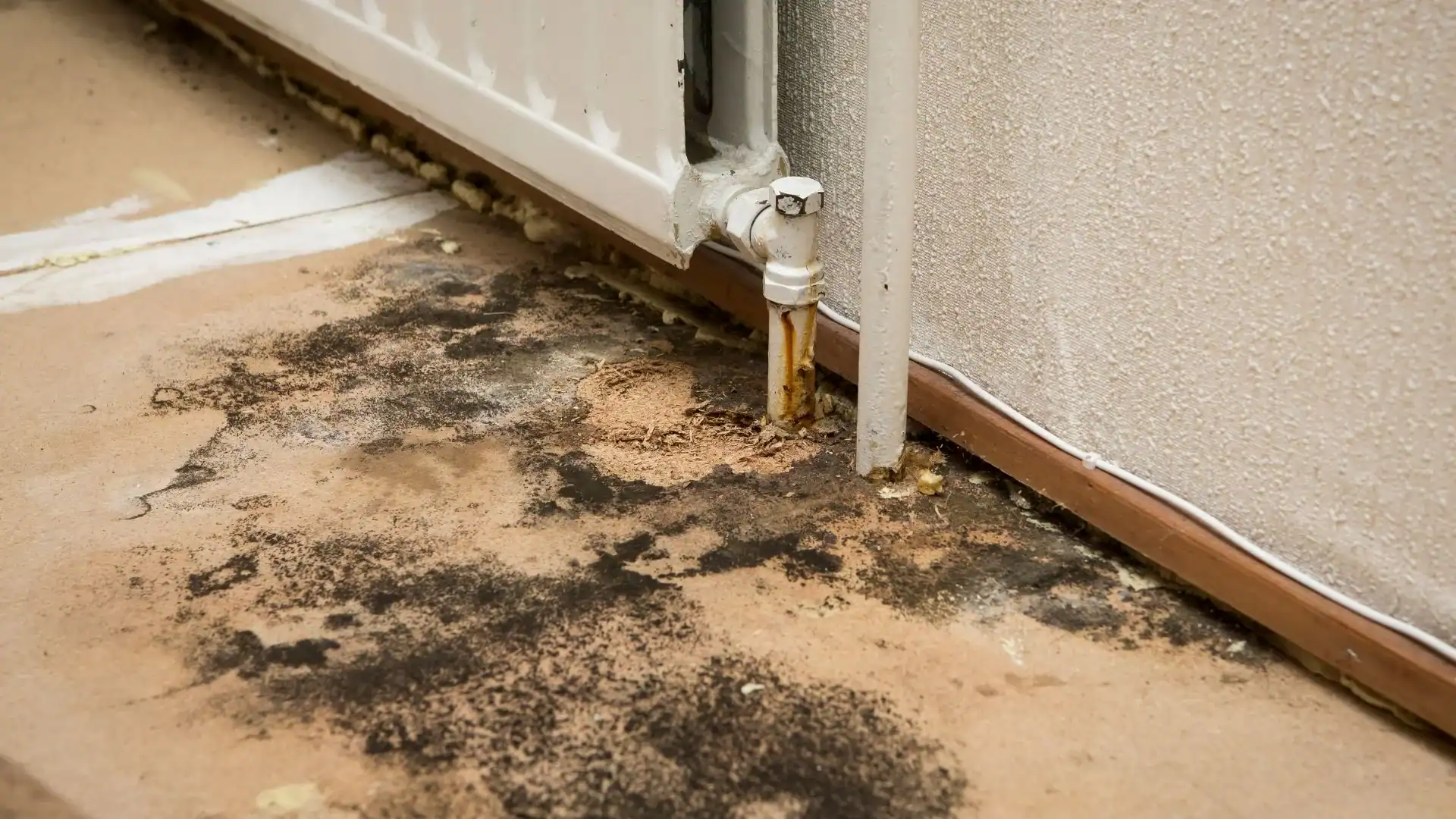
It thrives in warm, moisture-rich environments where indoor humidity climbs to 70% or above. That’s not an unusual condition in a Montgomery County basement during a humid July, or in a bathroom with a slow leak behind the wall. The mold itself is dark greenish-black, often slimy in appearance, and tends to grow in areas where water damage or chronic moisture has gone unaddressed.
What makes it particularly dangerous is that you don’t have to see it to be exposed to it. Mold releases spores into the air — microscopic particles that travel through your HVAC system, settle on surfaces, and get inhaled without any visible warning sign.
Most people associate mold exposure with sneezing and a stuffy nose. That’s the beginning of the list, not the end of it. The effects of living in a house with mold — especially over weeks or months — go well beyond seasonal allergy symptoms, and they’re easy to misattribute to other causes.
Respiratory effects are the most commonly recognized. Persistent coughing, worsening asthma, recurring sinus infections, shortness of breath, and throat irritation are all documented responses to ongoing mold exposure. For people who already have asthma or COPD, living in a mold-affected home can trigger frequent flare-ups that don’t respond well to medication because the underlying trigger is never removed.
What gets talked about less — and what genuinely surprises a lot of people — are the neurological effects. A 2017 Finnish study found that exposure to toxic indoor mold can cause insomnia, migraines, and peripheral neuropathy. That’s nerve-related symptoms: tingling, numbness, motor difficulties. Researchers also noted cognitive effects including brain fog, difficulty concentrating, and mood changes like anxiety and depression. These symptoms are real, they’re documented, and they’re frequently misdiagnosed because the connection to mold isn’t obvious until someone looks for it.
Immune system suppression is another concern with prolonged exposure. The mycotoxins produced by Stachybotrys chartarum are cytotoxic — they interfere with protein synthesis at the cellular level. Over time, this can leave the immune system less equipped to handle ordinary infections, which is part of why people in mold-affected homes often describe feeling generally run-down without being able to explain why.
Children, elderly residents, and anyone with a compromised immune system face elevated risk across all of these categories. For families in Montgomery County with young kids or aging parents in the home, that’s not a theoretical concern — it’s a practical one worth taking seriously.
This is the question people are most afraid to ask, probably because they’re afraid of the answer. So here it is directly: in some situations, yes, leaving your home temporarily is the right call. The threshold depends on the extent of the contamination, who’s in the household, and whether the mold has reached your HVAC system.
If mold has spread across a large surface area — think multiple walls, or a significant portion of a basement or crawl space — the concentration of airborne spores can reach levels that make continued occupancy genuinely risky, particularly for children, seniors, or anyone with respiratory conditions. If your HVAC system has been circulating air through a mold-affected area, spores may have traveled to every room in the house, not just the visible problem zone.
Short of a large-scale infestation, many situations can be managed without evacuating — but that determination should come from a professional assessment, not a guess. A qualified inspector can evaluate the contamination level, test air quality, and give you an honest read on whether your home is safe to occupy during remediation. That’s not something a home test kit from a hardware store can tell you.
One thing that consistently makes the situation worse: disturbing mold without proper containment. If you’ve already tried scrubbing it with bleach and it came back — or if you’ve noticed the smell spreading to other areas after attempting a DIY fix — that’s a sign the spores have been redistributed rather than eliminated. Bleach can address surface mold on non-porous materials, but it doesn’t penetrate drywall, wood framing, or insulation, where the root structure of the mold actually lives. Disturbing a mold colony without negative air pressure containment can spread contamination to areas that were previously unaffected.
The honest answer to “should I leave?” is: get a professional in to assess it first. The answer will be specific to your home, your family, and the actual scope of what’s there.
Want live answers?
Connect with a EJS Environmental expert for fast, friendly support.
Montgomery County, PA has a housing stock that creates near-ideal conditions for mold problems. The median construction year for homes in the county is 1969, and nearly 17% of homes were built before 1940. That means older foundations, aging ventilation systems, and construction methods that predate modern moisture barriers by decades.
Add the county’s climate to that equation — hot, muggy summers with humidity that regularly pushes into mold-growth territory, heavy spring rains that saturate foundations along the Schuylkill River and Perkiomen Creek corridors, and winter freeze-thaw cycles that stress plumbing — and you have a region where moisture intrusion is genuinely common, not exceptional.

If you live in Lower Merion, Narberth, Bryn Mawr, or anywhere along the Main Line, you probably already know that the character of older stone and brick homes comes with a tradeoff. Those beautiful fieldstone foundations that define so many properties in this part of Montgomery County are also among the most moisture-permeable construction materials in residential use. Water doesn’t need a dramatic flood event to get in — it seeps, slowly, through foundation walls that have been doing their job for eighty or a hundred years without modern waterproofing.
The result is chronic low-level moisture in basements and crawl spaces. Not a flood. Not a visible leak. Just a persistent dampness that creates exactly the conditions black mold needs to take hold. Homeowners often don’t discover it until they finish a basement, do a renovation, or start noticing symptoms they can’t explain.
Mold can begin growing within 24 to 48 hours of a moisture event. But chronic moisture exposure — the kind that happens gradually in an older basement — can sustain mold growth for months or years before it’s ever detected. By the time there’s a visible colony, the problem has usually been developing for a while. That’s why professional inspection matters, especially in homes that have any history of moisture, musty odor, or water intrusion, even minor.
For homeowners in Cheltenham, Elkins Park, Glenside, or Abington — communities with dense concentrations of mid-century and pre-war homes throughout Montgomery County — the same dynamic applies. These aren’t poorly maintained homes. They’re older homes in a humid climate, and that combination creates real exposure risk that deserves honest attention rather than a “wait and see” approach.
Consumer mold test kits are widely available, and they’re widely considered unreliable. The EPA’s own guidance notes that if mold is visible, testing to identify the species is generally unnecessary — the priority is getting it out, not cataloging it. And if mold isn’t visible but you suspect it’s there, a petri dish left on your kitchen counter for 48 hours isn’t going to tell you whether there’s a colony inside your wall cavity or under your bathroom subfloor.
Professional assessment is different in kind, not just degree. A qualified inspector uses air sampling, surface testing, moisture meters, and thermal imaging to locate contamination that isn’t visible to the naked eye. They can identify whether your HVAC system has been distributing spores. They can assess the scope of the problem and tell you what remediation actually needs to look like — whether that’s a contained surface treatment or a more involved process involving demolition, replacement of building materials, and waterproofing to address the moisture source.
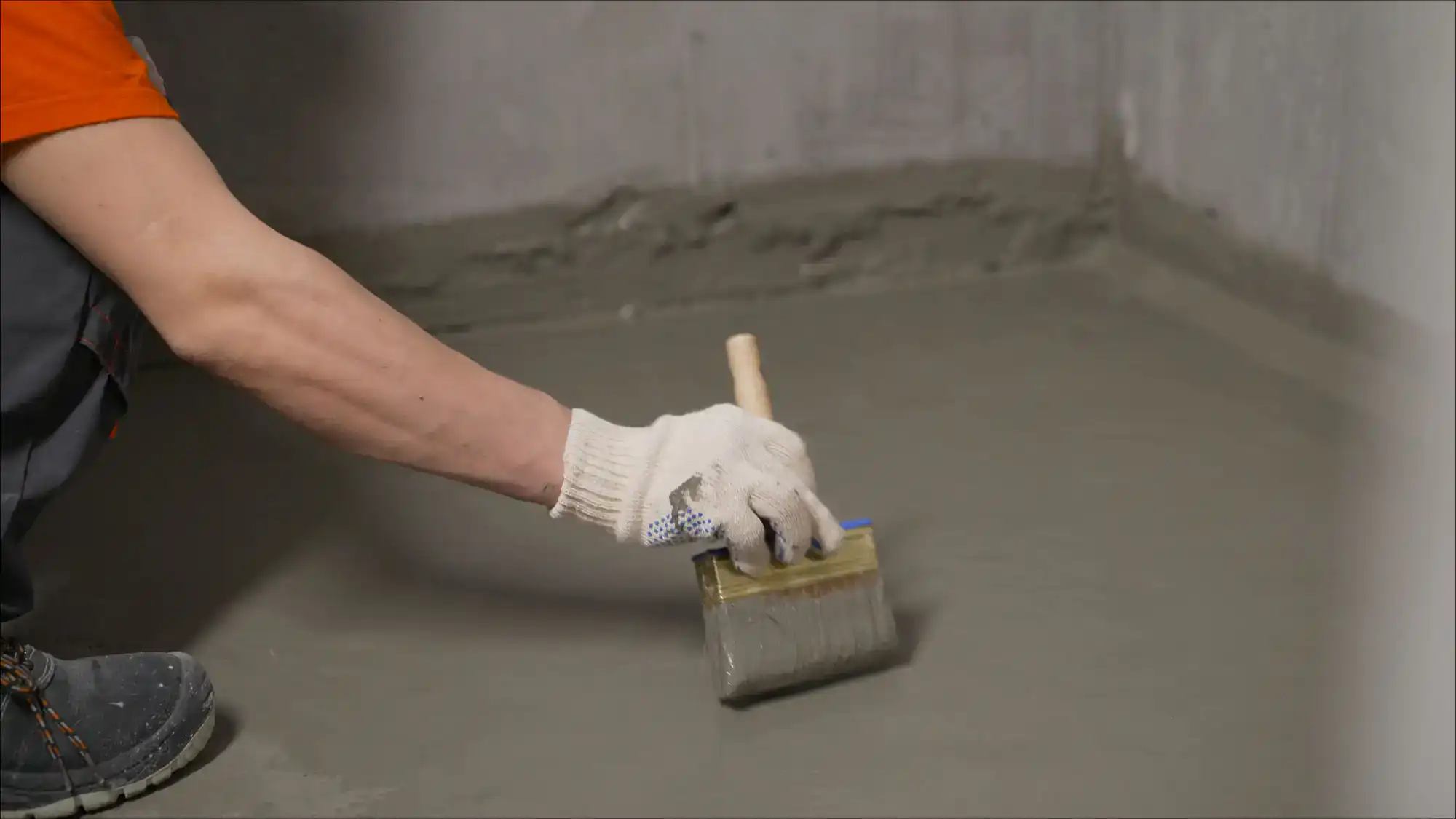
That last part matters more than most people realize. Mold remediation that doesn’t fix the underlying moisture problem isn’t remediation — it’s a temporary cosmetic fix. The mold comes back because the conditions that created it were never changed. A professional who handles both the remediation and the waterproofing closes that loop in a way that a mold-only contractor cannot.
We’ve been doing this work across Montgomery County, Chester County, Bucks County, and Delaware County for over two decades, operating out of Willow Grove. We’re a licensed, bonded, and insured operation — not a franchise, not a side business. We hold EPA/HUD compliant certifications and carry Certified Lead Inspector and Risk Assessor credentials, which matters in Montgomery County where a significant portion of the housing stock was built when lead paint and asbestos were standard materials. When we come in to assess a home, we’re looking at the full picture, not just the surface.
We offer free estimates, 24/7 phone availability for urgent situations, and a one-stop service model that covers testing, remediation, demolition, and waterproofing under one roof. For homeowners in Montgomery County dealing with an active mold concern, that means fewer contractors, fewer handoffs, and a clear chain of accountability from the first call to the final clearance test.
If something in your home smells off, if your family has been dealing with symptoms that don’t have a clear explanation, or if you’ve found something that looks like mold — don’t wait it out. Mold doesn’t improve on its own, and the longer it has a moisture source, the more ground it covers.
The most useful thing you can do right now is get a professional assessment from someone who will give you an honest answer, not an upsell. That means understanding the actual scope of the problem, knowing whether your home is safe to occupy during remediation, and having a clear plan for fixing the moisture source so the mold doesn’t come back.
We at EJS Environmental Services LLC have been serving homeowners across Montgomery County and the surrounding region for twenty years. If you have questions or need someone to take a look, we’re available — including after hours.
Summary:
Article details:
Share: