Bathroom mold keeps coming back for a reason. Here's what's really going on behind your walls — and what to do about it.
You’ve scrubbed it, sprayed it, maybe even painted over it. And then a few weeks later — it’s back. Bathroom mold is one of the most frustrating problems homeowners deal with, partly because the fix seems obvious but rarely works. The truth is, what you see on the tile is almost never the whole story. There’s usually something going on behind the wall, under the floor, or inside the grout that a bottle of bleach simply can’t reach. This page will help you understand what bathroom mold actually is, what it’s doing to your family’s health, and what it takes to get rid of it for good.
The short answer is yes — but the longer answer matters more. Most people have heard of “toxic black mold” and assume that if the mold in their bathroom is green or gray, they’re fine. That’s not how it works. Any mold growing indoors can trigger health problems in sensitive individuals, regardless of color. The species, the concentration of spores in the air, and how long you’ve been exposed all factor into how much damage it can do.
What makes bathrooms particularly risky is the daily exposure. You’re in there every morning, breathing in steam-heavy air that’s often thick with mold spores — especially if your ventilation isn’t great. Over time, that adds up.
Short-term mold exposure tends to show up as the kind of symptoms people brush off — a stuffy nose, itchy eyes, a cough that won’t quit, or skin irritation after a shower. Easy to blame on allergies or a cold. But when exposure continues over weeks or months, the effects become harder to ignore and harder to reverse.
Prolonged mold exposure has been linked to chronic respiratory inflammation, worsening asthma, recurring sinus infections, and in some cases, lung damage. Research from Harvard Health and the Cleveland Clinic both confirm that sustained indoor mold exposure — not just the notorious Stachybotrys chartarum — can cause lung inflammation and cognitive effects including brain fog, mood changes, and fatigue.
Children, elderly family members, and anyone with a compromised immune system are at the highest risk. For a household with a young child or an aging parent, a moldy bathroom isn’t a minor inconvenience — it’s an ongoing health exposure that compounds every single day. One in three people has some sensitivity to mold, which means the odds are good that someone in your home is already being affected, even if the connection isn’t obvious yet.
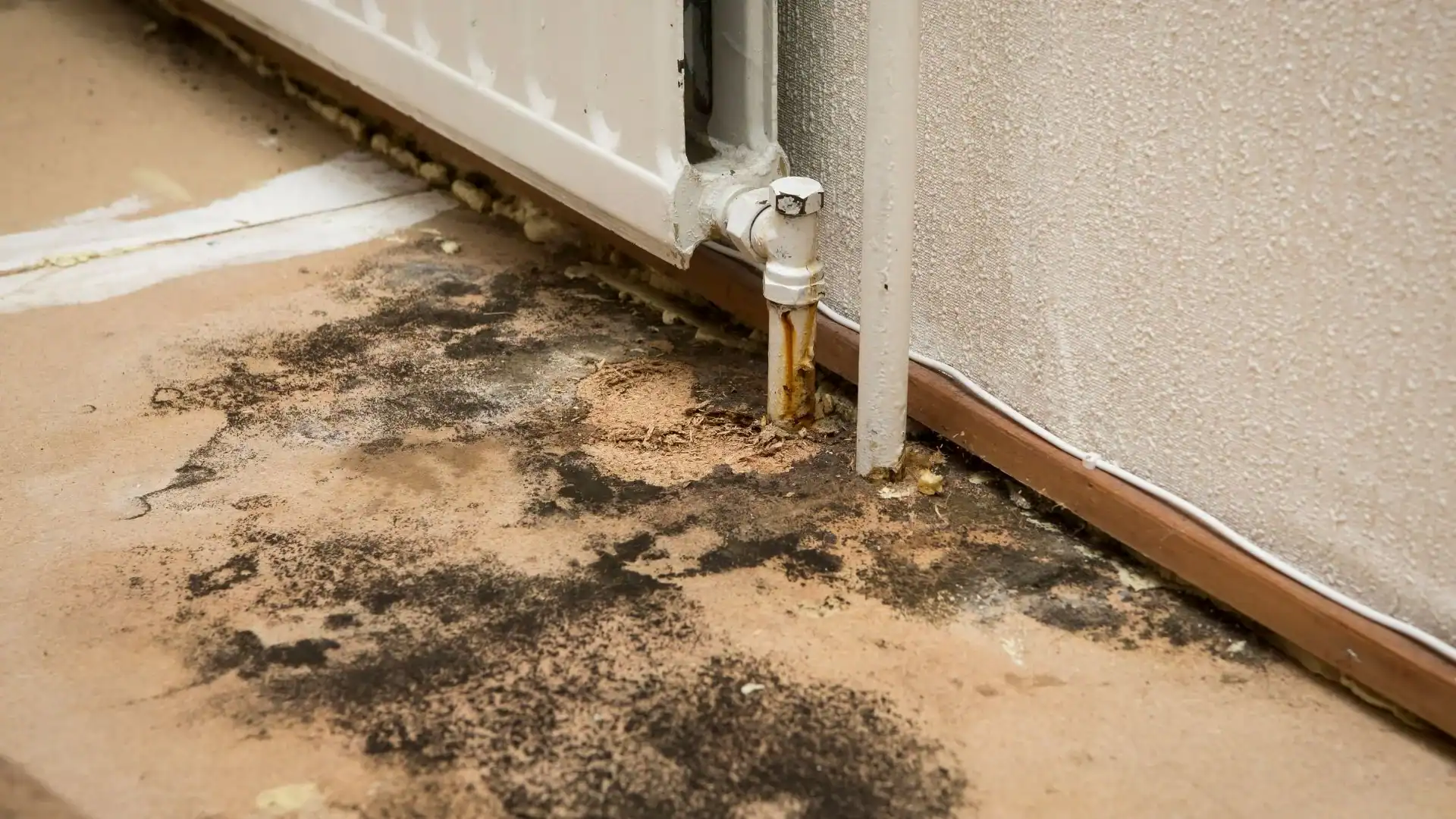
The tricky part is that mold doesn’t have to be visible to be a problem. Stachybotrys — the species most commonly called black mold — actually requires sustained wet conditions to thrive, not just surface humidity. That means it’s most often found growing inside walls, behind tile, or under flooring where moisture has been trapped for a long time. By the time you can see it, there’s frequently much more you can’t.
One reason mold-related health problems go undiagnosed for so long is that the symptoms mimic so many other common conditions. Persistent headaches, fatigue, throat irritation, and skin rashes are all classic signs of mold exposure — and all easy to attribute to stress, seasonal allergies, or just getting older.
What makes it worse is how mold moves through a home. Spores don’t stay in the bathroom. Every time you run the exhaust fan — or don’t run it — spores circulate through the air and can travel into bedrooms, living areas, and HVAC systems. A mold problem in one bathroom can quietly affect indoor air quality throughout the entire house. The EPA estimates that indoor air is already two to five times more polluted than outdoor air in most homes. Add an active mold colony to the mix, and that number climbs.
This is why a personalized assessment matters. A family with a toddler and a grandparent living in the same house faces a very different risk profile than a couple in their thirties with no respiratory conditions. When we come out to assess a mold situation, we’re not running through a generic checklist — we’re looking at your home, your family’s situation, and what the mold is actually doing in your specific environment. That context changes the remediation plan.
The goal isn’t just to remove what’s visible. It’s to understand the full picture: where the moisture is coming from, how far the mold has spread, and what it’s going to take to make sure your home’s air is genuinely clean again.
Want live answers?
Connect with a EJS Environmental expert for fast, friendly support.
Most DIY mold treatments follow the same basic script: spray bleach, scrub, let it dry, hope for the best. And for a tiny patch of surface mold on a non-porous tile? That might hold for a while. But for anything growing in grout, behind drywall, or on wood framing — which is most bathroom mold situations — bleach doesn’t penetrate deep enough to do the job. It kills what’s on the surface and leaves the root structure intact.
Professional remediation works differently. It starts with finding the actual source of moisture, because without fixing that, nothing else matters. Then it moves into containment, removal of affected materials, HEPA filtration to capture airborne spores, and post-remediation testing to confirm the job is done.
Mold can begin growing within 24 to 48 hours of a moisture event. That’s just biology. Mold needs three things: a food source (drywall, wood framing, grout), the right temperature, and moisture. In a bathroom, two of those three are always present. Moisture is the only variable you can actually control.
This is where a lot of remediation jobs fall short. A contractor comes in, removes the visible mold, applies an antimicrobial treatment, and leaves. Three months later, you’re back to square one — because the leaking pipe behind the wall, the inadequate exhaust fan, or the failing caulk seal never got addressed. The mold didn’t come back because the treatment failed. It came back because the conditions that caused it were never fixed.
Our approach combines mold removal with waterproofing — which means we’re not just treating the symptom, we’re fixing the underlying problem. For older homes throughout Montgomery County, this is especially important. Many of the Victorian and Colonial homes along the Main Line, mid-century ranchers in Lansdale, Horsham, and Abington, and post-war homes in Norriton and Upper Merion were built with original tile work, cast iron plumbing, and bathroom ventilation that was never designed to handle modern shower usage. Aging grout seals, slow pipe leaks hidden inside walls, and inadequate exhaust fan capacity are the three most common root causes we find — and none of them show up on a bleach-and-scrub checklist.
When we find mold behind a bathroom wall in a 1940s home in Ardmore or a finished basement bathroom in Cheltenham, we’re not surprised. We’ve been doing this for over two decades in these exact neighborhoods throughout Montgomery County. We know what the housing stock looks like, what the common failure points are, and what it takes to fix them properly so the mold doesn’t come back six weeks later.
Visible mold on tile or grout is the obvious sign. But hidden mold — the kind growing inside walls, under flooring, or behind a vanity — often announces itself in subtler ways before you can see it.
A persistent musty smell in the bathroom, even after cleaning, is one of the most reliable indicators. If the smell is stronger near a particular wall or under the vanity, that’s worth paying attention to. Tile that feels soft or slightly hollow when you press it, wallpaper or paint that’s bubbling or peeling without obvious cause, and grout lines that keep darkening even after scrubbing are all signs that moisture is getting somewhere it shouldn’t.
The EPA’s general guidance is that any mold covering more than 10 square feet warrants professional remediation — but that threshold applies to visible mold. Hidden growth behind a bathroom wall can far exceed that without a single visible spore on the surface. A professional inspection with air sampling and moisture mapping is the only reliable way to know what you’re actually dealing with.
We use HEPA filtration systems and professional-grade containment during every remediation job, which means the work we do in your bathroom doesn’t spread spores into the rest of your home. That’s a meaningful difference from tearing out tile yourself and hoping for the best. Disturbing mold without proper containment can actually make air quality worse in the short term — which is the last thing you want if you have kids or elderly family members in the house.
If there’s any chance the mold has grown beyond what’s visible, or if it’s come back after a previous treatment, a professional assessment is the right next step.
If the mold in your bathroom keeps returning, smells worse than it looks, or you suspect there’s growth somewhere you can’t see — that’s your answer. Surface treatments buy time. They don’t solve the problem. And the longer a moisture issue goes unaddressed inside a wall or under a floor, the more damage it does to both the structure and the air your family breathes.
Montgomery County’s older housing stock, wet springs, and humid summers make this a real and recurring issue for a lot of homeowners — not a rare worst-case scenario. We’ve seen it in Main Line Victorians, finished basements in Horsham, and tile showers in Norristown that looked fine on the surface until we got behind the wall.
We offer free estimates, 24/7 availability, and the kind of one-stop approach that means you’re not juggling three different contractors to fix one problem. If you’re ready to find out what’s actually going on in your bathroom — and get it handled properly — give us a call.
Summary:
Article details:
Share: