Thinking about removing asbestos siding yourself? Here's what Montgomery County homeowners need to know before they touch a single panel.
If your home was built before 1980 and you’re planning any exterior work, there’s a real chance you’re dealing with asbestos siding. That’s not a reason to panic — but it is a reason to pause before picking up a pry bar or calling a general contractor who handles “a little of everything.”
Montgomery County is full of older homes. Norristown, Lansdale, Hatboro, the Main Line — beautiful neighborhoods with beautiful old bones. And a lot of those bones include asbestos cement siding that was completely standard at the time. Here’s what you need to understand about removing it safely, legally, and without putting your family at risk.
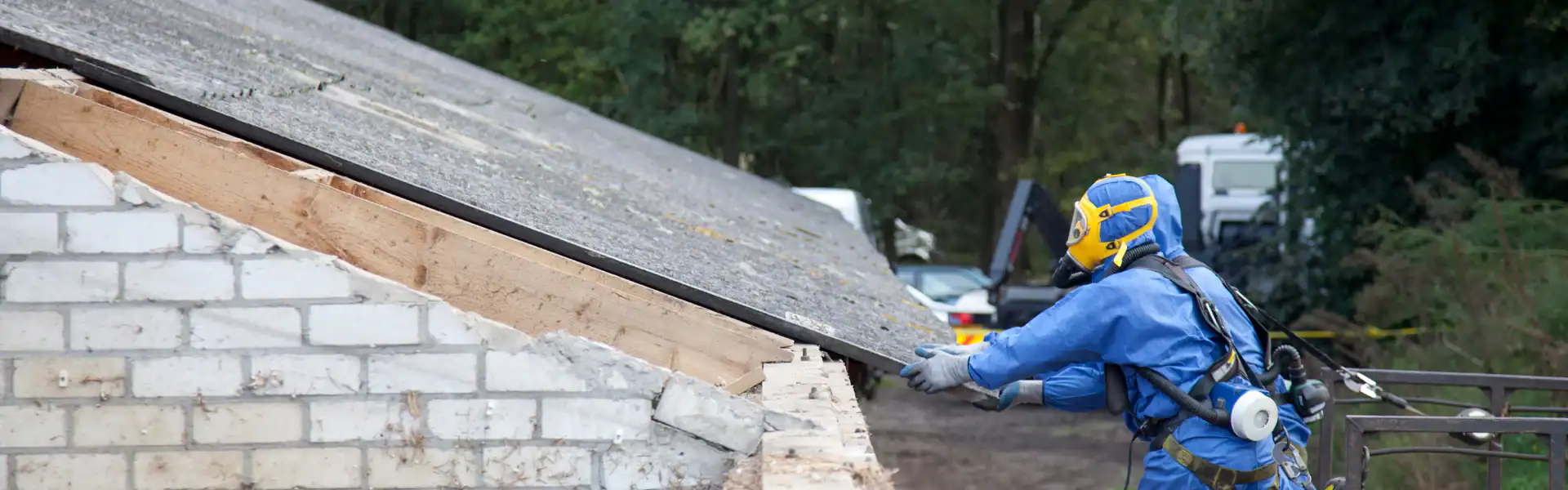
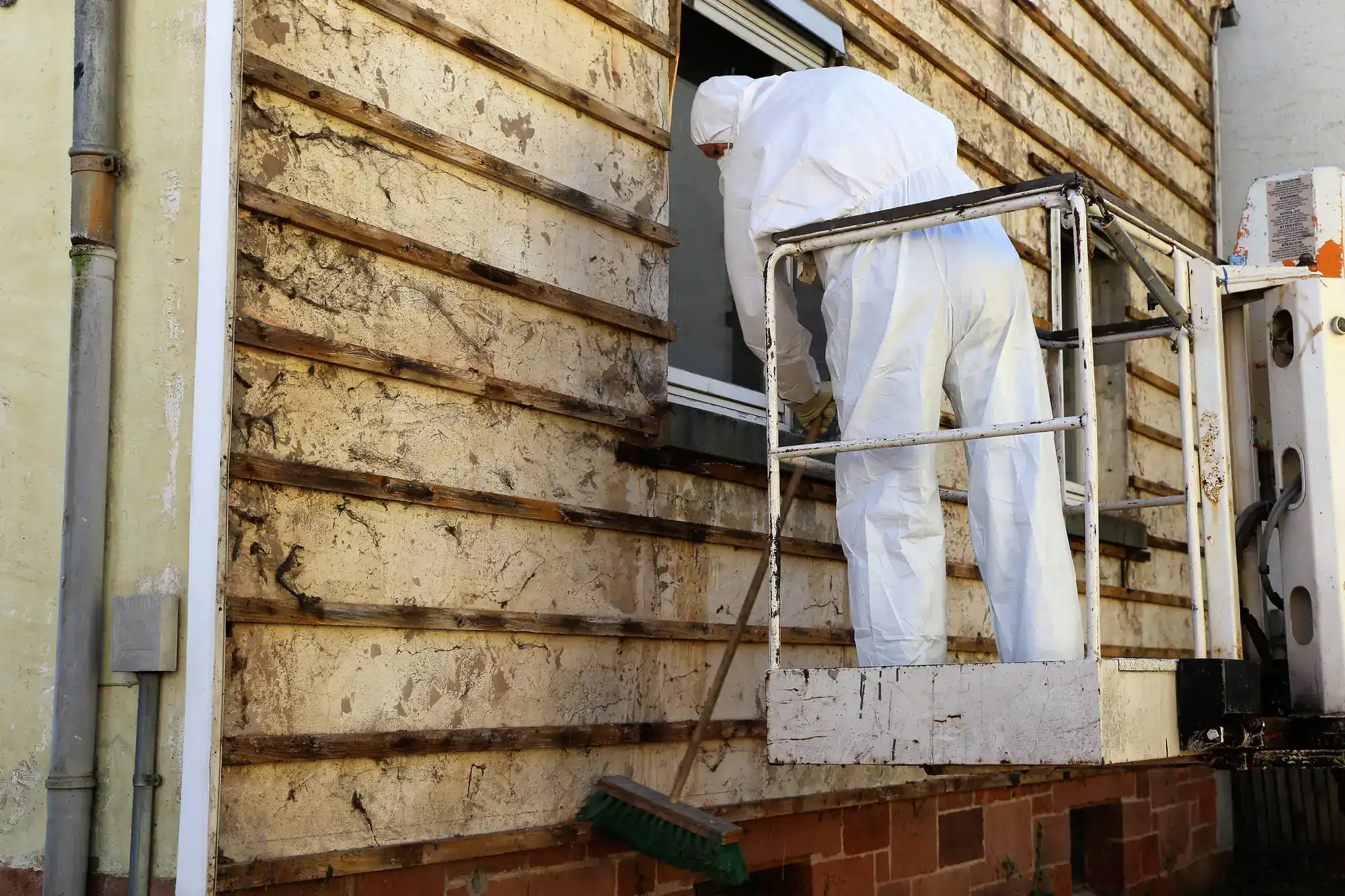
Professional asbestos siding removal isn’t just “someone with gloves taking panels off a wall.” It’s a regulated, multi-step process designed to keep fibers contained from the moment work begins to the moment the last bag leaves your property.
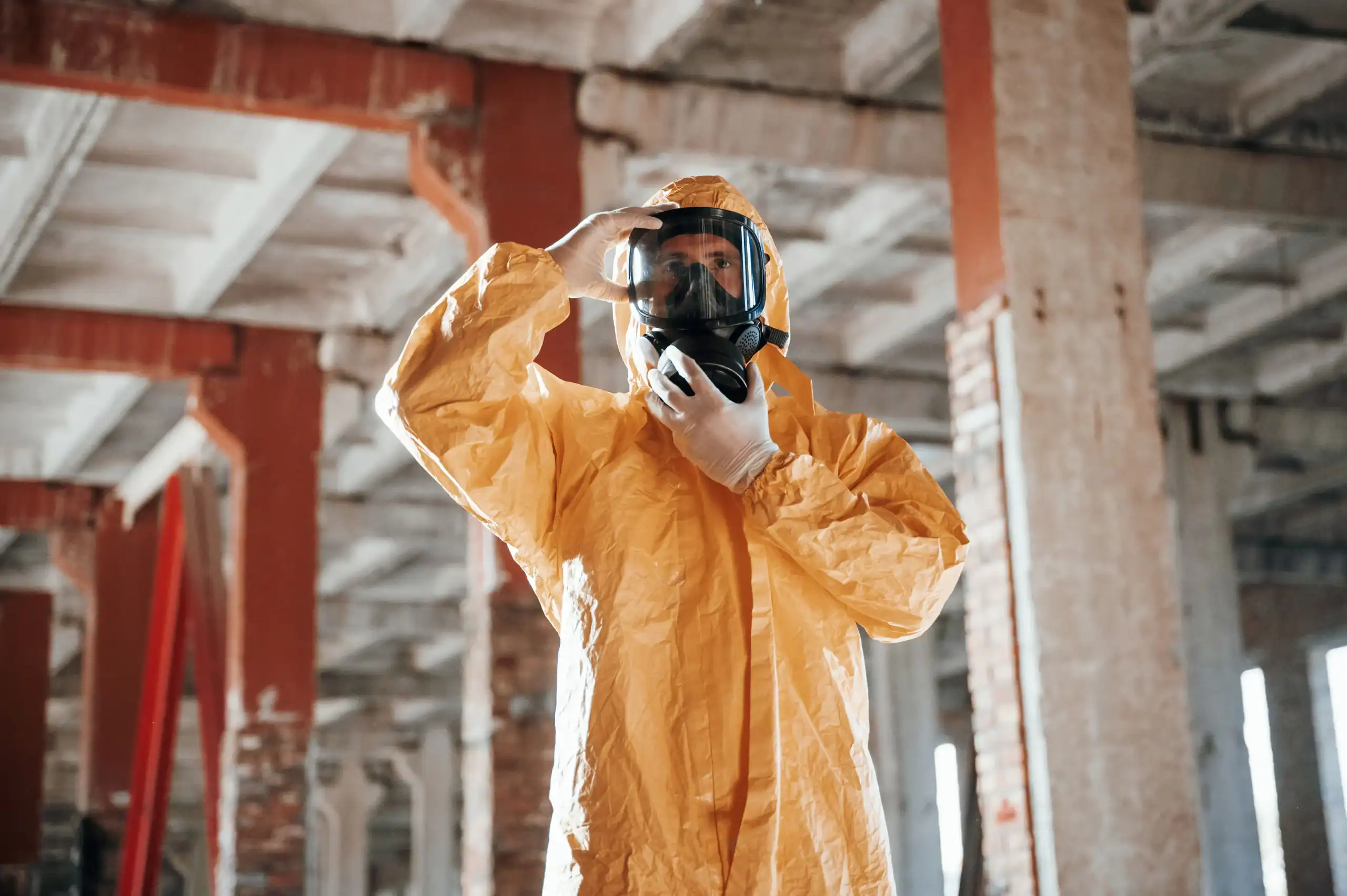
We start with certified testing to confirm what you’re dealing with and what condition it’s in. From there, the work area gets sealed off using plastic sheeting and a negative air pressure system — meaning air flows in, not out, so fibers can’t migrate into your home. HEPA-filtered air scrubbers run the entire time. The siding comes off in whole pieces using wet methods to suppress dust, gets double-bagged in labeled asbestos waste containers, and goes to a licensed disposal facility. Then the site gets decontaminated.
That’s the standard. Anything less isn’t professional abatement — it’s just removal.
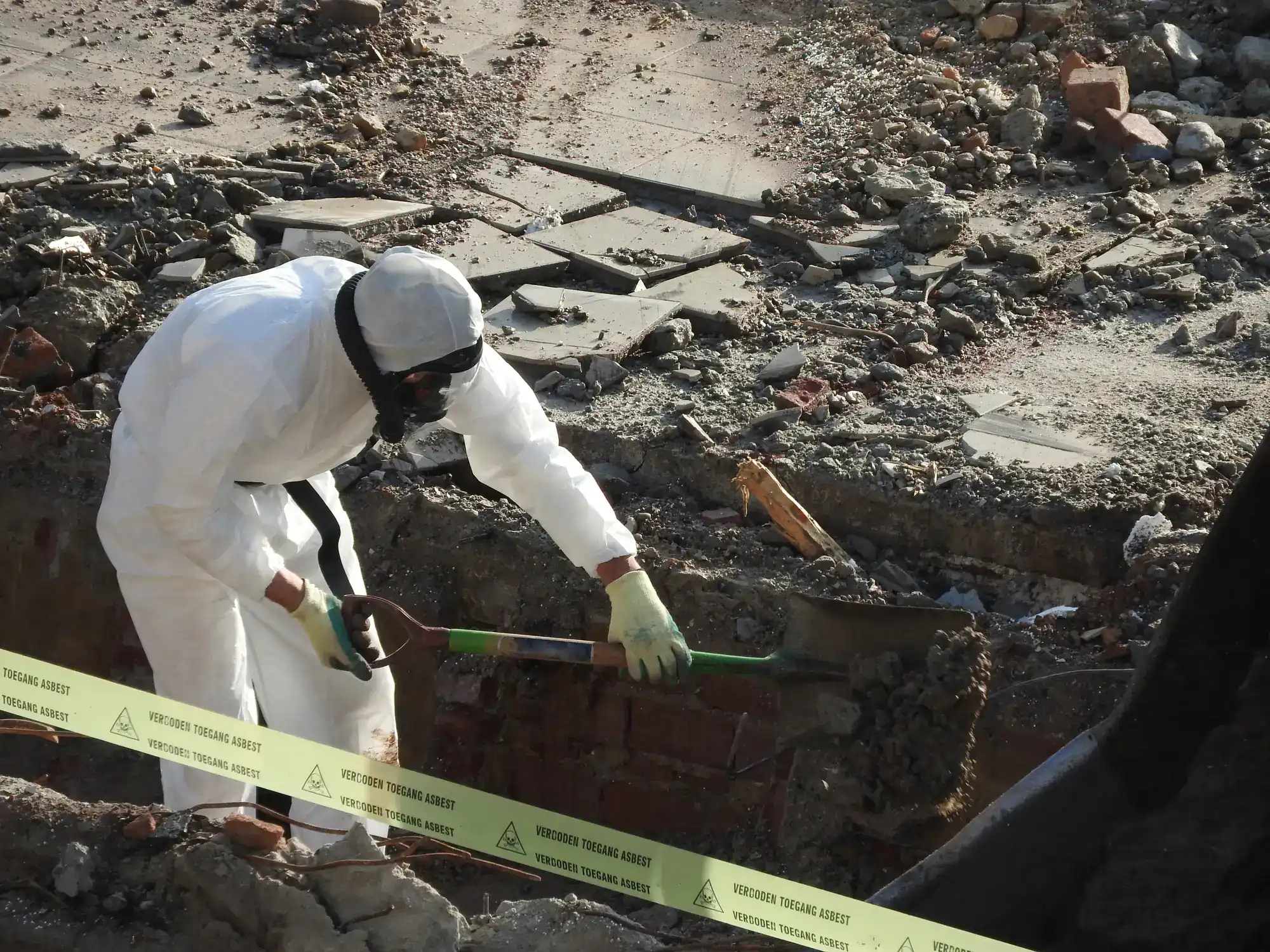
There’s a version of this conversation where we just talk about the health risks and leave it there. But in Pennsylvania, there’s also a legal reality that makes DIY asbestos siding removal genuinely complicated — and in most cases, impossible to complete lawfully on your own.
Under Pennsylvania’s Asbestos Occupation Accreditation and Certification Act (Acts 194 and 161), it is illegal for anyone to perform asbestos abatement work without holding a valid certification from the Pennsylvania Department of Labor and Industry. That applies to contractors, supervisors, and workers. A general contractor’s license doesn’t cover it. A handyman’s experience doesn’t cover it. The certification is specific, it’s tested, and it’s required by state law.
Here’s where it gets more complicated for Montgomery County homeowners specifically: even if you were legally permitted to remove the siding yourself, you’d have nowhere to put it. Montgomery County does not accept asbestos materials at its Household Hazardous Waste events. There is no legal DIY disposal pathway available to residents. Licensed disposal facilities require documentation from a certified contractor. So even if you pulled every panel off your house, you’d be left with bags of hazardous waste and no legal way to get rid of them.
There’s also the NESHAP threshold to consider. Federal EPA regulations require notification and compliance measures for any project disturbing more than 160 square feet of asbestos-containing material on building components. A full exterior siding job almost always exceeds that. And in Pennsylvania, regulated friable asbestos projects require a five-day notification to DEP before work begins — a step that only a certified contractor is positioned to handle correctly.
We’ve seen homeowners try to work around this by having a general contractor cover the asbestos siding with new vinyl instead of removing it. That’s sometimes a legitimate option — encapsulation can be appropriate when the material is stable and undamaged. But it defers the problem, not eliminates it. Future renovations, storm damage, or a home sale will eventually surface it again, and at that point you’ll be dealing with disclosure requirements on top of the removal cost. It’s worth having an honest conversation about which approach actually makes sense for your situation.
You can’t identify asbestos siding by looking at it. That’s the short answer. The longer answer is that asbestos cement siding — the most common type used on residential homes — looks a lot like regular fiber cement siding. It often comes in a shingle or clapboard style, sometimes with a slightly rough or textured surface. Homes built between the 1930s and the late 1970s are the ones most likely to have it.
In Montgomery County, that covers a significant portion of the housing stock. The older boroughs — Norristown, Ambler, Jenkintown, Cheltenham — were heavily developed during that era. The Main Line communities have large, early-20th-century homes that frequently still have original exterior materials in place. If your home was built before 1980 and you’re not sure what the siding is made of, the only way to know for certain is a certified lab test.
The test itself isn’t dramatic. A small sample gets taken carefully, sealed, and sent to an accredited laboratory. Results typically come back quickly. What matters is that the sampling is done by someone who knows how to take it without disturbing the surrounding material — because that’s the moment of risk. An improperly taken sample can release the same fibers you’re trying to avoid.
If the test comes back positive, the condition of the material matters. Asbestos siding that is intact, painted over, and not cracked or crumbling poses minimal immediate risk if left alone. The danger comes when it’s disturbed — drilled, cut, broken by impact, scraped during painting, or removed without proper containment. That’s when fibers become airborne. And once they’re in the air, you can’t see them, you can’t smell them, and you can’t know how much you’ve inhaled.
Want live answers?
Connect with a EJS Environmental expert for fast, friendly support.
Asbestos is classified as a known human carcinogen by the EPA, the U.S. Department of Health and Human Services, and the International Agency for Research on Cancer. That classification exists because the evidence is unambiguous — asbestos exposure causes cancer, and there is no established safe level of exposure.
What makes it particularly dangerous in a home renovation context is that the effects aren’t immediate. You won’t feel sick the day you remove the siding. You won’t cough or notice anything unusual. The diseases asbestos causes take decades to develop, which is exactly why so many people underestimate the risk in the moment.
When asbestos fibers are inhaled, they travel deep into the lungs and stay there. The body can’t break them down or expel them. Over time, the fibers cause inflammation and scarring that leads to a range of serious conditions.
Asbestosis is one of the most common outcomes of prolonged exposure. It’s a buildup of scar-like tissue in the lungs that progressively reduces lung function. OSHA describes it plainly: asbestosis often progresses to disability and death. It’s not a condition that gets better.
Lung cancer is another direct consequence of asbestos exposure, and the risk compounds significantly for people who smoke. If you’re a smoker who’s been exposed to asbestos, your lung cancer risk isn’t just additive — it multiplies. That’s a specific, documented interaction that most homeowners don’t know about until it’s too late to matter.
Then there’s mesothelioma — a rare and aggressive cancer of the lining of the lungs, chest, and abdomen that is almost exclusively caused by asbestos exposure. What makes mesothelioma particularly devastating is the timeline. It typically takes 30 or more years to develop after first exposure. The American Cancer Society notes that the risk doesn’t decrease with time — once you’ve been exposed, the elevated risk stays with you for the rest of your life. There is no threshold below which exposure becomes safe.
This is the part of the conversation that matters most when someone is weighing whether to handle asbestos siding removal themselves. It’s not about whether you feel fine right now. It’s about what a single afternoon of unprotected work could set in motion over the next three decades. Professional abatement with proper containment, HEPA filtration, and negative air pressure systems exists specifically to prevent those fibers from ever reaching your lungs in the first place.
This comes up more than you’d expect, and it’s worth answering directly. Yes — direct skin contact with asbestos fibers can cause localized skin reactions. When fibers embed in the skin, they can produce redness, itching, irritation, and small raised bumps at the point of contact. It’s sometimes described as a rash, though it’s more accurately a physical irritation response to a foreign material the body can’t process.
Here’s the important context: if you’re noticing a skin reaction after handling what you suspect is asbestos siding, the skin irritation itself is the least of your concerns. It’s a visible signal that you had direct, unprotected contact with the material — which means you were also in a position to inhale fibers. The skin reaction is something you can see. The respiratory exposure is something you can’t.
For homeowners in Montgomery County who’ve already disturbed suspected asbestos siding — maybe during a repair, a paint scrape, or a contractor visit that didn’t go as planned — the right move is to stop work, ventilate the area if possible, and call a certified abatement contractor to assess the situation. Don’t try to clean it up yourself. Don’t run the HVAC. And if you have any concern about the level of exposure, talk to a doctor. The latency period for asbestos-related disease is long, but early documentation of a potential exposure event matters.
We work with homeowners in this exact situation regularly. Someone cracked a panel during a storm. A roofer drilled through the wrong surface. A well-meaning DIY project went sideways. It happens, and there’s a clear path forward — but it starts with getting a certified professional on-site to assess what you’re actually dealing with.
The decision between professional asbestos siding removal and DIY isn’t really a close call once you understand the full picture. The health risks are real and long-lasting. The legal framework in Pennsylvania makes unlicensed abatement work illegal. And in Montgomery County specifically, there’s no legal way to dispose of asbestos materials without a certified contractor involved. The math doesn’t work in favor of going it alone.
What it does work in favor of is calling someone who knows exactly what they’re looking at. We’ve been doing this work in Montgomery County and the surrounding area for over two decades. We’re certified by the Pennsylvania Department of Labor and Industry, EPA and HUD compliant, fully licensed, bonded, and insured — and we offer free estimates so you can understand what you’re dealing with before committing to anything.
If you’re in Norristown, Lansdale, Hatboro, along the Main Line, or anywhere else in the county and you’ve got questions about asbestos siding, reach out to EJS Environmental Services LLC. We answer the phone — including nights and weekends — and we’ll give you a straight answer.
Summary:
Article details:
Share: