Asbestos exposure can go undetected for decades. Here's what Montgomery County homeowners need to know before it's too late.
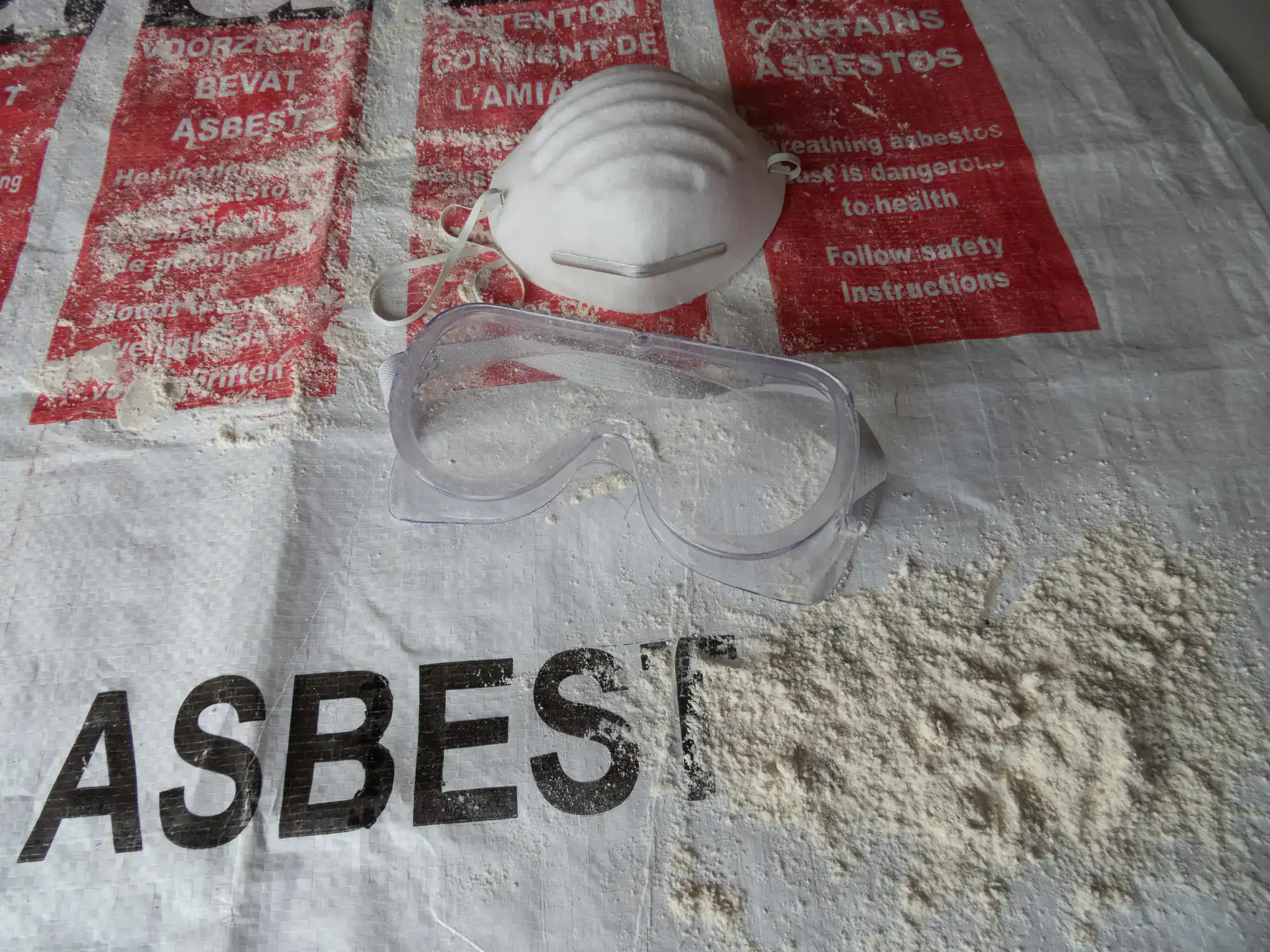
Most people who find out their home might contain asbestos aren’t panicking because they feel sick. They’re panicking because they don’t know whether they should be. That uncertainty — the not knowing — is the hardest part. You’ve been living in this house for years, maybe decades. The floors look fine. The ceiling tiles haven’t crumbled. And you feel perfectly healthy. So what’s the problem?
The problem is that asbestos doesn’t announce itself. It works slowly, quietly, and on a timeline that can stretch across most of your adult life. Understanding what you’re actually dealing with — and when to get a professional asbestos inspection — is the most important first step.
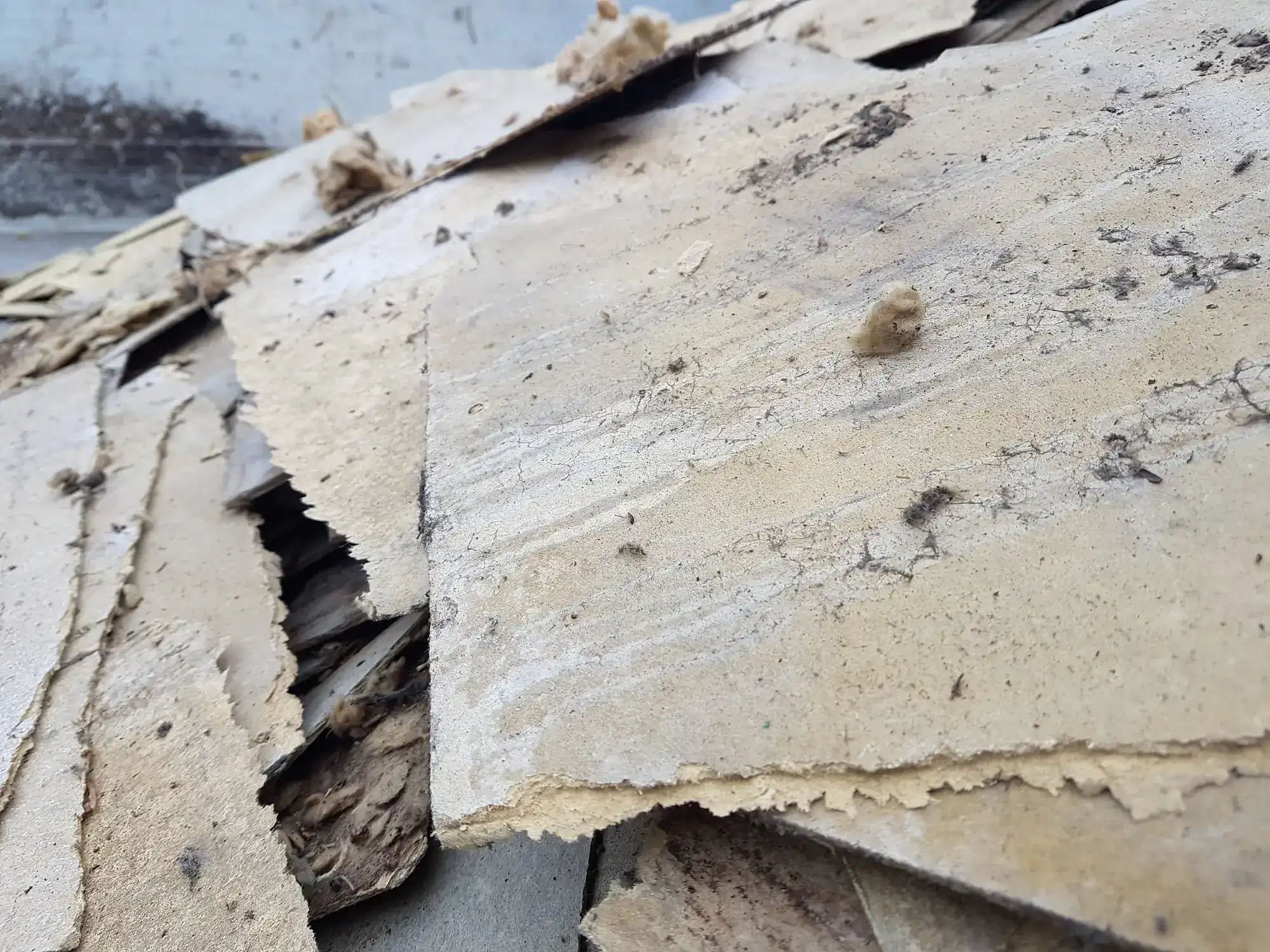
When asbestos fibers are disturbed — through drilling, sanding, cutting, or even just the slow deterioration of aging materials — they become airborne. Once inhaled, they travel deep into the lungs, past the airways, and into the tissue lining the chest and abdomen. The body has no way to break them down or expel them. They stay there permanently, and over time, they cause damage that doesn’t show up on any scan for years.
The diseases linked to asbestos exposure include mesothelioma, lung cancer, asbestosis, and pleural plaques. Each has its own timeline and mechanism, but they share one defining characteristic: by the time symptoms appear, significant damage has already been done. That’s what makes asbestos uniquely dangerous compared to most environmental hazards — the harm is invisible for a very long time.
Most people think about asbestos as a lung problem — something that affects the person who directly disturbs the material. But the environmental picture inside a home is more complicated than that, and it matters for everyone living under the same roof.
When asbestos-containing materials are disturbed, fibers don’t just settle where they were released. They travel. Air currents carry them through rooms, into HVAC systems, and through ductwork to parts of the house that were never touched during the original disturbance. A renovation in the basement can introduce fibers into the living room, the bedrooms, and anywhere the air circulates. That’s a predictable outcome when materials aren’t properly contained during disturbance.
Secondary exposure is a well-documented risk that rarely gets discussed in the context of residential asbestos. Historically, workers in asbestos-heavy industries would unknowingly carry fibers home on their clothing, hair, and skin. Family members — particularly children — were exposed without ever setting foot in a worksite. The same principle applies in a home renovation context. If someone in your household disturbs asbestos-containing materials without proper containment, the rest of the family can be exposed through nothing more than normal daily contact.
Montgomery County’s housing stock makes this a real and present concern. Communities like Ambler have a documented asbestos manufacturing history — the Keasbey & Mattison Company operated there for decades, and the environmental legacy of that operation is still part of the county’s story. The older neighborhoods throughout Norriton, Lansdale, Conshohocken, and the Main Line corridor carry a significant concentration of pre-1980 homes where original asbestos-containing materials were never removed. When those materials are disturbed — during a kitchen gut, a basement finishing project, or even routine HVAC maintenance — the environmental risk extends well beyond the person holding the drill.
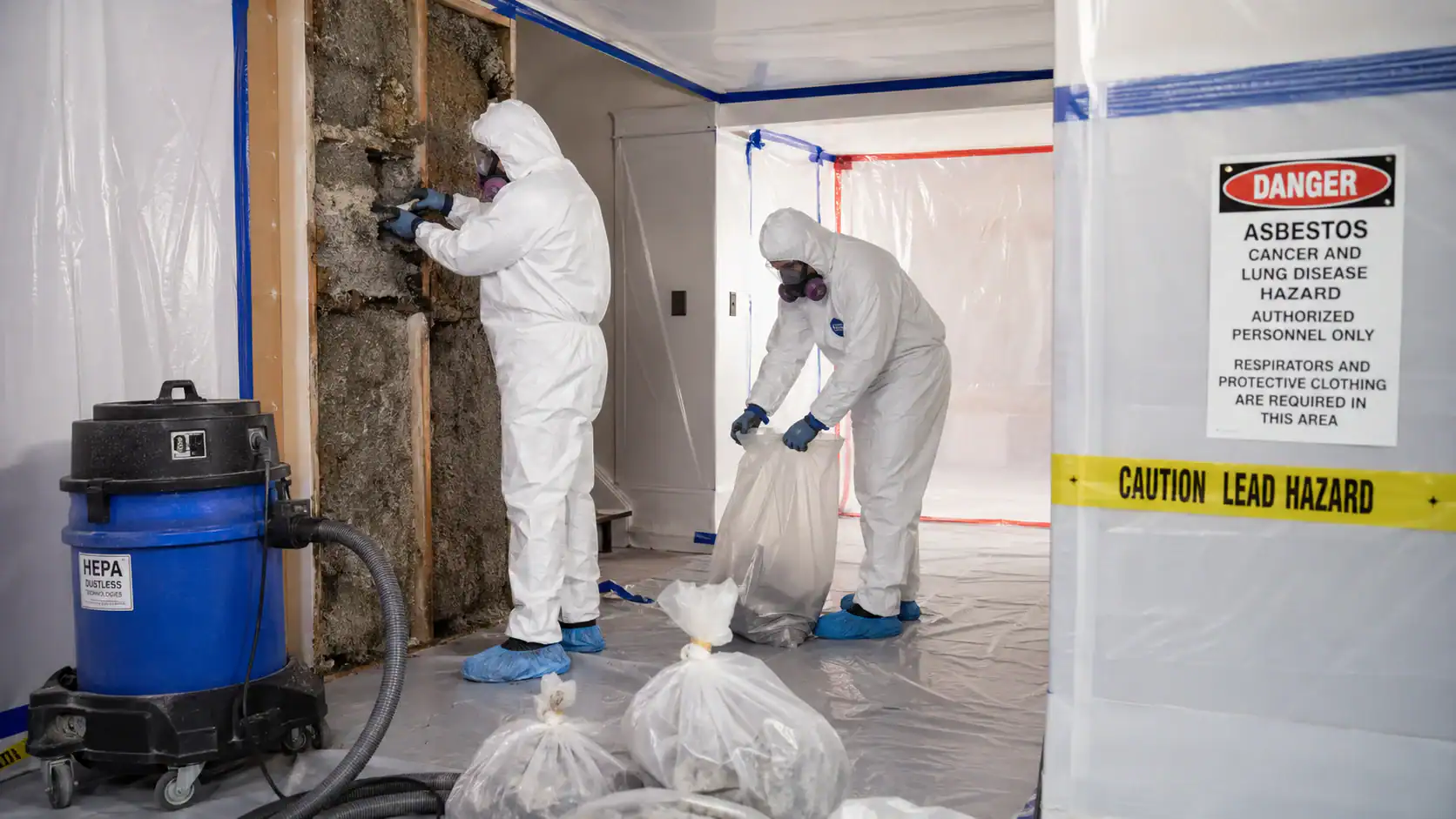
This is exactly why professional containment matters. When we conduct an asbestos inspection and, if needed, perform abatement, we use HEPA filtration systems and negative air pressure containment to ensure that fibers stay where they are — not circulating through your home’s air supply. It’s not just about regulatory compliance. It’s about making sure the work doesn’t create a new problem while solving the original one.
One of the most common situations we see is a homeowner who started a renovation project — pulled up some old floor tiles, sanded a textured ceiling, or cut into pipe insulation — and then found out afterward that the material might have contained asbestos. The work is done. The fibers, if they were there, are already airborne. And now the question isn’t whether to get an inspection; it’s what to do about what may have already happened.
This is an uncomfortable situation, but it’s not uncommon in Montgomery County. Homes built before 1980 throughout the region — from the Victorian-era properties along the Main Line to the mid-century ranches in Horsham and Abington — were constructed during a period when asbestos was used in more than 3,000 different building products. Floor tiles, particularly the 9-by-9-inch vinyl tiles common in homes from the 1950s and 1960s, frequently contain asbestos. So does the black mastic adhesive used to install them. Popcorn ceilings, pipe wrap insulation, duct wrap, joint compound, and attic insulation from that era all carry real risk.
The critical thing to understand is that a standard home inspection won’t catch this. General home inspectors are trained to note suspected materials visually, but they cannot collect samples or provide definitive testing. That requires a certified asbestos inspector — someone with the specific training, equipment, and PA Department of Labor & Industry certification to do the job properly and legally.
If you’ve already disturbed a material you’re now concerned about, the right move is to stop work immediately, limit access to the area, and call for a professional assessment. We’re available around the clock — not because it makes for a good marketing line, but because this kind of discovery doesn’t wait for business hours. A Saturday afternoon renovation gone sideways shouldn’t mean waiting until Monday morning to get answers.
Want live answers?
Connect with a EJS Environmental expert for fast, friendly support.
This is the part that most people find hardest to sit with. You feel healthy. You’ve been living in your home for 20 or 30 years. Nothing has seemed wrong. Doesn’t that mean you’re okay?
Not necessarily. The latency period for asbestos-related disease is one of the longest of any occupational or environmental hazard — typically 20 to 50 years between first exposure and the onset of symptoms. Malignant mesothelioma has a median latency period of 34 years. One study of over 300 cases found an average latency exceeding four decades, with some cases developing more than 70 years after initial exposure. Feeling well today is not evidence that past exposure was safe. It may simply mean the clock hasn’t finished running.
Understanding the mechanism helps explain why the timeline is so long. When asbestos fibers are inhaled, the body’s immune system recognizes them as foreign and attempts to destroy them. It can’t. The fibers are too durable to break down, so the immune response becomes chronic — a persistent, low-grade inflammation that continues for years or decades. Over time, this ongoing inflammation causes cellular damage, scarring, and eventually the kind of DNA mutations that lead to cancer.
Asbestosis, the chronic lung scarring caused by asbestos exposure, typically develops 15 or more years after exposure. Asbestos-related lung cancer may appear 10 or more years after first contact with the material. Pleural plaques — a thickening of the lining around the lungs that serves as an early indicator of significant past exposure — usually develop 20 to 30 years after exposure. Mesothelioma, the cancer most closely associated with asbestos, can take anywhere from 20 to 60 years to develop. The CDC and NIOSH have confirmed that once fibers are lodged in lung tissue, the body has no mechanism to remove them. They remain permanently.
None of these conditions announce themselves early. Symptoms like shortness of breath, chest pain, and persistent cough are easy to attribute to other causes — aging, allergies, a lingering respiratory infection. By the time the connection to asbestos exposure is made, the disease is often well advanced. This is why professional consultation matters even when you feel completely fine, and even when the exposure you’re concerned about happened years or decades ago.
**Do I really need an asbestos inspection if I’m not planning to renovate?**
Not every home with asbestos-containing materials requires immediate action. Undisturbed, non-friable materials in good condition pose a lower immediate risk than materials that are deteriorating or being disturbed. But here’s the thing — you can’t know what condition your materials are in, or whether they contain asbestos at all, without a professional assessment. “Leaving it alone” is only a reasonable strategy if you actually know what you’re leaving alone. An inspection gives you that information. It might confirm that your materials are stable and low-risk, which is genuinely reassuring. Or it might identify something that needs attention before your next renovation project turns into a much bigger problem.
**How much does an asbestos inspection cost in Montgomery County, PA?**
For a standard residential inspection in Montgomery County, you’re typically looking at somewhere between $250 and $750, depending on the size of the property and the number of samples collected. That’s a meaningful number, but it’s worth putting in context: if asbestos is found and removal turns out to be necessary, the cost of proper abatement runs $5 to $15 per square foot. Encapsulation — sealing the surface to prevent fiber release, which is often the appropriate response for stable, non-friable materials — runs $2 to $6 per square foot and is typically 15 to 25 percent less expensive than full removal. The inspection is what tells you which path makes sense for your specific situation. We offer free estimates, so you can get a clear picture of costs before committing to anything.
**What does a professional asbestos inspection actually involve?**
A certified inspector does a thorough visual walkthrough of the property, identifying suspect materials in the areas where asbestos was most commonly used — floor tiles and mastic adhesive, pipe and duct insulation, ceiling tiles, popcorn ceilings, joint compound, plaster, attic insulation, and roofing materials. Samples of suspect materials are collected using strict safety protocols to minimize fiber release, then sent to an accredited laboratory for analysis. Results typically come back within three to seven business days. The final report documents everything — what was found, where, in what condition, and what the recommended response is. In Montgomery County, PA, that report also needs to align with PA Department of Labor & Industry requirements under Acts 194 and 161, which govern certified asbestos work statewide.
**What if asbestos is found?**
It doesn’t automatically mean everything has to come out. Removal is one option, but encapsulation and leave-in-place management are appropriate responses in many situations, particularly when materials are in good condition and not at risk of being disturbed. A trustworthy inspector explains all three options honestly — because the goal is to match the response to the actual risk, not to generate the most work possible. We’ve been serving Montgomery, Chester, Delaware, Bucks, and New Castle counties for over two decades, and our approach has always been to tell you what you actually need, not what sounds most alarming.
If your home was built before 1980, you’re planning a renovation, you’ve already disturbed a material you’re now concerned about, or you’ve simply been wondering about past exposure — those are all valid reasons to pick up the phone. You don’t need to be in crisis mode to make the call. You just need to want a clear answer.
The health risks tied to asbestos exposure are real, the latency period is long, and the peace of mind that comes from knowing exactly what’s in your home is worth more than most people expect. Montgomery County has some of the oldest, most beautiful housing stock in the Philadelphia region — and a lot of it was built during the decades when asbestos was standard practice in construction.
We’re based in Willow Grove and have been serving this area for over 20 years. We’re available around the clock, offer free estimates, and will give you a straight answer about what you’re dealing with — no pressure, no unnecessary work, just honest guidance from people who know this county and its homes.
Summary:
Article details:
Share: