Summer heat and humidity turn Montgomery County homes into prime mold territory. Here's what actually works to keep it out before it takes hold.

Every summer, Montgomery County homeowners open a basement door, catch a whiff of something musty, and think, is that mold? Sometimes it’s nothing. Sometimes it’s the beginning of a problem that costs thousands to fix. The frustrating part is that most summer mold issues are preventable, but only if you know what you’re actually dealing with. Pennsylvania summers are hot and humid in a way that creates near-perfect conditions for mold growth, especially in older homes that weren’t built with modern moisture management in mind. This page breaks down five strategies that work, not in theory, but in practice, for the kind of homes and climate we see across Montgomery County every single year.
Mold doesn’t care about your cleaning routine. It cares about moisture. Most molds thrive between 77°F and 86°F, which is exactly where Pennsylvania summers spend the better part of June through August. Pair that with outdoor humidity that regularly climbs above 80% on a muggy afternoon in Horsham or Lansdale, and your home’s interior is fighting a constant battle.
The target indoor humidity level is 30 to 50 percent. Once you push past 60 percent, you’ve crossed into territory where mold can survive and spread. The problem is that most homeowners don’t know what their indoor humidity actually is until they smell something that shouldn’t be there.

A significant portion of homes in Montgomery County were built before 1970, and a meaningful chunk were built before World War II. That matters because pre-war construction (the kind you’ll find throughout Lower Merion, Cheltenham, and Abington) was built long before vapor barriers and modern moisture management became standard practice. Stone foundations wick groundwater. Original plaster absorbs humidity. Basement walls that were never designed to be dry are now expected to stay that way through a Pennsylvania summer.
Add in the fact that the southern parts of the county, particularly along the Schuylkill River corridor, experience a more humid subtropical climate than the rest of the region, and you have homes sitting in naturally wetter air with foundations that weren’t built to resist it.
A good dehumidifier is your first line of defense. For a typical basement, you want a unit rated for the square footage of the space, running continuously during summer months, draining directly into a floor drain or sump rather than relying on a collection bucket you’ll forget to empty. Pair that with keeping basement windows closed on humid days (counterintuitive as it feels) because bringing in warm, humid outdoor air into a cool basement is exactly how you create condensation on walls and floors.
Ventilation matters too, but it needs to be the right kind. Exhaust fans in bathrooms and kitchens should vent to the outside, not into the attic or a wall cavity. If you’re not sure where yours terminate, that’s worth checking. Mold in attic insulation is one of the more common surprises we find during inspections, and it almost always traces back to an exhaust fan that was venting warm, moist air into an enclosed space for years.
Your air conditioning system does remove some humidity from the air, but it also creates condensation on coils and in ductwork, and if that moisture doesn’t drain properly, it becomes a mold source sitting inside the system that distributes air throughout your entire home. That’s a problem worth taking seriously.
Have your HVAC system serviced before summer hits. Make sure the condensate drain line is clear and draining properly. Check that the drip pan under the air handler isn’t holding standing water. If your system is older, consider whether it has enough dehumidification capacity for the size of your home, many systems installed in Montgomery County’s older housing stock were sized for the original layout and don’t account for finished basements or additions.
Duct cleaning is worth considering if you haven’t had it done in several years, particularly if you’ve had any water intrusion events or noticed musty air when the system kicks on. We offer duct cleaning as part of our service lineup specifically because it’s one of those maintenance items that gets overlooked until it becomes a problem. Clean ducts mean cleaner air, and cleaner air means fewer opportunities for mold spores to find a surface and settle in.
One more thing on HVAC: if you’re leaving for vacation this summer (which a lot of Montgomery County families do) don’t turn the system off entirely. Set the thermostat to 78 or 80 degrees and keep a dehumidifier running. Coming home to a mold problem after two weeks away is more common than most people expect, and it’s entirely avoidable.
Want live answers?
Connect with a EJS Environmental expert for fast, friendly support.
Prevention is easier when you know the specific spots in your home where mold is most likely to take hold. It’s not random. Mold follows moisture, and moisture follows predictable paths: through foundation cracks, around window frames, under roof penetrations, and wherever warm humid air meets a cool surface.
In Montgomery County homes, a few areas come up again and again: unfinished basements with exposed concrete or stone walls, attic spaces with inadequate ventilation, and crawl spaces that haven’t been properly sealed. Older homes near the Perkiomen Creek or Wissahickon Creek corridors face elevated baseline humidity that makes these areas even more vulnerable.
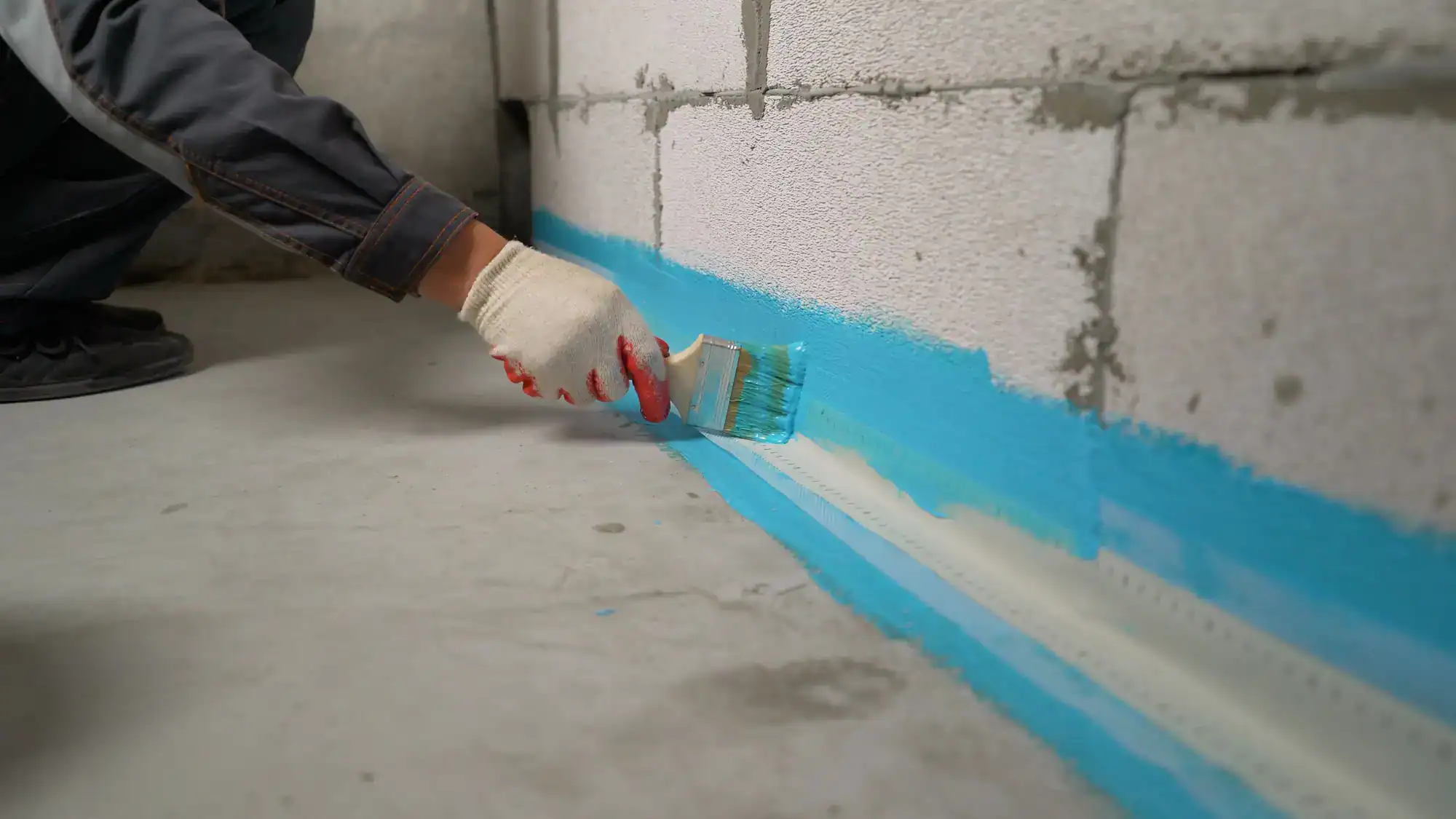
Basements are the most common site for summer mold growth in this region, and the reasons are straightforward. Cool surfaces, limited airflow, potential for groundwater intrusion, and the kind of chronic low-level dampness that older foundations allow. It all adds up. If your basement has a musty smell that gets worse in July and August, that’s not just “how basements smell.” That’s moisture, and where there’s moisture, there’s mold opportunity.
Attics are the second most common problem area, and they tend to surprise homeowners because people don’t spend much time up there. Poor ridge ventilation, inadequate soffit vents, or bathroom exhaust fans that terminate in the attic rather than through the roof can push warm humid air into an enclosed space where it condenses on the underside of the roof deck. Mold can establish itself in attic insulation and on roof sheathing without any visible sign from inside the living space. By the time it’s discovered, it’s often been growing for a season or more.
Crawl spaces deserve their own conversation. An unsealed crawl space is essentially an open invitation for ground moisture to evaporate up into your home’s structure. The fix (a proper vapor barrier installed across the soil, combined with adequate ventilation or encapsulation) is one of the most effective mold prevention investments a homeowner can make. It’s also something we handle as part of our integrated waterproofing and environmental services, because addressing the crawl space in isolation from the rest of the moisture picture rarely produces lasting results.
The broader point here is that mold prevention isn’t a single action. It’s a system. Humidity control, HVAC maintenance, targeted waterproofing, and regular inspection of high-risk areas all work together. If one piece is missing, the others have to work harder to compensate, and eventually, something gives.
The earlier you catch a mold problem, the cheaper and simpler it is to address. The challenge is that mold is often invisible until it’s well established. What you’re more likely to notice first is a smell: musty, earthy, sometimes described as damp books or wet soil. If you’re catching that odor in your basement, a closet on an exterior wall, or near your HVAC system, it’s worth investigating rather than ignoring.
Visible signs include discoloration on walls, ceilings, or floors, not always the dramatic black patches people picture, but sometimes greenish or grayish spots, or what looks like a stain that keeps coming back after you clean it. Condensation on windows or walls during summer is another indicator that humidity levels are elevated enough to support mold growth.
Health symptoms matter too. If someone in your household has been dealing with a persistent cough, worsening allergy symptoms, or unexplained respiratory issues through the summer, and those symptoms improve when they’re out of the house, that’s a pattern worth paying attention to. Mold exposure is estimated to account for roughly 4.6 million asthma cases in the U.S. alone, it’s not a minor consideration.
The EPA’s guidance is clear: if you’re dealing with mold covering more than 10 square feet, or if the source of moisture is unknown, professional assessment is the appropriate next step. DIY treatment with bleach or store-bought sprays addresses surface mold on non-porous materials but does nothing for mold growing inside drywall, behind tile, or in insulation, and it does nothing to address whatever moisture condition allowed it to grow in the first place. That’s why it comes back. We’ve seen it hundreds of times over two decades working in homes across Montgomery County.
If you’ve tried cleaning it yourself and it returned, that’s not a cleaning problem. That’s a moisture problem, and it needs to be treated as one.
Prevention works. A good dehumidifier, a properly maintained HVAC system, sealed crawl spaces, and regular checks of your basement and attic will stop most summer mold problems before they start. But Montgomery County’s older housing stock, combined with the region’s heat and humidity, means that some homes are fighting an uphill battle, and prevention alone isn’t always enough.
When you find something that doesn’t look right, or when the musty smell won’t go away no matter what you do, the smartest move is getting an honest assessment from someone who knows what they’re looking at. We’ve been working in homes across Montgomery County for over two decades, and we offer free estimates, 24/7 phone availability, and the ability to handle testing, remediation, and waterproofing under one roof, so you’re not managing three different contractors for one problem. If you’re not sure whether what you’re seeing is mold, call us. We’ll tell you honestly.
Summary:
Share: