Hear from Our Customers
You stop guessing. That’s the first thing. When you’re living in a Springfield home built in the 1940s — which describes most of the housing stock here — you’ve probably wondered more than once whether that old floor tile, that pipe wrap in the basement, or that textured ceiling is something to worry about. The answer isn’t something you can eyeball. Only a lab test tells you for sure, and only a licensed abatement contractor can legally and safely remove it.
Once it’s handled, renovation moves forward. Real estate transactions stop stalling. Your family stops being exposed to something that takes 20 to 40 years to show up as a health problem. That’s the reality of how asbestos-related disease works, and it’s exactly why the homes along Providence Road and in the Stoney Creek neighborhood deserve a real answer, not a workaround.
Springfield’s housing market is active, and median home values sit near $390,000. A documented, professionally completed abatement protects that value. Buyers, lenders, and inspectors all notice when it’s been done right — and they definitely notice when it hasn’t.
We’ve been doing this work for two decades across Delaware County and the surrounding region. Springfield is part of our core service territory — not a stretch, not a side trip. We know Springfield’s housing stock because we’ve worked in it, from the stone-front colonials of the Stoney Creek development to the Cape Cods in Scenic Hills.
Every job we handle is fully licensed under Pennsylvania’s Asbestos Accreditation and Certification Act, EPA and HUD compliant, and staffed by a team that includes a Certified Lead Inspector and Risk Assessor. Those aren’t marketing lines — they’re state-required credentials that can be verified.
What sets us apart from a lot of operators in this space is the one-call model. Testing, abatement, demolition, waterproofing, cleanup — it all runs through one company. In a 1940s Springfield home where you might find asbestos in the floor, lead paint on the trim, and mold in the basement all at once, that matters more than most people realize until they’re in the middle of it.
It starts with a call and a free estimate. Someone from our team comes out, looks at what you’re dealing with, and tells you what needs to happen. If testing is required — and in most pre-1980 Springfield homes, it should be before any renovation work begins — samples are collected and sent to a certified lab. You get real results, not assumptions.
Once asbestos is confirmed, we handle the required Pennsylvania DEP notification before any friable material is removed. For Delaware County projects, that notification goes to PA DEP directly — not to Philadelphia’s Air Management Services office, which only covers city limits. This is the kind of detail that unlicensed operators miss, and it matters for legal compliance. We take care of all of it, so you don’t have to navigate the regulatory side yourself.
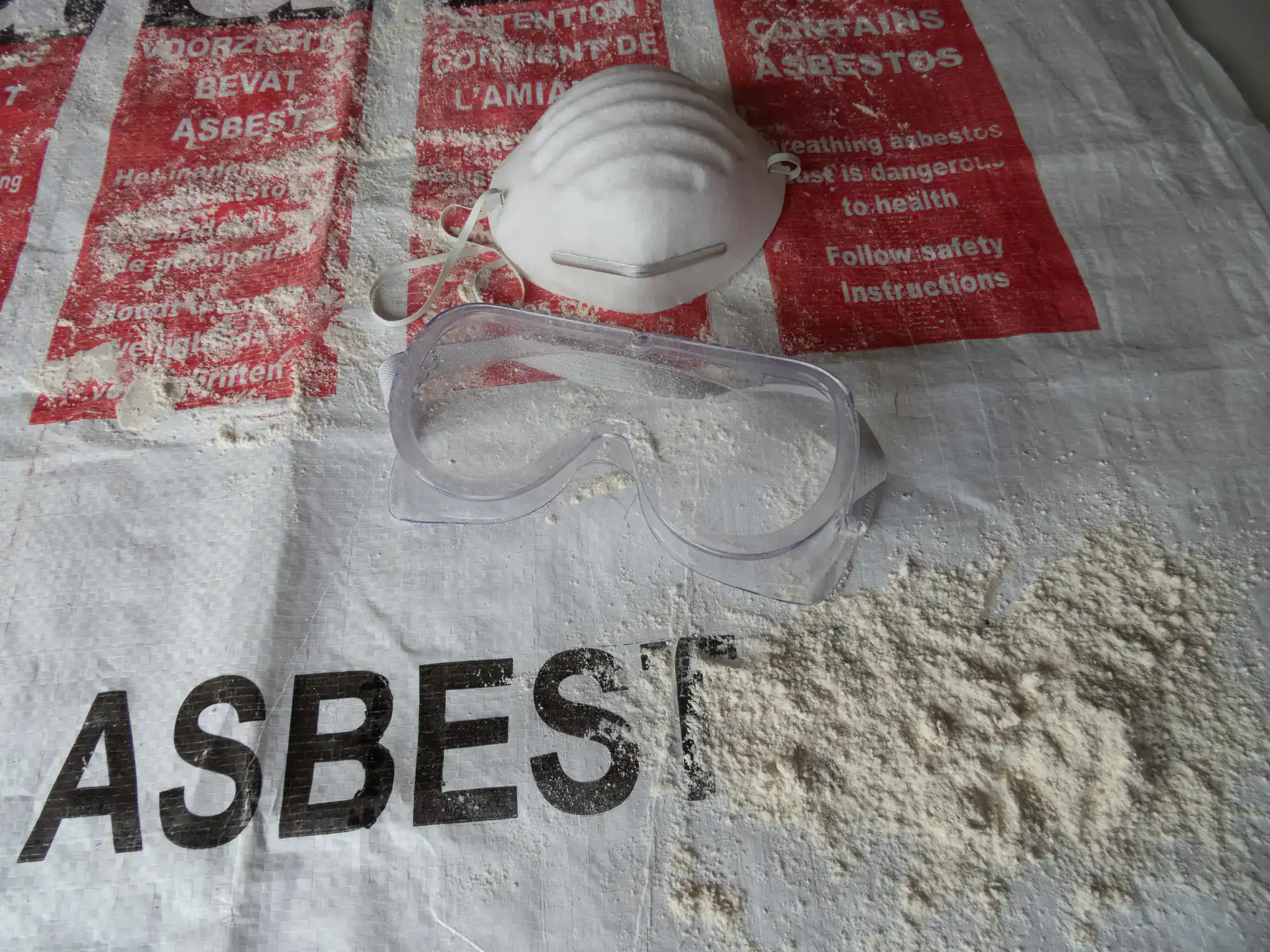
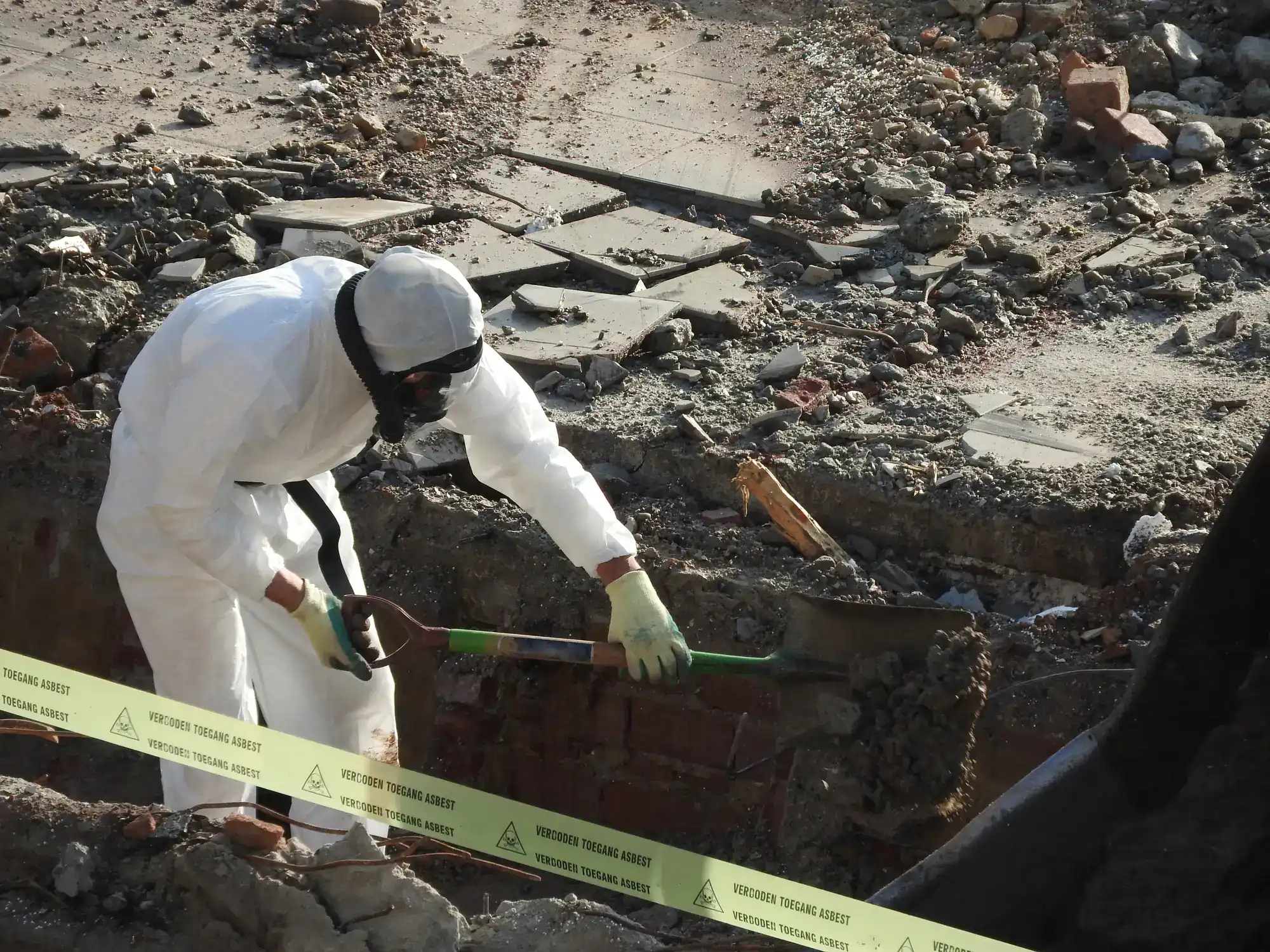
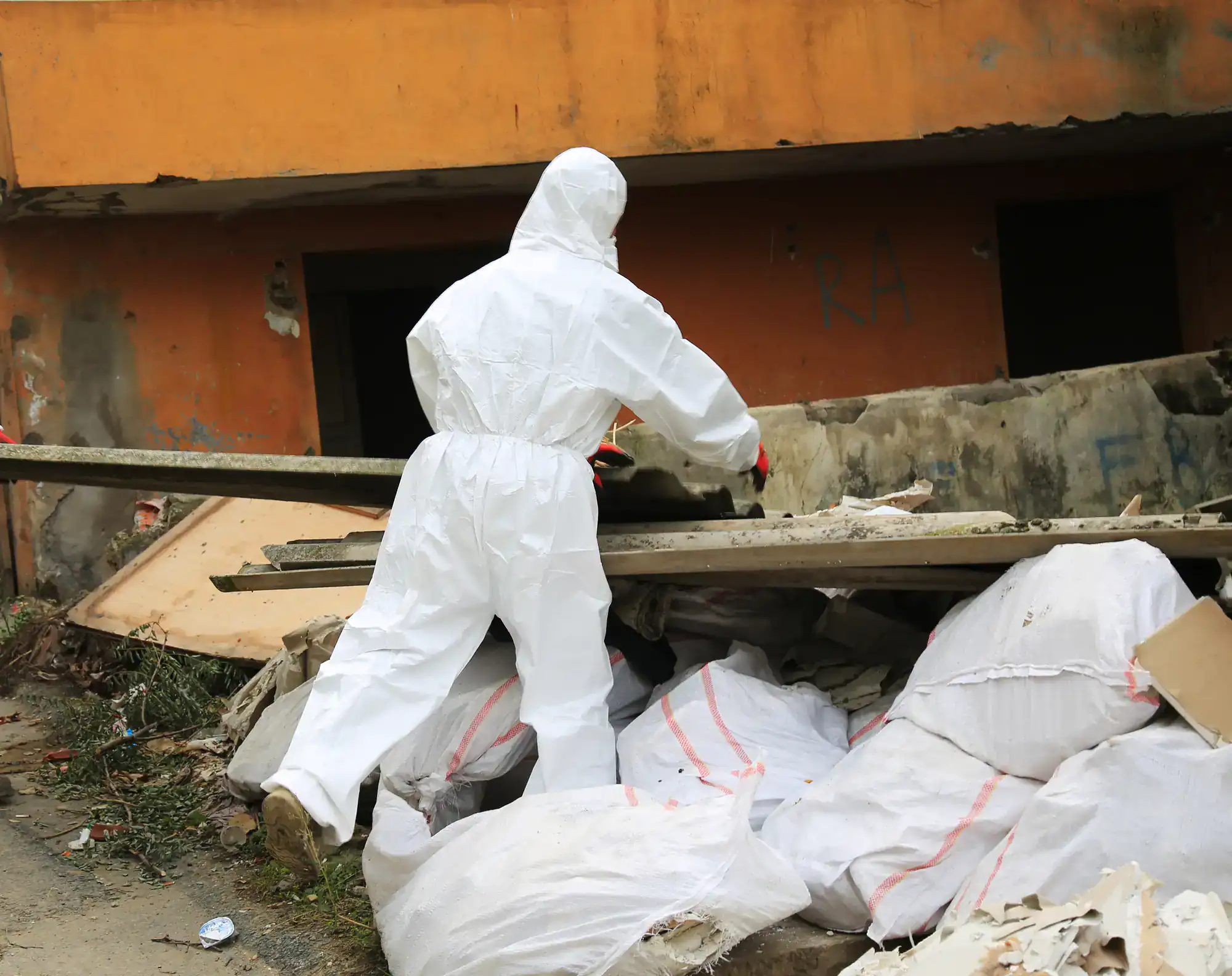
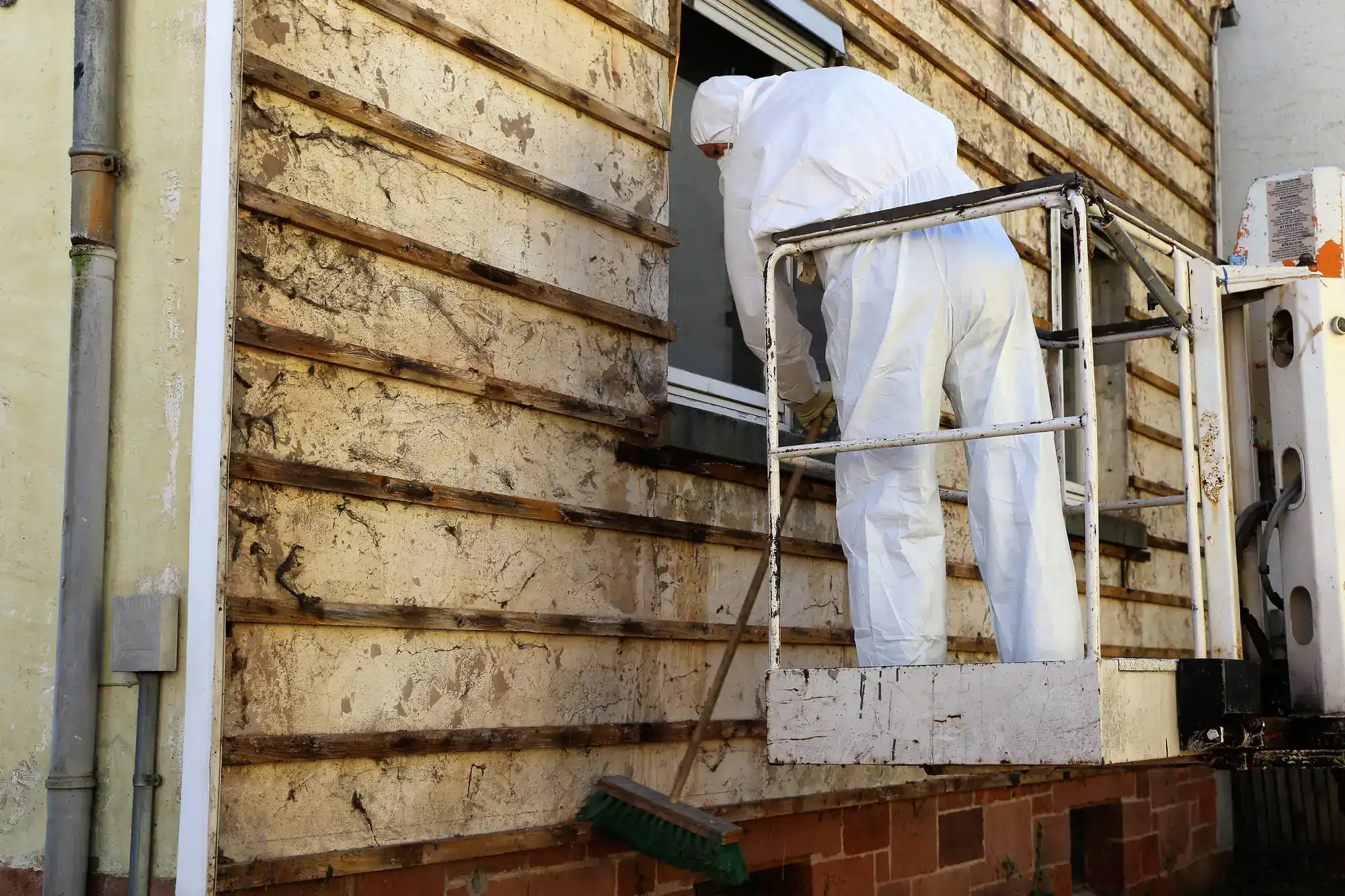
The removal itself is done under full containment with HEPA filtration and negative air pressure — meaning the fibers disturbed during the work don’t end up redistributed through your home. When the job is done, the space is cleaned, tested for clearance, and documented. If there’s additional work to follow — demo, waterproofing, or cleanup — that stays in-house. One company, start to finish.
Ready to get started?
The homes in Springfield’s 19064 ZIP code were primarily built in the 1940s, and the materials from that era show up in predictable places: vinyl floor tiles and the mastic adhesive underneath them, pipe and boiler insulation in basements, plaster walls, joint compound, vermiculite attic insulation, and acoustic ceilings. A real Springfield homeowner submitted an inquiry specifically about “asbestos abatement from kitchen flooring in the linoleum, may be in the adhesive and tile.” That’s not a hypothetical — it’s one of the most common jobs we handle in this community.
We provide the full scope of service: initial inspection, lab-confirmed testing, licensed abatement, proper disposal, and post-clearance documentation. HEPA filtration systems are used on every job as standard practice. For homes where multiple hazards are present — which is common in pre-1978 Delaware County properties subject to EPA Renovation, Repair, and Painting rules — we also offer lead paint assessment and mold remediation under the same roof.
Free estimates are available for all Springfield jobs, and cash discounts apply. If you’re managing a renovation budget on a home that’s been in the family for decades, that’s a real number — not a throwaway line. Emergency response is available around the clock for situations that can’t wait, including storm damage to older roofing or siding materials that may contain asbestos.
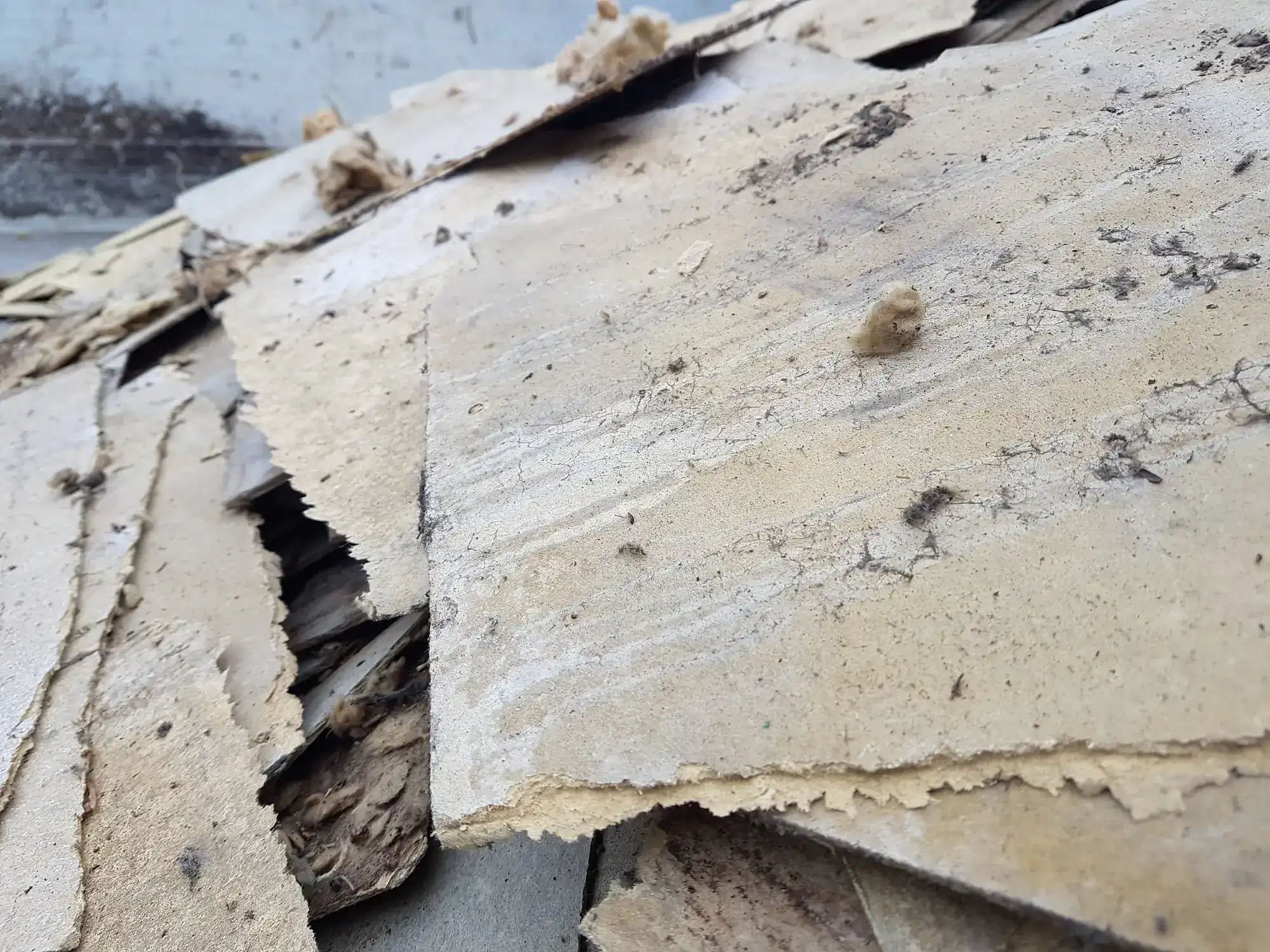

Yes — and not just in one place. Homes built in Springfield during the 1940s and into the 1950s, including those in the Stoney Creek development and throughout the 19064 ZIP code, were constructed during the peak era of residential asbestos use. That means asbestos-containing materials could be present in vinyl floor tiles, the adhesive beneath them, pipe and boiler insulation, plaster, joint compound, attic insulation, roofing shingles, and acoustic ceiling finishes.
The important thing to understand is that you cannot identify asbestos visually. A tile that looks fine might test positive. A pipe wrap that seems intact might be friable. The only way to know is a lab-confirmed test collected by a qualified professional. If you’re planning any renovation work in a pre-1980 Springfield home — even something as straightforward as pulling up old flooring — testing before demo is the responsible move, and in many cases it’s what your contractor should be requiring before they start.
For most residential jobs, national averages run between $1,200 and $3,240 depending on the scope — where the material is located, how much there is, and whether it’s friable or non-friable. Larger projects involving multiple areas of a home, or whole-house abatement before a major renovation, can run significantly higher.
In Springfield specifically, the most common jobs involve floor tile and mastic adhesive, pipe insulation, and occasionally attic vermiculite — and the cost varies based on how accessible those areas are and how much material needs to be removed. The best way to get a real number is a free on-site estimate, which we provide at no cost and no obligation. Cash discounts are also available, which is genuinely uncommon in this industry. If you’re working within a renovation budget on a home that’s been in the family for years, it’s worth asking about when you call.
It depends on the scope and location of the work. For contained jobs — say, floor tile removal in a single room — it’s often possible for the rest of the home to remain occupied as long as proper containment is in place and the work area is fully sealed. For larger projects, or work in central areas like HVAC systems or attic insulation, temporary relocation is usually the safer and more practical choice.
We’ll walk you through what’s realistic for your specific job during the estimate. The containment setup — negative air pressure, HEPA filtration, sealed work zones — is designed to prevent fiber migration into the rest of the home. But every situation is different, and the honest answer depends on what’s being removed, where it is, and how your home is laid out. You’ll get a straight answer before any work begins.
For renovation and demolition work in Springfield Township, building permits are issued by the Springfield Township Building Department at 50 Powell Road. Whether a permit is required for your specific project depends on the scope of the work — structural changes, HVAC, plumbing, and major alterations all typically require one.
On the environmental side, Pennsylvania DEP requires a minimum five-day advance notification before the removal of friable asbestos material exceeding three square feet or three linear feet on applicable projects. For larger commercial-scale projects, federal NESHAP rules require a ten-working-day notice. For Delaware County projects, those notifications go to PA DEP — not to Philadelphia’s Air Management Services, which only handles city limits. We handle all required notifications as part of the job. You don’t need to figure out which agency to call or what forms to file — that’s part of what you’re getting when you hire a properly licensed abatement contractor.
Pennsylvania does not regulate the removal of asbestos-containing materials from private single-family residences the same way it regulates commercial projects — but that doesn’t mean DIY removal is a good idea, or a safe one. Pennsylvania’s Department of Labor and Industry still requires licensed contractors for abatement work, and the health risk from improper removal is real regardless of what the regulatory threshold says.
Research has documented cases where airborne asbestos levels inside a home were actually higher after removal than before — because the work was done without proper containment or filtration. In a Springfield home where your family lives, that’s not a risk worth taking to save money on a contractor. Beyond the health issue, improperly documented removal can create problems when you go to sell. Buyers, lenders, and inspectors in Delaware County’s active real estate market will ask about it, and a job that wasn’t done by a licensed contractor — or wasn’t documented correctly — can complicate or derail a transaction.
Stop the work. That’s the first step, and it’s the right one. If a contractor is mid-demo and something turns up that looks suspicious — old floor tile adhesive, pipe wrap, a ceiling material that doesn’t match anything modern — work should stop in that area until the material is tested. Disturbing asbestos-containing material without containment is how exposure happens, and once fibers are airborne in an enclosed space, the situation becomes more complicated and more expensive to resolve.
Call us. We’re available 24 hours a day, seven days a week, including for emergency situations exactly like this one. In Springfield, where renovation work in 1940s homes is common and contractors regularly encounter original materials that haven’t been touched in decades, mid-project discoveries aren’t unusual. We can come out, assess the situation, collect samples for lab testing, and give you a clear path forward — including coordinating with your existing contractor so the project timeline doesn’t fall apart completely. The free estimate applies here too, and the faster you call, the faster the project gets back on track.
Other Services we provide in Springfield