Hear from Our Customers
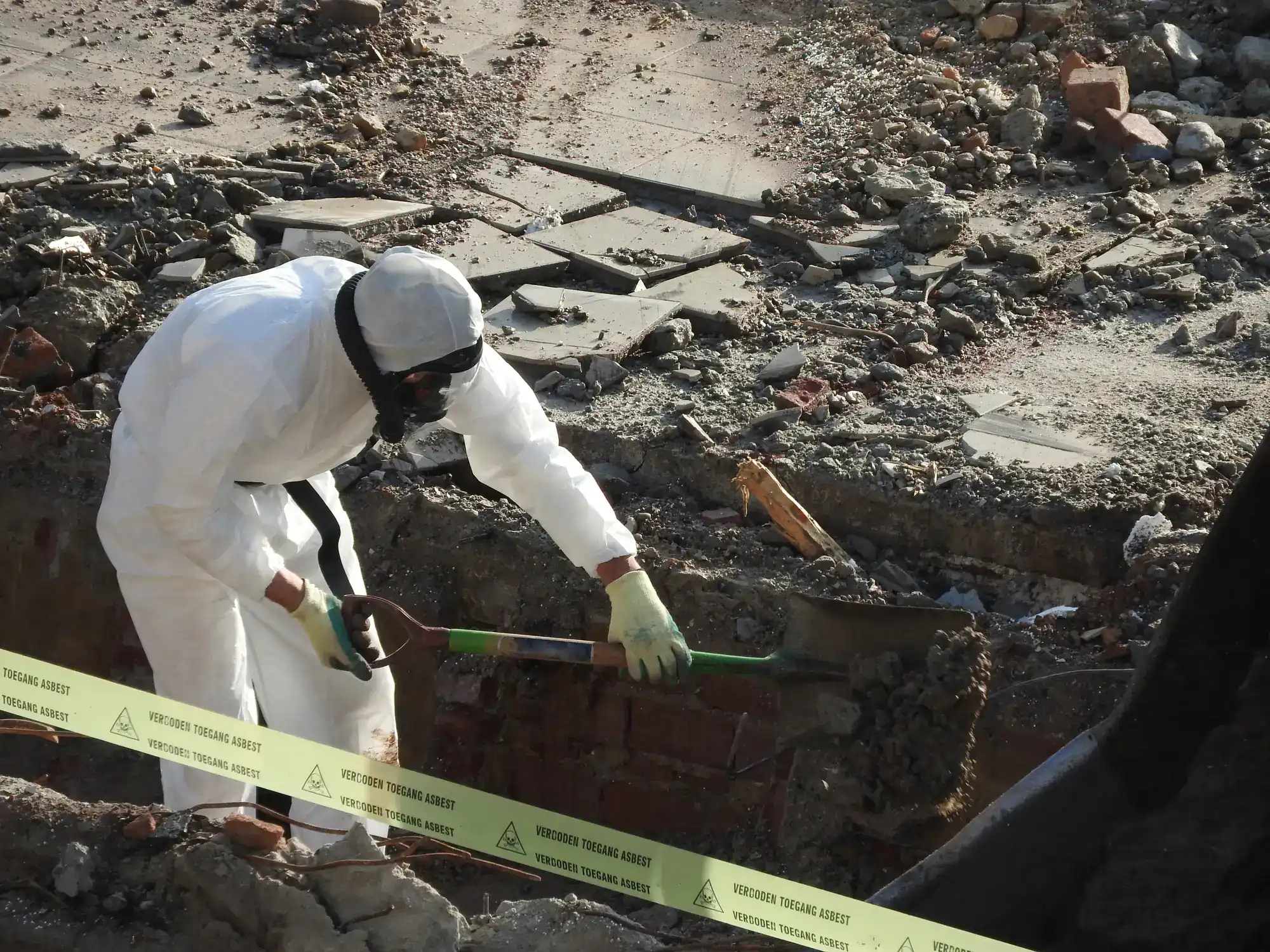
You stop wondering. That’s the part people don’t talk about enough. The renovation gets back on track, the house goes back on the market, or you just stop walking past that corner of the basement with a knot in your stomach. That’s what proper asbestos abatement actually delivers — not just a cleared job site, but real peace of mind.
Abington’s housing stock tells the story pretty clearly. The township was built out heavily between the 1930s and 1970s, which means a significant portion of homes were constructed right in the middle of the era when asbestos was used in nearly everything — floor tiles, ceiling tiles, pipe insulation, joint compound, roofing, and boiler wrap. These aren’t hypothetical risks. They’re common findings in the exact homes that are being renovated and sold throughout Abington every single week.
The other thing that changes is your renovation timeline. When a contractor stops work because they’ve found something suspicious in a 1950s Abington colonial, the clock starts ticking. A fast, qualified response from a licensed asbestos removal company means your project doesn’t sit idle for weeks. You get a real assessment, a clear scope, and a crew that knows how to work in older Abington homes — because we’ve been doing exactly that for two decades.
We’ve been working in Abington and the surrounding Montgomery County area for over twenty years. That’s not a number pulled from a brochure — it’s the kind of track record that only comes from doing the work right, consistently, in the specific homes and neighborhoods that make up this township. We know Abington’s housing patterns, its building codes, and the environmental challenges that come with pre-1980 construction.
We’re fully licensed under Pennsylvania’s Department of Labor and Industry, bonded, and insured. We have a Certified Lead Inspector and Risk Assessor on staff — which matters more than it might sound, because in Abington’s older housing stock, asbestos and lead rarely show up alone. We handle both, along with mold remediation, demolition, gut services, and waterproofing. One company, one call, no coordinating three separate crews while your renovation sits on hold.
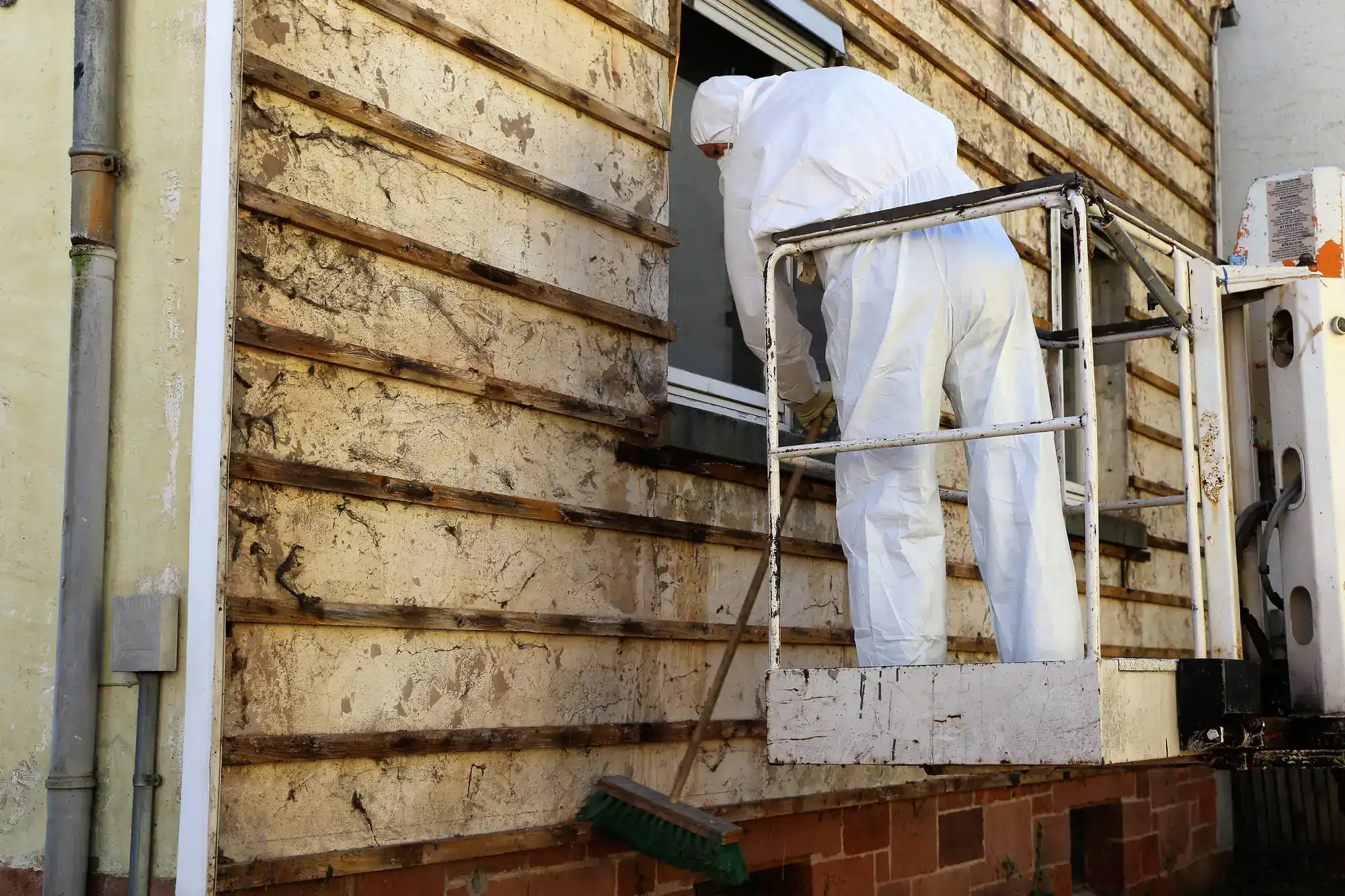
It starts with a free estimate. Someone comes out, looks at what you’re dealing with, and gives you a straight answer about what needs to happen. If testing is needed to confirm whether a material actually contains asbestos — because you genuinely cannot tell by looking — we handle that too. Bulk sampling and lab analysis are part of the process, not an upsell.
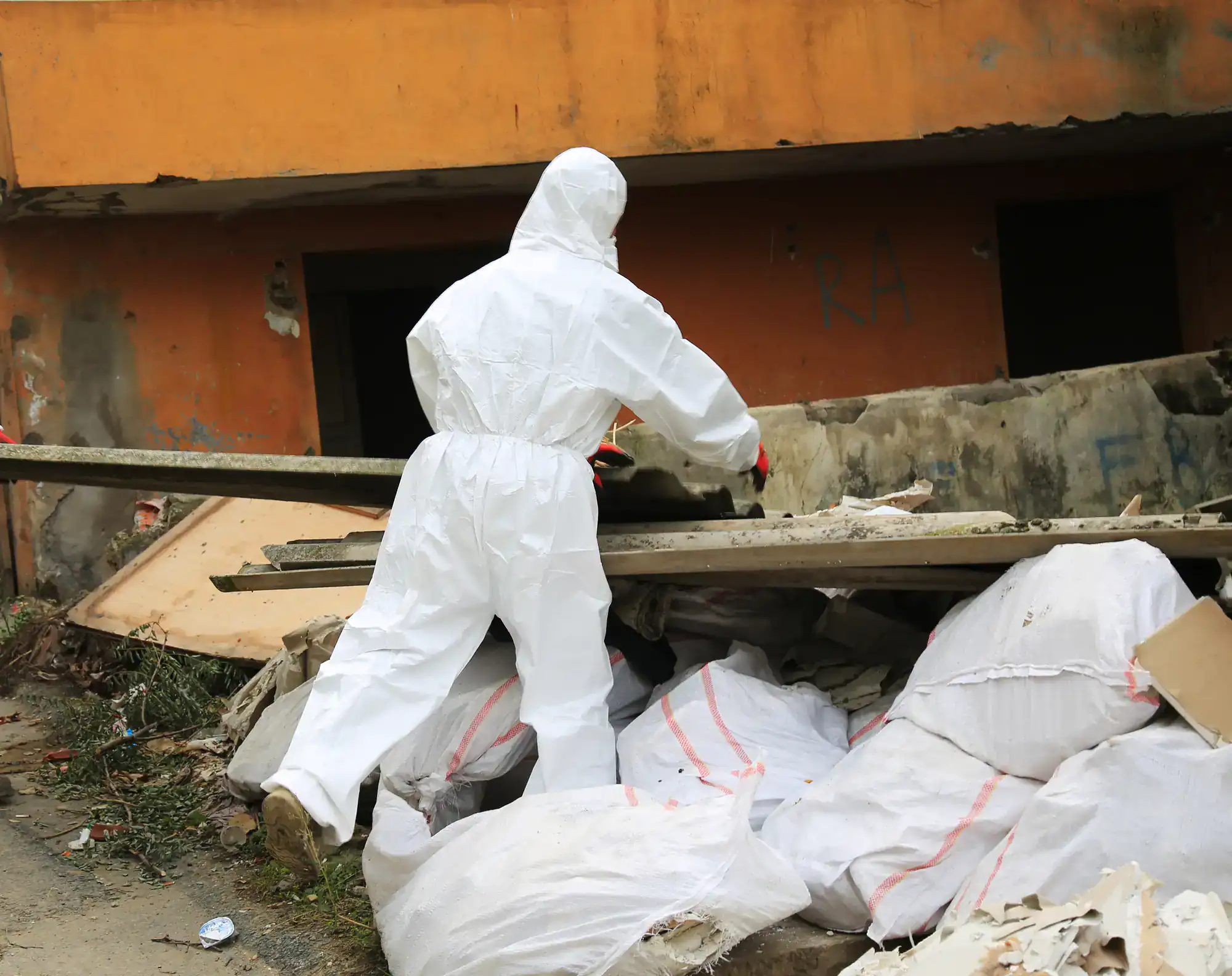
Once the scope is confirmed, the abatement work begins under full containment. That means HEPA filtration systems, negative air pressure, and proper protective barriers — all of it required under EPA and HUD standards, and all of it standard practice for us on every job. For projects in commercial properties or multi-family buildings with five or more units, Pennsylvania DEP NESHAP notification requirements apply, and we handle that coordination. For single-family homeowners in Abington, the regulatory path is more straightforward, but our workmanship standard doesn’t change.
After removal, the area is cleared and cleaned. If your project involves demolition, gut work, or follow-on remediation for lead or mold — which is common in Abington’s pre-1960 homes — that work continues under the same crew without starting over with a new company. Post-abatement clearance testing confirms the space is clean before anything else moves forward. From the first call to final clearance, the process is designed to keep your project moving and your home safe.
Ready to get started?
What we bring to an Abington job isn’t a one-size-fits-all approach. The homes here have specific characteristics — original plaster walls, old pipe insulation wrapped around cast iron, vinyl floor tiles from the 1950s, popcorn ceilings from the 1970s — and we account for all of it in our abatement process. Testing, containment, removal, and clearance are handled as a complete sequence, not a series of disconnected steps handed off between contractors.
Our full scope of services includes asbestos inspection and lab testing, licensed abatement under EPA and HUD-compliant protocols, lead inspection and remediation, mold remediation, interior demolition and gut services, waterproofing, and post-abatement cleanup. This matters for Abington homeowners specifically because the township’s older housing stock means environmental hazards rarely travel alone. A homeowner gutting a 1940s kitchen in Abington is likely dealing with more than one issue, and we handle the full picture.
Montgomery County’s own guidance directs residents to use only licensed contractors for asbestos removal — and that’s the baseline, not the ceiling. We’re fully licensed under PA DL&I, EPA and HUD compliant, and have the credentials to work on both private residential projects and properties participating in county-level programs, including those connected to Montgomery County’s HUD lead hazard control funding. We offer free estimates, and cash discounts apply. If the situation is urgent, we’re reachable around the clock.
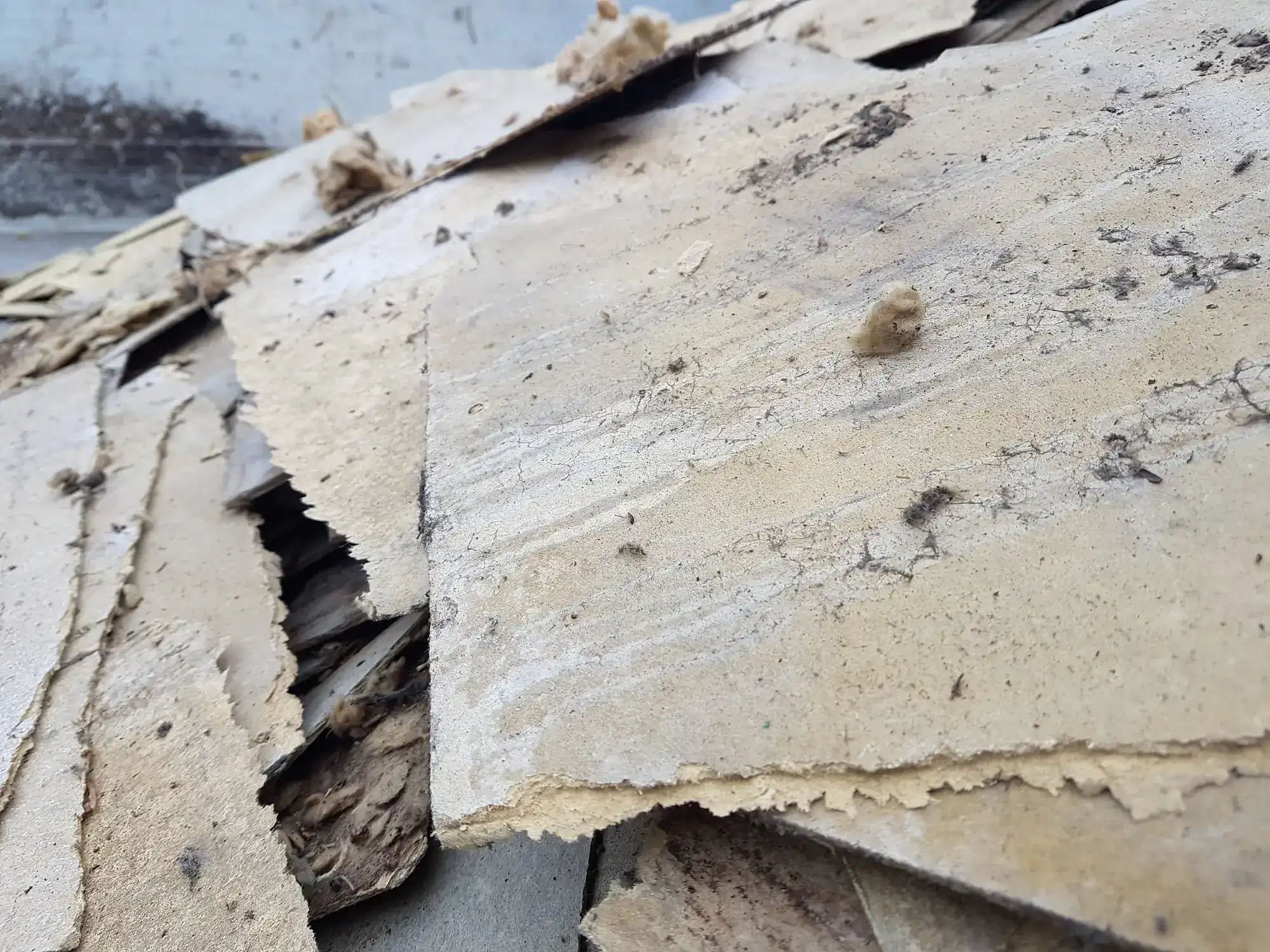

If your home was built before 1980 — which describes the majority of Abington Township’s housing stock — there’s a realistic chance it contains asbestos-containing materials somewhere. The most common locations are floor tiles (especially 9×9 inch vinyl tiles from the 1950s and 60s), ceiling tiles, pipe and duct insulation, attic insulation, joint compound, roofing shingles, and the wrap around older boilers and furnaces. Homes throughout Abington often have pre-WWII construction with even more potential exposure points.
The critical thing to understand is that you cannot identify asbestos by looking at it. It has no distinctive color, texture, or smell. The only way to know for certain is through bulk sampling and lab analysis. A licensed asbestos inspector collects a small sample of the suspected material and sends it to an accredited laboratory. Results typically come back within a few days. Until then, the rule is simple: don’t disturb it. Cutting, sanding, drilling, or breaking asbestos-containing materials releases fibers into the air — and that’s when the health risk becomes real.
It depends on the scope and location of the work. For smaller, contained projects — like removing asbestos floor tiles in a single room — it’s often possible to remain in the home if the work area is properly sealed and isolated. For larger projects involving multiple rooms, attic insulation, or whole-house gut work, temporary relocation during the active abatement phase is typically the safer and more practical choice.
We use negative air pressure containment and HEPA filtration on every job, which prevents asbestos fibers from migrating into unaffected areas of your home. Before any work begins, you’ll get a clear picture of what the project involves, how long it will take, and what the safest approach is for your specific situation. In Abington’s older homes — particularly the larger colonials and split-levels — projects can sometimes uncover additional scope once walls or floors are opened, so having that conversation upfront matters. No one should be walking into an abatement project without knowing what to expect.
Cost varies based on the type of material, the quantity, the location in your home, and whether additional work like demolition or mold remediation is involved. For a straightforward residential project — say, asbestos floor tile removal in a single room — costs can range from a few hundred dollars into the low thousands. Larger projects involving pipe insulation, attic insulation, or full gut work in a pre-1960 Abington home can run higher depending on scope.
The most important thing is getting an accurate assessment before committing to anything. We offer free estimates, so there’s no cost to find out what you’re actually dealing with. In a community where homes are actively being renovated and sold, the cost of proper abatement is a reasonable investment — especially compared to what a failed buyer inspection or an improperly handled removal can cost you later. Cash discounts are also available, which is something most asbestos removal firms don’t advertise. Call and ask about it directly.
Stop work immediately — and that’s not an overreaction, that’s the correct call. If a contractor is opening walls, pulling up flooring, or cutting into pipe insulation in a pre-1980 Abington home and encounters material they suspect contains asbestos, work should halt in that area until testing confirms what it is. Continuing to disturb suspected ACM without testing and proper containment is how fibers get spread through a home and into the air.
This situation happens regularly in Abington’s renovation market. Older homes are actively being updated, and asbestos discoveries mid-project are a common trigger for calling us. The good news is that a discovery mid-renovation doesn’t have to derail the entire project for long. We offer emergency response and are reachable around the clock — not because it sounds impressive, but because renovation timelines don’t pause for business hours. A fast assessment, a clear scope, and a licensed removal crew can get your project back on track without the weeks-long delay that comes from trying to figure it out on your own.
Pennsylvania does not legally require asbestos testing as a condition of selling a residential property, but that doesn’t mean you can ignore it. Buyer inspections in Abington’s active real estate market frequently flag suspected asbestos-containing materials in older homes, and when that happens mid-transaction, it creates leverage for price renegotiation, closing delays, or buyers walking away entirely. In a market where homes are actively changing hands, that’s a significant financial exposure.
The smarter approach for sellers with pre-1980 homes — which is most of Abington’s housing stock — is to get ahead of it. A pre-listing inspection, followed by abatement if needed, lets you disclose a clean environmental record and move to close with confidence. It also removes the uncertainty that makes buyers nervous and agents cautious. We handle the full sequence: inspection, testing, abatement, and post-removal clearance. Having that documentation in hand before you list is a real advantage in a competitive market.
Cash payments reduce administrative overhead — no processing fees, no delayed receivables, simpler accounting. We pass that savings directly to our customers. It’s a straightforward business decision, and in a community like Abington where homeowners are managing renovation budgets carefully, it’s a meaningful one. The discount isn’t tied to cutting corners on the work — the same licensed crew, the same HEPA filtration, the same EPA and HUD-compliant process applies regardless of how you pay.
For Abington homeowners dealing with asbestos as part of a larger renovation or pre-sale project, where costs can add up across multiple trades, every reasonable saving helps. The cash discount is one of the more practical differentiators we bring to the table in a market where most asbestos removal companies simply don’t mention pricing flexibility at all. Ask about it when you call for your free estimate — it’s a real offer, not a footnote.
Other Services we provide in Abington