Water in the wrong place does real damage. Here's what a French drain system actually consists of — and why the design details matter more than most people realize.
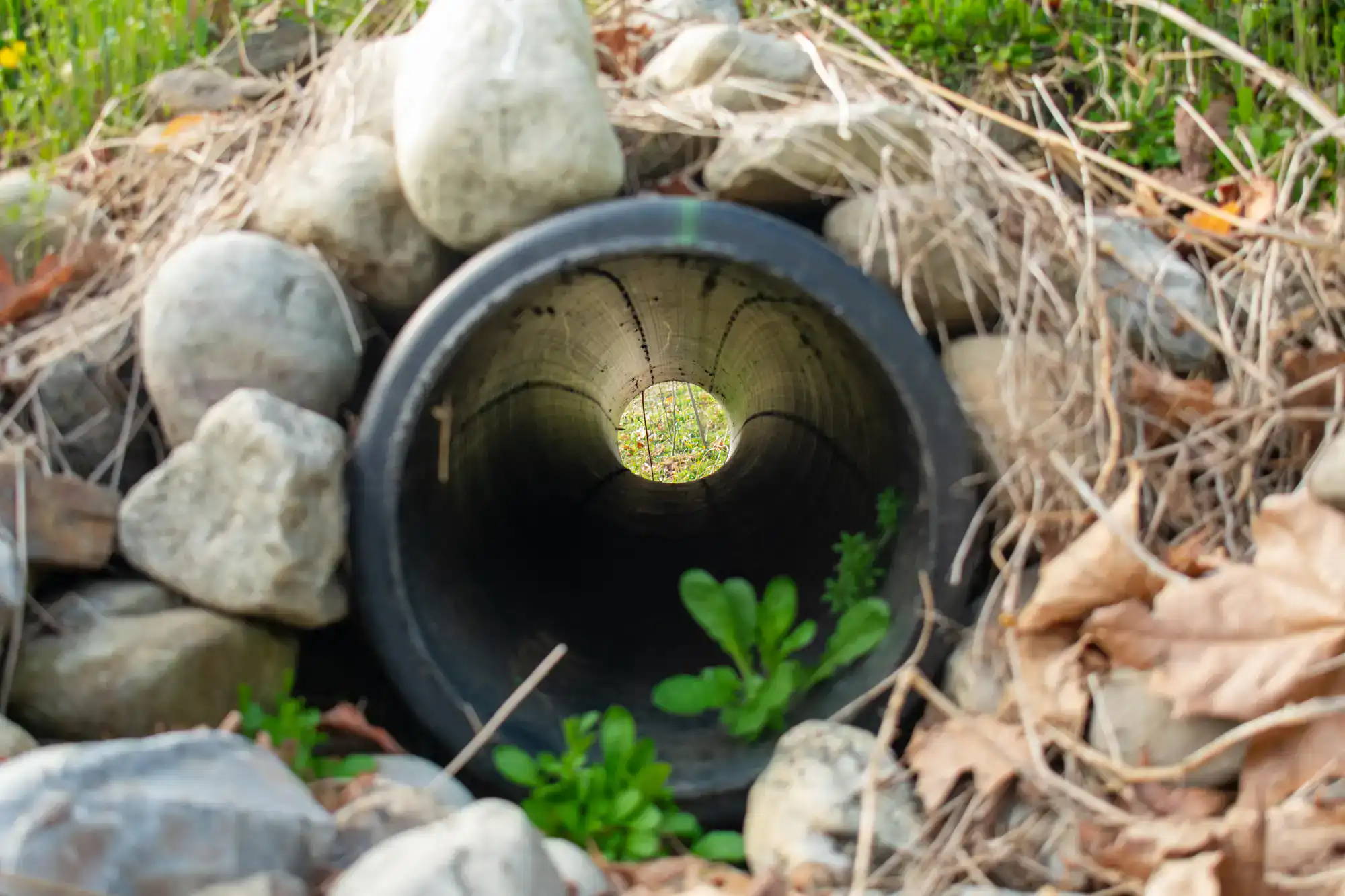
Water problems rarely announce themselves at a convenient time. It’s usually the middle of a rainstorm, or the morning after, when you’re standing in a damp basement wondering how this keeps happening. If you’ve been dealing with seepage, pooling, or that persistent musty smell that no dehumidifier can fix, a French drain system is probably part of the conversation you need to have. But before you call a contractor, it helps to understand what you’re actually buying — what these systems are made of, how they work, and why the design matters as much as the installation itself.
At its core, a French drain is a subsurface drainage system designed to intercept groundwater and redirect it away from wherever it’s causing problems — usually your foundation, your yard, or both. Water follows gravity. A French drain gives it a better path to follow than through your basement wall.
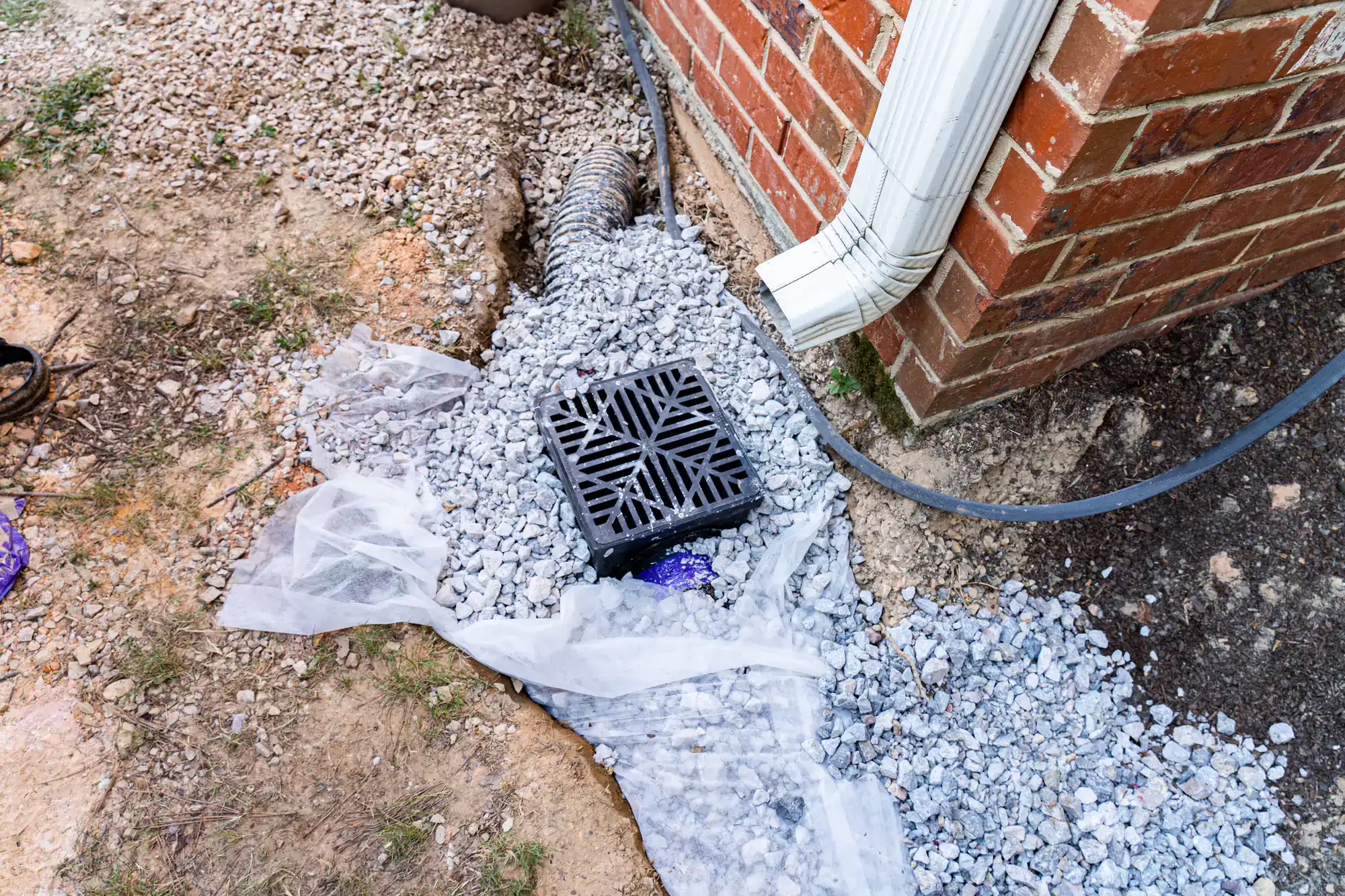
The basic concept has been around since the 1800s, but the materials and design standards have improved significantly. A modern system uses perforated pipe set in a gravel bed, wrapped in filter fabric, and sloped toward a discharge point. Each of those components has a job to do, and each one can fail if it’s sized, selected, or installed incorrectly.
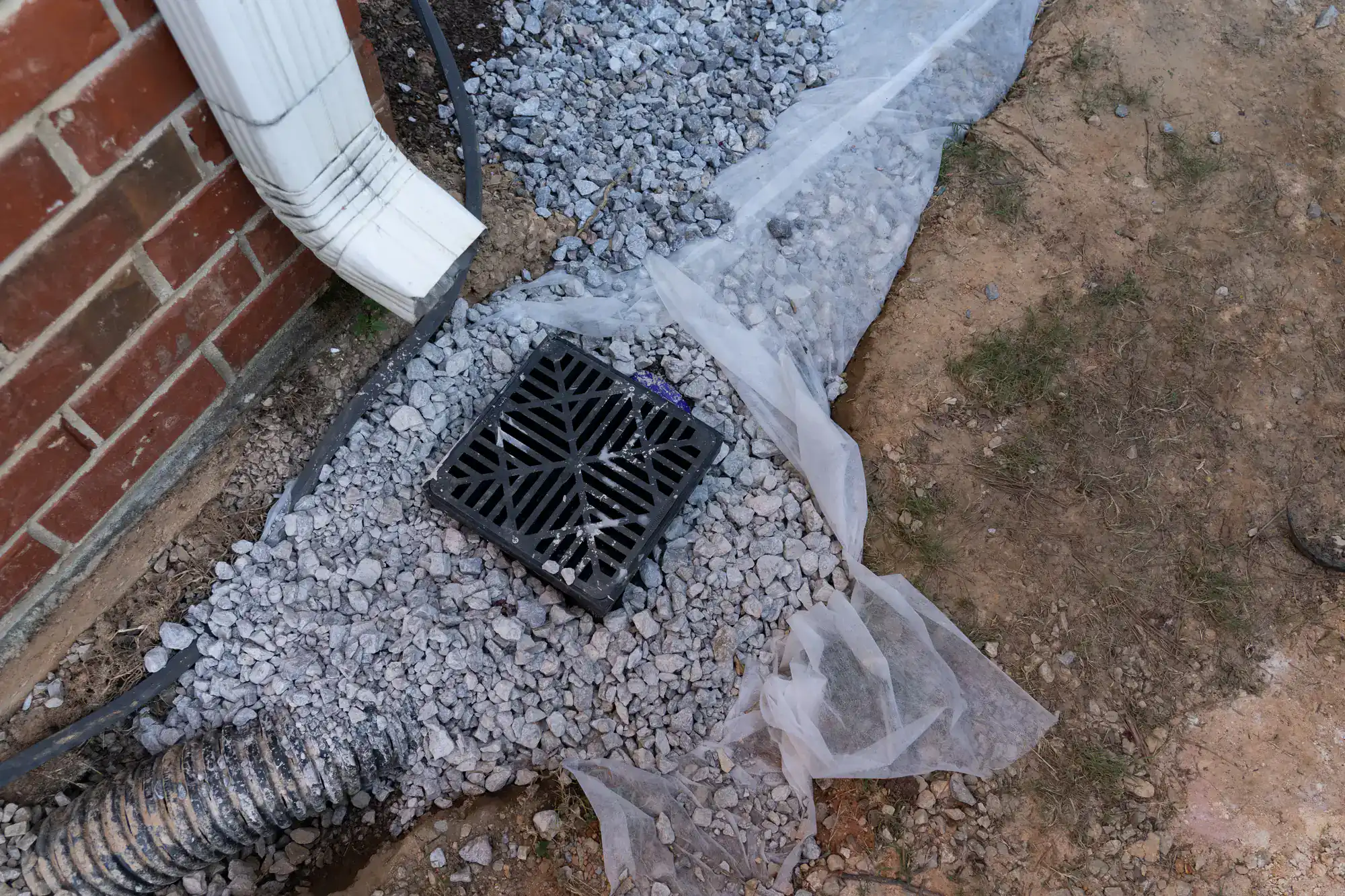
The perforated pipe is the spine of the system. Water enters through the holes, travels through the pipe, and exits at a discharge point — a storm drain, dry well, daylight outlet, or sump pit. Most residential systems use four-inch PVC, though heavier drainage loads sometimes call for six-inch pipe. One detail that separates a professional install from a weekend project: the perforations should face downward, not up. It sounds counterintuitive, but water rises through the gravel bed and enters the pipe from below. Holes facing up just collect sediment.
The gravel bed surrounds the pipe and does two things simultaneously. It creates the void space that allows water to move freely toward the pipe, and it provides the structural support that keeps the pipe from shifting over time. The right gravel matters — washed, angular stone around three-quarter inch in size gives you the interconnected air pockets you need. Rounded pea gravel or fine stone compacts too easily and loses its drainage capacity faster than you’d want.
The filter fabric — also called geotextile fabric — wraps around the entire gravel bed like a sleeve. Its job is to keep soil particles from migrating into the gravel over time. This is the component that most DIY installs skip or cheap out on, and it’s exactly why so many DIY French drains clog within a few years. Industry standard calls for non-woven geotextile fabric in the four-to-six ounce weight range. Woven fabric has larger openings and lets fine particles through. It’s a small detail with a long-term consequence.
Finally, there’s slope. The entire system needs to maintain at least a one-percent grade — roughly one inch of drop for every eight feet of run — from start to finish. Not just at the beginning. Consistently, throughout the entire length of the pipe. Lose the slope and water sits in the pipe. Sitting water means sediment accumulation, and sediment accumulation means a system that stops working years before it should.
This is the question most homeowners ask once they understand the basics, and the honest answer is: it depends on where the water is coming from and what your property will allow.
An exterior French drain is installed around the perimeter of your foundation, below grade. It intercepts groundwater before it ever reaches your foundation wall — which makes it the more preventive of the two options. The tradeoff is that exterior installation requires excavating down to the footing, which means disturbing landscaping, hardscaping, or anything else that’s been built up around your home over the years. For a lot of older homes throughout Montgomery County — the Tudor and Colonial Revivals on the Main Line, the stone-foundation colonials in Narberth and Haverford — that excavation is a significant undertaking.
An interior French drain is installed inside the basement, typically along the perimeter where the wall meets the floor. It doesn’t stop water from entering the foundation, but it captures it before it can spread across the floor and manages it toward a sump pump. Interior systems require jackhammering the concrete floor, which sounds disruptive — and it is, briefly — but the work is contained, the yard stays intact, and the system is protected from frost and soil movement once it’s in.
Here’s something that doesn’t come up enough in these conversations: in older homes throughout Montgomery County, opening up that basement floor can expose asbestos floor tile, lead-containing materials, or other hazardous substances that were standard building materials in homes built before 1978. Most waterproofing contractors aren’t equipped to handle that discovery. We are. As certified lead inspectors and licensed asbestos abatement specialists, we can assess, contain, and remediate whatever’s under that floor — and then complete the drainage installation — without you needing to coordinate a second contractor or stop the project mid-stream.
Neither interior nor exterior is universally superior. The right choice depends on your specific foundation type, the source of your water intrusion, your site conditions, and your budget. That’s why the assessment matters more than the product.
Want live answers?
Connect with a EJS Environmental expert for fast, friendly support.
A French drain on its own handles a lot. But in many Montgomery County properties — particularly those near the Schuylkill River floodplain in Norriton and Conshohocken, or in flat-terrain neighborhoods where gravity drainage has nowhere to go — a complete basement drainage system means integrating the French drain with a sump pump and, in some cases, interior waterproofing measures as well.
The Philadelphia suburban corridor receives close to 47 inches of rain annually, distributed throughout the year, and the Northeast has seen a documented 55-percent increase in heavy precipitation events since 1958. The drainage system that was adequate for a 1965 ranch house in Lansdale may not be adequate for the rainfall those same streets see today.
Soil type is one of the first things we look at when assessing a drainage problem, and it’s one of the most commonly overlooked variables when homeowners try to research solutions on their own. The Philadelphia suburban corridor — which includes most of Montgomery County — tends toward clay-heavy soils. Clay holds moisture. It swells when wet, contracts when dry, and dramatically reduces the rate at which water can naturally percolate downward. In sandy soil, a modest French drain might be sufficient. In clay-heavy soil, the same system can be overwhelmed after a single heavy storm.
What this means practically is that French drain systems in this area often need to be sized more generously than a textbook calculation would suggest. The pipe diameter, the gravel bed width, and the overall system capacity need to account for the fact that the surrounding soil isn’t going to help much with absorption. In flat areas with high water tables — think the neighborhoods along the Schuylkill near Norriton and Bridgeport — a sump pump isn’t optional. It’s the only way to move water when gravity alone isn’t enough.
Newer developments in communities like Horsham and Hatfield present a different version of the same problem. When land is graded during construction, the topsoil is often disturbed, compacted, or redistributed in ways that create drainage patterns the original homeowner never anticipated. We’ve seen properties in these neighborhoods where water pools against the foundation because the grading slopes slightly toward the house rather than away from it — a construction-era mistake that a French drain alone won’t fully resolve without addressing the grading as part of the overall plan.
The point is that soil conditions, terrain, and site history all feed into how a system gets designed. A contractor who shows up, quotes you a standard interior perimeter drain, and schedules the work without evaluating any of this is guessing. Guessing is expensive when the fix doesn’t hold.
**How long does a French drain last?** A properly designed and installed system — right pipe, right gravel, right filter fabric, correct slope — can last 30 to 40 years. The systems that fail in five years are usually missing one of those elements. Filter fabric is the most common omission in failed installs. Without it, soil fines migrate into the gravel bed over time, reducing void space until the system can’t drain effectively. It’s not dramatic. It just quietly stops working.
**Does a French drain always need a sump pump?** Not always, but frequently in Montgomery County. If your property has enough natural slope to drain water to a daylight outlet — a point where the pipe exits above grade on a downhill slope — a pump may not be necessary. But in flat areas throughout the county, low-lying properties, or anywhere near the Schuylkill River corridor, gravity alone usually isn’t sufficient. An interior basement French drain almost always terminates at a sump pit, because there’s nowhere else for the water to go. The pump is what moves it out of the house.
**Do I need a permit for French drain installation in Montgomery County, PA?** It depends on the scope of the work and your specific municipality. Montgomery County contains 62 separate municipalities, each with its own local codes and stormwater ordinances. Work that affects impervious surface coverage or discharges to a public stormwater system may require a permit from your township. Interior basement work is less likely to trigger a permit requirement, but it’s not a guarantee. We handle the permit question as part of the project assessment — it’s not something you should have to figure out on your own.
**Can I just do this myself?** You can dig a trench. The harder part is getting the slope consistent across the entire run, choosing the right gravel, installing the filter fabric correctly, and making sure the discharge point is legal and functional. The most common DIY failure points are insufficient slope, missing or wrong filter fabric, and a discharge location that creates a new problem — flooding a neighbor’s yard or pooling near another part of the foundation. If the system fails, you’re paying to have it done correctly anyway, plus the cost of undoing the first attempt.
**What happened to so many basements during Hurricane Ida?** When Ida’s remnants hit southeastern Pennsylvania in September 2021, parts of the region recorded more than three inches of rainfall per hour. That’s not a drainage problem — that’s a volume problem that overwhelms almost any system not specifically designed for it. But many of the basements that flooded that night had pre-existing drainage deficiencies that a properly designed system would have mitigated significantly. The homes that fared best were the ones where water had somewhere to go before it reached the foundation.
The difference between a French drain system that protects your home for decades and one that fails quietly after a few seasons comes down to design decisions most people never think about — pipe size, gravel selection, fabric weight, slope consistency, and how the system integrates with whatever else is happening on your property.
In Montgomery County, those decisions are shaped by clay-heavy soils, aging housing stock, flat floodplain terrain in some areas, and rainfall patterns that are measurably more intense than they were a generation ago. Generic solutions don’t account for any of that.
If you’re ready to stop guessing and actually solve the problem, we offer free estimates and have been doing this work across the Philadelphia suburbs for over two decades. Give us a call — we’re available 24 hours a day, and we’ll start with your property, not a catalog.
Summary:
Share: