Found mold on your walls and not sure what to do next? This guide covers the health risks, the removal process, and when to stop guessing and call a pro.
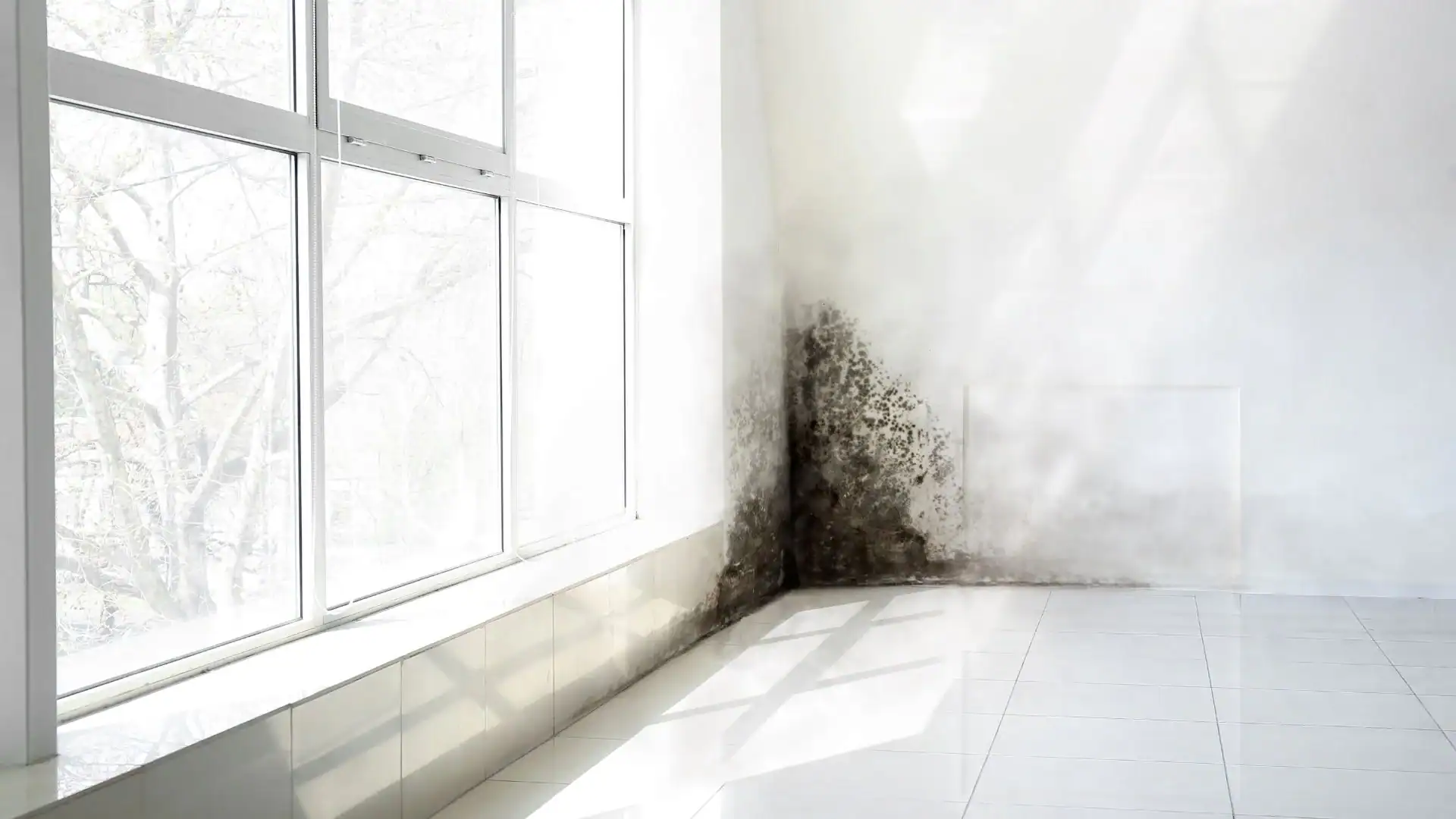
You noticed something on the wall. Maybe it’s been there a while. Maybe it showed up overnight after a leak. Either way, you’re now down a rabbit hole at 11pm trying to figure out whether you need to evacuate your house or just grab some bleach.
Here’s the short answer: it depends — but the bleach probably won’t fix it. The longer answer involves understanding what mold actually does to your health, when it becomes a serious problem, and what removing it from walls the right way actually looks like. We’ll walk you through all of it, starting with the part most people want to know first: how bad is this for you?
The word “black mold” has a way of sending people into full crisis mode — and understandably so. But the reality is a little more nuanced than the horror stories suggest. Not every dark-colored growth on your wall is Stachybotrys chartarum, the species most associated with serious health effects. Dozens of common indoor mold species can appear black or dark green, including Cladosporium and Aspergillus, and visual identification alone tells you almost nothing useful.
That said, any indoor mold — regardless of color — is worth taking seriously. The danger level depends on a few key factors: how much of it there is, how long you’ve been exposed, and whether anyone in your home is particularly vulnerable. Children, elderly adults, and people with asthma, allergies, or compromised immune systems face a meaningfully higher risk than a healthy adult with brief, limited exposure.

The CDC is careful not to overstate the dangers of black mold, and that’s worth noting. The documented health effects of mold exposure — including from Stachybotrys — are real, but they’re not always the dramatic, life-threatening scenarios you might read about online. For most people, mold exposure produces symptoms that look a lot like a stubborn allergy: stuffy or runny nose, itchy or watery eyes, coughing, sneezing, and skin irritation. Annoying, persistent, and easy to misattribute to seasonal allergies or a lingering cold.
For people with asthma, the picture changes. Mold is a well-documented asthma trigger, and exposure can bring on attacks or significantly worsen baseline symptoms. If someone in your household has asthma and has been dealing with unexplained flare-ups, mold is worth investigating seriously.
The more concerning scenarios involve prolonged, high-concentration exposure — especially in enclosed spaces with poor ventilation — and people who are immunocompromised. In those cases, mold exposure can lead to respiratory infections and more serious lung involvement. The CDC recognizes that people with chronic lung disease may develop actual infections in their lungs from mold, not just irritation.
Even dead mold can still trigger allergic reactions in sensitive individuals. That’s part of why simply painting over mold or spraying it with bleach doesn’t solve the problem. The mold may appear gone, but the biological material is still there — and your body can still react to it.
The honest bottom line is this: if you’re experiencing symptoms you can’t explain, and there’s visible mold or a persistent musty smell somewhere in your home, those two things are probably connected. The question isn’t whether to address it. It’s how.
This is the question that keeps people up at night, and it deserves a straight answer. Long-term, low-level mold exposure — the kind that happens when mold has been quietly growing behind a wall or under a floor for months before anyone notices — is more concerning than a single short exposure event. The cumulative effect of breathing in mold spores day after day, especially in a bedroom or a space where you spend a lot of time, is what tends to produce the more persistent symptoms.
What makes this particularly tricky in Montgomery County is the housing stock. Many homes here — especially on the Main Line in communities like Lower Merion and Narberth, in Norriton Township, and throughout the older neighborhoods of Abington, Jenkintown, and Cheltenham — were built decades ago. Stone foundations, finished basements, older HVAC systems that weren’t designed with modern dehumidification in mind. These homes can harbor moisture in places that don’t get inspected for years. By the time mold becomes visible on a wall, it’s often been growing in the wall for much longer.
If you’ve had a musty smell in your basement or a lower level of your home that you’ve just gotten used to, that’s worth revisiting. Persistent musty odors are one of the most reliable indicators of hidden mold — mold you can’t see but that’s still releasing spores into the air you’re breathing.
The reassuring part: the health effects of mold exposure are generally reversible once the source is removed and you’re no longer being exposed. Most people see their symptoms improve significantly after professional remediation. But that improvement depends on actually getting the mold out — not just treating the surface — and making sure the moisture source that caused it is addressed so it doesn’t come back.
Want live answers?
Connect with a EJS Environmental expert for fast, friendly support.
Here’s where a lot of well-intentioned homeowners run into trouble. The instinct to grab bleach and start scrubbing is understandable — it feels like action, and it’s cheap. The problem is that bleach doesn’t penetrate porous surfaces like drywall. It kills what’s on the surface, turns it white, and within a few weeks the mold is back. You haven’t solved the problem; you’ve just temporarily hidden it.
The bigger risk with DIY removal is what happens to the spores you disturb in the process. Mold that’s been growing undisturbed releases a concentrated burst of spores when it’s agitated. Without proper containment — sealed work areas, negative air pressure, HEPA filtration — those spores travel through your home’s air and HVAC system and start new colonies in places that were previously unaffected. What started as a problem in one corner of the basement can become a problem throughout the house.
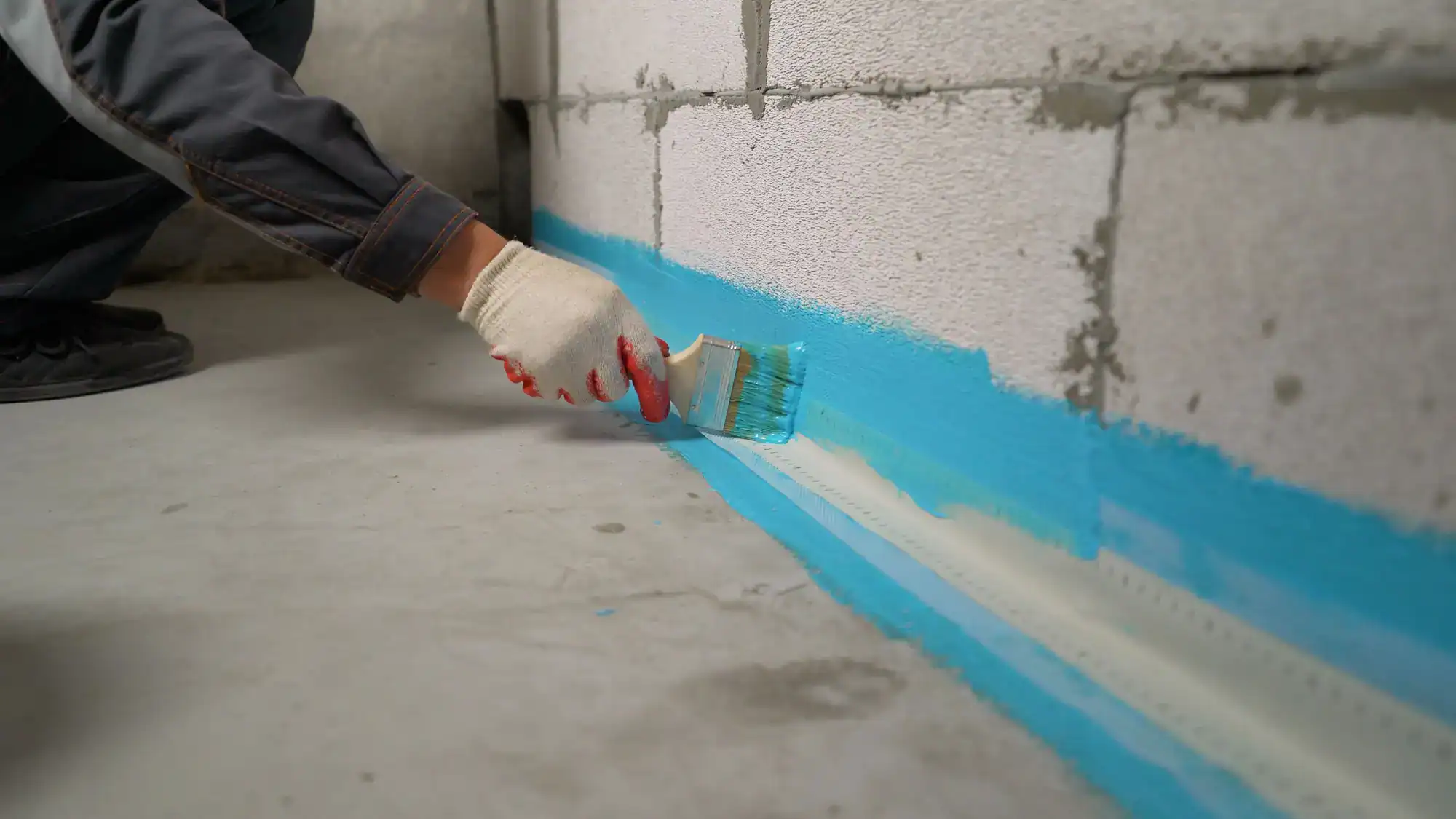
Professional mold remediation isn’t just cleaning with better products. It’s a structured process designed to remove contamination without spreading it, verify that the job is complete, and address the underlying cause so the mold doesn’t return.
It starts with a thorough inspection — not just looking at what’s visible, but identifying where moisture is coming from and whether mold has spread beyond the obvious area. Mold follows water, and water in older homes has a way of traveling surprising distances from its source. In a stone-foundation home in Lower Merion or a finished basement in Blue Bell, what looks like a small patch on the wall can be the tip of a much larger problem inside the wall cavity.
Once the scope is understood, containment goes up. The work area is sealed off with plastic sheeting and put under negative air pressure, which means air flows into the contained space rather than out of it — keeping spores from migrating to the rest of your home. HEPA air scrubbers run throughout the process, capturing particles as small as 0.3 microns. That’s the level of filtration that actually removes mold spores from the air rather than just recirculating them.
Porous materials — drywall, insulation, carpeting — that are heavily contaminated typically need to come out. You can’t remediate mold out of drywall the way you can clean a tile surface. The material has to be removed, bagged, and disposed of properly. What remains — the structural framing, concrete, or block — gets treated with EPA-registered antimicrobial agents. Then, before the containment comes down, air testing or surface sampling confirms the space has returned to normal before the area is cleared.
That final verification step matters more than most people realize. A remediation job isn’t finished when the visible mold is gone. It’s finished when the air quality confirms it.
Montgomery County isn’t a generic suburban market when it comes to mold risk. The combination of older housing stock, humid summers, and the kind of winters that regularly burst pipes creates a set of conditions that make mold a recurring issue for homeowners throughout the county — not a rare one.
The Main Line communities — Lower Merion, Narberth, Wynnewood, Ardmore — are full of beautiful older homes with stone foundations that were never designed to keep moisture out the way modern construction does. Finished basements in these homes trap humidity, and when the HVAC system isn’t keeping up, the conditions for mold growth are met quickly. Spring is particularly high-risk: snowmelt and rain push groundwater against foundations that have been contracting and expanding through a hard winter, and moisture finds its way in.
The Schuylkill River corridor — Norristown, Conshohocken, Bridgeport — sees periodic flooding that creates acute mold risk. After a flooding event, mold can begin growing within 24 to 48 hours. That’s not a figure meant to alarm you; it’s just the biology. And it’s why emergency response matters — the faster the moisture is addressed, the smaller the remediation scope.
There’s also a specific consideration for homes built before 1978, which covers a large portion of Montgomery County’s housing stock. When mold remediation involves cutting into walls — and it often does — federal EPA and HUD regulations require lead-safe work practices. We hold certification as a Certified Lead Inspector and Risk Assessor, which means we’re qualified to handle that work legally and safely. A lot of contractors aren’t. That’s not a minor detail; it’s a legal requirement that protects your family and your property.
For homeowners thinking about selling — and in an active market like Montgomery County, that’s always a relevant consideration — mold discovered during a buyer’s inspection can reduce a property’s value by 20 to 37 percent. Addressing it proactively isn’t just about health. It’s a financial decision.
If there’s one thing worth taking from this page, it’s that mold problems don’t improve on their own — and the longer they sit, the more they cost to fix, both financially and in terms of health exposure. The 10-square-foot rule from the EPA is a useful starting point: if the affected area is larger than roughly three feet by three feet, professional help isn’t just recommended, it’s the right call.
The good news is that you don’t have to figure this out alone, and you don’t have to wait until Monday morning to get answers. We’re available around the clock, because we know that burst pipes and flooding discoveries don’t follow business hours. We offer free estimates, so there’s no financial risk in making the call.
We’ve been handling mold, asbestos, lead, and environmental hazards in Montgomery County and the surrounding area for two decades. If you’re dealing with mold on your walls — or you suspect something is growing where you can’t see it — reach out. We’ll tell you honestly what you’re dealing with and what it takes to fix it right.
—
**FAQs**
**Does homeowners insurance cover mold removal?**
Usually only in limited circumstances, and the fine print matters a lot here. Standard homeowners insurance covers mold when it results directly from a sudden, accidental covered peril — like a burst pipe or water from extinguishing a fire. Mold caused by ongoing humidity, a slow leak you didn’t catch, or general moisture infiltration is typically excluded, because insurers treat it as a maintenance issue rather than an accident.
Even when coverage applies, most policies cap mold-related payouts at $1,000 to $5,000 per occurrence. Given that professional mold removal averages around $2,363 nationally — and can run significantly higher for larger infestations in Montgomery County homes with complex layouts or extensive wall damage — that cap may not go far. Add to that the fact that filing a claim tends to raise your premiums by an average of 9%, and for smaller jobs, it’s often worth getting a free estimate from us before deciding whether filing makes financial sense at all.
**Can I remove mold from walls myself?**
For a very small, isolated patch on a non-porous surface — tile grout, for example — careful DIY cleaning with proper protective gear can be reasonable. But for anything on drywall, wood framing, or other porous materials, DIY removal carries real risk. Disturbing mold without proper containment releases spores into your home’s air. Those spores settle on surfaces throughout the house and can start new colonies in places that weren’t affected before. The EPA recommends calling a professional for any mold coverage exceeding 10 square feet. In Montgomery County, where many homes have interconnected basements and older HVAC systems, that risk is even higher — spores can travel further and settle in unexpected places.
**How long does mold remediation take?**
It depends on the scope. A contained area in a single room might be completed in one to two days. Larger infestations involving multiple rooms, HVAC contamination, or significant structural material removal can take longer. In Montgomery County homes with finished basements or stone foundations — where moisture intrusion tends to be more extensive — it’s not uncommon for the process to involve waterproofing work after remediation is complete, which adds time but also means the problem is actually solved rather than temporarily addressed.
**Will the mold come back after it’s removed?**
Not if the moisture source is fixed. Mold is a symptom of a moisture problem. Remove the mold without addressing why water is getting in, and it will return — sometimes within weeks. That’s why we don’t just remediate; we also offer waterproofing services as part of the same engagement. Fixing the source is what makes the remediation last.
Summary:
Article details:
Share: