Hear from Our Customers
You stop guessing. That’s the first thing. When you’re renovating a 1940s or 1950s home in McKinley — pulling up old floor tile, opening a basement ceiling, replacing a boiler — there’s a moment where you’re not sure if what you’re looking at is a problem or not. That uncertainty is expensive. It stalls projects, spooks contractors, and in a real estate transaction, it can kill a deal entirely.
Once a licensed abatement contractor has cleared the material and handed you documentation, that uncertainty disappears. Your renovation moves forward. Your inspector has what they need. Your family isn’t breathing disturbed fibers from pipe wrap that’s been sitting in your basement since Eisenhower was president.
McKinley’s housing stock is almost entirely pre-1980, and the semi-detached twins along Tulpehocken and Cadwalader avenues add a layer most homeowners don’t think about — when you share a wall, a botched abatement job isn’t just your problem. It’s your neighbor’s too. Proper containment, HEPA filtration, and negative air pressure aren’t optional extras here. They’re the standard that protects the whole building, not just the unit being worked on.
We’ve been working in the close-in Philadelphia suburbs for two decades. That means we’ve been inside homes that look exactly like yours — mid-century construction, original systems, materials that haven’t been touched since the house was built. We know what a 1949 Montgomery County home looks like from the inside, and we know where the risk tends to hide.
We’re fully licensed under the Pennsylvania Department of Labor and Industry, EPA/HUD compliant, fully bonded and insured, and have a Certified Lead Inspector and Risk Assessor on staff. That’s not a marketing checklist — those are legal requirements in Pennsylvania, and not every contractor you’ll find online actually meets all of them.
McKinley sits in the heart of our service territory. Whether you’re in the older blocks near the McKinley Fire Company on Cadwalader Avenue or in one of the 1960s homes on Serrill Avenue, we’ve worked in your neighborhood’s housing vintage. We know Abington Township’s permit process, we handle the state notifications, and we don’t leave you holding a stack of paperwork you don’t understand.
It starts with an inspection. Before anything is removed, we identify all suspect materials in the work area — pipe insulation, floor tiles, ceiling materials, joint compound, roofing, whatever applies to your specific project. In a McKinley home built in the 1940s or 1950s, that list can be longer than homeowners expect, which is why a thorough walkthrough matters before any work begins. Samples are collected and tested so you’re working with confirmed facts, not assumptions.
Once the scope is clear, we handle the required notifications. For projects involving friable asbestos above threshold quantities, Pennsylvania DL&I requires a minimum five-day advance notice. Some larger projects also require notification to PA DEP. We manage all of that — you don’t need to navigate the state regulatory framework on your own. And with the PA DEP notification fee increasing to $400 for Montgomery County projects starting in January 2026, there’s a real advantage to getting your project moving sooner rather than later.
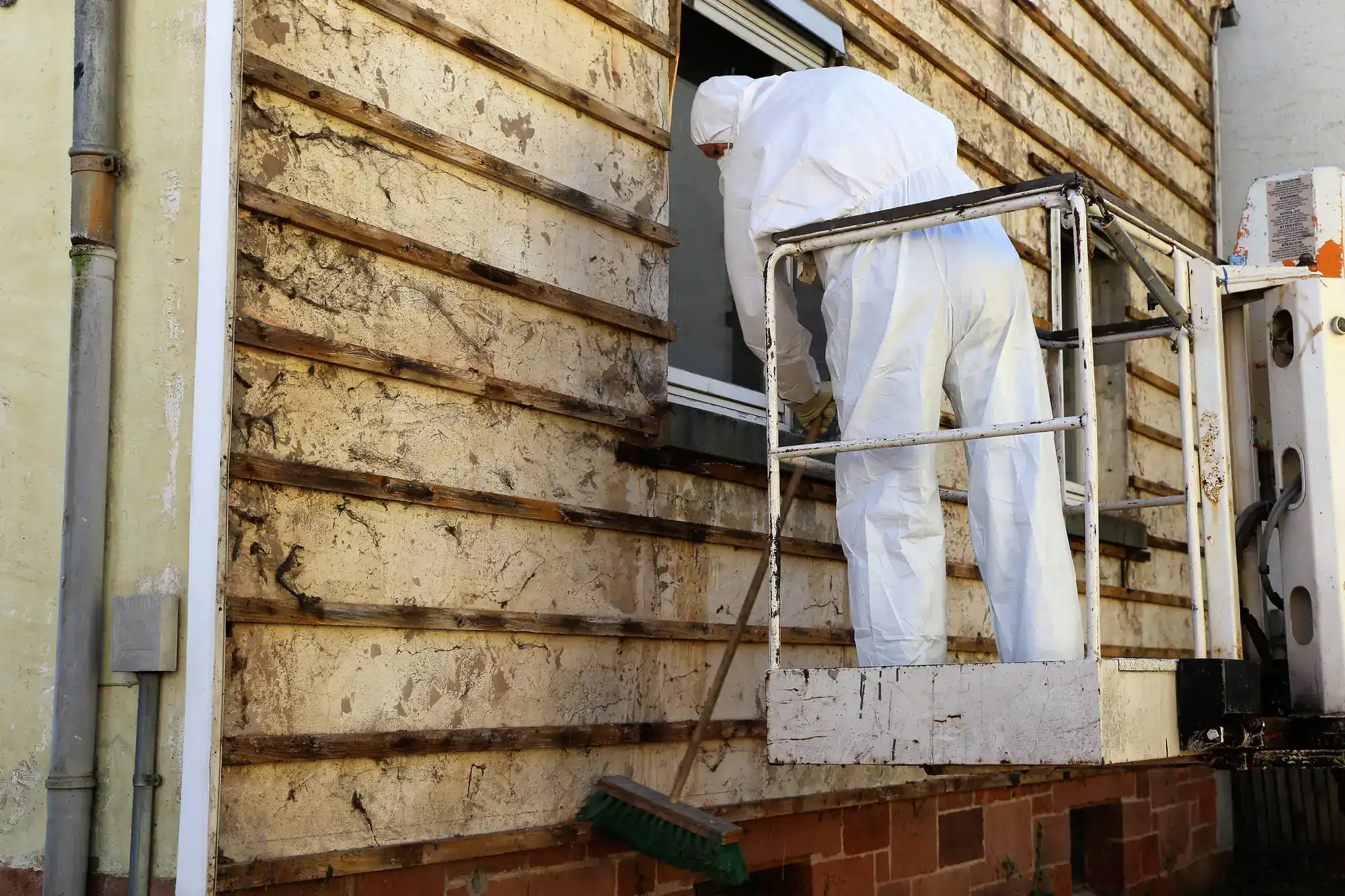
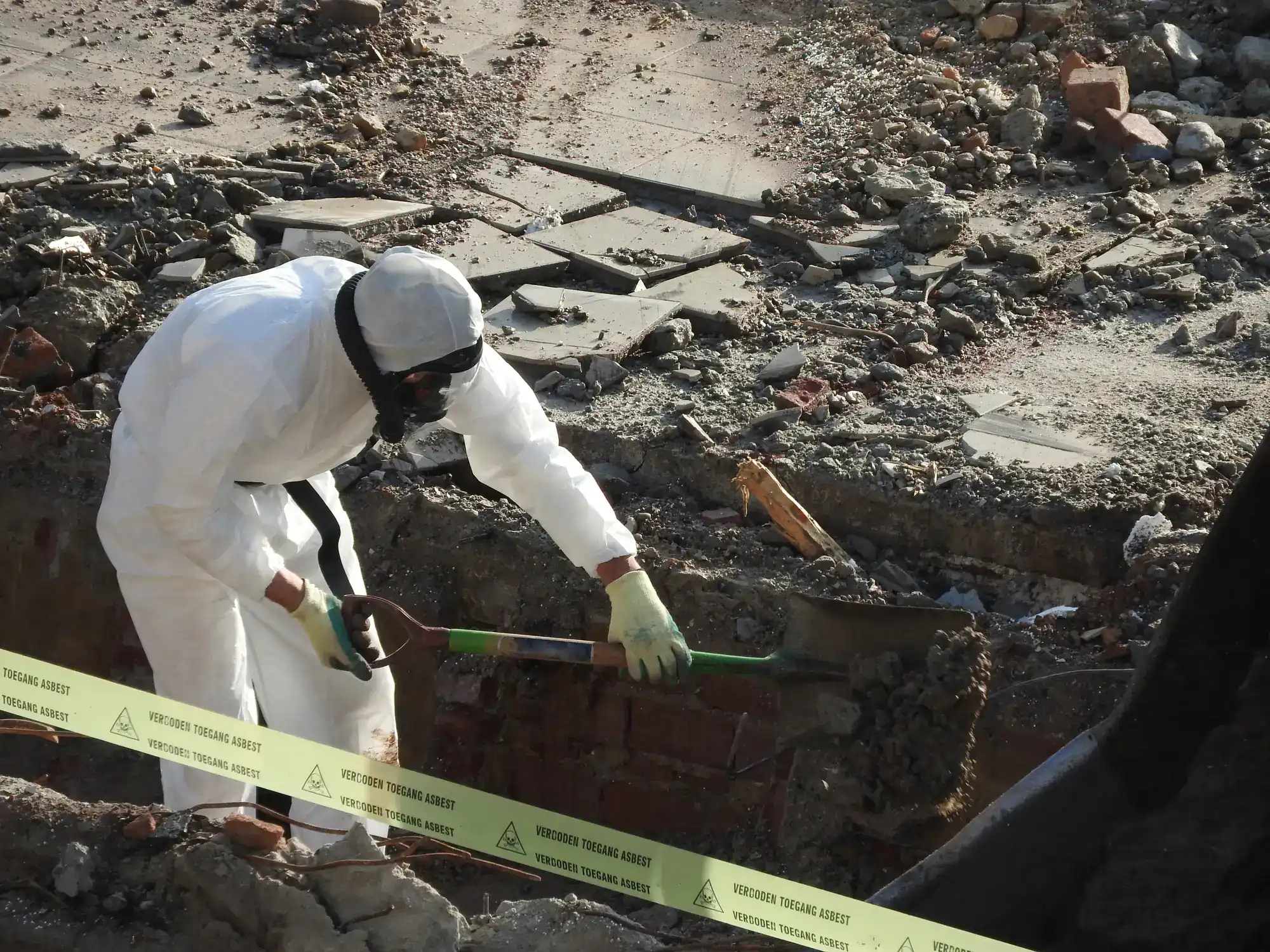
The removal itself is done under full containment — sealed work areas, HEPA air filtration, and negative air pressure to prevent fiber migration. That’s especially important in McKinley’s twins, where the work area shares structural elements with a neighboring unit. When the material is out, clearance testing confirms the space is clean. You receive full documentation — something that matters whether you’re finishing a renovation or preparing for a home sale.
Ready to get started?
Asbestos abatement in McKinley typically involves pipe and boiler insulation, vinyl and asphalt floor tiles, plaster and joint compound, acoustic ceiling tiles, and in some cases roofing or siding materials — all common in homes built between the 1920s and 1970s. If your home has a vermiculite-insulated attic, that needs to be tested before any attic work is done, period. We handle all of these material types under one engagement, and we document everything in a format that holds up for lenders, buyers, and inspectors.
What separates us from most abatement contractors in the Montgomery County market is the one-stop model. A McKinley homeowner who opens up a basement ceiling and finds asbestos pipe wrap alongside visible mold doesn’t have to manage two separate contractors. We handle asbestos testing, abatement, mold sampling, mold remediation, lead inspection, demolition, and waterproofing. One company, one point of contact, one less thing to coordinate during an already stressful project.
We offer free estimates, cash discounts, and 24/7 phone availability — including emergency response for situations where asbestos materials are disturbed unexpectedly, like a burst pipe in a 1940s basement or storm damage to an older roof. Montgomery County is clear that asbestos cannot be dropped off at county hazardous waste events, which means disposal has to go through a licensed contractor. We handle that too.
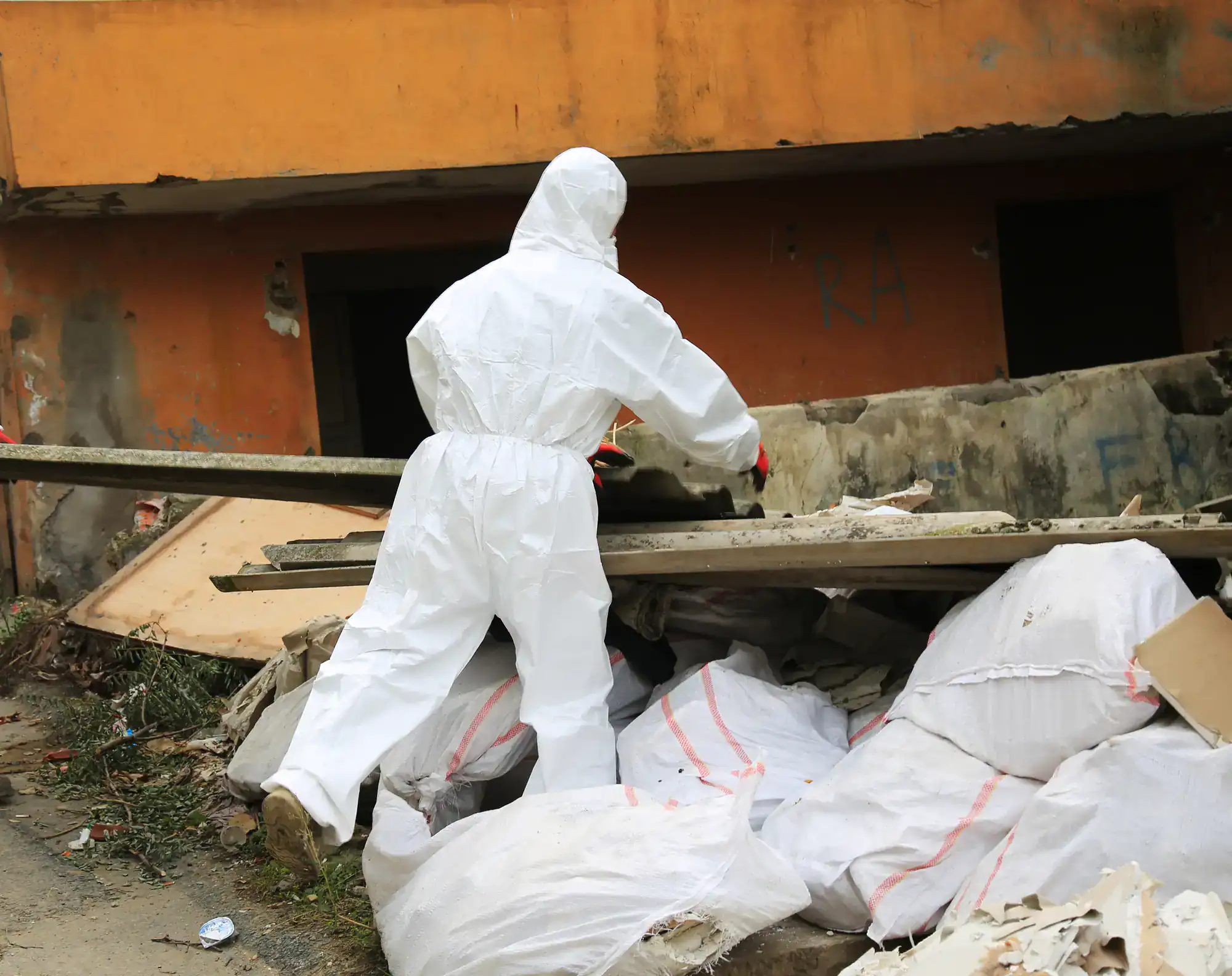

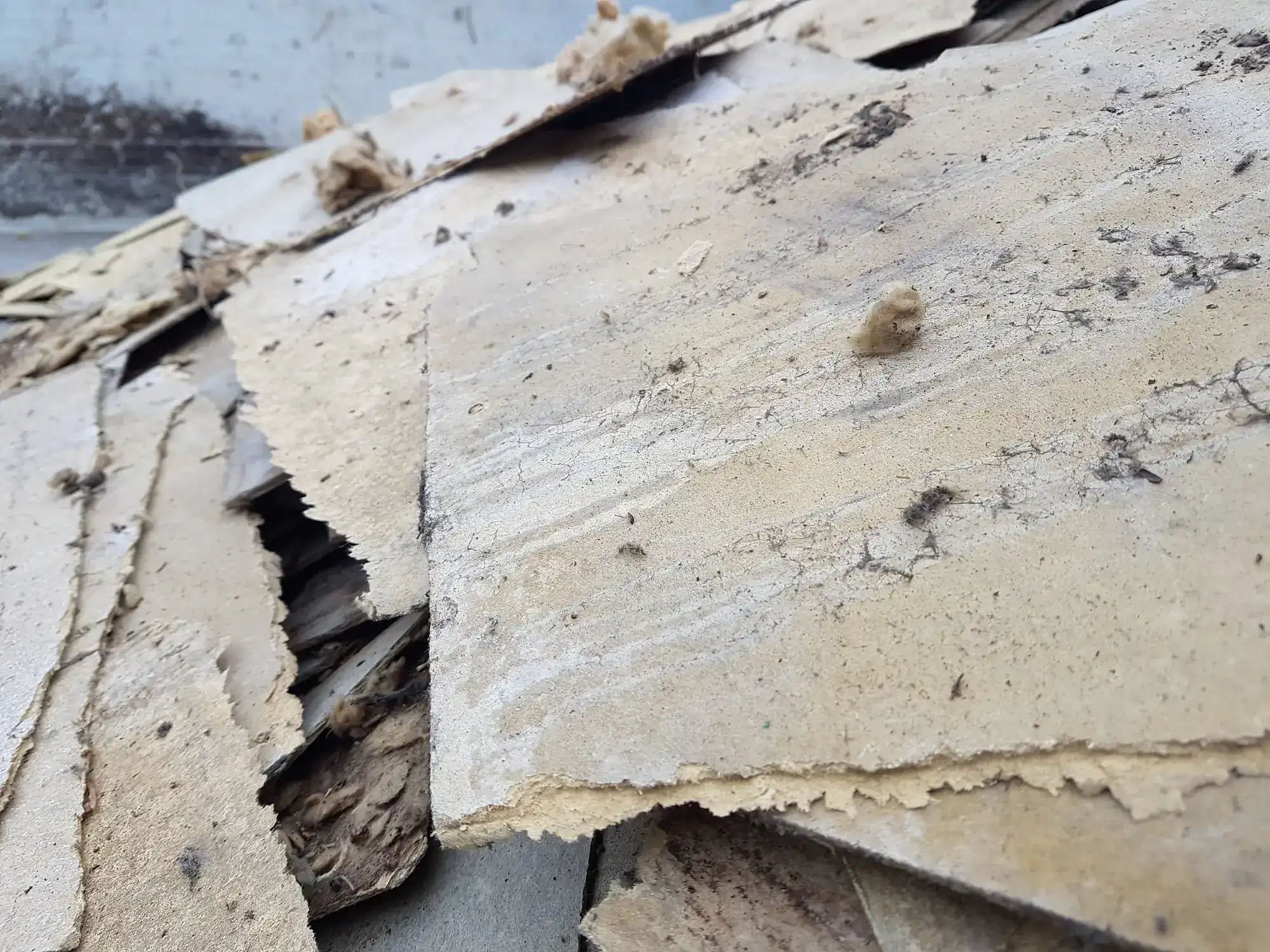
Not every home from that era contains asbestos in every material, but the odds are high enough that you should assume it’s present until testing says otherwise. Homes built in McKinley between the 1920s and 1970s routinely used asbestos in pipe and boiler insulation, floor tiles, ceiling materials, plaster, joint compound, and roofing shingles — because it was cheap, durable, and widely available at the time.
The safest approach before any renovation, demolition, or major system replacement is to have suspect materials tested by a licensed professional. In Pennsylvania, that means working with a contractor certified under the PA Department of Labor and Industry. A test isn’t expensive, and it answers the question definitively. Guessing — or having an unlicensed handyman take a look — doesn’t.
Work stops. That’s the short answer. If a contractor opens a wall or pulls up flooring and encounters suspect material, the responsible move is to halt work, clear the area, and bring in a licensed asbestos abatement contractor before anything else is disturbed. Continuing to work around suspect material — or having someone remove it without the proper license — can spread fibers throughout the home and creates serious legal and health exposure.
In Pennsylvania, asbestos abatement above certain thresholds requires advance notification to the PA Department of Labor and Industry (minimum five days for friable asbestos) and in some cases to PA DEP. We handle those notifications as part of the job. Once the material is properly removed and clearance testing confirms the space is clean, your renovation contractor can get back to work. The delay is frustrating, but it’s far less costly than the alternative.
It does, and it’s worth understanding before work starts. Semi-detached twins share a party wall, which means inadequate containment on one side can allow asbestos fibers to migrate into the neighboring unit. That’s not a hypothetical — it’s a real risk when the work area isn’t properly sealed and pressurized.
We use full containment with HEPA filtration and negative air pressure on every job, which is the standard that prevents fiber migration beyond the work area. For McKinley homeowners in twins — particularly along Tulpehocken and Cadwalader avenues where a significant portion of the community’s twin stock is concentrated — this isn’t just about protecting your own home. It’s about not creating a problem for the family on the other side of the wall. A licensed, properly equipped contractor understands this. A general handyman typically does not.
Most of McKinley falls under Abington Township’s jurisdiction, with a small portion in Cheltenham Township — and neither township has its own standalone asbestos ordinance beyond what Pennsylvania state law requires. That said, renovation and demolition work may require a building permit from Abington Township’s Code Enforcement Department depending on the scope of the project, and PA DEP explicitly advises property owners to check with their local township before starting work.
At the state level, projects involving friable asbestos above three square or three linear feet require a minimum five-day advance notification to PA DL&I. Larger projects may also trigger PA DEP’s ten-working-day NESHAP notification requirement. We handle all of this paperwork as part of the engagement — so you’re not left trying to figure out which agency needs what form and by when. It’s one less thing to manage while you’re already dealing with a renovation.
For most residential jobs in McKinley — a single room, a basement pipe system, or a localized floor tile removal — the work takes one to three days. Larger whole-home projects or situations involving multiple material types can run up to five days. The timeline depends on what’s there, how much of it there is, and how complex the containment setup needs to be.
Whether you need to vacate depends on the scope and location of the work. For contained, isolated jobs — like pipe wrap in a basement utility room — many homeowners stay in the home while work is ongoing in the sealed area. For more extensive projects or work in living spaces, we’ll give you a clear recommendation upfront. The goal is to be honest about what’s involved so you can plan accordingly, not to give you a vague answer and figure it out later.
Asbestos abatement isn’t optional when it needs to happen — it’s a safety and legal requirement. We offer cash discounts because we want to make it as straightforward as possible for McKinley homeowners to do the job right, without adding unnecessary friction to an already stressful situation. Cash payments reduce administrative overhead on our end, and we pass that savings directly to you.
For a McKinley homeowner who’s already managing the costs of a renovation — or dealing with an unexpected discovery mid-project — a real discount on the abatement portion is a tangible benefit, not a gimmick. The national average for residential asbestos removal runs roughly $1,200 to $3,200 depending on scope, and the cash discount can meaningfully reduce that number. Combined with free estimates, it means you know what you’re getting into before you commit to anything.
Other Services we provide in Mckinley