Hear from Our Customers
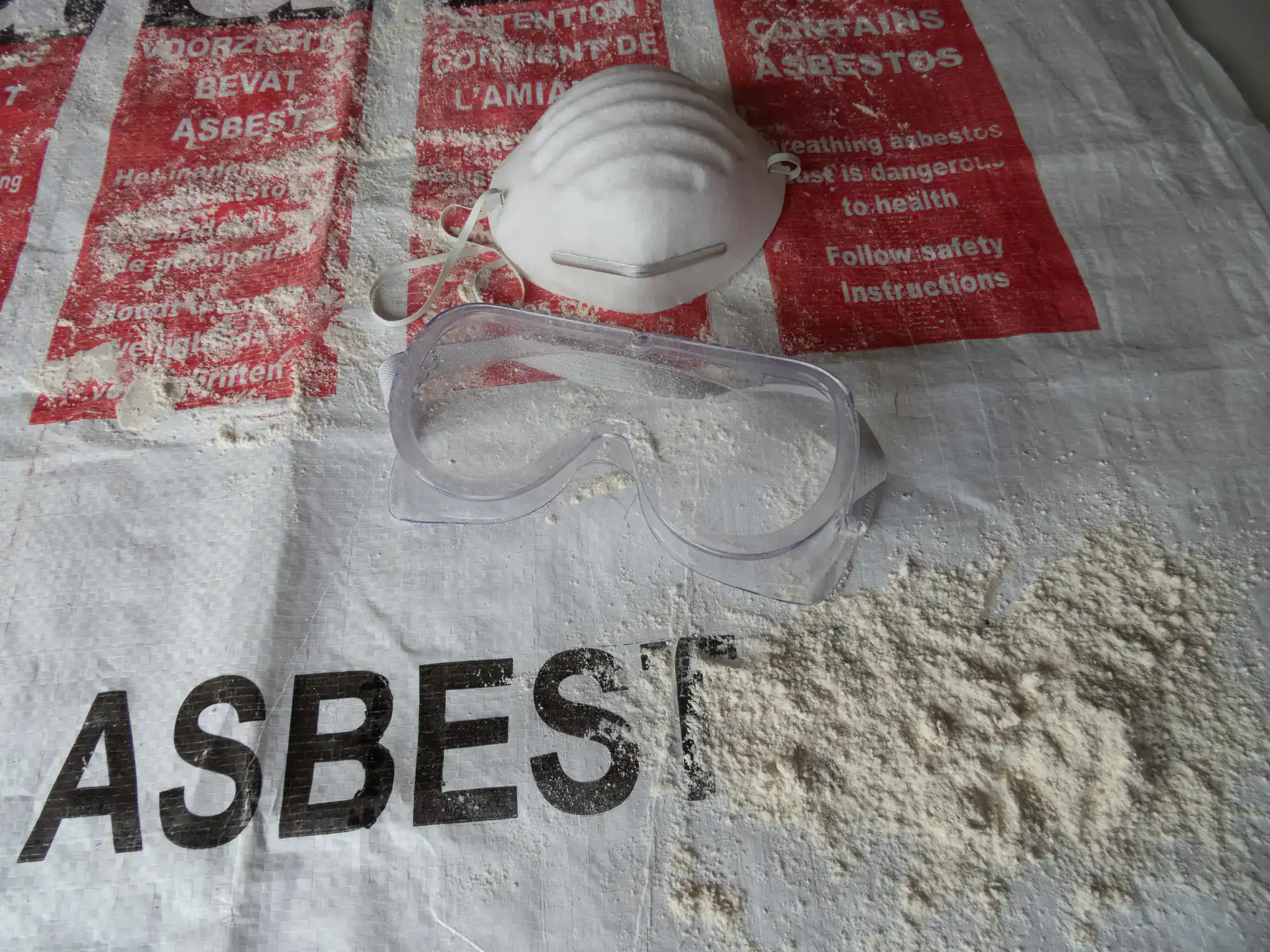
You stop the renovation. You find something suspicious under the floor tiles, behind the drywall, wrapped around a pipe in the basement. Now you’re not sure if you should be worried, who to call, or how long this is going to derail everything you had planned. That moment is exactly what we built our process around.
When the job is done right, you get a clean clearance report, your contractor can get back to work, and you’re not left wondering if the air in your home is safe. For King of Prussia homeowners managing renovations on properties worth close to half a million dollars, that documentation isn’t just peace of mind — it’s protection for your investment.
King of Prussia gets around 47 inches of rain per year, more than the national average. That moisture accelerates the breakdown of older building materials — floor adhesives, pipe insulation, ceiling tiles — turning what might have been stable asbestos-containing material into something that’s starting to deteriorate. Add in the freeze-thaw cycles every winter, and the older homes in neighborhoods like Swedeland, Henderson Park, and Kings Manor are dealing with conditions that actively age those materials faster than most homeowners realize.
We’ve been doing this work in King of Prussia and across Montgomery County for two decades. Not two years. Not “over a decade.” Twenty years of licensed, bonded, and insured asbestos abatement — the kind of track record that comes from doing the job right the first time, every time.
Our team is fully licensed under Pennsylvania’s Asbestos Accreditation and Certification Act, EPA and HUD compliant, and we have a Certified Lead Inspector and Risk Assessor on staff. That last part matters more than it sounds — it means you’re getting a credentialed professional assessment, not just a crew that shows up with equipment.
King of Prussia sits at the crossroads of some of the most heavily traveled corridors in the Philadelphia suburbs — I-76, I-276, US-202, and US-422 — and the communities along those corridors are exactly where we’ve been working for twenty years. From commercial buildings near the Turnpike interchange to split-levels off Gulph Road, this is familiar ground for us.
It starts with a call — any time, day or night. You describe what you found or what you suspect, and we talk through it plainly. If testing is needed, we schedule it fast. Samples go to an accredited lab, and you get clear results without having to decode technical language on your own.
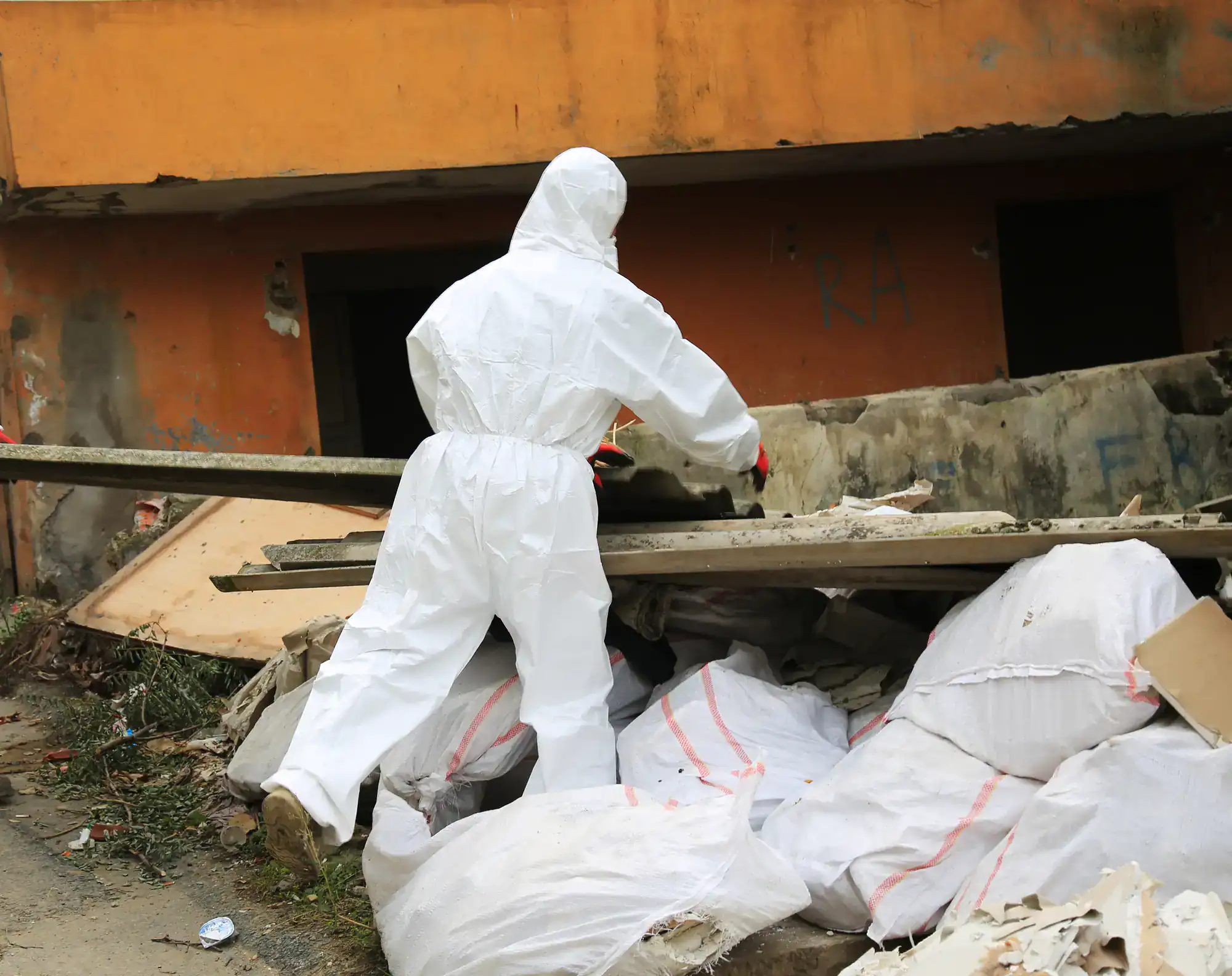
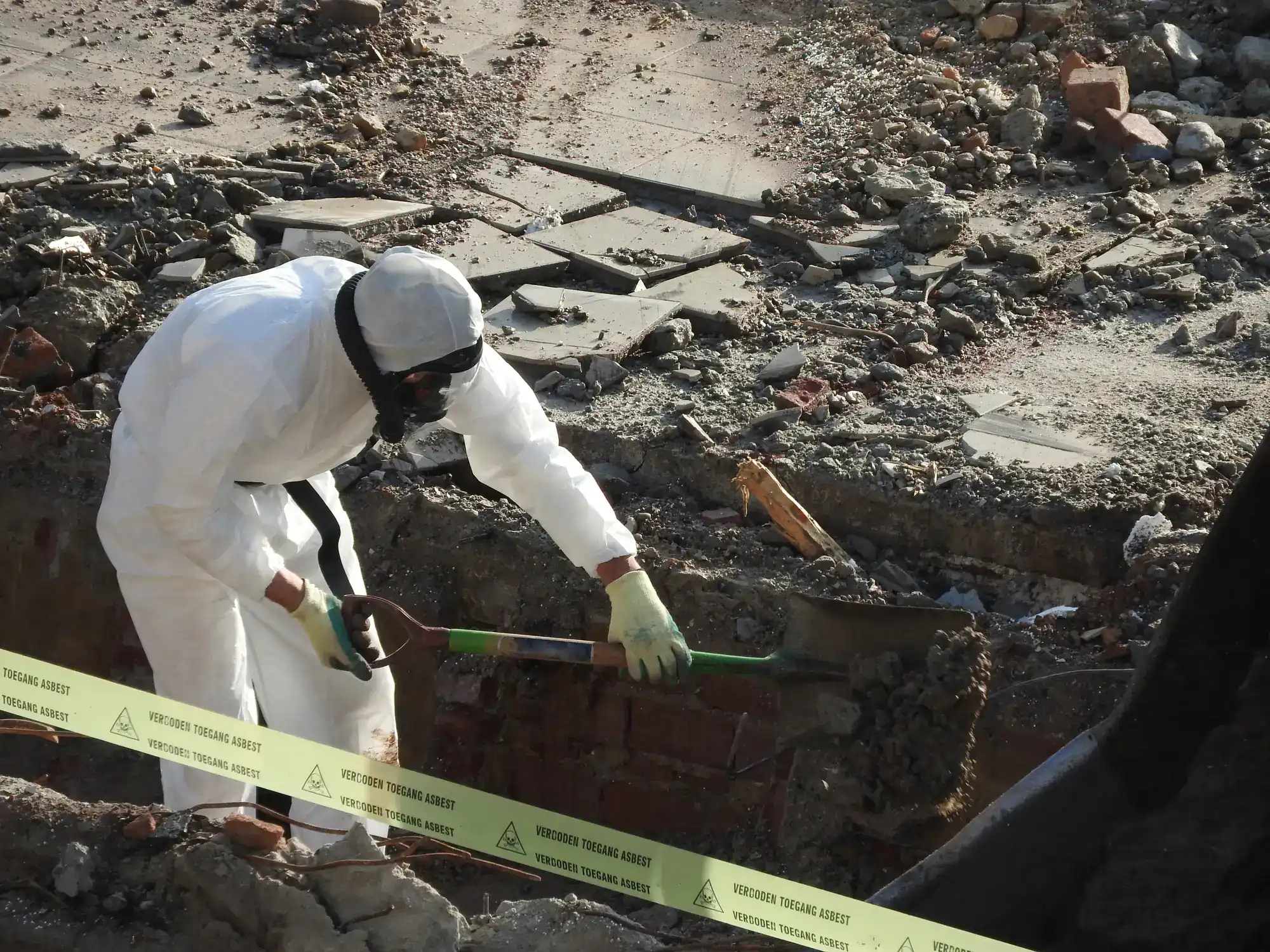
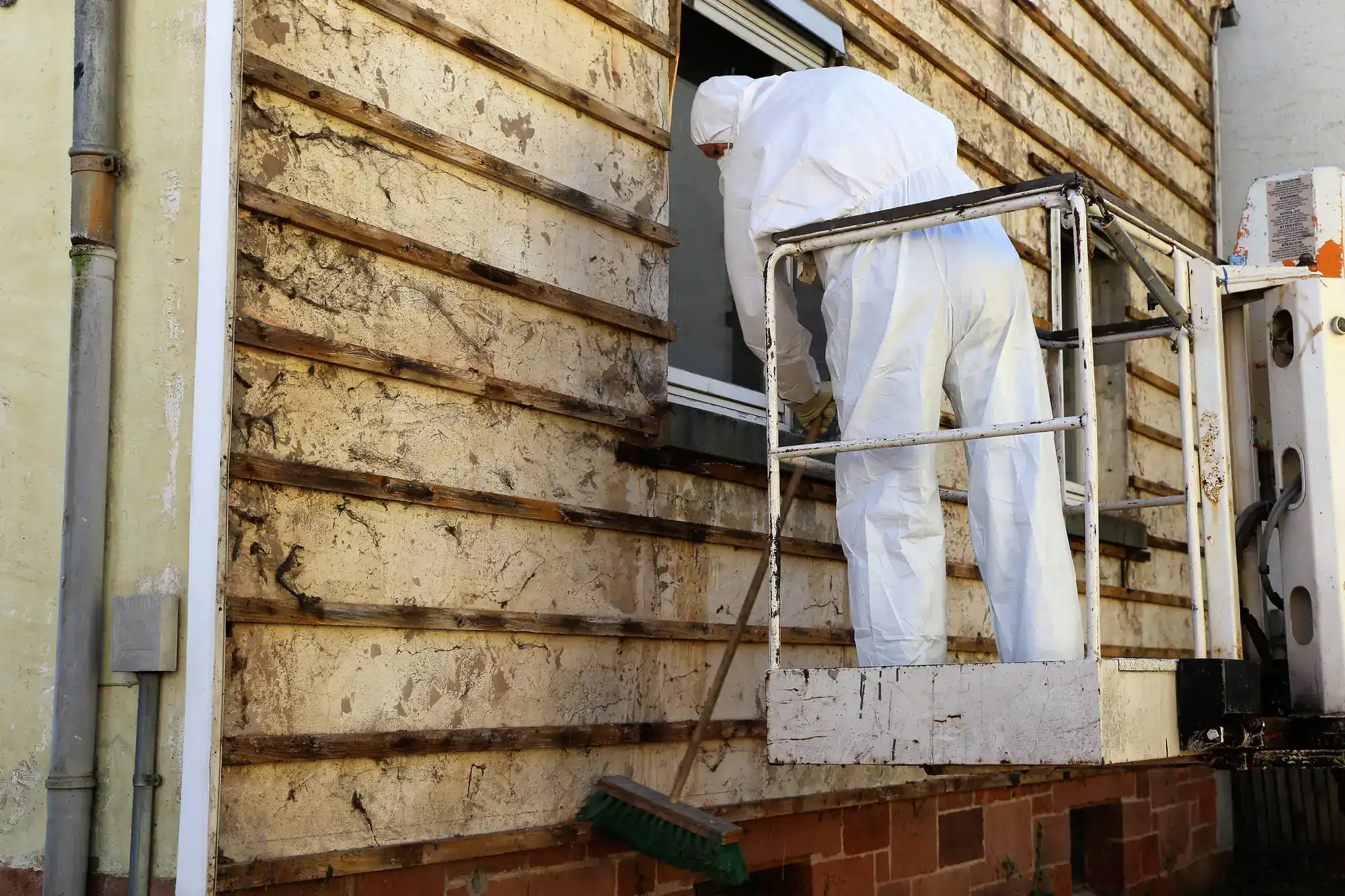
If asbestos is confirmed, we handle the abatement from start to finish. That means full containment using plastic sheeting and negative air pressure, HEPA filtration running throughout the job, and proper disposal through licensed channels. Pennsylvania DEP requires advance notification before friable asbestos removal above certain thresholds, and we handle all of that paperwork — you don’t have to figure out the regulatory side on your own. Upper Merion Township also requires contractors to carry current insurance documentation on file with permit applications, and we meet that requirement as standard practice.
After the work is complete, post-clearance air testing confirms the space is clean before anyone re-enters. You get the documentation. Your contractor gets back on schedule. If your project also needs demolition, waterproofing, or cleanup, we handle that too — same team, same project, no hand-offs to a third party.
Ready to get started?
Most of the asbestos calls we get from King of Prussia follow a familiar pattern: a homeowner is mid-renovation on a 1960s split-level and pulls up flooring to find old vinyl tile or adhesive mastic underneath. Sometimes it’s popcorn ceiling in a bedroom. Sometimes it’s pipe insulation in the basement utility room. Occasionally it’s joint compound or attic insulation. These materials were standard in the homes built during King of Prussia’s residential growth years, and they show up regularly — especially now that so many of those homes are being updated or sold.
For residential clients, we cover the full scope: testing, containment, abatement, air clearance, and cleanup. For commercial clients — and King of Prussia has no shortage of those, given the concentration of 1950s and 1960s office buildings along the US-202 and US-422 corridors — the work includes pre-demolition surveys, NESHAP compliance documentation, and the kind of regulatory paper trail that corporate facility managers and property developers actually need.
We offer free estimates, and cash discounts apply — something you won’t find publicly advertised by the other asbestos removal firms serving this area. If you’re in the middle of a real estate transaction and working against a closing deadline, we have emergency response scheduling available. The goal is always the same: get the work done correctly, get you the documentation you need, and get your project moving again.
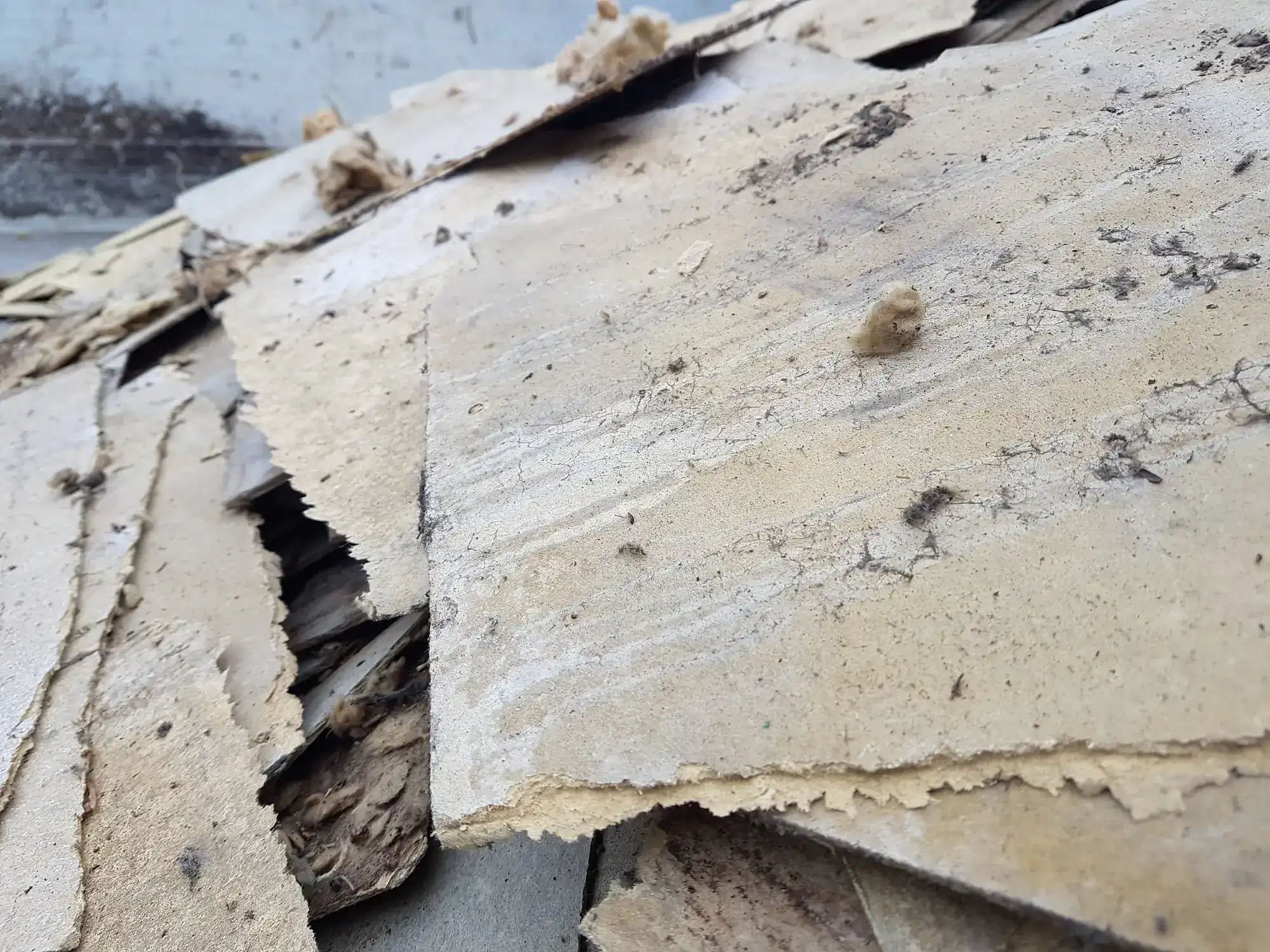
The honest answer is that you can’t know for certain just by looking. Asbestos-containing materials don’t have a distinctive appearance — they look like ordinary floor tile, ceiling texture, pipe insulation, or drywall compound. The only way to confirm it is through lab testing of a physical sample collected by a licensed inspector.
What you can do is use the age of your home as a starting point. If your King of Prussia home was built before 1980 — and most of the single-family homes in neighborhoods like Swedeland, Kings Manor, and Henderson Park were — there’s a meaningful probability that at least some of the original building materials contain asbestos. The materials most commonly found in homes from that era include vinyl floor tiles and the adhesive beneath them, acoustic or popcorn ceiling texture, attic insulation, pipe wrap in basements and utility areas, and older joint compound. If you’re planning any renovation that disturbs those materials, testing before you start is the right move — not after something gets broken open.
Stop work in that area. Don’t sand it, cut it, or try to remove it yourself. Asbestos fibers become a health risk when they’re disturbed and released into the air — intact material that’s left alone is generally not an immediate danger, but the moment it gets broken up, the risk changes.
Once you’ve stopped, call a licensed asbestos abatement contractor to collect a sample and have it tested. The turnaround on lab results is typically fast — often within a few days — so you’re not sitting on a completely stalled project for long. If the test comes back positive, abatement needs to happen before any further renovation work in that area can proceed. Pennsylvania requires advance notification to DEP before removal of friable asbestos above certain quantities, and a licensed contractor handles that filing. We offer 24/7 availability precisely because this kind of discovery doesn’t wait for a Monday morning — it happens on a Saturday afternoon when you’re halfway through a bathroom gut.
Yes, and it’s worth understanding why. King of Prussia’s commercial identity was built largely in the 1950s, 1960s, and 1970s — the same decades when asbestos was widely used in commercial construction for fireproofing, insulation, floor and ceiling systems, and mechanical pipe wrap. The office parks and corporate campuses along US-202, US-422, and the Turnpike interchange area contain a significant inventory of buildings from that era.
Federal NESHAP regulations require a pre-demolition or pre-renovation asbestos survey before any work that disturbs regulated quantities of asbestos-containing materials — and those thresholds are not especially high (160 square feet of surface material, 260 linear feet of pipe insulation, or 35 cubic feet of other material). If you’re a facility manager, property developer, or commercial property owner planning any renovation or demolition in King of Prussia’s older building stock, a licensed survey is a legal requirement, not an optional precaution. We handle commercial abatement and provide the compliance documentation that corporate clients and developers need to satisfy regulatory requirements and keep projects on schedule.
It depends on the scope — specifically, how much material is involved and where it’s located. A contained area like a single bathroom with asbestos floor tile and mastic might be completed in one to two days. A larger project involving multiple rooms, attic insulation, or pipe wrap throughout a basement utility system will take longer, sometimes three to five days or more.
What adds time on the front end in Pennsylvania is the regulatory notification requirement: DEP requires at least five business days’ advance notice before removal of friable asbestos above threshold quantities. We file that notification — you don’t have to manage it — but it’s a real timeline factor to plan around, especially if you’re working against a renovation schedule or a real estate closing date. Post-clearance air testing happens after the abatement is complete, and you get the all-clear documentation before anyone re-enters the space. For King of Prussia homeowners managing active renovation projects, the clearest way to minimize delays is to test early — before demolition begins — rather than discovering the issue mid-project.
It can work in your favor if you handle it proactively. King of Prussia’s real estate market moves quickly — homes in Upper Merion Township typically sell within about a month of listing, and the median home value hovers around $489,000. At that price point, buyers are doing their due diligence, and mid-century homes are increasingly subject to environmental inspection requests.
If asbestos is discovered during a buyer’s inspection and there’s no documentation of prior abatement, it can stall a closing or become a negotiating point that costs you more than the abatement itself would have. Sellers who get ahead of it — testing before listing, completing abatement if needed, and having clean clearance documentation ready — tend to move through the transaction faster and with fewer surprises. We can work on compressed timelines when a closing date is in play, and the documentation we provide is the kind that satisfies buyers, realtors, and lenders. If you’re planning to list a pre-1980 home in King of Prussia, a pre-listing asbestos inspection is a straightforward way to protect the sale.
It comes down to how the work is priced and what actually drives costs on a job. Cash payment eliminates processing fees and simplifies the billing side of a project — savings that we pass directly to the customer rather than absorb as overhead. It’s a straightforward business decision, not a marketing tactic.
For King of Prussia homeowners managing renovation budgets on homes worth $400,000 to $600,000, every line item matters. Abatement is already an unplanned expense for most people — it’s not something you budget for when you’re planning a kitchen remodel or a bathroom update. The cash discount doesn’t change the quality of the work, the equipment we use, or the licensing behind it. HEPA filtration, proper containment, licensed disposal, and post-clearance documentation are standard on every job regardless of how you pay. What it does is make a necessary expense a little more manageable — and in a community where the cost of getting this wrong (a failed clearance test, a contaminated living space, a stalled real estate transaction) is genuinely high, the value of doing it right at a fair price is real.
Other Services we provide in King Of Prussia