Hear from Our Customers
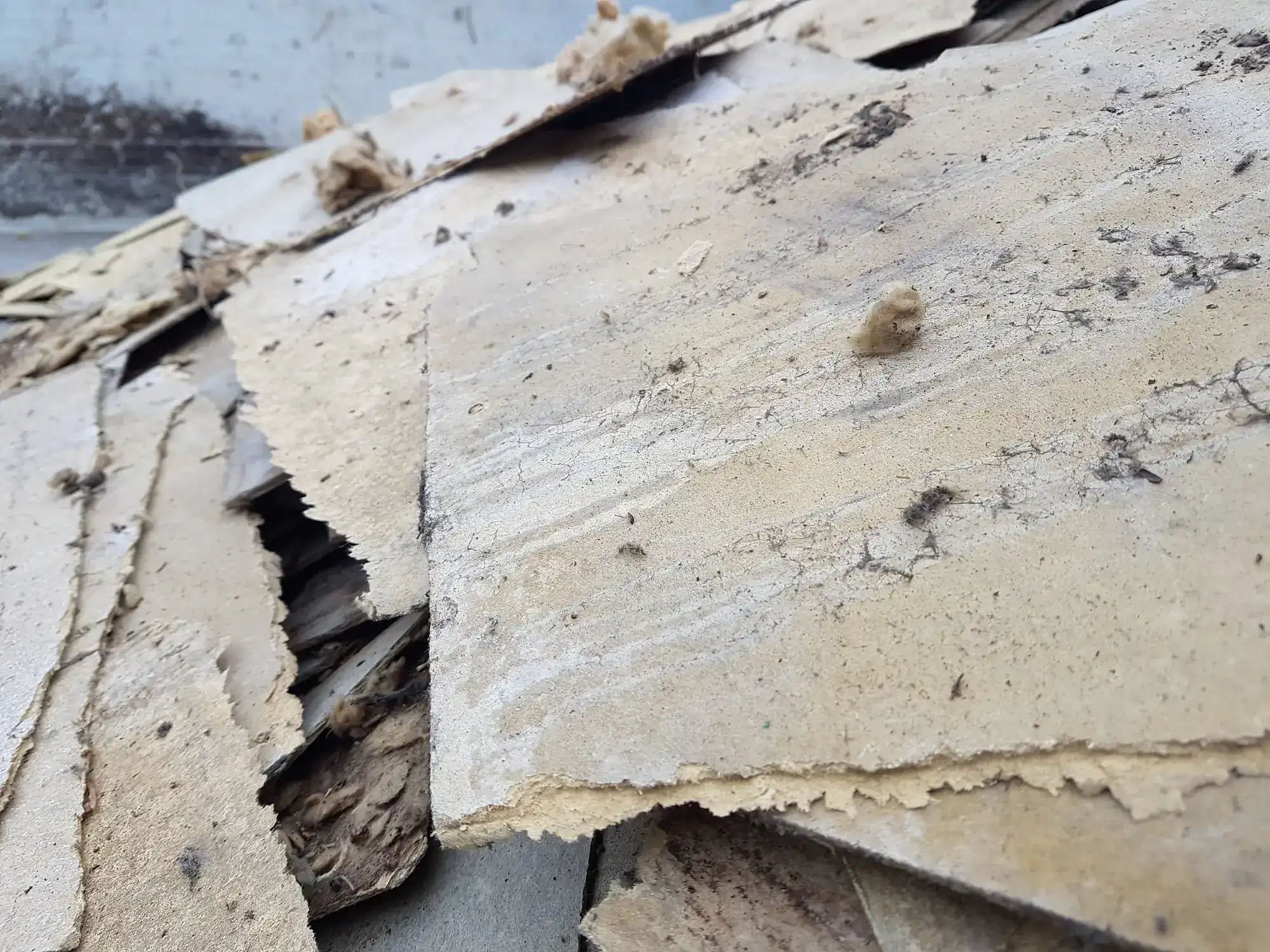
You stop guessing. That’s the first thing. You stop wondering whether the floor tiles in your basement are safe, whether the pipe wrap in your utility room is a problem, whether the popcorn ceiling in the back bedroom has been quietly shedding fibers every time someone slams a door. Once the material is tested, identified, and properly removed by a licensed asbestos removal contractor, you have documentation that says exactly what was there and exactly what was done about it.
For Audubon homeowners specifically, that documentation carries real financial weight. With median home values approaching $490,000 and an active real estate market, a clean asbestos clearance report isn’t just peace of mind — it’s a line item that protects your sale price and keeps a transaction from falling apart at the inspection table. Buyers in this market are educated and their inspectors are thorough. Coming to the table prepared is the difference between a smooth closing and a renegotiation.
There’s also the geography to consider. Audubon’s Peninsula — the area formed by the Schuylkill River and Perkiomen Creek — means some properties here carry real flood exposure. When water gets into a basement or crawl space in a mid-century home, it doesn’t just cause water damage. It can disturb asbestos-containing pipe insulation, floor tiles, and joint compound that had been sitting undisturbed for decades. Proper abatement before that happens — or immediately after — is the only way to handle it correctly.
We’ve been doing licensed asbestos abatement, lead removal, mold remediation, and environmental clean-outs across Montgomery County for two decades. That’s not a talking point — it’s the reason we’re still the most referred contractor in the region. When you’ve been working in the same county long enough, your reputation either builds or it collapses. Ours has built.
What makes us different in a market full of single-service contractors is the one-stop model. Most asbestos removal firms in the Montgomery County area do one thing. We handle the full scope — testing, abatement, demolition, waterproofing, duct cleaning, and environmental clean-outs — under one roof. For a homeowner in Audubon Estates who discovers something suspicious during a kitchen gut, that means one call instead of four.
We’re fully licensed by the Pennsylvania Department of Labor and Industry, EPA and HUD compliant, fully bonded and insured, and have a Certified Lead Inspector and Risk Assessor on staff. Free estimates, cash discounts, and 24/7 availability are standard — not extras.
It starts with a call and a free estimate. One of our technicians comes to your Audubon home, walks the property, and identifies any materials that may contain asbestos — floor tiles, pipe insulation, attic insulation, joint compound, ceiling texture, roofing materials. If testing is needed, we collect samples and send them to an accredited lab. You get real answers, not guesses.
Once the scope is confirmed, we handle the Pennsylvania DEP notification process. For projects exceeding 160 square feet, 260 linear feet, or 35 cubic feet of friable asbestos-containing material, PA DEP requires a notification at least 10 working days before work begins — and starting January 2026, that notification carries a $400 fee for Montgomery County projects. We manage all of that. You don’t have to figure out the paperwork.
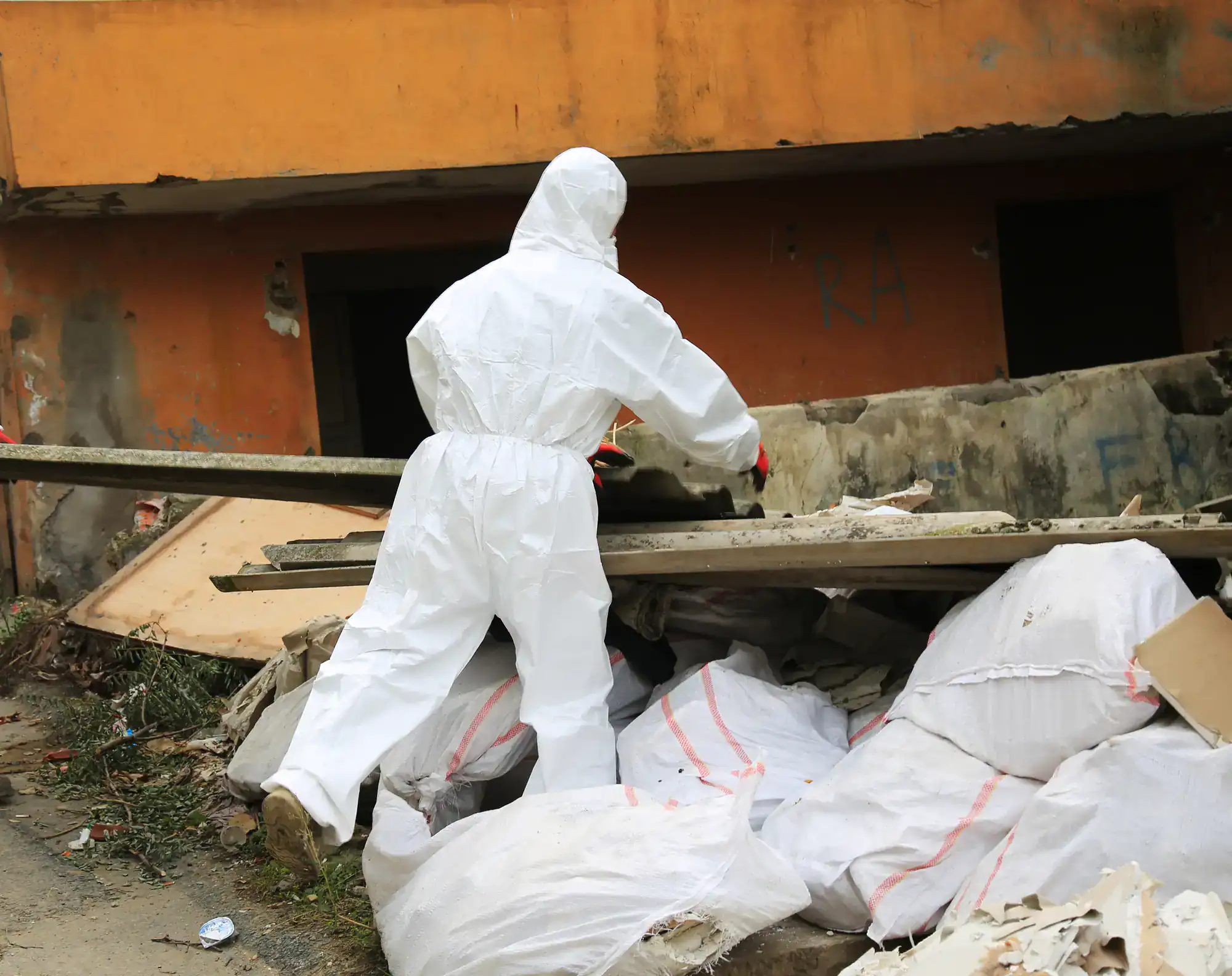
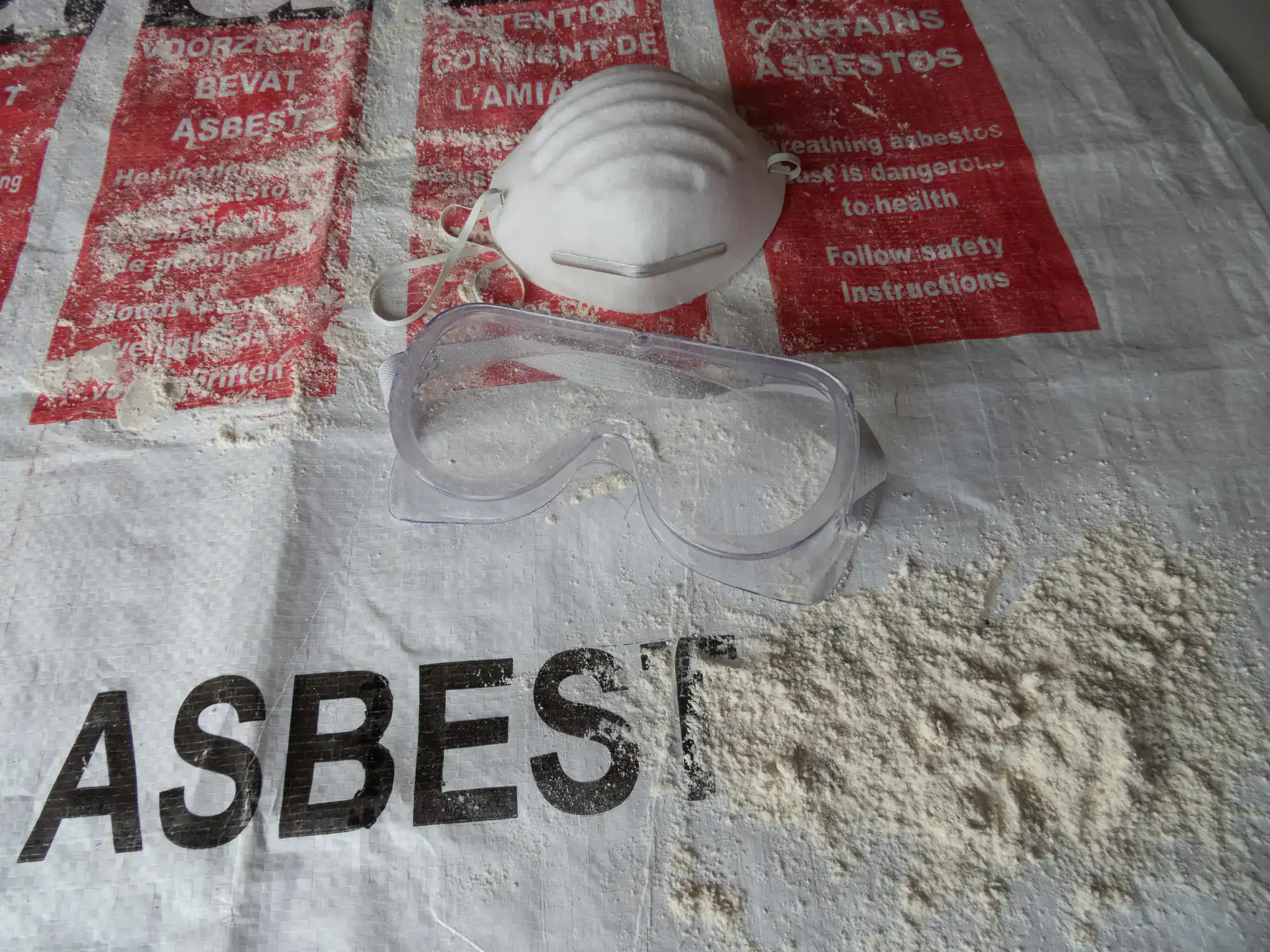
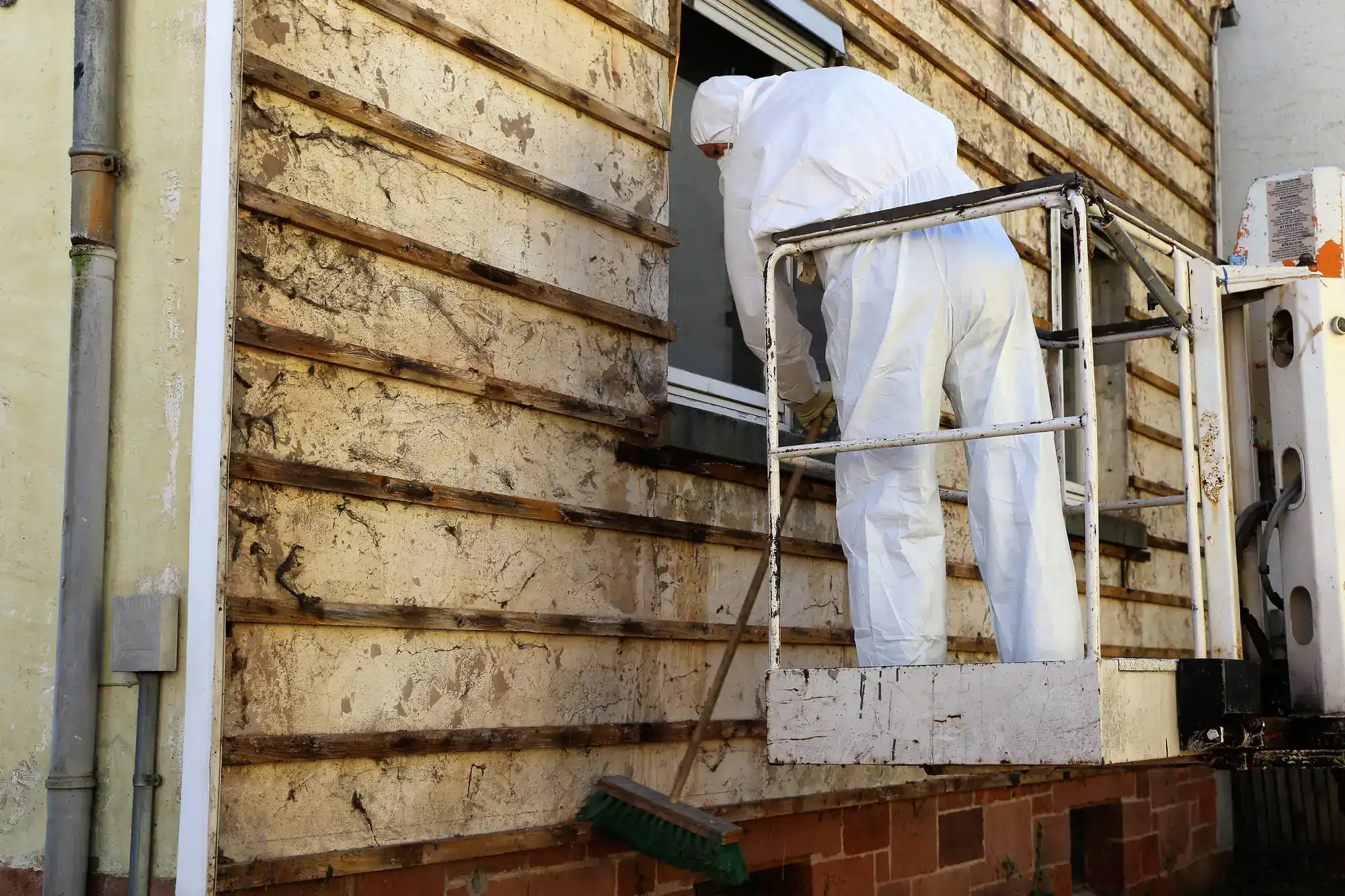
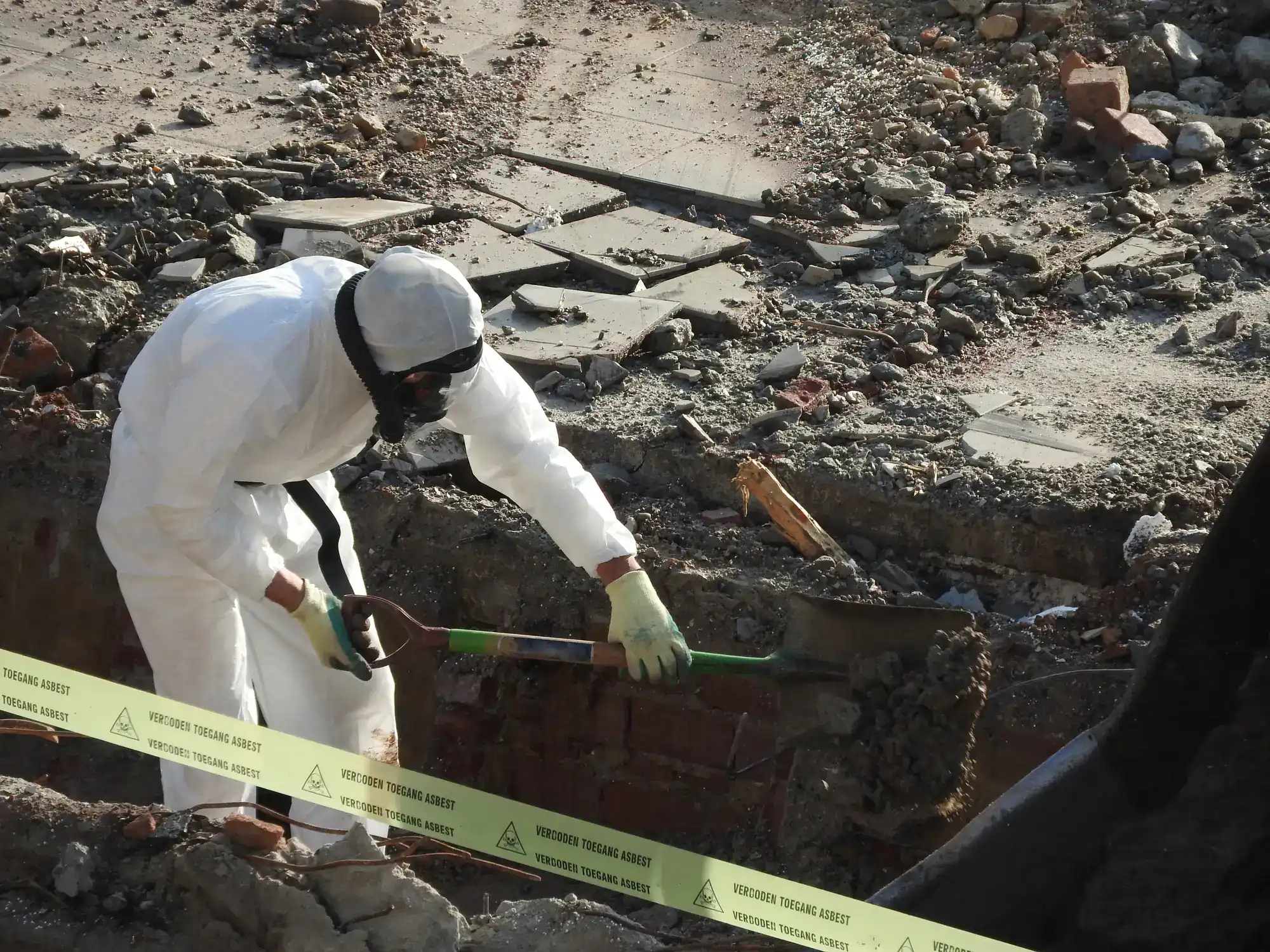
On job day, the work area is sealed with full containment and negative air pressure systems. HEPA filtration runs throughout the entire job, which means asbestos fibers don’t migrate to other parts of your home. We remove materials, package them properly, and dispose of them at a licensed facility — because asbestos is not accepted at Montgomery County’s Household Hazardous Waste events, and it cannot go in a dumpster. When the job is done, you receive clearance documentation. If your project also involves demolition, waterproofing, or a full gut, we handle the next phase without you having to bring in a second contractor.
Ready to get started?
The housing stock in Audubon tells a specific story. Audubon Estates — one of the community’s most established subdivisions, developed in the 1960s — is exactly the kind of neighborhood where asbestos-containing materials show up in multiple places in the same home. Floor tiles. Pipe wrap. Attic insulation. Acoustic ceiling texture. Joint compound behind the drywall. These aren’t rare findings in a 1960s colonial — they’re common ones. We’ve seen every version of this in homes across Lower Providence Township and the surrounding area, and our approach is always the same: assess everything, test what needs testing, and remove what needs to go.
Every abatement job we perform in Audubon includes full containment setup, negative air pressure systems, HEPA filtration throughout, licensed removal and disposal, and complete clearance documentation. If your project is connected to a real estate transaction, we format that documentation to satisfy buyer and lender requirements. If it’s connected to a renovation, it clears the path for your contractor to proceed without liability exposure.
We also handle lead removal, mold remediation, demolition, waterproofing, and environmental clean-outs — so if your Audubon home needs more than just asbestos abatement, you’re not starting the contractor search over from scratch. One company, full scope, no gaps.
Yes — and it’s not a small percentage. Homes built between the 1930s and late 1970s were routinely constructed with asbestos-containing materials because asbestos was cheap, effective at fireproofing, and widely available. Audubon’s housing stock is heavily concentrated in that window. The Audubon Estates subdivision, for example, is a documented 1960s development — and 1960s homes are textbook candidates for asbestos in floor tiles, pipe insulation, attic insulation, joint compound, acoustic ceiling texture, and roofing shingles.
The tricky part is that you can’t identify asbestos by looking at it. A floor tile that looks perfectly normal could contain up to 70% chrysotile asbestos. The only way to know for certain is lab testing by a licensed inspector. If your Audubon home was built before 1980 and you’re planning any renovation, demolition, or mechanical system replacement, getting an asbestos inspection before work begins isn’t overcautious — it’s the legally required approach for permitted projects in Pennsylvania.
It depends on the material and its condition. Asbestos that is in good condition and undisturbed — encapsulated pipe insulation in a utility room, for example — may not require immediate removal. A licensed asbestos inspector can assess whether the material is friable (meaning it can be crumbled or disturbed easily) and advise on whether abatement is necessary now or can be monitored.
In a real estate transaction, however, the practical reality is that most buyers in Audubon’s market — where homes are selling near $490,000 — will want the issue resolved before closing, or they’ll want a price adjustment that accounts for it. Sellers who address asbestos proactively, before listing, are in a much stronger negotiating position. We can move quickly when there’s a transaction timeline involved, and the clearance documentation we provide after abatement is formatted to satisfy buyer, lender, and inspector requirements.
Pennsylvania regulates asbestos abatement at the state level, and the requirements apply fully in Lower Providence Township. For projects that exceed 160 square feet, 260 linear feet, or 35 cubic feet of friable asbestos-containing material, a notification must be submitted to PA DEP at least 10 working days before work begins. Starting January 2026, that notification carries a $400 fee for projects in Montgomery County.
Beyond the DEP notification, any asbestos abatement work in Pennsylvania must be performed by a contractor licensed by the PA Department of Labor and Industry. This is not optional — it is a legal requirement. Unlicensed removal is not only dangerous, it creates liability for the homeowner and can complicate future real estate transactions. We handle the DEP notification process as part of every qualifying job, so you’re not navigating state paperwork on your own.
Residential asbestos removal costs vary depending on the type of material, the quantity, and the accessibility of the work area. For a straightforward job — removing asbestos floor tiles in a single room or addressing a section of pipe insulation — costs typically fall in the $1,200 to $3,500 range. Larger projects involving multiple materials or whole-house abatement can run $10,000 to $30,000 or more depending on scope.
For Audubon homeowners, the more useful frame is return on investment. A $2,500 abatement job on a home valued near $490,000 is not a large number in context — especially when it protects the sale price, satisfies buyer requirements, and eliminates ongoing health liability. We offer free estimates on every job, so you get a real number specific to your property before committing to anything. Cash discounts are also available, which is genuinely uncommon among asbestos removal contractors in the Montgomery County area.
In most cases, yes — at least for the duration of the active abatement work, and sometimes for a period after. The reason is containment. Even with full negative air pressure systems and HEPA filtration running throughout the job, the safest approach is to keep occupants — especially children — out of the home while asbestos-containing materials are being disturbed and removed.
The length of displacement depends on the scope of the job. A single-room abatement may require only a day away. A larger project involving multiple areas of the home will take longer. We’ll give you a clear timeline during the estimate so you can plan accordingly. For families in Audubon with children in the Methacton School District, coordinating around school schedules is often straightforward — and knowing exactly how long you’ll be out of the house makes the logistics manageable. After abatement is complete and clearance testing confirms the area is safe, re-occupancy is cleared.
Cash payments reduce processing costs and administrative overhead on both sides of the transaction. When we don’t absorb credit card processing fees or deal with extended billing cycles, there’s real savings to pass along — and that’s exactly what the cash discount reflects. It’s a straightforward exchange, not a sales tactic.
For Audubon homeowners managing a renovation budget that just got more complicated — or dealing with an unexpected asbestos discovery mid-project — every dollar of savings matters. The cash discount is one of several ways we keep the cost of doing this right more accessible. Combined with free estimates and transparent pricing, it reflects how we operate: direct, honest, and without the kind of hidden-fee structure that makes homeowners feel like they’re being worked over. No other major asbestos removal company in the Montgomery County market consistently offers this.
Other Services we provide in Audubon