Hear from Our Customers
Water in your basement isn’t just an inconvenience — it’s a slow drain on your home’s value, your air quality, and your peace of mind. Once a properly installed french drain system is in place, the hydrostatic pressure that’s been pushing moisture through your foundation walls finally has somewhere else to go. That’s the difference between a basement you avoid and one you can actually use.
For Plymouth Township homeowners, that pressure is real and it’s seasonal. The Schuylkill River runs along most of the township’s southwestern boundary, and when the watershed fills up in spring or after a heavy storm, groundwater tables rise in the lower sections of Plymouth. Add in the clay-heavy soil that holds moisture long after the rain stops, and you’ve got conditions that work against your foundation year-round.
The homes most affected are the ones built between the 1940s and 1970s — a large portion of Plymouth Township’s housing stock — where there was no drainage membrane, no perimeter system, and no real plan for what happens when the water table rises. A french drain doesn’t just solve today’s problem. A well-built one lasts 30 to 40 years.
We’ve been working in Montgomery County for close to 20 years, with deep roots in Plymouth Township specifically. That’s not a tagline — it’s a track record built on showing up, doing the work right, and handling the things that other contractors aren’t equipped to deal with.
What sets us apart in Plymouth Township is the environmental side. A lot of homes here predate 1978, which means the soil around your foundation and the walls themselves may contain lead paint or asbestos materials. When a standard drainage contractor digs around a foundation like that, they’re not thinking about what they’re disturbing. We’re a certified lead inspector and risk assessor — we test before we dig, and we handle what we find safely and in compliance with EPA and HUD standards.
From Hickorytown to Plymouth Valley to the neighborhoods near Ridge Pike, we’ve worked on homes across Plymouth Township. We know the soil, the housing stock, the permit requirements, and what a proper french drain installation looks like in this specific environment.
It starts with a free estimate and a real conversation about what’s happening with your drainage. We walk the property, look at where water is entering, check grading, and assess whether an interior french drain, an exterior perimeter system, or a combination of both makes the most sense for your specific situation. If there’s any reason to test for lead or asbestos before excavation begins — and in Plymouth Township’s older housing stock, there often is — that happens before anyone picks up a shovel.
Once the plan is set, we handle the permitting. Plymouth Township requires a grading permit for drainage excavation, and the application has to include engineering-level plans showing drainage structures, pipe locations, and existing grades. That’s not optional and it’s not something you want to skip. We manage that process so you’re not navigating township code on your own.
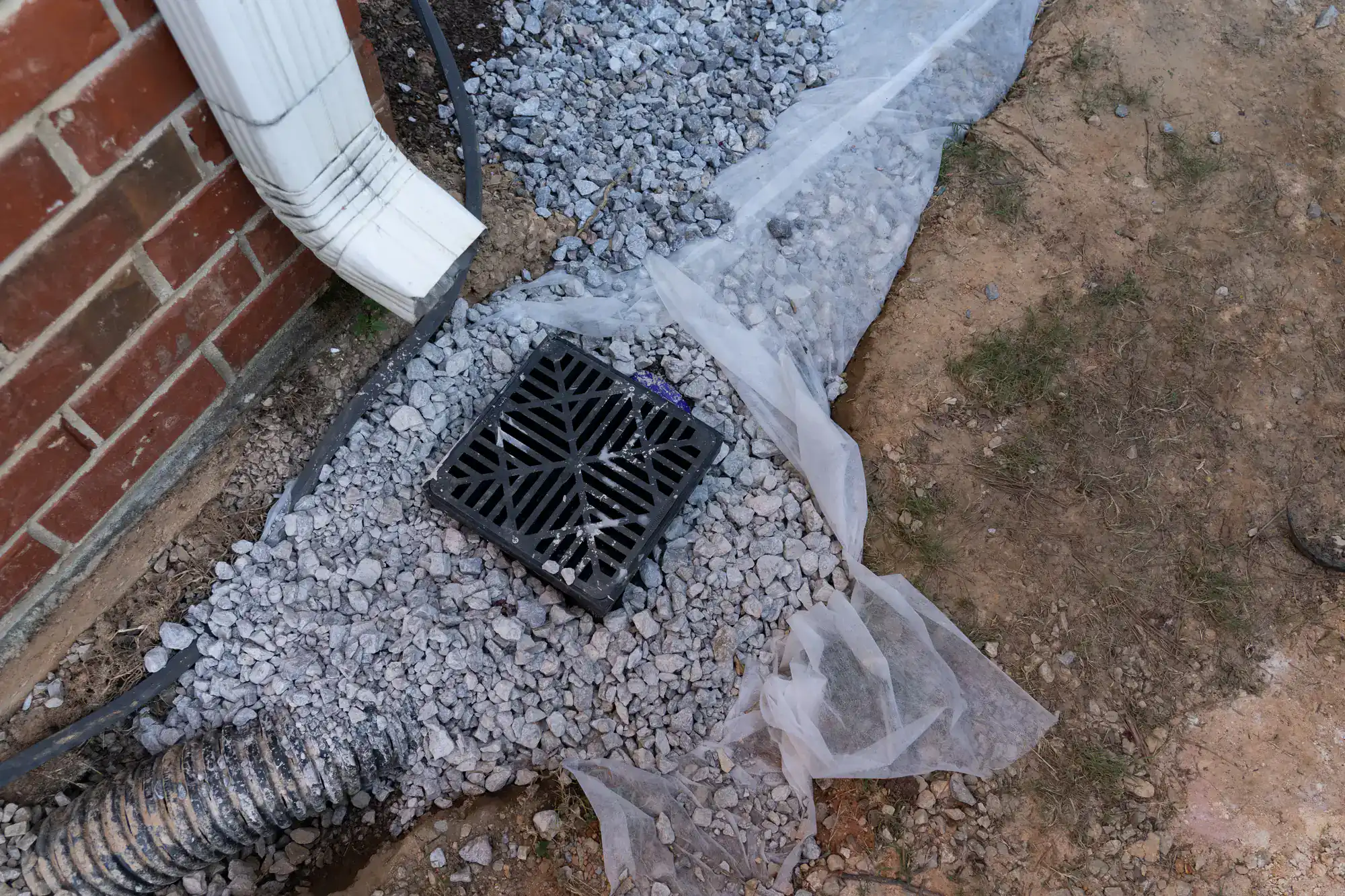
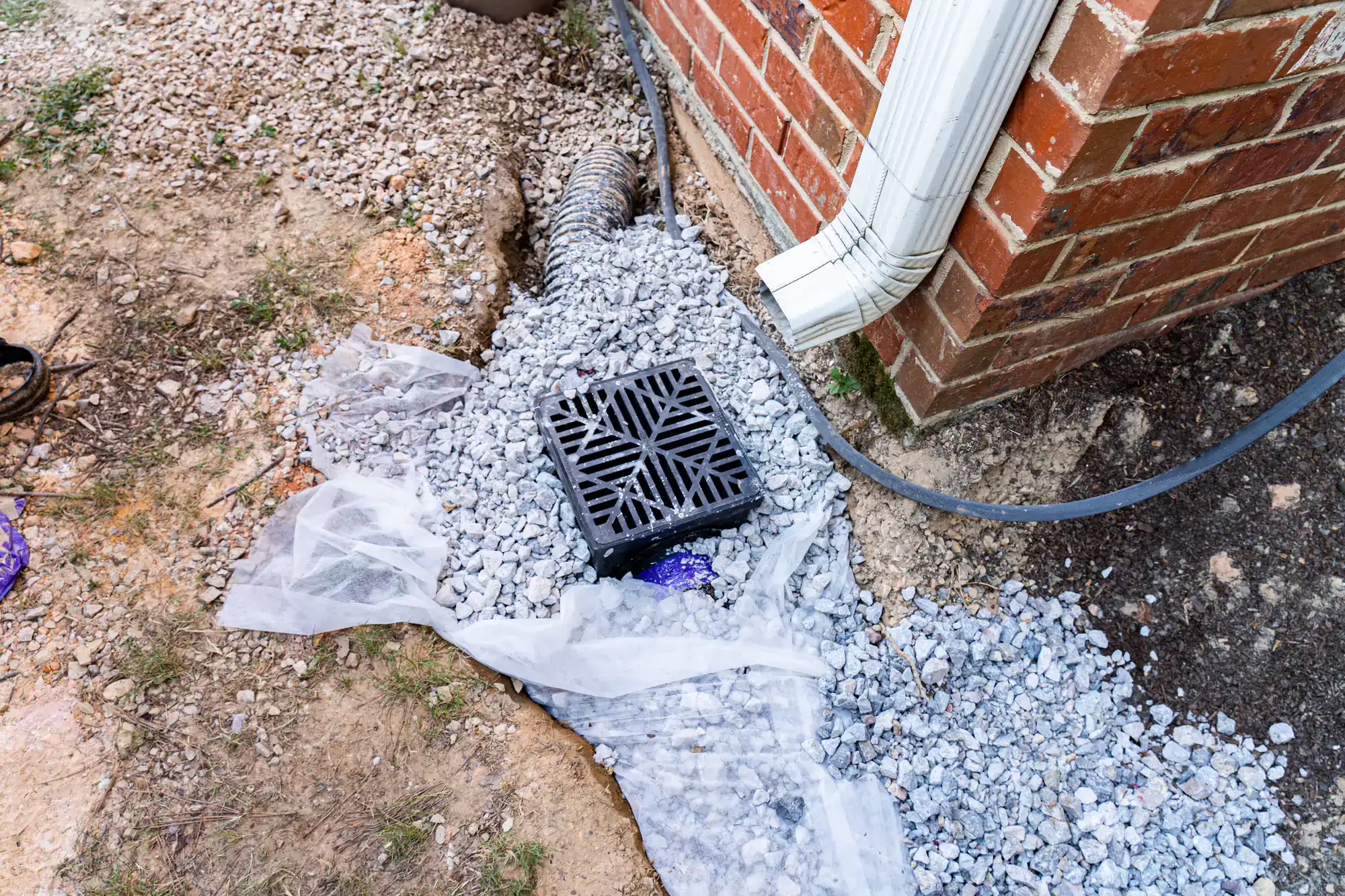
The installation itself uses rigid perforated PVC pipe, geotextile filter fabric to keep sediment out of the system, and clean crushed stone — not corrugated flex pipe and not shortcuts. The system is sloped correctly, outlets to a code-compliant discharge point, and is built to handle what Plymouth Township’s weather actually throws at it: nor’easters, tropical remnants, spring snowmelt from the Schuylkill watershed, and the freeze-thaw cycles that run from November through March.
Ready to get started?
We don’t just install a french drain and leave. Because we’re an environmental hazard abatement company first, every job comes with the capability to handle what’s actually in and around your foundation — not just the water. That means if mold has developed behind drywall from years of moisture intrusion, we remediate it. If the excavation uncovers lead-contaminated soil or asbestos pipe insulation, we handle it safely with HEPA filtration systems and proper containment. Most drainage contractors in this market — including the ones you’ll find ranking for Plymouth Meeting searches — simply aren’t equipped to do that.
For Plymouth Township homeowners, that integrated approach matters. The township’s stormwater management program and its home rule grading permit requirements mean the paperwork side of a drainage project is more involved here than in many neighboring townships. We handle all of it — the permit application, the engineering coordination, the inspection process — so the installation is fully code-compliant and documented.
Whether you’re dealing with a wet basement in Plymouth Meadows, standing water in your yard near Germantown Pike, or hydrostatic pressure in a home that’s been sitting near the Schuylkill floodplain for 50 years, we build the system to match the actual conditions. Free estimates, 24/7 availability, and cash discounts are part of how we make that accessible.

Yes — and this is one area where Plymouth Township is more specific than many surrounding municipalities. Because Plymouth operates under a home rule charter rather than the standard Pennsylvania Township Code, it maintains its own grading permit requirements. Any excavation work for drainage purposes requires a grading permit, and the application must include engineering-level documentation: a contour map showing existing and proposed grades, a plot plan with drainage structure and pipe locations, soil classification details, and specifications for all drainage components.
This isn’t a formality. If a contractor tells you no permit is needed for french drain work in Plymouth Township, that’s either a mistake or a red flag. Unpermitted drainage work can create problems when you sell the home and leaves you without any code-compliance documentation if something goes wrong later. We handle the permit process as part of the job — pulling the required permits, coordinating with any required engineering review, and making sure the installation passes inspection.
French drain cost varies based on the scope of the job — whether it’s an interior system, an exterior perimeter system, or both — as well as the length of the drain run, site conditions, and what’s discovered during the assessment. Nationally, the range runs from roughly $1,650 on the low end to $12,250 for more complex installations, with a typical project landing around $5,000.
In Plymouth Township, a few factors can affect where your project falls in that range. Homes with deeper footings, significant clay soil conditions near the Schuylkill watershed, or pre-1978 construction that requires lead or asbestos assessment before excavation may involve additional steps that other drainage jobs don’t. That said, the cost of a properly installed french drain system is a fraction of the average water damage insurance claim — which runs around $15,400 — and far less than the $25,000 in damage FEMA estimates a single inch of standing water can cause. We provide free estimates so you know exactly what you’re looking at before committing to anything.
An exterior french drain is installed around the outside perimeter of your foundation, typically at or below footing depth. It intercepts groundwater before it ever reaches your foundation walls and redirects it away from the structure. This is the more comprehensive solution, but it requires excavation around the foundation — which in Plymouth Township’s older housing stock means there’s a real chance of encountering lead paint on foundation walls or lead-contaminated soil along the perimeter.
An interior french drain is installed inside the basement, beneath the floor slab. It doesn’t stop water from entering the foundation, but it captures it at the point of entry and channels it to a sump pump before it can spread across the floor. Interior systems are less disruptive to install and can be done year-round, including during the winter months when Plymouth Township’s frozen ground makes exterior excavation impractical. Many homes in Plymouth Township end up with a combination of both — an exterior system handling the bulk of the groundwater load and an interior system as a secondary line of defense. The right answer depends on your specific conditions, which is exactly what the free estimate is designed to figure out.
The most obvious signs are visible water intrusion — wet walls, water on the floor after rain, white mineral deposits (efflorescence) on basement walls, or a musty smell that won’t go away no matter how many times you clean. But some of the more telling signs are less dramatic: paint peeling off basement walls, rust stains near floor joints, wood rot on the bottom of framing near the slab, or soil that stays soft and saturated near your foundation long after it rains.
In Plymouth Township, the risk is elevated for homes in lower-elevation areas near the Schuylkill River, in neighborhoods where clay soil slows drainage significantly, or in postwar homes along Ridge Pike and Germantown Pike that were built without modern waterproofing systems. If your home was built before 1978 and you’ve never had the drainage system assessed, the honest answer is that you probably don’t know what’s happening at the foundation level. A free estimate from us gives you a clear picture — what’s there, what’s causing it, and what it would take to fix it properly.
Absolutely. French drains are just as effective for yard drainage as they are for foundation protection. If you have low spots in your yard that hold standing water after rain, areas where runoff from a neighbor’s property or a higher-grade lot collects on your side, or a driveway that floods every time a storm rolls through, a french drain system can redirect that surface water before it saturates the soil around your foundation.
This is a particularly common issue in Plymouth Township, where decades of commercial and residential development along Germantown Pike and Chemical Road have increased impervious surface coverage across the watershed. When more surfaces are paved, more rainfall becomes runoff instead of soaking into the ground — and that runoff has to go somewhere. Montgomery County’s own stormwater documentation notes that in developed environments, up to 50% of rainfall can become surface runoff. For homeowners in established Plymouth Township neighborhoods, that means the drainage burden on your yard and foundation is higher than it would have been 40 years ago. A yard drainage system designed around your specific grading and runoff pattern is a direct response to that reality.
Yes — and this is one of the clearest reasons we’re a different kind of contractor for Plymouth Township homeowners. When you hire a standard drainage company, their job ends at the drain. If they uncover mold behind a wall, disturb lead paint on a foundation, or hit asbestos pipe insulation during excavation, they’re not equipped to deal with it — and in most cases, they’re not legally permitted to. That means you’re stopping the job, finding a separate specialist, waiting for availability, and starting the billing process all over again.
We handle all of it in one engagement. As a certified lead inspector and risk assessor operating under EPA and HUD compliance standards, we test for hazards before excavation begins in any home where the risk exists — which in Plymouth Township’s pre-1978 housing stock is a meaningful portion of the jobs we take on. If something is found, we remediate it using HEPA filtration and proper containment protocols before continuing with the drainage installation. For homeowners in Plymouth Valley, Plymouth Meadows, or anywhere in Plymouth Township with an older home, that integrated capability isn’t a bonus feature — it’s the thing that keeps a drainage project from turning into a multi-month ordeal.
Other Services we provide in Plymouth