Hear from Our Customers
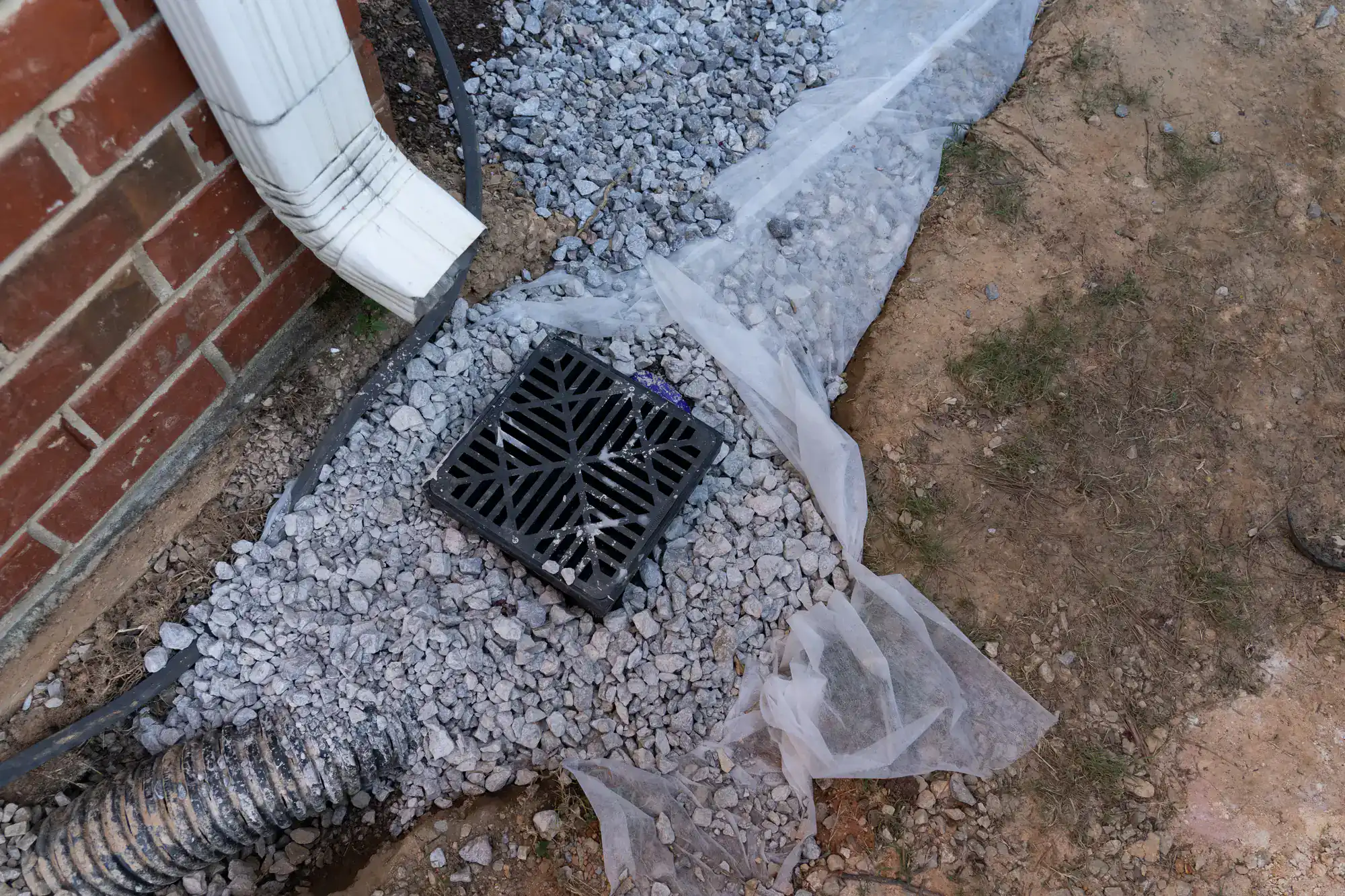
When a french drain is installed correctly, the difference isn’t subtle. The musty smell is gone. The damp corner you’ve been ignoring for two years stops being a problem. The basement you’ve been treating as a write-off becomes usable space again — whether that’s a home office, a gym, or just storage you can actually trust.
For homeowners in King of Prussia’s established neighborhoods — the split-levels in Henderson Park, the colonials near Gulph Mills, the ranch homes in Valley Forge Acres — this matters more than it might somewhere else. Most of these homes were built between the 1950s and the 1970s on Montgomery County’s clay-heavy soil. That clay absorbs water, holds it, and presses it against your foundation with what engineers call hydrostatic pressure. A properly installed french drain system intercepts that water before it ever reaches your walls.
There’s also the runoff factor. King of Prussia sits at the convergence of I-76, the Pennsylvania Turnpike, US 202, and US 422. All of that pavement — the highways, the mall, the business park corridors — generates stormwater that has to go somewhere. If your home sits downslope from any of it, your drainage system may be handling more than just your own precipitation. A french drain designed for your actual conditions, not a generic template, handles that load without flinching.
We’ve been working in Montgomery County for close to twenty years. That’s not a tagline — it means we’ve installed french drains in the same clay soils your King of Prussia home is sitting on, navigated Upper Merion Township’s permit requirements firsthand, and handled the specific drainage challenges that come with homes built during King of Prussia’s post-war development surge.
What separates us from every other drainage contractor serving this area is the environmental side. We hold an EPA Certified Lead Inspector and Risk Assessor credential — something no standard waterproofing contractor in this market carries. For a community where most of the residential housing stock predates 1978, that matters. Before any excavation starts near your foundation, we test for what’s there. Lead paint, asbestos, mold — we identify it, handle it under EPA and HUD-compliant protocols, and keep your home safe throughout the process.
We’re fully licensed, bonded, and insured. Free estimates. Cash discounts available. And someone actually answers the phone at 2 AM if a storm rolls through the Schuylkill valley and you’ve got water coming in.
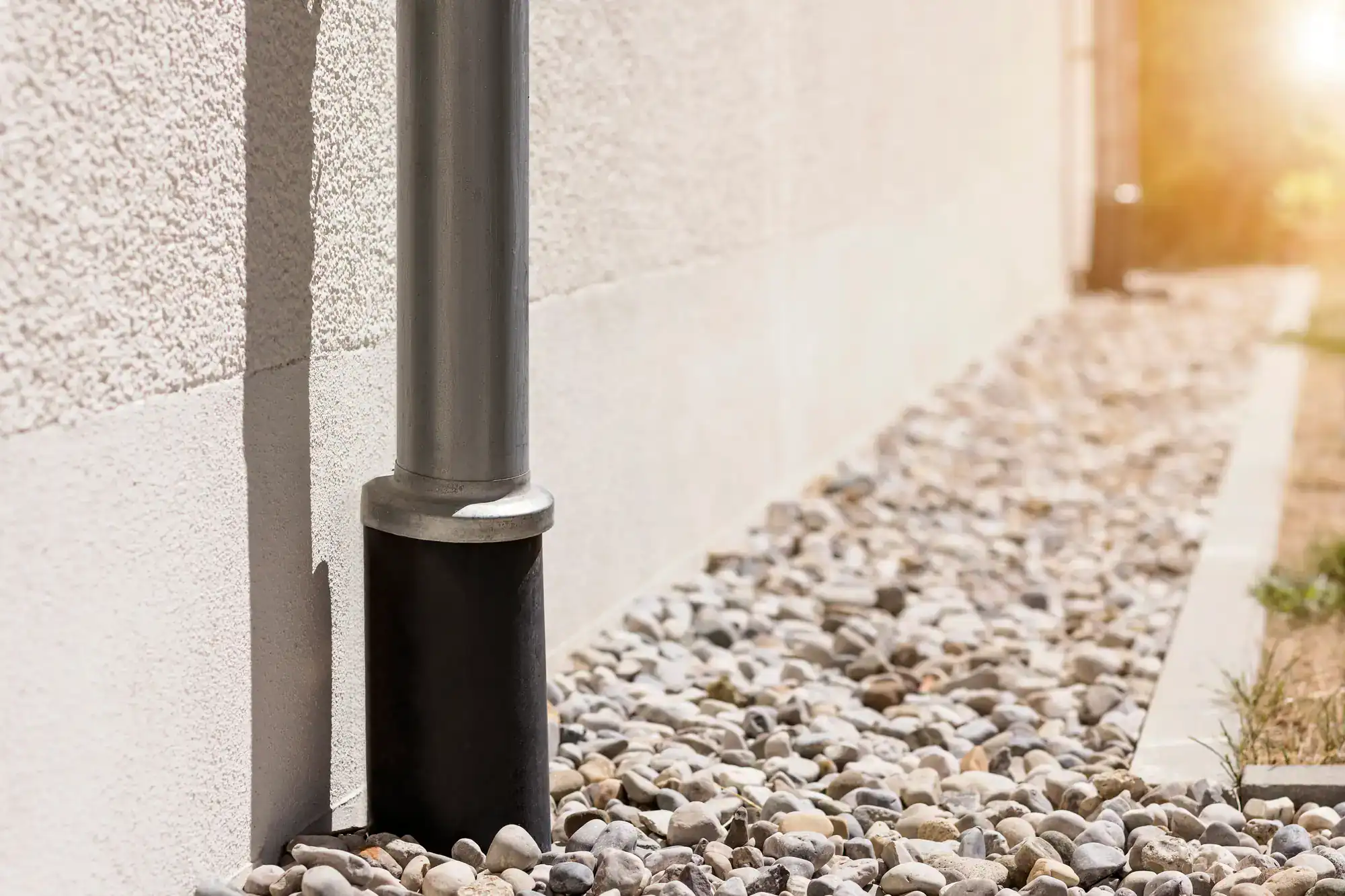
It starts with a free on-site estimate. We come out, look at your property, and give you a straight read on what’s happening — where the water is entering, why it’s happening, and what the right fix looks like. For most King of Prussia homes, that means evaluating the slope of your yard, the condition of your foundation, the soil composition around your footing, and whether any environmental testing needs to happen before excavation begins. If your home was built before 1978, that last step isn’t optional — it’s how we protect you and our crew.
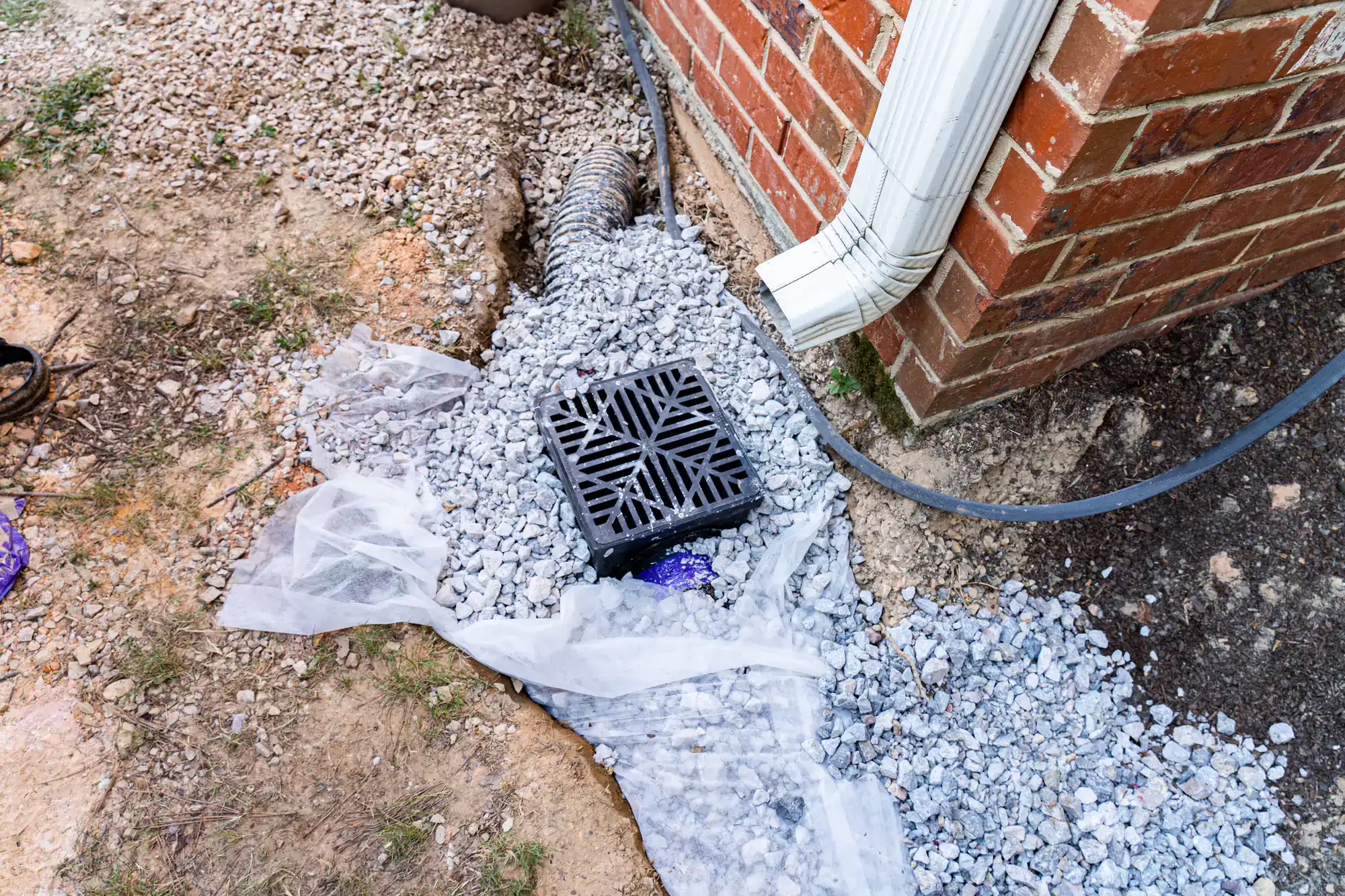
Once the scope is clear and any necessary permits are pulled — Upper Merion Township requires a Stormwater Class A Permit for most residential drainage work, along with Best Management Practices documentation — the installation begins. We use rigid perforated PVC pipe, not the corrugated flex pipe that clogs within a few years in Montgomery County’s clay. The trench is dug to the right depth, lined with geotextile filter fabric to keep clay out of the pipe, filled with clean crushed stone, and sloped precisely to drain by gravity to the discharge point. That slope calculation is not an afterthought — it’s what determines whether your drain works for thirty years or three.
After the work is done, we clean up the site and walk you through what was installed and why. You’ll know exactly what you have, how it works, and what to watch for going forward. No mystery, no mess left behind.
Ready to get started?
We install both exterior and interior french drain systems depending on where your water problem originates. Exterior drains intercept groundwater and surface runoff before it reaches the foundation — the right solution for homes in Valley Forge Acres and similar King of Prussia neighborhoods where stormwater from surrounding commercial development is part of the equation. Interior basement french drains manage water that’s already entered the structure, directing it to a sump system before it can cause damage. In many King of Prussia homes, both systems work together.
Every installation includes proper geotextile filter fabric, clean angular gravel, and rigid perforated PVC pipe sized and sloped for your specific site. HEPA filtration equipment is on-site for any job involving a pre-1978 home — because lead dust and asbestos fibers don’t stay in the work area unless they’re actively contained, and we don’t leave that to chance. If mold is discovered behind a finished basement wall during the process, we handle that too. You don’t need a separate contractor.
For homeowners near Gulph Mills or along the lower elevations near Valley Creek, we also evaluate groundwater table influence — a real factor in the western portions of King of Prussia that borders Valley Forge National Historical Park. The drain system you get is designed around your actual site conditions, not copied from the last job.

The most common reason is what local waterproofing contractors call the clay bowl effect. When your home was built — and most King of Prussia homes went up between the late 1950s and the mid-1970s — the soil excavated from your foundation was backfilled around the structure. That backfill is less compacted than the surrounding native clay, so it absorbs water faster and holds it longer. As it saturates, it exerts hydrostatic pressure against your foundation walls, and eventually water finds a way through — through cracks, through mortar joints, through porous concrete.
The problem is often made worse by King of Prussia’s geography. With the highway interchange, the mall, and the business park generating enormous volumes of stormwater runoff, homes that sit downslope from commercial corridors are managing more water than their original drainage systems were designed to handle. A properly installed french drain system — positioned at or below footing depth, with the right slope and the right materials — intercepts that water before it ever reaches your foundation wall.
Most residential french drain installations fall somewhere between $3,000 and $10,000, with the national average landing around $5,000. The range is wide because the scope varies significantly — a simple exterior perimeter drain on a flat lot is a different job than a full interior and exterior system on a split-level home in Henderson Park with a high water table and a pre-1978 foundation that needs environmental testing before excavation starts.
In King of Prussia specifically, a few factors tend to push projects toward the middle or upper end of that range: Montgomery County’s clay soil requires more careful installation to prevent pipe clogging over time, Upper Merion Township’s permit requirements add a step to the process, and older homes in the area frequently present environmental considerations that a certified contractor needs to address before digging. We provide free, itemized estimates so you know exactly what you’re paying for and why — no surprise additions after the work starts.
Yes, in most cases. Upper Merion Township requires a Stormwater Class A Permit for residential drainage work involving land disturbance under 5,000 square feet — which covers the majority of french drain installations. That permit requires a plot plan showing existing and new structures, impervious coverage, and documentation of Best Management Practices (BMPs). If the work involves any excavation near the right of way or driveway apron, a separate Road Opening Permit may also be required.
This isn’t paperwork for its own sake. Unpermitted drainage work can create real problems when you go to sell your home — a buyer’s inspector or their lender may flag it, and retroactive permitting after the fact is significantly more complicated than doing it right the first time. We handle the permitting process as part of the job. We know Upper Merion Township’s requirements, we submit the right documentation, and we make sure the work is done in a way that passes inspection.
It’s not a problem, but it is something that needs to be handled correctly. Homes built before 1978 — which includes most of King of Prussia’s established residential neighborhoods — commonly have lead-based paint on exterior surfaces, including foundation walls. The soil around pre-1978 foundations can also contain lead from decades of paint weathering and flaking. Asbestos in pipe insulation and building materials is another possibility in homes from this era.
When a standard waterproofing contractor excavates around a pre-1978 foundation without testing first, they’re potentially disturbing lead-contaminated soil and creating an exposure risk for your family and their crew. We hold an EPA Certified Lead Inspector and Risk Assessor credential — the only french drain contractor serving King of Prussia that does. We test before we dig, identify what’s present, and handle any hazardous materials under full EPA and HUD-compliant protocols. HEPA filtration equipment is used on-site to contain airborne particulates throughout the job. For a 1960s colonial in Lafayette Park or a split-level near Gulph Mills, that’s not a minor detail — it’s the standard every job should be held to.
An exterior french drain is installed around the outside perimeter of your foundation, typically at or below footing depth. It intercepts groundwater and surface runoff before it ever reaches your basement walls — the best outcome if you can get it, because it keeps water away from the structure entirely. An interior french drain is installed inside the basement, usually along the perimeter of the floor. It doesn’t stop water from entering the foundation, but it captures it immediately and channels it to a sump pump before it spreads or causes damage.
For many King of Prussia homes — particularly those in lower-lying areas near Valley Creek or in neighborhoods where decades of clay soil saturation have already created foundation stress — the answer is often both systems working together. The exterior drain handles the bulk of the groundwater load, and the interior system serves as a backup for what gets through. We evaluate your specific site, your foundation condition, and the water sources affecting your property before recommending one approach over the other. The goal is solving your actual problem, not defaulting to the easiest installation.
No catch. Cash payments reduce the administrative and processing costs on our end — no credit card fees, no delayed transfers, simpler bookkeeping — and we pass a portion of those savings back to the customer. It’s a straightforward exchange that works well for homeowners who prefer to pay directly and want to get something back for doing so.
For King of Prussia homeowners managing a larger drainage project — an exterior perimeter system, environmental testing, and interior work combined — the cash discount can represent a meaningful reduction on a job that’s already a significant investment. We’re transparent about the discount upfront, so you know what it amounts to before you commit to anything. The free estimate gives you the full picture of what the project costs with and without it, and you decide from there. No pressure either way.
Other Services we provide in King Of Prussia