Hear from Our Customers
Whitemarsh is one of Montgomery County’s most established townships, and that history shows up the moment you open a wall. The Lafayette Hill colonials, the mid-century ranches tucked into Barren Hill, the older stone properties along Ridge Pike — a huge portion of this township’s housing stock was built before 1978. That means asbestos-containing materials, lead paint, and occasionally mold are not rare surprises. They’re the statistical norm.
When a demolition-only contractor hits those materials, the project stops. They pack up, you call around for a certified abatement company, you wait on their schedule, and your timeline falls apart. That’s not how it works with us. Testing, abatement, and demolition all happen under one roof — one crew, one call, one project that keeps moving regardless of what’s inside those walls.
The result is a gut renovation that finishes on time, stays compliant with Pennsylvania’s licensing requirements for lead and asbestos removal, and doesn’t leave you coordinating between three different contractors. For a homeowner in Whitemarsh, where homes move in an average of eight days and renovation timelines are often tied to real estate transactions, that kind of control over your project isn’t a luxury — it’s the whole point.
We’ve been working in the Philadelphia suburban market for over twenty years, and that means we’ve gutted kitchens in Lafayette Hill colonials, remediated basements in Spring Mill properties near the Schuylkill, and handled the full range of what Montgomery County’s older housing stock throws at a crew. We know what materials show up in a 1958 ranch and where to look for them.
We’re fully licensed, bonded, and insured — and we carry the Certified Lead Inspector and Risk Assessor designation that Pennsylvania law actually requires for this work. That’s not a bonus credential. It’s the legal standard, and most operators in this market don’t hold it. We do.
The one-stop model is what sets us apart. Testing, asbestos abatement, lead removal, mold remediation, demolition, and waterproofing — all in-house, all under one contractor relationship. No subcontracting the hard parts out. No gaps in accountability.
It starts with a free estimate. We come out, walk the scope with you, and give you a clear picture of what the job involves — including whether testing for regulated materials makes sense given the age and condition of your home. For most Whitemarsh properties built before 1980, that conversation is worth having upfront rather than mid-demo.
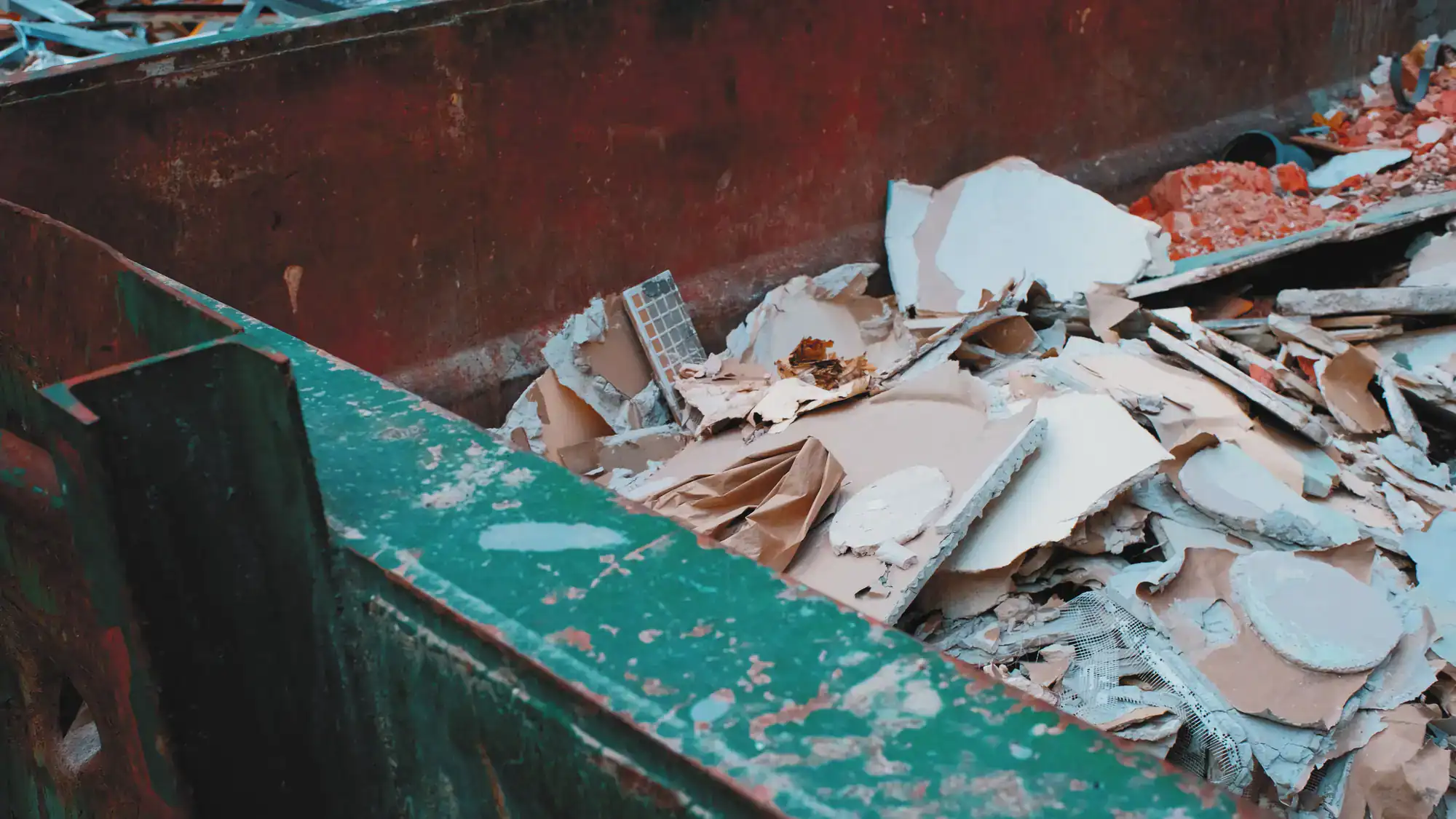
If testing turns up asbestos, lead, or mold, we handle the certified removal in-house before demolition continues. There’s no project pause while you hunt for a separate abatement contractor. Containment goes up, HEPA filtration runs throughout, and the affected materials come out according to Pennsylvania’s regulatory requirements. The rest of your home stays clean and unaffected.
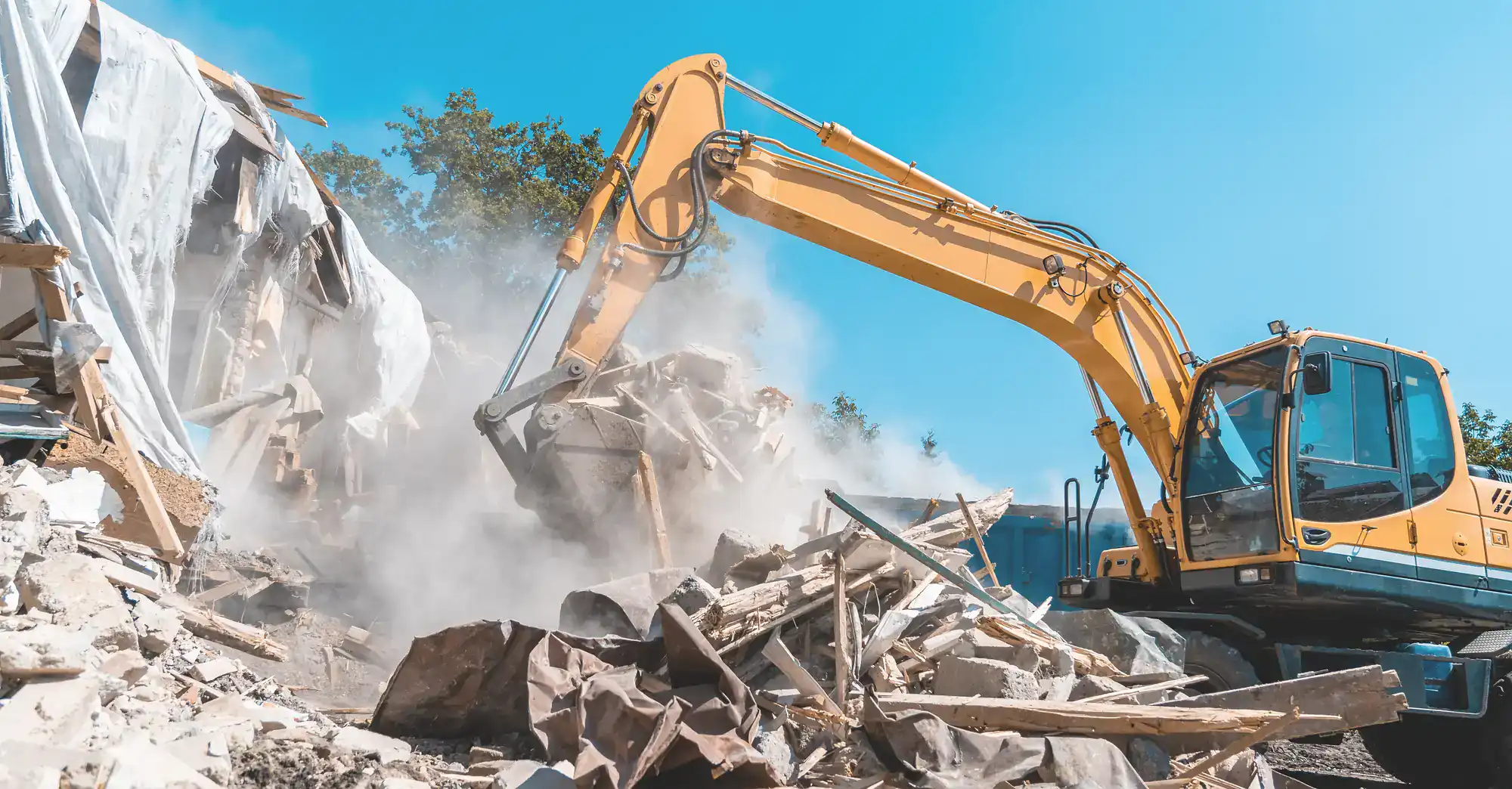
Once abatement is complete, the demolition moves forward. Whitemarsh Township requires a building permit for demolition work, and only contractors registered with the township can pull one — we operate with the full licensing to do exactly that. If your property falls within or near the township’s Historic District, that adds an Architectural Review Board consideration that we’re familiar with navigating. From the first call to final debris removal, the process is managed by one team, on-site supervised throughout, with no handoffs and no gaps.

Ready to get started?
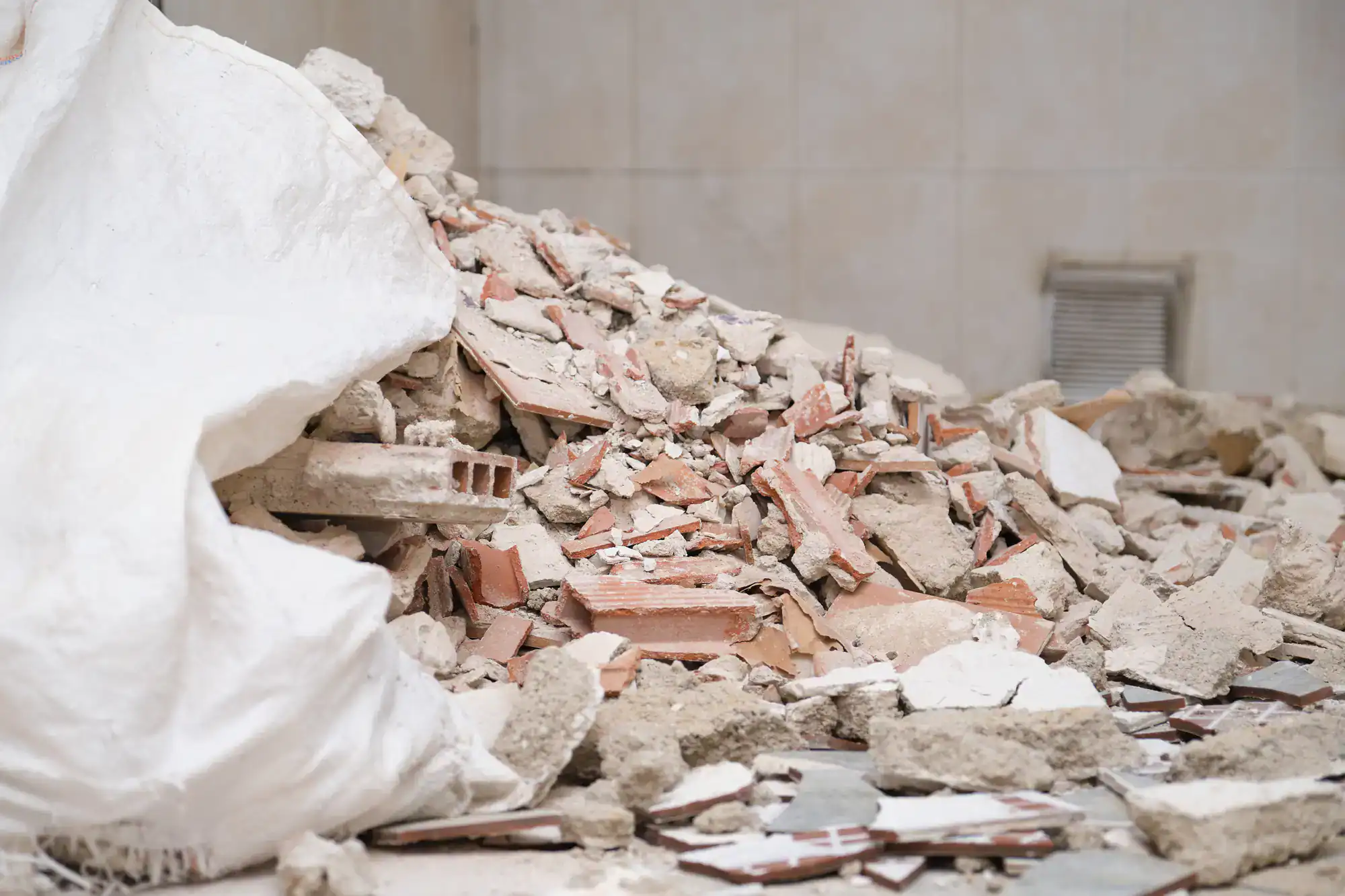
What we bring to a Whitemarsh demolition isn’t just a crew with tools. It’s the full scope — testing, certified hazmat removal if needed, actual demolition and gutting, debris handling, and waterproofing where the job calls for it. That matters in a township where the housing stock ranges from 300-year-old stone farmhouses in Miquon to postwar ranches in Barren Hill to 1970s split-levels in Lafayette Hill. Each of those eras comes with its own set of materials, and we know how to work through all of them.
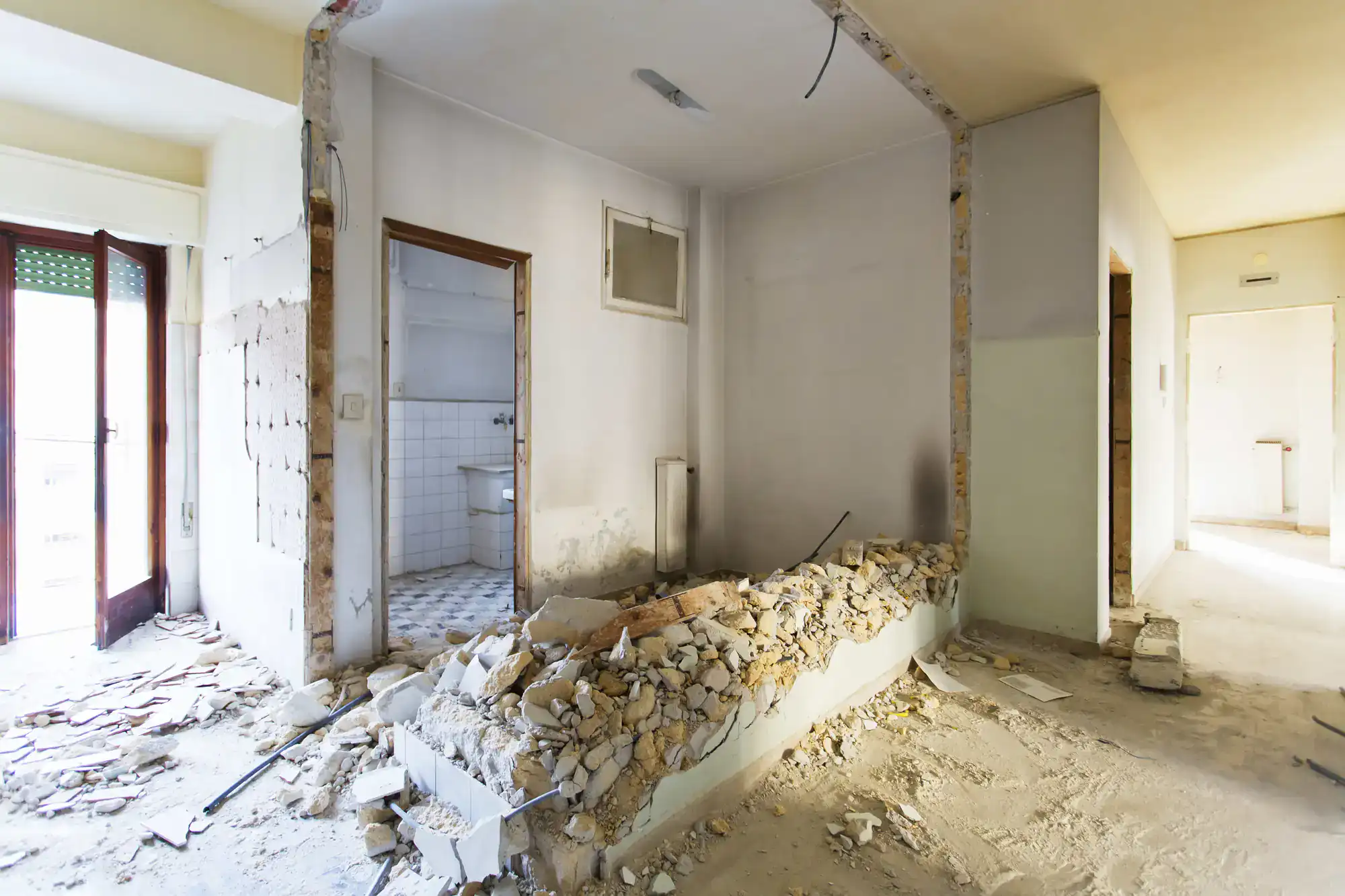
For interior demolition — kitchen gut-outs, bathroom removals, full-floor demo, structural wall work — we handle containment and HEPA filtration throughout so the rest of your home isn’t affected. For properties near the Wissahickon Creek or in lower-lying areas like Spring Mill, moisture-related issues often go hand in hand with demo work, and waterproofing is available as part of the same project without bringing in another contractor.
We also offer 24/7 availability and emergency response — which matters when a burst pipe or post-flood discovery in a Whitemarsh home can’t wait until Monday morning. Free estimates, cash discounts, and a beat-any-estimate guarantee mean you get a clear number before committing and a fair price when you do.
Yes — Whitemarsh Township requires a building permit for demolition work, and that applies to interior demolition as well as structural projects. It’s not just a formality. Unpermitted demo work creates real problems at resale and can expose you to liability if something goes wrong during or after the project.
There’s an additional layer worth knowing: Whitemarsh Township specifically requires that only contractors registered with the township can pull building permits to work there. That means an unlicensed handyman or unregistered operator can’t legally permit a demo job in Whitemarsh — any work they do is unpermitted by default. We carry the full licensing and registration to pull permits and work legally within the township. If your property is in or near the Historic District, there may also be a Historical Architectural Review Board requirement for any exterior alterations visible from a public way. That’s a step that catches some homeowners off guard, and it’s worth confirming before work starts.
If asbestos-containing materials turn up mid-demo — and in Whitemarsh’s older housing stock, that’s a real possibility — the right response depends entirely on who you hired. With a demolition-only contractor, the answer is usually a full work stoppage while you scramble to find a separate certified abatement company. That means delays, duplicate mobilization costs, and a project timeline that’s now someone else’s problem.
With us, that discovery triggers a protocol, not a phone call to another company. We are the certified abatement contractor. Containment goes up, HEPA filtration runs, and the material is removed according to Pennsylvania’s asbestos licensing requirements — which are among the stricter state-level standards in the region. Pennsylvania requires a state-issued license for asbestos removal contractors, and we hold it. Once the abatement is complete, demolition continues. The project doesn’t stop — it just moves through the right steps in the right order, handled by the same crew that started the job.
The short answer: if your home was built before 1978, assume lead paint is present until testing says otherwise. That’s not an overstatement — the federal cutoff year for lead paint in residential construction is 1978, and the majority of Whitemarsh’s housing stock predates that threshold. Lafayette Hill colonials, Barren Hill ranches, the older stone properties along Ridge Pike — these homes were built during the era when lead-based paint was standard.
We hold the Certified Lead Inspector and Risk Assessor designation — a state-issued credential in Pennsylvania that authorizes formal lead inspections and risk assessments. That’s different from a general “lead-safe” certification. It means we can test your home, give you a documented assessment, and handle any removal that’s required — all before demolition disturbs those surfaces. The EPA’s Lead Renovation, Repair, and Painting Rule requires that contractors working in pre-1978 homes use lead-safe certified practices. We are EPA/HUD compliant, which means the work generates the documentation that increasingly comes up in real estate transactions when you go to sell.
You don’t have to hire separately — but most contractors in this market will make you do exactly that. Environmental companies that do asbestos and lead removal typically don’t perform full demolition. Demolition contractors typically don’t hold the certifications required for regulated material removal. The result is a coordination problem that lands entirely on the homeowner: scheduling two separate companies, managing sequencing, handling two invoices, and absorbing any delays when one side doesn’t move fast enough for the other.
We are built specifically to eliminate that gap. Testing, asbestos abatement, lead paint removal, mold remediation, demolition, and waterproofing are all in-house services. There’s no subcontracting the regulated work to a third party. One contractor relationship covers the full scope, which matters especially in Whitemarsh where the housing stock routinely requires both environmental and demolition work in the same project. For a homeowner managing a gut renovation while commuting to Philadelphia or King of Prussia, not having to project-manage two separate contractors is a real and meaningful difference.
Demolition costs vary depending on scope, but for a standard interior gut in Whitemarsh — a kitchen, a bathroom, or a partial floor removal — you’re generally looking at a range that starts in the low thousands and scales based on square footage, the complexity of the space, and whether regulated materials need to be addressed before demo can proceed. A full-floor gut or whole-room removal in a larger Lafayette Hill home will cost more than a single-room project in a smaller property.
What shifts the number most in Whitemarsh specifically is the age of the home. If testing confirms asbestos-containing floor tile, pipe insulation, or textured ceiling material, that adds certified abatement to the scope — which is a separate cost from the demolition itself but one that’s legally required, not optional. We offer free estimates that cover the full picture: what the demo costs, what abatement would add if needed, and what the total project looks like before you commit to anything. The beat-any-estimate guarantee means if a fully licensed competitor quotes you lower for the same scope, we will match it.
Yes — we offer 24/7 phone availability and emergency response service. In Whitemarsh, that’s not a theoretical offering. Properties in Spring Mill and Miquon along the Schuylkill River are genuinely vulnerable to flooding, and homes throughout the township face Pennsylvania’s freeze-thaw cycles that stress older masonry, foundations, and plumbing systems. When a basement floods or a burst pipe soaks through walls and subfloor, the window for limiting damage is short. Mold can establish within 24 to 48 hours in wet building materials.
Emergency response from us means you’re not waiting until the next business day to start the process. We can assess the damage, begin containment, and move into demo and remediation without the delay of scheduling around a normal workweek. Because we handle both the environmental side and the demolition in-house, emergency calls don’t require coordinating multiple contractors in a time-sensitive situation — one call covers the scope. For homeowners in lower-lying Whitemarsh neighborhoods who’ve dealt with water intrusion before, having that number available around the clock is worth knowing before the next storm season.
Other Services we provide in Whitemarsh