Hear from Our Customers
Plymouth Township has been continuously settled since the 1680s, and a significant portion of its housing stock was built between 1945 and 1978 — the exact window where asbestos and lead paint show up most. When you’re gutting a kitchen off Germantown Pike or renovating a basement near Butler Pike, the odds that something regulated is hiding inside those walls are real. Not theoretical. Real. Most homeowners in Plymouth don’t find out until a demo crew stops work and tells them they can’t continue.
That’s the scenario we built EJS Environmental Services LLC to prevent. Because we handle environmental testing, abatement, and demolition under one roof, the project doesn’t pause when something turns up. Our crew already has the certifications, the equipment, and the protocols to handle it and keep moving. You don’t lose days waiting for a second contractor to mobilize.
Plymouth Township’s proximity to the Schuylkill River also means moisture intrusion and mold are recurring issues in lower-lying residential areas — especially after the freeze-thaw cycles that hit Montgomery County every winter. When a gut renovation uncovers mold alongside asbestos or lead, we handle that too. One call. One crew. One timeline from start to finish.
We’ve been working in the Philadelphia suburban market for two decades — long enough to know exactly what’s inside the walls of a Colonial School District-area home built in 1962, and exactly what it takes to remove it legally, safely, and without blowing up your renovation timeline. Plymouth Township is core territory for us, not an afterthought.
We’re fully licensed under Pennsylvania’s Asbestos Accreditation and Certification Act, hold a Certified Lead Inspector and Risk Assessor credential, and operate in full compliance with EPA and HUD standards. Those aren’t just checkboxes — they’re the legal threshold between work that protects your family and work that creates liability. We’re fully licensed, bonded, and insured on every job.
Plymouth Township homeowners do their research before they hire. Our credentials are verifiable, our experience is documented, and when you call (484) 378-2453, you reach someone available 24/7, not a voicemail box.
It starts with a free estimate. We come to your property, assess the scope, and give you a clear picture of what the job actually involves — including whether testing for asbestos or lead is warranted based on your home’s age and construction. In Plymouth Township, where a large portion of the residential inventory predates 1978, that assessment step isn’t optional. It’s what keeps the project legally compliant and keeps you out of a situation where work has to stop mid-gut.
If regulated materials are present, we handle the abatement before demolition begins. That means proper containment, HEPA filtration, certified removal, and disposal — all documented and compliant with Pennsylvania’s state licensing requirements and EPA NESHAP regulations. Plymouth Township’s Code Enforcement Department requires permits for demolition work, and we coordinate that process as part of the job, not as an add-on you have to figure out yourself.
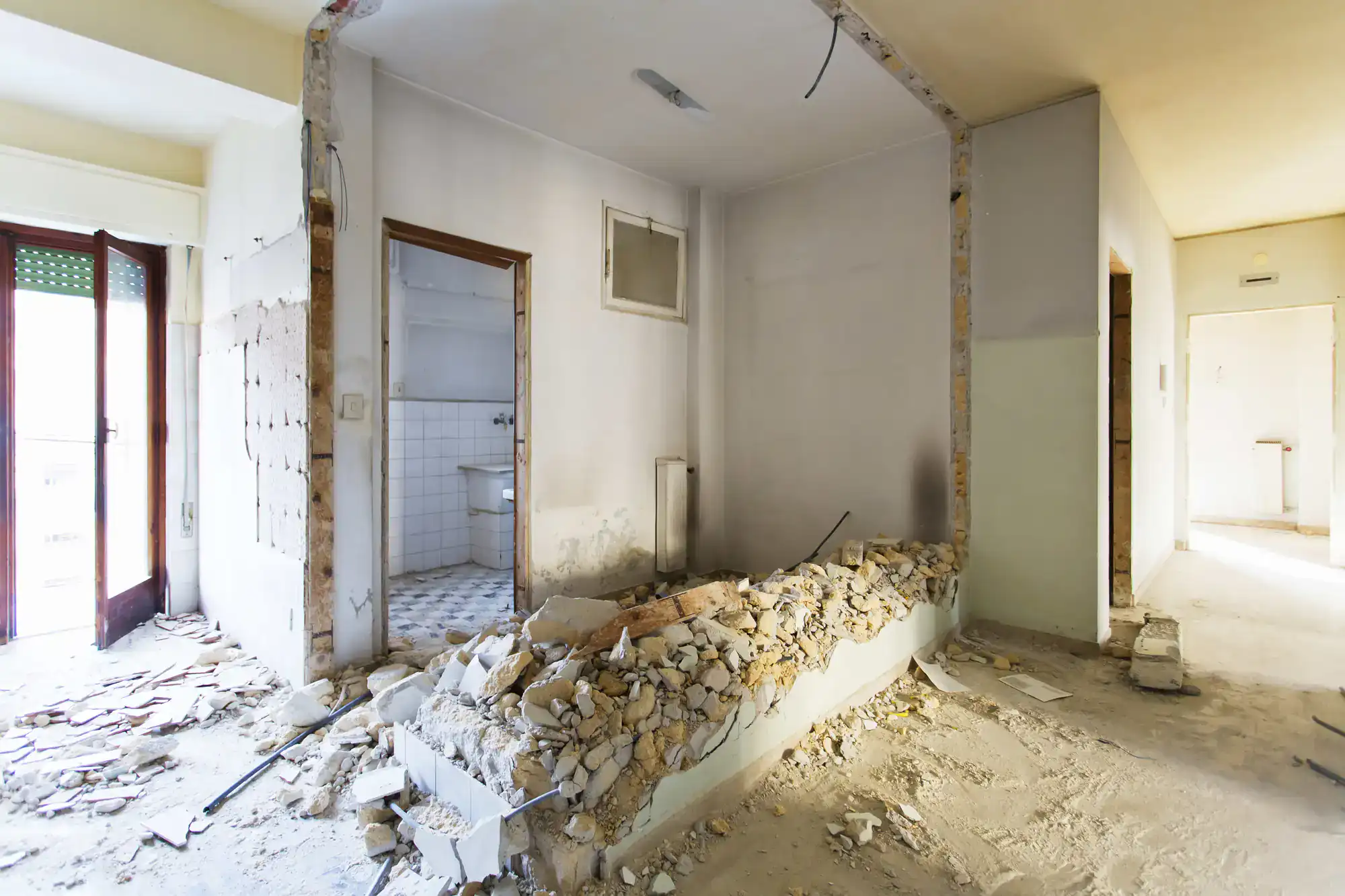
Once the site is clear, demolition proceeds on schedule. Interior gutting, structural removal, debris hauling — whatever the scope calls for. If waterproofing is needed after a basement gut-out, we handle that too. The job ends with a clean site and documentation you can hand to your GC or keep on file. No loose ends, no hand-off to a third contractor, no wondering what happened to the crew.
Ready to get started?
Demolition through us isn’t just swing-a-sledgehammer work. Our service covers the full scope of what a gut renovation in Plymouth Township actually requires — environmental testing, asbestos abatement, lead paint removal, mold remediation if needed, interior demolition, debris removal, and waterproofing. All of it in-house, all of it under one licensed contractor.
For homeowners in Plymouth Meeting, Lafayette Hill, or anywhere else in the township, that matters because the housing stock here isn’t uniform. You might have a 1950s Cape Cod with original floor tiles, a 1960s split-level with pipe insulation that’s never been touched, or a home near the Cold Point area with construction materials going back further than most contractors in this market have ever dealt with. We’ve seen it. Our equipment — HEPA filtration systems, state-of-the-art containment — is matched to what the job actually requires, not a one-size approach.
Emergency response is available around the clock. If a pipe bursts in February and you’re looking at mold and water damage in a finished basement, we can respond the same day. Cash discounts are available, and we’ll beat any legitimate estimate — not because the work is cut-rate, but because our all-in scope means there are no surprise line items added after the fact. Free estimates are always the starting point.
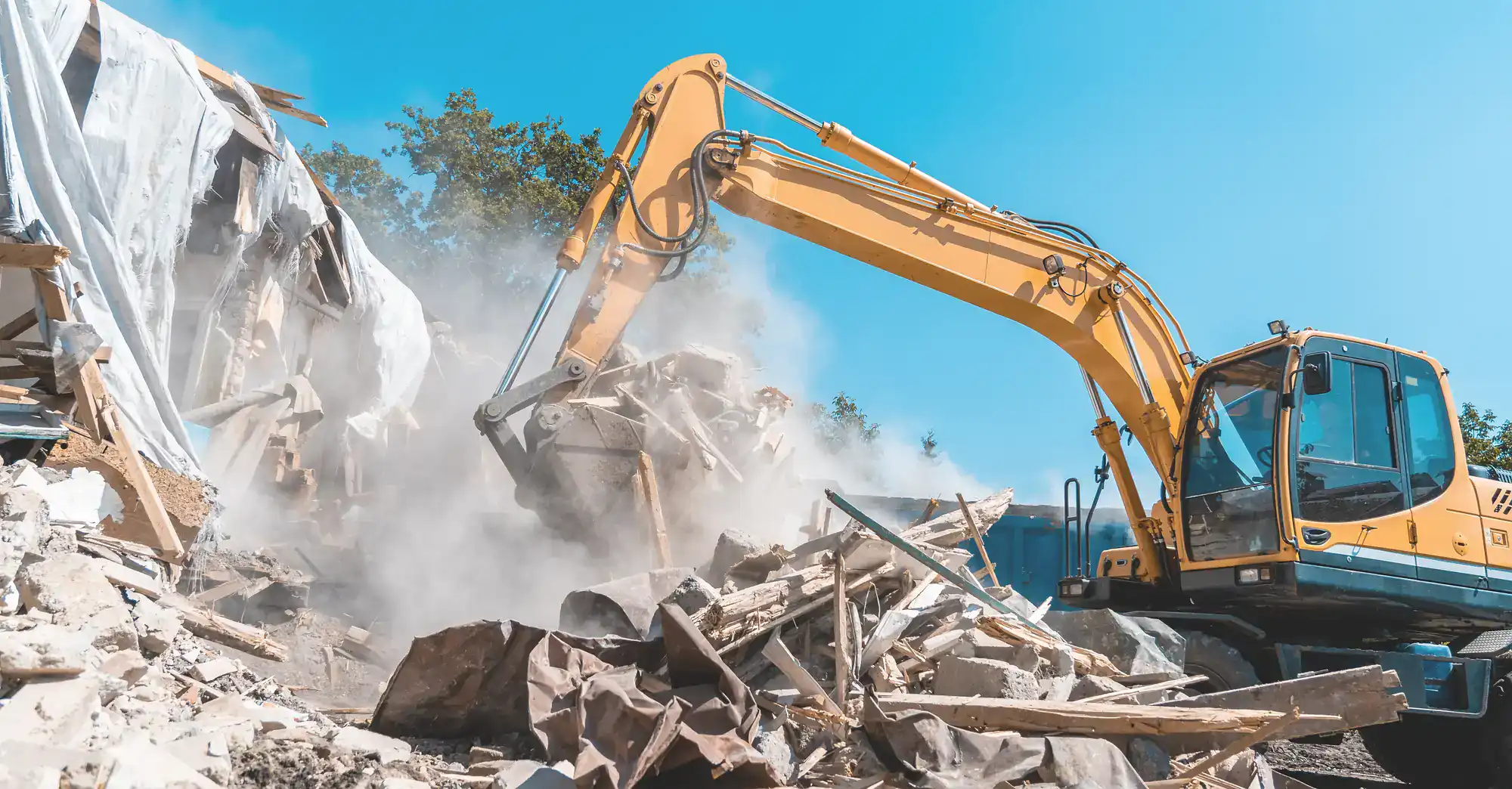

Yes. Plymouth Township operates under a home rule charter and has its own Code Enforcement Department that administers building permits for demolition and renovation work. You can’t simply hire a crew and start tearing out walls — the township requires a permit, and its commercial code package includes specific requirements around protecting adjacent structures and controlling water runoff during demolition activities.
The permit process isn’t complicated if you’ve done it before, but it’s a real source of delay for homeowners trying to manage it alongside an unlicensed crew. We handle permit coordination as part of the job. That means the application, the documentation, and the compliance requirements are accounted for from the start — not discovered halfway through the project when work has to pause.
Work stops — unless your contractor is licensed to handle it. Under Pennsylvania’s Asbestos Accreditation and Certification Act and EPA NESHAP regulations, regulated asbestos-containing materials must be removed by a state-licensed abatement contractor before demolition or renovation continues. A demo-only crew that isn’t certified cannot legally proceed and cannot legally remove what they found. That means you’re waiting on a second contractor to mobilize, and your project timeline takes a hit.
With us, that scenario doesn’t happen. Because abatement and demolition are handled by the same licensed crew, discovering asbestos in a floor tile or pipe insulation doesn’t stop the job — it just shifts to the next step in the process. In Plymouth Township’s older housing stock, where pre-1980 construction is common, this isn’t a rare edge case. It’s something we account for on every estimate.
Interior demolition generally runs between $2 and $8 per square foot depending on scope, with most residential gut projects falling somewhere between $1,000 and $9,800. A single-room gut-out — kitchen or bathroom — typically lands in the lower part of that range. A full basement gut-out or whole-floor demolition will push higher, especially if hazmat remediation is part of the scope.
In Plymouth Township, the honest number is the all-in number. A quote that doesn’t account for asbestos testing, potential abatement, or permit fees isn’t a real quote — it’s a starting point that grows once the walls come down. We build the full scope into the estimate upfront, which is why the final invoice tends to match what was quoted. Free estimates are always available, and we’ll beat any legitimate comparable quote.
If your home was built before 1980, there’s a meaningful chance it contains asbestos in some form — floor tiles, pipe insulation, joint compound, ceiling tiles, or roofing materials are the most common locations. If it was built before 1978, it’s legally presumed to contain lead-based paint under EPA regulations, which means any renovation that disturbs painted surfaces requires lead-safe work practices by a certified contractor.
Plymouth Township’s housing stock includes a large number of homes built during the postwar suburban boom of the late 1940s through the 1970s. The township also contains historically significant structures — including the Cold Point Historic District, listed on the National Register of Historic Places — where the building materials are older still. If you’re not sure what era your home falls into, we can assess it as part of the free estimate process and tell you exactly what testing is warranted before any work begins.
Yes — but only if they hold the right credentials for both. Pennsylvania requires a state-issued license for asbestos removal under the Asbestos Accreditation and Certification Act. Lead abatement and renovation work in pre-1978 homes falls under the EPA’s Lead Renovation, Repair, and Painting Rule, which requires a separate lead-safe certification. A general contractor who isn’t specifically licensed for both cannot legally perform both scopes of work.
We hold both. That’s the core of our one-stop model — not just a convenience, but a legal and logistical reality that eliminates the need to coordinate between a demo crew and a separate abatement sub. For homeowners and general contractors working in Plymouth Township and the surrounding Montgomery County area, it means one contract, one timeline, and one point of accountability from the first day on site to the final inspection.
Cash discounts are available on demolition and abatement projects, and we’ll beat any legitimate comparable estimate. Our beat-any-estimate guarantee works because our quotes are all-in — testing, abatement if needed, demolition, debris removal, and cleanup are all accounted for upfront. When you compare that against a lower-looking quote that doesn’t include hazmat compliance or permit coordination, the math usually shifts.
Plymouth Township homeowners tend to be thorough when evaluating contractors — they compare quotes, ask about credentials, and read the fine print. That’s exactly the kind of buyer we’re built for. The free estimate process is designed to give you a complete, honest scope before you commit to anything. No pressure, no hidden line items added after the walls come down. Call (484) 378-2453 to schedule yours.
Other Services we provide in Plymouth