Hear from Our Customers
Here’s what usually happens when a homeowner in Newtown hires a demo-only contractor: the crew starts tearing out a kitchen or bathroom, hits something in the wall — asbestos floor tile, old pipe insulation, lead-painted plaster — and the whole job stops. Now you’re coordinating a second contractor, waiting on a new schedule, and watching your timeline fall apart. That’s not a worst-case scenario. In Newtown’s housing stock, it’s just Tuesday.
Newtown Borough’s median construction year is 1938. That means half the homes in the borough predate World War II — and virtually all of them contain lead-based paint, with a high likelihood of asbestos-containing materials in the walls, floors, and ceilings. Even the township’s subdivisions like Newtown Grant and Village Shires, built mostly in the 1970s and 1980s, sit squarely in the era when asbestos was standard in floor tiles, joint compound, and pipe wrap. These aren’t edge cases. They’re the norm.
When we handle your demolition in Newtown, testing and abatement are part of the same job. One crew, one contract, one timeline. If something turns up mid-project — and in a home this age, it very well might — it doesn’t stop the clock. It just becomes the next step in the process we were already prepared for. That’s the difference between a project that finishes on schedule and one that drags into the fall.
We’ve been doing this work for two decades across Chester, Delaware, Montgomery, New Castle, and Bucks County. That’s not a number we throw out to sound impressive — it means we’ve worked in hundreds of homes throughout Newtown with exactly the kind of construction profile you’re dealing with right now. Colonial-era plaster. 1970s asbestos tile. Flooded basements with mold behind the drywall. We’ve seen it, handled it, and done it correctly every time.
We’re fully licensed under Pennsylvania’s asbestos contractor requirements, bonded, and insured — all three. We employ a Certified Lead Inspector and Risk Assessor, which is a state-issued credential, not a marketing title. And we’re EPA/HUD compliant, which matters in Newtown where pre-1978 homes are everywhere from State Street in the borough to the cul-de-sacs off the Newtown Bypass.
You can reach us at (484) 378-2453, any time of day or night. We offer free estimates, cash discounts, and we’ll beat any legitimate estimate you bring us.
It starts with a free estimate. We come out, walk the space with you, and give you a straight read on what’s there and what needs to happen before demolition begins. For older homes in Newtown Borough — especially anything near the historic district on or around State Street — that assessment includes a close look at potential lead and asbestos exposure, because the permit process in the Borough specifically requires that hazardous materials be addressed before demolition work begins. We know the Borough’s requirements. We know how the Codes Department works. That’s not something you want to be learning for the first time mid-project.
Once we’ve done the assessment, we handle any required testing and abatement in-house before the demo crew starts. HEPA filtration systems go up to contain anything airborne. The work gets done in the right order, by the right licensed people, using state-of-the-art equipment. When abatement is complete, demolition moves forward — gutting, structural removal, interior teardown, whatever the scope calls for.
By the time we’re done, the space is clean, safe, and ready for your contractor to build. If you’re working around the Council Rock School District calendar and need this wrapped before September, tell us that upfront. We plan around real deadlines, not just our own schedule.
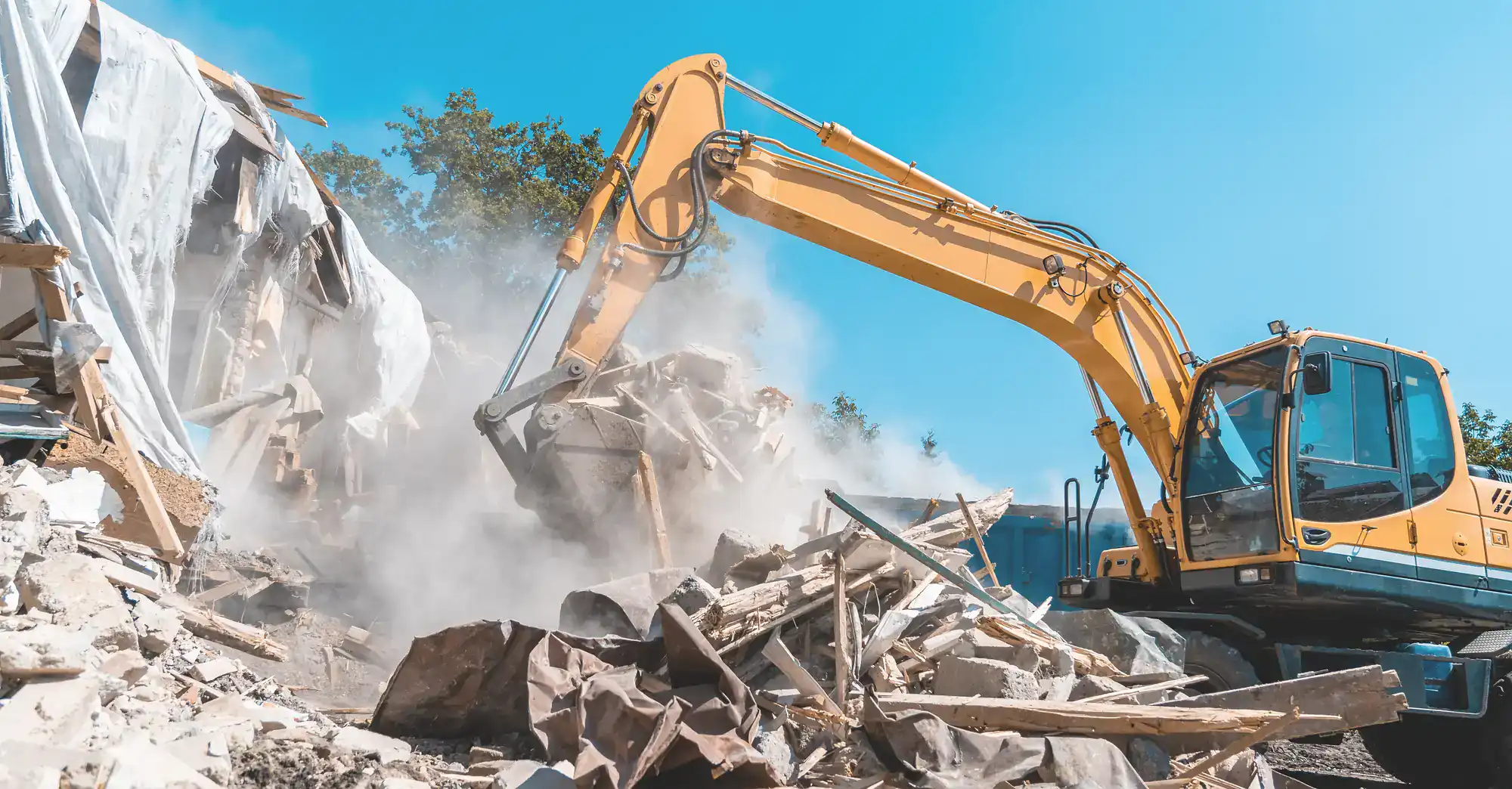
Ready to get started?
We handle the full scope of what a demolition project in Newtown actually requires — not just the swinging of a sledgehammer. That includes asbestos testing and removal, lead paint assessment and encapsulation or removal, interior gut-outs, structural demolition, mold sampling and remediation, basement waterproofing, and full debris removal. If your project involves any of it, we cover it. You’re not calling three different companies and hoping their schedules line up.
For homeowners in Newtown Grant or Village Shires tackling a kitchen gut or full-floor renovation, the process typically starts with a material assessment of the 1970s–1980s construction before any walls come down. For homeowners in the borough core renovating a Federal or Victorian-era property, that assessment goes deeper — pre-WWII construction has its own hazmat profile, and any demolition work near the historic district may also involve the Borough’s Historic Architectural Review Board process, which we’re familiar with navigating.
We’re available 24 hours a day, seven days a week — including emergency response for situations that can’t wait, like burst pipe damage or storm-related structural compromise during a Bucks County winter. Whatever the scope, whatever the timeline, call (484) 378-2453 and we’ll tell you exactly what you’re looking at.
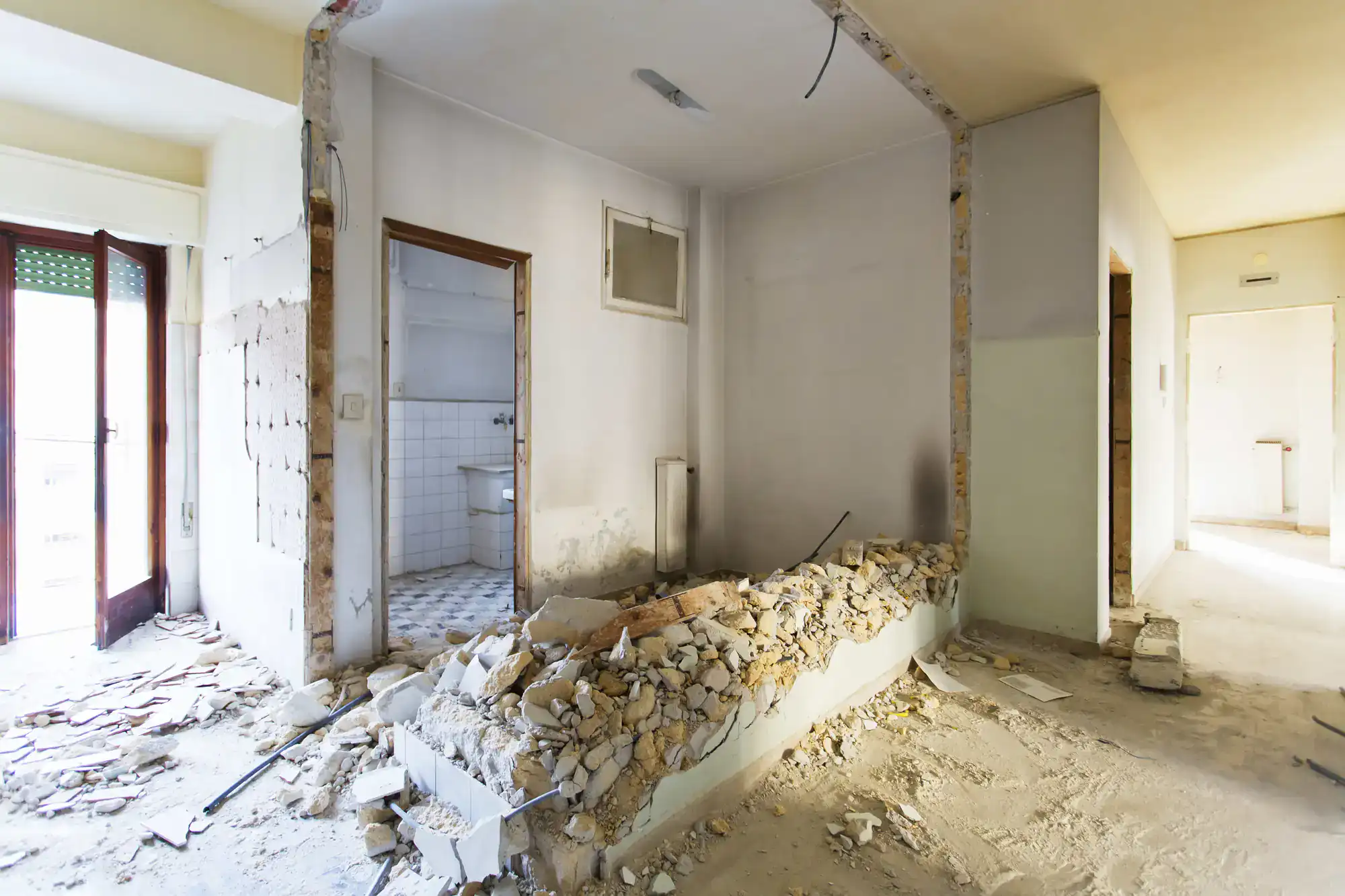
Yes — and the requirement applies to both Newtown Borough and Newtown Township, though through separate departments. In the Borough, you need a demolition permit from the Borough Building Inspector before any structure can come down. If your property falls within the Newtown Borough Historic District — the area centered around State Street that’s listed on the National Register of Historic Places — there’s an additional layer: the Historic Architectural Review Board may need to review the application before the permit is issued. That’s not a minor detail, and it’s not something to sort out after work has already started.
In Newtown Township, demolition and renovation work falls under the Township’s Codes Department, which administers the Pennsylvania Uniform Construction Code. At the state level, Pennsylvania also requires that buildings be assessed for asbestos-containing materials before a demolition permit is issued — and if regulated materials are found, a notice must be submitted to the PA Department of Environmental Protection at least 10 days before work begins. We manage this process as part of every project in Newtown. You won’t be left to figure out the paperwork on your own.
Possibly, yes. The common assumption is that asbestos was phased out before the 1980s, but that’s not quite accurate. While the EPA began restricting certain asbestos products in the late 1970s, asbestos-containing materials were still being installed in homes well into the early 1980s — particularly in floor tiles, ceiling tiles, pipe insulation, joint compound, and roofing materials. If your Newtown home in Newtown Grant or Village Shires was built between 1975 and 1985, there’s a real chance some of those materials are present.
The only way to know for certain is to test. Visual inspection alone can’t confirm or rule out asbestos — it requires lab analysis of material samples taken by a licensed contractor. Under Pennsylvania law, those samples must be collected and handled by a state-licensed asbestos professional. We hold that license. We test, we analyze, and if regulated materials are present, we remove them before demolition begins — all under the same contract, without stopping your project to bring in a second crew.
If you’re working with a demo-only contractor, the job stops. They’re not licensed to handle it, which means they’re legally required to walk away until a certified abatement contractor comes in. That means a new contractor, a new schedule, and a new invoice — on top of whatever you were already paying. In an older Newtown home, this scenario is common enough that it shouldn’t be treated as a surprise. It should be planned for.
When we’re running your project, discovering asbestos or lead mid-job doesn’t stop anything. We’re already licensed for both. Our Certified Lead Inspector and Risk Assessor can assess and document the scope on the spot. Abatement gets handled in-house, using HEPA filtration to contain airborne particles, and demolition continues once the affected area is cleared and documented. The timeline adjusts, but the project doesn’t fall apart. That’s the practical reason the one-stop model matters — not just convenience, but actual project continuity when reality doesn’t cooperate.
It depends on the scope and what the assessment turns up, but for a standard interior gut — a kitchen, a bathroom, or a single floor — most projects run between two and five days once abatement is complete. Larger whole-house gut-outs take longer, typically one to two weeks depending on the size of the home and the complexity of what’s inside the walls.
The variable that most affects timeline in Newtown specifically is the pre-demolition assessment and abatement phase. In the Borough’s older homes, that phase can add several days if regulated materials are present and need to be properly removed and documented before the DEP. In the township’s 1970s–1980s subdivisions, the assessment is usually faster, but it still needs to happen before demo begins. If you’re working around a specific deadline — say, wrapping up before the Council Rock school year starts in September — the best thing you can do is get your estimate early and give us enough runway to sequence the work correctly. Rushing the abatement phase to hit a deadline is not something we do, because it creates legal and health exposure that outlasts the renovation.
Not just any contractor — but yes, a single contractor can handle both if they hold the right credentials. Pennsylvania requires a separate state-issued license for asbestos abatement work under the Pennsylvania Asbestos Accreditation and Certification Act. It’s not a general contractor license, and it’s not something that comes bundled with a standard demolition permit. A contractor who advertises demo services but doesn’t hold this specific license cannot legally perform asbestos removal — and in Pennsylvania, they’re required to stop work and bring in someone who can.
We hold the Pennsylvania asbestos contractor license, employ a Certified Lead Inspector and Risk Assessor, and are EPA/HUD compliant. That combination means we can legally and safely handle testing, abatement, and demolition as a single integrated project. For Newtown homeowners, this matters because the housing stock — from the colonial-era properties in the Borough to the 1970s builds in the Township — makes it genuinely likely that hazardous materials will be part of the conversation. Having one licensed contractor who can do all of it isn’t a luxury. In this market, it’s just the smarter way to run a project.
Yes. Every project starts with a free estimate — no obligation, no pressure. We come out, walk the space, and give you a clear picture of what’s involved before you commit to anything. For Newtown homeowners, that walkthrough often covers more ground than a standard demo estimate because we’re also evaluating the age and construction profile of the home, flagging anything that might require testing or abatement before work begins, and giving you a realistic scope that accounts for what’s actually in the walls — not just what’s visible on the surface.
We also offer cash discounts for qualifying projects and a beat-any-estimate guarantee. Newtown’s housing market is one of the stronger ones in Bucks County, and homeowners here are making real investments in high-value properties. The estimate process is how we make sure you understand exactly what you’re getting before a single wall comes down. Call (484) 378-2453 to schedule yours — we’re available around the clock, including evenings and weekends, because we know renovation planning doesn’t always happen between nine and five.
Other Services we provide in Newtown