Hear from Our Customers

The homes along Forrest Avenue, Cadwalader, and Tulpehocken weren’t built yesterday. Most of them were built in the 1940s and 1950s, which means behind those walls — under that linoleum, above those drop ceilings — there’s a real chance of asbestos, lead paint, or both. That’s not a worst-case scenario in McKinley. That’s just the math of a neighborhood with a median home construction year of 1949.
When you hire a demo-only contractor and they find something on day one, the job stops. They back out, you scramble to find an abatement firm, and your timeline falls apart. We are both the demolition contractor and the licensed environmental remediation team — so when something turns up mid-project, it gets handled in-house and the work keeps moving. No pause, no second contractor, no surprise invoice from someone you’ve never met.
What you end up with is a gutted space that’s been properly cleared, legally documented, and ready for whatever comes next — whether that’s a contractor doing a full build-out or your own renovation crew picking up from a clean slate. For a homeowner investing in a McKinley property worth well above the Pennsylvania median, that kind of certainty isn’t a luxury. It’s the whole point.
EJS Environmental Services has been working in McKinley and southeastern Pennsylvania for twenty years. The stone-and-stucco Colonials, postwar Cape Cods, and brick twins that define McKinley and the broader Abington Township area aren’t unfamiliar territory — this is the housing stock we work in every week.
We hold Pennsylvania’s state-issued asbestos contractor certification, the Certified Lead Inspector and Risk Assessor designation, and carry full EPA/HUD compliance for work in pre-1978 homes. We’re fully licensed, bonded, and insured — all three, not just two of the three. And because McKinley sits at the boundary of both Abington Township and Cheltenham Township, we know which jurisdiction your permit comes from before you even have to ask.
We answer the phone 24 hours a day, offer free estimates with no obligation, and we’ll beat any legitimate competitor estimate. That’s not a promotional line — it’s how we’ve kept the same clients coming back, and kept general contractors in the Elkins Park and Jenkintown corridor calling us first.
It starts with a free on-site estimate. We come out, look at the space, and give you a straight number — no vague ranges, no bait-and-switch. If your project involves a pre-1978 home, which covers the vast majority of McKinley’s housing stock, we’ll assess for asbestos and lead before any demolition begins. That assessment isn’t optional under Pennsylvania and federal law — it’s required, and skipping it exposes you to real liability.
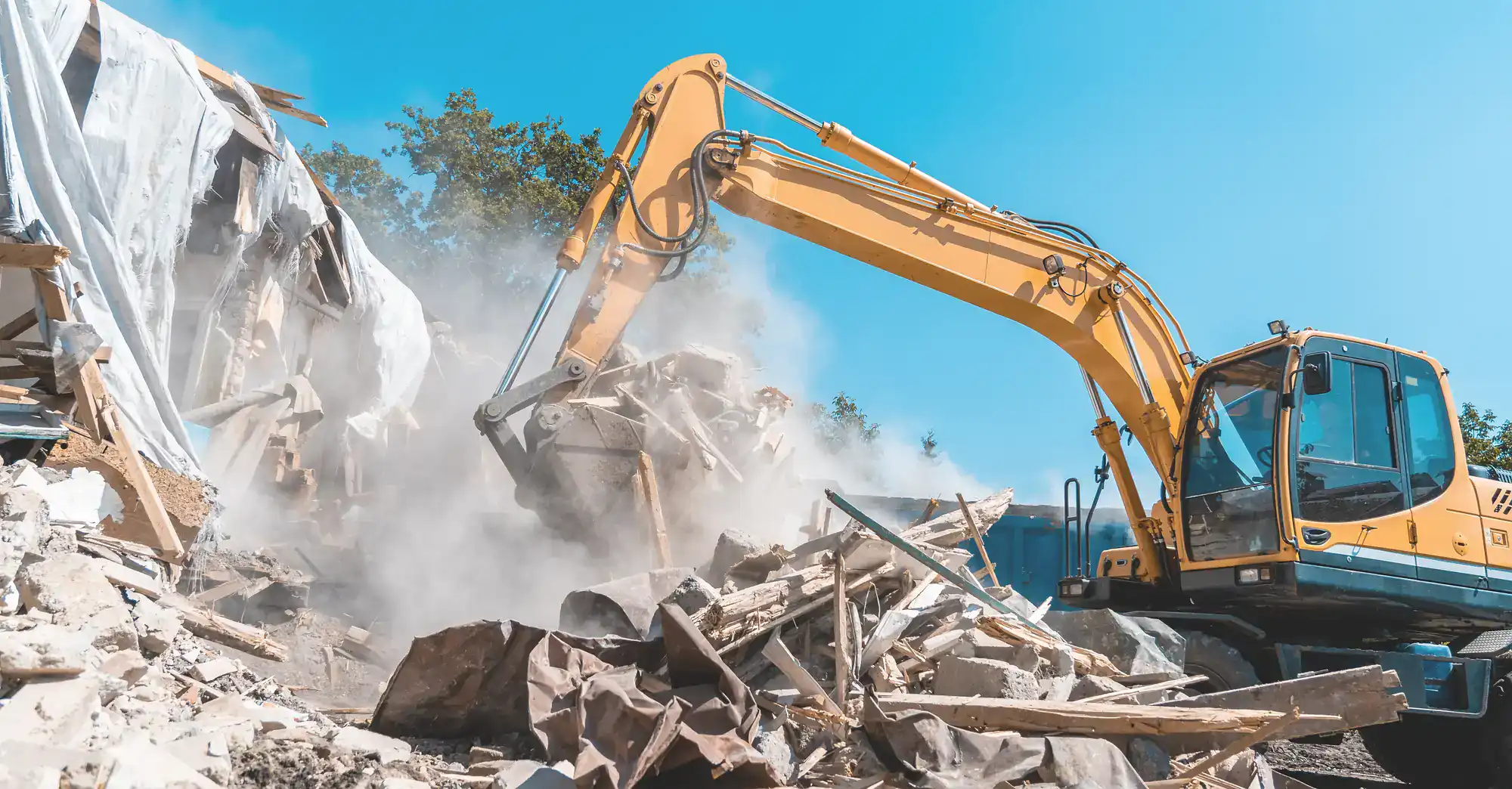
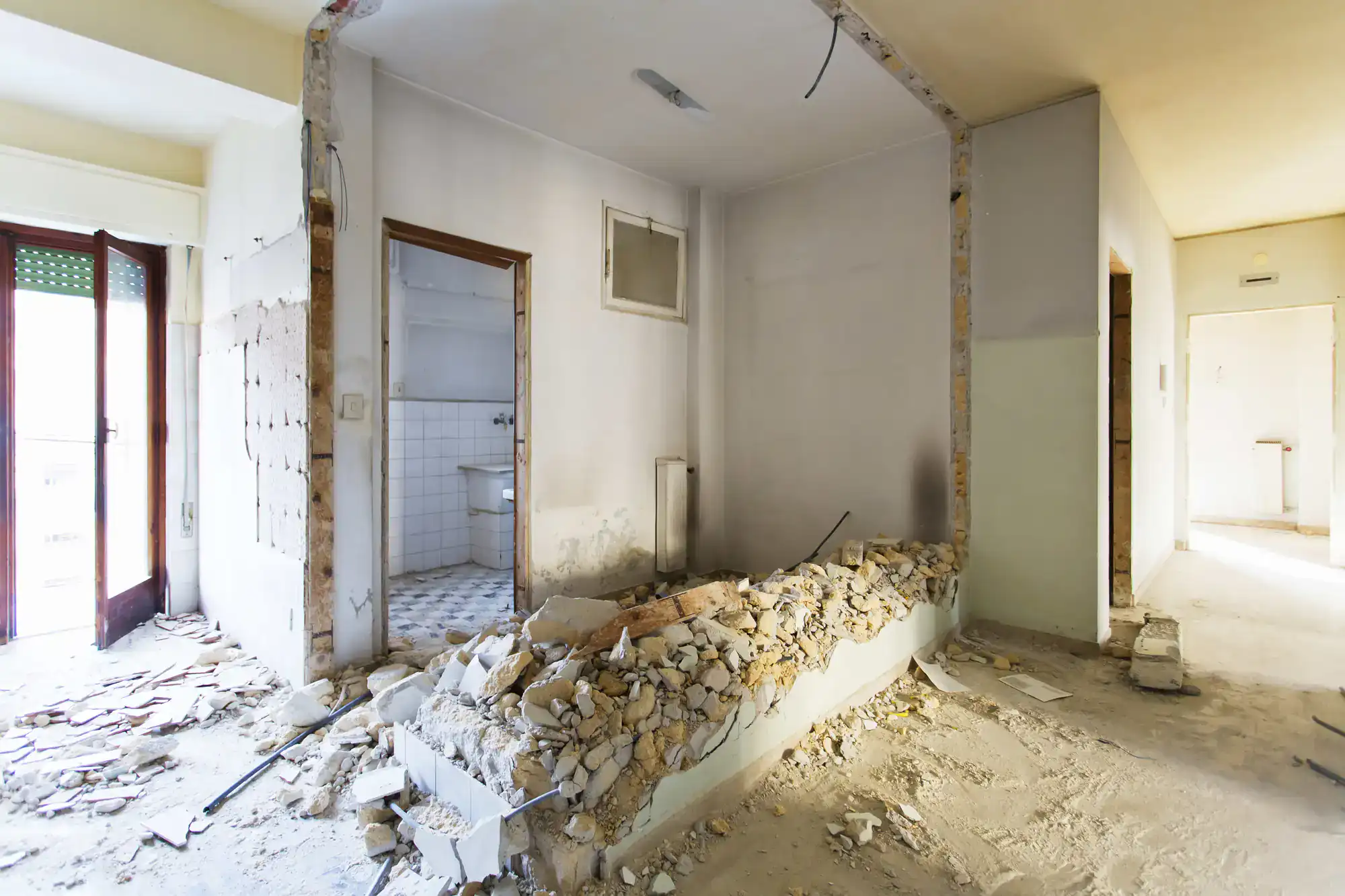
Once testing is complete, we handle any necessary remediation first. Asbestos-containing materials get removed by our licensed abatement team using HEPA filtration and EPA-compliant containment procedures. Lead paint is addressed under our Certified Lead Inspector credentials. Only after the space is cleared do we move into the actual demolition — gutting walls, removing flooring, tearing out fixtures, or whatever the scope of your project requires.
One thing worth knowing for McKinley specifically: because the neighborhood straddles Abington Township and Cheltenham Township, your permit comes from one of two different municipal departments depending on exactly where your home sits. Abington Township’s Fire and Code Services Department transitioned to fully digital permit submissions in July 2025. We’ve worked in both jurisdictions and know what each requires. You won’t have to figure that out on your own.
Ready to get started?
We handle the full scope of what a gut renovation in McKinley actually involves. That means interior demolition and gutting, asbestos testing and removal, lead paint inspection and remediation, mold sampling and remediation, waterproofing, and complete clean-outs — all under one roof, on one timeline, with one point of contact. For a home built in the 1940s or 1950s in a neighborhood like McKinley, that’s not an upsell. It’s the realistic scope of the job.
The older homes in McKinley — the detached singles on Osceola and Crefeld, the twins along Tulpehocken — were built with materials that are now regulated as hazardous. Asbestos was standard in floor tiles, pipe insulation, plaster, and ceiling materials. Lead paint was used on virtually every painted surface before 1978. A contractor who isn’t certified for both cannot legally complete a full gut renovation in these homes without stopping the job mid-project. We can, and we do.
We also bring state-of-the-art equipment to every job — HEPA filtration systems, proper containment barriers, and tools that meet current EPA and OSHA standards. In a dense residential neighborhood where your neighbors are close and your family returns to the property after we leave, the quality of the containment and cleanup matters as much as the demo itself. We treat it that way.
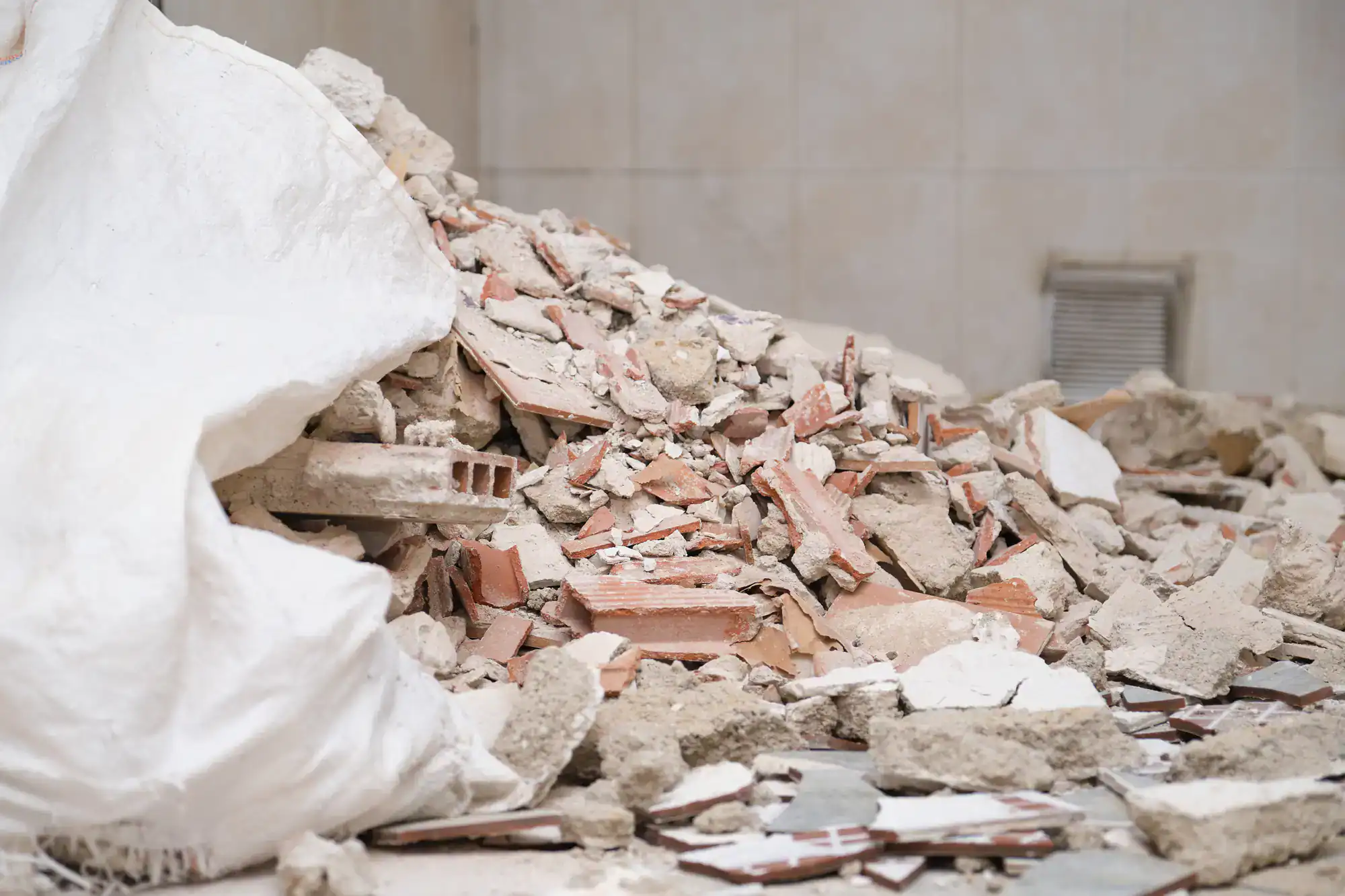

Yes — demolition work in McKinley requires a permit, and where you apply depends on which side of the township boundary your home sits on. Most of McKinley falls within Abington Township, so the majority of residents will apply through Abington Township’s Fire and Code Services Department. However, a portion of McKinley crosses into Cheltenham Township, which has its own building department and permit process. If you’re not sure which jurisdiction you fall under, your property address will tell you — and we can help you sort it out before the project starts.
One important update: as of July 2025, Abington Township moved to a fully digital permitting process. All applications are now submitted online through their system. If you’re planning a gut renovation in McKinley and haven’t navigated that process before, it can feel like an extra hurdle on top of an already complex project. Working with a contractor who’s already familiar with both jurisdictions — and the new digital workflow — makes that part of the process a lot smoother.
If asbestos is discovered during a demolition project, work has to stop until the material is properly assessed and removed by a licensed abatement contractor. Under Pennsylvania’s Asbestos Occupations Accreditation and Certification Act and EPA NESHAP regulations, regulated asbestos-containing materials must be removed before any demolition or renovation activity that would disturb them. That’s not a guideline — it’s the law, and it applies whether you’re gutting a kitchen or tearing out a bathroom in a 1940s Cape Cod on Forrest Avenue in McKinley.
The practical problem is that most demo-only contractors aren’t licensed for abatement. So when they find asbestos floor tiles, pipe insulation, or joint compound that tests positive, they have to walk off the job while you find a separate firm. That gap can add days or weeks to your timeline and creates real coordination headaches. Because we hold Pennsylvania’s state asbestos contractor certification and handle both demolition and abatement in-house, a discovery mid-project doesn’t stop anything. The licensed team is already on-site. The work continues.
Interior demolition generally runs between $2 and $8 per square foot, depending on the scope of the work, the materials involved, and what’s found during the process. For a standard gut renovation — removing walls, flooring, fixtures, and ceilings in one or two rooms — most projects fall somewhere in the $1,000 to $5,000 range. A full gut-to-studs project on a larger space will typically run higher, with national averages around $2,995 for a complete interior gut.
For McKinley specifically, the age of the housing stock is the biggest variable that affects cost. Homes built in the 1940s and 1950s almost always require asbestos testing before demolition begins, and a meaningful percentage of those tests come back positive for regulated materials. Asbestos abatement adds to the overall project cost, but it’s a required step — not an optional add-on. The good news is that getting testing and abatement done by the same contractor handling the demolition typically costs less than sourcing two separate firms, and it eliminates the scheduling gap between the two phases of work.
It’s not overstated — it’s the statistical reality of McKinley’s housing stock. The neighborhood’s median home construction year is approximately 1949, and the homes here range from the late 1800s through the early 1970s. Asbestos was used extensively in residential construction throughout that entire period. It showed up in 9″x9″ vinyl floor tiles, pipe and duct insulation, plaster, joint compound, ceiling tiles, roofing materials, and textured coatings. In a neighborhood full of stone-and-stucco Colonials and postwar singles, the probability of encountering asbestos-containing materials during a gut renovation isn’t a remote risk — it’s close to the baseline expectation.
The important thing to understand is that the presence of asbestos doesn’t automatically mean the material is dangerous in its current state. Asbestos that is intact and undisturbed poses minimal risk. The risk comes when materials are cut, broken, sanded, or demolished — which is exactly what happens during a gut renovation. That’s why testing before demolition begins is required by law, not just recommended. If materials test positive, they need to be removed by a licensed abatement contractor before any further work proceeds. We handle both the testing and the removal, so you’re not managing two separate contractors across that critical handoff.
Yes — but only if they hold Pennsylvania’s state-issued asbestos contractor certification under the Asbestos Occupations Accreditation and Certification Act (Act 194 of 1990). Pennsylvania is one of the few states that requires a specific, state-issued license for asbestos abatement work. A general contractor or demo crew cannot legally perform asbestos removal without it, regardless of how long they’ve been in business or how many projects they’ve completed.
We hold that certification, along with the Certified Lead Inspector and Risk Assessor designation and full EPA/HUD compliance for lead work in pre-1978 homes. That means one company can legally and safely handle the full scope of a gut renovation in McKinley — from initial testing through abatement through demolition — without the project ever needing to pause for a handoff to a second firm. For homeowners in a neighborhood where nearly every home predates the 1978 lead paint ban and the early 1980s asbestos phase-out, having a single contractor who is licensed for all of it is a meaningful practical advantage, not just a convenience.
The cash discount reflects a straightforward reality of how smaller-scale residential projects get priced and processed. Credit card transactions carry processing fees that ultimately factor into what we charge. When a project is paid in cash, that cost disappears — and we pass that savings directly to the homeowner rather than keeping it as margin. It’s a simple exchange, and it’s one that makes sense for the kind of gut renovation projects that are common in McKinley’s older housing stock, where homeowners are already managing the added cost of testing and potential abatement on top of the base demolition scope.
It’s also worth noting that McKinley homeowners are typically investing in properties that carry real value — the neighborhood’s median real estate values rank higher than 83.4% of Pennsylvania communities. These aren’t small projects, and the total cost of a proper gut renovation in a pre-1978 home adds up quickly between permits, testing, abatement, and demolition. The cash discount is one way to take some of that pressure off without cutting corners on the work itself. If you want to know exactly what your project would cost and whether the cash discount applies, the free estimate is the right place to start.
Other Services we provide in Mckinley