Hear from Our Customers
Water in your basement isn’t just an inconvenience — it’s a slow attack on your foundation, your air quality, and eventually your wallet. FEMA estimates that just one inch of standing water can cause up to $25,000 in damage. Most homeowners insurance won’t cover gradual water intrusion from drainage failure. By the time the damage is obvious, the fix is a lot more expensive than a french drain would have been.
Souderton sits entirely within the Perkiomen Creek Watershed — a watershed that Montgomery County has formally identified as a stormwater problem area significant enough to warrant its own dedicated flood mapping study. That’s the county telling you, in official terms, that properties here face real and recurring drainage stress. Add the heavy clay soil that runs through this area — which holds water instead of draining it — and you have a recipe for chronic hydrostatic pressure against foundations, especially in homes built before the 1970s along the borough’s older residential streets.
A properly installed french drain system intercepts that water before it reaches your foundation and moves it somewhere it can’t do damage. The result is a basement you can actually use, a yard that doesn’t stay soggy for days after rain, and a foundation that isn’t quietly deteriorating behind your walls. That’s not a small thing — especially in a borough where a lot of homes have been standing since the early 1900s and deserve to keep standing.
We’ve been working in Montgomery County for close to two decades. That means we’ve been inside the older homes along Souderton’s Main Street corridor, the mid-century ranchers near Chestnut Street, and the properties in Franconia Township that everyone just calls “Souderton.” We know what the foundations look like. We know the soil. We know the drainage patterns.
What makes us different from every other drainage contractor in this market is straightforward: we’re a federally certified environmental services company that also installs french drains — not the other way around. Before we ever break ground, we can test for lead and asbestos, because homes of this age in Souderton regularly contain both. No other drainage contractor serving this area holds EPA Certified Lead Inspector and Risk Assessor credentials. That’s not a minor detail when you’re excavating around a pre-1978 foundation.
We’re fully licensed, bonded, and insured at the environmental services level — which covers more than a standard contractor policy does. Free estimates, cash discounts, and 24/7 availability are part of how we operate, not extras we advertise to seem competitive.
It starts with a free estimate. We come out, look at where the water is coming from, and give you an honest assessment of what the right solution actually is — interior french drain, exterior french drain, or both. We don’t recommend the most expensive option by default. We recommend what the property needs based on where the water is entering and what the soil and foundation conditions look like.
Before any excavation begins on a home built before 1978 — which covers a significant portion of Souderton’s housing stock — we test for lead and asbestos. This step protects your family and our crew, and it’s something no standard drainage contractor in the area does. If hazardous materials are present, we handle abatement before the drainage work starts. That sequencing matters. It’s not something you want to skip and deal with later.
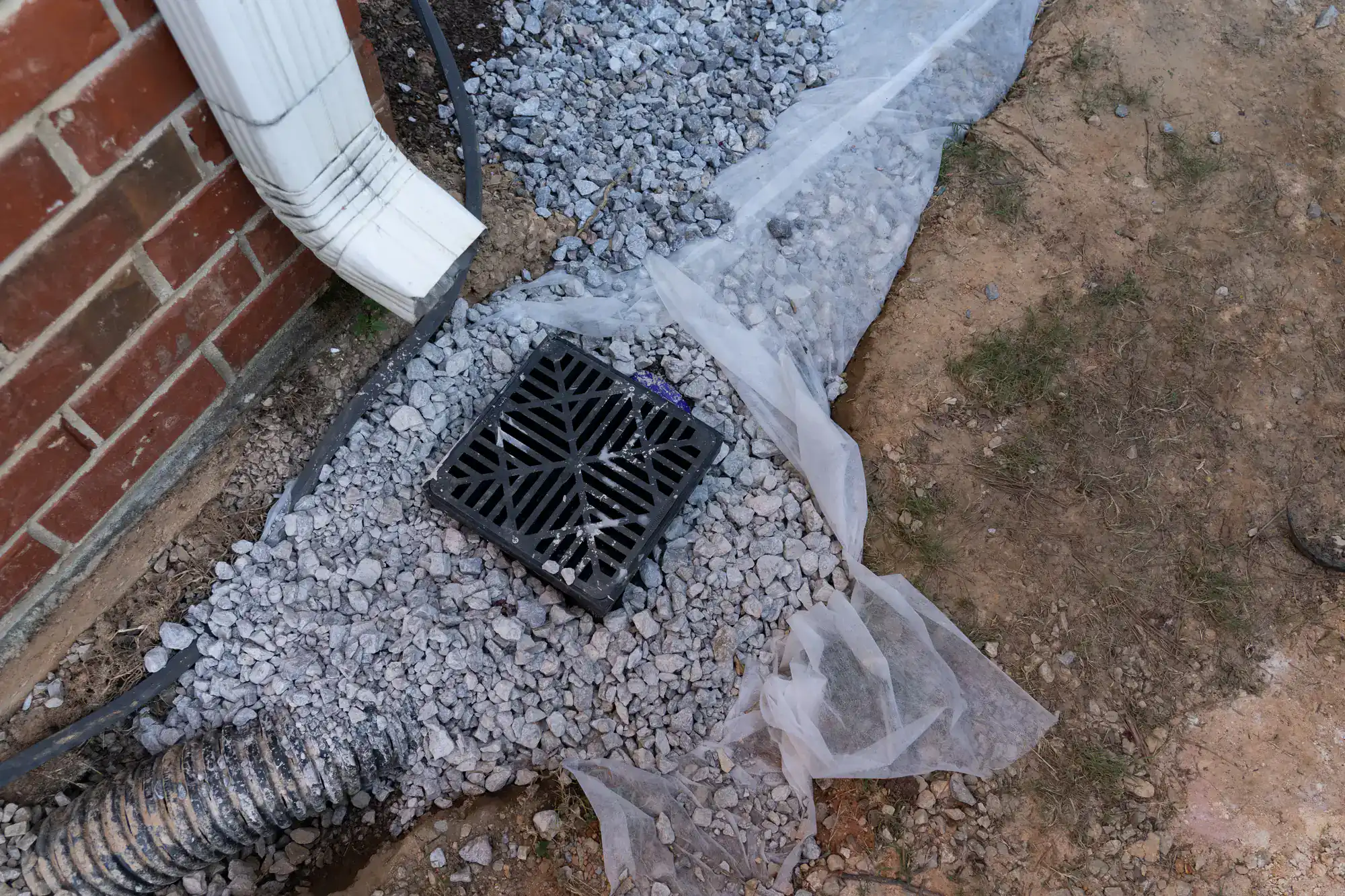
The installation itself involves trenching at a precise slope, laying perforated PVC pipe — not the flexible corrugated stuff that collapses over time — wrapping it in filter fabric to keep clay particles out, and surrounding it with the right gravel media to keep water moving. In Souderton’s clay-heavy soil, the filter fabric is especially important because fine clay particles will migrate into a system that isn’t properly protected, and a clogged french drain typically fails within a few years. Done right, the system lasts 30 to 40 years. When the job is complete, we clean up, restore the disturbed area, and walk you through what was done and why.
Ready to get started?
Every french drain installation through us starts with a proper site assessment — not a quick glance and a quote. We look at where water is entering, how the grading sits, what the soil profile looks like, and whether the issue is better addressed from the interior, the exterior, or both. In Souderton, where clay soil and older foundations are the norm rather than the exception, that assessment step isn’t optional — it’s what determines whether the system actually works.
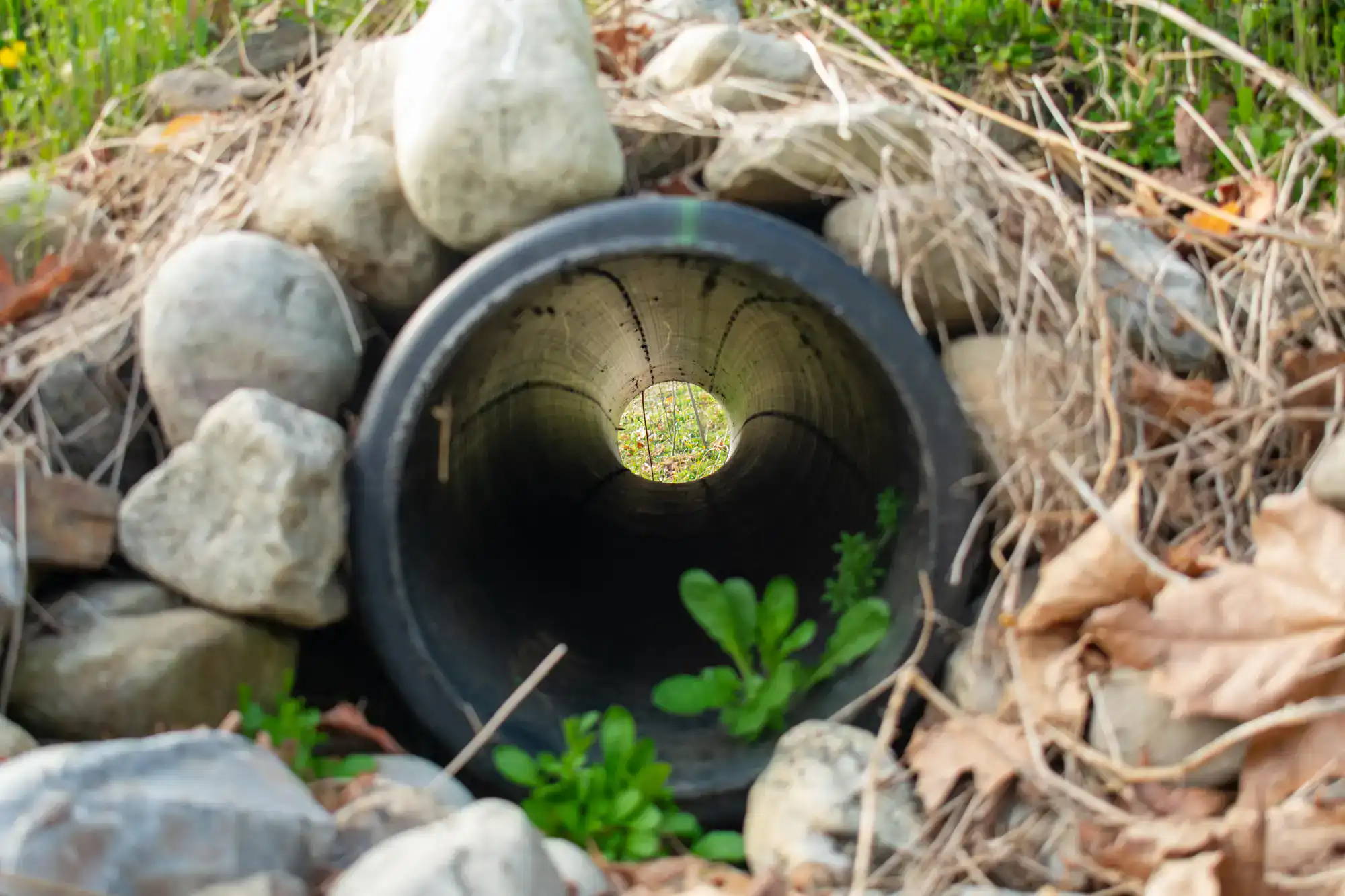
Interior french drain systems are installed along the perimeter of the basement floor, channeling water that enters through floor-wall seams into a sump pump that moves it out of the home. These systems are often the right call for older homes in the borough where exterior excavation would be disruptive or where the foundation has already settled. Exterior french drain systems intercept water before it ever reaches the foundation wall — typically the better long-term solution when grading and soil conditions allow for it.
Every installation includes properly rated perforated pipe, appropriate gravel media, and filter fabric specified for the soil conditions on your property. Where mold is present from prior water intrusion — which develops within 24 to 48 hours of moisture exposure and is common in chronically damp basements — we handle remediation as part of the same engagement. Souderton Borough participates in the MS4 stormwater program, which means any drainage work that connects to or affects the municipal system may require a permit. We’re familiar with those requirements and work within them. One call, one company, one job done completely.
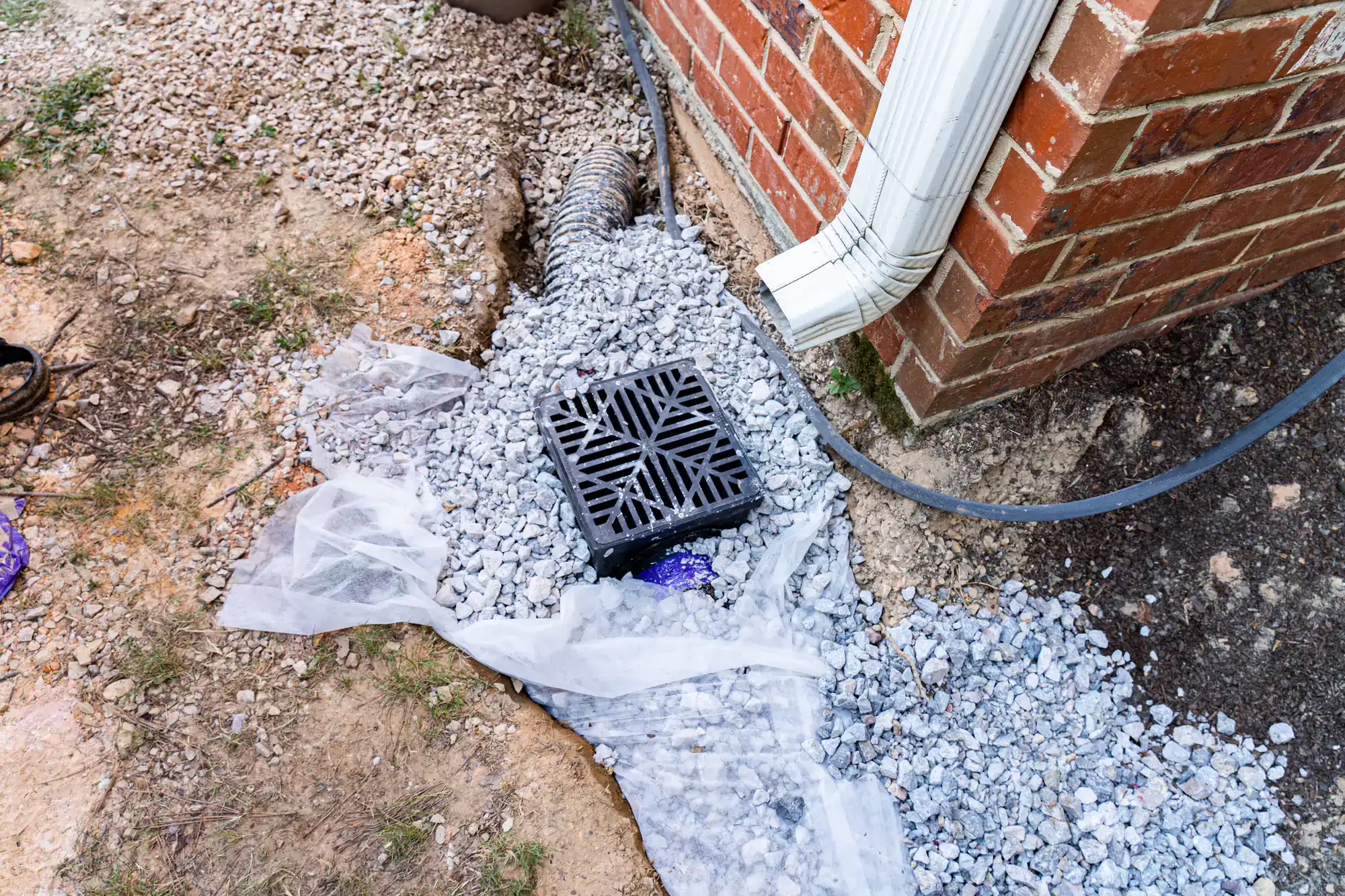

The national average for french drain installation runs around $5,000, with a realistic range of $1,650 to $12,250 depending on the scope of the project. In Souderton, a few factors can push costs toward the higher end of that range. The clay-heavy soil in this area requires more careful system design — the filter fabric specification, gravel media selection, and pipe depth all matter more in clay than in sandy or loamy soil. Cutting corners on any of those components is what leads to a system that clogs and fails within a few years.
Older foundations also tend to require more careful excavation, and if a pre-1978 home tests positive for lead or asbestos — which is common in Souderton’s housing stock — abatement work will add to the total. That said, the cost of a properly installed french drain is a fraction of what water damage repair costs. A single water intrusion event can run $15,000 to $25,000 in structural and content damage. The drain is the cheaper option by a significant margin. We provide free estimates with no obligation, so you’ll know the full scope and cost before committing to anything.
An exterior french drain is installed outside the foundation wall, typically in a trench that runs along the perimeter of the home at or below footing depth. It intercepts groundwater and surface runoff before they ever contact the foundation. This is generally the more comprehensive solution because it addresses the source of the problem rather than managing water after it’s already entered the structure. It requires excavation, which in older Souderton homes can be more involved depending on how close the foundation sits to property lines, utilities, or existing hardscape.
An interior french drain — sometimes called an interior perimeter drain — is installed inside the basement along the floor-wall seam. It doesn’t stop water from entering the wall, but it captures it before it can spread across the floor and channels it to a sump pump for removal. For homes in Souderton’s older residential areas where exterior excavation isn’t practical, or where the foundation has already developed cracks that are letting water in at multiple points, the interior system is often the more realistic and cost-effective path. In some cases, both systems are used together. The right answer depends on where the water is actually coming from, which is why the assessment step matters so much.
Grading issues and drainage system failures can look similar on the surface — water pooling in the yard, wet basement walls, damp corners — but the fix is different for each. If the ground around your home slopes toward the foundation instead of away from it, regrading may solve the problem on its own. But in Souderton, where clay soil is prevalent, regrading alone often isn’t enough because the soil can’t absorb water fast enough regardless of slope. Water sits on top of or within the clay layer and eventually finds its way to the lowest point — which is usually your foundation.
If you’re seeing water intrusion after moderate rain events, not just major storms, that’s typically a sign that the drainage system itself needs to be addressed rather than just the surface grading. Similarly, if you have efflorescence — the white chalky residue on basement walls — or if you’ve noticed cracks in the mortar joints of an older block or stone foundation, those are signs of chronic hydrostatic pressure that grading alone won’t fix. A proper site assessment will tell you which issue you’re actually dealing with. We’ll give you that assessment at no cost and tell you honestly what the property needs.
Souderton Borough participates in the MS4 Municipal Separate Storm Sewer System program under the federal Clean Water Act, which means the borough has formal obligations around stormwater management. Any drainage work that connects to or affects the municipal stormwater system may require a permit from the borough’s public works or code enforcement office. Pennsylvania also requires Home Improvement Contractor registration for any work over $500, which applies to french drain installation. We hold the appropriate licensing to operate in Montgomery County and are familiar with the permit requirements that apply to drainage work in the borough.
Beyond the borough-level requirements, properties in the Perkiomen Creek Watershed — which includes all of Souderton — may be subject to watershed-specific stormwater management plan requirements under Pennsylvania DEP and Montgomery County regulations if the drainage work alters flow patterns significantly. In practice, most residential french drain installations don’t trigger those watershed-level requirements, but it’s worth knowing the context. We handle the permit coordination as part of the job so you’re not left navigating municipal offices on your own.
This is one of the most common concerns we hear from homeowners with older properties, and the honest answer is: it depends on what’s actually happening with the foundation. A french drain system — interior, exterior, or both — is designed to manage water, not repair structural damage. If your foundation has active cracks that are allowing water intrusion, those cracks need to be addressed as part of the overall waterproofing solution, not ignored in favor of just installing drainage. The drain handles the water that reaches the foundation; the crack repair handles the point of entry.
That said, the vast majority of older homes in Souderton that have chronic wet basement problems are not dealing with catastrophic structural failure — they’re dealing with water management systems that were never adequate for the soil and watershed conditions they’re sitting in. Many homes built in the early-to-mid 1900s simply didn’t have the drainage infrastructure that modern standards require. A properly installed french drain system, combined with crack injection or waterproofing membrane work where needed, can absolutely turn a chronically damp basement into a usable, dry space. The assessment will tell you what combination of solutions is appropriate for your specific foundation condition.
No catch. Credit card processing fees typically run between 2.5% and 3.5% of the transaction total — on a $5,000 job, that’s $125 to $175 that goes to a payment processor instead of covering labor and materials. When a customer pays in cash, we don’t absorb that cost, and we pass the savings back to them directly. It’s a straightforward exchange that works in both directions.
For homeowners in Souderton who are already weighing the cost of a drainage project carefully — which is most people, because this isn’t a small investment — the cash discount is a real number, not a token gesture. It’s also consistent with how we operate generally: transparent pricing, free estimates, no pressure to sign on the spot. The goal is to make it easy for you to understand exactly what you’re getting and what it costs before you commit to anything. If cash works for you, it works for us too, and the price reflects that.
Other Services we provide in Souderton