Hear from Our Customers
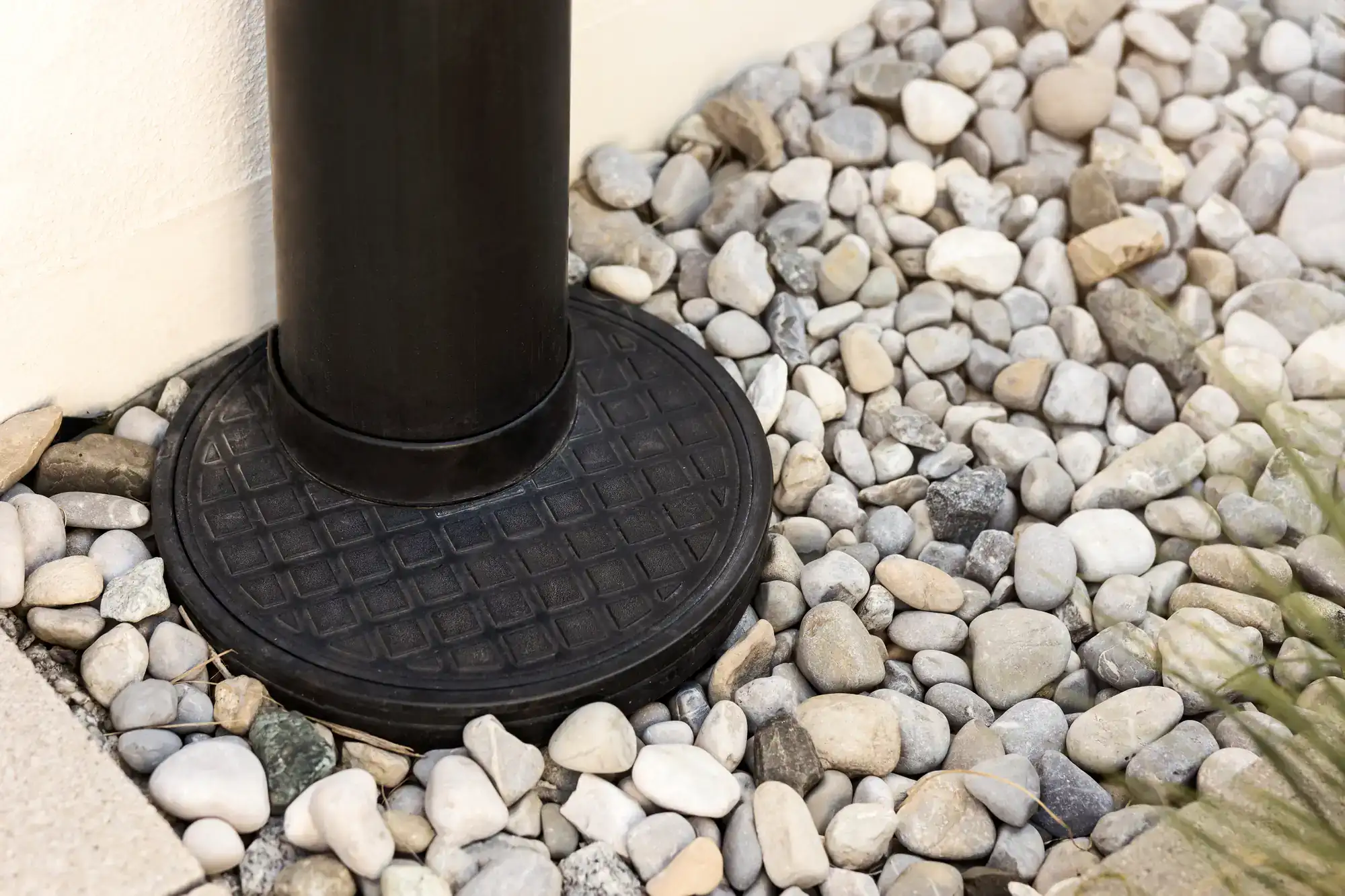
A dry basement is not a small thing. It is usable square footage, protected belongings, and a home that holds its value instead of quietly losing it to moisture damage behind the walls. When a french drain system is installed correctly, hydrostatic pressure stops building against your foundation and water gets redirected before it ever becomes your problem.
For homes in Melrose Park, that outcome matters more than it does in newer developments elsewhere in Montgomery County. Most of the housing stock here was built between the 1930s and 1960s — homes with original drainage systems that are now pushing 70 or 80 years old, sitting in Piedmont Province soil that holds clay and does not drain freely. That combination is exactly why so many basements in this neighborhood stay wet long after the rain stops.
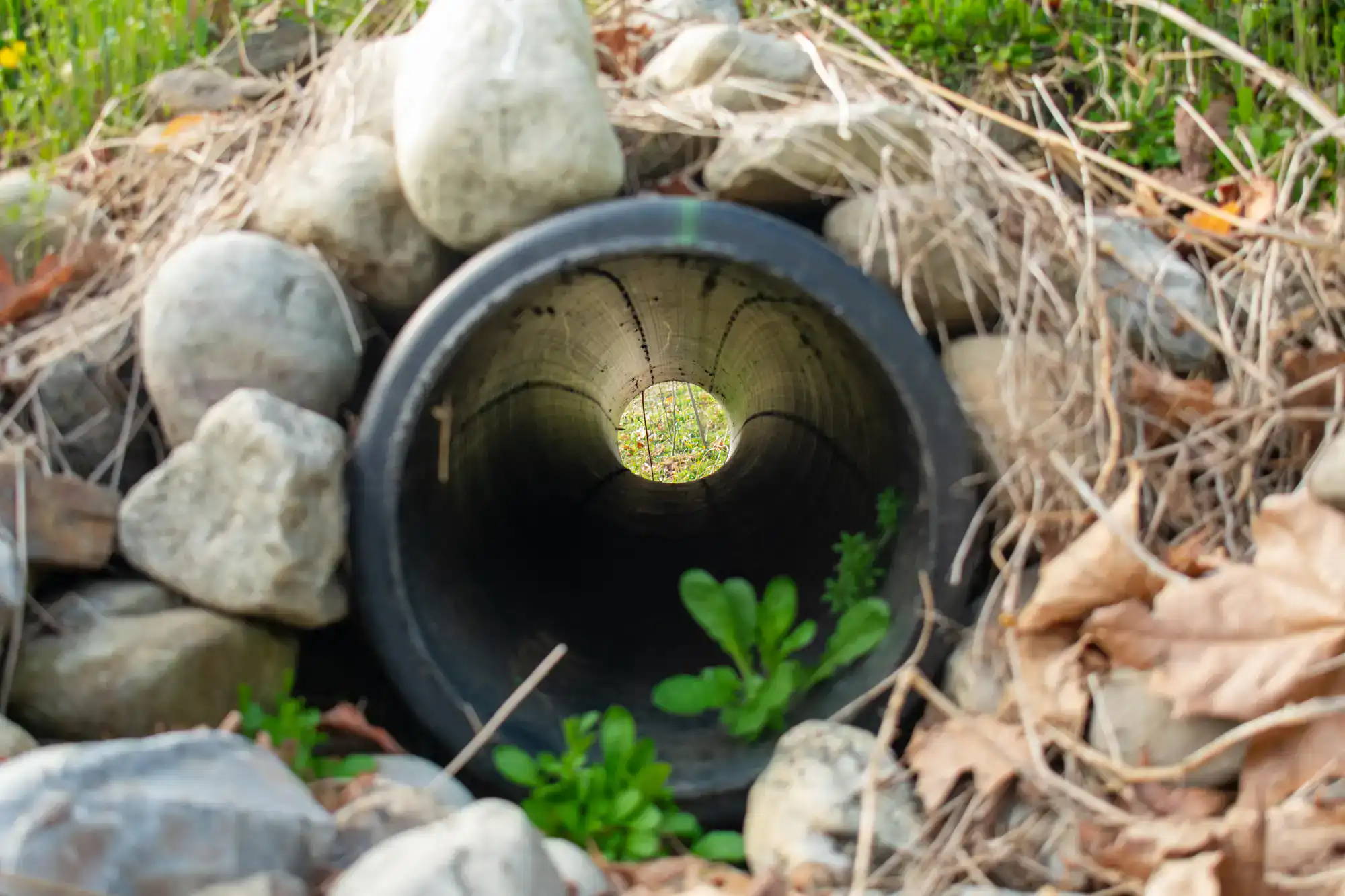
The Tookany Creek watershed runs right through Cheltenham Township, and the U.S. Army Corps of Engineers has formally studied it for flood damage reduction — because urbanization here has increased runoff and reduced the creek’s ability to handle heavy rain events. That is not a vague regional concern. It is a documented, local reality affecting Melrose Park residents directly. A properly installed french drain addresses the ground-level symptom of that larger problem: water that has nowhere to go until it finds your foundation wall.
We have been working in Melrose Park and the greater Montgomery County area for about 20 years. That means we have been inside homes like yours — pre-war colonials, postwar split-levels, stone ranches — long enough to know that drainage work in this area is rarely just a drainage job.
What sets us apart from every other contractor showing up in local search results is this: we are a Certified Lead Inspector and Risk Assessor. When we excavate around a foundation or break through a basement floor slab in a Melrose Park home, we test first. Because in a neighborhood where virtually every house predates 1978, lead paint and asbestos are not rare exceptions — they are the baseline. No standard waterproofing contractor in the Cheltenham Township area carries that certification. We do.
We are fully licensed, bonded, and insured at the environmental services level. We offer free estimates, cash discounts, and 24/7 availability — because water problems do not wait for business hours.
It starts with a free assessment. We come out, look at what you are dealing with — whether it is a saturated yard, a chronically wet basement, or water pooling against your foundation after every storm — and we tell you exactly what the problem is and what it will take to fix it. No pressure, no obligation.
Before any digging starts, we test. In Melrose Park’s older housing stock, excavating near a foundation can disturb lead-contaminated soil or lead paint that has been undisturbed for decades. We identify what is present and handle it under EPA and HUD protocols before the drainage work begins. This step is not optional for us — it is standard practice on every job.
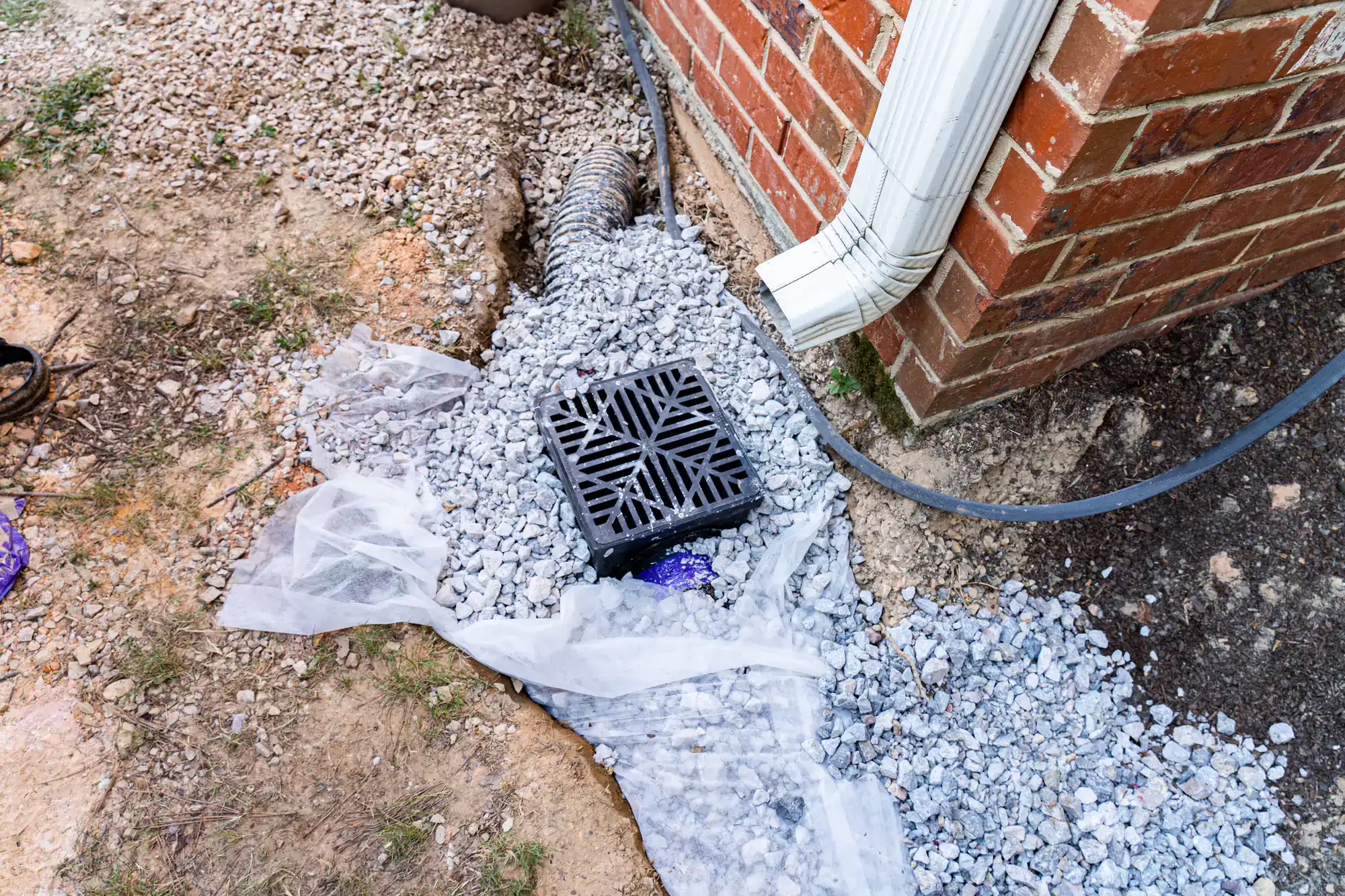
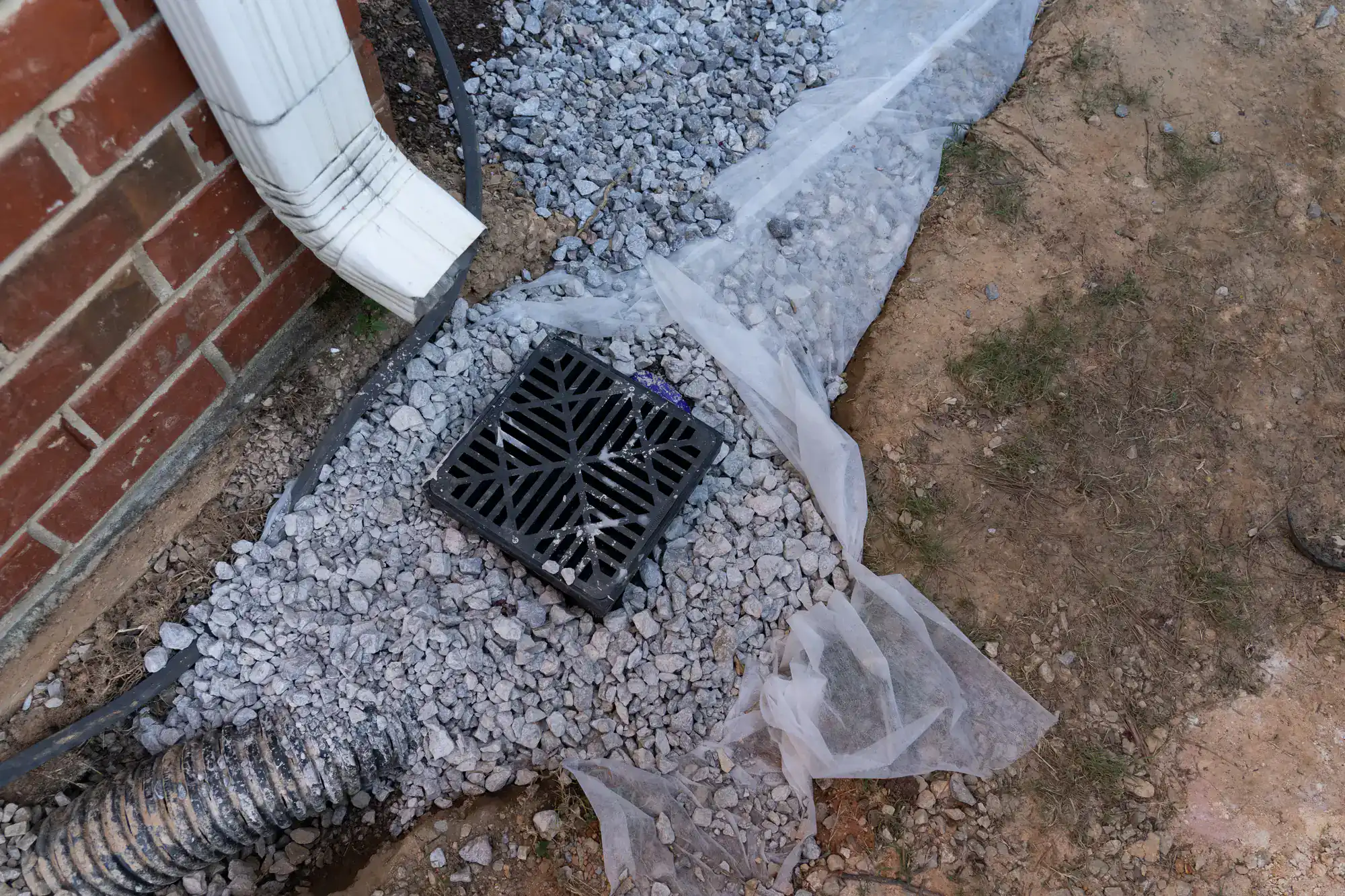
Then comes the installation itself. We use rigid perforated PVC pipe — not cheap corrugated flex tubing — surrounded by clean crushed stone and wrapped in geotextile filter fabric to keep soil from infiltrating the system over time. The pipe is set at a minimum 1% slope so gravity does the work, and the outlet is designed to move water well away from your foundation. Cheltenham Township’s Stormwater Management Ordinance requires a formal review for property improvements that disturb 250 square feet or more, and we navigate that permitting process correctly. When the job is done, we clean up and walk you through what was installed and why it will last.
Ready to get started?
French drain installation cost varies based on length, depth, soil conditions, and whether you need an interior system, an exterior system, or both. Nationally, the typical range runs from $1,650 to $12,250, with most residential projects landing around $5,000. For a Melrose Park home with clay-heavy Piedmont soil and a foundation that has been managing water pressure for 60 or 70 years, getting an accurate number means getting eyes on your specific property — which is exactly what the free estimate is for.
What you get with us goes beyond the drain itself. Because we hold environmental certifications that no standard drainage contractor in this area carries, we can handle whatever the excavation turns up — lead paint, asbestos pipe insulation, mold behind finished walls — without stopping the job and sending you to find a separate specialist. That one-stop model is not a convenience pitch. In a neighborhood like Melrose Park, where the housing stock age makes hazardous material encounters genuinely likely, it is a practical protection for your family and your project timeline.
We use HEPA filtration systems on every job that disturbs older materials, and we use state-of-the-art equipment throughout. The french drain system we install is built to last 30 to 40 years. At that lifespan and cost, you are looking at roughly $125 per year to protect a home worth well over $275,000 from the kind of water damage that FEMA estimates can run $25,000 from a single inch of flooding. Cash discounts are available, and we are happy to walk through the numbers with you before you commit to anything.

It depends on the scope of the work, but in many cases — yes. Cheltenham Township has adopted a Stormwater Management Ordinance that requires a formal stormwater management review for any property improvement that disturbs 250 square feet or more of ground. A french drain installation involving significant excavation, changes to surface drainage patterns, or a connection to the storm sewer system will likely trigger that review threshold.
This is not a step you want to skip. A contractor who bypasses the permit process to save time is leaving you exposed to code violations and potential enforcement action down the road. We are fully familiar with Cheltenham Township’s stormwater requirements and Pennsylvania DEP regulations, and we handle the permitting process as part of the job — so you are not left figuring it out on your own after the fact.
An exterior french drain is installed around the perimeter of your foundation, outside the home. It intercepts groundwater before it reaches your foundation wall and redirects it away from the structure. This is generally considered the more comprehensive solution because it addresses the problem at the source — but it requires excavation around the foundation, which in a pre-1978 Melrose Park home means testing for lead and handling whatever is found before digging begins.
An interior french drain is installed beneath the basement floor slab, along the interior perimeter. It captures water that has already entered through the foundation and channels it to a sump pump for removal. Interior systems are often used when exterior excavation is not practical — because of finished landscaping, tight lot lines, or access limitations that are common in Melrose Park’s dense, established neighborhood layout. Many homes end up with a combination of both. The right answer depends on where your water is coming from, which is something we assess during the free estimate.
A sump pump removes water that has already entered your basement. It does not stop water from getting in — it just manages the volume after the fact. If you have a sump pump running constantly after every rainstorm and your basement is still taking on water or staying damp, the underlying drainage problem has not been addressed. The pump is treating the symptom, not the cause.
In Melrose Park, this situation is common in homes where the original drainage system — installed 60 or 70 years ago — has finally reached the end of its useful life. The clay-rich Piedmont soil in this area holds water against foundation walls and does not drain freely, which means hydrostatic pressure keeps building even when a sump pump is running. A properly installed french drain system intercepts that water before it reaches the foundation, reducing the load on your sump pump and actually solving the problem instead of just keeping up with it.
This is the right question to ask, and most contractors in this area are not equipped to answer it honestly. If your home was built before 1978 — and in Melrose Park, that describes nearly every house on the block — there is a real possibility that lead-based paint is present on the foundation walls, in the soil immediately adjacent to the structure, or in other building materials that could be disturbed during excavation.
We are a Certified Lead Inspector and Risk Assessor. Before any excavation begins, we test for the presence of lead and other hazardous materials. If lead is found, we handle it under EPA and HUD protocols — with HEPA filtration, proper containment, and documented disposal — before the drainage work proceeds. No standard waterproofing contractor in the Cheltenham Township area holds this certification. Hiring one without it for a pre-1978 home means you have no way of knowing what was disturbed, how it was handled, or what exposure risk remains after the crew leaves.
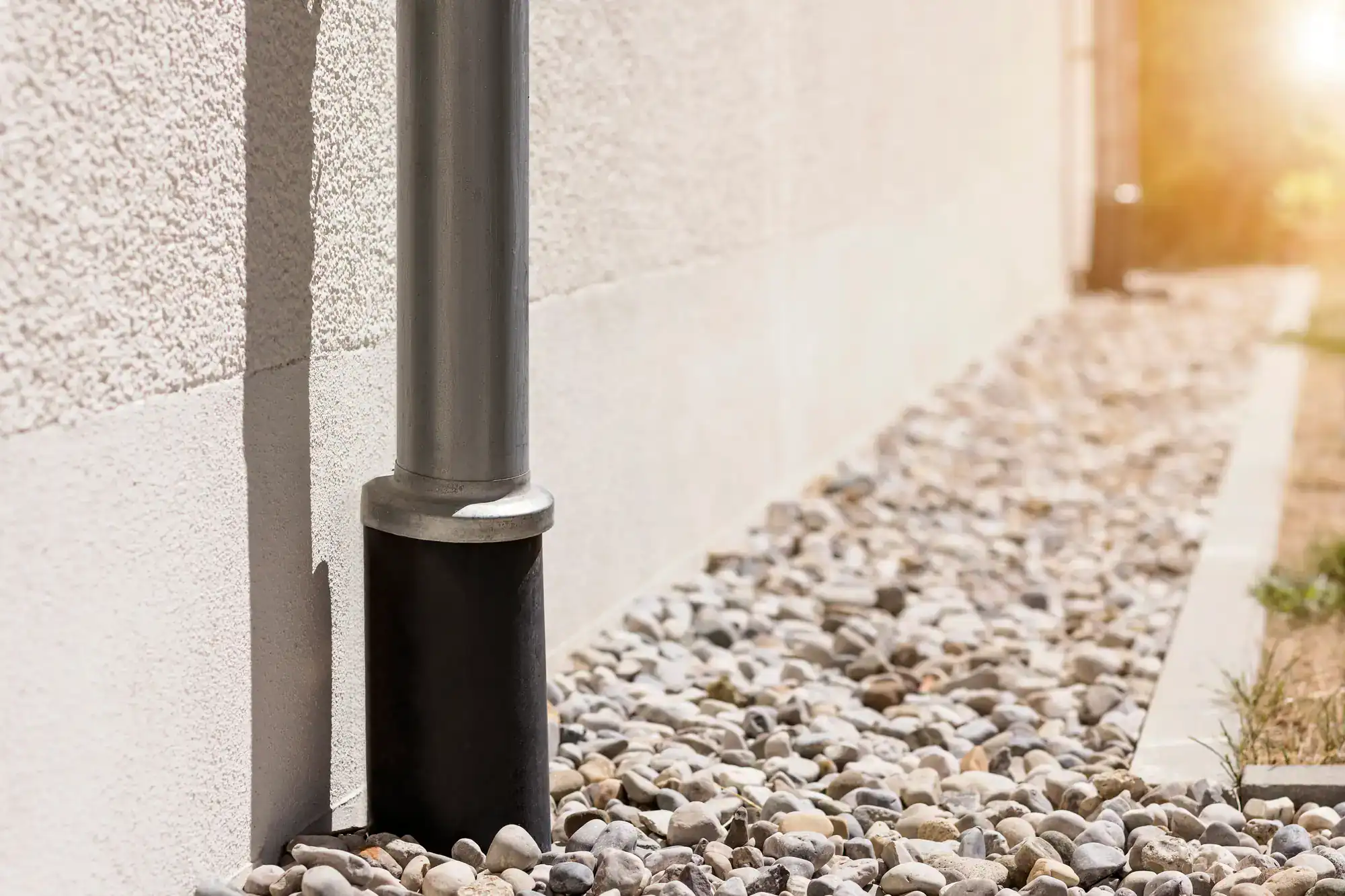
A french drain installed with the right materials and proper technique should last 30 to 40 years. The key variables are the pipe specification, the filter fabric, the stone, and the slope. Rigid perforated PVC pipe holds its shape and resists root intrusion far better than corrugated flex tubing, which collapses and clogs over time. Geotextile filter fabric wrapped around the pipe and stone prevents fine soil particles from infiltrating the system and reducing its drainage capacity.
In Melrose Park’s clay-heavy soil, filter fabric is especially important — clay particles are fine enough to work their way into a system that is not properly wrapped, and once that happens, drainage capacity drops significantly. We use professional-grade materials on every installation because the difference between a 5-year drain and a 40-year drain is almost entirely in the details that are invisible once the job is done.
Yes, it is worth asking about. Cash discounts are straightforward — when payment processing fees and administrative overhead are reduced on our end, we pass a portion of that savings directly to you. It is a practical arrangement that works well for homeowners who are paying out of pocket for a drainage project rather than financing it through a home equity line or insurance claim.
In Melrose Park, where a lot of homeowners have been in their homes for many years and are managing the ongoing costs of maintaining older housing stock, every reasonable saving matters. French drain installation is a real investment — typically in the range of a few thousand dollars depending on your specific situation — and the cash discount option brings that number down without any reduction in the quality of materials, the scope of the work, or the certifications behind it. Ask about it when you call for your free estimate.
Other Services we provide in Melrose Park