Hear from Our Customers
Fort Washington sits in the Wissahickon Creek watershed, with Sandy Run flowing right through Upper Dublin Township before it reaches the State Park. That’s not a scenic footnote — it means the groundwater table in this area rises faster and stays higher than most homeowners expect, especially during spring snowmelt and heavy summer storms. The clay-heavy soils throughout Montgomery County make it worse. Clay doesn’t drain. It holds water against your foundation until something gives.
A properly installed French drain system changes that equation entirely. Water gets intercepted before it builds pressure against your walls, redirected away from the foundation, and discharged safely — instead of sitting in your soil and looking for the nearest crack to exploit. For homeowners in Fort Washington neighborhoods like Dublin Chase, where the original Toll Brothers drainage systems are now 35-plus years old, this is less of an upgrade and more of a necessity.
The result is a dry basement, stable soil around your foundation, and a yard that doesn’t turn into a swamp after every storm. For a home worth $575,000 in this market, that’s not a minor quality-of-life improvement. It’s protecting a serious financial asset from one of the most common and preventable causes of structural damage.
We’ve been working on homes across Montgomery County for close to 20 years. That means we’ve dug into the clay-heavy soil around foundations in Fort Washington and Upper Dublin Township, pulled permits from the township building on Loch Alsh Avenue, and dealt with the drainage conditions that come with living in the Wissahickon watershed — not once, but hundreds of times.
What makes us genuinely different isn’t just the drainage work. We’re a certified environmental hazard firm, which means we’re also Certified Lead Inspectors and Risk Assessors. In Fort Washington, with Victorian-era homes in Elliger Park and a significant stock of pre-1978 properties throughout the area, that matters. When we excavate near a foundation, we test first. If there’s lead-contaminated soil, asbestos, or mold in the picture, we handle it — not a separate contractor you have to find and schedule yourself.
Fully licensed, bonded, and insured at the environmental services level. Free estimates. Cash discounts available. And yes, we answer the phone at 2 AM when water is coming in during a nor’easter.
It starts with a free on-site estimate. We come out, look at your yard, assess where water is entering or pooling, and give you a clear picture of what’s going on and what it will take to fix it. No vague ballpark. No pressure to sign anything on the spot.
Before any digging starts, we do something most drainage contractors skip entirely — we assess for environmental hazards. For older homes in Fort Washington, especially anything built before 1978, that means checking for lead paint on foundation surfaces and lead-contaminated soil in the excavation zone. This is a required step when you’re a certified environmental services firm, and it’s the step that protects your family when the trenching machine starts moving dirt.
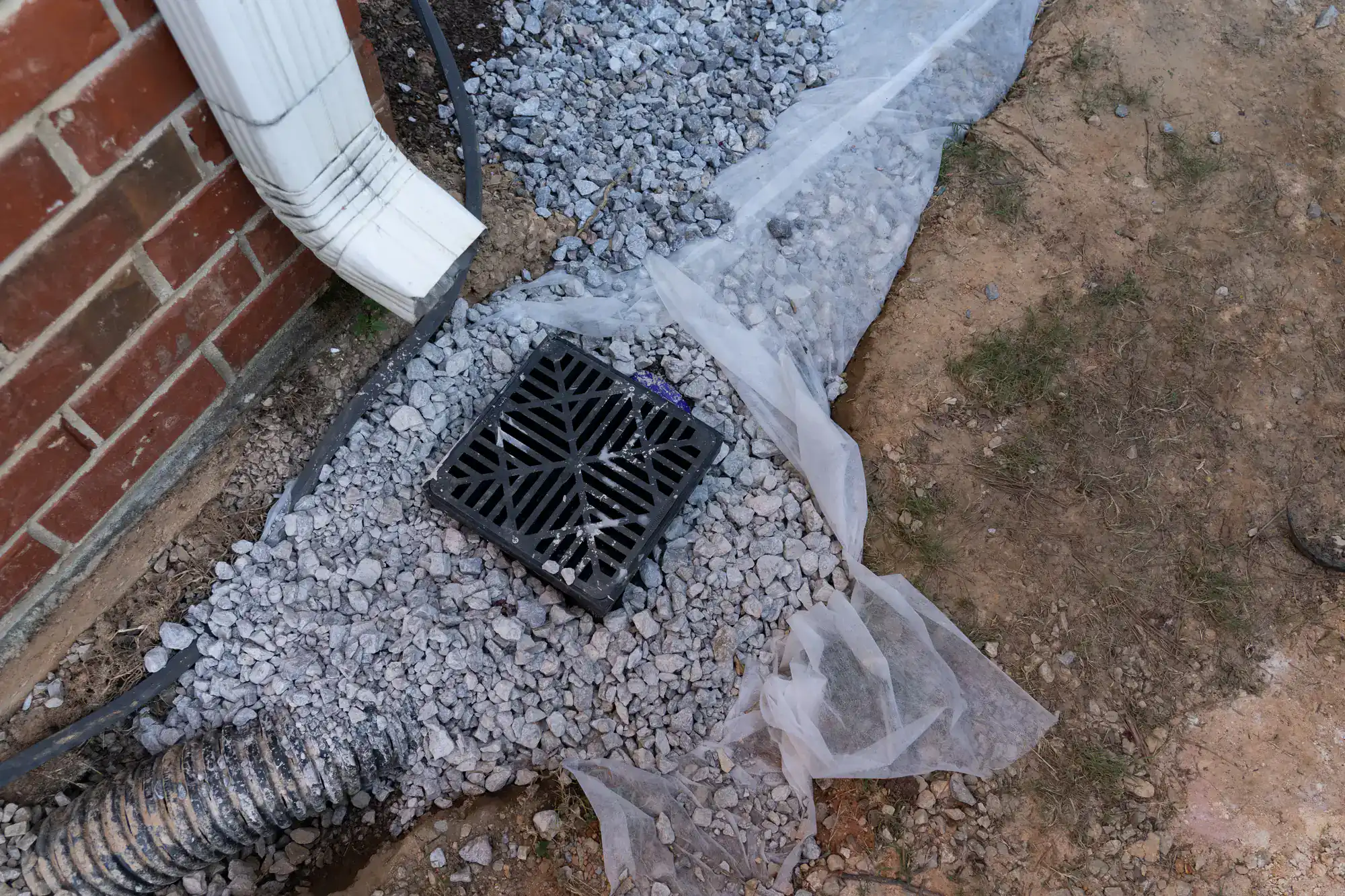
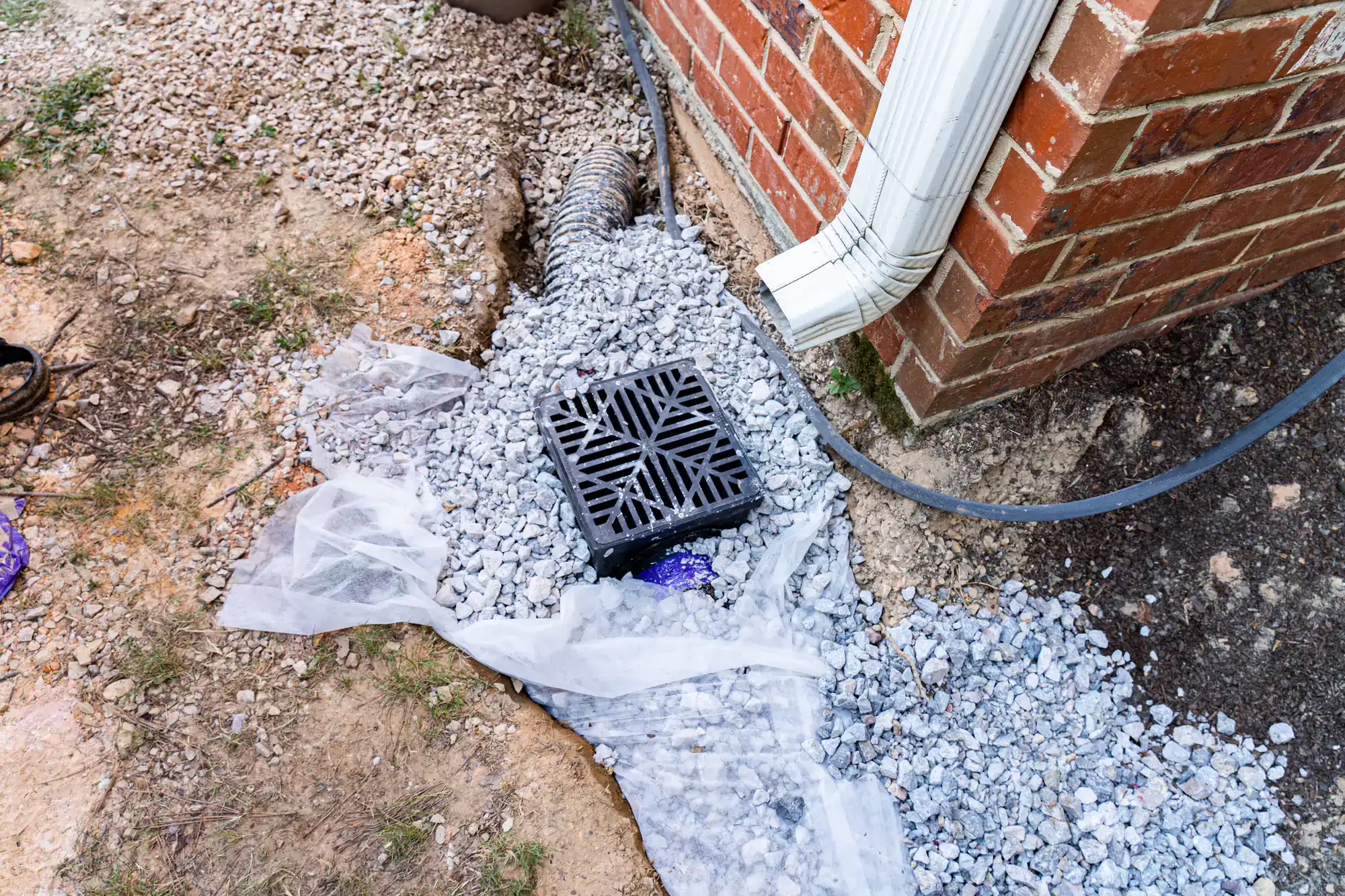
Once the site is cleared, we install the French drain system the right way: rigid perforated PVC pipe, not the corrugated flex pipe that fails in a few years, wrapped in geotextile filter fabric to keep Fort Washington’s clay soil from clogging the system, set in clean crushed stone, and graded at the correct slope to move water to a code-compliant outlet. Upper Dublin Township requires a building permit for this work, and we handle that process as part of the job. When we leave, the drainage is done, the site is cleaned up, and any hazardous materials encountered have been properly remediated — not left for you to deal with later.
Ready to get started?
Most drainage contractors do one thing: install pipe and leave. We operate differently because our background is environmental hazard abatement first. That means every French drain project we take on in Fort Washington comes with the full picture — drainage installation, environmental testing, mold remediation if it’s needed, lead or asbestos handling if it’s present, and full site cleanup when the job is done.
For homeowners near Sandy Run or in the lower-lying parts of Upper Dublin Township, we also assess whether interior French drain installation makes more sense than exterior, or whether a combination of both is the right call. Interior systems intercept water at the footing level and route it to a sump pump — useful when exterior excavation isn’t practical or when hydrostatic pressure is coming from multiple directions. Exterior systems address the source directly by redirecting surface and subsurface water before it ever reaches the foundation wall. We’ll tell you honestly which approach fits your specific situation.
Yard drainage is part of the conversation too. If your property is graded in a way that channels runoff toward the house — something we see regularly in Fort Washington given the clay soil and the watershed geography — we address that as part of the overall drainage plan, not as an add-on you have to ask about separately. One call, one company, one job done right.

Yes, in most cases. Upper Dublin Township enforces the Pennsylvania Uniform Construction Code and requires building permits to be submitted and approved before any construction work begins. The permit office is located at the Township Building at 801 Loch Alsh Avenue in Fort Washington, and Code Enforcement hours run from 8:00 AM to 3:00 PM. Skipping this step isn’t just a code violation — it can create real problems when you go to sell the home, since unpermitted work often surfaces during the buyer’s inspection and can delay or kill a sale.
We handle the permit process as part of the project. We know Upper Dublin Township’s requirements, we’ve pulled permits here before, and we manage it so you don’t have to navigate the township’s process on top of everything else. If you’ve gotten quotes from other contractors who didn’t mention permits at all, that’s worth asking about before you sign anything.
The national average for French drain installation runs between $1,650 and $12,250, with most residential projects landing somewhere in the $3,000 to $7,000 range depending on the length of the system, how deep it needs to go, and the complexity of the outlet situation. In Fort Washington, a few local factors can influence where your project falls in that range. The clay-heavy soils in this part of Montgomery County require more careful excavation and proper gravel media to keep the system from clogging — cutting corners on materials here is exactly how you end up with a failed drain in three years instead of thirty.
Older homes, particularly in Fort Washington neighborhoods like Elliger Park or any pre-1978 property, may add cost if environmental testing reveals lead-contaminated soil that needs to be handled properly before or during excavation. That’s not a surprise fee we spring on you — it’s something we assess during the free estimate so you know the full scope before any work starts. We also offer cash discounts, which can meaningfully reduce the final number.
There are two common options: rigid perforated PVC pipe and corrugated flexible pipe. Rigid PVC is the right choice for a system you want to last 30 to 40 years. It holds its shape, maintains proper slope, and doesn’t collapse under soil pressure over time. Corrugated flex pipe is cheaper and easier to install, which is why a lot of contractors default to it — but it’s also prone to collapsing, crushing under clay soil pressure, and clogging with sediment within a few years.
In Fort Washington, the clay soil environment makes pipe selection even more important. Clay is heavy and shifts seasonally with freeze-thaw cycling, which puts real lateral pressure on anything buried in the ground. A flex pipe system installed in this soil type is likely to fail faster than it would in sandier conditions. We use rigid perforated PVC wrapped in geotextile filter fabric and set in clean crushed stone — the combination that holds up in this specific ground environment over the long term.
It’s something that needs to be addressed before excavation starts, yes. The Pennsylvania Department of Health is clear that any home built before 1978 may contain lead-based paint, and homes built before 1950 are even more likely to have it. When lead paint weathers off exterior foundation surfaces over decades, it accumulates in the surrounding soil. Excavating that soil without testing first — and without the proper protocols in place — can spread lead dust through the yard and potentially into the home.
We are Certified Lead Inspectors and Risk Assessors, which means we test before we dig. If lead-contaminated soil is present, we handle it under proper protocols — HEPA filtration, containment, safe disposal — rather than just moving it around and leaving the hazard in place. For Fort Washington homeowners with Victorian-era properties in Elliger Park or any mid-century home in the area, this is the single most important reason to work with a contractor who holds environmental credentials, not just a waterproofing license.
The short answer is that it depends on where the water is coming from and how it’s getting in. An exterior French drain intercepts water before it reaches your foundation — it’s the most direct solution when the problem is surface runoff or subsurface water building up in the soil around the house. An interior French drain, sometimes called a perimeter drain, is installed inside the basement at the footing level and routes water that has already entered the wall to a sump pump for discharge. It doesn’t stop water from entering the wall, but it manages it before it causes damage to your living space.
In Fort Washington, the combination of clay soil, a high groundwater table near Sandy Run, and the freeze-thaw cycling that cracks foundations over time means many homes benefit from both. We assess the specific conditions at your property during the free estimate — where water is entering, what the grading looks like, what the soil profile is — and give you a straight answer about which approach actually addresses your situation rather than defaulting to the more expensive option automatically.
Yes, it’s worth asking about. Cash payments reduce the administrative overhead on our end — no processing fees, no delayed settlements, simpler bookkeeping — and we pass that savings directly to you. It’s a straightforward exchange that works for both sides, and for a project in the $4,000 to $7,000 range, the discount can be a real number, not a token gesture.
For Fort Washington homeowners who are already investing in a home worth well over half a million dollars, every reasonable way to reduce project cost without reducing quality is worth knowing about. The discount never affects the materials we use, the permit process, or the environmental testing — those are fixed parts of how we work regardless of payment method. If you’re getting a free estimate and cash is an option for you, just bring it up. We’ll tell you exactly what it means for your specific project.
Other Services we provide in Fort Washington