Hear from Our Customers
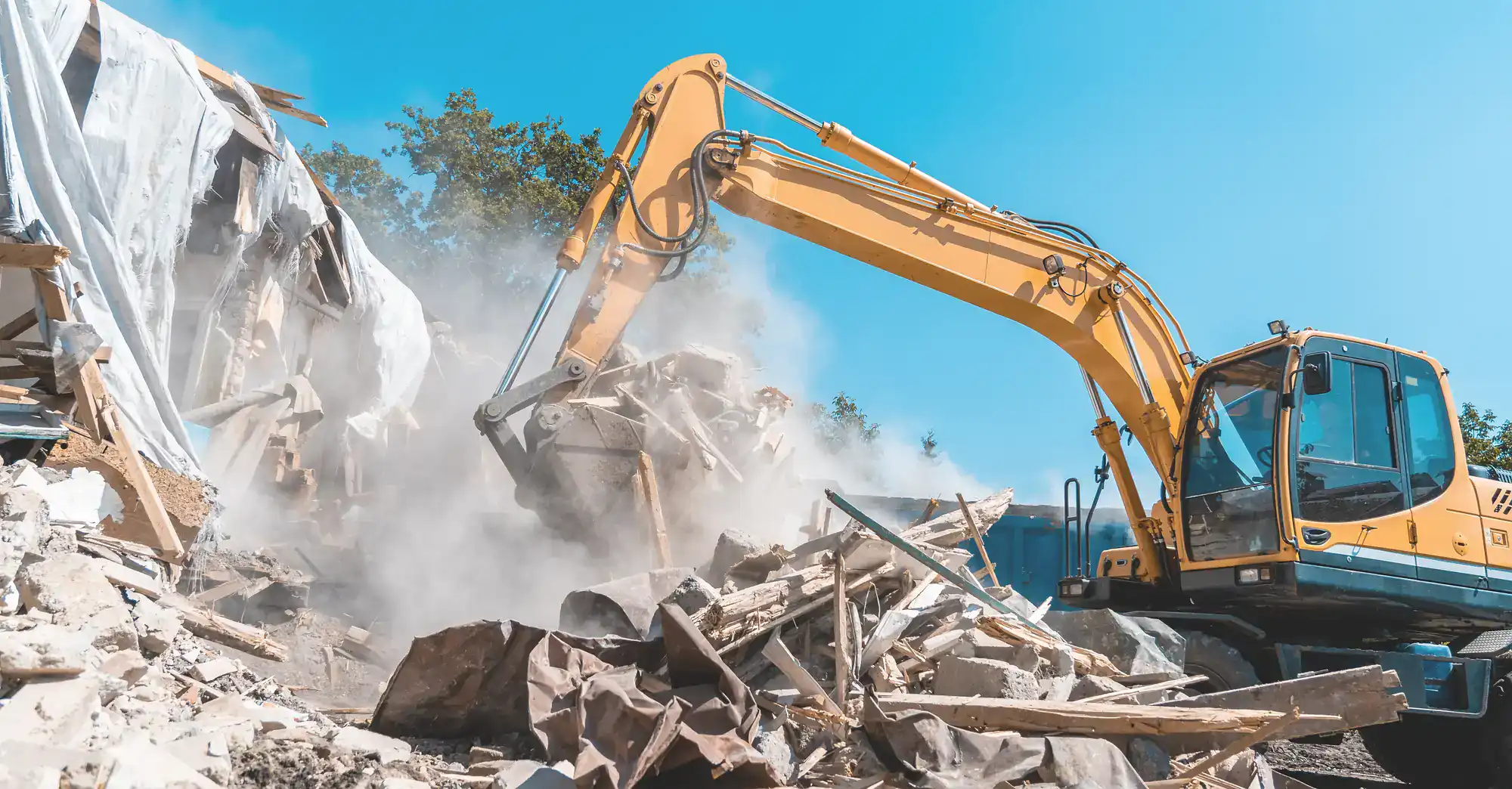
The biggest risk in any gut renovation in Tredyffrin isn’t the demo itself — it’s what shows up mid-project. A wall comes down in a Chesterbrook townhome and there’s asbestos-wrapped pipe insulation behind it. A bathroom gut in Paoli reveals mold that’s been sitting behind the tile for years. Most contractors stop cold at that point, call someone else, and leave your home torn open while the scheduling and pricing sort themselves out. That delay can stretch into weeks.
When we’re on the job, that discovery doesn’t stop anything. Testing, abatement, and demolition all happen under one roof — one crew, one license, one continuous workflow. You don’t lose momentum, and you don’t absorb the cost of a project shutdown.
There’s also the lead paint reality that applies to a significant portion of Tredyffrin’s housing stock. Homes built before 1978 — and there are many throughout Berwyn, Paoli, and the older pockets of the township — require a lead-safe certified contractor for any renovation work that disturbs painted surfaces. We hold that certification. Most demo-only contractors don’t, which means they’re either skipping a legal requirement or stopping your job to bring in someone who has it. Neither outcome is good for your timeline or your home.
We’ve been doing this work in Chester County for over twenty years, with deep roots in Tredyffrin specifically. That’s not a tagline — it means we’ve pulled permits through Tredyffrin Township’s Permits and Inspections Department, worked inside Chesterbrook’s townhome construction, and handled the full range of what older Main Line homes produce when you open the walls. We know what to expect before the first cut is made.
Our credentials are real and verifiable: PA state-licensed asbestos contractor, Certified Lead Inspector and Risk Assessor, EPA/HUD compliant, fully licensed, bonded, and insured. These aren’t boxes checked for a website — they’re the legal requirements for doing this work properly in Pennsylvania, and we hold all of them.
What that means for you is simple. You’re not hiring a demo crew and hoping the hazmat situation works itself out. You’re hiring one contractor who handles the entire scope, keeps your project on schedule, and doesn’t create new problems in the process of solving the original one.
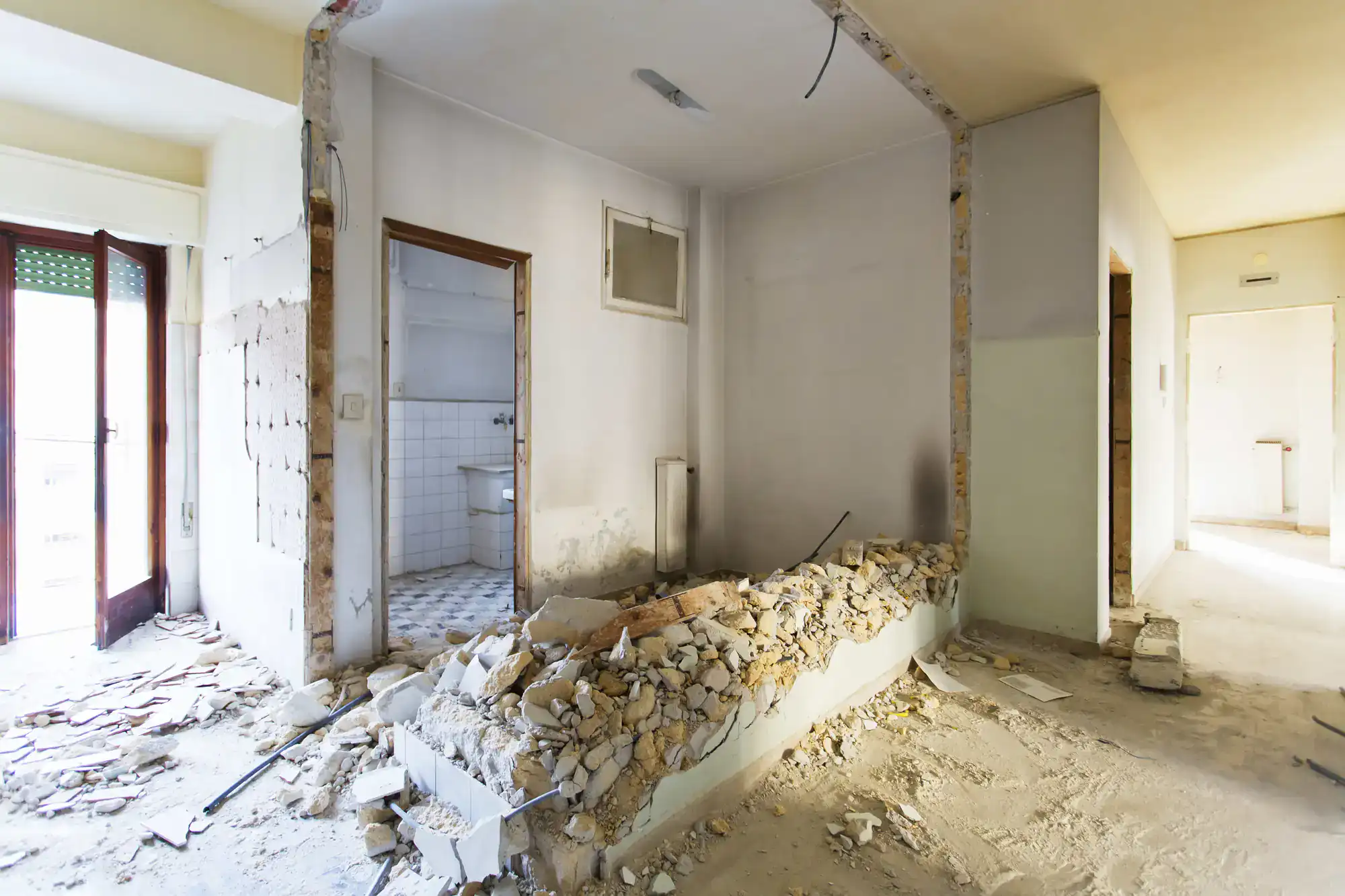
It starts with a free on-site evaluation. We come out, walk the space, and give you a real picture of what the project involves — including any environmental testing that should happen before demolition begins. In Tredyffrin’s older housing stock, that step isn’t optional. Pennsylvania’s NESHAP regulations require an asbestos survey to be submitted to the PA DEP at least ten days before any demolition project in a building that may contain asbestos. We handle that filing. You don’t have to figure it out yourself.
If testing turns up asbestos, lead, or mold — which in Chesterbrook’s late-1970s construction is a planning assumption, not a surprise — remediation happens first, under full state certification, before demolition continues. HEPA filtration systems are used throughout containment to keep the rest of your home protected. Once the environment is clear, the gutting proceeds on schedule.
Throughout the job, there’s licensed on-site supervision at every stage. That matters in Tredyffrin, where the T/E School District calendar drives renovation timelines and families are often working against a hard deadline to be back in the house before September. We run a structured process from evaluation to final inspection — not because it sounds good on paper, but because it’s what keeps your project on track when the stakes are real.
Ready to get started?
We handle interior demolition, full gut-outs, selective demolition, and structural gutting — along with the environmental work that almost always comes with it in Tredyffrin and the surrounding Chester County area. That includes asbestos testing and removal, lead paint abatement, mold remediation, and waterproofing when moisture damage is part of the picture. The Great Valley’s low-lying terrain and Tredyffrin’s older foundation stock make basement water intrusion a common discovery during renovation work. We don’t refer that out — we handle it.
For homeowners in Chesterbrook, Paoli, Berwyn, Strafford, and the broader Tredyffrin Township area, the practical value of this model is significant. You’re not coordinating three separate contractors in a sequential process, each with their own mobilization fees and scheduling windows. You’re making one call, getting one crew, and moving through testing, remediation, and demolition without the stops and starts that inflate both cost and timeline on a gut renovation.
Tredyffrin Township requires building permits for demolition work, and we’re fully familiar with the local permit process. Whether you’re gutting a kitchen in a Chesterbrook carriage home, stripping a Victorian-era bathroom in Berwyn, or doing a full floor gut in a pre-war Paoli colonial, the regulatory requirements are accounted for before work begins — not discovered mid-project. We offer free estimates, cash discounts apply, and we’ll beat any legitimate competing estimate.

Yes. Tredyffrin Township’s Permits and Inspections Department requires a building permit to demolish, alter, or otherwise structurally change any building — and that includes interior gut work. If you’re removing walls, ceilings, or structural elements as part of a renovation, you need a permit before work begins. Skipping that step creates liability for the homeowner and can complicate resale down the line.
Beyond the local permit, Pennsylvania’s NESHAP regulations add a state-level requirement: if the building may contain asbestos, an asbestos survey must be submitted to the PA Department of Environmental Protection at least ten days before demolition starts. In Tredyffrin’s housing stock — especially anything built before 1985 — that requirement applies to most projects. We handle both the local permit coordination and the DEP notification as part of the project process, so you’re not navigating that paperwork on your own.
The honest answer is that you don’t know until you test — and in Tredyffrin, the probability is high enough that testing should be a standard first step, not an afterthought. Chesterbrook’s 28 villages were built beginning in 1978, right at the peak of asbestos use in residential construction. Floor tiles, ceiling tiles, pipe insulation, joint compound, and HVAC components in those homes routinely contain asbestos-containing materials. The same applies to older homes throughout Paoli, Berwyn, and Strafford.
We conduct pre-demolition asbestos testing as part of the project evaluation. If ACMs are found, they’re removed under PA state certification before gutting continues. If nothing turns up, you have documentation that confirms the space is clear — which matters both for your contractor’s safety and for future resale disclosure. Either way, you’re not making assumptions about a material that carries serious health and legal consequences if mishandled.
If you’re working with a demo-only contractor, the answer is usually: everything stops. They’re not licensed to handle it, so they call an abatement company, your project goes on hold, and you’re absorbing the cost of the delay plus the abatement sub’s markup on top of whatever the original demo quote was. In older Tredyffrin homes, this scenario isn’t rare — it’s predictable.
With us, a mid-project discovery is a workflow adjustment, not a shutdown. Because testing, abatement, and demolition are all handled in-house, the crew pivots to remediation, clears the affected area under proper containment with HEPA filtration, and continues the demolition once the environment is safe. Your project keeps moving. The timeline shifts minimally rather than collapsing entirely. That’s the practical difference between hiring a one-stop environmental and demolition contractor versus a crew that only handles one part of the job.
Interior demolition generally runs between $2 and $8 per square foot, depending on the scope of work, the materials involved, and what’s found during the process. A full gut-out of a kitchen or bathroom in a Tredyffrin home typically falls in the $2,500 to $9,800 range for the demolition work itself — though environmental remediation adds to that figure if asbestos, lead, or mold is present.
In Tredyffrin’s market, where median home values sit around $745,000 and renovation projects routinely run well into six figures, the demolition and gutting phase is a relatively small percentage of total project cost. What matters more than finding the cheapest demo bid is avoiding the cost of a mid-project shutdown — which, when you factor in delay, rescheduling, and a separate abatement contractor’s mobilization fee, almost always costs more than hiring a full-service contractor from the start. We offer free estimates and will beat any legitimate competing quote, so you have a clear number before committing to anything.
Yes — but only if they hold the right credentials. Pennsylvania requires asbestos removal contractors to hold a state-issued license under the Pennsylvania Asbestos Accreditation and Certification Act. This is a specific, verifiable credential — not a generic business license. A contractor who does demolition but doesn’t hold PA asbestos certification cannot legally perform abatement work, which means they either skip it (creating serious liability for you) or stop the project and bring in someone who can.
We hold PA state asbestos certification, a Certified Lead Inspector and Risk Assessor designation, and EPA/HUD compliance — meaning we are legally authorized to handle testing, abatement, and demolition under one license. For homeowners in Tredyffrin’s older housing stock, where the odds of encountering asbestos or lead during a gut renovation are genuinely high, having one contractor who can do all of it legally and continuously is the difference between a project that runs on schedule and one that doesn’t.
Yes. We’re available 24 hours a day, seven days a week, including emergency response situations. In Tredyffrin, that matters more than it might in some other markets. The Great Valley’s low-lying terrain makes certain properties — particularly those in older neighborhoods and along the township’s drainage corridors — more susceptible to basement flooding and water intrusion after heavy rain. The Philadelphia region averages around 46 inches of precipitation annually, and a significant storm can send water into a foundation fast.
When that happens — a burst pipe in a Chesterbrook townhome at midnight, a flooded basement in Paoli after a heavy rain, a mold discovery that turns up during a weekend renovation — you need a licensed contractor who can respond immediately, not one who returns calls during business hours. We pick up the phone. We assess the situation, contain the damage, and begin remediation before the problem compounds. For Tredyffrin homeowners sitting on homes worth $700,000 or more, the ability to reach a qualified contractor at any hour isn’t a luxury — it’s straightforward risk management.
Other Services we provide in Tredyffrin