Hear from Our Customers
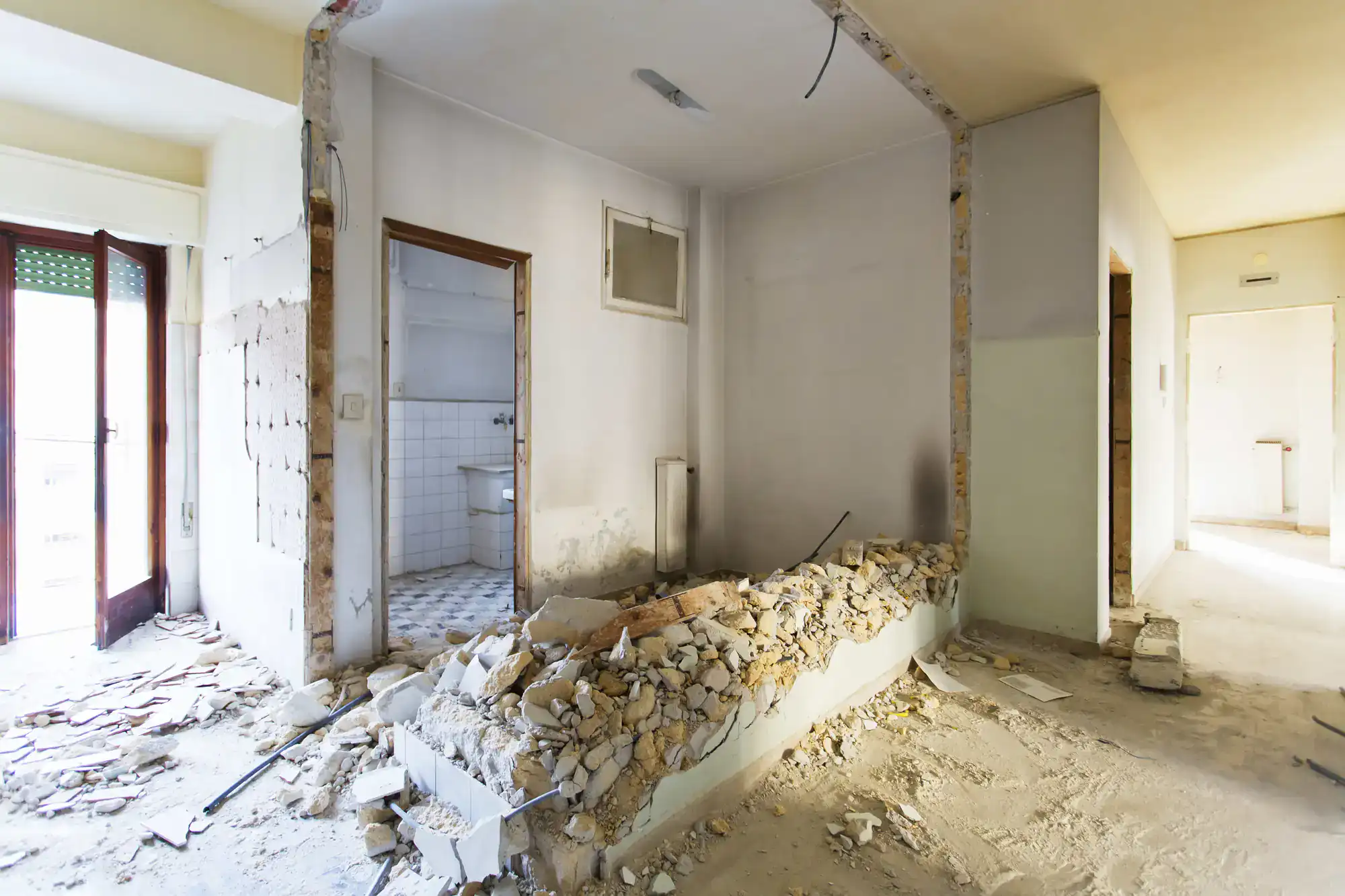
When you gut a room in a Glenside home, you’re not just pulling drywall. You’re opening up walls that have been sealed since the Coolidge administration — and in neighborhoods like Ardsley and Edge Hill, where most homes predate World War II, what’s behind those walls rarely surprises us. Asbestos floor tiles, lead paint on the original millwork, plaster over balloon framing — we’ve seen it hundreds of times in homes exactly like yours. The difference is, we don’t stop when we find it.
Most demolition contractors in this market are demo-only. They hit something hazardous, and the job goes on hold while you scramble to find a certified abatement contractor, wait for their schedule to open up, and hope the timeline doesn’t blow up entirely. That’s not how this works with us. Testing, abatement, and demolition happen under one contract, with one crew, on one timeline. Your project keeps moving.
What that means practically: you get a gutted space that’s actually clean — not just cleared. No lingering asbestos fibers. No lead dust left behind. No liability hiding in the walls. And because we’re fully licensed, bonded, and insured for both the environmental and demolition sides of this work, you’re protected from the moment we walk in to the moment we walk out. For a homeowner sitting on a $500,000-plus property in one of Pennsylvania’s most competitive real estate markets, that protection isn’t a bonus — it’s the whole point.
EJS Environmental Services LLC has been working in Glenside and Montgomery County for over twenty years — long enough to know exactly what’s inside a 1920s colonial off Easton Road and what it takes to gut it safely, legally, and without blowing up your schedule. This isn’t a franchise operation or a junk-removal company that added “demo” to their service list. We’re a licensed, certified environmental and demolition contractor that has been doing this specific type of work, in homes exactly like yours, for a long time.
We hold the Pennsylvania state asbestos certification, a Certified Lead Inspector and Risk Assessor credential, and full EPA/HUD compliance — credentials that are required by law for the kind of work that Glenside’s pre-war housing stock almost always demands. We’re also fully licensed, bonded, and insured on both sides of the work: environmental and demolition. Cheltenham Township’s permit process, the Historical Architectural Review Overlay, the new OpenGov submission system the township launched in early 2025 — we know how it works, and we handle it.
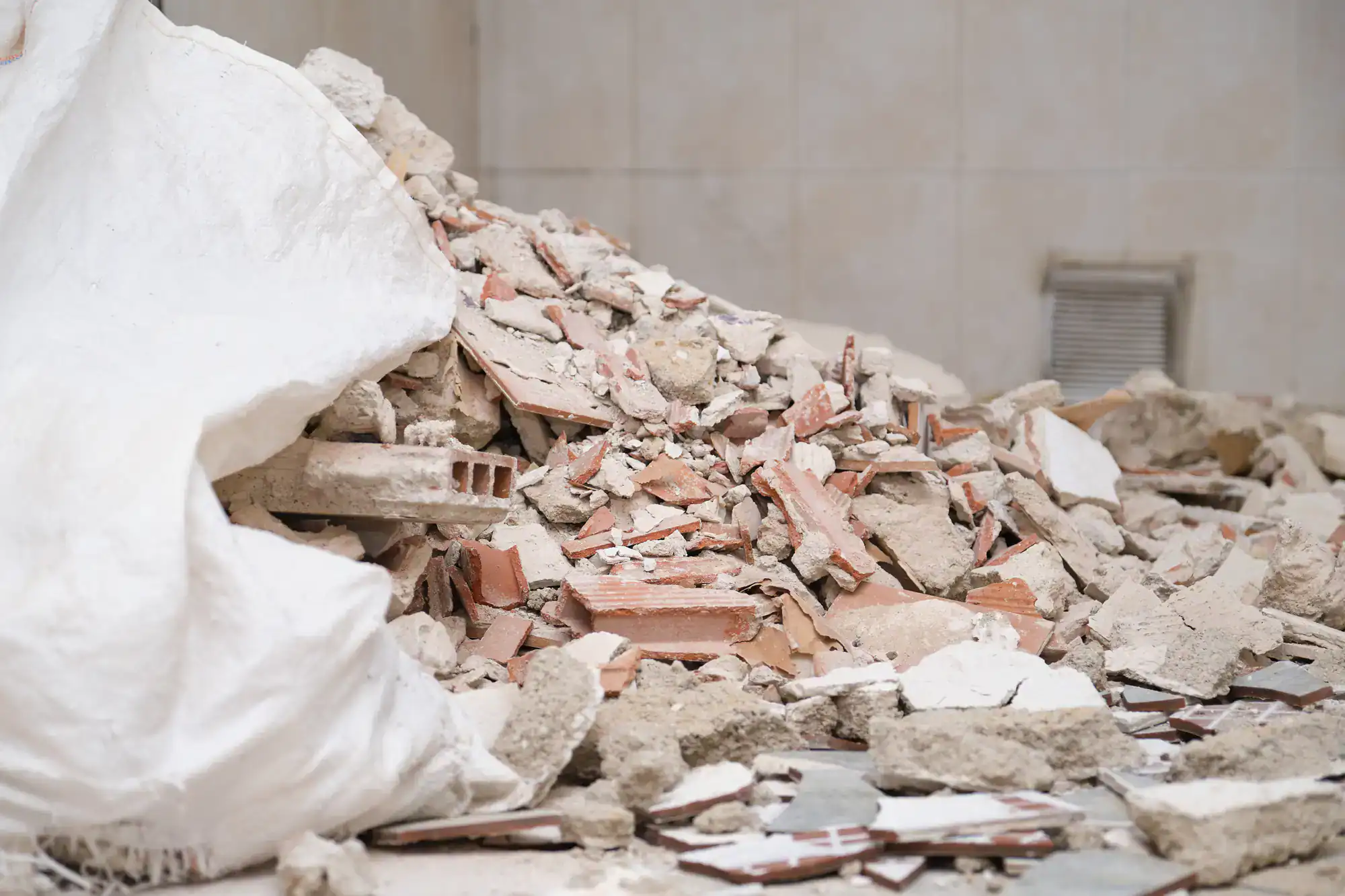
It starts with a free on-site estimate. We come to your property, walk the space, and give you a straight answer about what the job involves — including whether testing for asbestos or lead is warranted. In Glenside, where the majority of homes were built before 1939, that answer is almost always yes, and we’d rather tell you upfront than have it become a mid-project crisis.
If testing confirms hazardous materials — which is common in homes throughout Ardsley, Edge Hill, and the surrounding neighborhoods — we handle abatement before demolition begins. That means containment, licensed removal, and proper disposal under EPA and OSHA protocols. HEPA filtration runs throughout. When that phase is complete, demolition proceeds: interior gutting, structural removal, floor and ceiling demo, whatever the scope calls for. Because we’re managing both phases in-house, there’s no gap between abatement completion and demo start. The crew that knows your project keeps working your project.
Before any work begins, we pull the appropriate permits through Cheltenham Township. We’re familiar with the township’s building and zoning department, including the updated online permit system they rolled out in February 2025. Once the work is done, the space is clean, inspected, and ready for whatever comes next — whether that’s a contractor building it back out or you doing it yourself. From first call to final walkthrough, you’re dealing with one company the entire way.

Ready to get started?
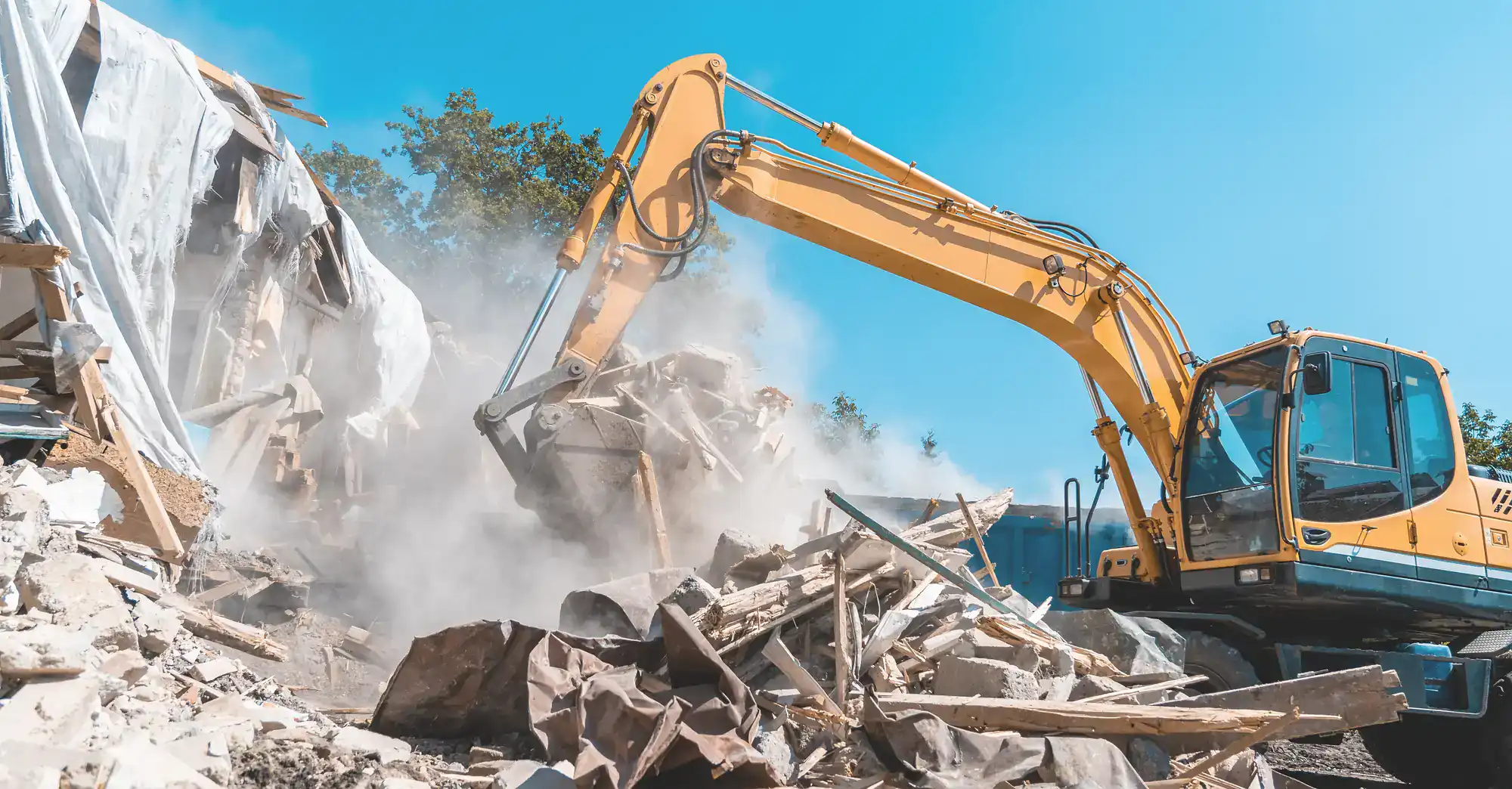
The demolition services we provide in Glenside cover the full range of what residential and light commercial projects actually require. Interior gutting, kitchen and bathroom demolition, basement demo, floor and ceiling removal, load-bearing wall work, shed and structure removal — if it needs to come down, we handle it. But what sets this apart from every other demo contractor you’ll find in a search result is the environmental side of the equation.
In Cheltenham Township, where Glenside sits, the overwhelming majority of homes were built before modern hazmat regulations existed. Asbestos was standard in pipe insulation, floor tiles, ceiling materials, and joint compound well into the 1970s. Lead paint was used in virtually every home built before 1978. When your home was built in the 1920s or 1930s — which describes most of Glenside — both are a realistic part of the job. We test for them, remove them under state-issued certification, and document everything for your records and your contractor’s peace of mind.
We also offer waterproofing and environmental clean-outs as part of the same service model, which matters in a community where older homes and aging infrastructure can turn a straightforward gut renovation into a multi-issue project. Cash discounts are available, and we’ll beat any comparable estimate from a licensed contractor doing the same scope of work. Call us to get a free estimate — no pressure, no obligation, just a straight answer about what your job involves and what it’ll cost.

If your home was built before 1978 — and in Glenside, most were built well before that — the honest answer is that both are realistic possibilities. More than half of Glenside’s housing stock predates 1939, which means asbestos-containing materials were commonly used in original construction: pipe insulation, floor tiles, ceiling tiles, plaster additives, and joint compound. Lead paint was standard on interior and exterior surfaces in homes built before 1978, and federal law requires lead-safe certified contractors for any renovation work in those properties.
The only way to know for certain is testing. We use bulk and air sampling methods to identify asbestos-containing materials before any demolition begins. Lead testing follows a similar process. If either is present, we handle abatement in-house under our Pennsylvania state asbestos certification and Certified Lead Inspector and Risk Assessor credentials — so your project doesn’t stall waiting for a separate contractor to get scheduled. In a town where pre-war construction is the norm, skipping this step isn’t just risky — in many cases, it’s illegal.
Yes, in most cases. Because Glenside is a census-designated place within Cheltenham Township — not an independent borough — all building permits, demolition permits, and zoning approvals go through Cheltenham Township’s Building, Zoning, and Codes department. The scope of your project determines exactly what’s required, but any work involving structural elements, load-bearing walls, or significant interior gutting will typically require a permit before work begins.
Cheltenham Township launched a new online permit submission system in February 2025, powered by OpenGov, which has streamlined the application process. If your property falls within or near one of the township’s designated historic areas — which applies to some properties near Glenside’s older landmarks — the Historical Architectural Review Overlay may add a layer of review to the process. We handle permit coordination as part of our service. We know the township’s process, we know what’s required for the type of work we do, and we make sure everything is filed correctly before the first tool comes out.
This is exactly the scenario that catches homeowners and general contractors off guard when they hire a demo-only contractor. If asbestos is discovered mid-project by a contractor who isn’t licensed for abatement, work has to stop — completely — until a certified abatement contractor can be brought in, scheduled, and cleared to proceed. That delay can stretch days or weeks, and the cost of coordinating two separate contractors mid-project adds up fast.
With us, this scenario plays out differently. Because we handle both demolition and environmental abatement in-house, discovering asbestos mid-project doesn’t stop the job — it shifts it. We contain the area, switch into abatement mode, remove and dispose of the material under EPA and OSHA protocols with full HEPA filtration, and then continue with demolition once the space is cleared. In Glenside’s pre-war housing stock, encountering asbestos isn’t an edge case — it’s a common reality. Having a contractor who can handle it without breaking stride is worth more than any price difference between us and a demo-only operator.
The honest answer is that it depends on the scope, the size of the space, and what’s found during testing. A straightforward bathroom gut in a newer addition is a different job than gutting a 1920s kitchen in an Ardsley colonial where asbestos floor tiles and lead paint on the original millwork are both in play. Those are real variables that affect cost, and any contractor giving you a firm number before they’ve walked the space and tested for hazmat is guessing.
What we can tell you is that our estimates are free, our pricing is transparent, and we offer cash discounts. We’ll also beat any comparable estimate from a licensed contractor doing the same scope of work — meaning a contractor who is actually certified for both demolition and any hazmat abatement your project requires. In a market where Glenside homes are selling at a median of around $520,000 and going fast, cutting corners on demolition to save a few hundred dollars upfront is a trade-off that rarely makes financial sense. The liability exposure from improperly handled lead or asbestos in a high-value property far outweighs the cost difference.
For a single-room interior gut — a kitchen, bathroom, or finished basement — most projects run between one and three days for the demolition phase itself, assuming no major hazmat complications. If testing confirms asbestos or lead, abatement adds time to the front end of the project. The length of that phase depends on the volume of material, the containment requirements, and the disposal logistics, but in most residential projects it’s measured in days, not weeks.
The bigger timeline factor in Glenside is permit processing through Cheltenham Township. We file permits before work begins, and while the township’s new OpenGov system has made the process more efficient, you should build some lead time into your project plan. We’ll give you a realistic timeline during the estimate walkthrough — including the testing phase, any abatement work, and the demo itself — so you’re not caught off guard. If you’re a homeowner trying to coordinate a renovation before move-in, or a GC scheduling a gut before a build-back, we’ll work with your timeline and tell you straight if something needs to shift.
Yes. We have emergency response service available and answer the phone around the clock — including nights and weekends. In a community like Glenside, where the majority of homes are pre-war construction with aging plumbing, original cast-iron pipes, and decades of deferred maintenance in some cases, emergencies don’t follow a business-hours schedule. A pipe bursts in an Ardsley colonial in January. A basement floods during a March storm and mold is discovered behind the walls. A weekend renovation uncovers something that needs to be dealt with before work can continue.
When that happens, you need someone who can respond quickly and handle whatever they find — not a contractor who can schedule you for next week and doesn’t have the credentials to touch hazmat anyway. We show up, assess the situation, and handle it: demolition, abatement, clean-out, whatever the job requires. Montgomery County’s older housing stock creates a year-round demand for this kind of response, and Glenside’s homes are some of the oldest in the county. We’re available when it matters, not just when it’s convenient.
Other Services we provide in Glenside