Hear from Our Customers
A lot of homes along Lancaster Avenue and throughout Tredyffrin Township were built decades before anyone was required to disclose what was inside the walls. Asbestos in the insulation, lead paint on every surface, mold behind the drywall from a slow leak that’s been going on longer than you realized — these aren’t rare findings in Paoli. They’re the norm. And when you hire a demolition crew that isn’t certified to handle them, you’re not just rolling the dice on your health. You’re taking on legal liability too.
When we come in, the process doesn’t stop at swinging a hammer. We test first, identify what’s there, remove what needs to go, and then demo what you need demolished — all with the proper containment, certified disposal, and documentation to back it up. That means no surprise halts mid-project because someone found something unexpected. No scrambling to find a separate abatement company while your renovation sits open.
For a homeowner in Paoli protecting a property that’s worth well above the state average, in one of Chester County’s most sought-after school districts, that kind of coordinated process isn’t a luxury. It’s just the smart way to do it.
We’ve been working on pre-1978 homes in the Philadelphia suburbs for over two decades. We’re based in Glenside and serve Chester County as a core part of our territory — which means Paoli, Tredyffrin Township, Willistown Township, and the surrounding Main Line communities aren’t new ground for us. We know the housing stock in Paoli. We know what a 1950s colonial on the Tredyffrin side typically holds. We know what to look for before the first wall comes down.
What makes us different isn’t just the credentials — though those matter, and we’ll get into them. It’s that we handle the full scope. Testing, abatement, demolition, waterproofing, cleanup. Most contractors do one piece of that. We do all of it, which means your project moves in a straight line instead of getting handed off between specialists who’ve never met each other.
Eric runs this operation personally. When you call, you’re talking to someone who’s been on job sites like yours in Paoli for twenty years — not a dispatcher reading from a script.
The first step is a free estimate and walkthrough. We come to your property, look at what you’re dealing with, and give you a clear picture of the scope — what needs to be tested, what’s likely there based on the age and condition of the structure, and what the full project looks like from start to finish. No vague ballpark. No surprises baked in later.
If testing reveals asbestos, lead, or mold — which it often does in Paoli homes built before 1978 — we handle abatement before any demolition begins. That means proper containment, HEPA filtration running throughout the work area, and certified removal with documented disposal. We also manage the permit process with Tredyffrin Township or Willistown Township, depending on where your property sits. Demolition work in Paoli requires a building permit, and contractors need to be registered with the Township’s Inspections Department — we handle all of that so you don’t have to track it down yourself.
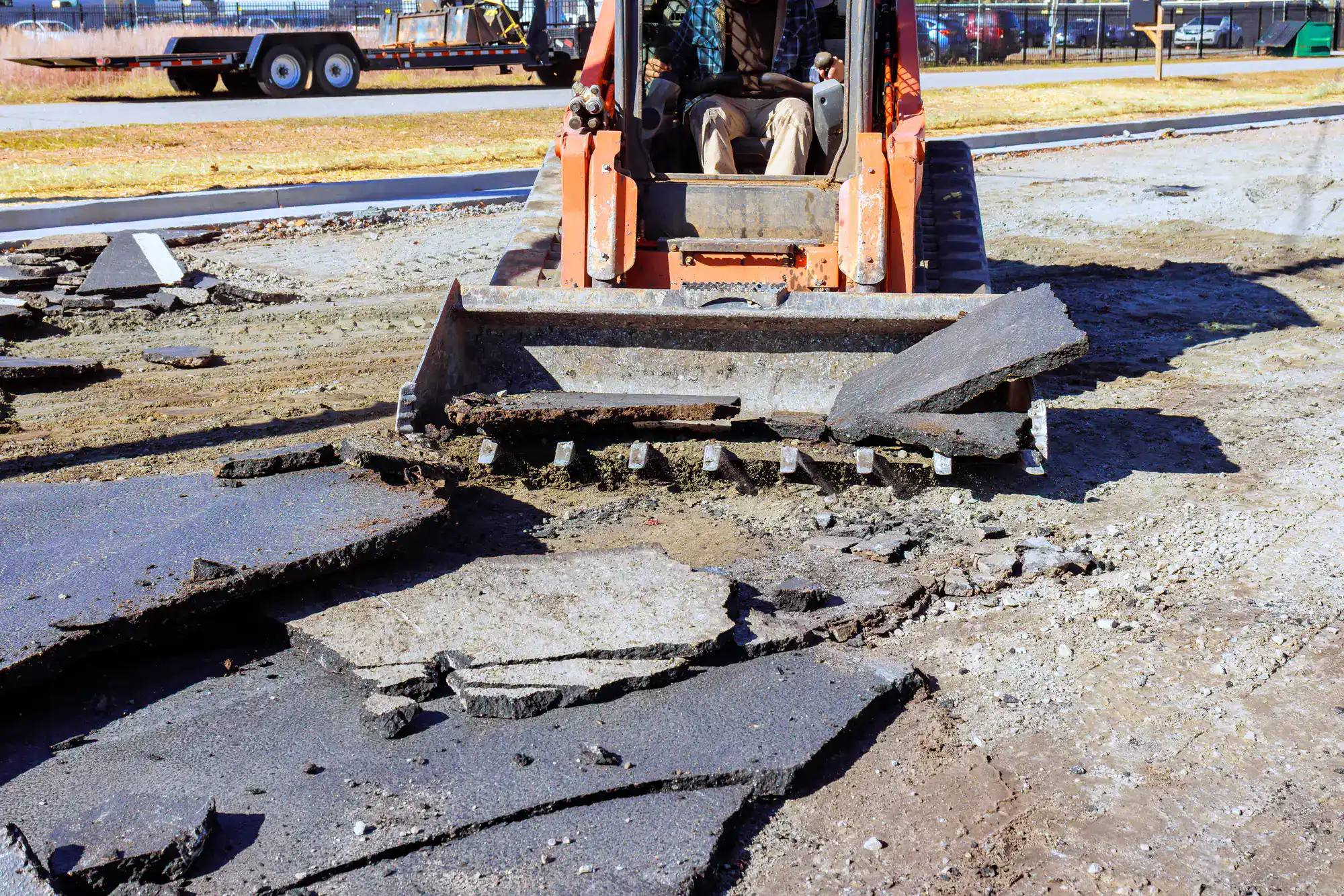
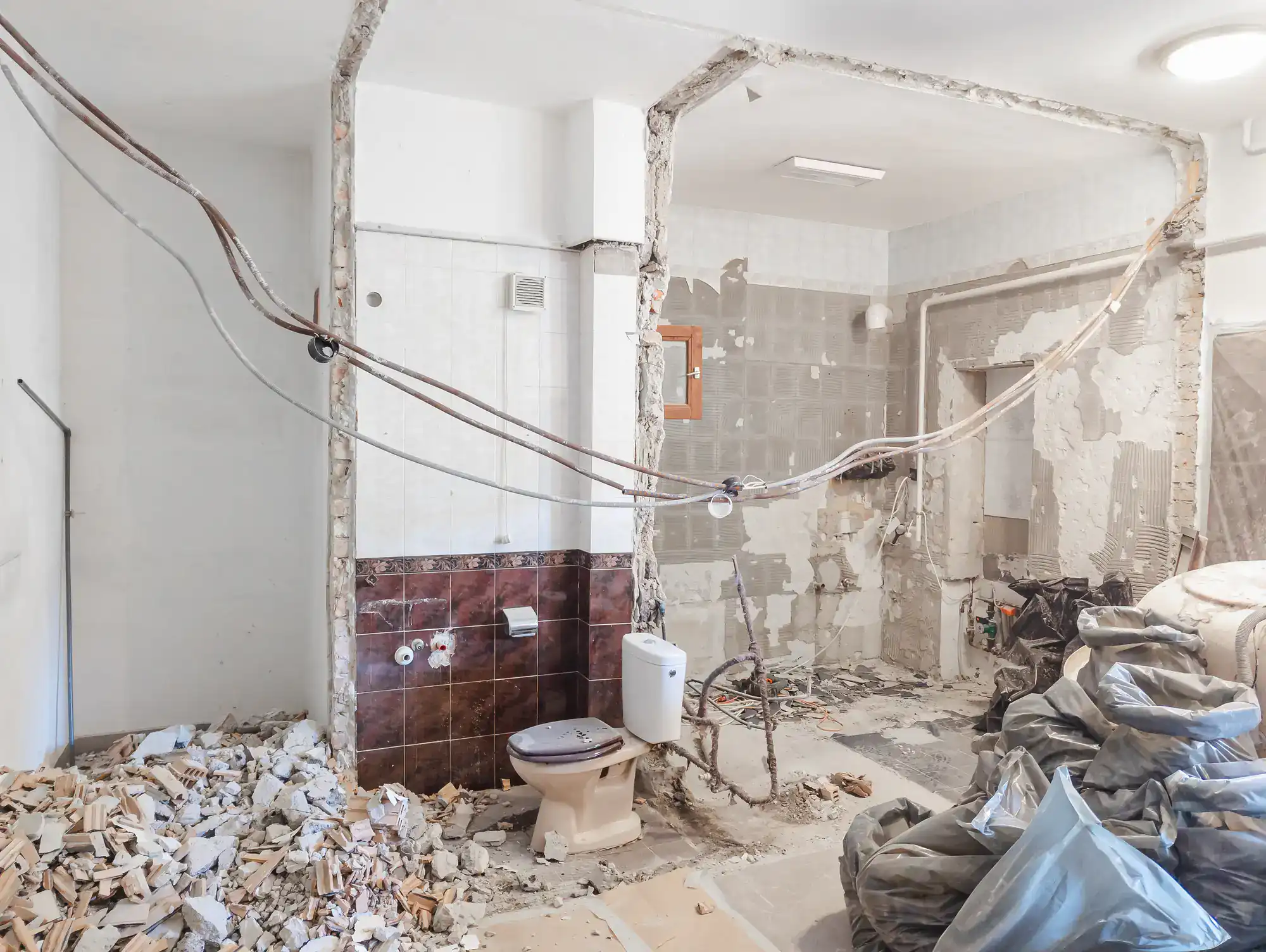
Once abatement is complete and the space is clear, demolition proceeds. Gutting, structural demo, debris removal — whatever the project calls for. When we’re done, the space is clean, documented, and ready for whatever comes next, whether that’s a renovation crew, a waterproofing job, or a fresh build.
Ready to get started?
Demolition in Paoli isn’t just a wrecking job. The homes here — particularly those built between the 1920s and 1970s along and around Lancaster Avenue, through the Tredyffrin Township neighborhoods, and into the Willistown side — were constructed during the era when asbestos was standard in insulation, floor tile, ceiling tile, pipe wrap, and joint compound. Lead paint was on the walls, the trim, and the windows. Any demolition or gutting project in these homes requires a certified professional, not just a licensed general contractor.
We carry EPA Certified Lead Inspector and Risk Assessor credentials — which means we don’t just remove lead, we can inspect and certify lead conditions. That’s a meaningful distinction if you’re dealing with a pre-sale inspection, a refinancing requirement, or any project that involves federally-assisted housing guidelines. We’re also fully HUD compliant, which opens up work that many contractors in Chester County can’t legally perform.
Beyond the certifications, what you’re getting is a complete service: hazardous material testing, abatement, interior demolition, gutting, construction debris removal, and waterproofing if the project calls for it. Emergency response is available around the clock — because burst pipes and water damage in Paoli’s older homes don’t wait for a weekday morning. If you’re dealing with something urgent, we’re reachable 24/7 and can mobilize quickly.

Yes — and the answer depends on which part of Paoli your property is in. Paoli sits across two townships: Tredyffrin and Willistown. Both operate under Pennsylvania’s Uniform Construction Code, and both require a building permit before any demolition work begins. In Tredyffrin Township specifically, contractors performing demolition must also be registered with the Township’s Inspections Department. That’s not optional, and it’s not something most homeowners think to verify before signing a contract.
If a contractor shows up to demo your home without pulling a permit, the liability for that unpermitted work falls on you as the property owner — not on them. That can affect your ability to sell the home, refinance, or pass a future inspection. We handle the permit process as part of the project. We know which township your address falls under, we know what’s required, and we take care of it so you’re covered from day one.
The honest answer is: you don’t know until you test. If your home was built before 1978 — which covers a large portion of Paoli’s housing stock — there’s a real probability that asbestos-containing materials are present somewhere. Common locations include pipe insulation, floor tiles (especially 9×9 vinyl tiles), ceiling tiles, textured drywall compound, roofing materials, and the wrap around older HVAC ductwork. These materials aren’t dangerous when left alone and undisturbed, but the moment you start cutting, sanding, or demolishing, you can release fibers into the air.
The only way to confirm what’s there is a physical sample sent to an accredited lab. We can handle that testing as part of the pre-demolition process. We’re EPA certified to inspect and assess — not just remove — which means you get a documented finding you can rely on, not just someone’s best guess based on a visual inspection. If something comes back positive, we move straight into abatement before any demo work begins.
Abatement is the certified removal of hazardous materials — asbestos, lead, mold — before or during construction work. Demolition is the physical tearing out of structures: walls, ceilings, flooring, framing. They’re related but not the same thing, and in many Paoli renovation projects, you need both — in the right order.
If you skip abatement and go straight to demolition in a pre-1978 home, you’re potentially violating EPA NESHAP standards and the RRP Rule, which require certified contractors for any work that disturbs lead paint or asbestos-containing materials above certain thresholds. The fines for non-compliance are real, and so is the health risk to your family and any workers on site. The right sequence is: test first, abate what needs to go, then demolish. We handle all three steps, which is why clients in Paoli don’t have to coordinate two separate companies or worry about the handoff between them.
We’re available by phone 24 hours a day, seven days a week — and that’s not a forwarding service. Water damage in Paoli’s older homes moves fast. The Philadelphia area’s freeze-thaw winters put real stress on older plumbing systems, and when a pipe lets go inside a wall of a pre-1978 home, you’ve got a narrow window before mold starts forming. The standard benchmark is 24 to 48 hours from initial water exposure to active mold growth, and that clock doesn’t care what time it is when the pipe bursts.
When you call us in an emergency, we assess the situation, give you a clear picture of what needs to happen, and mobilize as quickly as the scope allows. Emergency gutting — removing wet drywall, insulation, and flooring before mold sets in — is something we handle regularly in Chester County. If hazardous materials are present in the affected area, we manage that as part of the emergency response rather than asking you to find a separate abatement company while your home sits open.
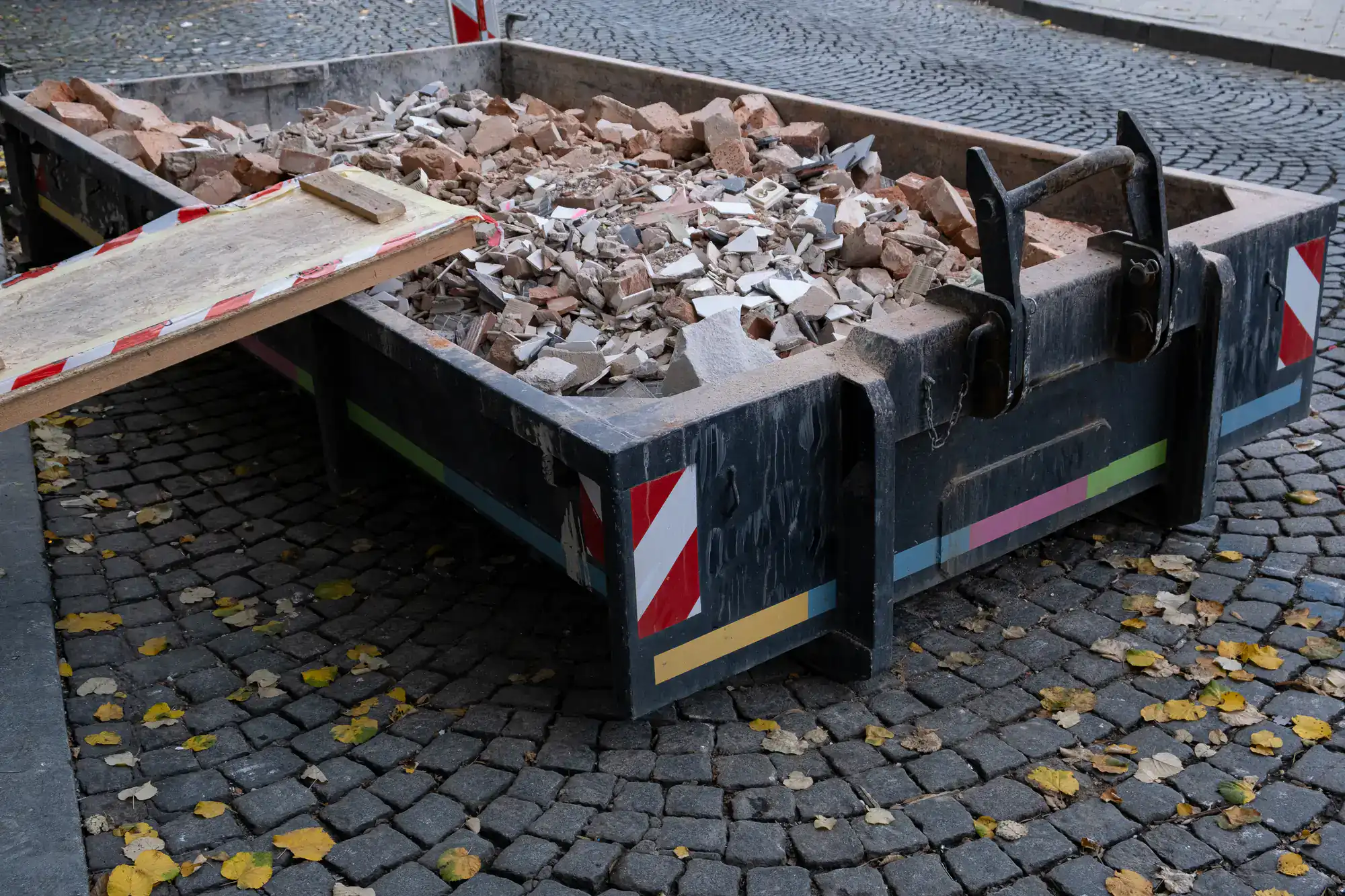
Yes — debris removal is part of the job, not an add-on you have to negotiate separately. After demolition or gutting work, you’re left with a significant volume of material that needs to be hauled out and disposed of properly. In projects involving hazardous materials, that disposal has to follow specific protocols — asbestos-containing debris, for example, can’t go into a standard dumpster. It requires licensed transport and disposal at a certified facility, with documentation to prove it was handled correctly.
We manage that entire chain. The job isn’t done when the walls are down — it’s done when the space is clean, cleared, and ready for whatever comes next. For Paoli homeowners moving into a renovation, that means your contractor can walk into a clean space without having to deal with what we left behind. For anyone doing pre-sale prep on a home in the Tredyffrin/Easttown or Great Valley school district catchment area, it means the property is in the condition it needs to be in before the next phase begins.
The cash discount exists because processing costs are real, and when we can avoid them, we pass that savings to you directly. It’s straightforward: paying in cash eliminates transaction fees on our end, and rather than absorbing that quietly, we reduce your bill. For a demolition or abatement project of meaningful scope — which most Paoli jobs are, given the age and size of the homes here — that difference can be worth having a conversation about.
It’s also part of a broader approach to pricing that we take seriously. Free estimates, transparent scope of work before anything starts, no hidden fees for permit pulling or hazmat disposal — the cash discount fits the same philosophy. You should know what you’re paying and why before you commit to anything. If paying cash makes sense for your situation, bring it up when you call. We’ll tell you exactly what the discount looks like for your specific project.
Other Services we provide in Paoli