Hear from Our Customers
You stop guessing. That’s the first thing. If your home was built between 1950 and 1980 in Upper Merion — whether it’s a split-level off DeKalb Pike, a colonial in Gulph Mills, or a mid-century condo near Route 23 — there’s a real chance asbestos-containing materials are somewhere in that structure. Floor tiles, pipe wrap, ceiling panels, plaster, joint compound. You can’t see it. You can’t smell it. And the health consequences don’t show up for decades. That uncertainty is its own kind of weight, and the only way to lift it is to actually know what you’re dealing with.
What you get after a proper abatement job isn’t just a cleaner house — it’s a house you can renovate, sell, or hand off without a legal or health liability attached to it. Upper Merion’s real estate market moves fast, with hundreds of transactions every year, and a pre-sale asbestos finding can stall or kill a deal. Getting ahead of it means you control the timeline, not the buyer’s inspector.
Upper Merion’s commercial side matters here too. The King of Prussia office corridor is one of the most active development markets in the Philadelphia region, and mid-century commercial buildings being renovated or demolished require pre-abatement surveys by law. Whether you’re a homeowner in a 1965 colonial or a property manager overseeing a building near Route 202, the outcome is the same — a cleared, documented, legally compliant property that’s ready for whatever comes next.
We’ve been handling asbestos abatement, lead inspections, and environmental remediation throughout Upper Merion and Montgomery County for two decades. That’s not a marketing number — it means we’ve worked in the kinds of homes that define Upper Merion: the split-levels off Route 23, the bi-levels near Gulph Mills, the mid-century condos that went up during the township’s population boom. We know what those structures tend to contain and where to look.
We’re fully licensed by the Pennsylvania Department of Labor and Industry, EPA and HUD compliant, and we carry a Certified Lead Inspector and Risk Assessor on staff. That credential matters in Upper Merion, where most of the housing stock is pre-1978 — which means lead and asbestos often show up in the same project. Having one company handle both under one roof saves you time, coordination headaches, and the cost of bringing in a second contractor.
We’re also fully bonded and insured, and every job comes with a free estimate upfront. No pressure, no runaround — just a straight answer on what you’re dealing with and what it costs to fix it.
It starts with an inspection. We come to your property, evaluate the materials in question, and collect samples for lab testing. You don’t need to guess whether those 9-inch floor tiles in your 1960s kitchen are a problem — the lab results tell you definitively. If asbestos is confirmed, you get a clear scope of work and a cost estimate before anything else happens.
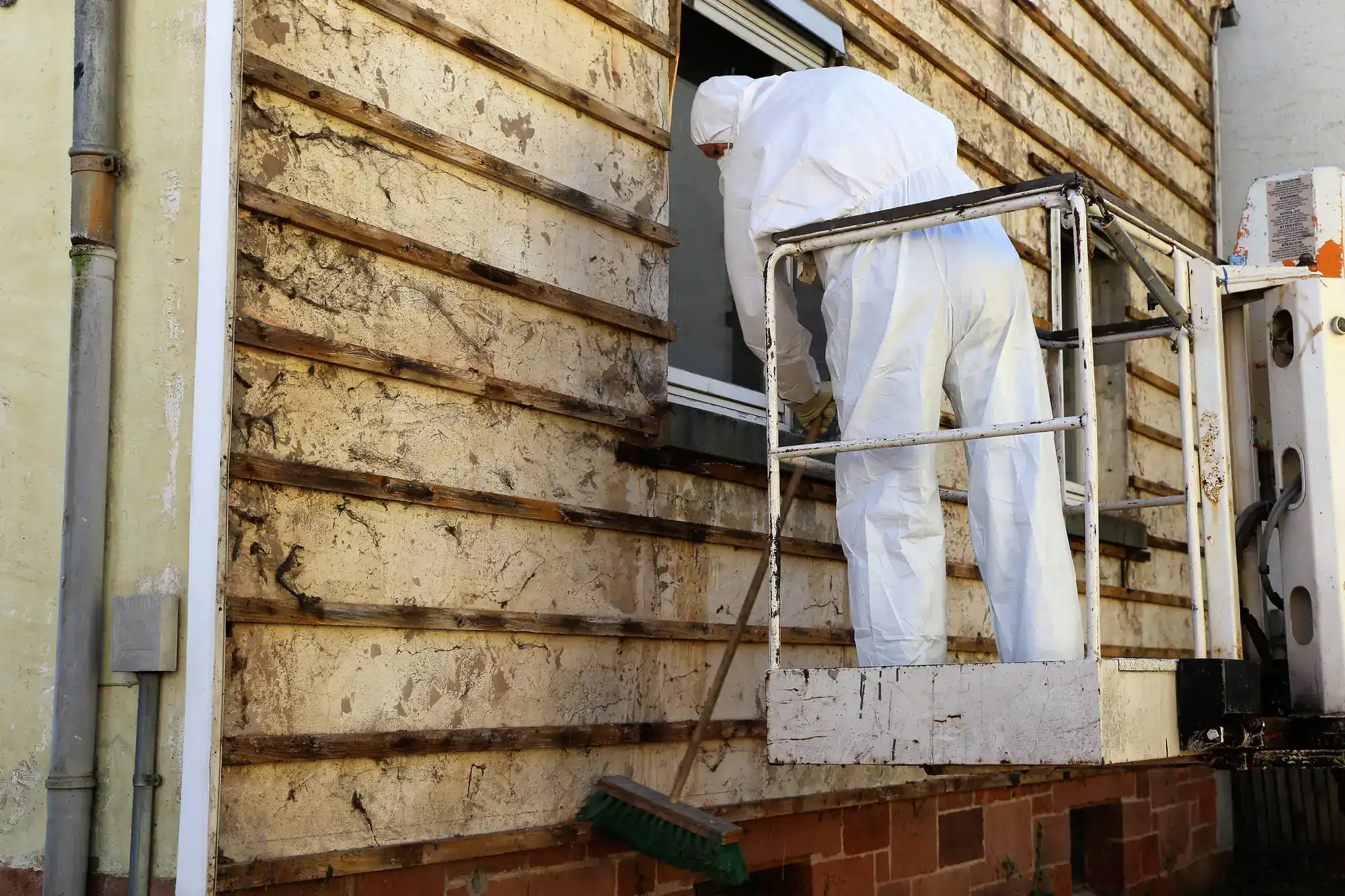
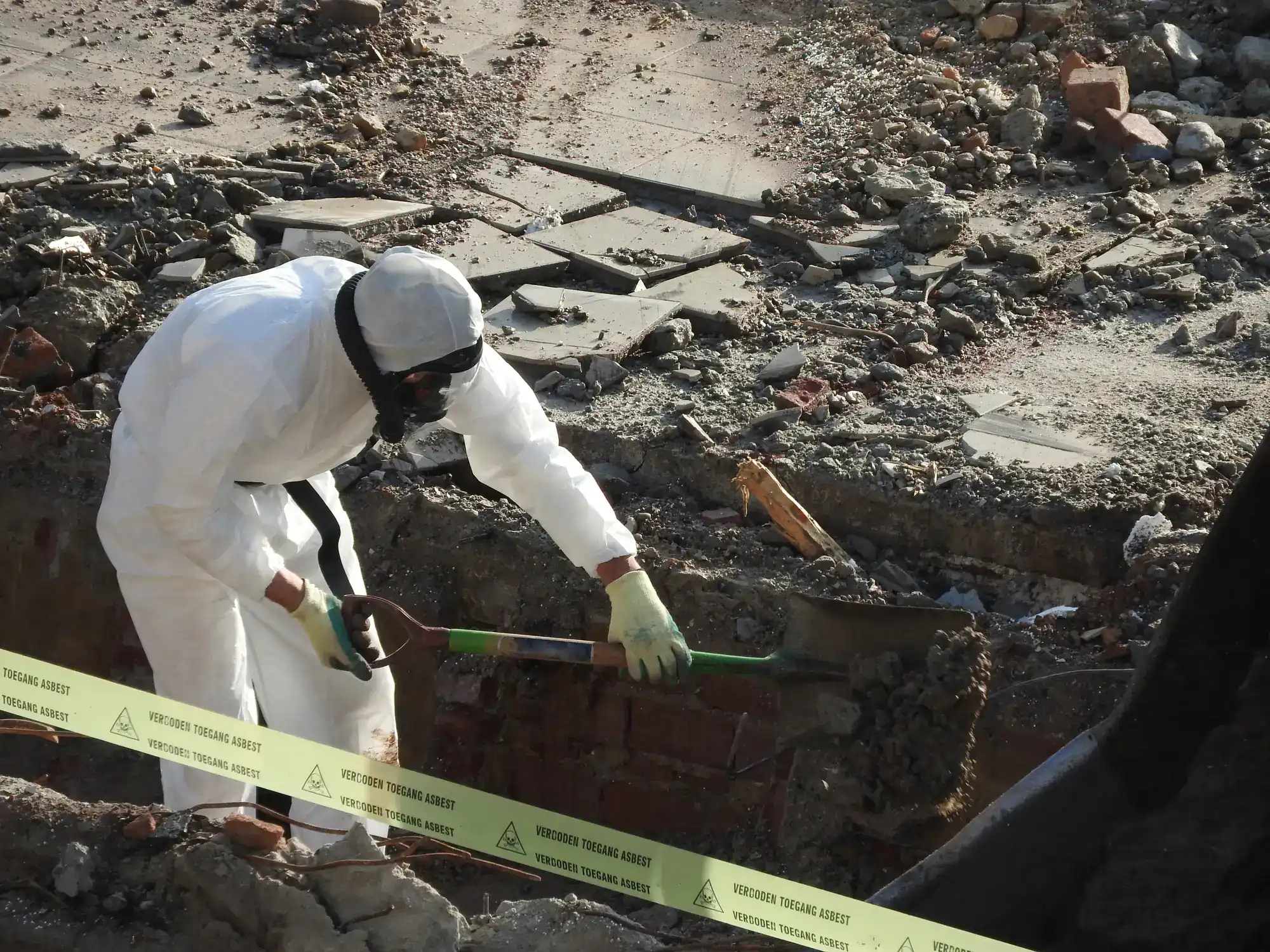
Once you’re ready to move forward, our crew sets up proper containment — negative air pressure, HEPA filtration, sealed work zones — so fibers don’t migrate into the rest of your home or building during removal. This step is where a lot of unlicensed or underprepared contractors cut corners, and it’s exactly where the health risk either gets controlled or gets worse. We use the equipment and protocols that the job actually requires, not the minimum we can get away with.
For commercial projects in Upper Merion — renovations or demolitions of mid-century buildings in the King of Prussia office park or along the Route 422 corridor — Pennsylvania DEP requires a minimum 10-working-day advance notification before regulated abatement work begins. We handle that notification process as part of the job, so you’re not left navigating state paperwork on your own. After removal, post-abatement air clearance testing confirms the space is clean before containment comes down. You get documentation. You get a cleared property. That’s the finish line.
Ready to get started?
We operate as a one-stop abatement contractor, which means you’re not coordinating between an inspector, a removal crew, a disposal company, and a clearance tester. One company, one point of contact, one chain of accountability from the first phone call to the final air test. For Upper Merion homeowners managing a renovation timeline or a real estate closing deadline, that matters more than it sounds.
The full scope of what we handle includes asbestos inspection and lab testing, full containment setup with negative air pressure and HEPA filtration, licensed removal and certified disposal, post-abatement clearance air testing, and documentation for permits, real estate transactions, or regulatory compliance. We also handle lead inspections and risk assessments — relevant for any pre-1978 home in Upper Merion, which covers a large portion of the township’s housing stock. If your project involves demolition, waterproofing, or additional remediation work, that’s covered under the same roof as well.
For commercial clients in Montgomery County — property managers, developers, or contractors working on projects in the King of Prussia development pipeline — we provide the pre-demolition asbestos surveys and licensed abatement that Pennsylvania DEP and federal NESHAP regulations require. Cash discounts are available, and our 24/7 phone line means that when you find something unexpected on a Friday afternoon with a contractor standing by, you’re not waiting until Monday to get an answer.
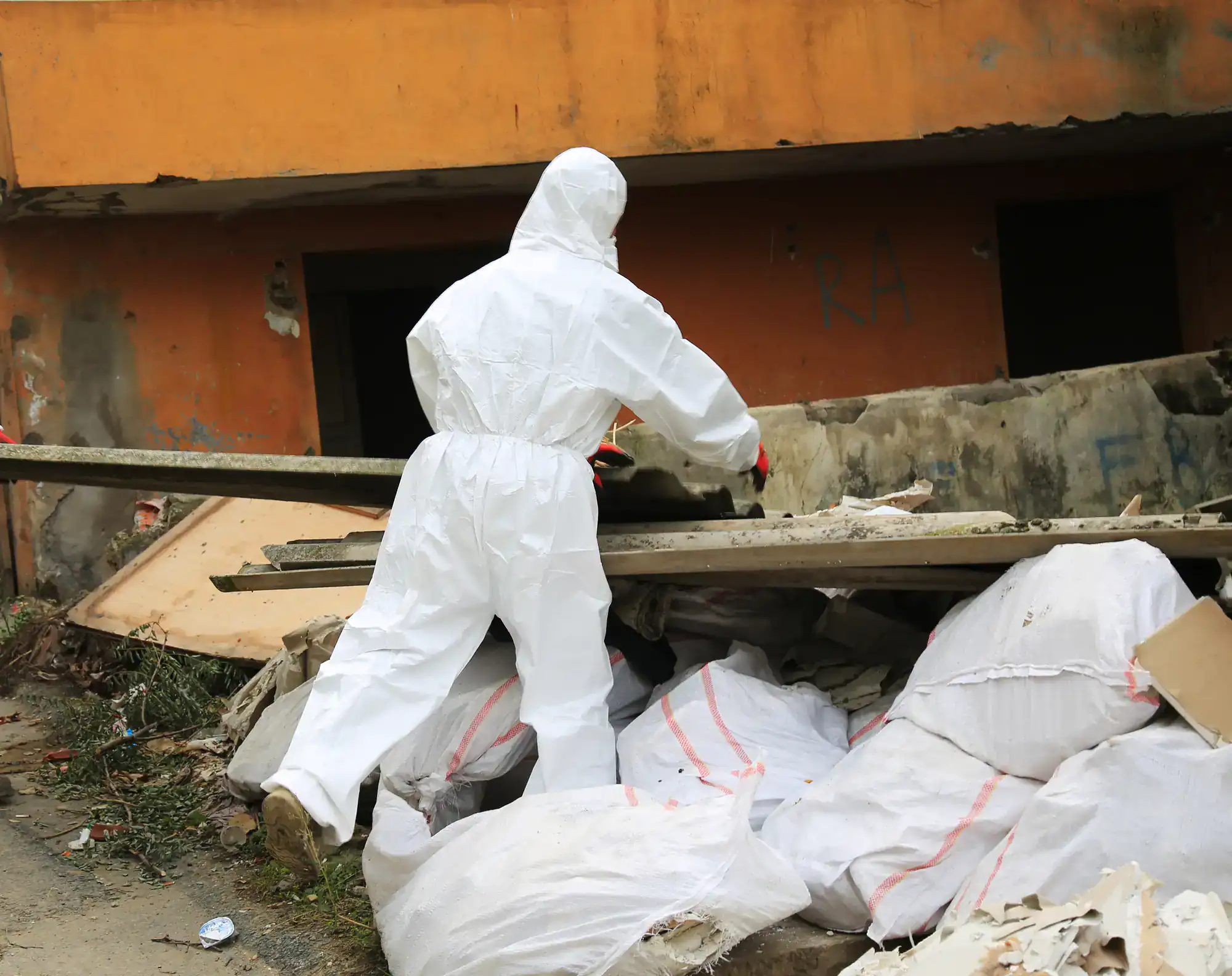
If your home was built before 1980 in Upper Merion, the honest answer is yes — you should test before you open walls, pull up flooring, or disturb any insulation. Upper Merion’s housing stock is heavily weighted toward the 1950s through 1970s, when asbestos was standard in floor tiles, ceiling panels, pipe insulation, joint compound, and plaster. You can’t identify it visually. The only way to know for certain is lab testing from a collected sample.
This matters most when renovation work is involved, because disturbing asbestos-containing materials without proper containment releases fibers into the air — and once they’re airborne in your home, the exposure risk extends to everyone in the building. A pre-renovation inspection by a licensed contractor is a straightforward step that either clears you to proceed or gives you a clear plan for safe removal before the project starts. Either way, you’re not left guessing halfway through a kitchen remodel.
For most residential jobs, the national average falls between $1,192 and $3,240, with the typical project landing around $2,200. Where your project lands within that range depends on the size of the affected area, the type of material involved, and how accessible the work area is. Floor tile removal in a finished basement is a different scope than pipe insulation removal in a crawl space or ceiling tile abatement in a large room.
Commercial projects in Upper Merion — including mid-century office buildings in the King of Prussia corridor and industrial properties along the township’s development zones — are scoped differently. Pre-demolition surveys, NESHAP notification requirements, and larger material volumes all affect the final number. The most reliable way to get an accurate figure is a site visit and free estimate, which we provide before any commitment is made. There are no hidden fees, and cash discounts are available — which is genuinely uncommon in this service category and worth asking about when you call.
It depends on the scope and location of the work. For smaller, contained jobs — a section of floor tile in one room, for example — it’s sometimes possible to remain in the home if the work area is properly sealed off and negative air pressure is maintained. For larger projects involving multiple rooms, HVAC insulation, or materials in high-traffic areas of the home, vacating during the active removal phase is the safer and more practical choice.
We’ll walk you through what’s reasonable for your specific job before work begins. The containment setup — sealed work zones, HEPA filtration, negative air pressure — is designed to prevent fiber migration into the rest of the home, but the scale of the project determines whether staying in place is realistic. Post-abatement clearance air testing confirms the space is safe before containment comes down, so you’re not moving back in based on someone’s word — you’re moving back in based on documented test results.
Split-levels built in Upper Merion during the 1960s are among the home types most likely to contain asbestos-containing materials, because that architectural style was at its peak popularity during the exact years when asbestos use in construction was most widespread. The materials to know about include 9-inch by 9-inch vinyl floor tiles — extremely common in kitchens, bathrooms, and basements of that era — along with the adhesive mastic used to install them. Ceiling tiles, textured ceilings, and plaster walls from that period also frequently tested positive for asbestos.
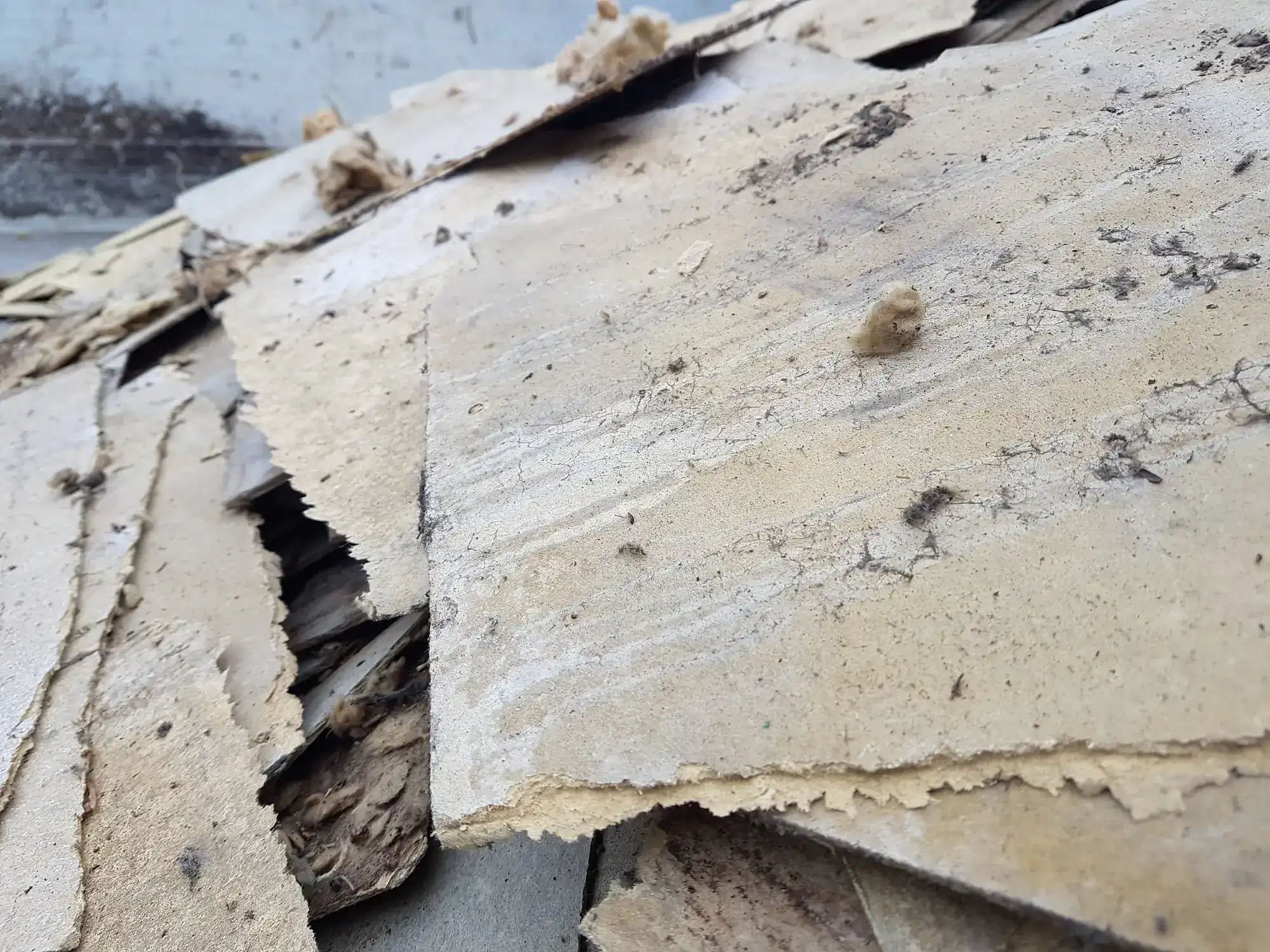
Beyond the visible finishes, pipe and duct insulation in mechanical rooms and crawl spaces is a common find, as is insulation around furnaces and boilers. Roofing shingles and exterior siding from that era can also contain asbestos, though those materials are less frequently disturbed during interior renovations. If you’re planning any work on a home built in that window in Upper Merion — whether it’s a full renovation or just pulling up old flooring — a pre-work inspection is the right first step before anything gets opened up.
Yes, and the difference is significant. Pennsylvania DEP enforces federal NESHAP regulations — 40 CFR Part 61 Subpart M — for commercial and industrial demolition and renovation projects. If a project involves the removal of 160 or more square feet, 260 or more linear feet, or 35 or more cubic feet of regulated asbestos-containing material, a minimum 10-working-day advance notification to PA DEP is required before work begins. Skipping that step isn’t just a procedural issue — it’s a regulatory violation that can halt a project entirely.
For Upper Merion’s commercial market — which includes mid-century office buildings in the King of Prussia corridor, industrial properties along the township’s development districts, and the active development pipeline of retail, life science, and logistics projects currently underway — pre-demolition asbestos surveys are a legal prerequisite before permits are issued. We handle the survey, the abatement, and the DEP notification process as part of the commercial scope, so the regulatory side of the job doesn’t fall on the property manager or developer to figure out independently.
It comes down to how we’re structured. We’re an owner-operated, independently run abatement contractor — not a large regional franchise with layers of overhead built into every invoice. When payment processing fees and administrative costs are reduced through cash transactions, that savings gets passed directly to the customer rather than absorbed into a corporate margin. It’s a straightforward operational reality, not a promotional gimmick.
For Upper Merion homeowners managing the cost of a pre-sale remediation project, a mid-renovation discovery, or a planned abatement alongside a larger renovation budget, that discount is a real number that can meaningfully affect the total project cost. It’s worth asking about when you call for your free estimate. We’ll give you a straight answer on what the discount looks like for your specific job — no conditions buried in the fine print, no pressure to decide on the spot.
Other Services we provide in Upper Merion