Hear from Our Customers
You stop guessing. That’s the first thing. Whether you’re mid-renovation on a 1960s cape cod off Butler Pike or just got a flag on a home inspection for a property near Germantown Pike, the uncertainty is the part that costs you the most — not the job itself. Once the asbestos-containing materials are properly identified, contained, and removed by a licensed contractor, you have documentation. Real clearance paperwork. The kind that holds up at closing, satisfies your general contractor, and doesn’t come back to haunt you three owners down the road.
Plymouth Meeting’s housing stock tells the whole story. Nearly 39% of homes here were built between the 1940s and 1960s — the exact window when asbestos was standard in floor tiles, pipe insulation, furnace wrap, ceiling tiles, and joint compound. The median construction year in this ZIP code is 1975. That means the majority of homes in Cold Point, Harmonville, and Plymouth Valley fall squarely in the highest-risk category. These aren’t obscure edge cases. They’re the neighborhood norm.
And because so many Plymouth Meeting homeowners are actively renovating — updating kitchens, finishing basements, replacing old boilers — the risk of disturbing these materials without knowing it is real and ongoing. Proper abatement doesn’t just protect your health. It keeps your renovation on schedule, protects your contractor from liability, and keeps your home’s value intact in one of Montgomery County’s most active real estate markets.
We’ve been doing this work across Montgomery County for 20 years. Not as a side service — as the core of what we do. We’re fully licensed by Pennsylvania’s Department of Labor and Industry, fully bonded and insured, and EPA/HUD compliant. We also have a certified lead inspector and risk assessor on staff, which matters more than most people realize when you’re opening up a pre-1978 home and finding more than one hazard behind the drywall.
We serve Plymouth Meeting as part of our core five-county territory, which means we know the housing stock here — the split-levels off Plymouth Road, the older commercial buildings along Chemical Road, the cape cods that back up to Plymouth Creek. This isn’t a market we’re stretching to reach. It’s one we’ve been working in for years.
We also answer the phone at any hour, offer free estimates, and give cash discounts — because we think the process of hiring an environmental contractor should be straightforward, not stressful.
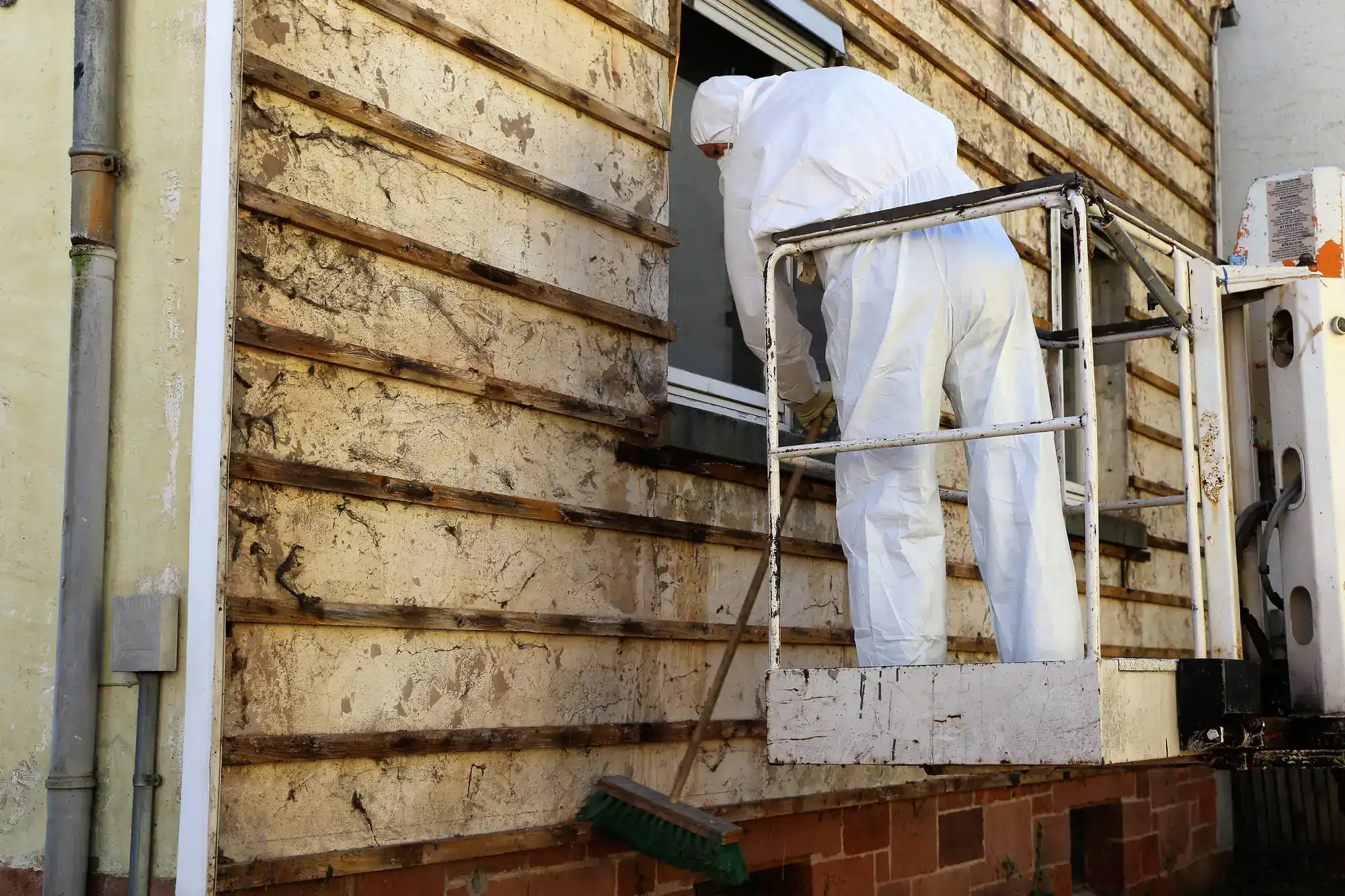
It starts with an inspection and, if needed, sample collection. We identify which materials are suspect, pull samples according to proper protocol, and get them tested. If asbestos-containing materials are confirmed, we walk you through what needs to come out, what can stay, and what the full scope of the job looks like — before anything is signed or scheduled.
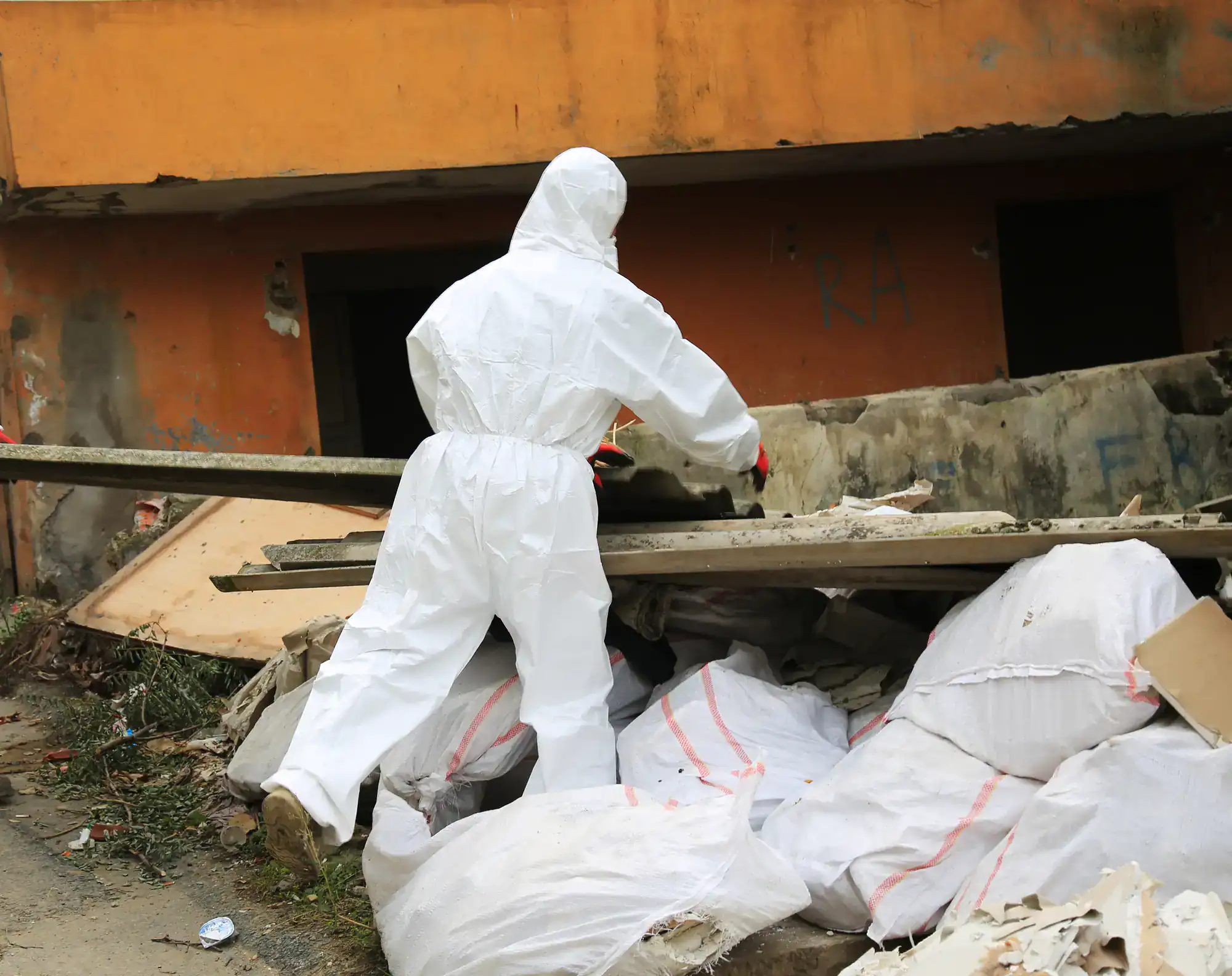
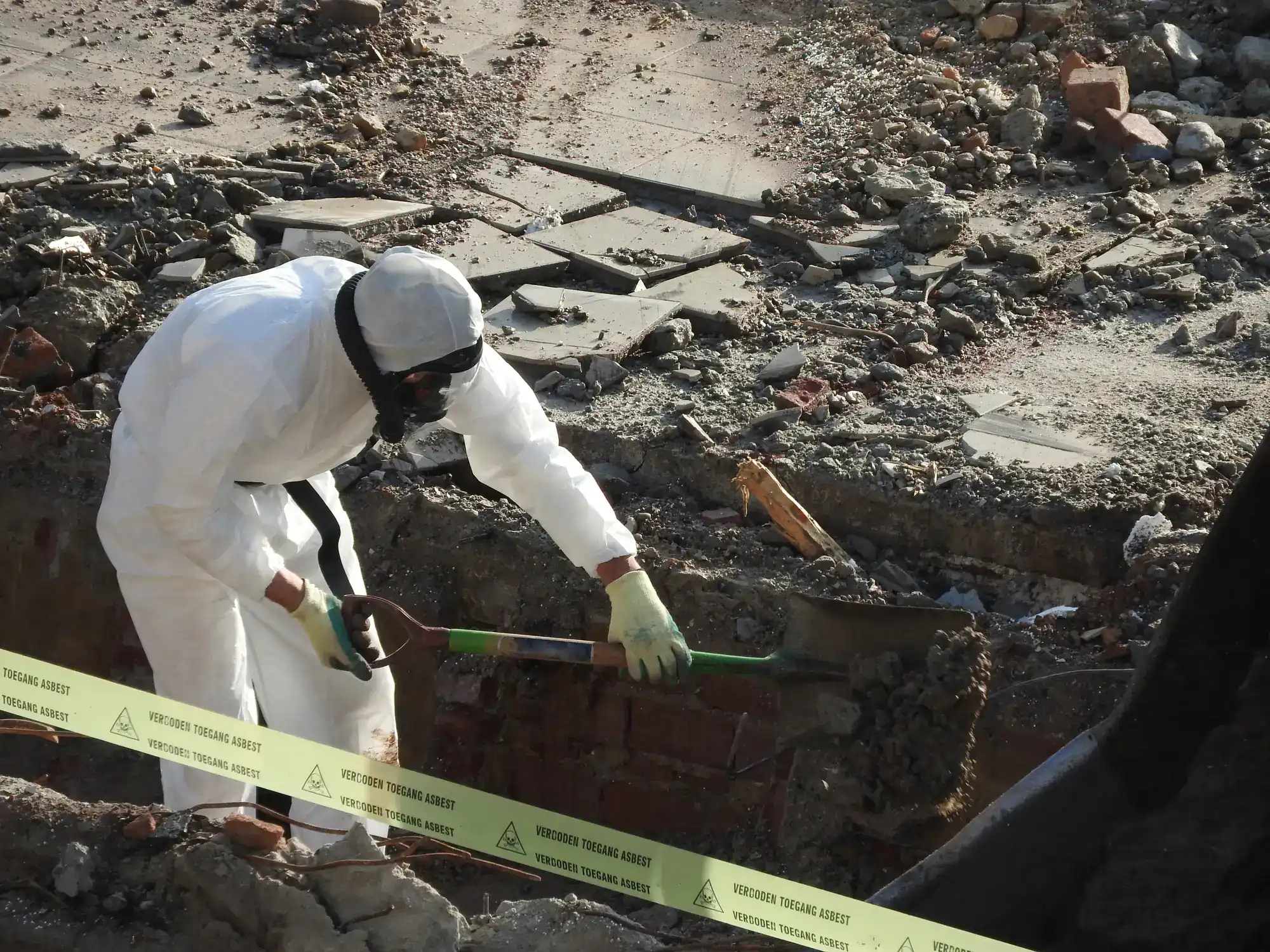
Once the work is authorized, we set up containment. That means plastic sheeting, negative air pressure, and HEPA filtration running throughout the removal process. This is standard on every job we do, not an upgrade. The reason it matters in a lived-in Plymouth Meeting home — where the rest of your family may be in the next room — is that improper containment is how asbestos fibers end up in places they were never supposed to reach.
Pennsylvania DEP requires advance notification before friable asbestos removal begins, and we handle that filing as part of the job. Plymouth Township’s Code Enforcement office at 700 Belvoir Road covers most of the Plymouth Meeting CDP, and we’re familiar with what local permit and notification requirements apply to your specific project. After removal, we conduct clearance air testing before containment comes down. You get documentation of the completed work — the kind that satisfies lenders, buyers, and building inspectors.
Ready to get started?
Most asbestos abatement contractors remove what they find and leave. We handle the full picture. Asbestos testing and inspection, abatement and removal, lead inspection and remediation, mold sampling and remediation, demolition and gutting, furnace and boiler removal, duct cleaning, waterproofing, oil tank removal, and environmental clean-outs — all under one roof. For a Plymouth Meeting homeowner opening up a 1958 split-level, that matters. You’re rarely dealing with just one issue.
The homes in this area — particularly in the Harmonville and Cold Point neighborhoods, and along the older residential streets near the Mid-County Interchange corridor — were built with asbestos in the floor tiles, the pipe wrap, the attic insulation, and sometimes the plaster itself. When a renovation uncovers more than one material, you don’t want to be coordinating three separate contractors while your general contractor waits. We assess everything, give you a clear scope, and handle it in sequence.
For commercial properties along Ridge Pike or Chemical Road — office parks and retail buildings from the same era — we also handle pre-demolition asbestos surveys and commercial abatement, which are legally required before any significant renovation or demolition work begins. Whether it’s a single-family home or a commercial building, the process is the same: licensed, documented, and done right the first time.
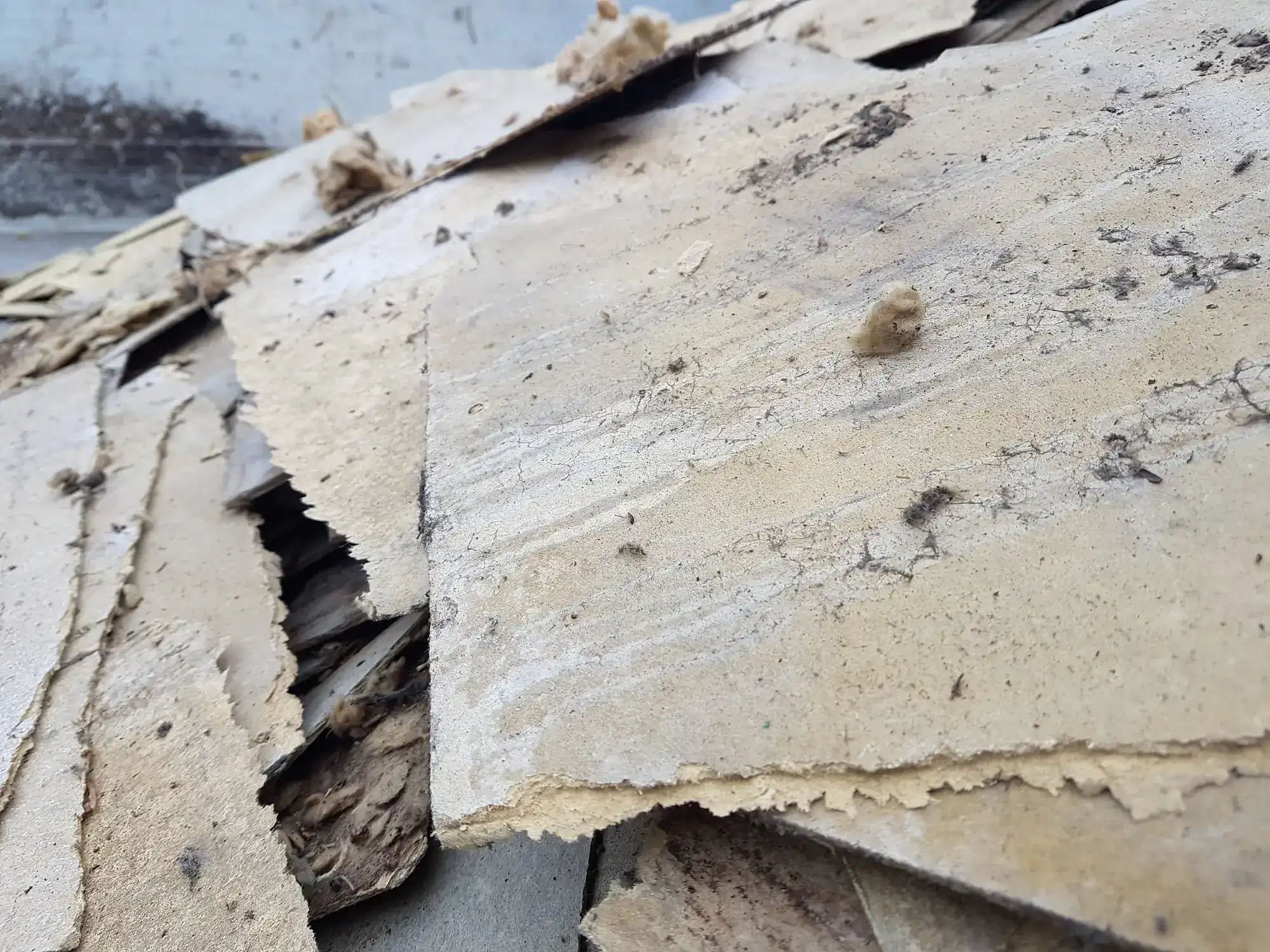

The honest answer is: you can’t tell by looking. Asbestos-containing materials don’t look different from materials that don’t contain it. The only way to know is to have a sample collected and tested by a licensed professional. In Plymouth Meeting, where close to 40% of the housing stock was built during the 1940s through 1960s, the odds are meaningful — especially if you have original floor tiles, pipe insulation, a pre-1980 furnace or boiler, attic insulation, or textured ceilings that haven’t been touched since the home was built.
The most common trigger for testing is a renovation. A contractor pulls up old vinyl flooring and finds a tile layer underneath. Or a plumber goes to replace a section of pipe and notices the insulation wrapped around it looks old and deteriorating. That’s when you stop and call before anything else gets disturbed. Disturbing asbestos-containing materials without proper containment is how fibers become airborne — and airborne is the only way asbestos actually hurts you. Testing is fast, affordable, and gives you a clear answer before any demo work continues.
It depends on the scope and location of the job. For smaller, contained removals — a section of pipe insulation in a utility room, for example — it’s often possible to remain in unaffected parts of the home while work is underway, as long as proper containment is in place. For larger jobs involving multiple rooms, attic insulation, or materials throughout a living space, temporary relocation is usually the safer and more practical choice.
We’ll tell you upfront what the job requires before you commit to anything. The containment setup we use — negative air pressure, HEPA filtration, sealed work zones — is specifically designed to prevent cross-contamination into the rest of the home. But there’s no one-size-fits-all answer, and anyone who tells you otherwise without seeing the job first isn’t giving you a real answer. For Plymouth Meeting families with kids in the Colonial School District on a tight renovation timeline, we factor that into how we sequence and schedule the work.
Cost varies based on the type of material, how much of it there is, where it’s located, and how accessible the work area is. A straightforward removal — say, asbestos floor tiles in a basement or pipe insulation around a single furnace — typically runs in the range of a few hundred to a couple thousand dollars. Larger scopes involving attic insulation, multiple rooms, or commercial properties will run higher, and that’s a conversation worth having before you assume the worst.
What we can tell you is that the cost of not addressing it properly is usually higher. In Plymouth Meeting’s real estate market — where median home values are well above $500,000 — a failed home inspection or an undisclosed asbestos issue can derail a sale, reduce your negotiating position, or create liability down the road. We offer free estimates, so you get a real number before committing to anything. We also offer cash discounts, which no other abatement contractor in the Plymouth Meeting search results mentions. The estimate is always the right first step.
Yes, and the regulatory layer here is worth understanding. Pennsylvania requires all asbestos abatement contractors to be licensed by the Department of Labor and Industry under the Pennsylvania Asbestos Accreditation and Certification Act. That license isn’t optional — it’s the legal baseline for any asbestos work in the state. Before friable asbestos removal begins, Pennsylvania DEP also requires advance notification, and federal NESHAP regulations apply to larger commercial projects with their own notification timeline.
At the local level, most of Plymouth Meeting falls under Plymouth Township’s jurisdiction, with Plymouth Township Code Enforcement located at 700 Belvoir Road. A smaller portion of the CDP falls under Whitemarsh Township. Depending on where your property sits, permit and notification requirements may route to either township. We handle the state DEP notification as part of every qualifying job — you don’t need to figure that out on your own. Montgomery County’s own guidance explicitly tells residents to use only a licensed contractor for asbestos removal, and to know that asbestos materials are not accepted at county Household Hazardous Waste events.
Encapsulation means sealing the asbestos-containing material in place so it can’t release fibers — it’s still there, but it’s no longer a hazard under normal conditions. Full removal means the material comes out entirely and is disposed of as regulated waste. Both are legitimate approaches depending on the situation, and the right choice depends on the material’s condition, its location, and what you plan to do with the space.
If the material is in good condition and won’t be disturbed — say, floor tiles under a finished floor that you’re not planning to renovate — encapsulation may be a reasonable option. If the material is deteriorating, if you’re renovating the area, or if you’re preparing the property for sale in Plymouth Meeting’s active real estate market and want a clean disclosure, full removal is usually the cleaner long-term answer. Buyers and their inspectors tend to feel more comfortable with documented removal than with encapsulation, particularly in a market where home values are high and buyers do their homework. We’ll give you an honest read on which approach fits your specific situation.
No catch. Credit card processing fees are a real cost, and passing some of that savings along to customers who pay cash is a straightforward way to keep pricing honest. For Plymouth Meeting homeowners who are already managing renovation budgets — contractor costs, materials, permits — finding a place to save without cutting corners on the actual work is a reasonable thing to want.
The cash discount doesn’t change anything about how the job gets done. The same licensed crew, the same HEPA filtration, the same containment protocol, the same clearance documentation. Plymouth Meeting is an area where people research before they hire, and where a $500,000-plus home means the stakes of getting this wrong are real. The discount is simply a reflection of how we prefer to operate — transparently, without padding the bill to cover processing costs and then calling it standard pricing. If you want to pay another way, that’s fine too. The free estimate is the same either way.
Other Services we provide in Plymouth Meeting