Hear from Our Customers
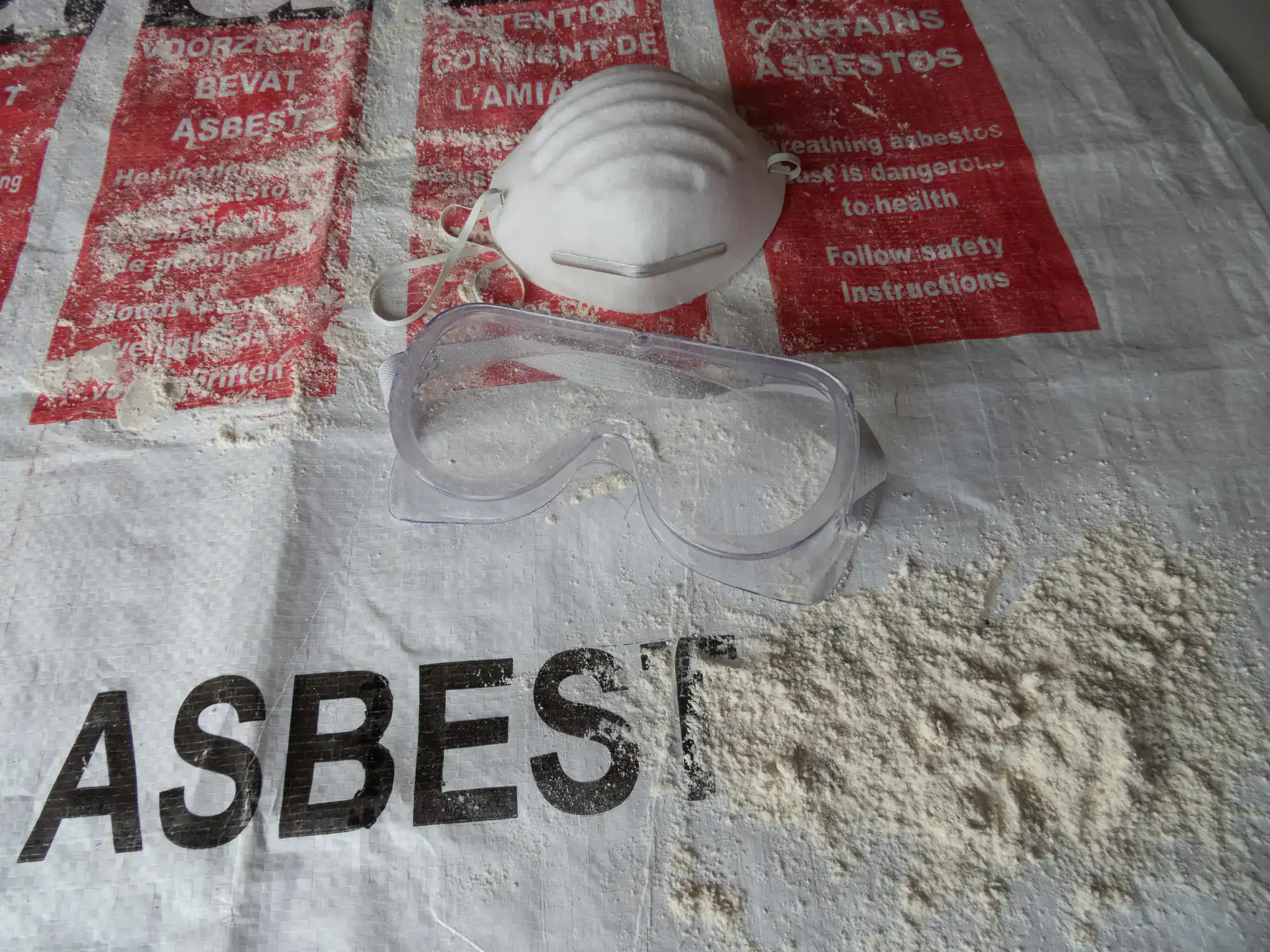
When you find something suspicious behind a wall in a Bridge Street rowhouse or under the floor tiles of a pre-war twin near the old foundry site, the clock doesn’t stop. Your contractor is standing by. Your timeline is already tight. What you need isn’t a lecture on asbestos history — you need someone who can confirm what you’re dealing with, contain it properly, remove it safely, and hand you a clearance report that holds up.
That’s exactly what a proper abatement job looks like when it’s done right. No disrupted air spreading fibers through the rest of your home. No vague verbal assurances. Just documented, lab-verified results that let your renovation move forward.
Phoenixville’s housing stock is among the oldest in the country — more than 28% of homes here were built before 1939, and nearly half were built during the decades when asbestos was standard in insulation, pipe wrap, floor tiles, and ceiling materials. Add 45 inches of annual rainfall to that equation and you’ve got aging building materials that have been absorbing moisture for generations. That combination accelerates deterioration in ways that can turn previously stable asbestos-containing materials into an active risk. Knowing that going in — and working with a contractor who already knows what Chester County’s older homes look like from the inside — makes a real difference in how the job gets done.
We’ve been handling asbestos inspection, testing, and abatement across Chester, Delaware, Montgomery, Bucks, and New Castle counties for twenty years. Phoenixville is part of that territory — not as a new market, but as a community we’ve worked in and around for a long time. The Victorian rowhouses near downtown, the brick worker homes built to serve the Phoenix Iron Works, the older commercial buildings along the PA Route 113 corridor — we know what these structures tend to hold, and we know how to work in them carefully.
We’re fully licensed by Pennsylvania DL&I, fully bonded and insured, and we carry a certified Lead Inspector and Risk Assessor on staff. Every job runs EPA and HUD compliant from start to finish, with HEPA filtration systems in place throughout the abatement. You get a real clearance report at the end — not a handshake and a promise. And if you need to reach us at 8 PM on a Tuesday because your contractor just stopped work, someone picks up.
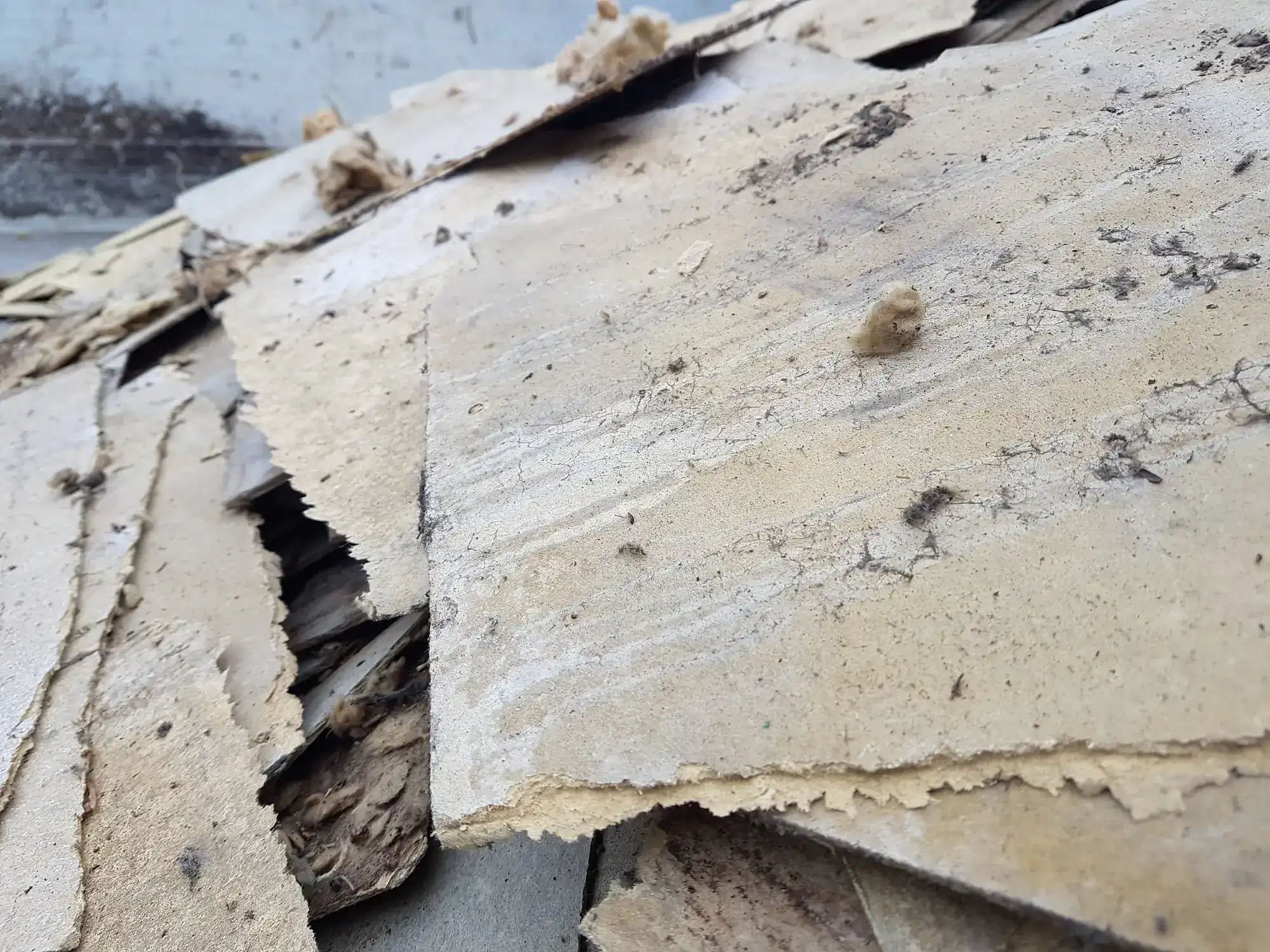
It starts with a visual survey and sampling of any materials suspected to contain asbestos. Samples go to an accredited lab, and once results come back confirmed, we put together a written abatement plan and file the required advance notification with Pennsylvania DEP — state regulations require a minimum 10-working-day notice before removal of friable asbestos above regulatory thresholds, and that paperwork is part of what we handle for you. If your property sits within Phoenixville’s historic district and your renovation is subject to HARB oversight, having that documentation in order from the start matters more than most homeowners realize.
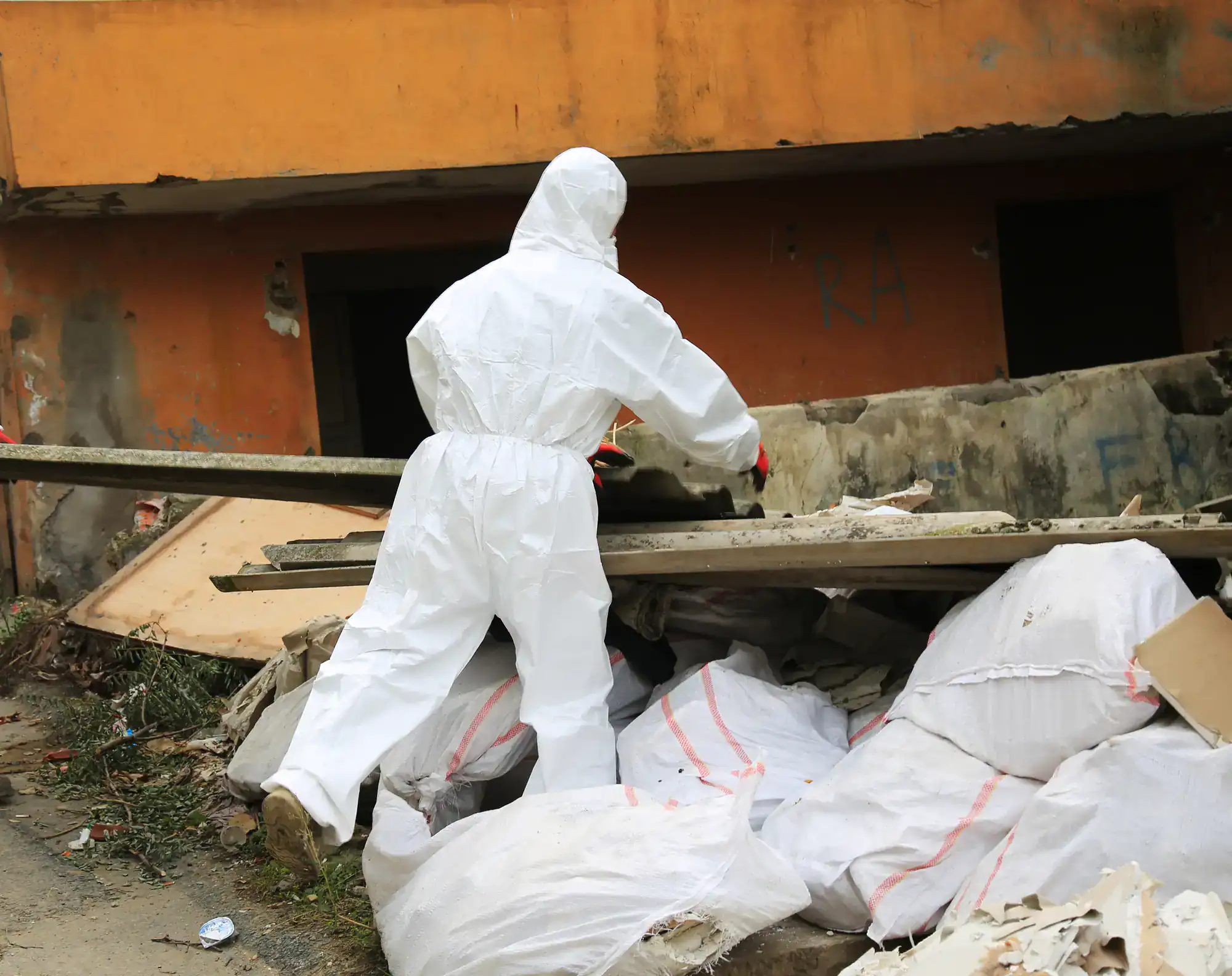
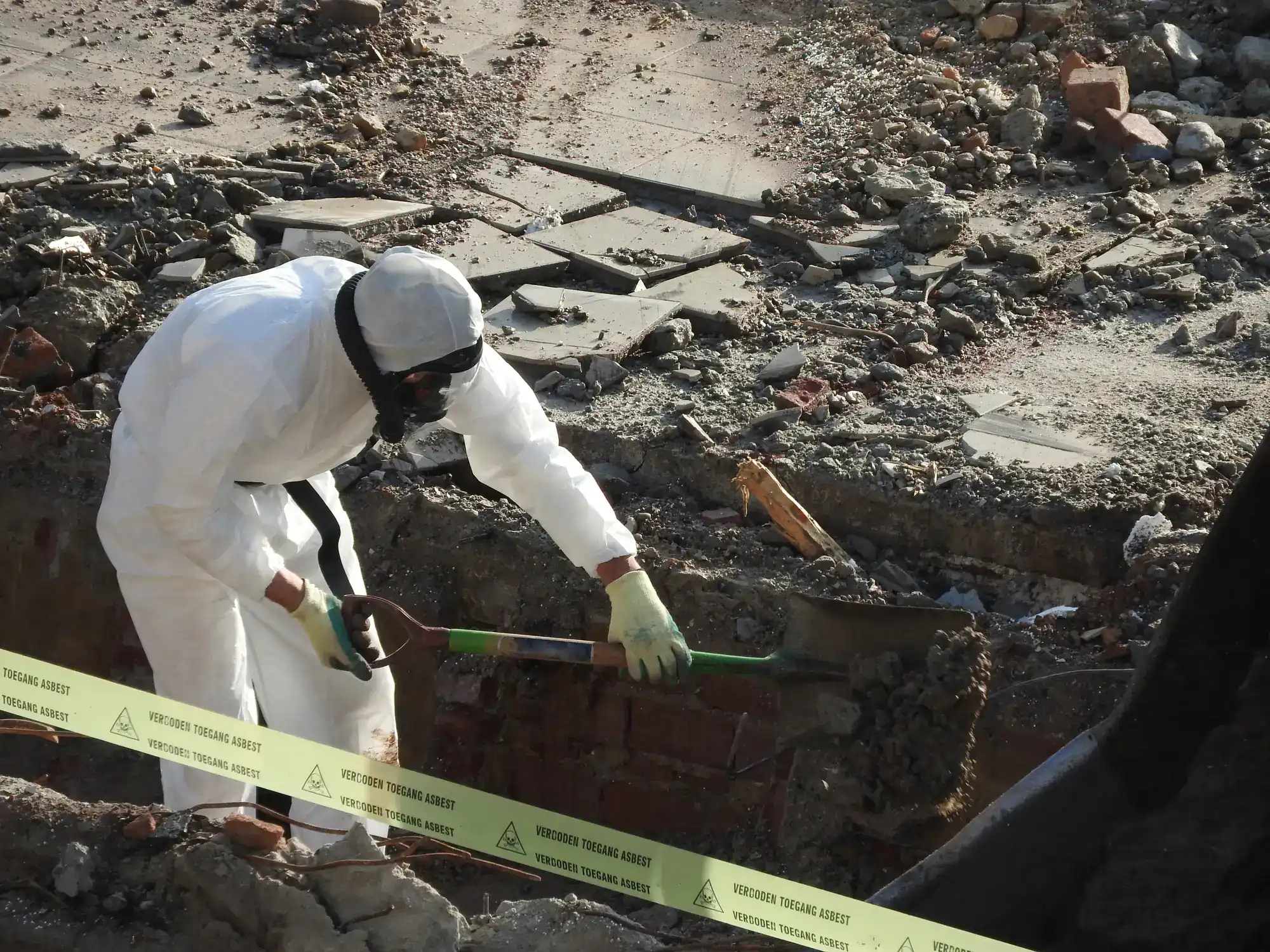
Once the plan is in place, the work area gets sealed under negative air pressure with HEPA filtration running throughout. Removal is done using wet methods to suppress fiber release. All material is bagged, labeled, and transported to a certified disposal facility — nothing gets left behind or handled loosely. When removal is complete, post-abatement air quality testing is conducted to verify the space is clear.
What you receive at the end is a complete clearance report — the kind of documentation that satisfies code enforcement, supports a real estate transaction, and gives you confidence that the job was done properly. For Phoenixville homeowners managing renovations in a market where homes go pending in under a week, that paper trail isn’t a formality. It’s the thing that keeps your project on track.
Ready to get started?
Most environmental contractors in Chester County handle one thing. We handle the full range — and in Phoenixville’s older housing stock, that matters. A pre-war home that tests positive for asbestos often has lead paint too. A basement that’s been taking on moisture from French Creek’s wet corridor for eighty years may have mold alongside deteriorating pipe insulation. Coordinating three separate licensed contractors to address all of it adds weeks to a renovation timeline. We handle asbestos inspection, testing, and abatement; lead inspection, encapsulation, and removal; mold sampling and remediation; demolition and gutting; environmental clean-outs; duct cleaning; furnace and boiler removal; and waterproofing — under one roof, one schedule, one point of contact.
Every job includes HEPA filtration, state-of-the-art containment equipment, and on-site licensed supervision from start to finish. Free estimates are available, and cash discounts apply — something worth knowing when you’re already managing a renovation budget on a home that’s been standing since before World War II. Emergency response service is available for situations that can’t wait, and the phone is answered 24 hours a day, seven days a week.
Whether you’re a homeowner in Old Mill Estates who cracked open a wall and found something alarming, a seller trying to close a deal before a disclosure derails it, or a contractor who needs a licensed abatement partner before demolition can proceed — we’re equipped for all of it.

The short answer is yes — statistically, a significant portion of them do. More than 28% of Phoenixville’s housing units were built before 1939, and nearly half were built before 1970. Asbestos was used extensively in construction materials throughout that entire period: pipe and boiler insulation, floor tiles, ceiling tiles, joint compound, plaster, roofing shingles, and more. The worker housing built to serve the Phoenix Iron Works and Phoenix Steel Corporation was constructed quickly and economically, using the industrial building materials of the era — which almost always included asbestos in one form or another.
That doesn’t mean every older home in Phoenixville has a dangerous situation on its hands. Asbestos that’s intact and undisturbed generally doesn’t pose an immediate risk. The problem shows up when materials start to deteriorate — from age, moisture, or renovation activity — or when someone starts cutting, drilling, or pulling things apart without knowing what’s inside. If your home was built before 1980 and you’re planning any renovation work, testing before you start is the right move. It’s not expensive, and it gives you a clear answer before work begins.
It depends on what was found and where. If a home inspector flags suspected asbestos-containing materials during a pre-sale inspection in Phoenixville, the next step is professional testing — not assumption. Suspected materials need to be sampled by a licensed contractor and sent to an accredited lab. Results typically come back within a few days.
From there, the options are removal or encapsulation, depending on the material’s condition and location. If the material is intact and unlikely to be disturbed, encapsulation — sealing it in place — may be the appropriate approach. If it’s deteriorating or in an area that will be renovated, removal is usually the right call. In Phoenixville’s real estate market, where homes are going under contract in roughly five to nine days, the pressure to resolve this quickly is real. We offer emergency response and 24/7 availability specifically because asbestos disclosures mid-transaction don’t follow business hours. The goal is to get you a documented clearance that satisfies both the buyer and any lender requirements, so the deal can move forward.
For most residential abatement jobs, yes — you should plan to be out of the affected area during active removal, and in many cases out of the home entirely, depending on the scope and location of the work. This isn’t a precaution that varies by contractor preference; it’s a function of the containment setup. The work area is sealed under negative air pressure with HEPA filtration running continuously, which means the rest of the home is protected — but only if the containment is maintained and not repeatedly broken by foot traffic in and out.
For smaller, contained jobs — say, a section of pipe insulation in a basement mechanical room — displacement may be brief. For larger abatement projects involving multiple areas of a Phoenixville rowhouse or an older home with extensive asbestos-containing materials throughout, you may need to be out for a day or more. We’ll give you a realistic timeline before work begins, not a vague estimate designed to get you to sign. Post-abatement air testing is conducted before the containment comes down, so you’re not returning to a space that hasn’t been cleared.
Pennsylvania and federal regulations both have clear requirements here. Under NESHAP rules, a thorough asbestos inspection is required before any renovation or demolition that will disturb regulated amounts of asbestos-containing material in a pre-1980 building. The threshold is 160 square feet of friable material, 260 linear feet on pipes, or 35 cubic feet — but in practice, most meaningful renovation work in a pre-war Phoenixville home will exceed at least one of those thresholds somewhere in the project scope.
For homes within Phoenixville’s historic district — the largest registered historic district in Chester County — there’s an additional layer to consider. The Historical Architectural Review Board oversees exterior alterations on contributing properties, and renovation projects in that district are subject to heightened scrutiny at the permit stage. Having documented asbestos testing and a proper clearance report as part of your permit file puts you in a much stronger position when code enforcement or HARB review comes into the picture. It’s not just about safety — it’s about having the paperwork that keeps your project moving without interruption.
The honest answer is that it depends on scope — which materials are involved, how much square footage needs to be addressed, and whether the job requires encapsulation or full removal. Nationally, residential asbestos removal averages around $2,200, with most jobs falling somewhere between $1,200 and $3,200. Larger projects or jobs involving multiple material types — pipe insulation, floor tiles, and ceiling materials in the same home — will run higher.
For Phoenixville specifically, a few factors can affect where your job lands in that range. Pre-war homes with original mechanical systems often have more pipe wrap and boiler insulation than newer construction, which adds to linear footage. Homes in the historic district may require additional care during containment setup to avoid damage to original architectural features. And if lead paint is also present — which it frequently is in homes built before 1978 — bundling that remediation with your asbestos abatement through us is almost always more cost-effective than scheduling it separately. We offer free estimates and cash discounts, so you get a real number before committing to anything.
Yes — and in Phoenixville’s older housing stock, that combination is common enough that it’s almost the rule rather than the exception. Homes built before 1978 may contain lead-based paint. Homes built before 1980 may contain asbestos. In a borough where more than half the housing was built before 1970, you’re frequently dealing with both in the same structure. Coordinating two separate licensed contractors to address them independently adds scheduling complexity, extends your timeline, and often costs more overall.
We carry a certified Lead Inspector and Risk Assessor on staff — not just certified workers, but a credentialed assessor who can evaluate both hazards in a single site visit and develop a remediation plan that addresses everything at once. Our services include lead inspection, encapsulation, and removal alongside the full asbestos abatement scope. For Phoenixville homeowners renovating a pre-war home, this means one point of contact, one coordinated schedule, and one clearance process — instead of two separate contractors trying to sequence their work around each other in a house that probably doesn’t have a lot of room to spare.
Other Services we provide in Phoenixville