Hear from Our Customers

You stop worrying every time someone mentions a renovation. That’s the most honest way to describe what proper asbestos abatement does for a homeowner in East Pikeland. Whether you’re updating a 1960s split-level off Route 23 or finally tackling that bathroom in a 1930s Valley Dell Colonial, the moment a licensed contractor has tested, contained, and removed the hazardous material — you can move forward. Not cautiously. Forward.
East Pikeland’s housing stock is genuinely layered. You’ve got early 20th century Sears kit houses near Kimberton, mid-century homes along the Route 724 corridor, and everything in between. That range means the type and location of asbestos-containing materials varies significantly from one property to the next — floor tiles in one house, pipe insulation in another, attic vermiculite or popcorn ceilings in a third. A contractor who treats every job the same way isn’t doing you any favors.
For homeowners near French Creek, there’s an added layer to consider. Flooding in this area is a documented, recurring reality — and when water damages the walls, floors, or insulation of a pre-1980 structure, it can disturb materials that were previously stable and contained. That’s not hypothetical. It’s the kind of situation where having a licensed asbestos removal company on call, available around the clock, is worth more than any brochure claim.
We’ve been doing this work in Chester County and the surrounding region for two decades. That’s not a talking point — it’s a track record. In an industry where licensing, insurance, and reputation are everything, longevity means something. Companies that cut corners don’t last twenty years in a regulated field.
East Pikeland is home territory for us. We’re familiar with the older housing stock throughout the Phoenixville area and East Pikeland, the regulatory requirements that apply to projects here, and the kind of properties — historic, multi-era, owner-occupied — that define this part of northwestern Chester County. When you call, you’re not explaining your situation to someone reading off a script three counties away.
We’re fully licensed by the Pennsylvania Department of Labor and Industry, EPA and HUD compliant, fully bonded and insured, and carry a Certified Lead Inspector and Risk Assessor on staff. Free estimates, cash discounts, and 24/7 availability aren’t add-ons. They’re how we operate.
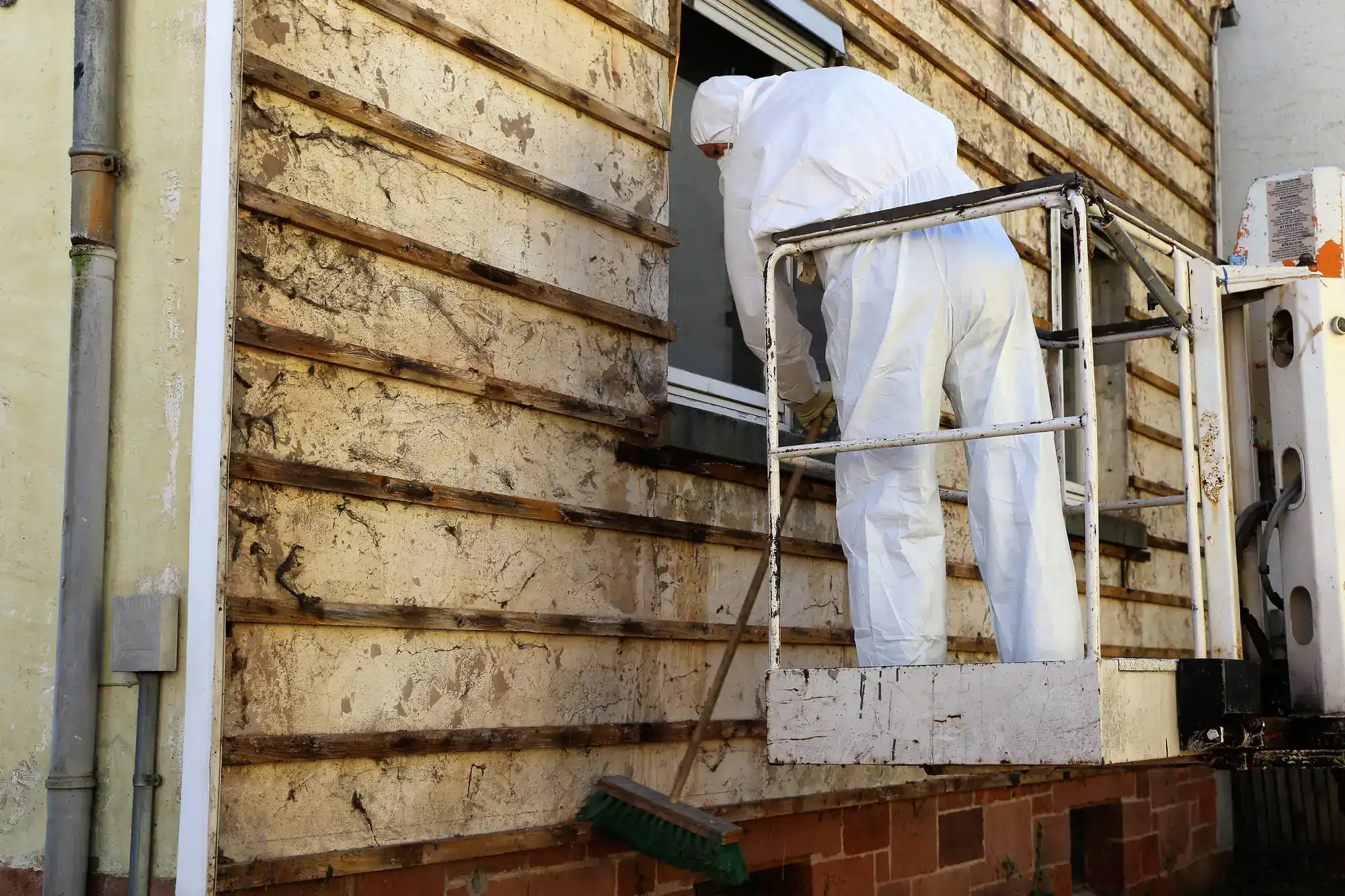
It starts with a phone call — and we answer that call any time of day or night. If you’ve just pulled up a floor tile in a 1940s Kimberton-area home and found something that doesn’t look right, you don’t have to wait until Monday morning. After the initial conversation, the next step is an on-site assessment. A licensed inspector comes to the property, evaluates the materials in question, and collects samples for laboratory analysis. You get a clear picture of what’s actually there before any decisions are made.
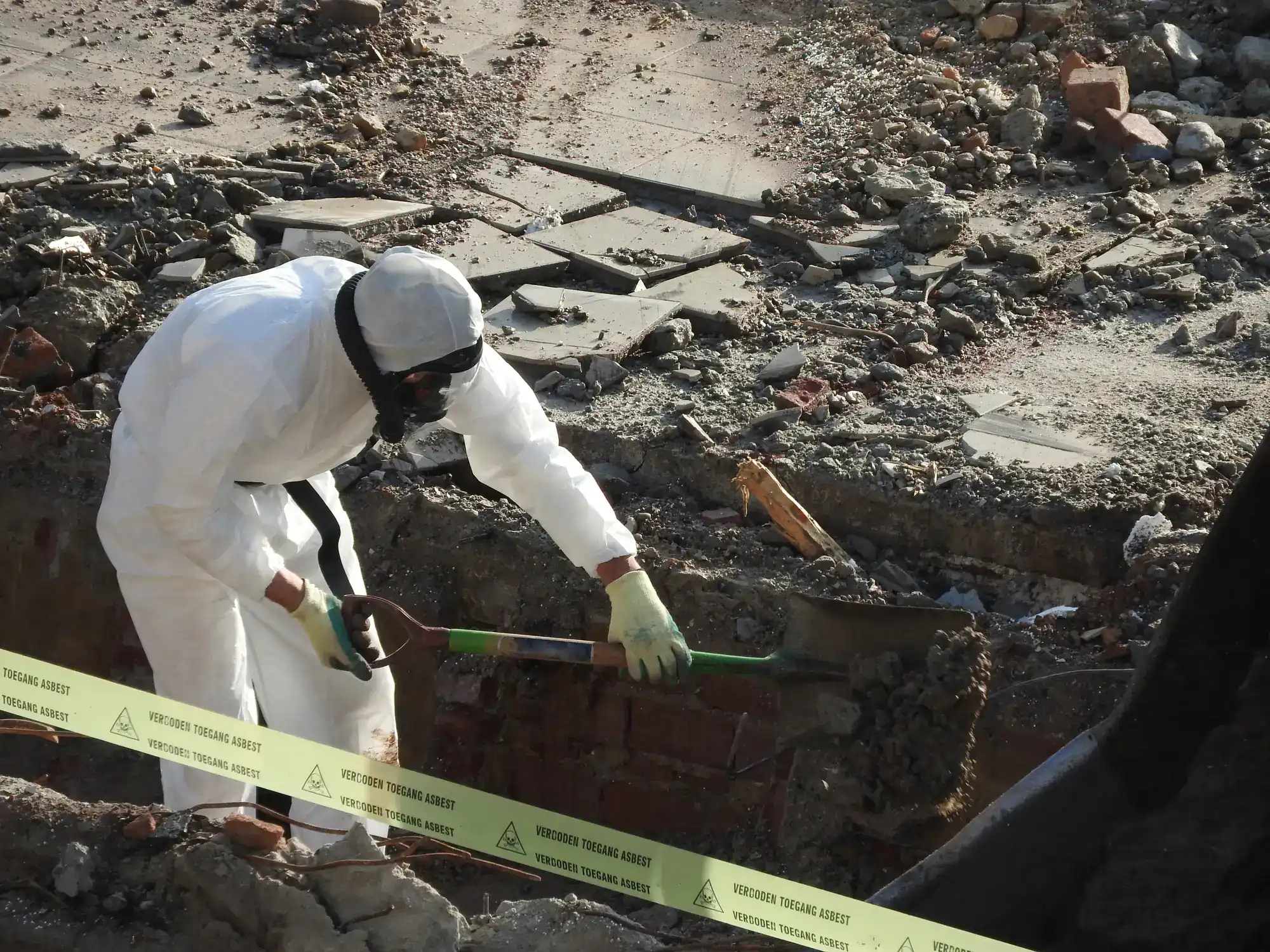
If asbestos-containing materials are confirmed, we build a customized abatement plan for your specific property. No two homes in East Pikeland are identical — the plan for a commercial building on the Route 113 corridor looks very different from the plan for a residential gut renovation near French Creek. Containment is established using negative air pressure and HEPA filtration to prevent fibers from spreading to unaffected areas of the structure. Then the removal happens — methodically, by a trained crew, under proper supervision.
For projects that exceed Pennsylvania DEP thresholds — 260 linear feet, 160 square feet, or 35 cubic feet of friable material — we handle the required advance notification to the DEP’s Southeast Regional Office, which covers Chester County. That’s a 10-working-day requirement, and missing it creates real problems. We know the timeline and manage it. After removal, the site is cleared, documented, and you receive the paperwork you’ll need — whether for your own records, a future sale, or a permit close-out.
Ready to get started?
Asbestos abatement is rarely the only issue in an older East Pikeland home. Pull up the floor tiles and find asbestos — fine, that’s the job. But open the walls and find mold behind them, or discover the furnace insulation is compromised, or realize the basement needs waterproofing before any of the renovation can continue. That’s the reality of working on pre-1980 housing stock, and it’s exactly why we’re built as a full-service environmental contractor rather than a single-trade shop.
In addition to asbestos testing and removal, we handle lead inspection, encapsulation, and removal — which matters significantly in East Pikeland, where virtually every pre-1978 structure contains lead paint. Mold sampling and remediation, demolition and gutting, waterproofing, oil tank removal, duct cleaning, furnace and boiler removal, radon testing, and chemical disposal are all part of what we bring to a job. For homeowners in the Kimberton Historic District or along the older residential corridors of Routes 23 and 724, that one-stop capability keeps a complex project from turning into a multi-contractor coordination problem.
Every job uses HEPA filtration and state-of-the-art containment equipment as standard — not as an upgrade. Whether it’s a single-room abatement in a residential property or a larger commercial project on the Route 113 strip, the process doesn’t change based on the size of the audience watching.
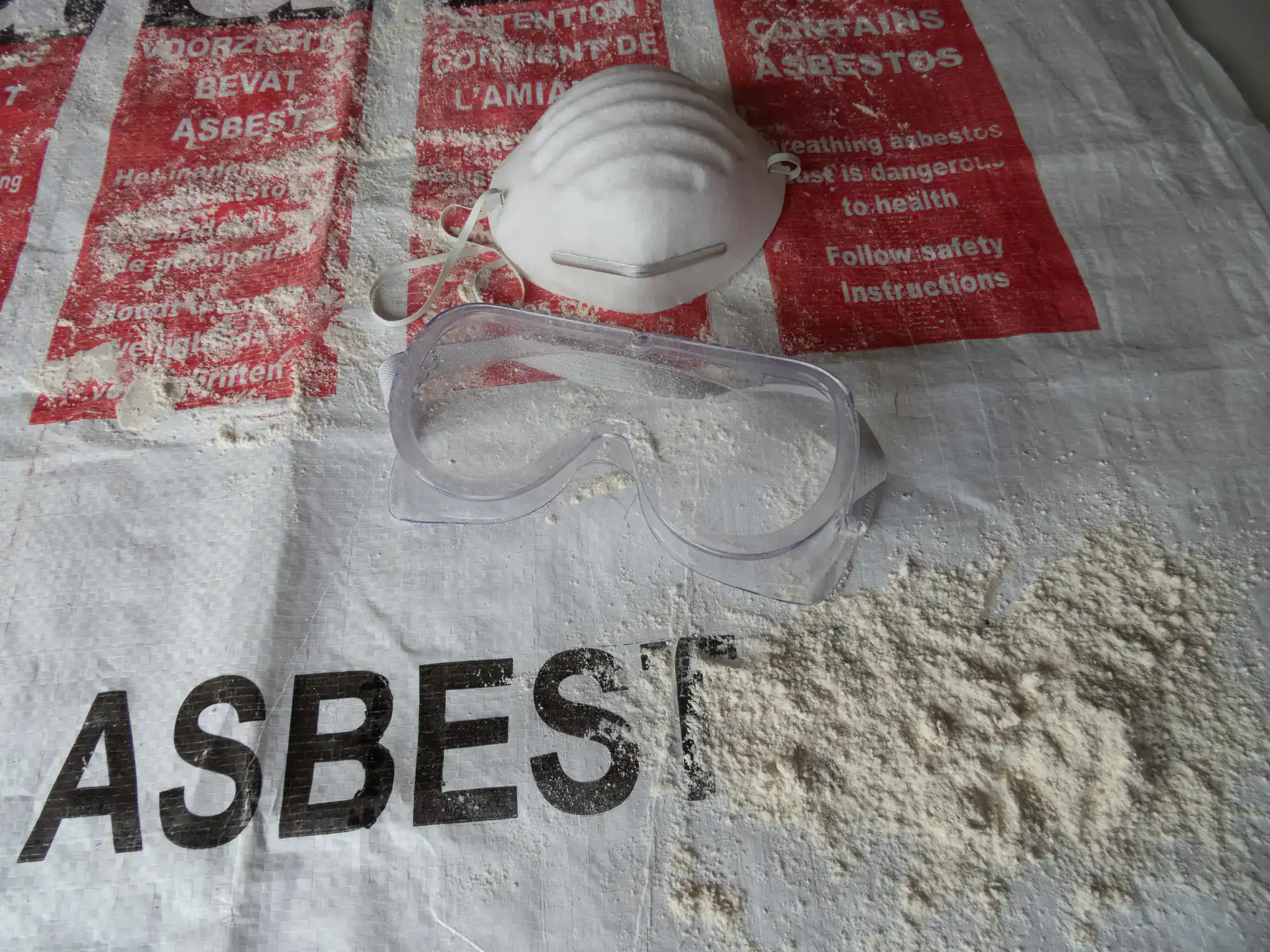

Statistically, yes — and in East Pikeland specifically, the odds are higher than in many other areas because of how the township developed. The Kimberton area contains early 20th century structures, Valley Dell has late 1930s Colonial-style homes, and the corridors along Routes 23 and 724 filled in with mid-century construction through the 1970s. All of those eras fall squarely within the primary window when asbestos was used in residential construction.
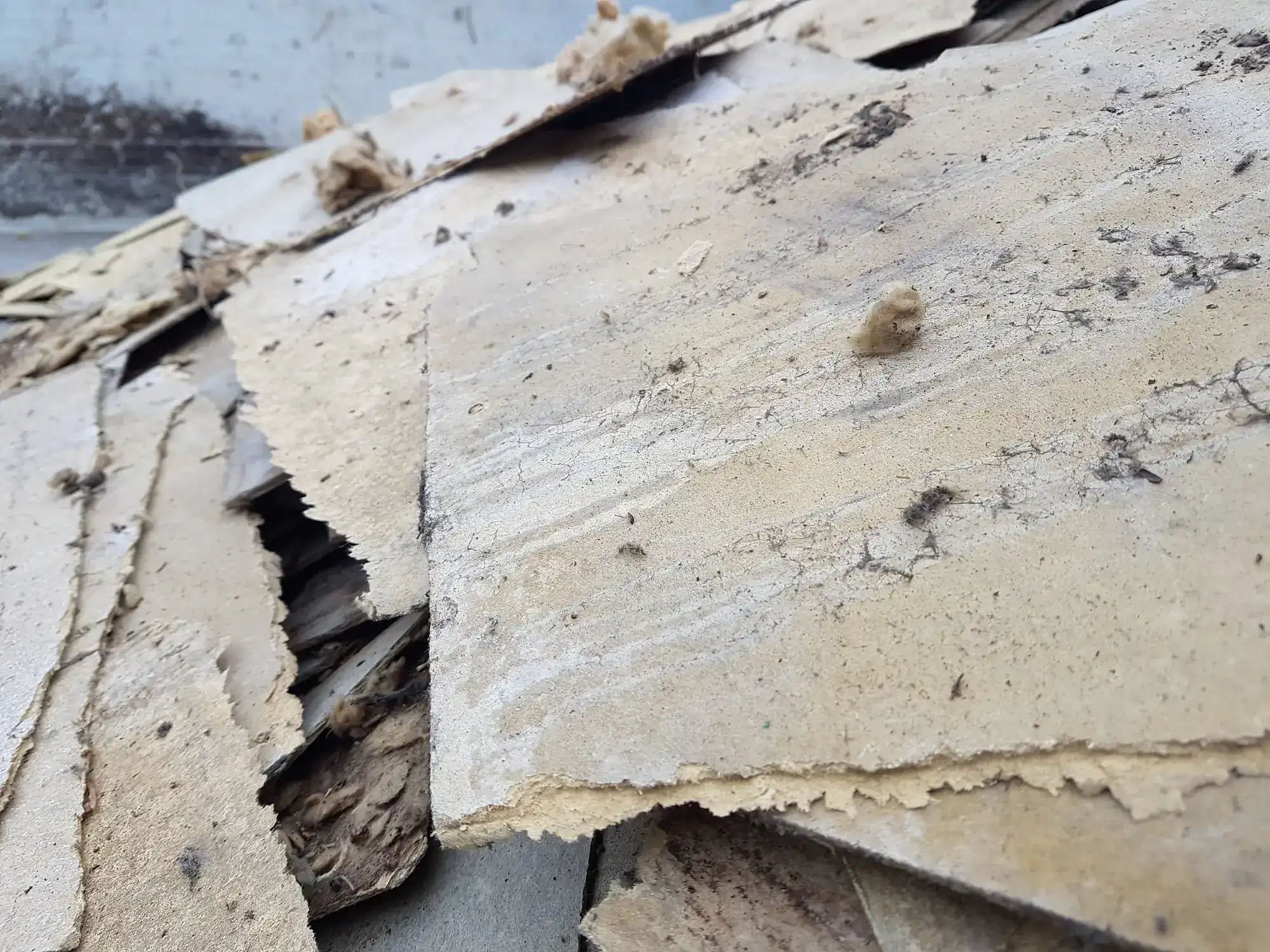
Common locations include vinyl floor tiles, the adhesive beneath them, pipe and duct insulation, attic vermiculite, plaster and joint compound, popcorn ceilings, roofing materials, and furnace or boiler insulation. The presence of asbestos doesn’t mean immediate danger — undisturbed ACMs that are in good condition are generally not an active hazard. The risk comes from disturbance: renovation, demolition, water damage, or physical deterioration. If you’re planning any work on a pre-1980 home in East Pikeland, testing before you start is the right move.
Stop the work. That’s the first and most important step. If a contractor or a DIY project disturbs material that might contain asbestos — and in a pre-1980 East Pikeland home, that’s a real possibility any time walls, floors, or ceilings are opened — the right call is to halt work immediately, keep people out of the affected area, and contact a licensed asbestos abatement contractor.
Do not attempt to remove or bag the material yourself. Do not run HVAC systems that could circulate fibers through the rest of the house. We answer calls 24 hours a day, seven days a week — so if this happens on a Saturday afternoon mid-renovation, you’re not stuck waiting until Monday. An inspector will come to the property, assess the situation, collect samples, and give you a clear answer about what you’re dealing with and what needs to happen next. The faster you act correctly, the smaller the problem stays.
It can, and it’s a question more East Pikeland homeowners should be asking. French Creek flooding is a documented, recurring issue in this township — multiple residents flag it as a real community concern, and properties near the creek and along Rapps Dam Road have experienced flood damage more than once. When water infiltrates a pre-1980 structure and saturates walls, floors, or insulation, it can disturb asbestos-containing materials that were previously stable and undisturbed.
Wet or physically compromised ACMs — saturated floor tile adhesive, damaged pipe wrap, deteriorating plaster — are more likely to release fibers than dry, intact materials. After any significant flooding event in an older East Pikeland home, it’s worth treating damaged building materials as potentially contaminated until a licensed inspector has evaluated them. This is an emergency-response scenario, not a scheduled appointment situation, which is exactly why we maintain 24/7 availability for calls like this.
It depends on the scope of the project. East Pikeland Township itself doesn’t have a separate municipal asbestos ordinance — the governing framework is Pennsylvania state law. For residential properties with fewer than five units, the Pennsylvania DEP does not regulate the removal directly. However, the contractor performing the work must still be licensed by the Pennsylvania Department of Labor and Industry under the Asbestos Accreditation and Certification Act. That requirement applies regardless of property type or project size.
For larger projects — commercial buildings, multi-unit residential, or any project involving more than 260 linear feet, 160 square feet, or 35 cubic feet of friable asbestos-containing material — NESHAP regulations require advance notification to the DEP’s Southeast Regional Office, which covers Chester County. That notification must be submitted at least 10 working days before work begins through the DEP’s online GreenPort system. Missing that window creates regulatory exposure. We handle the notification process as part of the job — you don’t have to navigate that on your own.
For a standard residential asbestos removal job — a single room, one material type — most homeowners in the Chester County area are looking at somewhere in the range of $1,500 to $3,500. Smaller, contained jobs like a single floor tile removal or a section of pipe insulation can come in lower. Larger projects — whole-house abatement, multi-material removal in a gut renovation, or commercial work — scale up from there depending on scope, accessibility, and the quantity of material involved.
In East Pikeland specifically, where homes tend to be older and larger than the regional average, and where the housing stock includes multi-era properties with layered construction, costs can trend toward the higher end of that range simply because there’s often more material to address. The only way to get an accurate number is an on-site assessment — which is why we offer free estimates. You’ll know the actual scope and cost before you commit to anything. Cash discounts are also available, which is genuinely uncommon in this industry.
Pennsylvania doesn’t legally require sellers to test for asbestos before listing a property, but East Pikeland’s real estate market makes it a smart move regardless of what the law says. With a median home value of $415,800 and an active buyer pool that tends to be educated and financially sophisticated, buyers here ask questions — and their inspectors do too. If a pre-sale inspection flags potential ACMs and you haven’t addressed them, you’re looking at delayed closings, renegotiated offers, or deals that fall apart entirely.
Getting ahead of it with a professional asbestos inspection and, if needed, abatement before you list puts you in a much stronger position. You can disclose with confidence, the buyer’s inspector doesn’t find a surprise, and the transaction stays on track. For homes in or near the Kimberton Historic District, where buyers are often specifically seeking out older, character-rich properties, having clean environmental documentation is a genuine selling advantage — not just a liability check.
Other Services we provide in East Pikeland