Hear from Our Customers
You stop guessing. That’s the first thing. Whether you found something suspicious pulling up a floor in your Pinecrest-area ranch or your contractor flagged insulation behind a wall during a kitchen gut, the uncertainty ends. Once we’ve assessed the situation and handled it properly, you move forward — on the renovation, on the sale, on your life.
East Norriton’s housing stock skews older, and that matters. A significant portion of homes in this township were built during the peak asbestos-use era, when the stuff showed up in floor tiles, pipe wrap, ceiling texture, joint compound, and attic insulation as a matter of routine. The median resident here is in their early 50s, which means a lot of people are now cracking open homes they’ve owned for decades — and finding exactly what was standard practice when those homes were built.
If you’re selling, East Norriton Township’s Use and Occupancy Certificate requirement means a pre-sale inspection is already in your future. Asbestos discovered during that process doesn’t have to derail a closing — but only if it’s handled by a licensed contractor who can document the work properly. That documentation is what keeps your deal together.
We’ve been doing this work in Montgomery County for two decades. That’s not a tagline — it’s the reason we understand what’s actually inside a 1962 Cape Cod off Germantown Pike versus a 1975 colonial near Township Line Road. The materials are different. The risk profiles are different. The approach has to match.
We’re fully licensed by the Pennsylvania Department of Labor and Industry, EPA and HUD compliant, fully bonded and insured, and we carry a Certified Lead Inspector and Risk Assessor on staff. East Norriton is core territory for us — not a stretch on the service map. We work regularly throughout this township and the surrounding Norriton corridor, and we know the Code Enforcement Department’s standards as well as we know the job itself.
One call gets you testing, abatement, demolition support, mold remediation, and more — all under one contractor. No handoffs. No waiting for three different companies to coordinate.
It starts with a call — and we answer, any time of day or night. If you’ve found something suspicious during a renovation or a pre-sale inspection, the first step is figuring out what you’re actually dealing with. We assess the material, confirm whether testing is needed, and give you a straight answer about scope and cost before anything else happens. Free estimates mean you’re not committing to anything blind.
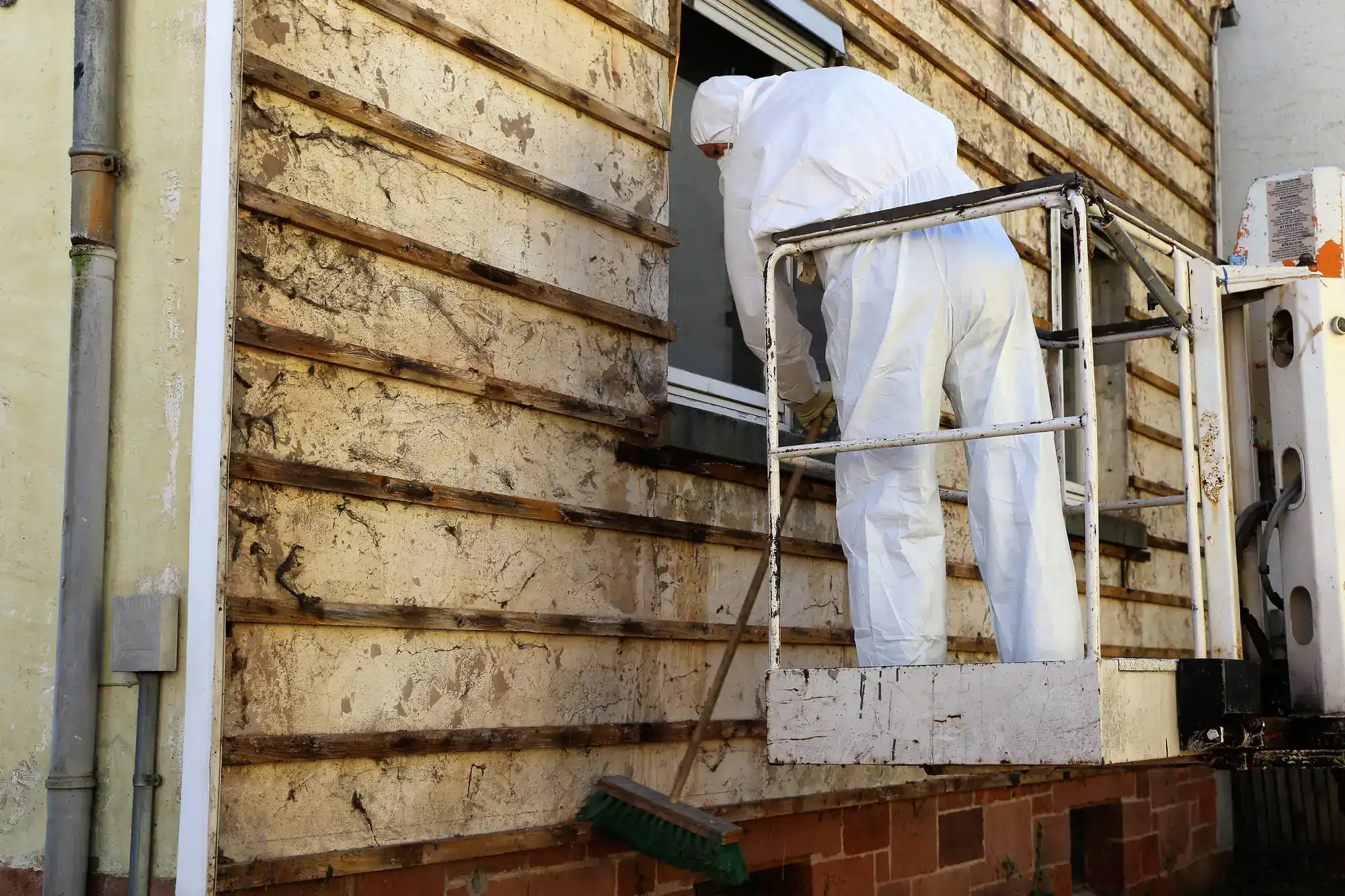
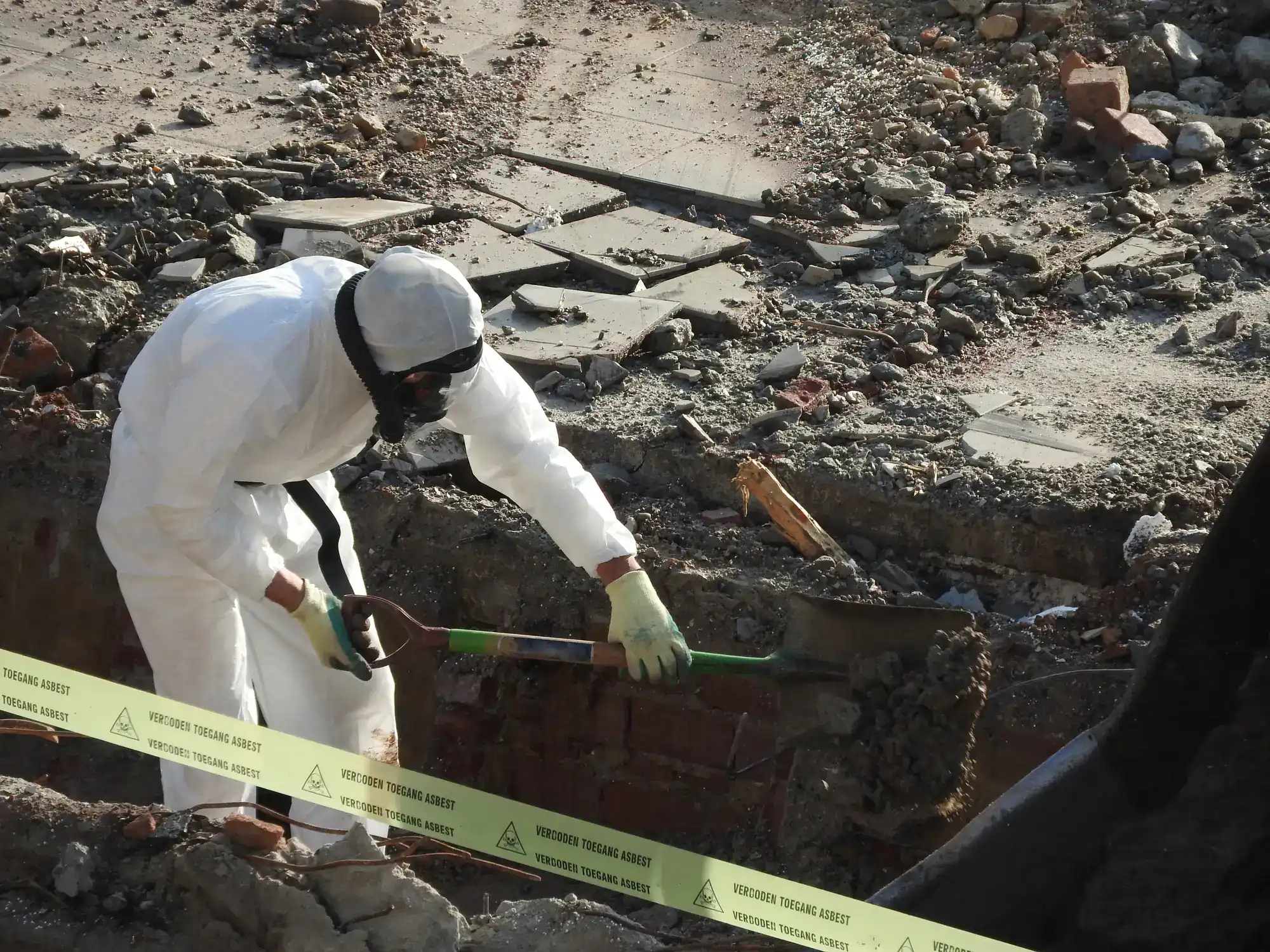
Once the scope is confirmed, we set up proper containment — negative air pressure, HEPA filtration, full enclosure of the work area so the rest of your home stays clean. In a township where the air quality index already runs above average, this isn’t a box to check. It’s the difference between a contained abatement and a problem that spreads to rooms you weren’t touching. Every job uses the same standard regardless of size.
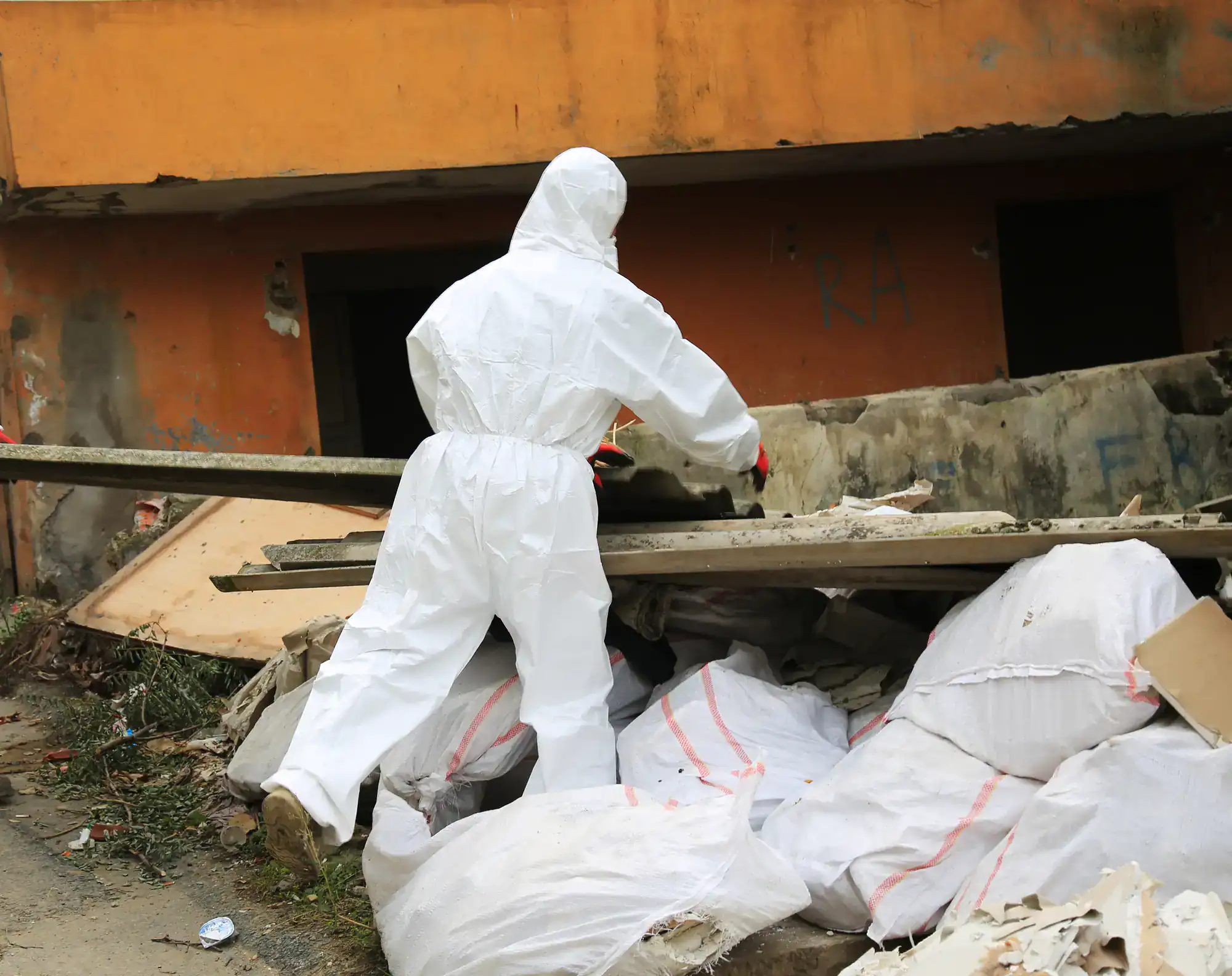
The removal itself follows Pennsylvania DEP and federal NESHAP protocols. For projects above the regulatory threshold, we handle the required advance notification to the state — that’s your responsibility as the property owner if you hire the wrong contractor, and ours when you hire us. After removal, post-abatement clearance testing confirms the area is clean before containment comes down. You get the documentation. The township gets what it needs. The job is done.
Ready to get started?
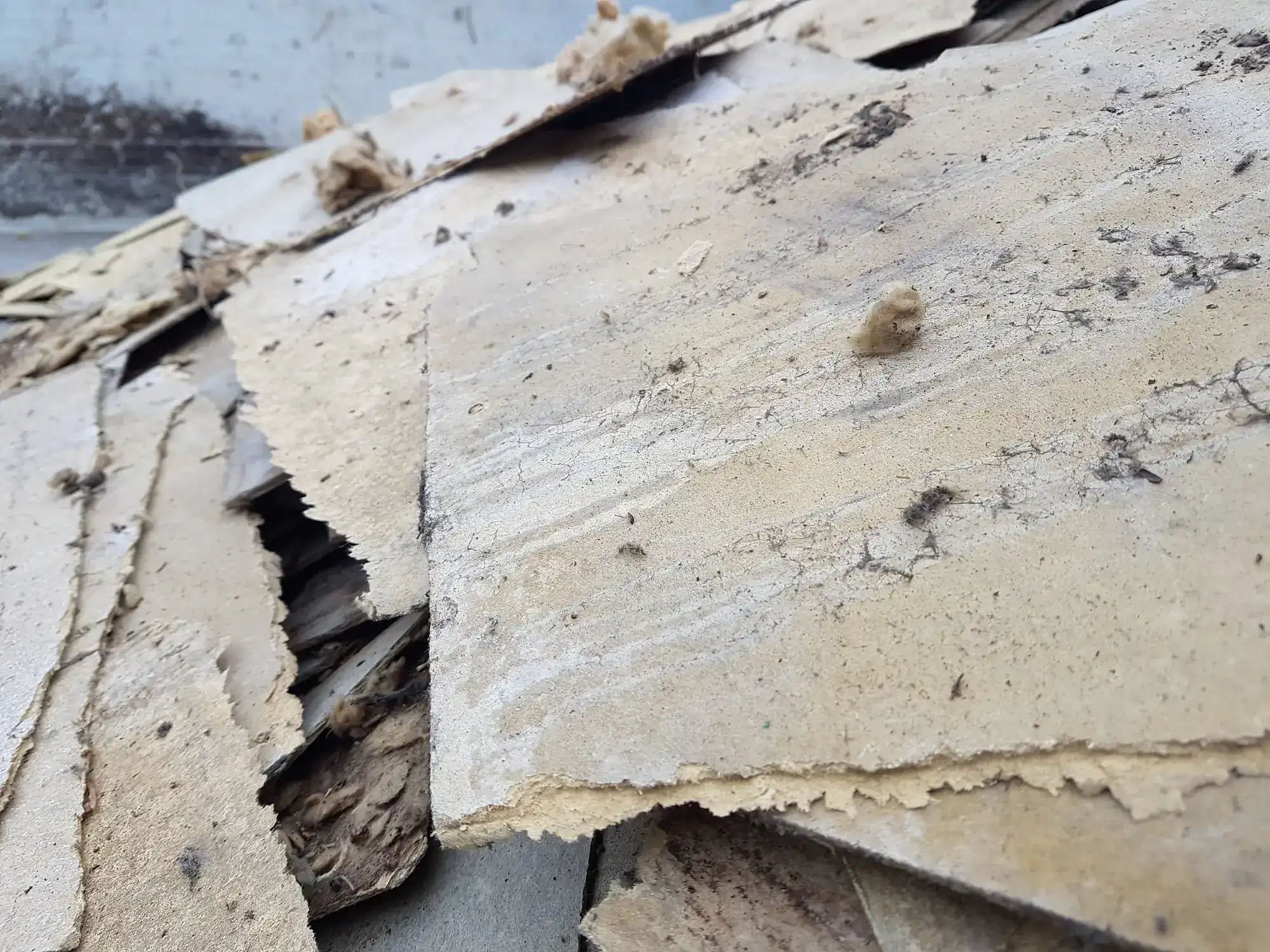
The asbestos abatement work we do in East Norriton reflects what’s actually in this township’s housing stock. Floor tiles from the 1950s and 60s — the nine-inch vinyl composition tiles that were standard in ranches and split-levels — are one of the most common finds here. So is pipe insulation around old boilers, textured ceiling finishes applied before 1980, and joint compound in walls that haven’t been touched since the original build. We’ve seen all of it, and each one requires a different approach.
Beyond residential work, East Norriton’s commercial and institutional properties — including facilities along the US Route 202 corridor — can carry the same risks in older mechanical systems, ceiling tiles, and flooring. If you’re a contractor, property manager, or business owner dealing with a pre-1980 building, the same licensed process applies, and the same documentation requirements exist.
We also carry a Certified Lead Inspector and Risk Assessor on staff because pre-1978 homes rarely have just one problem. If the floor tiles contain asbestos and the walls have lead paint, you shouldn’t need two separate contractors and two separate project timelines. We handle both. And if the basement has a mold issue on top of everything else — which happens more often than not in older homes in this area — that’s covered too.

East Norriton Township requires a Use and Occupancy Certificate of Compliance before any residential property can be sold. That means a township inspection — and if asbestos-containing materials are identified during that process, they become part of the documented record. You’re not legally required to remove asbestos simply because it exists in a home, but if the material is in a condition that raises concerns during inspection, or if a buyer’s lender requires remediation as a condition of financing, you’ll need a licensed contractor to handle it and provide proper documentation before the certificate is issued.
The practical reality for most East Norriton sellers is that trying to navigate the U&O process with an unresolved asbestos issue creates delays, negotiation leverage for buyers, and potential deal risk. Having us handle the work — and produce the clearance documentation — before the inspection puts you in a much stronger position. We work with sellers on tight timelines regularly in this township, and a free estimate is the fastest way to understand what you’re actually dealing with before the process starts.
You can’t tell by looking at it. Asbestos fibers are microscopic, and the materials that contain them — floor tiles, pipe insulation, ceiling texture, joint compound, roofing shingles — look completely ordinary. The only way to confirm is through testing by a licensed inspector who collects a sample and sends it to an accredited laboratory. If your home was built before 1980, testing before any renovation that disturbs original building materials is the responsible call.
In East Norriton specifically, the housing stock built between the 1940s and late 1970s is where the risk is most concentrated. A 1958 ranch, a 1965 split-level, a 1972 colonial — these homes were built when asbestos-containing materials were standard across the industry. That doesn’t mean every one of them has a problem, but it does mean the odds are meaningful enough that testing before you demo a kitchen or finish a basement is worth the cost. We offer free estimates that include a clear explanation of what testing involves and what it costs before you commit to anything.
Pennsylvania law requires that asbestos abatement be performed only by contractors licensed by the PA Department of Labor and Industry. This isn’t a guideline — it’s a legal requirement, and it applies to projects that meet certain size thresholds. For homeowners, the temptation to handle it yourself is understandable, especially when you’re in the middle of a renovation and the scope feels small. But disturbing asbestos-containing materials without proper containment, HEPA filtration, and disposal protocols can turn a localized problem into a whole-house contamination event.
Beyond the health risk, DIY removal creates a documentation gap that will surface when you sell. East Norriton’s U&O inspection process and any future buyer’s due diligence will look for evidence that hazardous materials were handled by a licensed contractor. Work done without that paper trail doesn’t just create liability — it can kill a deal. The cost of hiring a licensed asbestos removal contractor is almost always less than the cost of fixing an improperly handled abatement after the fact.
For most residential jobs — a room of floor tiles, a section of pipe insulation, a ceiling in one area of the house — the actual abatement work takes one to two days. The total project timeline from first call to clearance documentation is typically three to five days, depending on the scope and whether state notification requirements apply. Pennsylvania DEP requires a minimum five-day advance notification for friable asbestos projects above a certain threshold, so if your job falls into that category, that window factors into the schedule.
The good news is that most East Norriton homeowners dealing with a pre-sale timeline or a renovation schedule aren’t looking at a weeks-long disruption. We set up containment so the rest of your home remains accessible during the work. Post-abatement clearance testing happens after the containment is removed, and that result — along with all project documentation — is what you’ll have in hand when the township or a buyer’s agent asks for it. If your timeline is tight, call us and tell us that upfront. We’ll be straight with you about whether it’s workable.
Most residential asbestos abatement jobs fall somewhere between $1,200 and $3,500, depending on the type of material, how much of it there is, where it’s located, and what condition it’s in. Floor tile removal in a single room is on the lower end of that range. Pipe insulation throughout a basement mechanical system, or a full popcorn ceiling in multiple rooms, will push toward the higher end. Larger or more complex projects — whole-house assessments, commercial properties, or jobs involving multiple material types — can go beyond that range.
The most honest answer is that cost varies too much to quote without seeing the job. What we can tell you is that a free estimate from a licensed contractor gives you an actual number based on your actual property — not a ballpark pulled from a website. We also offer cash discounts, which meaningfully affects the final cost for homeowners who prefer to pay that way. For East Norriton residents navigating a renovation or a home sale, knowing the real number early is almost always worth the call.
It depends on the scope and location of the work. For a contained single-room abatement — a kitchen floor, a utility room, a section of basement pipe — most homeowners can remain in the house as long as the containment zone is properly sealed and you stay out of the work area. The negative air pressure and HEPA filtration we use on every job are specifically designed to prevent fibers from migrating to other parts of the home during removal.
For larger projects involving multiple rooms, HVAC systems, or attic spaces where containment is harder to isolate, temporary relocation during the active abatement phase is a reasonable precaution and something we’ll discuss with you honestly during the estimate. We’re not going to tell you to leave your house unnecessarily — but we’re also not going to tell you to stay if the scope of the job makes that the smarter call. East Norriton’s older homes sometimes present more complex material distributions than a single-room job, and the right answer depends on what’s actually in your specific property, not a generic policy.
Other Services we provide in East Norriton